SPAC · 379
Why did Trump's media's $6.4 billion CRO hoarding plan go bad?

Why did Trump's media's $6.4 billion CRO hoarding plan go bad?

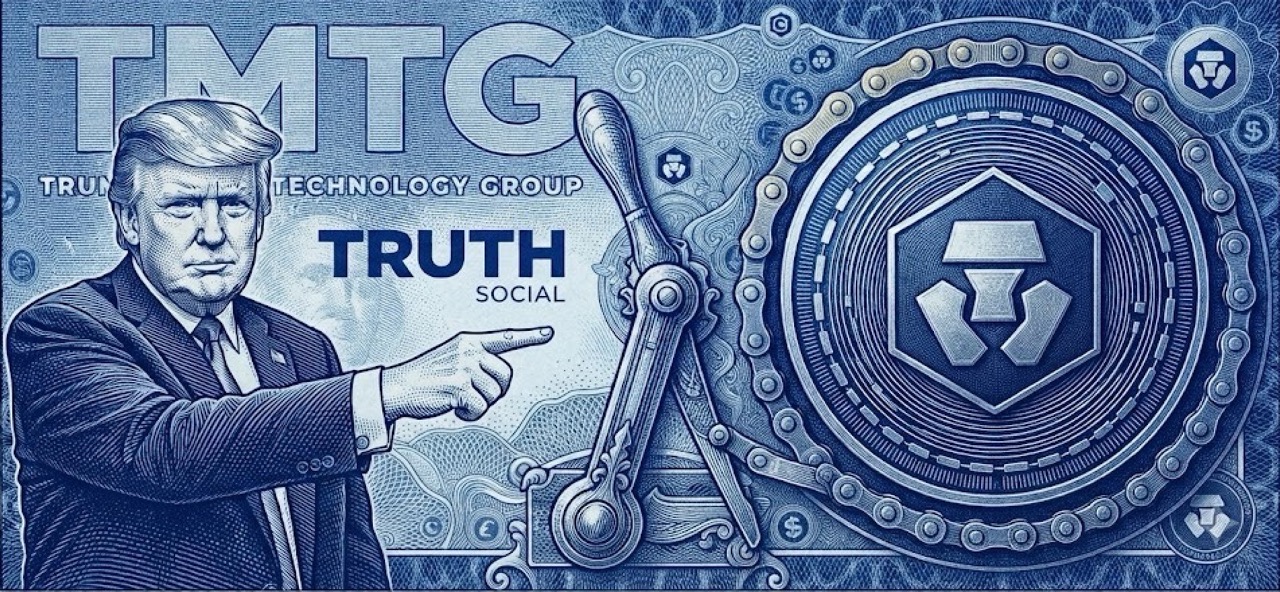
Author: Angelilu, Foresight News Original title: Worth $6.4 billion. Trump Media Group's CRO coin hoarding plan came to an end. A year ago, Trump Media Technology Group (DJT) and crypto exchange Crypto.com held high-profile hands to set up a listed treasury company to hoard several billion dollars of CRO. At the time, this politically strong affiliated company set up a stage with a leading exchange to sing, which made a huge impact. A year later, the capital game came to an end sadly. On August 7, DJT, Crypto.com, and SPAC company Yorkville officially announced the termination of this plan, along with the previously announced forecast market and ETF escrow program cooperation. Bitcoin's peak is almost at a standstill, and there is a collective decline in coin hoarding listed companies — after all, this collaboration, which began as a result of being close to politics, failed to reach the point where it came to fruition. At what stage did the suspended cooperation take place, the most important part of this cooperation is to rebuild a publicly traded CRO treasury company. In August 2025, three parties made a high-profile announcement: Trump Media will use SPAC company Yorkville to establish a company called Trump Media Group CRO Strategy, claiming to be the “first and largest publicly traded CRO treasury company,” and plans to stock up about 6.313 billion CROs — close to one-fifth of the current CRO circulation. The entire company is approximately $6.42 billion, comprised of $1 billion in CRO, $200 million in cash, $220 million in warrants, and a $5 billion equity line of credit. However, momentum returned; in fact, this treasury plan never actually came to fruition. It was only a framework agreement announced in August 2025. It had to go through a major SEC filing and approval process for the backdoor listing, which would have been delayed for more than half a year; it remained in a “to be completed” state until it was directly suspended a year later, and was never established. Along with the yellow one, there are two additional packages. Truth Predict, which was originally intended to be embedded into Truth Social's prediction market product — allowing users to bet on political, economic, and sporting events — has now been reduced to a marketing partnership, with Crypto.com only promoting its own prediction market to Truth Social users; Crypto.com provided escrow arrangements for Trump Media's ETFs, which also stopped. The only thing that actually came to fruition and is still in effect is another independent agreement. In August 2025, Trump Media spent about $105 million to buy CRO on the balance sheet, while Crypto.com bought $50 million in DJT shares. This transaction was unaffected by this termination, and it became the only link that did not let go of during this exit. Politics comes first, and commercial transactions come later to figure out why this game of chess fell on Crypto.com. We have to look back — it's political closeness that paved the way for business first. Before and after the 2024 US election, Crypto.com has been handing out olive branches to the Trump campaign: donating $1 million to the inauguration and investing $10 million in MAGA Inc., the pro-Trump super political action committee; CEO Kris Marszalek also personally visited Sea-Lake Manor to talk to Trump about crypto policies in person. In March 2025, the US Securities and Exchange Commission (SEC) dropped its investigation into Crypto.com — and not long before that, the agency had warned Crypto.com about potential enforcement actions. The relationship paved the way, and a commercial partnership only came to fruition in August 2025. The Trump media wanted a crypto story, a bunch of tokens that could be listed, and an ETF custodian; Crypto.com wanted to use Trump's fame to endorse a self-issued CRO. Precisely because of this, the deal had the smell of a conflict of interest from the first day it was announced — the Trump administration itself had the power to oversee the crypto industry, yet the company linked to his family was deeply tied to an exchange that had just donated money and had just been released by the SEC. Senator Elizabeth Warren and others have publicly called for an investigation into whether the relevant SEC decision involved political factors. Why was it withdrawn? The currency price and market are all...


12d agoburnking

Analysis: The bursting of the memory chip stock bubble did not cause a systemic impact; the S&P 500 fell only 1.6% from its all-time high

Comparative news, according to the “Wall Street Journal” report, there have been frequent bubbles surrounding specific industries and themes in the US market in recent years, but the bursting of these local bubbles has generally failed to drag down the overall stock market. The current round of the memory chip bubble rapidly expanded and burst in about 4 months, along with sharp fluctuations and a hedge fund falling into crisis. However, the S&P 500 index is only 1.6% from its all-time high, and the weighted S&P 500 index reached a new high last week. The pullback in AI-related stocks is now almost completely offset by gains in other sectors. Over the past decade, the US market has experienced bubbles such as 3D printing, Chinese concept stocks, low volatility products, SPAC, clean energy, cannabis, space, crypto assets, and AI concept stocks. Strategy fell 83% from a high point, Trump Media shares fell 89%, and SK Hynix fell 55% before rebounding last Friday. Easy funding, speculative demand, and expectations for new technology have all contributed to these bubbles, and margin debt and leveraged ETFs have further amplified volatility in recent years. These partial bubbles did not have a serious impact on the economy, mainly because most of them were not funded by large amounts of debt. After the bubble burst, losses were mainly borne by investors, and the banking system was not significantly impacted. Macro strategist Russell Napier said the banking system is still healthy, so the market always has more credit to create the next bubble. However, AI investments are moving the market into a more dangerous zone. Data center spending is expected to reach $7 trillion over the next 4 years, and if the productivity gains brought about by AI are insufficient to support this scale of investment, capital misallocation could seriously damage the economy. As AI construction becomes increasingly reliant on debt financing, once broader AI investment eventually turns out to be a bubble, its collapse may impact the financial system, and the overall market will be unavoidable.

20d ago

Cantor Intends to Help Swiss Crypto Bank AMINA Seek Growth Capital Through a Backshell Listing

Comparatively, according to CoinDesk, Swiss crypto bank AMINA is collaborating with Wall Street agency Cantor to evaluate the path to enter the capital market. AMINA has considered a SPAC merger, and is currently preferring a reverse takeover listing through the acquisition of a Digital Asset Treasury company, but no final decision has been made. A company spokesperson said that the current priority goal is to introduce strategic growth capital, an IPO can be a follow-up option, and there are currently no SPACs or DATs being negotiated. AMINA, formerly known as SEBA Bank, is regulated by Switzerland's FINMA and provides crypto trading, escrow, pledging and lending services. By the end of 2025, AMINA had Tier 1 capital of 74.6 million Swiss francs and accumulated financing of approximately US$245 million.

26d ago

Institutional crypto trading platform LMAX explores sale or listing, with a possible valuation of up to $5 billion

Comparatively, institutional crypto trading platform LMAX Group is cooperating with Morgan Stanley and Stifel's investment bank KBW to evaluate strategic options, including a sale, SPAC merger, or listing in the US or Europe, with a valuation of up to $5 billion. People familiar with the matter revealed that the NASDAQ listing is currently a priority plan, but the company is not in a hurry to advance, and its core foreign exchange business can hedge against the impact of the current downturn in the crypto market. Headquartered in London, LMAX is regulated by the United Kingdom's Financial Conduct Authority (FCA) and provides banks, brokers, hedge funds and asset managers with a place to trade foreign exchange and digital assets institutions. In 2021, private equity firm J.C. Flowers bought 30% of its shares for $300 million, which was valued at around $1 billion at the time. In January of this year, Ripple invested $150 million in the LMAX strategy to drive institutional adoption of the RLUSD stablecoin. (CoinDesk)

29d ago

Bitcoin Treasury Group Turns: Selling BTC, Paying Debt, and Betting on AI, Plummeting Stock Prices Force Strategic Adjustments

Comparatively, with the sharp correction in Bitcoin prices, listed companies that once hoarded BTC are facing multiple challenges such as falling stock prices, debt pressure, and deteriorating financing environments. Some companies have begun to sell Bitcoin, repay debts, and even switch to artificial intelligence (AI) data center business. Strategy pioneered the launch of the “Digital Asset Treasury (DAT)” model, which continues to buy Bitcoin through financing and loans, driving a number of listed companies to follow suit. However, as the price of BTC fell from the high of about $126,000 set in October 2025, the cumulative decline was about 50%, and the stock prices of related companies also shrunk drastically, forcing them to re-evaluate their coin hoarding strategies. This week, shareholders of London-listed company Satsuma Technology approved the liquidation of all 668 BTC and the return of capital while advancing delisting. Another London-listed company, The Smarter Web Company, sold 178 BTC to pay off convertible debts. Additionally, Sequans Communications has sold 1,025 BTC and further sold nearly 80% of its remaining holdings to repay the convertible bonds. The company said it will not continue to buy Bitcoin in the future and plans to sell the remaining approximately 658 BTC. Nakamoto's stock price has dropped by about 99% since SPAC was listed in May 2025. Recently, it sold about 284 BTC and raised about $20 million in operating capital. Nearly 70% of the company's remaining approximately 5342 BTC has been used to secure Kraken loans, and market participants believe it is facing a potentially risky event. At the same time, Bitcoin mining companies are also beginning to adjust their strategies. Companies such as Bitdeer Technologies and MARA Holdings are selling part of the BTC to buy back shares, repay debts, and shift energy resources and computing power infrastructure to AI data center businesses. Other businesses that sell BTC include Empery Digital, etc. According to the data, Strategy has recently sold around 3,620 BTC and authorized further asset sales to maintain dollar reserves. However, Strategy is still the world's largest publicly traded company Bitcoin holder, holding more than 840,000 BTC. Company CEOMichael Saylor said it is possible to sell part of Bitcoin in the future to pay dividends, but that doesn't mean the company is quitting Bitcoin investments. In addition to asset adjustments, there have also been changes in the management and capital operations of some Bitcoin treasury companies. Jack Mallers has stepped down as CEO; Adam Back's Bitcoin Standard Treasury Company (BSTR) also failed to complete the proposed merger due to deteriorating market conditions. Analysts believe that as financing costs rise and BTC price fluctuations intensify, the treasury model of “borrowing money to buy coins” is undergoing a reshuffle, and some companies are shifting from simply hoarding bitcoins to AI infrastructure and business transformation with more cash flow capacity. (CoinDesk) This article is sponsored by GENG, Build Your Fortune on GENG (https://geng.one)

29d agoburnking
$365 million is betting on tokenization, Cantor wants to end the IPO roadshow

$365 million is betting on tokenization, Cantor wants to end the IPO roadshow

Author: Prathik Desai Compiled and edited by: BitPushNews Foreword In the same week that Cantor and Securitize joined forces to promote stock tokenization, Canton chain developer Digital Asset raised an additional 10 million US dollars, bringing the total amount of this round to 365 million US dollars, with a valuation of 2 billion US dollars. The money came from an unidentified institutional investor. The $365 million not only placed Digital Asset among the largest blockchain infrastructure companies to finance in 2026, but also sent a clear signal that the boundaries between traditional finance and the crypto world are dissolving faster than expected. Why now? Why Cantor? The answer points in the same direction: equity financing is undergoing a paradigm shift comparable to a revolution in the bond market. A company that wants to borrow $200 million can use either a commercial paper project or a portion of the medium-term note (MTN) issuance amount. The former satisfies immediate cash needs through a continuous and revolving debt issuance mechanism. The latter allows companies to sell bonds in batches when market conditions are favorable using a one-time “shelf registration” filed with the supervisory authority. But if the same company wanted to raise $200 million by selling its shares, it would have to hire bankers, spend weeks visiting fund managers, and pay up to 7% of the capital raised to cover the cost of the entire process. This is one of the oldest questions in corporate finance. Issuing bonds is a routine operation, but issuing shares requires a “ceremony.” This asymmetry is due to more than just paperwork or regulatory requirements. The bigger problem is on the demand side. A company's shares are traded in only one trading pool on an exchange during trading hours. When the number of shares it wants to sell exceeds the trading pool's absorption capacity, the bank or fund manager must go through a roadshow to find new buyers. Blockchain can solve this asymmetry by expanding the scope of the geographical market for which new shares are issued. This article will explore how the tokenization trajectory makes equities behave like bonds, and who captures value in the process. A sense of divestment ceremony Although IPOs involve roadshows and processing costs in the form of bank commissions that account for 5-7% of the amount raised, it has become relatively easy to issue additional shares over the past few decades. In 1982, the US Securities and Exchange Commission (SEC) passed Rule 415, creating a “shelf registration” system that allows eligible companies to register securities they plan to issue over the next two years and then sell them in batches. The “Issuance at Market Price” (ATM) program goes a step further. Under this model, the company issues new shares to designated broker-dealers in the primary market. Brokers then trickle these stocks into the open market in small amounts to avoid a sudden oversupply. Usually, the market doesn't notice this action until the company releases its quarterly report. ATM projects may only bring issuers 1-3% of commission costs, which is only half of the IPO fee. However, there is still a problem with these ATM projects. If a company's broker-dealers invest too much stock into a weak order book, they will artificially cause prices to fall. That's why this route is only suitable for companies looking to raise modest capital. For larger financings, companies still tend to opt for roadshows. This is what the IPO fee buys from partner banks — the ability to find buyers for their new shares. Blockchain can solve this problem. Broadening the pipeline Last week, Cantor Fitzgerald partnered with Securitize to allow the company to issue shares directly on the blockchain. This is unlike other tokenized stock versions that have appeared on the blockchain. Vaidik and I have written about how ownership works in these different versions. Some of these tokenized versions are simply packages that provide price exposure, and do not come with voting rights or ownership. But Securitize isn't packaging stocks. Cantor — the bank that topped the US IPO underwriting list in 2025 (its business covers equity, SPAC, and ATM placements) — knows that there is also value to be tapped in expanding demand coverage for US listed companies. @Cantor7月2日, Securitize became the first US company to go public and go online on the same day. Its approximately $270 million common stock (SECZ) began trading simultaneously on the Solana and Avalanche blockchains on the morning of the same day it was listed on the NYSE. Two weeks later, Securitize teamed up with Cantor...

31d agoWendy#Canton #digital asset #IPOs #tokenize #Tokenization topics #Equity financing
Is crypto venture capital dying out?

Is crypto venture capital dying out?

Source: Token Dispatch Author: Vaidik Mandloi Compiled and collated by: BitPushNews created an era's top investor and began leaving it as one of the largest cryptocurrency exclusive funds ever formed. Paradigm recently raised $1.2 billion to begin investing in startups in the fields of artificial intelligence (AI), robotics, and aerospace. They've even completely removed the word “crypto” (crypto) from their website! Their investment logic is: Cryptocurrency was only their first frontier, but there are so many other new things happening right now that they must not turn a blind eye. Coincidentally, Framework Ventures also closed a $400 million fund in June and began expanding their investment reach beyond the crypto sector, and they are no exception. Over the past year, almost every leading crypto specialty fund has begun to drift towards broader topics and investment licensing. In the first quarter of 2026, only 8 new crypto-specific venture capital funds were established globally, the lowest since 2020. This article will explore in depth whether crypto-specialty venture capital is actually dying out as a fund category. If so, how does this shuffle map into the life cycle of these funds, and what does it mean for crypto startups — they will now have to compete for attention in multi-industry portfolios. The life cycle of professional funds Crypto professional funds came into being because they were willing to take the time to build a competitive advantage and were the only ones willing to take and underwrite this risk at the time. Understanding how Solidity contracts actually work and connecting with anonymous developers on the Discord channel—these aren't things Tiger Global's growth equity partners were able to touch in 2017. To understand whether crypto VC is coming to an end as an investment category, it would be beneficial to see how the specialty fund category has evolved in history, as this phenomenon has happened more than once in the past. Between 2006 and 2011, Climate Tech (Climate Tech) became mainstream as an investment logic. VCs have set up clean energy exclusive funds for the same reason that crypto VCs set up exclusive blockchain funds: they think they have keenly captured an epoch-making technological shift before generalists (generalists) reacted, and wanted to build a new investment institution around this firm belief. They poured more than $250 billion into clean energy startups, but lost more than half of their capital. Interestingly, the technology itself actually worked, and today's clean energy market is extremely large — which has caused the cost of solar energy in this sector to drop dramatically by 85% over the same period. What the VCs misunderstood, however, was that they hardwired the same model applied to software companies and threw $5 million in seed round checks to companies that actually needed $200 million in project financing and took 15 years to make a profit. The Energy Initiative (Energy Initiative) of the Massachusetts Institute of Technology (MIT) conducted an ex post facto review and found that the venture capital model was fundamentally flawed in the field. Professional VCs completed the experimental phase by taking technical risk funding, funded early R&D, and gave the field credibility to attract larger capital; however, once the technology matured enough to allow infrastructure lenders and project finance facilities (project finance facilities) to underwrite, the information advantage of professional investors disappeared. Data source: MIT Energy InitiativeSpac (a special absorption merger and acquisition company) has also evolved a similar trajectory. To add background, SPAC is a “blank check company” with no actual business, raising capital through an IPO and then merging with a private company to help it go public faster than a traditional IPO. In 2020 and 2021, some investors saw it as a replicable vehicle and built entire companies around them. Chamath Palihapitiya raised $1.6 billion in SPAC exclusive capital. But by 2022, SP established in 2021...

32d agoWendy#AI #Framework Ventures #Paradigm #VC #Investment funds
Trump's post data was sold “in milliseconds” to hedge funds, and its influence eventually became a clearly priced product

Trump's post data was sold “in milliseconds” to hedge funds, and its influence eventually became a clearly priced product

Author: Shenchao TechFlow Original title: Trump's post On Selling to Wall Street in Milliseconds, Breaking Down Truth Social's Parent Company's “Influential Business Experience” Shenchao Guide: Truth Social's parent company Trump Media (DJT) announced that it will sell real-time millisecond data on Trump's posts to hedge funds starting August 1. This is not an isolated incident. From the SPAC listing to the $2.5 billion Bitcoin treasury, 6 billion nuclear fusion mergers and acquisitions, to today's data licensing, the company with quarterly revenue of less than $1 million has been doing the same thing for two years: systemically commercializing Trump's influence. On the same day, CNN revealed that Trump publicly praised 21 companies on Truth Social after buying their shares. Truth Social has finally officially put a price on its most valuable asset. According to reports from Fast Company and other media outlets on July 16, Truth Social's parent company Trump Media & Technology Group (Nasdaq: DJT, hereinafter referred to as Trump Media) announced the launch of the Truth API to provide institutional customers with millisecond real-time data push of posts from Truth Social's top 10 most influential accounts, which was officially launched on August 1. Trump Media interim CEO Kevin McGurn said in a statement that “the market is already fluctuating due to Truth Social posts,” and that Truth API is part of the company's strategy to “monetize proprietary assets through high profit margins and recurring revenue streams.” The company says it has signed contracts with some customers before the launch, and pricing has not yet been announced. Seen alone, this is just an open enterprise-grade API for a social media platform; X and Reddit have done similar things. However, looking at Trump Media's monetization path over the past two years, Truth API marks the company's completion of a closed loop from “selling stocks” to “selling influence itself.” From backdoor listing to selling the API: A two-year monetization path completely sorted out Trump Media's monetization logic has never been the same ad+subscription model of traditional media companies. The company's Q1 revenue in 2026 was only $8712 million. One quarter's revenue was not enough for the annual salary of a senior engineer in Silicon Valley. The net loss for the same period was $405.9 million, of which $368.7 million came from unrealized losses on digital assets and equity securities. What this company is actually selling has always been Trump's own influence and attention. The monetization method went through several iterations: in March 2024, Trump Media landed on the NASDAQ through a SPAC backshell, directly transforming Trump's political influence into equity value, and DJT once surged above $40. This is the most extensive way to monetize; essentially, it uses meme stock logic to harvest retail sentiment. In January 2025, the company launched the fintech brand Truth.Fi, allocating an initial batch of $250 million to Bitcoin and ETF products. In the same year, a “America First” themed ETF was launched in partnership with Crypto.com to apply for a Bitcoin spot ETF. By May 2025, Trump Media announced that it had raised more than $2.3 billion to establish a Bitcoin treasury through additional shares and convertible bonds. The logic of this round of operation is: since DJT stocks themselves fluctuate like crypto assets, they simply bet their balance sheet directly on Bitcoin and use the BTC increase to leverage the company's valuation. As of Q1 2026, Trump Media held 9542 BTC (worth about $767 million, average price $118,529) and 756 million CRO (worth about $54 million), and total assets soared to $2.2 billion from $759 million a year ago. The cost is also obvious: Bitcoin fell 22% in Q1, directly contributing more than 400 million unrealized losses. In December 2025, Trump Media announced a merger with nuclear fusion company TAE Technologies, an all-stock transaction, with a valuation of over 60...

36d agoburnking#social #Truth+ #Bitcoin #Trump
Are Chinese University of Science and Technology+Shibata's college bullies and money industry bosses running away from New York?

Are Chinese University of Science and Technology+Shibata's college bullies and money industry bosses running away from New York?

Another exchange in the coin industry is about to disappear. AscendEX (Pinnacle, formerly BitMax) ceased operations. According to AscendEX's official website announcement, the platform will completely stop all business operations from July 1, 2026 — it will no longer provide account opening, deposit, trading, pledge, loan and activity services, and will only retain limited account access to handle withdrawals, KYC updates, complaints and export transaction records. Since July 6, all withdrawal channels have been automatically processed, and all have been reviewed manually. The official even bluntly stated in the announcement: “Withdrawals may be delayed or may not be processed during the review period. There is currently no guarantee on the timing or amount of withdrawals”. AscendEX blamed the shutdown on the “current market environment” and the impact of the European Union's Crypto Asset Market Regulation Act (MiCA), claiming that it was forced to shut down due to a lack of MiCA authorization combined with “broader regulatory, financial, and operational factors.” ZachXBT serial warning: From “withdrawal delays” to “almost zero liquid assets” as early as June 26, 2026, on-chain detective ZachXBT issued a community alert on the X platform: several AscendEX users reported that withdrawals were delayed for several days to weeks, or even impossible to process at all. Judging from feedback from communities such as Reddit and X, starting in early June, many users will stay in the “Initiating” (initiating) state for a long time after submitting their withdrawal requests. The problem seems to have come to an end as early as May. An AscendEX user told Bitpush: “My withdrawals have been restricted since May 6th, long before AscendEX's official shutdown announcement. AscendEX asked me to stop my public activity and notified me to enter a phased settlement process on June 12. On June 24, they authorized the first settlement withdrawal, but then the withdrawal was marked “Rejected” without any TXID. This isn't just a MiCA issue. ” The user claims that there are still 34,174 USDT + 25,592 XRP that have not been settled or withdrawn. After reviewing AscendEX's known hot wallets, ZachXBT found that the platform had almost no reserves on mainstream assets such as ETH, USDT, and SOL. Blockchain data platform Arkham Intelligence shows that currently (as of July 8, EST), AscendEX label addresses only hold about $13.45 million in crypto assets, of which more than $12 million is concentrated in the platform's own ASD token and Unbound Science's Unite token. To put it bluntly, there are almost zero mainstream stablecoins and liquid assets that can actually be used to pay user withdrawals. However, while the platform freezes withdrawals, it still accepts user deposits normally. By July 2, the situation had worsened further. ZachXBT revealed that AscendEX's official X account has been suspended for 9 consecutive days since the initial warning. A victim of large sums said he had contacted AscendEX co-founder George Cao several times to report issues and received no response. At the time, ZachXBT publicly advised users whose funds were frozen to report cases to the law enforcement authorities and supervisory authorities in the country or region where they are located. By July 8, ZachXBT stated that its verified user claims had reached millions of dollars, but judging from AscendEX's public hot wallet situation, there is currently almost no current assets available to pay for relevant withdrawal requests. Another detail is worth noting. On-chain records show that on June 20 — six days earlier than ZachXBT's initial warning — the AscendEX wallet balance suddenly crashed, evaporating more than $240 million in a single day. Strangely enough, less than two months ago, the address had a capital injection of about the same size, and since then the reserves have stabilized at around 50 million US dollars. That $240 million capital injection held up the books for a short time, but it was emptied all at once on June 20. This means that the core liquidity of the platform had already been artificially taken away 11 days before the official claim was forced to shut down due to MiCA regulations. Was it an early transfer? Is debt repayment? Or is it the last “retreat” for some? No one knows yet. The only sure thing is: the money is gone. The founding team disputes AscendEX founder George Cao (real name Jing Cao), who has a gorgeous resume. According to Linkedin, Cao Jing has a doctorate degree in computer science from the University of Chicago. He...

45d agoWendy#AscendEX #CEX #Exchanges #Shut down the tide topic #original #Cao Jing #Run away #Zenith #hacks

Bitcoin Reserve Company BSTR Seeks to Amend SPAC Merger Agreement with Cantor

According to Bloomberg, according to Bloomberg, a special purpose acquisition company (SPAC) supported by Cantor Fitzgerald and Adam Back's Bitcoin reserve company BSTR announced that the two sides have abandoned the original terms of the previously proposed merger and will renegotiate the revised agreement. Against the backdrop of the increasingly severe crypto market environment and the challenges faced by Bitcoin reserve companies, the two sides decided to adjust the trading arrangements. Cantor Equity Partners I Inc. and BSTR Holdings said on Wednesday that the two sides will no longer proceed with the deal in accordance with the merger agreement signed last year, but will instead seek revised transaction terms that better reflect current market conditions. However, the two companies did not disclose the specific financial terms of the new deal, nor did they say when they will be able to reach a new agreement.

45d ago