
Stacks · 1057

MemeCore announces a $1 billion strategic deal with ZeroStack

Comparatively, MemeCore announced that its core team members have reached a $1 billion strategic deal with Nasdaq-listed crypto infrastructure asset management company ZeroStack (NASDAQ: ZSTK). According to the announcement, memeCore will contribute related assets to ZeroStack in exchange for ZeroStack shares and pre-financing warrants (pre-financing warrants). The deal aims to strengthen the connection between the memeCore ecosystem and the US open capital market and advance the development of decentralized AI, digital assets, and blockchain infrastructure. MemeCore said the partnership will further integrate its Meme economic ecosystem, decentralized AI applications, and digital asset infrastructure to support future ecological expansion and capital market financing. MemeCore previously launched a Layer 1 blockchain for the “Meme 2.0” economy, which focuses on connecting community-driven assets through the Proof of Meme (PoM) consensus mechanism. This article is sponsored by GENG, Build Your Fortune on GENG (https://geng.one)
3d agoburnking
540 million airdrops face cancellation, OP governance vote engulfed in civil war

540 million airdrops face cancellation, OP governance vote engulfed in civil war

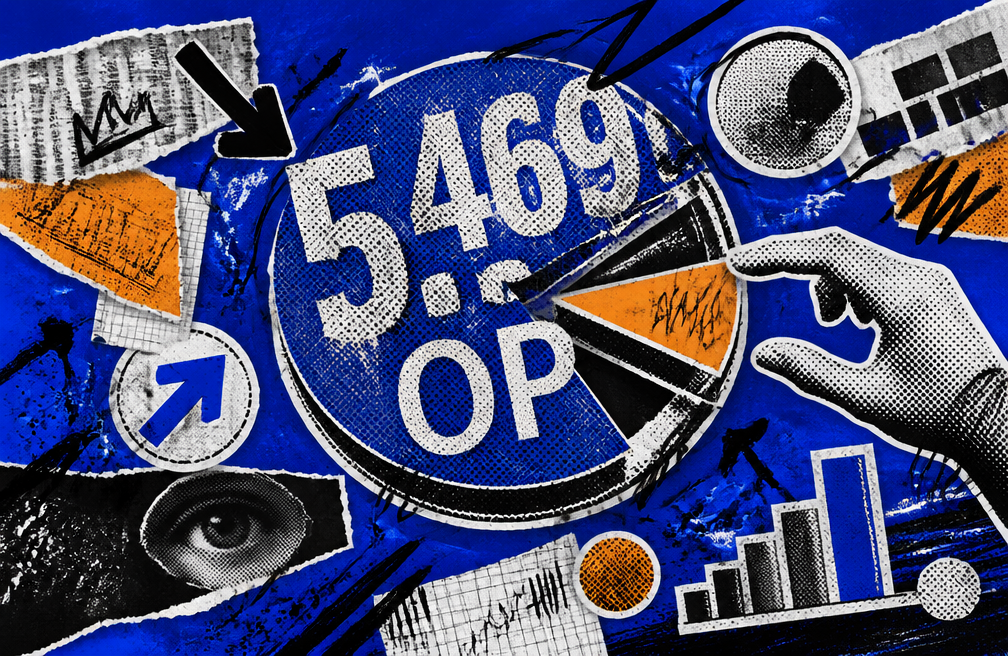
Author: Foresight News Original title: 540 million token airdrop about to be confiscated? The OP governance vote fell into the civil war in early August, and the Optimism Foundation officially submitted a proposal to reclassify the remaining 546.9 million OPs in user airdrop allocations as “strategic ecological funds”. Because it may substantially affect token holders' expectations for future airdrops, it needs to be approved by vote. Voting began on August 14, Beijing time, and the deadline is 12:07 on August 20. Up to now, according to the latest on-chain data, there are about 9.105 million OP votes in favor and 4.258 million OP votes against. A quorum of approximately 16.54 million OPs is required, and there is still a clear gap between the current scale of participation and compliance. The voting results have yet to be finalized, and the community game continues. After May of this year, OP repurchases were suspended, and the total initial supply of OP was approximately 4.295 billion pieces. Of these, 19% (approximately 816 million) were explicitly reserved for users to airdrop. Although this arrangement is an unofficial legal obligation, Optimism has repeatedly confirmed it in public communication over many years, including that when Airdrop 5 was released in October 2024, it was still mentioned that approximately 550 million copies can be used for future airdrops. Actual implementation shows that a total of five rounds of airdrops were completed between 2022 and 2024, and a total of about 269.1 million OPs were distributed, accounting for about 33% of the total amount reserved. The first round accounted for the highest proportion, and standards continued to be adjusted in subsequent rounds, gradually shifting from early use and gas consumption to delegated governance, OP mainnet activity, NFT creators, and Superchain activities. There were no new airdrops in the fourth year (May 2025 to April 2026), and the government clearly switched to “targeted growth projects that can measure retention and revenue results.” On-chain data also shows that Optimism hasn't bought back OP as planned since May. After completing the second and third rounds (March and April) of monthly community repurchases, the government unilaterally suspended the subsequent repurchase program. Officials spent 367.905 ETH to buy back 6951,453 OPs in March, and 50.16 ETH to repurchase 925654 OPs in April. Up to now, the total number of OPs repurchased is 945,1924 OP, which is worth about $756,200 based on the latest price of $0.08. The foundation said it will re-evaluate after the 12-month period ends and does not promise a long-term continuation. At the same time, the overall OP investment in the fourth year decreased by about 35% compared to the third year. New circulation of governance funds decreased by 53% year over year, and Retro Funding (OP is a public product funding mechanism that rewards actual contributions.) Spending dropped by 30%, and airdrops returned to zero. The Foundation simultaneously released the fourth year budget update and the fifth year outlook. It expects to add about 273 million OPs in circulation in the fifth year (not including the airdrop quota that may be restructured this time), of which the Ecosystem Fund is expected to invest about 200 million. According to DeFilLama data, its total TVL has now dropped sharply from its peak of US$5.5 billion to US$526 million. The strategy is shifting to enterprise growth in the crypto market. Second-tier networks are currently facing problems such as loss of users and weak innovation. According to Token Terminal's latest data, its core developers have been reduced to 42, while at its peak at the end of 2024, this number was 144. Currently, Optimism is shifting to the corporate market, including fintech, trading platforms, payment institutions and traditional financial institutions. Currently, partnerships include Bitpanda, Ink, and Dunamu. Specifically, the proposal calls for: · creating a new allocation category “strategic ecosystem fund”; · reassigning the remaining 546.9 million OPs from the user airdrop category to the fund; · Uses include facilitating cooperative transactions involving chains, agreements, institutions and infrastructure to join OP Stack, deepening incentives for OP Mainnet chain activity and liquidity, and expanding cooperation with top brands and institutions. Airdrops that have already been issued are unaffected. If the proposal is approved, the Foundation will update token allocation documents and public accounting records, and follow the established grant monitoring and annual budget reporting mechanisms. The fifth year budget outlook itself...

3d agoForesight News#optimism #token #proposals #governing #airdrop

Founder of Stacks, the hard fork is running smoothly, and Binance's “watch label” is still awaiting the next round of evaluation

Comparing news, Muneeb Ali, co-founder of Stacks, said that the Satoshi Upgrade I hard fork has been successfully completed, and the degree of network decentralization has further increased after the launch of the new signer. As for Binance's “watch label,” there are currently no concerns about the risk of removal or liquidity, but it is still necessary to wait for the next round of formal evaluation.

6d ago#On-chain dynamics

Michael Saylor proposed the digital asset spectrum framework, BTC is digital capital, and STRC stands for digital credit

Comparatively, Strategy founder Michael Saylor proposed the “Digital Assets Monetary Spectrum” (Digital Assets Monetary Spectrum) concept, which classifies different types of digital assets according to their volatility, yield potential, and transaction function. Saylor said that the digital asset system can be divided into four levels: Bitcoin (BTC): Digital Capital (Digital Capital) STRC: Digital Credit (Digital Credit) SR-STRCusX: Digital Money (Digital Money) USDT: Digital Currency (Digital Currency). He believes that from left to right, asset volatility and profit potential are gradually declining, while stability and trading use continue to improve. Saylor said that Bitcoin is the “ultimate storage asset of value,” with high volatility, high potential returns, and digital asset attributes that do not require a third party's credit endorsement; stablecoins are the “ultimate medium of exchange,” which emphasizes stability and payment functions. In between, digital credit and digital currency act as a bridge between capital and money. Among them, STRC is defined by Saylor as “digital credit”, which is characterized by relative stability, high fixed income, and certain value storage properties. He further stated that digital currency combines digital currency technology with the economic attributes of digital capital, and has stability, profitability, transaction convenience, and value storage functions. According to Saylor, digital capital is a bearer asset (bearer asset), while assets such as digital credit, digital currency, and digital cash are created and managed by digital finance companies, and their ownership layer corresponds to “digital equity” (Digital Equity). Together, these components form the “Digital Finance Stack” (Digital Finance Stack) of the future. This article is sponsored by GENG, Build Your Fortune on GENG (https://geng.one)

9d agoburnking

HashKey Cloud and Cactus Custody reached a strategic partnership to create a one-stop institutional staking service

In comparison, HashKey Cloud, the world's leading Web3 infrastructure service provider, has reached a strategic partnership with Cactus Custody, a third-party institutional digital asset custodian service provider. The two sides will deeply combine Cactus Custody's secure escrow capabilities with HashKey Cloud's pledge infrastructure advantages to work together to create a secure and efficient one-stop institutional-level pledge service for global institutional clients. The two sides will hold a strategic cooperation signing ceremony at HashKey's Hong Kong headquarters on August 27. At that time, they will invite ecological partners such as Babylon, Stacks, Solana, and Lido to witness and conduct in-depth discussions on institutional staking and multi-chain earnings. This collaboration focuses on the growing demand for digital asset revenue from institutions. Based on the concept of non-trusteeship management, institutional clients can participate in pledging on the premise of retaining control over assets; at the same time, the forfeiture risk guarantee mechanism jointly designed by both parties can effectively hedge against on-chain punishment risks, so that both safety and benefits can be achieved. The cooperation will open up a full link of services from asset escrow to on-chain staking, cover core scenarios such as BTC staking and multi-chain ecosystem benefits, provide end-to-end one-stop pledge solutions for institutional investors, funds, CEX and Web3 companies, and further guarantee asset safety with strict risk control standards and operational transparency. The conclusion of this strategic partnership marks an important step for HashKey Cloud and Cactus Custody in exploring the construction of a safe and efficient institutional-level staking ecosystem. The two sides will give full play to their respective core strengths at the level of secure escrow and pledge infrastructure, work together to further develop institutional needs, continue to promote the innovation and practice of institutional chain revenue services, and jointly inject strong momentum into the sustainable development of the global digital asset market.

11d ago
Crypto Agent commercialization is accelerating, why are stablecoins the most critical part?

Crypto Agent commercialization is accelerating, why are stablecoins the most critical part?

Core view: For AI agents to become real economic agents, the core obstacle is that traditional payment systems cannot support their autonomous payments. Stablecoins represented by USDC, along with dedicated infrastructure launched by companies such as Coinbase, Circle, and Stripe, are building a native programmable, all-weather, small, high-frequency “currency layer” for AI agents, spawning a program-driven on-chain microeconomy. Key elements: 1. Four major barriers to traditional payments: Agents cannot pass the identity barrier (no ID card), authorization (verification code required), time (not 7 x 24 hours), and cost (high fixed processing fee), and cannot perform small-amount high-frequency transactions. 2. Native advantages of stablecoins: programmable (automatic code execution), no license (self-generated wallet), 7 x 24 hours, transparent accounts and stable value, perfect for agent payment needs. 3. Implementation practices of leading companies: Coinbase launched AgentKit and X402 protocols (more than 50 million transactions have been processed); Circle launched the CCTP cross-chain protocol and AgentStack; Stripe launched a stablecoin API and supported USDC subscription payments. 4. Typical application scenario 1 (ultra-small payment): The x402 protocol and Circle's Gateway Nanopayments achieve $0.000001 micropayments, unlocking the long-term economy of pay-per-use billing for API calls, data access, etc. 5. Typical application scenario 2 (automatic generation): AI agents can achieve “self-hematopoiesis” through yield-bearing stablecoins (such as aUSDC), cover operating costs with interest, and platforms such as Ymax can achieve 8-12% annual stablecoin returns. 6. Large-scale implementation challenges: Private key management is vulnerable to attacks (such as the Owockibot incident), gaps in compliance (agents cannot be identified), and inaccurate AI intentions may lead to irreversible financial losses. Generative AI is changing from a “chatbot” to an AI agent (AI agent) that can do things by itself. A real question then popped up: How do these silicon-based “employees” receive money and how do they pay? Traditional banking stuff — real-name authentication, manual authorization, public accounts — inherently disapproves of AI agents. One answer that is rapidly evolving is to use stablecoins (USDC, USDT, and stablecoins with interest) to create a native “currency layer” for AI. This article will break down the implementation of leading companies such as Coinbase, Circle, and Stripe in this field, while also discussing compliance and security risks. The technical infrastructure is ready, but how to drive it is still a big problem. 1. The “payment breakpoint” encountered in the commercialization of AI agents Today's AI agents are already very capable: book air tickets, write codes, adjust interfaces... but they get stuck as soon as they get to the “payment” step. Traditional payment systems are designed for humans — you have to have an ID card, enter a verification code, operate on weekdays, and have a low processing fee for each transaction. These are all barriers for agents. Specifically, traditional payment systems set up four hurdles for agents: identity barriers: opening a bank account or credit card requires an ID card, face recognition, or even bank transactions, and agents can't even pull it out. Authorization: SMS verification codes, manual confirmation, and 3D security authentication are often required during payment, and agents cannot click buttons even if they cannot receive SMS. Time limit: Banks only process transfers on weekdays and business hours, while agents work 7×24 hours. Cost barrier: Each transaction has a fixed processing fee, such as starting at 30 cents for credit cards, so the pay-per-use model of $0.001 doesn't work at all. However, the financial behavior of agents requires exactly this kind of small, high-frequency charge (such as per number of API calls, per usage). The more fundamental problem is that the entire payment system has never considered direct “program to program” transfers. Even between two technology companies, the process is often: the agent generates an order → sends an email → person approves → person logs in to online banking to transfer money → each other's financial reconciliation. The agent can only do the first two steps and the final record. The most important step, “money from A to B”, must be done by hand. Current experiments: they are all modelling...

18d ago22#AI #stablecoins #wallets

0G treasury company ZeroStack's financial report shows that 0G positions lose 91%, and operations are highly dependent on 0G prices and liquidity

According to the 10-Q filing submitted by 0G treasury company ZeroStack to the US Securities and Exchange Commission (SEC), as of June 30, the company's cash balance was US$2.6 million, working capital was negative US$600,000, cumulative losses of US$339.1 million, and confirmed a loss of fair value of US$82.5 million in digital assets, which is expected to have a net loss of US$61.3 million in the first half of 2026. According to financial reports, as of June 30, ZeroStack held 75.1 million 0G (Zero Gravity) tokens, with a total cost of US$163.3 million, and a fair value of only US$15.2 million, a reduction of about 91% from book costs. The company said that its current operation mainly relies on 0G staking rewards and token sales, and future financing capacity will also depend on 0G price performance and market transaction liquidity. According to public information, ZeroStack is a listed treasury company with 0G as its core reserve asset, and is not an official 0G project or development team. The company participates in the 0G ecosystem through large-scale holding and staking, and its operating conditions are highly correlated with the 0G token price trend.

19d ago

Stacks Co-Founder Summarizes Coldcard Security Incident Lessons: Don't Put All Your BTC in One Basket

Comparing news, Stacks co-founded Muneeb expressed opinions on the Coldcard wallet incident, summarizing the three lessons of Bitcoin storage, quantum computing threats, and ecological security construction. In terms of Bitcoin storage strategies, it was pointed out that many industry security experts don't even understand Coldcard, and top security research institutes may not have fully audited its code. Muneeb believes that the best solution for the future should be asset diversification rather than concentrating all funds in a single solution and suggests: 1, 20%-30% of BTC is allocated to ETFs, such as IBIT, a Bitcoin ETF owned by BlackRock to obtain professional custody and regulatory protection; 2. 40%-50% of BTC uses multi-signature schemes similar to Casa, such as the three-key model, to distribute keys to secure companies, mobile devices, and hardware wallets; 3. 20% to 30% of BTC is used for more advanced Autonomous management scheme, combining different hardware wallets and different entropy sources. In response to the quantum computing threat, Muneeb said that after quantum computers break through the existing encryption system in the future, Bitcoin users may experience an impact similar to “the sudden transfer of BTC in a cold wallet”. The quantum threat is real, and the industry should prepare in advance rather than underestimate technological progress, especially in the context of big language models accelerating scientific breakthroughs.

20d ago

From USDGO to OUSD: Corporate stablecoins “crossed the billion mark” and are close to 10 billion, what's the difference?

From the Asia-Pacific region and emerging markets to global corporate needs, the compliant digital dollar has quietly entered an era of consolidation where “distribution is king”. By Farmer Frank about corporate stablecoins, the market has been discussing a “about to happen” story for the past few years. There are many versions of this story, but the core context is largely the same: traditional financial institutions are entering the market, compliant stablecoins will become the underlying infrastructure for cross-border payments, and corporate treasury management will also undergo a paradigm shift as a result, and carrying all of this will be a number of new stablecoins involving banks, payment institutions, and technology platforms. Few people question this narrative. In fact, it is precisely because it is so reasonable that the market has given it such high attention and expectations. After all, institutions and enterprises do need a digital dollar that can both enjoy blockchain efficiency and be accepted by finance, compliance, and risk departments. However, most of the past discussions were limited to the future: which institutions are ready to enter the market, what products are about to be launched, and what payment and settlement scenarios are expected to migrate to the chain. Until recently, two clues worth watching have appeared in the market at the same time: On June 30, Open Standard officially announced Open USD (OUSD), bringing together more than 140 financial, payment, technology and crypto companies such as Visa, Mastercard, Stripe, BlackRock, BNY, Google, Coinbase, etc., and plans to officially launch in late 2026; on July 20, press DeFilLama In terms of statistics, USDGO, another enterprise-grade stablecoin, surpassed 1 billion US dollars in circulation, and became the largest dollar-compliant stablecoin operated by Asian stablecoin operators; in a sense, OUSD intends to elevate the demand for corporate stablecoins to a kind of global industry consensus, and USDGO's 1 billion US dollars also provides a realistic sample of this set of consensus with prior reference value. Enterprise stablecoins seem to have entered a new phase of “distribution is king.” 1. I already have USDT and USDC, why do we need “OUSD”? Why does the market need another US dollar stablecoin when USDT and USDC have established huge liquidity networks? This is a cliché topic, and it is also the first threshold that no enterprise stablecoin can bypass. Many discussions in the past have reduced the opportunities for corporate stablecoins to two structural pain points of traditional payment systems: the first is the cost of compliance. Compliance reviews of cross-border capital flows are not one-off, but are embedded in every transaction. The link between anti-money laundering reviews, sanctions list screening, and cross-border reporting and rules between different jurisdictions means more uncertainty; the second is settlement efficiency. A cross-border B2B payment of hundreds of thousands of dollars often requires multiple steps such as message transmission, intermediary banking, foreign exchange, and final payment. The resulting processing fees, foreign exchange spreads, and capital usage costs are often superimposed, and the settlement cycle usually takes several working days; however, in reality, corporate stablecoin opportunities have never only come from existing stablecoins being “not compliant enough” or traditional payment systems “not fast enough”. The deeper reason is that the way and standards for enterprises use capital are fundamentally different from how crypto users use stablecoins. You need to know that in the crypto market, stablecoins are first and foremost a type of liquid asset. Among them, exchanges are responsible for providing transaction entrances, wallets and blockchains to handle transfers, and DeFi protocols provide borrowing, market making, and revenue scenarios. This also means that as long as a stablecoin has sufficient trading pairs and on-chain liquidity, users will naturally choose it. However, a multinational enterprise will not migrate supplier payments, merchant settlement, and treasury management to the chain simply because certain stablecoin transfers are faster; it also needs to handle issuer risk, subscription and redemption, fiat currency exchange, technology integration, accounting processing, liquidity management, and regulatory requirements in different markets. To put it bluntly, what companies are really concerned about is a whole set of issues, such as who is the issuer in the legal sense of the word? Who manages reserve assets? Can large subscriptions and redemptions be successfully completed? How to exchange fiat and stablecoins? Can financial costs be optimized? How to connect to the original financial system? How to complete customer identification, anti-money laundering, sanctions screening, and accounting processing? In addition to this, from the perspective of economic benefits, the traditional stablecoin model formed for the crypto trading market may not necessarily be replicated unchanged in the field of corporate payments. In the past model, Tether/Circ...

29d agoWeb3 农民 Frank#stablecoins

Binance will add watch tags to ACX, LSK, and STX

According to the official announcement, Binance will add watch tags to the following tokens on July 24, 2026, according to a recent review: Across Protocol (ACX), Lisk (LSK), and Stacks (STX). Observe that tag tokens may have higher volatility and risk compared to other listed tokens, and Binance will closely monitor and continuously review them. Trading these tokens with an observation tag is risky. These tokens may no longer meet the listing standards and may be removed from the list. Binance will conduct regular project reviews and decide whether to add or remove watch tags for tokens based on the latest findings.

29d ago