Stripe · 712
From 4 models to more than 500, OpenRouter was acquired after growing 30,000 times in three years

From 4 models to more than 500, OpenRouter was acquired after growing 30,000 times in three years

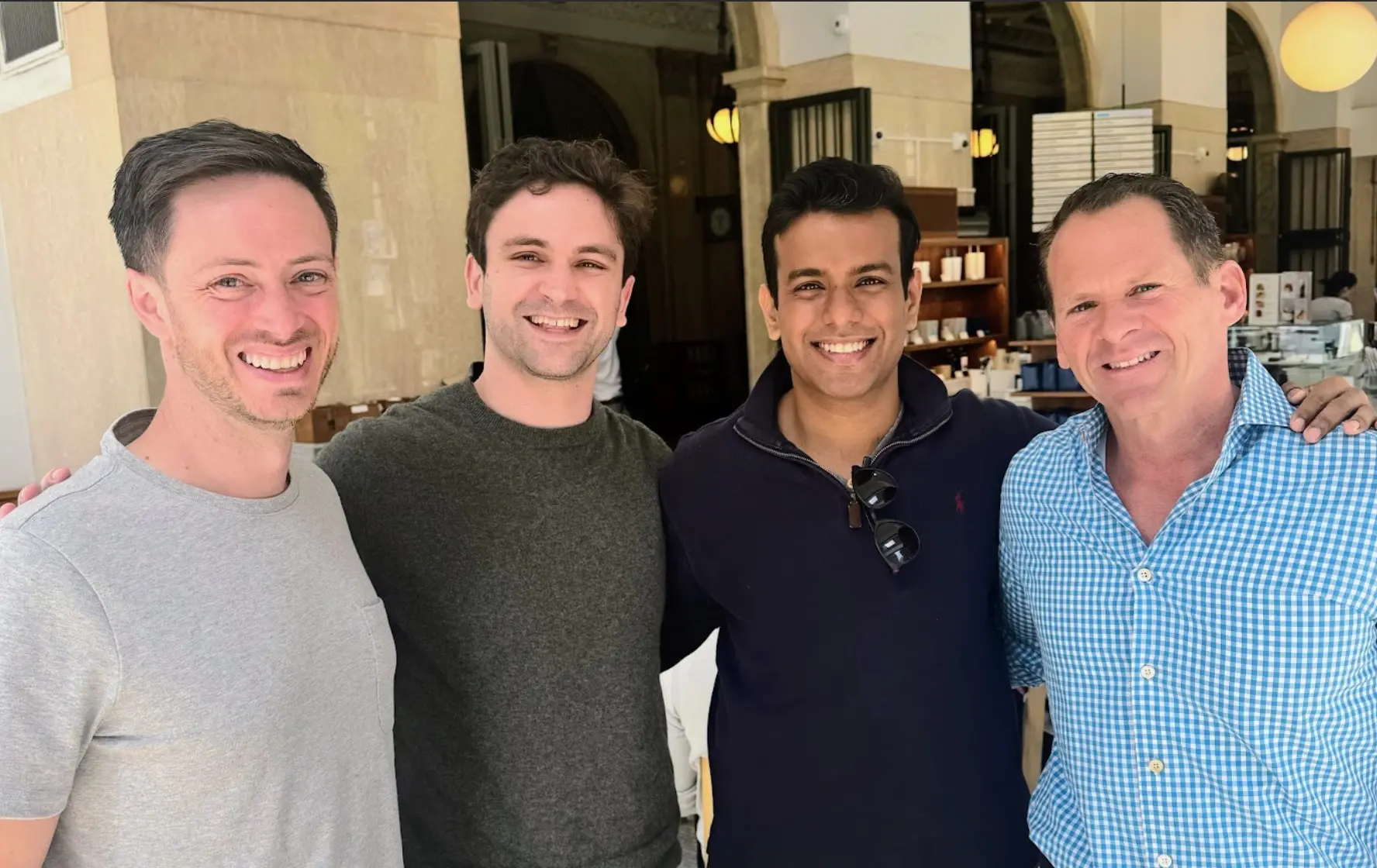
Author: Menlo Ventures Compiled by: Jia Huan, ChainCatcher Original title: Early Investors Behind OpenRouter Revisited Investments Today, OpenRouter announced that it has reached an acquisition agreement with Stripe. OpenRouter was launched in 2023, just over three years ago. OpenRouter was initially launched as a “unified interface for LLM” and only supported 4 models at the time: GPT-3.5, GPT-4, GPT NeoXt and Cohere xlarge by Together. When the company was founded, it was based on two core judgments: first, AI will eventually be used on a large scale and penetrate various fields; second, there will be many different models on the market, each with trade-offs, and users will choose different models according to different needs. As it turned out, both judgments far exceeded expectations at the time. Since its launch, the number of tokens processed by the OpenRouter platform has increased by about 30,000 times. Currently, it has exceeded 4,500 trillion tokens on an annualized basis, and the scale of expenditure on the platform has reached a very impressive level. Meanwhile, the number of models supported by OpenRouter has grown from the original 4 to over 500. Figure: OpenRouter Token usage growth from inception to acquisition Menlo Ventures is fortunate to be part of this journey. In March 2025, we participated in OpenRouter's seed funding round through the Anthology Fund set up in partnership with Anthropic. OpenRouter founder and CEO Alex Atallah previously founded OpenSea, which was once valued at $13.3 billion. His co-founders include tech guru Louis Vichy, whom he met on Discord, and highly executive COO Chris Clark. In May 2025, we led OpenRouter's Series A funding round, with Matt joining the company's board of directors, and Deedy as a board observer. Earlier this year, after seeing OpenRouter's rapid growth in customer numbers and revenue, and the company built a product route with stronger “model intelligence” capabilities around model selection and evaluation, we continued to step up Series B financing. In the tech industry, it often takes years for an idea to change from the judgment of a few people to industry consensus. And just a few weeks ago, this happened: from Ramp to Cursor, more than 10 companies launched their own model routing products almost simultaneously. In just a few years, OpenRouter has become one of the most important companies in the AI era. Picture: Group photo when deciding to lead OpenRouter Round A At first glance, Stripe doesn't seem like the most natural buyer of OpenRouter, but the two companies are actually strikingly similar. Both use an API that can be directly accessed to simplify the otherwise complicated transaction process and charge a certain percentage of the fee. It's just that OpenRouter deals with AI models. As Stripe has always said, the two companies combined and are still doing the same thing: increasing “internet GDP.” In fact, over a year ago, OpenRouter called itself the “Stripe of LLM.” OpenRouter's core value OpenRouter was one of the first companies Deedy came into contact with after joining Menlo in 2024. This company is almost right at the heart of our AI infrastructure investment logic. Menlo presented two judgments necessary to invest in OpenRouter in the 2024 Enterprise AI Report: AI spending will increase dramatically, and developers will not only use one model, but multiple models at the same time. Figure: Menlo's initial contact email to OpenRouter As someone who can also write code and actually use these models, we realized long ago that there is a very clear difference in cost, latency, and performance between the different models...


2d agoburnking#OpenRouter

Stripe buys OpenRouter for more than $8 billion, says the private model is more suited to the “era of singularity,” and the IPO may be delayed

Comparing news, according to Axios, payment giant Stripe said in a letter to investors that January 1 marks “the beginning of a singularity”, sees it as a major inflection point in a long-term trend, and believes that maintaining a private structure is most suitable for this critical moment, and the IPO may continue to be put on hold. The company said that in the first half of the year, revenue increased 41% year over year and free cash flow increased 43%; 88% of Forbes AI 50 companies (including OpenAI and Anthropic) built on their platforms, and the share of revenue from AI and crypto companies has more than doubled year over year. Stripe also confirmed the acquisition of the AI routing platform OpenRouter. The transaction consideration was not publicly disclosed. Axios received more than $8 billion and was mainly paid in shares. Stripe says maintaining private ownership will help advance mergers and acquisitions and long-term investments without diluting shareholders. Its share capital is lower than three years ago, and the compound annual return on share prices since Series D has been around 31%. According to the company, total platform payments reached 1.9 trillion US dollars in 2025, an increase of 34% over the previous year; the employee share acquisition in February this year was valued at about $159 billion. There are also reports that Stripe is discussing a $53 billion takeover of PayPal with Advent International.

2d ago

OpenRouter CEO: Stripe has signed an agreement to acquire OpenRouter

On Twitter, OpenRouter CEO Alex Atallah announced that Stripe has signed an agreement to acquire OpenRouter. After the transaction is completed, OpenRouter will maintain its current name, product, roadmap, and mission, and will continue to adhere to the principle of model neutrality, and its model routing decisions will not change due to changes in the parent company. Atallah said that OpenRouter currently has access to more than 400 AI models, serves more than 10 million developers and enterprises, processes more than 10 trillion tokens every day, and the amount of inference has increased at least tenfold every year since its inception. Regarding the reasons for choosing Stripe, Atallah said that the combination of Stripe's vast customer network, global infrastructure operation experience, and proven fraud and abuse management capabilities will allow OpenRouter to expand faster without sacrificing neutrality and mission.

2d ago

Kraken payment app Krak multi-asset debit card lands in US

According to news, Kraken's payment app Krak has launched its multi-asset debit card in the US, which was previously launched in the UK and the European Economic Area (EEA). The card was built in partnership with Stripe and can be used at all merchants that accept Visa. Users can get up to 2% cashback in dollars or bitcoins, and can hold and spend over 600 currencies and assets. Krak aims to provide users with a convenient payment experience between crypto assets and fiat currencies.

4d ago

Visa is seeking a new stablecoin settlement partner to replace BVNK, which was acquired by Mastercard

Comparatively, according to CoinDesk, Visa is looking for new stablecoin settlement and OTC trading partners to replace BVNK, which was previously acquired by Mastercard. According to the relevant product request documents, Visa hopes that the partner has cryptocurrency exchange licenses in the US, Canada, the United Kingdom and Singapore, and can support various stablecoin exchange and settlement services, including processing the settlement of the Open USD stablecoin project promoted by Stripe, Visa, and Mastercard. Previously, Visa had launched the Visa stablecoin platform to provide banks, fintech companies, and payment service providers with stablecoin access, storage, redemption, and transfer tools, with initial support for OUSD. This article is sponsored by GENG, Build Your Fortune on GENG (https://geng.one)

4d agoburnking
What happened to Farcaster, which was sold twice in a year and is valued at $1 billion?

What happened to Farcaster, which was sold twice in a year and is valued at $1 billion?

Author: Shenchao TechFlow Original title: Farcaster, which was once valued at 1 billion US dollars, ushered in a project resold for the second time in a year, and was sold twice within a year. What an experience. On August 17, Farcaster operator Neynar's co-creator Rish announced the search for a new team for the Farcaster agreement, official app, and coin platform Clanker. The company returned the remaining funds and the team later disbanded. It's only been 7 months since Neynar took over the project from the founding team. And that handover was Farcaster's first “sold”. This Web3 social star, once invested by Paradigm and a16z and valued at $1 billion, has entered the process of finding a home for the second time in a year. The founding team that left first On January 21 of this year, Farcaster's founding team, Merkle Manufactory, did an uncommon thing: handing over all of the agreements, codebase, official app, and Clanker to Neynar, and then refunded all of the $180 million in financing to investors. The two founders, Dan Romero and Varun Srinivasan, joined the payment chain Tempo (a project incubated by Stripe and Paradigm). The money was refunded, the people left, and the project was left behind. The takeover, Neynar, a middleware company that makes Farcaster development tools, raised $11 million in Series A in 2024. What it saw when it took over was a developer-first social network and a coin machine that was printing money. After 7 months, it also started looking for a new home. Rish wrote in the announcement that the acquisition seemed like a good choice at the beginning of the year, but then it changed so much that Neynar “no longer fits the needs of the next phase.” The announcement was posted on Farcaster in advance, and he said, don't be so sudden this time around. The money printer temporarily shut down. Among the assets Neynar took over, the most valuable was Clanker, an AI one-click coin issuing robot. At the beginning of this year, when the AI coin issuance hype was at its peak, it was Farcaster Ecological's cash cow, which swept away $35 million in on-chain coin service fees in one quarter. According to DeFilLama data, Farcaster Ecosystem's agreement fee: $35.43 million for the first quarter of 2026. In the second quarter, $4.67 million. From July 1 to August 17, $377,000. But for the past 24 hours, the agreement cost was only $4001. From 35.43 million in a single quarter to 4,000 in a single day, the drop was 99%. The cumulative processing fee of 94.1 million US dollars since its launch has become a monument parked at the top of the mountain. Meanwhile, CLANKER token repurchases, which are fed by handling fees, have stopped. The cost side is also an issue. According to Rish, to keep this full-stack social network running, it costs 100,000 dollars a month, and at its peak, 500,000. However, in the last 30 days, the revenue of the entire ecosystem was $120,000, which can only be said to cover the monthly consumption of the project. At the same time, RiSH also wrote on Farcaster: The operating cost is really high, but it really wasn't a factor in our decision. This number is being disclosed because it may influence the next team's decisions. Our balance sheet can absorb current costs indefinitely. The other sentence is more straightforward: “This is not a financial decision. Gathering energy is much harder than raising capital. “(It's much harder to raise energy than capital.) is probably the most accurate microcosm of Farcaster's development over the past seven years. Perhaps the problem with the consumer-grade social illusion Farcaster really isn't the cost. After the market is booming, it is not critical how much money the project burns this month, because the existing capital can still cover this part. But in terms of direction and demand, one question is hard to avoid: Why are users leaving X and coming to you? Alliance Co-Founder Imran's review is straightforward: Farcaster was a useful...

4d ago深潮TechFlow#Farcaster #WEB3

Stripe's acquisition of AI model marketplace OpenRouter, a16z may receive nearly $1.5 billion in returns

According to Business Insider, Stripe is in talks to acquire AI model market startup OpenRouter for more than $8 billion. If the deal is reached, Andreessen Horowitz (a16z)'s 17% equity will be worth nearly $1.5 billion, compared to an initial investment of around $20 million; Menlo Ventures holds more than 6% of the shares, with an investment of less than $50 million. The current value is over $500 million, and the combined return of the two institutions is close to $2 billion.

4d ago
Is the code no longer worth it? The $11.2 billion financing gave the same answer

Is the code no longer worth it? The $11.2 billion financing gave the same answer

Author: Shenchao TechFlow Original title: Revealing the $11.2 billion funding flow in half a year: The crypto industry's most valuable asset is changing from code to license Dubai crypto lawyer Irina Heaver and her team NeosLegal did a simple but powerful thing: sorting through all publicly disclosed crypto industry financings in the first half of 2026, totaling about $112 billion. The conclusion is only one sentence: every loan with a disclosed amount goes to a business that requires regulatory permission to operate. The top three tracks are: $3.7 billion in payments and stablecoins, $2 billion in forecasting markets, and $1.7 billion in exchanges and trading platforms. All three areas have one characteristic in common, requiring a license to operate lawfully in any major jurisdiction. Institutional capital's valuation logic for the crypto industry has changed from “what code can you do” to “do you have a license or not”. Who checks the cheque who pays the bill first. Kalshi closed a $1 billion financing round in May, with investors including Sequoia, Morgan Stanley, Ark Invest, and a16z. Polymarket received $600 million, and the lead investor was the Intercontinental Exchange (ICE), the parent company of the New York Stock Exchange. It only predicted a single market track and completed 34 rounds of financing within half a year. Among the $3.7 billion in payments and stablecoin circuits, the names BlackRock, Goldman Sachs, and the Persian Gulf Sovereign Fund appear repeatedly. Vineet Budki, Managing Partner at Sigma Capital, put it bluntly: Regulatory licenses have gone from compliance footnotes to core valuation metrics. There is cold arithmetic behind this judgment. An application cycle for a MiCA license or Dubai VARA license usually takes 18 to 24 months and costs millions of dollars. Codes can be forked over the weekend; licenses can't. When venture capital evaluates two projects with similar functions, the one with the license naturally has a moat that cannot be quickly replicated by competitors. The license plate is a new moat to look at this phenomenon on a longer timeline. In 2020-2021, the main themes of crypto financing were protocols and infrastructure. Public chains, DeFi protocols, and NFT platforms have taken most of VC money. The investment logic is technical barriers and network effects. Whoever has the highest TVL, who has the most active developer ecosystem, is worth the most. In 2022 - 2023, the bear market cleaned out a number of pure narrative projects, and financing began to lean towards businesses with real income. Exchanges, wallets, and infrastructure companies have increased their share of financing. Data for the first half of 2026 show that this trend has reached a logical end: capital is no longer paying for technological innovation itself, but for “the ability to operate technological innovation within a compliance framework.” To put it bluntly, a code is a necessary condition; a license is a sufficient condition. This is highly consistent with the evolutionary path of the traditional financial industry. Fintech companies relied on technology disrupted financing in the early 2010s, and by the late 2010s, they relied on licenses and compliance capabilities. Stripe is worth 100 billion dollars, and the core barrier is its ability to operate in compliance in more than 40 countries, far exceeding the technical gap of the payments API itself. The crypto industry is following the same path, only faster. Funding flows and user activity are being split, but there is an important gap in this set of data: it only counts financing, not users. On-chain data shows that DeFi protocols are growing in TVL, DEX trading volume, and number of active addresses in the first half of 2026. Uniswap, Aave, and Jupiter's unlicensed daily activity and trading volume didn't shrink because VC money stopped flowing to them. Retail users are still trading, borrowing, and providing liquidity on the chain. This means that what is happening is a more subtle split rather than the “death of unlicensed agreements”: institutional capital is flowing to compliant, licensed centralized businesses, and retail user activity is still distributed in an unlicensed on-chain market. Money and people are moving in two directions. This split is most evident in the prediction market. Kalshi and Polymarket both predict markets, but Kalshi is a CFTC-registered exchange, and Polymarket has no license in the US. Kalshi got $1 billion in financing and Morgan Stanley...

5d ago深潮TechFlow#Kalshi #Exchanges #stablecoins #financing #Predicting the market
From crypto mining farms to AI clouds: Why does a16z say the “new cloud” burns money as it grows?

From crypto mining farms to AI clouds: Why does a16z say the “new cloud” burns money as it grows?

Source: a16z New Media Author: Moses Sternstein, a16z Original title: Charts of the Week: Head In The Neoclouds Editor's Note: In the context of generative AI driving a new round of computing power investment, market discussions on AI infrastructure are shifting from “whether there are enough GPUs” to “who can provide computing power in a sustainable way”. When model training, inference requirements, and data center expansion became consensus, a lower-level question began to emerge: Can the rapid increase in computing power demand actually translate into stable profits and cash flow? In “Charts of the Week” published by a16z New Media, author Moses Sternstein moved in from new cloud companies such as CoreWeave, Nebius, and Applied Digital to discuss the growth, valuation, and profit conflicts of the AI computing power market, and further extended to horizontal SaaS, model routing, and cutting-edge lab talent competition. In this article, instead of simply judging whether AI demand is strong, the author breaks down current AI transactions into a set of lower level structural issues: how existing infrastructure is being repriced, why revenue growth is not simultaneously improving market expectations, and why the AI industry's competitive focus is shifting from simple expansion to efficiency and return. The first is the rediscovery of the value of infrastructure. In the past, land along railway lines, gas pipelines, and cable television networks all served specific industries and were later transformed into telecommunications and internet infrastructure. Today, a similar revaluation of assets happened again. Originally serving cryptocurrency mining, some new cloud companies already have operating experience with electricity, computer rooms, cooling systems, and high-density computing; after the outbreak of AI demand, these capabilities were quickly transformed into scarce computing power supplies. The point is that AI infrastructure competition doesn't start entirely from scratch; early advantages often come from a recombination of old assets, energy resources, and engineering capabilities. Second, high revenue growth and profit uncertainty coexist. The early revenue growth rate of new cloud companies such as CoreWeave once surpassed the initial stages of cloud giants such as AWS, but the capital market did not receive the same level of recognition. The reason is that the new cloud is not a typical asset-light software business. GPU procurement, power access, data center construction, chip depreciation, and debt interest will rise simultaneously with scale, or even faster than revenue. This means that revenue expansion can only prove that AI computing power is in high demand, but it cannot automatically prove that the business model has a sufficiently high return on capital. What the market is really waiting for is whether these companies can turn orders and revenue into sustainable free cash flow. Third, the value of software is being re-differentiated according to the impact of AI. In the past, the market feared that generative AI would generally weaken SaaS companies' moats, but Atlassian's performance suggests AI could also be a tool to increase customer spend and product stickiness. At the same time, cybersecurity and observability software continues to receive valuation premiums as AI expands potential risks and increases companies' reliance on proven solutions. This means that the so-called “end of SaaS” will not happen evenly. Whether AI is an alternative product, lower prices, or expand demand, is becoming the new standard for software valuation differentiation. Fourth, AI applications are shifting from “stacking tokens” to optimizing tokens. In the past, companies often preferred to directly call the most capable models or give engineering teams a budget to test on their own; now, companies such as Databricks have begun to use intelligent routing to match models with different prices and performance according to the difficulty of the task to reduce costs while maintaining results. A decrease in the unit price of tokens does not necessarily mean a contraction in total AI spending: as unit costs decrease and application scenarios increase, total token consumption and overall market size may continue to rise. Efficiency and demand are not mutually exclusive, but may form a mutually reinforcing cycle. If I were to reduce this article to one judgment, it would be: AI infrastructure has proven itself to generate rapid growth, but the next phase of success or failure will depend on whether the company can transform growth into greater capital efficiency. In this sense, the topic discussed in this article is not only whether CoreWeave can become the next generation of cloud giants, but whether the entire AI industry can move from expanding computing power to sustainable commercial returns...

5d ago22#a16z