


Once upon a time, the “NFT chain” raged 250 million US dollars and wanted to rob Stripe and Circle's businesses
Source: Fintech Blueprint
Author: Laurence Smith
Original title: DeFi: Polygon's $250MM Play for the Stablecoin Rails, Done with Stripe
Compiled and organized by: bitPushNews
PolygonLabs has been acquired for over $250 millionCoinme与sequence.
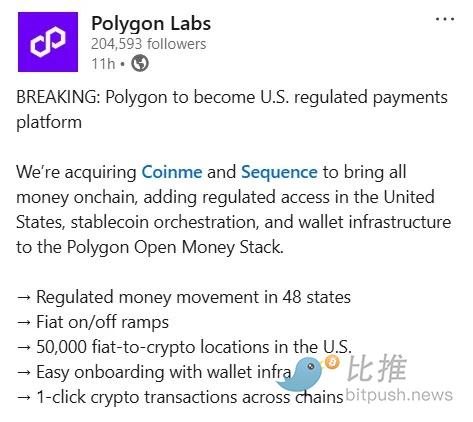
Founded in 2014, Coinme is the bridge between compliance and physics in the payments sector. It operates one of the largest licensed cash-to-cryptocurrency networks in the US, covering more than 50,000 retail outlets (including Coinstar self-service kiosks) where users can exchange cash for digital assets.
More importantly, Coinme holds currency transmission licenses (MTL) in 48 states, which can be embedded in diverse user experiences. In comparison, Alpaca Markets recently raised 150 million US dollars at a valuation of more than 1 billion US dollars, and its business is an embedded crypto asset and stock brokerage service.
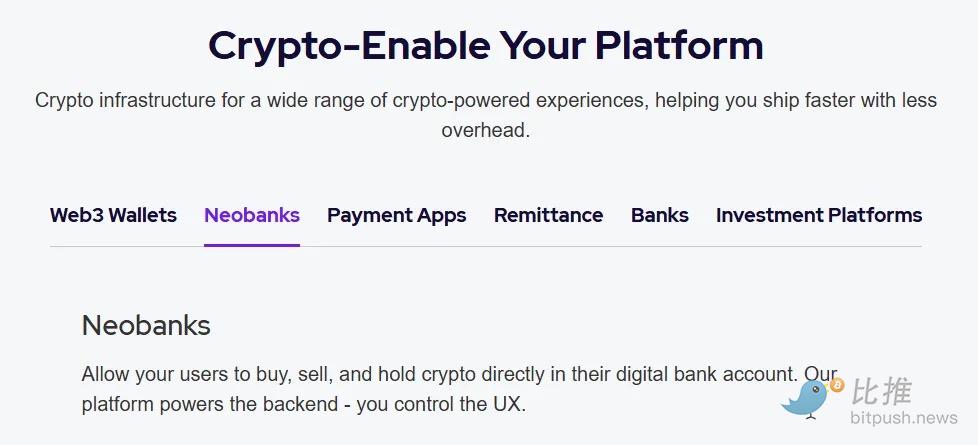
In the current US Genius Act regulatory environment, a license is a key prerequisite for earning revenue. MTL is a necessary condition for connecting to the Federal Reserve's payment system and avoiding the legal risks of illegal banking activities. Through the acquisition of Coinme, Polygon has directly obtained market access, enabling it to directly process fiat and stablecoin conversions without relying on third-party banking partners (which may end cooperation with crypto companies at any time).
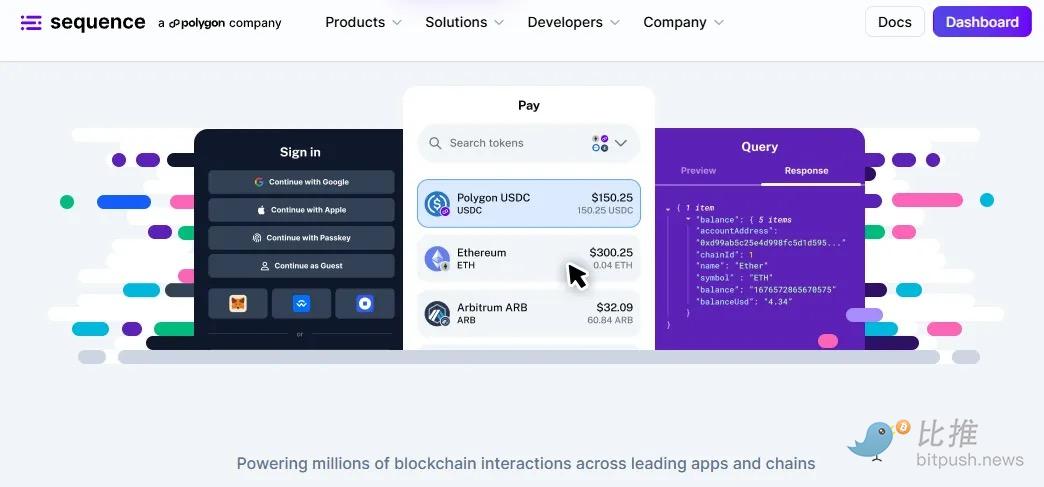
Sequence addresses the second hurdle: user experience.
Polygon provides the underlying ledger, while Sequence provides the smart wallet infrastructure. Its technology hides the complex details of the blockchain (fuel costs, private keys, cross-chain bridging) through account abstraction, and end users don't even need to be aware of the existence of the blockchain. Its “Trails” coordination engine supports one-click payments, and users don't need to know the technology behind it.
Strategic Positioning: Become a “Public Stablecoin Chain”

Polygon's ultimate goal is to transform into a public stablecoin chain. The most direct comparison isstripeEcology: Polygon is targeting Tempo ($500 million in funding), Sequence is targeting Privvy, which was acquired by Stripe, and Coinme is targeting Bridge, which was also acquired by Stripe.
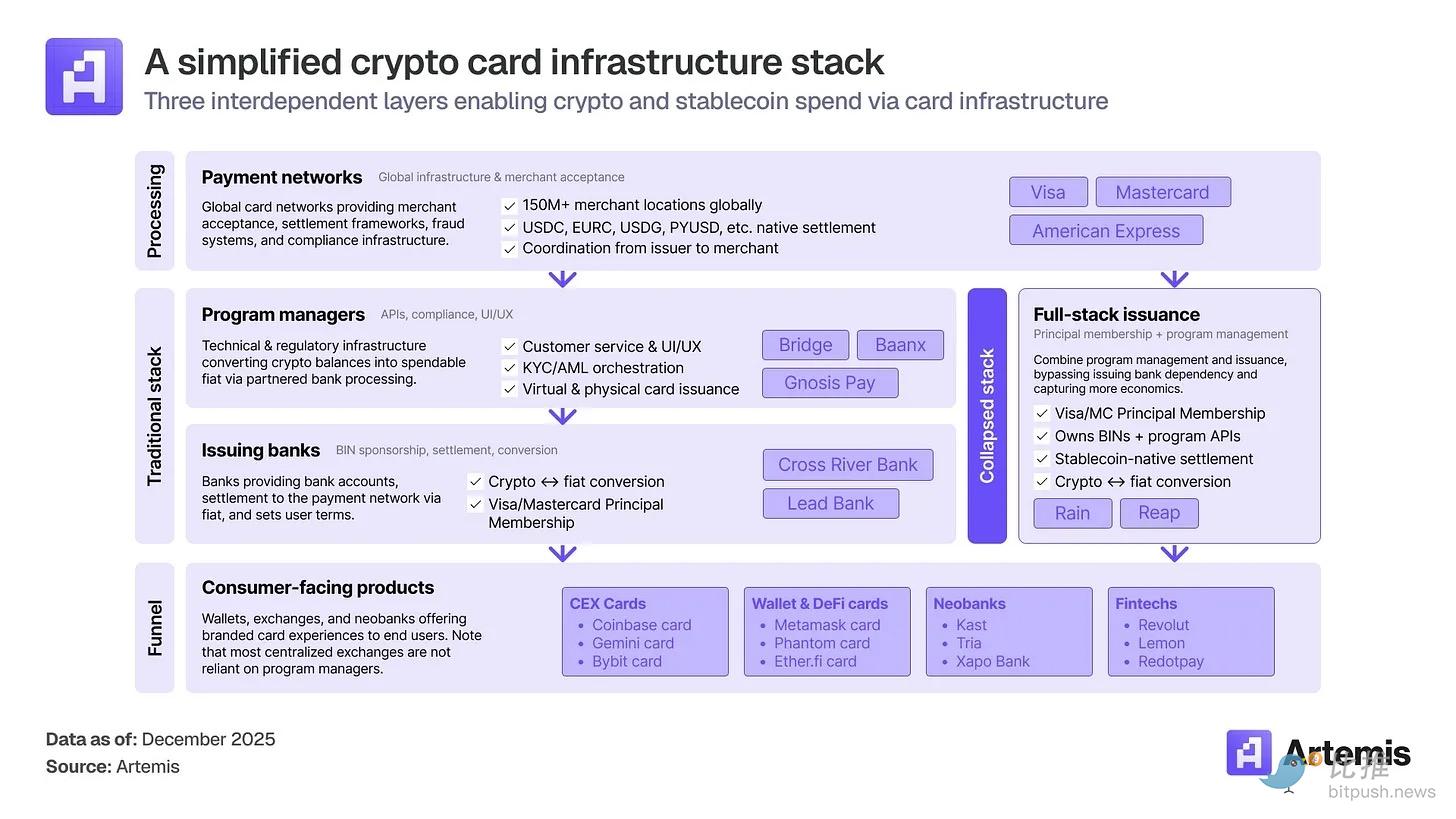
This move comes as no surprise. Over the past year, other players such as Rain (integrating stablecoin payments with Visa through BaaS solutions) have also had great success. The company recently completed financing of US$250 million, and the amount of payments increased 38 times in one year.
Unlike Polygon, Rain does not provide a public chain, but rather provides the underlying technical support for payment cards using stablecoins in the physical world. Polygon's acquisition shows its strategic intention: to capture the value currently flowing to these specialist middleware providers.
Market Effects: Lowering the Barriers and Reshaping the Narrative
By bundling Coinme's US license with Sequence's smart wallet technology stack, Polygon has lowered the entry threshold for a new generation of developers and simplified its positioning — shifting from the former “media and NFT public chain” to a “public currency chain.”
This will have a dual market effect:
1. Based on Polygon's “out-of-the-box” compliance portal and user experience tools, it is easier to create the next “Rain”;
2. Major fintech companies can directly access Polygon's “open currency stack”, completely bypassing third-party BaaS providers.
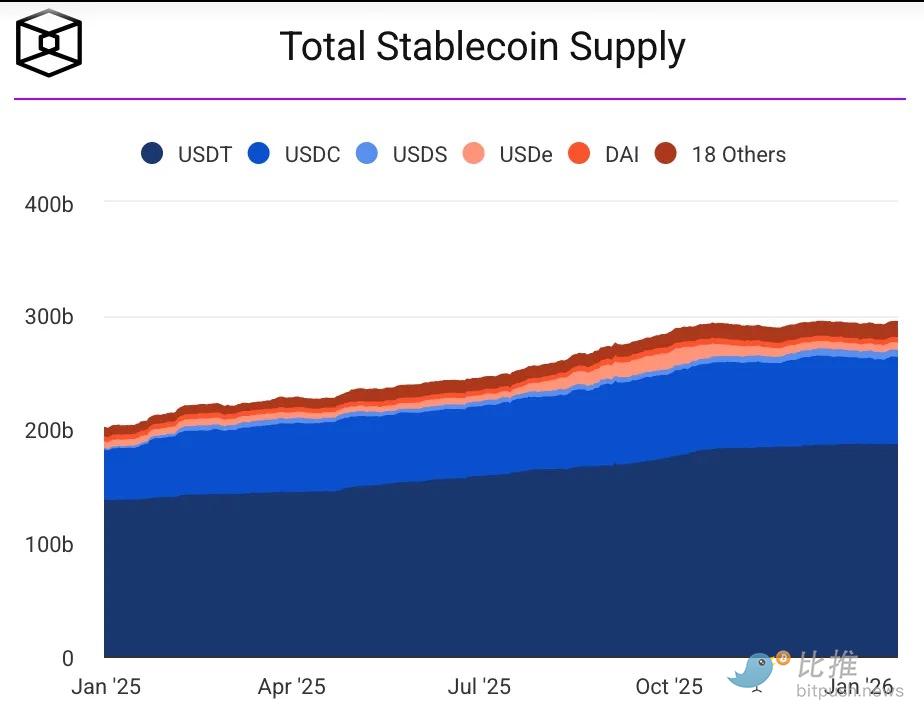
Potential market size: $300 billion.
Lessons from the past: Tether Plasma (XPL) failure
Tether's Plasma (XPL) also tried to become the preferred stablecoin network, but flaws in its token economy model design led to excessive mining and aggressive sell-off. The price of the XPL token, which aims to guarantee cybersecurity, has plummeted 80%, and the market realizes that the chain's “zero fee” utility does not require holding volatile native assets. By the time staking is expected to start in early 2026, the speculative bottom has already collapsed, validator incentives have completely disappeared, and the long-term viability of the network is questionable.
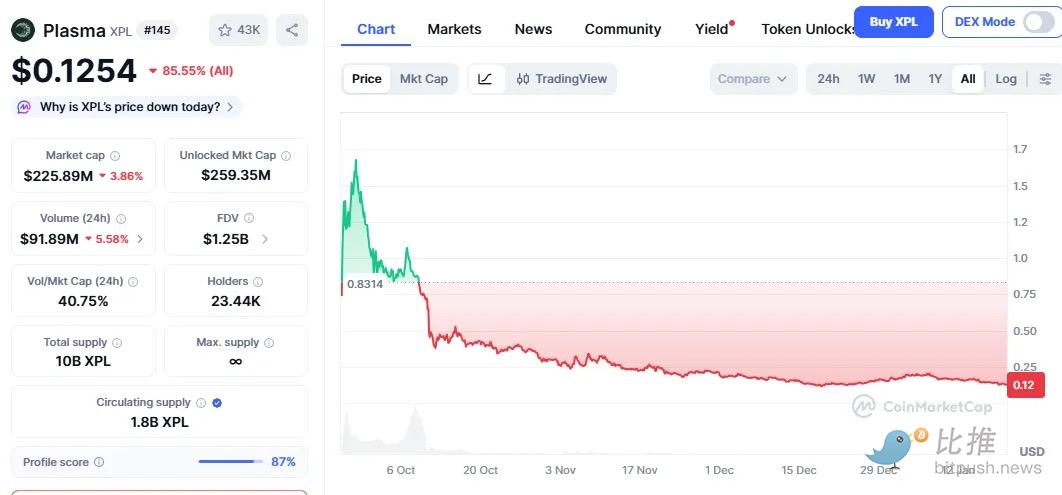
Polygon is facing a similar conflict. To avoid a repeat of its mistakes, it must ensure that its new integrated technology stack provides a stable business environment that decouples it from the price performance of its native token POL. Instead of adopting consumer-centered incentives, Polygon chose to attract user attention and activity through collaboration.
There are two other integrated models vying for dominance in the crypto payments sector: Stripe's Tempo and Circle's Arc. However, up to now, each of the three has its own focus:
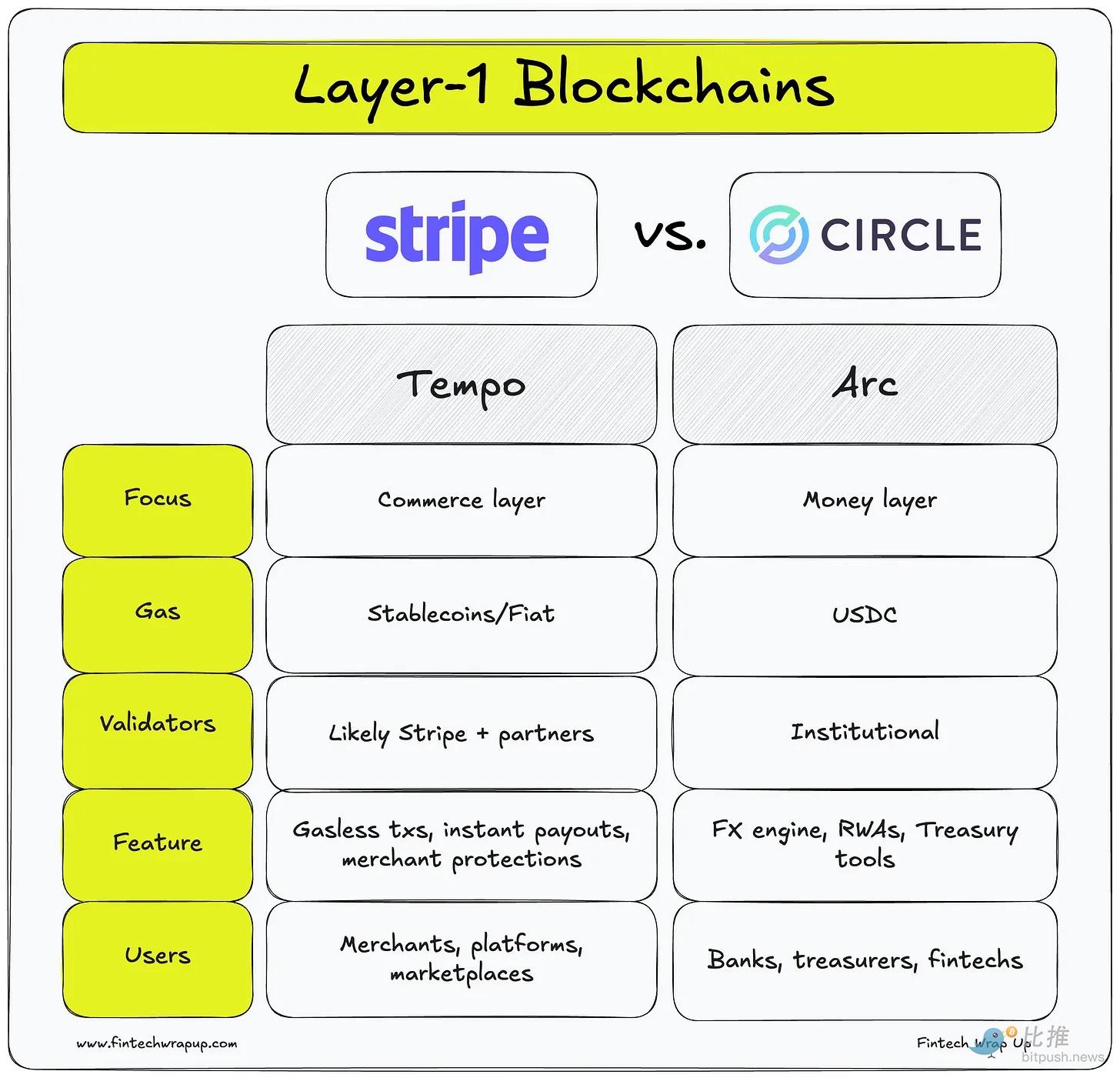
Circle Arc is a closed ecosystem. By making USDC the native fuel token, Arc frees businesses from exposure to volatile cryptocurrencies at all. For banks, Arc is built by asset issuers to ensure the strictest closed loop of compliance. It is more like an institutional settlement center than a general blockchain.
STripe's Tempo is more neutral — it doesn't care what kind of stablecoins you use; they just want to be a network that processes these stablecoins. Tempo's unique strength lies in its large fintech distribution network. As an internet-scale SWIFT system, it can be connected to an existing Stripe dashboard. It's aimed at developers who already own a business and just want to add the “pay with stablecoin” feature.
Polygon is an infrastructure toolkit. Unlike Circle and Stripe, which focus on providing services, Polygon has existed as an open ecosystem for a long time. The acquisition of Coinme and Sequence changed its value proposition from a “high-speed public chain” to a “licensed payment is a toolbox.”
Of the three, Polygon is the only solution that provides a physical cash bridge. This makes it a better choice in some real-world fintech scenarios (such as cross-border remittance, cash-led economy, payroll applications) — because funds in these scenarios were initially in the form of paper cash and began to flow in a compliance environment covering 48 states across the US.
We expect competition to shift more to real-world scenarios rather than endless speculative casinos.
Twitter:https://twitter.com/BitpushNewsCN
Compare the TG exchange group:https://t.me/BitPushCommunity
Compare TG subscriptions:https://t.me/bitpush
