


Whoever defines a token will have the right to mint coins in the AI era

By Curry, Deep Wave TechFlow
Original title: Token doesn't need a Chinese name, but the business behind it needs it
Recently, you may have noticed one thing: people are starting to discuss what tokens should be called.
Professor Yang Bin of Tsinghua University posted an article with the direct title “Determining the Chinese translation of the token is imminent”; 250,000 people viewed the translation questions on Zhihu, and the comments section was full of ideas.
In the past two or three years, the domestic AI community directly mentioned the term Token, and no one thought there was a problem. Why do you need a Chinese name all of a sudden?
The direct reason is probably that after the Spring Festival this year, ordinary people first learned that tokens cost money.
OpenClaw turned AI from chat to work. One task burned hundreds of thousands of tokens, and the bills were booming; various cloud vendors also announced price increases one after another, and the unit of measurement was tokens.
Meanwhile, tokens are starting to appear where they shouldn't have appeared before.
At the GTC conference, Nvidia CEO Hwang In-hoon said that there were already people in Silicon Valley who asked “how many tokens can be distributed for this job” during interviews, and he suggested including tokens in engineer remuneration;
Sam Altman, founder of OpenAI, went further, believing that tokens will replace the basic income for all, and that everyone gets not money, but computing power.
According to data from the National Data Bureau, China's average daily token consumption went from 100 billion in early 2024 to surpassing 40 trillion in September 2025, and reached 180 trillion in February this year. “People's Daily” published a special article at the beginning of the year called “Rambling on the Word” to explain the meaning of this term to readers.
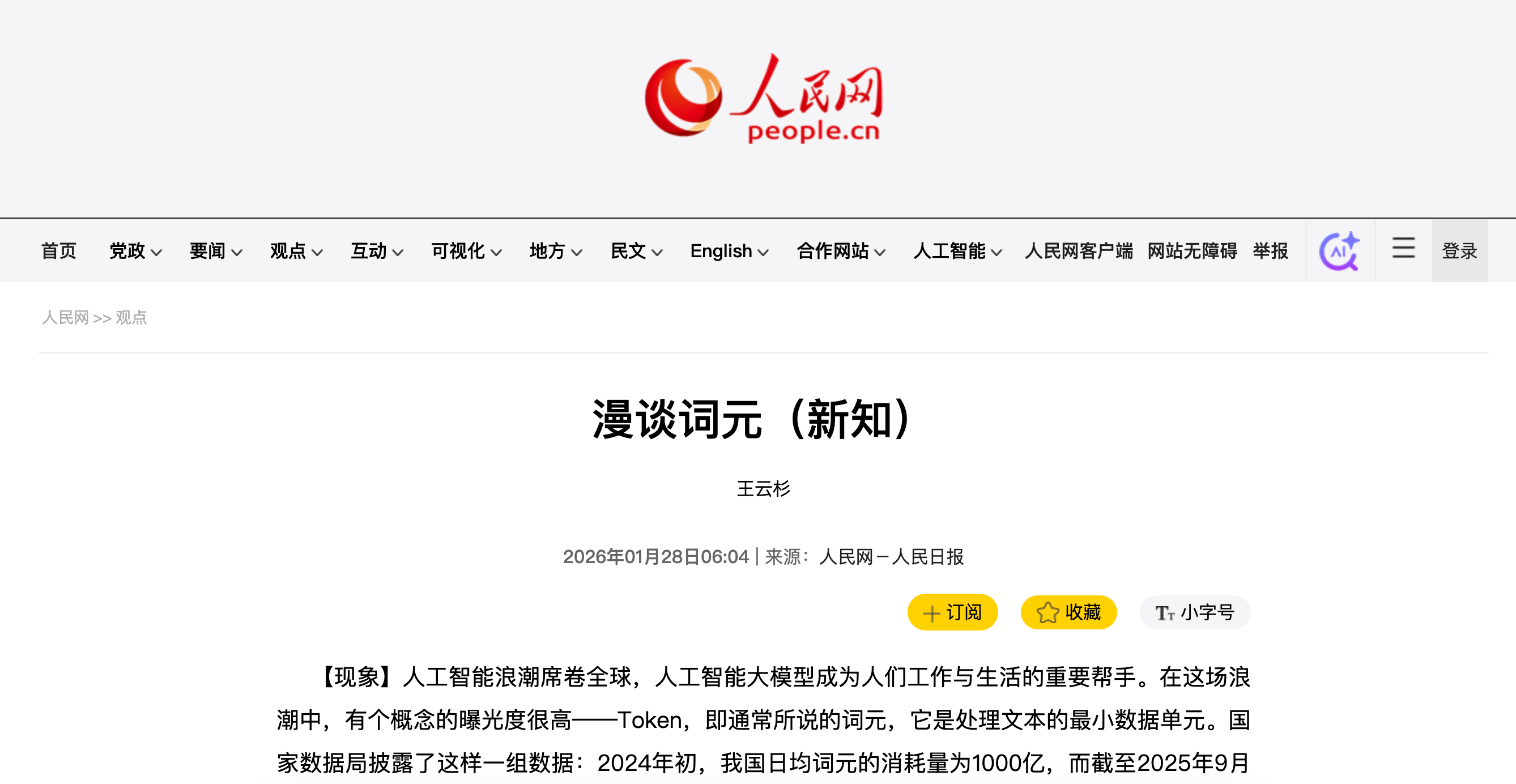
It's a technical term. Once it's included in cloud service bills, recruitment pay packages, and official statistics, it's impossible to continue to call it English.
The question is, what is it called?
If this were just a translation question, it would have been answered a long time ago. In 2021, the domestic academic community decided on a name for Token: the word element.
But no one cared, because at the time, Token was just an internal term in the tech world.
It's not the same now.
The term token itself is a universal container. In the past, people in the coin industry called it a token; those involved in security called it a token; those involved in AI called it a token. The same English term belongs to whichever direction the Chinese translation depends on.
Thus, a battle for token naming began.
Business needs a voice
How to translate a word is usually a matter for linguists. However, there were almost no linguists among those involved in the naming this time.
Currently, the loudest name is “Ji-won.”
One of the AI media called “Xinzhigen” is the one that has been promoted the most. If the Chinese name of Token were to be “Zhiyuan,” the company's brand name would coincide with basic industry terms, which would be equivalent to every article discussing Token helping it advertise for free.
At the end of their own promotional post, they wrote very frankly: “We suggest translating Token as the industry's new consensus: Zhiyuan, and leave the word 'new' to us.”
According to the same article, Wang Xiaochuan, founder of Baichuan Intelligence, said, “It's nice to be called Zhiyuan.”
He made a big model. Of course, the Token called Ji-won would be great. Every time the model is calculated, the output is no longer a billing unit, but a “basic unit of intelligence.”
Selling tokens is selling traffic; selling smart yuan is selling intelligence. The valuation story is completely different.
Professor Yang Bin of Tsinghua University proposed the “model element”, the corresponding model for the “model”. Whoever owns the big model will control the production rights of the “model element”. The name depends on the model, and the pricing power is in the hands of the model company.
Some people also argue that it's called “Fu Yuan.” Back to the lowest definition in computer science, a token is a symbol processing unit. It has nothing to do with intelligence, and it has nothing to do with models.
Technically the cleanest, but the proponent was an independent technical writer. There was no company standing up, no capital promotion, and there was almost no voice in this discussion.
Whichever direction the name goes, the industry narrative takes, and the money flows in any direction.
As an example from afar, the day Facebook changed its name to Meta, the “metaverse” changed from a sci-fi concept to a company's valuation story; in the recent example, China consumes 180 trillion tokens every day, the number one in the world, but what is the name of this term, how it is defined, and who defines it, is still undecided...
The world's largest consumer of tokens doesn't even think about what to buy.
However, the term actually has a Chinese name for a long time.
In 2021, Professor Qiu Xipeng of the School of Computer Science at Fudan University translated Token as a “word element”, which was accepted by the academic community and included in the textbook. No one discussed this at the time because tokens were worthless back then.
Now the token is valuable.
It is a pricing unit for cloud services, a revenue source for large model companies, and a core indicator of the scale of the AI industry in national statistics. So the media came, the bosses came, the professors came, and everyone carried their favorite names and the reasons behind them.
Translation was never an issue. The question is when did the term begin to be valuable.
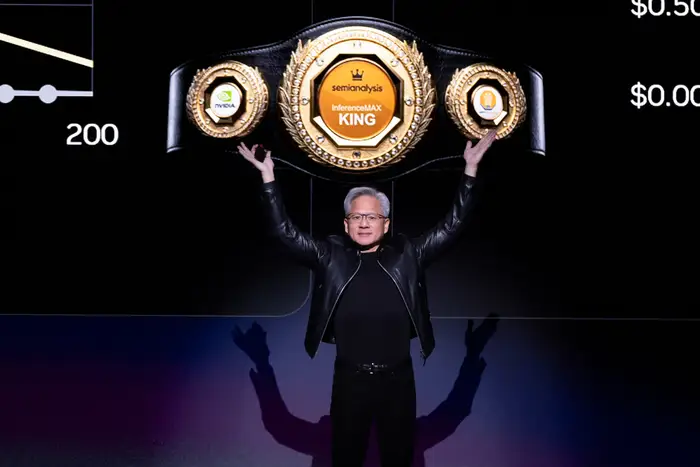
Wong In-hoon did not participate in the Chinese naming discussion at GTC. He did something simpler: pick up a championship belt with Token King on it and announce that the data center is a Token factory.
Who produces tokens and who defines tokens. He doesn't care what the name is.
Tokens, Geodges, and Minting
So, what really deserves serious consideration in this matter is not about which translation is better.
After the term “calorie” was established, the entire food industry's pricing, labeling, and regulatory system was built around it. After the definition of “traffic” was established in China's telecom industry, operators billed by traffic, competed by traffic, and designed packages according to traffic. The entire business model revolved around these two words for more than ten years.
Token is now following the same path.
It is already a billing unit for cloud services, the revenue caliber of large model companies, and a core indicator for measuring the scale of the AI industry at the national level. The VC community has even begun discussions about whether it is possible to directly invest in tokens.
Once a word becomes a measure of money, naming it is not a translation; it is a minting.
It's called “Zhiyuan,” the right to mint money belongs to AI narratives, and whoever tells intelligent stories benefits. It's called a “model”. The minting rights go to the model company. Whoever has the big model prints the money. Called “Fu Yuan,” the right to mint coins goes back to technology itself, but technology itself doesn't speak for itself.
No one cares about the “word word” defined academically in 2021, not because the translation was bad, but because the “coin” wasn't worth much back then.
Now that it's worth it, everyone wants their name engraved on it.
Twitter:https://twitter.com/BitpushNewsCN
Compare the TG exchange group:https://t.me/BitPushCommunity
Compare TG subscriptions:https://t.me/bitpush
