华人 · 516
Will Cows Be the Next PEPE? Bitmart official pushes rights fryer; 31-year-old Chinese spent 70 million US dollars to buy a California mansion...

Will Cows Be the Next PEPE? Bitmart official pushes rights fryer; 31-year-old Chinese spent 70 million US dollars to buy a California mansion...

Dear readers, what have the KOLs on X been talking about in the past 24 hours? Note: The following content is compiled from the X platform. They are all personal opinions. They do not represent the platform's position, let alone constitute investment advice. Could Cows Be the Next PEPE? Bitmart officials push to defend their rights in person, and the situation escalated! The co-founder of XAI, Wu Yuhuai, 31, spent 70 million US dollars to buy a California mansion! RMB continues to appreciate Twitter: https://twitter.com/BitpushNewsCN比推 TG exchange group: https://t.me/BitPushCommunity比推 TG subscription: https://t.me/bitpush

4d agoWendy#KOL

Meta can't keep the Chinese University of Science and Technology hegemony: the big model in Silicon Valley, the Chinese are starting to form their own games

Meta can't keep the Chinese University of Science and Technology hegemony: the big model in Silicon Valley, the Chinese are starting to form their own games

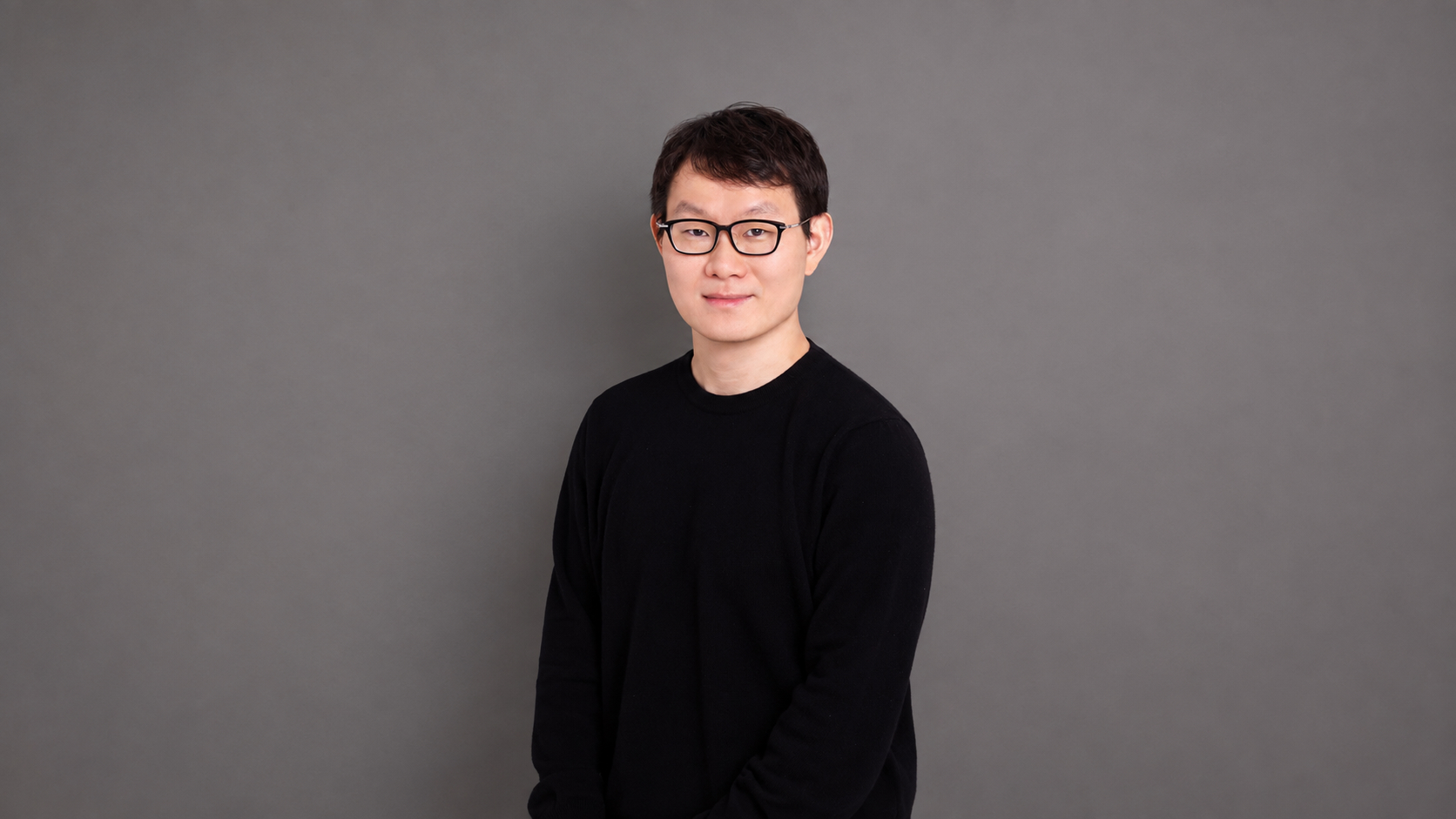
He dropped a $100 million, four-year “contract” in exchange for leaving after 14 months — the talent Zuckerberg had taken from OpenAI and left Meta. In the summer of 2025, Zuckerberg personally knocked out Jiahui Yu (Jiahui Yu), the head of multimodal research, from OpenAI using a salary plan with a total value of up to 100 million US dollars and covering four years. Silicon Valley is on the sidelines, and the industry calls it “stealing people at sky-high prices.” However, just 14 months later — on August 14, 2026, the star researcher, whom Meta had high hopes for, announced his departure and started his own business. A year ago, the blockbuster in the industry ended up being held for a shorter period of time than an NBA season. Just eight days before leaving his job, Muse Spark, the multi-modal model he led, had just been updated to version 1.2. From forming the team to continuously launching the four product lines Muse Spark, Voice Mode, Muse Image, and Muse Video, Yu Jiahui's year at Meta covered almost the entire process of this new team from construction to intensive delivery. Muse Image finished second in the Arena Wensheng Trials Test, beating Google Nano Banana, behind OpenAI GPT Image 2; Muse Video ranked third in the Wensheng video rankings. For Meta, this is certainly an impressive report card. But for Yu Jiahui, this is just an interlude. In his departure statement, he said he was “increasingly drawn to an issue that is critical to the future of humanity but has yet to be fully explored.” Details of the new company have not been disclosed, but he has decided to leave. From the junior class to the history of Yu Jiahui, the top in Silicon Valley, he is at the “top” level for any major AI company. Born in 1995 in Cixi, Zhejiang. In 2012, while still in his sophomore year of high school, he was admitted early to the Junior Class College of the Chinese University of Science and Technology. During his undergraduate studies, he won several contests, including the National Parallel Application Challenge Championship. After graduating in 2016, he went to the University of Illinois at Urbana-Champaign (UIUC) to study for his PhD in computer vision. This scholar trained many famous figures in the field of AI, such as Zhou Xi, founder of Yuncong Technology, and Han Xu, founder of Wenyuan Zhixing. After graduating from her PhD, Yu Jiahui's career progressed step by step. He has worked as a senior research scientist and manager at Google Brain and Google DeepMind, and has participated in the development of visual modules for the Gemini multi-modal project. Joined OpenAI in October 2023 as the head of the Perception (Perception) team, leading the development of GPT-4O and O-series inference models. In June 2025, Zuckerberg personally stepped down, and Yu Jiahui joined former OpenAI researchers such as Zhao Shengjia, Bi Shuchao, and Ren Hongyu into Meta's newly formed super intelligent team. According to foreign media Wired, Meta's compensation package was as high as $100 million — although Meta CTO Andrew Bosworth later clarified that this was not a one-time signing bonus, but a four-year total compensation plan that included stocks, bonuses, and performance conditions. But even so, this is one of the few sky-high contracts in the AI field. (Photo source: One mu of three-quarters of land) After conversion, even though Yu Jiahui only worked for 14 months, Meta paid an estimated cost of more than 25 million dollars for this short period of cooperation — but the actual cost of sunk was even higher. After all, the investment in team building and project start-up cannot be proportionately calculated. The fanaticism of the capital market is driving Silicon Valley's talent exodus, and Yu Jiahui's departure is by no means an exception. In fact, Silicon Valley in 2026 is experiencing an unprecedented “exodus” of AI talents. According to data from the research platform AlphaXiv, Meta alone has lost more than 200 well-known researchers, and another 929 researchers have “worked at Meta but have left their jobs.” In October of last year, Meta drastically cut more than 600 researchers in the AI business. In June of this year, with Llama 4's poor market performance and the company's implementation of more stringent performance reviews, it is expected that 15% to 20% of employees will be rated as “below expectations”, and many senior researchers have switched to competitors. Tech author Gergely Orosz pointed out that Meta's internal organizational restructuring and efficiency adjustments have caused engineers to feel uneasy, and many senior experts have begun to remain open to external opportunities. Google's situation is no less than happy...

5d agoBitpushNews#AI #Yu Jiahui #original #Silicon Valley
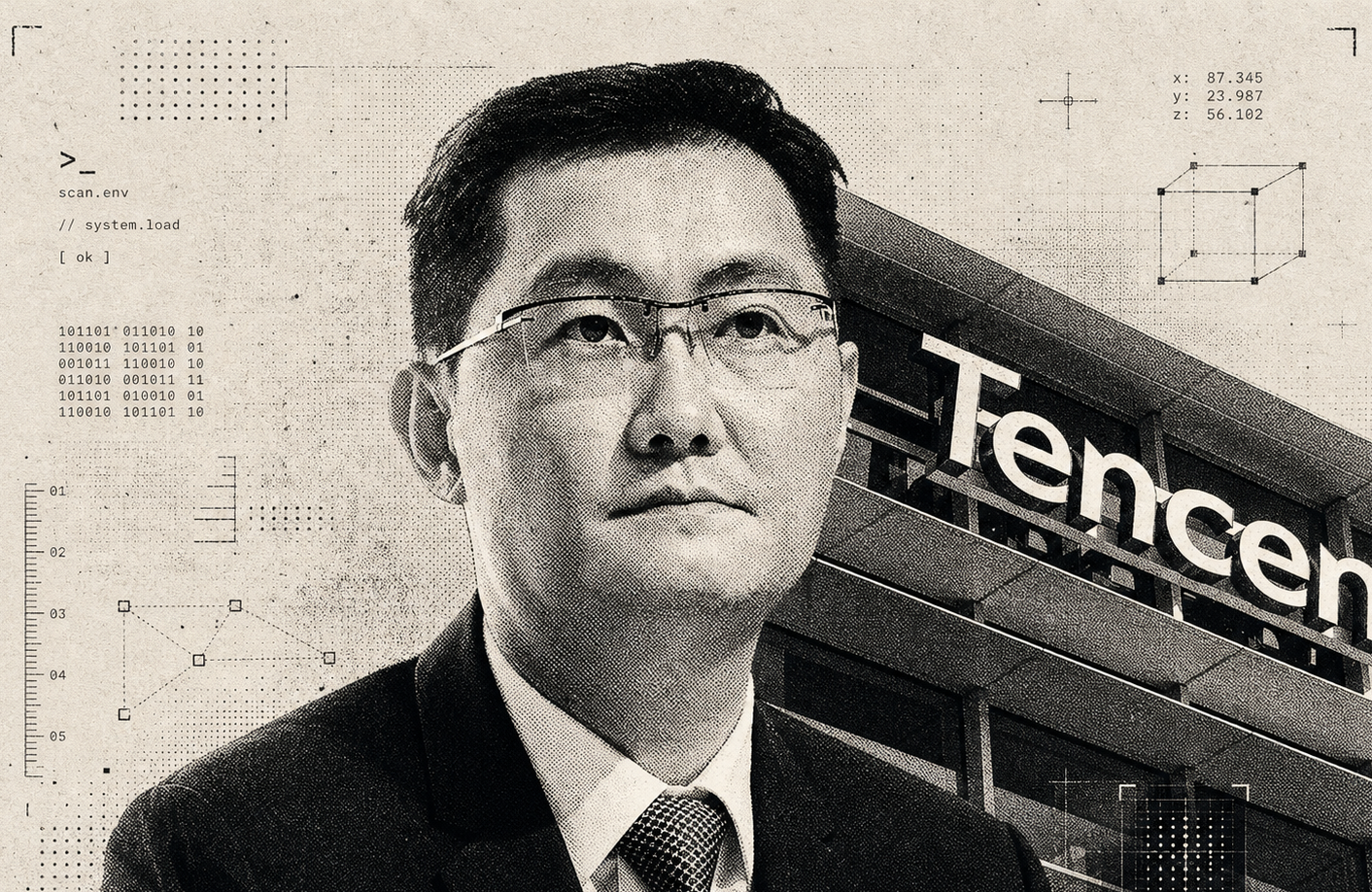
After disbanding AI Lab and spending 84.6 billion dollars to buy cards in half a year, Tencent is going against the current

After disbanding AI Lab and spending 84.6 billion dollars to buy cards in half a year, Tencent is going against the current

Author: Activision BeatingOriginal title: Tencent Still Has Dreams On August 12, 2026, Tencent released its financial report for the second quarter. Capital expenditure for a single quarter, $52.78 billion. Three months ago, that number was 31.9 billion. Moving forward a year, the total for the whole year would be less than 79.2 billion. This company has always been known for spending money with restraint. The speed at which it bought cards was once slow enough to make the market wonder if it actually wanted AI at the table. Now, it has brought the speed of spending money to this level within a year. At the earnings conference on the same day, Ma Huateng said that Tencent is “building a brand new, AI-enabled Tencent.” The hybrid was renamed HY, and Hy4 will be released soon. The last time this company described itself as “brand new” was in the era when WeChat was born. Tencent still has dreams. Its dream is not just AI; it needs to relearn to be an unstable company. In 2018, Pan Ran said in “Tencent Has No Dreams” that Tencent is a company like water. Water is good for all things, and there is no dispute; wherever there is a channel, it flows. Water has no personality, so water doesn't have dreams. It is natural for water to flow to a low place; backflow is for those who have reflux. In 2026, the 28-year-old company did something against nature. It admits that the article from eight years ago was right. It admits that it is no longer possible to live like water. On Wednesday, May 5, at 9 p.m., “Tencent Has No Dreams” was published. 13,000 words. At 2 o'clock in the evening, Liu Chiping and Tencent PR director Zhang Jun responded in the circle of friends. Liu Chiping said that Tencent is a larger organization and ecosystem than the outside world can imagine. “It's too narrow to reduce Tencent to the gains and losses of a product, a kind of strategic deployment, and one person's will.” At 2:19, a screenshot suspected of Ma Huateng's response began circulating in the circle of friends. At 2:39 the real Ma Huateng spoke up, saying “It's nice to have criticism” to a friend who cares about him. Afterwards, he said, “From writing the first line of code, my dream was how to make the best product, not how much money to make.” During the day, the national media quoted almost the full screenshot of Ma Huateng's response. Even Zhang Yiming spoke for Tencent in his circle of friends, saying this was a “Don Quixote imagination.” Tencent is not only powerful, but it is also constantly evolving in every dimension. Zhang Jun was on the long-haul flight that day. After landing, he said, “We certainly weren't as bad as the outside world thought, but the criticism also made us realize that we weren't as good as we thought.” Of course, there were a few different voices about that article at the time. Hong Bo said that many of the questions mentioned in the article are real questions, but is there only one correct answer for such a large company? “Perhaps the author thinks Zhang Yiming is the only correct answer. He is a bit superstitious about Zhang Yiming.” That article also recorded an earlier story. At the beginning of 2011, just after the 3Q war ended, Tencent held a general meeting to discuss what Tencent's ability to open up is. Ma Huateng asked the 16 executives who attended each to write down what they thought Tencent's core competencies were on paper, and came up with a total of 21 answers. Finally, decide on two. Capital, flow. The term capital was advocated by Liu Chiping. Opening up means releasing traffic and turning it into an investment. Traffic is open, capital is open, “I don't do it myself anymore.” These two terms have governed Tencent for ten years. The entrance to WeChat traffic and the exit of investment traffic is in the middle is a steady stream of cash generated by games and advertisements. JD's e-commerce portal entered the WeChat Jiugong grid. Sogou picked up the search, and Meituan took over the local life. Traffic is exchanged for shares, and shares are exchanged for allies. In ten years, Tencent's market capitalization has increased tenfold, surpassing Facebook's. When that article was published, it still looked invincible. If you look back and reread it eight years later, you'll find that the article predicted almost every time Tencent fell since then. Ten years later, on December 23, 2021, Tencent distributed 14.7% of JD shares to its shareholders, with a market value of about HK$100 billion. In January 2022, Sea holdings were reduced and $3.2 billion was cashed out. In November 2022, 9.6% of Meituan was split, or approximately HK$159.4 billion. The capital, which was designated as a “core competency” back then, was personally destroyed by Tencent. The water has flowed back and forth for the first time in decades. There is a section in the first AI Dream article that not many people paid attention back then. It's written in Tencent's AI. The Go program “Amazing Art” created by AI Lab successively lost to two amateur games. One is the personal hobby of Headline's vice president, and the other is an amateur work by several engineers on the WeChat translation team. Few people realize that...

5d ago动察Beating#AI
From Avenir to UMX, Li Lin's return and new propositions

From Avenir to UMX, Li Lin's return and new propositions

Author: Eric, Foresight News In the summer of 2026, UMX, which was incubated by Li Lin's Avenir Group, began public testing, which also made outsiders once again set their sights on this group of Chinese entrepreneurs in the crypto industry. Thirteen years have passed since Huobi was founded in 2013. At that time, Li Lin was standing in a market that had just taken shape. The problem he faced was very straightforward: how to make it easier for more people to trade Bitcoin. Thirteen years later, the crypto industry has moved from a relatively independent digital asset market to a new stage of continuous convergence with ETFs, stablecoins, RWA, and traditional securities. Over the past few years, Li Lin's role has also changed. In 2023, he founded Avenir Group in Hong Kong, gradually shifting from a frontline entrepreneur to an investor and asset allocator, continuing to focus on digital assets, securities trading, and financial infrastructure. Today, UMX has emerged as an “Avenir Group Incubator”, giving these seemingly scattered investment leads over the past few years a new perspective. Problems also followed. In the years since Huobi founded Avenir Group, what exactly is Li Lin doing, and what is it that has made him stand back to the stage now? From Beijing to Hong Kong, from athletes to referees, to understand this return, they must first go back to where they left. In September 2013, Huobi went online. It was a crazy year when Bitcoin rushed from 800 yuan to 8,000 yuan. It was also a year on the eve of Mentougou's collapse and the industry grew reckless. A young man from Hengyang, graduated from the Tsinghua Automation Department, wrote code for Oracle, and had started a business twice. Using the “permanent exemption of processing fees,” he cut through the Bitcoin exchange market, which had experienced rough experiences at the time. Half a year after launch, Huobi's daily transaction volume exceeded 1.5 billion yuan. At its peak, it occupied more than half of the global Bitcoin exchange market. Zhenge Fund, Dai Zhikang, and Sequoia Capital followed one after another, and Li Lin became one of the most familiar faces of entrepreneurs in the Chinese crypto world. Over the next decade, Huobi and Li Lin experienced a complete cycle of the crypto industry from early recklessness to global compliance competition. For an entrepreneur, this experience left behind not only how to become a trading platform, but also a complete set of perceptions about trading, liquidity, user needs, account systems, and risks. However, running a platform and allocating a sum of money is not the same way to look at the market. In 2023, Li Lin founded Avenir Group in Hong Kong. The name comes from French and means “better future”. From managing an exchange with your own hands to managing a multi-strategy family office, the roles have changed, and so has the way you look at the market. In the past, he was an athlete on the field, watching user growth, transaction volume, product lines, and liquidity, and was fighting closely with his opponents every minute and every second. Now he is sitting on the sidelines and working as a fund allocator, but what he sees is a different set of problems. Where are funds left idle, where are assets split, why can't accounts be exchanged, and why is risk difficult to be managed uniformly. These issues are hard to see from an operator's perspective, because exchanges naturally only care about matters within their own market. From the perspective of the configurator, they are so dazzling that one cannot ignore them. Avenir's actions over the past few years have vaguely outlined a main line. The list has been drawn up for a long time. It has taken a stake in UP Fintech, the parent company of Tiger Securities, as a core investor, participated in the US$300 million equity financing of the Hong Kong licensed platform OSL, invested in the institutional order routing company CoinRoutes and options derivatives infrastructure SignalPlus, led the AI native quantification platform Inference Research, and signed multiple assets with Tiger Securities and AMINA Bank on Consensus Hong Kong Infrastructure Cooperation Memorandum. According to the 13F filing submitted to the SEC, Avenir ranked first among Asian Bitcoin ETF institutions for eight consecutive quarters, with BlackRock IBIT alone holding more than 18 million shares. In addition, Avenir launched a $500 million quantitative partnership program to provide capital and ecological support to mature quantitative trading teams, and also acquired the Japanese compliant trading platform BitTrade through the Xinhua Group. The investment reach of licensed platforms, brokerage services, transaction execution, quantitative capabilities, and stablecoin payments covers almost every aspect required to connect the two markets. Looking at individual projects, these investments are scattered across different products and markets. When you look at it together, the direction gradually...

10d agoForesight News#web 3.0
Who are the Chinese buyers who have invested $100 million in Trump's cryptocurrency?

Who are the Chinese buyers who have invested $100 million in Trump's cryptocurrency?

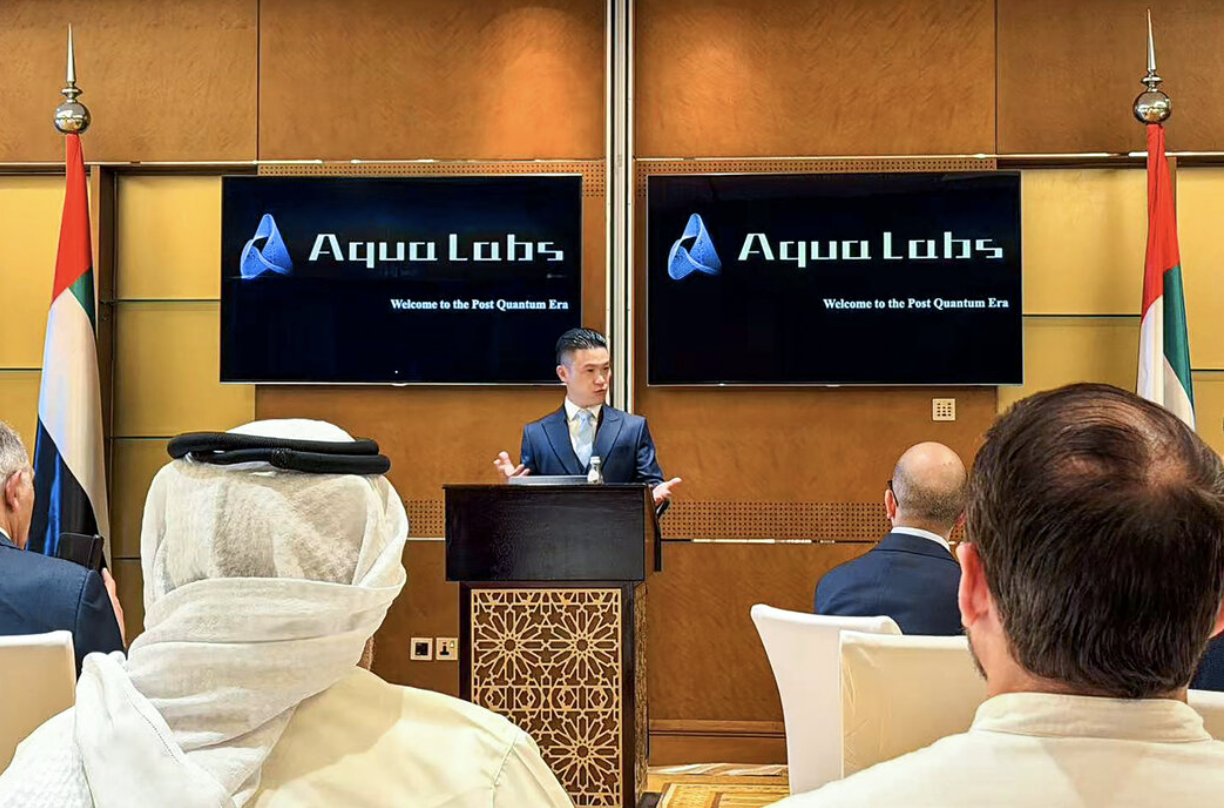
On July 19, at the World Cup final in East Rutherford, New Jersey, Zhou Guren (top left) appeared in a private room with Zach Witkoff on the right. Vincent Alban for The New York Times saw the World Cup finals in New Jersey last month, Zack Witkoff, the co-founder of President Trump's cryptocurrency company, in a luxurious private room. Also watching the game was a man who brought huge wealth to the president and all of the company's co-founders. Two years ago, this man named Zhou Guren (English name Bobby) was also a failed hardwood flooring retailer in the UK and was investigated there on suspicion of money laundering; he headed a small cryptocurrency startup that eventually directed the broadcast. He then seemed to come out of thin air and became one of the biggest buyers of Trump's “World Free Finance” tokens, investing a total of $100 million through a new company called Aqua 1. For several months, he kept a low profile, speaking only briefly as Aqua 1's “Mr. Bobby” during an audio broadcast on the X platform where almost no one followed. “We are very proud to be a major player in 'world liberty', the Trump family's crypto enterprise,” he said. As much as $75 million of this funding was distributed to a company controlled by the president and his three sons, according to World Free Finance regulations. The money also benefited Steve Vitkov's family, the Trump administration's peace envoy and Zach Vitkov's father. In any era in the past, there was no public evidence that a foreigner with such financial resources offered such a huge amount of money to the US president would necessarily be considered contrary to political practice, and could even lead to congressional investigation. However, Zhou Guren's confusing case just revealed how easy it is for buyers with unknown origins and unclear motives to use the anonymity of cryptocurrencies to send large amounts of money to Trump. According to the president's recent financial disclosure report, he received $1.4 billion in revenue from his cryptocurrency business last year, mostly from anonymous sources. At present, it is unclear how deep the World Free Finance Corporation has investigated Zhou Guren's background, but the UK money laundering investigation is publicly searchable information, and part of Zhou Guren's troubled business history can also be found publicly. A court record filed in November last year accuses Zhou Guren of participating in money laundering activities with five other people starting in 2019. However, he has yet to be prosecuted. British officials said at the end of last month that the investigation was still ongoing. His deal with World Free Finance raised a series of questions: How did he obtain such huge sums of money? Does World Free Finance actually comply with anti-money laundering laws? Under relevant laws, in some cases, businesses must record the origin of customer funds before accepting them. Patrick Prinz, chief operating officer of Recoveris, headquartered in Switzerland, which specializes in investigating digital asset crimes, said that the multiple red flags described to him by the “New York Times” — Zhou Guren's experience of business failure, sudden acquisition of huge wealth, large transactions, and the fact that he is being investigated — should have triggered these record requirements. World Free Finance Corporation spokesman David Waxman said in a statement that the company has complied with all applicable laws and regulations. “World Free Finance has established a compliance system that meets or exceeds industry standards,” he said. Zhou Guren set up a company and paid $100 million to President Trump's main cryptocurrency business, “World Free Finance.” Gabby Jones/Bloomberg Waxman declined to say whether the company was aware of the source of the coin purchase funds. He said that the company did not agree with the “New York Times”'s “description of Mr. Zhou,” but did not specify. White House spokeswoman Anna Kelly said Trump had no conflicts of interest and “acted only in the best interest of the American public.” Neither Zhou Guren himself nor his company responded to the New York Times's multiple contacts. Reuters was the first to reveal his identity as the person behind Aqua 1 at the helm. To this day, the true origin of the funds Zhou Guren paid to World Free Finance is still a mystery. But through dozens of interviews with former colleagues, reviews of classified documents, and analysis of court records and other public information, the New York Times's in-depth investigation of Zhou Guren's career revealed a bizarre trajectory. Just after his crypto company burned $7.6 million and he left London to move to the UAE in the summer of 2024, the fortune of this man who once seemed to be borrowing money from others took a dramatic turn...

11d agoWendy#Trump #World free finance #Trump
On the eve of SpaceX's first earnings report, Musk was so anxious that he stayed up late to play

On the eve of SpaceX's first earnings report, Musk was so anxious that he stayed up late to play

Author: Ga-6 Recently, in addition to Oracle founder Ellison taking his six-married Chinese wife to shopping in Newport, Los Angeles, the former richest man in the world, Musk, became addicted to “Eildon's Ring” again after SpaceX's stock price fell. This isn't the first time Musk threw himself into a game during a high-pressure period. In 2022, after deciding to buy Twitter, he played “Eildon's Ring” at a Vancouver hotel until 5:30 a.m. This is what Musk's former girlfriend said, and it was later written in “The Biography of Musk.” Musk's anxiety this time came from a sharp drop in SpaceX's stock price. On the first day of listing on June 12, SpaceX closed at $161, surpassing $2.1 trillion in market capitalization, directly among the top six US stocks. Four days later, on June 16, the intraday market hit an all-time high of $225.64, and the market capitalization once reached $2.94 trillion, briefly surpassing Microsoft. Musk's net worth reached 1.45 trillion US dollars that day, making it the richest time humans have recorded. Today, seven weeks later, the stock price has dropped from a high of $225.64 to $114, close to a standstill. The market capitalization has evaporated by about 1.2 trillion dollars, and Musk's personal book has evaporated by more than 750 billion dollars. People close to Musk said that he has recently become super addicted to playing “Eildon's Ring”, and is also looking for employees to help him play games, even during meetings. It is common to slander employees at meetings. He was often late for evening meetings, and even postponed the 8 pm meeting until 2 in the middle of the night and there were people waiting for him. Although we are unable to confirm the truth of these news. However, Musk's anxiety reached its peak this week, as SpaceX's first earnings release this Tuesday coincided with the first round of large-scale lifting of the ban this Thursday. Who undertook the $1.2 trillion evaporation On June 16, SpaceX's four-day market capitalization hit $2.94 trillion. However, the good times didn't last long. SpaceX, which has low circulation and high valuation, experienced 51 days of unilateral decline. As of today, SpaceX's market value has evaporated by about 1.2 trillion dollars. Musk himself is probably the one who has been most affected. He holds approximately 4.8 billion shares of SpaceX, plus 350 million options with an exercise price of $8.40, and approximately 700 million Tesla shares. SPCX fell 16.4% in a single day on June 22, and he lost $152 billion a day. The net worth fell below 1 trillion dollars on July 1, officially losing his status as a trillionaire. The launch of the Starship was suspended on July 16, and another day it lost 45 billion dollars. On July 27, his net worth dropped to $695.7 billion. In five weeks, Musk's net worth evaporated by about 750 billion dollars, and the evaporated market value surpassed the net worth of the second and third richest people in the world combined. And the most “dumb eaters can't tell you how bitter it is” are the millions of US retirement account holders who have never placed a SpaceX purchase order. SpaceX was included in the Nasdaq 100 Index on July 7. According to the old rules, newly listed companies need to wait a three-month “maturing period” before they are eligible. Nasdaq has modified the rules specifically for SpaceX: companies whose total market capitalization exceeds their existing constituents can skip the waiting period. SpaceX was included in the index just 15 trading days after listing, making it the fastest ever NASDAQ 100. J.P. Morgan estimates that the Invesco QQQ Trust Fund alone, which manages about $480 billion and tracks the largest ETF on the NASDAQ 100, generated around $4.3 billion in passive buying demand. Adding up all the products tracking the Nasdaq 100, over 200, managed assets of about $800 billion, and the total passive capital flow was between $22 billion and $27 billion. The vast majority of this money entered the market before and after the market closed on July 6 and opened on July 7. At that time, the SPCX price range was $157 to $161. As of July 22, QQQ held 39.7 million shares of SPCX, with a market capitalization of US$4.57 billion and a combined weight of 0.98%. In other words, millions of 401 (k) holders became SpaceX shareholders at a price of around $160. And their asset allocation added a net loss of 4.9 billion dollars in 2025...

18d agoburnking#SpaceX #Musk

Ministry of Foreign Affairs of the People's Republic of China: Resolutely opposes the establishment of a “territorial sea baseline” by the Philippines on Huangyan Island

Comparative news, according to Jin Shi's report, the Philippines has established a so-called “territorial sea baseline” on the Chinese territory of Huangyan Island, which seriously infringes on China's territorial sovereignty and violates international law. China resolutely opposes this and demands that the Philippines respect China's territorial sovereignty and maritime rights and interests, and refrain from any infringement and provocation; otherwise, China will resolutely deal with it.

22d ago
Sacrificing three exchanges in a month, can the Crypto bull market still come?

Sacrificing three exchanges in a month, can the Crypto bull market still come?

The midwaist exchange business seems to have come to an end. On July 1, AscendEX ceased operations. On July 23, BitMEX, which once defined a cryptographic perpetual contract and brought 100x leverage to the mainstream market, announced that it would close after two months. Three days later, BitMart, which has been in operation for nearly nine years, initiated a shutdown procedure: it stopped accepting new users and deposits, ended spot and contract trading on August 26, and officially terminated platform operations on January 31, 2027. In less than a month, three centralized exchanges (CEXs) that have gone through at least one round of bull and bear cycles have left the market one after another. In a market that is used to treating bad news as an inverse indicator, this can easily raise the question: exchanges can't survive. Has the crypto market bottomed out? This is not another FTX moment where AscendEX was originally known as BitMax. According to official data, it was founded by a Chinese team with a background in quantitative trading on Wall Street. Founder George Cao and others are closely linked to the New York financial community. BitMart was founded by Sheldon Xia. In the early days, he participated in events organized by the Yangtze River Business School and the Chinese and US blockchain community in New York, and also set up a team in New York; however, its global business has been operated through offshore entities for a long time, and public commercial data shows that it is headquartered in the Cayman Islands. Both have clear Chinese entrepreneurial backgrounds and experience in the US market, and are typical examples of the “Wall Street team plus offshore trading platform” entrepreneurial model in the early years. This model used to work very well. Between 2017 and 2021, an exchange is not required to obtain a full license in every market or have a bank-level compliance and escrow system. As long as the coin is listed fast enough, the contract leverage is high enough, and there are enough rebates, and with the Chinese-speaking community, Telegram, and KOL subscription channels, it is possible to quickly accumulate users in a round of bull markets. By 2026, these conditions are far from enough. Judging from current public information, the three exchanges can be boiled down to three “dead” methods: AscendEX faced liquidity and compliance pressure, BitMart chose to exit in an orderly manner, and BitMEX was left behind by users and trading volume. What they all have in common is that they can no longer afford the high costs of a global crypto exchange. On the face of it, exchanges have been shut down one after another, which is easily reminiscent of the FTX-style crisis in 2022. However, the transmission mechanism is not the same this time. The bear market in 2018 was the disappearance of demand. The ICO bubble burst, a large number of tokens lost liquidity, retail investors withdrew, and listing fees, transaction fees, and Taiwan dollar valuations fell together. According to CoinGecko's statistical method — which defines Bitcoin running below the 200-day EMA for 30 consecutive days as a bear market — the bear market from 2018 to 2019 continued for 385 days, with Bitcoin's biggest retracement of 83.6%. The problem in 2022 is that the credit chain is broken. After Terra's collapse, the complex borrowing and asset liability relationships between Three Arrows Capital, Celsius, Voyager, Genesis, and FTX turned the failure of a single project into a credit contagion for the entire industry. According to Bank for International Settlements statistics, after the Terra incident, the market value of crypto assets of more than 450 billion US dollars evaporated; after FTX went bankrupt, the market lost about 200 billion US dollars. In the 2026 shutdown wave, there was no serial rush of the same scale. It's more like a slow but complete structural elimination: total market volume falls, regulatory thresholds are raised, liquidity is concentrated at the head, and on-chain transactions take users from the other side. Regulation has gone from a potential risk to a cost of doing business. EU MiCA will be fully applicable from December 30, 2024. According to ESMA's explanation, the original crypto service provider can continue to operate for a period of time according to member state regulations, but the transition period must not exceed July 1, 2026 at the latest. Platforms that are not authorized by MiCA cannot continue to rely on the original system to carry out related business after the transition period is over. AscendEX ceased operations on July 1st. It also acknowledged in the announcement that the platform was not authorized by MiCA. But compliance is only one reason: AscendEX also mentioned failed financing transactions, market pressure, and financial condition assessments. Regulation didn't kill this exchange alone. It just makes an already weak balance sheet more difficult to maintain. The old exchange model is dead. The “incremental sharing dividend” ended the second quarter of 2026, and the total market value of the crypto market fell 12.6%, from $2.4 trillion to $2.1 trillion, about 52% lower than the October 2025 high. More importantly, “cash” in the industry is also dwindling. The total stablecoin market capitalization fell 1.6% quarterly to 3...

25d agoWendy#CEX #DEX #Exchanges #Shut down the tide topic #original #Bitcoin #Bull market #viewpoints

Two departments: Individuals who load assets into offshore trusts and obtain income through offshore trusts should file and pay personal income tax

Comparative news. According to Jin Shi's report, the two departments issued announcements on matters relating to personal income tax on offshore trusts. Individuals incorporating assets into offshore trusts and obtaining income through offshore trusts are income obtained as stipulated in section 2 of the “Personal Income Tax Law of the People's Republic of China”, and they shall declare and pay personal income tax in accordance with the provisions of this Notice. Offshore trusts referred to in this notice refer to trusts established in accordance with foreign laws or other legal arrangements with fiduciary functions. Other legal arrangements with a trust function refer to foreign legal arrangements that are not established under the name of a trust and essentially have similar trust functions, except for financial products issued by banks, insurance companies, securities companies, fund companies, etc. that independently conduct business and bear risks to unspecified customers and are subject to supervision by financial supervisory authorities in the country or region where they are located.

29d ago
Liang Wenfeng became the richest person in AI. 36 people are on the list of billionaires, 9 of whom are post-00s

Liang Wenfeng became the richest person in AI. 36 people are on the list of billionaires, 9 of whom are post-00s

Source/Smart Stuff Author/Cheng Qian Original Title/Just Now! Liang Wenfeng became the richest person with AI, and 36 people relied on big models to become billionaires July 14. According to the latest data from the Bloomberg Billionaires Index, DeepSeek founder and CEO Liang Wenfeng's net asset value has reached 36 billion US dollars (approximately RMB 244 billion), surpassing OpenAI co-founder and president Greg Brockman to rank among the richest big model founders in the world. Liang Wenfeng's net asset value (Source: Bloomberg Billionaires Index) In his early years, Liang Wenfeng relied on Magic Square to quantify as a billionaire, and this big model wave further boosted his value. At the beginning of June this year, it was reported in the market that DeepSeek would complete a round of financing of about 50 billion yuan, causing Liang Wenfeng's worth to soar 115.57% from US$16.7 billion (approximately RMB 113.2 billion) to US$36 billion. According to incomplete statistics from Wisdom & West, as of the 14th, the big model had listed at least 36 billionaires with net assets exceeding 1 billion US dollars. The net assets of these entrepreneurs ranged from 1.3 billion US dollars to 25.5 billion US dollars, and their cumulative assets exceeded 249.1 billion US dollars (about 1.69 trillion yuan). This article only focuses on big model circuit entrepreneurs, and does not include pan-Internet and large technology group entrepreneurs. These billionaires come from 17 companies around the world, covering tracks such as big models, AI computing power, data services, AI programming, AI healthcare, AI agents, and AI search. Among them, 6 Chinese are on the list, 3 are from the Chinese company Zhi Spectrum and MiniMax, respectively, Liu Debing, Chairman of Smart Spectrum, and Tang Jie, founder and CEO of MiniMax, Yan Junjie, founder, CEO, chairman of the board of directors and chief technology officer of MiniMax; the other 3 Chinese are Alexandr Wang (Alexandr Wang), the former co-founder and CEO of the US AI data service platform Scale AI and current Chief AI Officer of Meta, and Edwin Chen (Lucy Guo), founder and CEO of Surge AI (Edwin Chen) Edwin Chen) Steven Hao, co-founder and CEO of Cognition, an American AI programming unicorn. Furthermore, among the billionaires associated with the big model, there are 9 post-00s. Among them, the most valuable is Wang Taoyi, with a net asset value of 3.2 billion US dollars (approximately RMB 21.7 billion). In addition to Liang Wenfeng's soaring net asset value, US AI data platform Databricks CEO Ion Stoicah and CTO Matei Zaharia's net worth also rose to 5 billion US dollars (approximately RMB 33.9 billion) along with the big model boom. Global Billionaires (Statistics as of July 14) (Statistics as of July 14) (Smart West) 1 | Chinese companies have created 3 billionaires. Liu Debing is the most valuable in the Forbes Global Real-time Billionaires List. There are 3 Chinese entrepreneurs on the list, respectively, from Zhi Spectrum and MiniMax. Liu Debing, Chairman of Smart Spectrum, is second only to Brockman with a net worth of 24.1 billion US dollars. 1. Zhipu Liu Debing, Tang Jie, and the two billionaires from Zhipu are Chairman Liu Debing and Founder and Chief Scientist Tang Jie, respectively. Their net assets reached US$24.1 billion (approximately RMB 163.4 billion) and US$5.2 billion (approximately RMB 35.3 billion), respectively. Zhipu Chairman Liu Debing Zhipu was founded in June 2019. It was transformed from the technological achievements of the Tsinghua University Computer Department Knowledge Engineering Laboratory. Tang Jie, professor of computer science at Tsinghua University, is the founder and soul figure of Zhipu. According to the prospectus, Tang Jie directly holds 6.66% of the shares and Liu Debing directly holds 0.23% of the shares. Tang Jie, professor of computer science at Tsinghua University, and Tang Jie, founder and chief scientist of Smart Spectrum (Photo: “Agi-Next” summit) In January of this year, Smart Spectrum was officially listed on the Hong Kong Stock Exchange, becoming the “first big model stock” for Hong Kong stocks. Today, its market value in Hong Kong stocks has reached HK$744.997 billion (approximately RMB 644.5 billion). It is worth mentioning that in June of this year, Zhipu's total market capitalization surpassed HK$1 trillion (approximately RMB 865 billion) for the first time, rising more than 2000% during the year. 2. MiniMax Yan Junjie, US$2.1 billion MiniMax was founded in early 2022. The net asset value of its founder, chairman, executive director, CEO and CTO Yan Junjie reached US$2.1 billion (approximately RMB 142...

37d agoWendy#AI #DeepSeek #big model #Zhipu #Liang Wenfeng