华尔街见闻 · 127
Is 40 trillion just an “appetizer”? The Hynix buyback landed ahead of schedule. Is 130 billion US dollars still ahead?

Is 40 trillion just an “appetizer”? The Hynix buyback landed ahead of schedule. Is 130 billion US dollars still ahead?

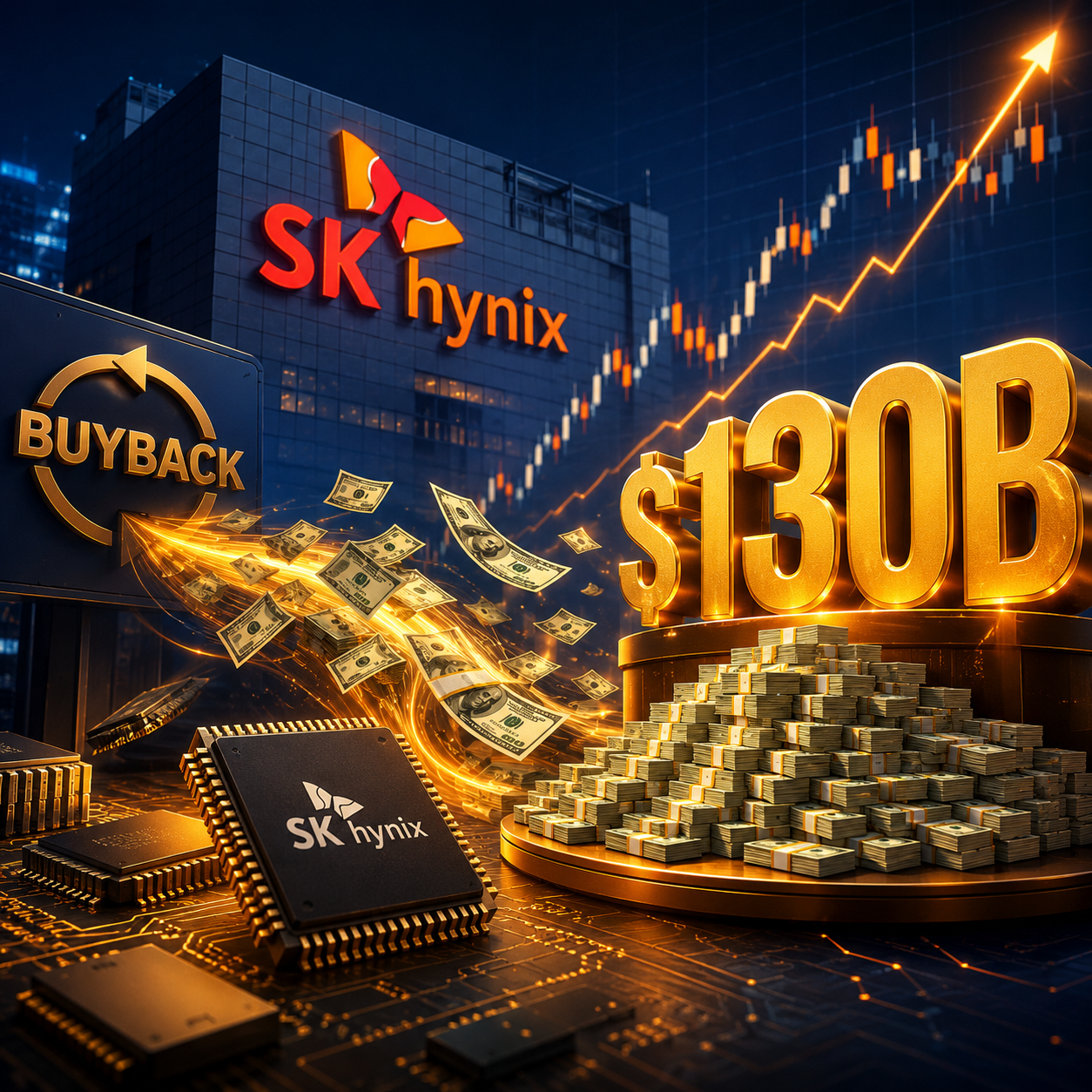
Source: Wall Street News Editor: Dong Jing Original title: Wall Street interprets Hynix's repurchase plan: Shareholder return of up to 8% next year, or return at least $130 billion to shareholders by 2027 Summary: J.P. Morgan believes that the shareholder return policy was upgraded from “no more than 50% free cash flow” to “no less than 50%”, changing from the upper limit to the lower limit, sending a clear signal to the market: future shareholder returns will only be greater, not less. Goldman Sachs predicts an 8% shareholder return in 2027, and expects an additional repurchase of approximately 7 trillion won in the future. J.P. Morgan expects additional return of over 16% of its market value by the end of 2027. Follow-up focus will be on the results meeting at the end of October. While the market was still debating the continuation of the AI storage cycle, and SK Hynix's stock price plummeted from a June high, the storage giant suddenly threw a huge bomb on the market. A historic repurchase, which was implemented early, reshaped the market's valuation logic for Hynix! SK Hynix officially announced the market's long-awaited shareholder return policy after closing on August 19, 2026 — it plans to repurchase and cancel 40 trillion won worth of shares, involving 24.07 million shares (3.3% of the shares issued as of the end of the second quarter of 2026), equivalent to about US$28.9 billion. This scale is not only the largest share repurchase in the history of a Korean listed company, but also exceeds the approximately 26.5 billion US dollars that Hynix raised through ADR financing in the US in early July this year. According to Chase Trading Desk, the two top Wall Street agencies, J.P. Morgan Chase and Goldman Sachs, both gave highly positive comments on the announcement in their latest research report on August 20. J.P. Morgan believes that the shareholder return policy has been substantially upgraded from “no more than 50%” to “no less than 50%”, and the policy ceiling has become the policy floor. Following the announcement of a 40 trillion won ($29 billion) share repurchase plan, SK Hynix may return at least $130 billion to shareholders by 2027, according to J.P. Morgan Chase. Goldman Sachs predicts a shareholder return of up to 8% in 2027, and expects an additional repurchase of approximately 7 trillion won in the future. Both J.P. Morgan Chase and Goldman Sachs maintain buying ratings: J.P. Morgan's target price is 2.75 million won (about 84% upside compared to the current price), and Goldman Sachs's target price is 3.5 million won (implying an upward margin of about 133%). The next key catalyst is the third quarter results conference call at the end of October 2026, when the company will reveal a more complete roadmap for shareholder returns. Analysts believe that this aggressive capital action directly proved to Wall Street that the company is “printing money” faster than market expectations. For the stock price, which has plummeted 49% since its high on June 22, this not only completely offset the dilution effect of the recent ADR issuance, but also established a valuation bottom (current annualized price-earnings ratio of only 3.8 times). The scale of the repurchase: The largest in history and earlier than expected. J.P. Morgan analyst Jay Kwon clearly stated that the 40 trillion won repurchase announcement “landed earlier than expected” — previously, the market generally expected the announcement to be released around the end of September, but the company chose to directly disclose it after closing on August 19, showing management's high level of confidence in the company's cash flow situation. In terms of scale, this repurchase has multiple historical significance: 40 trillion won is the largest share repurchase announced by a Korean listed company so far; equivalent to US$28.9 billion, higher than the approximately US$26.5 billion raised by Hynix's US ADR offering in early July, which means that the company actually used the repurchase to “hedge” the previous equity dilution; this amount is equivalent to 63% of the rolling FCF (operating cash flow minus capital expenses) over the past 12 months, & nbsp; It is higher than the previous “no more than 50%” FCF allocation limit policy. At the same time, J.P. Morgan Chase pointed out that if viewed from a valuation perspective, the price-earnings ratio corresponding to Hynix's current stock price is 6.4 times (based on adjusted earnings per share for the past 12 months) or 3.8 times (based on annualized adjusted earnings per share for the first half of 2026). This valuation level can be regarded as a reference benchmark for management to initiate repurchases. Policy upgrade: From “ceiling” to “floor”, the core policy change in this announcement is that the shareholder return ratio statement was upgraded from “up to 50% (no more than 50%)” to “50%”...
1d ago22#SK Hynix #J.P. Morgan Street
Are big bears shorting AI stocks and making over 100 million dollars a year from selling opinions?

Are big bears shorting AI stocks and making over 100 million dollars a year from selling opinions?

Author: Long Yue, Wall Street News Original title: Before the AI bubble burst, the “Big Short” first earned $100 million by charging subscription fees. Michael Burry's paid newsletter “Cassandra Unchained” surpassed 300,000 subscribers in 231 days. Based on an annual fee of 379 US dollars, the theoretical annual revenue was about 113.7 million US dollars. Meanwhile, AI and semiconductor stocks such as Nvidia, Micron, and AMAT, which he shorted, rose sharply this year. Among them, Micron rose 697% during the year, and short positions were clearly under pressure. Shorting AI stocks made a huge loss, but selling subscriptions may turn over — Michael Burry's most profitable business this year is probably not stock trading, but writing blog posts. “Big Short” Michael Burry's Substack subscription investment newsletter “Cassandra Unchained” surpassed 300,000 subscribers in just 231 days since it went live. Based on an annual fee of $379, the theoretical annual revenue is approximately $113.7 million. How intuitive is this number? According to Stocktwits, if $1 million were to be invested in each of S&P's top 10 highest-grossing stocks in the past 500 years, the total revenue would be about $34 million — less than one-third of Burry's Communications theoretical revenue. With 300,000 subscribers, 231-day Burry revealed in a post entitled “Short & Thankful: 300,” that “Cassandra Unchained” has reached 300,044 subscribers and 346,680 followers, with subscribers from all 50 states and 212 countries in the US, 52% of which are outside the US. Judging from the data, the “Cassandra Unchained” newsletter had about 218,000 followers in January of this year, and by July it was close to 347,000, and the growth curve continued to rise. Communications are priced at $39 per month or $379 per year, plus a free tier. Burry did not disclose the exact percentage of paid subscribers. Substack's subscription statistics include both free and paid readers, and the above estimates did not deduct the Substack platform extract. As a result, $117.7 million is a theoretical upper limit rather than actual income received. Burry founded the newsletter in November 2025, when he had just deregistered a hedge fund with the SEC, returned to social media, and relaunched criticism of the AI craze. Once launched, the newsletter attracted more than 60,000 subscribers, and since then it has gradually evolved into his main platform for posting real-time position updates, valuation analysis, and detailed transaction records. Long value stocks: PayPal, Lululemon, and Alibaba In newsletters, Burry continues to disclose specific transactions. In April of this year, he made his first large-scale public position, opening PayPal Holdings (PYPL) for about $49, accounting for 3.5% of the position, and listed it as the preferred target in the software and payment sector, ahead of Fiserv (FI) and Adobe (ADBE). He then continued to increase his PayPal position around $45 and bought Fiserv at the same time. In the same month, he also opened positions with Adobe, Autodesk (ADSK), and Veeva Systems (VEEV) on the grounds that “fears of AI disruption have driven software valuations below intrinsic value.” In April, he also reiterated his confidence in Molina Healthcare (MOH), saying that market expectations “have bottomed out” and said he will continue to increase positions because the investment logic is based on normalized profits over the next few years. In June, Burry turned his sights on Lululemon Athletica (LULU) and increased his position several times. He said bluntly, “Bad management is a value investor's best friend.” He believes Wall Street is focusing too much on management mistakes, tariffs, and slowing growth while ignoring their long-term value. In terms of Chinese assets, Burry disclosed in April that it holds more than 6% of Alibaba's shares and continues to increase its position in JD (JD). Last week, he said that JD is one of his top three holdings, adding that “as enthusiasm for AI and memory chips fades, capital will rotate to Hong Kong and Chinese stocks.” Shorting AI stocks: Nvidia, Micron, Pal...

8d agoburnking#AI
As soon as US stocks stopped falling, capital went crazy rising -- Wall Street was suddenly wary

As soon as US stocks stopped falling, capital went crazy rising -- Wall Street was suddenly wary

Source: Wall Street News Author: Xu Chao Original title: After the sharp fall in July, capital surged again, and the “panic index” of US stocks plummeted. Wall Street began to be wary. The strong rebound in US stocks created a calm image of a sharp drop in volatility, but Wall Street is sounding the alarm: the options market is now “biblical” and distorted. Under ostensible prosperity, the market position structure is extremely weak. As Nvidia's earnings report and the central bank's annual meeting approach, any external catalyst could set off a severe one-sided storm at any time. US stocks rebounded strongly from sharp deleveraging in July. Investors scrambled to catch up, and volatility indicators quickly fell back to a near-calm level. However, Wall Street traders and strategists are warning that under surface calm, the market structure already conceals fragility, and any external catalyst could trigger a rapid, self-reinforcing directional shock. The VIX Index plummeted from a July high of around 21 points to around 15 points — a level that has historically been on par with absolute calm in the market. Meanwhile, Goldman Sachs's internal panic index plummeted from 7.9 at the end of July to less than 1, hitting its lowest point since June 2024. Bloomberg market strategist Jan-Patrick Barnert pointed out that the position structure left over after large-scale deleveraging last month makes the market extremely vulnerable to dramatic changes in direction caused by mechanical capital flows before important risk events such as upcoming inflation data, Nvidia earnings reports, and the Jackson Hole Central Bank Annual Meeting. The three Wall Street trading platforms gave a nearly consistent description of the current August market: investors are selectively chasing the rise, but not out of full faith. Fundamentals may provide support for current index points, but market sentiment is far from being fully optimistic. Traces left by the rise: the options market is now “biblically” distorted. After the severe deleveraging round in July, buyers' institutional positions were generally light, but it just happened to have hit one of the strongest earnings seasons in recent years. At the same time, the market rotated, and stocks outside the AI sector and high-quality AI targets both became the core of risk taking. Charlie McEligott, a cross-asset strategist at Nomura Securities, said that “customers were caught off guard” and immediately began to rise. The evidence of this upward movement is not reflected in price trends, but is clearly imprinted in the options market: call options are being snapped up, and as the index soars away from everyone's hedging price, put options quickly lose value. McEligott described the resulting skewed bias as “biblical level.” Both the S&P 500 and Nasdaq 100 Index's 25-Delta bullish option bias fell to the lowest level in history in January, and the S&P 500 bullish options volume simultaneously reached record highs. Over the past week, the achieved volatility was significantly higher on rising days than on falling days — the only thing the market seemed to worry about was shorting subsequent gains. The volatility of individual stocks has been destroyed, and the risk behind the calm has not been eliminated. Volatility at the individual stock level has been erased on a large scale in the process. Goldman Sachs derivatives and capital flow expert Lee Coppersmith pointed out that the average monthly implied volatility of NASDAQ 100 constituent stocks fell 9.1 percentage points within three trading days, and the decline of S&P 500 constituent stocks also reached 6 percentage points. Coppersmith said, “In the AI era, we have seen larger fluctuations, only the fluctuation shock in August 2024 and the tariff incident in April 2025. “At that time, VIX broke through 60 points. However, in the past month, the highest point of VIX reached only about 21 points, then quickly fell back. However, this is probably where the trouble lies. Goldman Sachs's internal panic indicators have certainly fallen to a low point, but a non-farm payroll report showing employment losses of 23,000 people, US bond yields hovering around 4.7%, the latest episode of the yen intervention, and the unresolved Iran conflict all together form a picture of macroeconomic risks that should not be underestimated. Financial data is impressive, but the macroeconomic background is far from confirming that everything is improving. AI is no longer an overall position, but a stock selection list at the index level. The overall exposure seems to have completely changed to risk appetite. But underneath the surface, skepticism still exists. Artificial intelligence trading is still the core of the market, but the basket of leading thematic gains is fragmenting. Not all of the targets that were hit hard in July experienced a strong rebound — memory chip stocks are a typical example. Nick Savone, Global Head of Equity Advisory and Client Services at Morgan Stanley, wrote: “This may be a broader revelation of a week of familiar trading regaining life without simply returning to the old script. The degree of diversification is still extremely high, and deleveraging in July...

9d ago22#US stocks
Musk said: After 5 years, AI will account for 99% of SpaceX's value. “We must win against AI!”

Musk said: After 5 years, AI will account for 99% of SpaceX's value. “We must win against AI!”

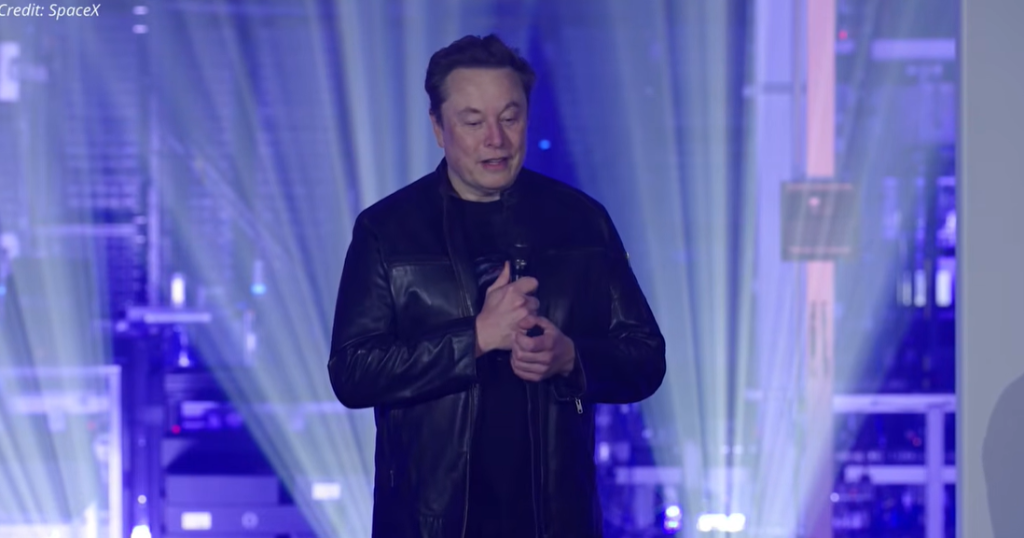
Source: Wall Street News Original title: Musk's latest speech: Five years from now, AI will account for 99% of SpaceX's value, and we must win against AI! Abstract: Musk announced at the SpaceX General Meeting that AI revenue “definitely” will surpass all other SpaceX business revenue for the first time in September, and has set a target of 10 gigawatts of AI computing power by the end of next year, corresponding to potential annual revenue of 300 billion to 500 billion US dollars. He shouted, “We must win against AI; the future will be about the world of AI and robots.” This is also his clearest forecast of the timeline and scale of SpaceX's AI business. In the early morning of August 12, SpaceX released a video of Musk's speech at the company's internal staff meeting, which lasted about half an hour. After reviewing the company's development history, Musk turned the conversation to AI and gave a series of specific revenue forecasts and timelines. Musk said at the conference, “It's impossible, definitely — our AI revenue will probably surpass all other SpaceX revenue in September, or next month, and will significantly exceed all other SpaceX revenue in the fourth quarter.” This is the first time Musk has publicly given a specific point in time when AI revenue surpasses traditional business. He said that Rocket, Starlink, Dragon spacecraft... no matter how strong these businesses are, they will be overtaken by AI. “AI has become an extremely important part of SpaceX's future.” He said, “We have to win against AI because the future will overwhelmingly be about AI and robots.” With a target of 10GW and annual revenue of 300 billion to 500 billion dollars, Musk further gave a scale forecast. SpaceX aims to reach 10 gigawatts of AI computing power by the end of next year. His estimate is: “If the value of each watt is about $30 to $50, that means the annual revenue will be between $300 billion and $500 billion. That's a huge number.” He also revealed that the company has now built the “world's most powerful AI training cluster,” and the goal by the end of next year is to build on this by 10 times. In terms of deployment methods, Musk also drew a division of labor: “AI training will continue to be carried out on the ground, but AI inference — that is, the daily use of AI — will be in space.” “Five years later, AI is 99% of SpaceX's value.” Musk's position on SpaceX's future has fundamentally changed. At the conference, he said, “In the long run, in the near future, in about four or five years, AI will account for 99% of SpaceX's value. I dare say for sure five years from now, AI is 99% of SpaceX's value. And SpaceX's value will be an astronomical figure.” This means that in Musk's narrative, SpaceX is no longer just a space company, but a technology company with starships as infrastructure and AI as the core value. Using Grok to carry SpaceX's “genes,” Musk's concerns about AI go beyond commerce. In his speech, he repeatedly emphasized the importance of AI values. “In the end, we won't be able to control AI; it will be too smart for us to control. But just like if you have a super genius kid, you can still instill in that kid the values you think are good and right.” SpaceX plans to use all of the company's information to train Grok, he said. “In a sense, you're actually going to be AI's parents. It will inherit your thoughts, ideas, and beliefs.” Grok's iteration schedule was also revealed: version 4.6 will be released in about a week, and “4.7 should be quite special.” Starlink: There are 22 million users in 167 countries, and in addition to AI, Musk has also updated the latest Starlink data. At present, Starlink has entered 167 countries, with 22 million mobile users, 13 million high-bandwidth users, and nearly 11,000 satellites in orbit, which is more than double the total number of satellites of all other operators. With the deployment of the V3 and subsequent versions, the target number of satellites is 100,000. Musk quoted Cloudflare's forecast as saying that according to the current growth trend, the traffic generated by AI may reach 1,000 times that of human Internet traffic within five years. He believes that Starlink could eventually carry more than 90% of global internet traffic. Starship: One million tons enter orbit every year, leading to a multi-planetary civilization, Musk's position on the Starship was still ambitious at the conference. “Starship will increase our ability to launch into orbit from about 2,500 tons per year to more than 1 million tons per year, and I think it may even reach 10 million tons per year.” He said that this amount of capacity is a prerequisite for establishing civilizations on the Moon and Mars. If you can't put millions of tons of cargo into Earth orbit, you won't be able to get the supplies you need to the Moon...

10d ago22#AI #SpaceX #Elon Musk
China-US Token Economics: Profit Sources, Premium Flow, and Cash Out Order

China-US Token Economics: Profit Sources, Premium Flow, and Cash Out Order

Source: Wall Street has seen that the rapid computing power of the big model and the misalignment of slow monetization are reshaping the profit distribution pattern of the global AI industry chain. In the past two years, the average number of daily token calls in the Chinese market has skyrocketed by more than a thousand times, but in 2025, the annual revenue of public cloud MaaS (model as a service) remained at the level of 3 billion yuan. Massive consumption has yet to be converted into equivalent book revenue, and China and the US have gone in very different directions in terms of computing power bottlenecks and commercialization paths. Song Xinzhu, an analyst at Northeast Securities, proposed in his analysis of the Token economy industry chain that AI profit accumulation consists of four mechanisms: scarcity premium, intergenerational premium, integrated internal settlement revenue, and migration cost premium. Currently, profits are entering the report in the order of top, middle, and bottom: the upstream computing power base takes the lead in cashing out scarce dividends; the midstream model layer is deeply mired in deflation caused by commercialization of contemporaneous capabilities; and the downstream application layer undertakes the dividends of reducing computing power prices and building long-term moats with “migration costs” accumulated over time. At the end of the premium flow, due to differences in payment endowments between the two countries' markets, the incremental value of AI in the US is being settled in the high-price software subscription system, while the low-price token dividends in the Chinese market are directly spilled over to the application layer, awaiting revaluation after the pricing method is fully migrated. Computing power investment is approaching the cash flow boundary, and a thousand times the usage volume is only cashing out the 3 billion market token economy, which is still under heavy asset construction. On the demand side, the average number of calls per day in China soared from about 100 billion calls at the beginning of 2024 to 100 trillion by the end of 2025. However, most token consumption occurs within the manufacturer's own scenario, and no external transactions have been formed; through external transactions, transaction prices have been extremely compressed; in addition, application-layer fees have yet to be fully migrated to token pricing, resulting in a thousand-fold usage increase of only 3.07 billion yuan in public cloud MaaS market size. Corresponding to the meager API revenue, it is extremely heavy on the computing power investment side. The intensity of capital expenditure is approaching the coverage boundary of operating cash flow. As of the second quarter of 2026, the ratio of TTM (rolling 12-month) capital expenses to operating cash flow of the four major US cloud vendors rose to 0.63 to 1.05. Alphabet experienced negative free cash flow for the first time in a single quarter, and Meta's free cash flow plummeted 91% year over year. Funding sources during the construction period have spilled over from operating cash outflows to the capital market. The pace of investment in the Chinese market is clearly divided. Alibaba is ranked first in terms of capital expenditure intensity, while Baidu is the only company among the eight leading buyers of computing power where declining revenue and increasing capital expenditure coexist. Upstream has exhausted scarce dividends, and the bottleneck in computing power between China and the US is moving upstream in the field. Currently, it is the only link where profits are steadily included in the report. The “scarcity premium” based on the supply gap directly contributed to Nvidia's FY2026 data center revenue of $193.7 billion. Faced with the same thirst for computing power, China and the US have formed very different clearance methods and industrial bottlenecks under the same regulations. The bottleneck in America's industrial chain is access to electricity. Of the ERCOT (Texas Reliability Commission) queue awaiting approval for access, about 90% of the more than 1,800 projects are data centers, corresponding to a cumulative total of about 474 GW of electricity demand. The lengthening of approval and power access cycles has led to a historically low vacancy rate of data centers in North America. America's scarcity was eventually paid off according to the price, and the proceeds from the price increase went to leading manufacturers such as Nvidia. The bottlenecks in China's industrial chain directly point to computing power chips. Under export controls, the Chinese market is cleared in accordance with controlled allocations, and the institutional drive is directed towards domestic substitution. In 2025, local manufacturers already accounted for more than 40% of the AI accelerator card market. The additional computing power is gathered at the “East Digital and Western Computing” hub nodes, and the construction entities are combined with public departments, operators, and private capital to form a computing power system dominated by the public sector. Open weights have broken through intergenerational barriers, and the midstream model has become extremely fungible to tokens with standardized production capacity in the same capacity level, and open weighting (open source) has become the absolute main force in bridging the price gap. The cost for buyers to replace suppliers is extremely low, and competition falls directly on the listing price. According to estimates, the calling price that has reached the same capability as GPT-4 drops to about one-tenth of a year. The price of comparable capabilities is rapidly being leveled around the world. At about 51 points in the AA Intelligence Index, the mixed prices of the four main models of China and the US (GPT-5.6 Luna, GLM-5.2, MuseSpark 1.1, and Gemini 3.6 Flash) all fall into an extremely narrow range of 14 to 22 yuan/million tokens. The lowest price in this tier does not come from a Chinese manufacturer, but rather Meta, which entered the market in the form of an API. Once the capability level is leveled by open source, the token is commercialized, and the price only depends on usage and performance...

12d agoWendy#AI #token #Arithmetic power

AI fund Situational Awareness has told investors that it will not accept new funding

Comparative news, according to the “Wall Street News” report, the AI fund Situational Awareness was previously revealed to be seeking new capital injections due to significant losses in AI-related stocks, but the experience of the fund bursting out not only did not become a stain in Silicon Valley, but instead strengthened the “heroism” of founder Leopold Aschenbrenner. Many Silicon Valley investors saw it as an opportunity to “buy on bargain” and continue to stand as a transformed investor for this former OpenAI researcher. Currently, the fund has Investors were told not to accept new funding, but enthusiasm from the outside world did not subside as a result. Senior venture capitalist Elad Gil even publicly announced his first application to invest in Aschenbrenner's fund. Additionally, Morgan Stanley, which previously declined to provide principal brokerage services for Situational Awareness, has changed its position and plans to include the fund as a prime brokerage client within the next few weeks.

14d ago

Situational Awareness tells investors that it will not accept new funding for the time being, and Morgan Stanley plans to make it the main brokerage client within a few weeks

Comparatively, Leopold Aschenbrenner's hedge fund Situational Awareness “bursts out”, but instead of deterring investors, the crisis has sparked a new wave of popularity in Silicon Valley. Currently, the fund's remaining asset portfolio (including private equity) is worth about $10 billion. Situational Awareness was previously revealed to be seeking new capital injections due to significant losses in AI-related stocks, but the fund's bursting experience not only did not become a stain in Silicon Valley, but instead strengthened the “heroic personality” of founder Leopold Aschenbrenner. Many Silicon Valley investors saw it as an opportunity to “buy on dips”, and continued to stand as a platform for the former OpenAI researcher's transformed investor. Currently, the fund has told investors that it will not accept new capital for the time being, but the enthusiasm from the outside world is not there any enthusiasm from the outside world As a result, it declined, and senior venture capitalist Elad Gil even publicly announced his first application to invest in Aschenbrenner's fund. Additionally, Morgan Stanley, which previously declined to provide principal brokerage services for Situational Awareness, has changed its position and plans to include the fund as a prime brokerage client within the next few weeks. However, if the high returns from earlier this year are to be reinstated, Aschenbrenner will ultimately have to persuade Wall Street to re-provide leverage. That means he must find a sustainable path between Silicon Valley's enthusiastic support and Wall Street's stringent requirements for risk management. (Wall Street News)

14d ago
Will the next storm in US stocks be caused by US debt? The week ahead is critical

Will the next storm in US stocks be caused by US debt? The week ahead is critical

Original author: Xu Chao Original source: Wall Street sees that the US Treasury bond market is sending increasingly strong pressure signals to other asset classes, and the stock market bears the brunt of it. Long-term US bond yields rose sharply last week. The 30-year Treasury yield hit the highest level since 2007, and the 10-year Treasury yield also broke through the trading range maintained since the end of 2023. Meanwhile, the ICE Bank of America MOVE Index, which measures the expected volatility of the US bond market, rose to its highest point since May, and demand for put options betting on falling bond prices surged. Chicago Options Exchange data showed that one-month put option bias linked to iShares's 20-year or more US Treasury bond ETF soared to the highest level since the 2008 financial crisis. In the coming week, the details of the US Treasury's financing plan were revealed and the July non-farm payrolls report was released one after another. The shock in the bond market may further intensify. Bob Elliott of Unlimited Funds recently wrote in a review: “It is difficult to determine how long other asset markets such as stocks can continue to support at current interest rates without being dragged downward. “Gennadiy Goldberg, head of US interest rate strategy at TD Securities, also warned that the uncertainty surrounding the Federal Reserve's policy guidelines, compounded by multiple noises such as geopolitics, is creating a dangerous situation in the market. The credibility of the Federal Reserve has been questioned. The core driving force behind the rise in US bond yields in this round of rising long-term bond yields comes from the market questioning the credibility of the Fed's policies. Since Federal Reserve Chairman Kevin Warsh (Kevin Warsh) took charge of the Federal Reserve, he has taken a tough stance on fighting inflation, but the inflation rate has been higher than the Fed's 2% policy target for five consecutive years, and investors are beginning to wonder whether the Fed is actually willing to raise interest rates again. On Wednesday, the Federal Reserve Interest Rate Decision Committee had a rare disagreement — three regional Fed presidents voted for interest rate hikes, contrary to the position of most members of the committee. When Walsh finished last week's press conference, long-term bond yields suddenly jumped, while short-term bond yields declined at the same time, and the spread between the two narrowed sharply. Analysis of Dow Jones market data shows that this is the biggest compression of the “Federal Reserve Interest Day” yield curve since 2023. Goldberg of TD Securities said: “The market is questioning how determined the Federal Reserve is in controlling inflation. “At the same time, he pointed out that under the benchmark situation, interest rates will not be raised this year or next, but the probability of interest rate hikes has “increased significantly.” The volatility of the bond market increased, and changes in hedging demand rapidly expanded yields were quickly transmitted to the derivatives market, and hedging demand heated up sharply. The ICE Bank of America MOVE Index hit a high level since May, indicating that traders are actively hedging the risk of further upward interest rates. Meanwhile, the trading volume of put options linked to iShares's 20-year US Treasury bond ETF (TLT) increased markedly compared to the ratio of bullish options. Chicago Options Exchange analysts pointed out that the one-month TLT put option bias has soared to the highest level since the 2008 financial crisis. What is particularly noteworthy is that this round of rising long-term yields and crude oil prices showed a divergent trend — oil prices fell rather than rising at the same time as yields. This further weakened the correlation between yield and oil prices, increasing market uncertainty. Spillover effects are looming, and the risk of the stock market under pressure is rising. The turmoil in the US bond market has always been a precursor to stock market risk. The current situation has also left equity market investors sitting idly by. Bob Elliott pointed out in his comments that whenever US bond yields hit or approach current levels, pressure often begins to spread to other markets, and the stock market is dragged down first. Currently, the yield on 30-year treasury bonds has reached 5.239%, and the 10-year yield is 4.693%, all in the historically high range. Goldberg also admits that the geopolitical uncertainty brought about by the Iranian situation, the fuzziness of the Federal Reserve's policy guidelines, and the combination of other multiple market noises all make up the current weak market environment. “All kinds of uncertainties are intertwined,” he said. A window of multiple events is approaching, and the critical one-week test is imminent. The next week will be a critical window period for whether this round of pressure on US debt can spread. Later this week, the US Treasury will announce the details of the latest government financing plan. Anything that exceeds expectations could trigger a new round of fluctuations in the bond market. A number of important economic data will be released one after another this week, ending with Friday's July non-farm payrolls report. The employment data will have a significant impact on the market's expectations about the direction of the Federal Reserve's policy. Meanwhile, last week the US...

17d ago22#policy #options #finance
Predicting market revenue surpassing stock trading, Robinhood changed from a stock trading platform to an event casino

Predicting market revenue surpassing stock trading, Robinhood changed from a stock trading platform to an event casino

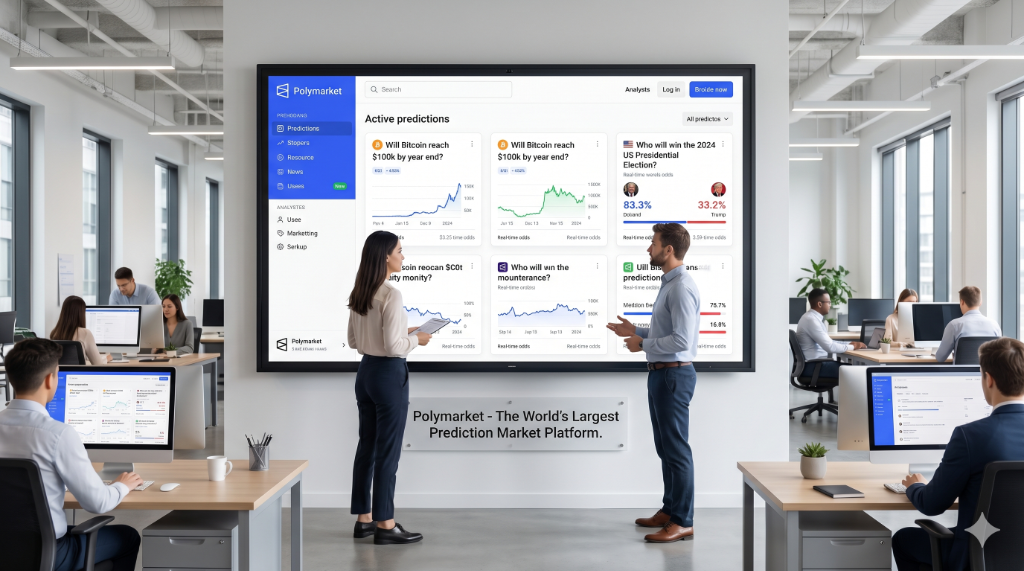
Author: Long Yue, Wall Street News Original title: “Influencer Broker” Robinhood's revenue structure has changed dramatically: It is predicted that market revenue has surpassed stock trading. This brokerage firm, which started with zero commissions, is turning gambling and betting on elections into a big business. Robinhood released its second-quarter earnings report last week, predicting that market revenue surged more than tenfold year-on-year to US$156 million, accounting for 20% of total transaction revenue, surpassing stocks and cryptocurrencies for the first time, becoming the second-largest trading business after options. This change is less than two years since Robinhood officially entered the forecast market. What does this number mean? Based on data for the second quarter, Robinhood predicts that the annualized revenue of the market business has exceeded 600 million US dollars. Mizuho Securities stock research analyst Dan Dolev said bluntly: “Users on Robinhood just love to gamble and predict where the market is in their hands. It's the perfect alternative to cryptocurrency because it gives the brain a sense of reward quicker — you don't have to wait.” From stock trading to betting on the World Cup: What are users chasing The logic of predicting the market is simple: users bet on the outcome of real-world events in the form of “yes/no”, including World Cup matches, elections, and even the weather. This instant, simple gameplay is highly compatible with Robinhood's retail user base. Over the timeline, Robinhood's transaction revenue structure has been shifting along with market hot spots. Stock and options revenue surged during the 2021 meme boom; cryptocurrencies then took over, and memes such as Dogecoin led to a surge in crypto trading revenue; until the end of 2024, cryptocurrencies remained Robinhood's biggest source of trading revenue. The turning point came around the 2024 US election. A sharp rise in market popularity is predicted, and a large influx of capital is betting on the election results. Kalshi was approved to operate legally in the US that year, paving the way for other platforms to follow suit. Robinhood then launched its first event contract at the end of 2024, allowing users to bet on the results of the US presidential election, and then launched categories such as sporting events one after another. The peak in revenue in the second quarter was largely due to the World Cup. Compass Point stock research analyst Ed Engel pointed out in the research report that this made the June and July trading volume “unusually strong.” However, he also mentioned that the US rugby season will begin this fall, which is expected to bring a new round of boost. Self-built trading platform, “split” with Kalshi Robinhood initially did not have its own predictive market trading platform, but instead directed user orders to Kalshi. The two parties split the cost of 2 cents per contract. This pattern is changing. In June of this year, Robinhood and Susquehanna International Group jointly established the prediction market trading platform Rothera and began transferring some orders (including World Cup-related bets) to the platform for execution. The fee structure was adjusted accordingly. Robinhood currently charges users up to 1 cent/contract, plus a fee that varies depending on the execution platform — if the order is still sent to Kalshi, Kalshi charges an additional 1 cent/contract. The result was a marked decline in the interdependence between the two companies. According to Artemis data, the share of Robinhood orders in Kalshi's trading volume fell from nearly 50% in the same period last year to 17.5% in the second quarter of this year. Dan Dolev believes that using Rothera will give Robinhood “more control over the forecasting market business.” But at the same time, he pointed out that since Robinhood needs to provide incentives to users, the difference in profit margins between the two models will not be too big. Industry landscape: Kalshi is still the boss. Despite Robinhood's strong momentum, Kalshi's dominant position in predicting the market remains unshaken. According to Artemis data, Kalshi's monthly nominal trading volume in June this year was about $33 billion, Polymarket was $14 billion, while Rothera (who also executed transactions for Robinhood and some market makers) was $2.1 billion. At the income level, Kalshi's annualized revenue for June this year...

18d agoburnking#Predicting the market
With 1.2 billion shares banned and peaked, can SpaceX's first quarterly report save the stock price?

With 1.2 billion shares banned and peaked, can SpaceX's first quarterly report save the stock price?

Author: Zhang Yaqi, Wall Street News Original title: After the IPO, it fell four weeks and 1.2 billion shares lifted the ban. Can SpaceX's first quarterly report save the stock price? SpaceX will soon release its first quarterly earnings report after listing, and the market will face a critical test. SpaceX will announce second-quarter results after the close of trading on Wednesday, August 4 (Wednesday) EST. As of the opening of the market this Monday, its stock price has been falling for four consecutive weeks, down about 20% from the $135 IPO price, and a cumulative drop of 46% from the historic high of $201.80 closing on June 16. Cantor Fitzgerald analyst Colin Canfield pointed out in the preview report that “earnings expectations for the initial quarter may be extremely biased,” suggesting that the outside world has almost no certainty about the direction of performance. Meanwhile, pressure to lift the ban hangs over stock prices. Approximately 912 million shares will be approved for circulation on August 6, and an additional 319 million shares will be lifted within about a week thereafter. This means that the potential selling pressure from early investors cannot be ignored, and the market's focus will be on the reaction of Thursday and Friday stock prices — a strong earnings report, which may be the only catalyst to break the continuous decline. The AI business has huge revenue potential, but the most uncertain SpaceX financial report was disclosed in three major business segments: Space (Space), Connectivity (Connectivity), and Artificial Intelligence (AI). Among them, the AI sector is where the biggest suspense this season lies. The core asset of the AI business is xAI — SpaceX completed a merger with it in February of this year. xAI currently operates two terrestrial data centers: Colossus I in Tennessee and Colossus II in Mississippi. In the first quarter, the AI business achieved revenue of US$818 million, but recorded operating losses of US$2.5 billion and capital expenditure of US$7.7 billion during the same period. Entering the second quarter, there were important variables on the revenue side. SpaceX has signed an AI data center lease agreement with Anthropic and Google. Among them, the monthly agreement with Anthropic amounts to $1.25 billion, and the gradual increase in volume began between May and June; the Google agreement has yet to be launched. This means that the actual revenue of the AI business is quite flexible this season, and profit margin trends are as difficult to predict as the pace of new capital expenditure. Investors' most anticipated guidance includes the company's outlook for the AI business in the second half of this year and 2027, and a timeline for advancing the idea of using Starship to launch a low-cost AI computing satellite into orbit. Starlink: User growth is a core indicator connecting the business Starlink is SpaceX's most stable profit engine. At the end of the first quarter, the number of Starlink subscribers reached 10.3 million, more than double that of 5 million 12 months ago; the quarter achieved revenue of US$11.4 billion and operating profit of US$4.4 billion. In this quarter's earnings report, user growth data will be the focus of market attention. Colin Canfield expects the company to disclose average revenue per user (ARPU) metrics, as well as the backlog of contracts for enterprise-level and government businesses, which will help investors assess Starlink's depth of commercialization and future growth potential. Space business: Starship's progress is receiving attention. The space sector carries SpaceX's core technology narrative. In the first quarter, the sector achieved revenue of US$4.1 billion, operating losses of US$657 million, and additional capital expenses of US$1.1 billion for plant and equipment. In the second quarter, Falcon 9 completed about 36 launches, most of which served its own Starlink constellation deployment. Such launches are not included in space sector revenue. Starship's progress has also received much attention. In July, Starship completed its 13th flight test, and investors will seek an update on the timing of the 14th test, as well as the scale of the company's continued investment in the rocket — Starship is a key vehicle for future commercial payload launches and AI satellite deployments. Performance expectations and market outlook Wall Street currently expects SpaceX's total revenue for the second quarter to be about $6.9 billion, and profit before interest, tax, depreciation and amortization (EBITDA) of about $2.1 billion; full-year revenue is expected to be $39 billion...

18d agoburnking#IPOs