数学 · 1527

Vitalik Releases “Partial Hybrid” Cryptography Research: Exploring the Next Generation of Obfuscation Techniques or Becoming the Basic Primitive for New Cryptography

In comparison, Vitalik Buterin, co-founder of Ethereum, published the latest article “Obfuscation (Part 3): Local Mixing”, which provides an in-depth introduction to a cryptographic obfuscation technology route currently being explored — “Local Mixing” (Local Mixing), and said that it may become a new cryptographic basic tool after elliptic curves, RSA, and lattice cryptography. Vitalik said that current mainstream obfuscation techniques mainly rely on complex mathematical assumptions, but often have extremely high computational costs; while local blending uses completely different ideas, does not rely on elliptic curves, big integer factorization, or lattice cryptography, but instead draws on symmetric cryptography and hash function design experience to eliminate information leakage while maintaining the same functionality by continuously disrupting, reconstructing, and hiding circuit structures. Local mixing technology mainly includes steps such as reversibility (reversing), hardening (hardening), mixing (mixing), splitting (crossing walk), and “gadgetization” (gadgetization). By adding random structures, rearranging logic gates, and nonlinear hiding mechanisms to the circuit, it is difficult for attackers to recover the original computational logic. Vitalik pointed out that the technology is still in its early stages, security has not been verified for a long time, and faces challenges such as random attacks and linear analysis. However, he believes that local blending represents a new cryptographic exploration path, and its goal is to build a more efficient indistinguishable obfuscation (iO) solution. If a breakthrough is made in local hybrid technology, it may bring new anti-quantum public key cryptography solutions and promote the development of general obfuscation technology. Currently, this field still requires years of cryptographic analysis and optimal verification, but AI-assisted research may significantly accelerate this maturing process. According to Vitalik, obfuscation technology is regarded as the “last frontier” of cryptography because theoretically other cryptographic primitives can be constructed based on obfuscation and unidirectional functions, and local mixing may not only reduce the cost of traditional obfuscation schemes, but may also become an important direction for future cryptographic infrastructure.

1d ago
They are all stealing earlier data. Where exactly is VC Alpha hidden?

They are all stealing earlier data. Where exactly is VC Alpha hidden?

Author: insights4vc Compilation: Shenchao TechFlow Original title: Private Equity Market Intelligence Warfare Heats Up: In the AI Era, Where Did VC Alpha Come From? Guide to Deep Wave: Venture capital returns are extremely concentrated, and finding a good company in the early stages is almost the life and death line of a fund. This article breaks down the latest evolution of private equity market data tools and whether they can actually bring in excess profits. This is a sobering map for investors who are using AI and research tools to find projects. Venture capital has always been an information business. The advantage often lies in timing: founders tell former colleagues instead of updating data first; new companies start recruiting people before they appear in the database; investors start watching a team before the funding is announced. This advantage is important because VC returns are highly concentrated. According to data from the 2026 Oxford Academic Study, 4.5% of the investment amount contributed to a return of about 60% in a long-term LP data set. [1] Therefore, missing a few excellent companies can affect the entire fund. But finding them early is only part of the problem. Investors also need to develop beliefs, get credits, obtain meaningful holdings, and keep things right for a few years. The private equity market data industry is now getting closer to the moment the company was born. PitchBook, Crunchbase, Dealroom, Tracxn, and CB Insights remain core recording systems for transactions, funds, valuations, and company history. PitchBook generated revenue of $174.7 million in the second quarter of 2026, equivalent to nearly $700 million in annualized revenue. [2] The new platform is not replacing this layer. They're extending this layer with faster updates, behavioral data, and signals that predate traditional company records. Three changes stand out the most. First, companies such as Harmonic and Specter are building a continuously updated map of companies and people, rather than relying mainly on regularly updated data. Second, specialty products are looking for earlier behavioral signals. Evertrace tracks metrics formed by founders, including company registrations, technical activity, research, and domain names. Frontrun monitors changes in selected venture capitals' interest maps on X. Third, the API and Model Context Protocol (MCP) are moving this data into the fund's own software and AI workflows. Crustdata represents the infrastructure side of this market, while Affinity complements first-party relationship data from emails, calendars, and CRM events. Adoption is visible, but evidence of excess return on investment is not clear. Harmonic says hundreds of venture capital teams use its platform, and Specter reports more than 300 investment institutions, Evertrace more than 200 funds, and Affinity more than 3,300 private equity firms. Listed company Tracxn disclosed that it had 2,289 customer accounts in fiscal year 2026. [3] [4] [5] [6] Most of these figures are self-reported by companies. Vendors rarely disclose the complete set of companies unearthed by their models, making it difficult to assess accuracy, recall rates, false positives, and the economic value of individual leads. No single signal alone is enough. Employee departures may be early but vague. Company registration is objective but common. GitHub activities are valuable in developer-led markets, but have limited relevance in other areas. Hiring speed and employee migration provide broader signals, while revenue, customer, and usage data are often more valuable for decision-making, but come later. When several credible industry experts focus on the same company, investors' attention can provide early signs, even though this signal is platform-dependent and may reinforce itself. The strongest defensive sources are likely to be hidden deeper in the data stack: historical time series that cannot be reconstructed later, accurate physical analysis across people and companies, authorized first-party fund data, and distribution through CRM systems, APIs, and agents. Public data is not necessarily proprietary. However, five years of correctly time-stamped change history can become a proprietary asset. AI is more likely to make these infrastructures more easily queried rather than eliminate the need for them. As research, classification, and workflow costs drop, clean data, sources, and institutional context become more valuable. Investment decisions, quotas, and relationships are still not something a simple layer of automation can solve. The likely outcome is that a broader market for private market intelligence will emerge, rather than an independent search for project software categories. A mature database will increase discoveries and...

1d agoburnking
Black eats black? Fake DeFi actually snatched out North Korea's Lazarus real hacker

Black eats black? Fake DeFi actually snatched out North Korea's Lazarus real hacker

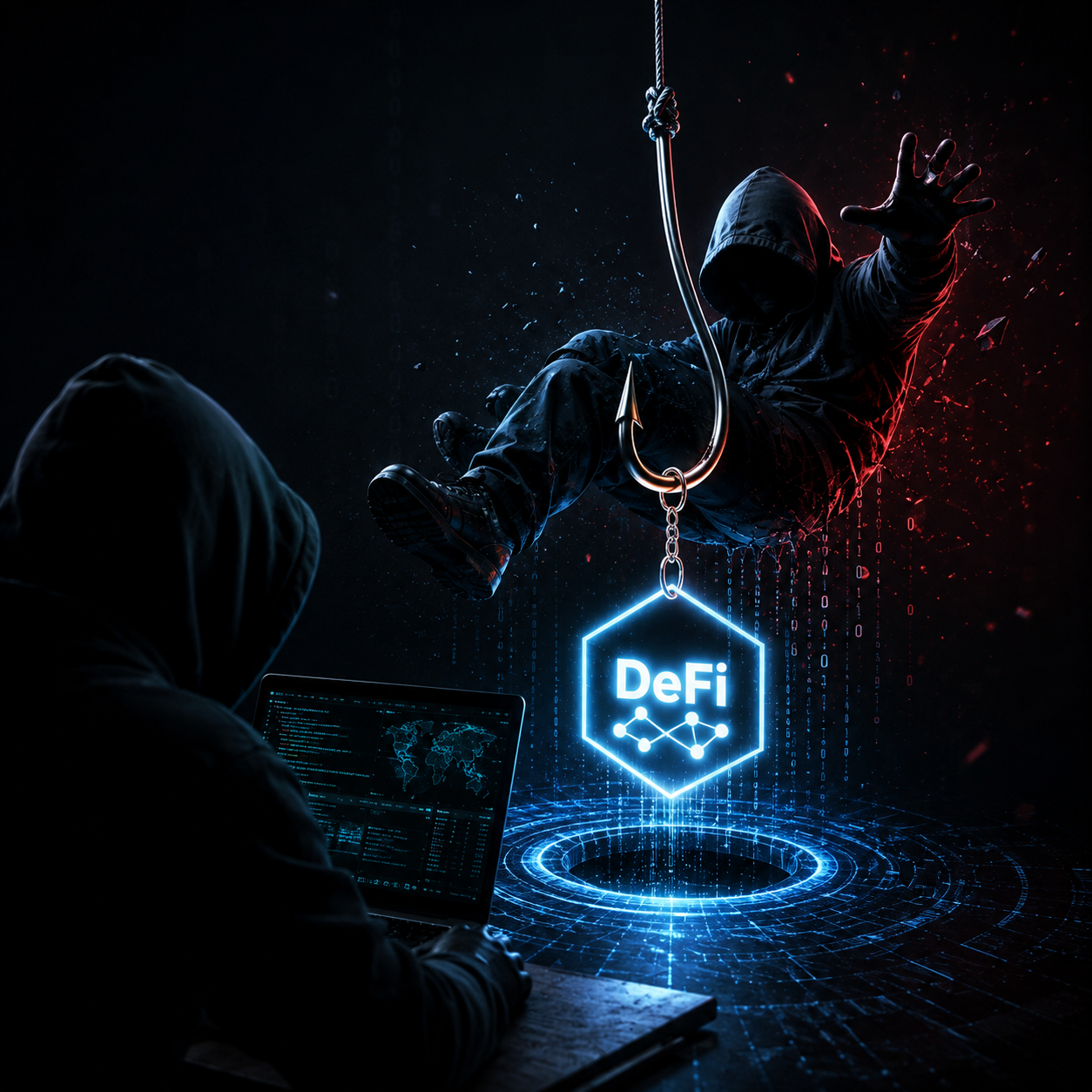
Source: Security Company ANY.RUN Compiled by: Daily Planet Daily Original title: Fishing Show of the Year, Fake DeFi Picks Out North Korea's Lazarus, Real Madrid Fans, Real Madrid Fans. With a mathematical background, they only use AI to write code. Core point of view: By setting up a fake DeFi company, the security agency successfully infiltrated the “Famous Chollima” hacker group under North Korea's Lazarus Group, revealed its complete process of using false identities, AI tools, and remote collaboration to infiltrate Western companies, and revealed its evolving toolset and infrastructure. Key element: The researchers disguised themselves as recruiters and recruited three North Korean agents within a few months to record their operation behavior, tool usage, and collaboration patterns in real time through the ANY.RUN sandbox environment. Agents used forged driver's licenses, stolen social security numbers, and mule accounts to complete the onboarding process. Some of these documents were processed by Google Gemini and had SynthID watermarks, revealing signs of forgery. Attackers rely on AI tools such as ChatGPT and Google Gemini to encode, translate, and modify files, and use AstrillVPN, remote desktop software, and dedicated servers to covertly access corporate environments. The three agents showed insufficient skills during development, frequently searched for basic issues, and exposed more proxy server and infrastructure information induced by selective network outages and captcha. The investigation found that Famous Chollima aims to lurk within the enterprise for a long time and legally obtain access to code, systems, and intellectual property rights, and is not limited to short-term attacks, and the threat persists significantly. Crypto friends who are often phished have probably heard of the North Korean hacker group Lazarus Group. Its well-known “campaigns” include, but are not limited to: Bybit ($1.5 billion) theft, Ronin Network/Axie Infinity Bridge attack ($6.2 billion), DMM Bitcoin/Ginco related attack ($308 million), Harmony Horizon Bridge attack ($100 million), and Atomic Wallet attacks ($100 million), etc. And the key to the success of these attacks is social engineering — hackers usually disguise themselves as normal job applicants, lurk at crypto companies for years, and wait for the right time. Recently, security agency ANY.RUN joined forces with BCA LTD (a company dedicated to threat intelligence and hunting) and NorthScan (a threat intelligence program to uncover the infiltration of North Korean IT workers) to effectively crack down on North Korean hacker agents. The researchers created a fake DeFi startup and successfully recruited “Famous Chollima” agents under North Korea's Lazarus Group who specialize in human infiltration, to gain an inside perspective on the actions of North Korea's IT workers. The ANY.RUN sandbox environment shows the agent's behavior patterns in real time, revealing their evolving toolsets, remote access workflows, AI tool usage, and supporting infrastructure. This survey went beyond the simple recruitment process and showed in depth how these agents collaborated, obtained, and used company resources after joining the company. The findings suggest that the North Korean IT worker program not only poses a recruitment risk; once agents sneak inside the organization, they can legally obtain access to code, systems, intellectual property, and critical business processes. The following is a report co-authored by the three parties, compiled by Daily Planet Daily. ——————Introduction In December of last year, we fully recorded the infiltration cycle of “Famous Chollima” for the first time. From recruiting collaborators to help them join Western companies, to falsifying documents, shipping laptops to intermediaries, and even using AI tools to assist and translate in real time during interviews, everything is under control. In that survey, we pretended to be a middleman willing to interview them and lend them a laptop in exchange for a percentage of their salary. The point is that those laptops are actually ANY.RUN sandbox environments that record every click and every step they take. This provided us with massive metrics, hours of computer operation videos, and face-to-face contact images, making an unprecedented survey and making headlines in many media. (“Famous Chollima...

1d agoOdaily星球日报#wallet security #hacks
US Stock Value Investing Is Heading Into Another Trap

US Stock Value Investing Is Heading Into Another Trap

Source: Shenchao TechFlow Original title: (Opinion: Value investing in US stocks is not equal to fundamental investment) When “fundamentals are dead” becomes a consensus, investors who blindly organize giants will eventually experience astonishing capital destruction. Guide: When the market shouted “fundamentals are dead” and the capital frenzy formed a group of tech giants, the author used an astronomy discovery to unravel the logical loopholes behind this narrative. Starting from the composition of valuation multiples, this article reminds investors to distinguish between the true quality of an enterprise and the premium that the market is willing to pay. It is particularly cautionary about long-term allocation in the crypto and technology sector. I promise this introduction won't be as long as the last one on the weather. But please give me 90 seconds. More than 100 years ago, a woman named Henrietta Levitt was doing the tedious job of measuring the brightness of thousands of stars on photographic negatives (the way they were imaged before film appeared). She noticed one characteristic of a class of pulsating stars: the slower they pulsate, the brighter they themselves are. ¹ This might just seem a little interesting today, like “OK, that's pretty cool.” But at the time, astronomers couldn't tell the difference between a dark star very close to Earth and a very bright star far away. For them, the two left the same stain on the photographic film. Visual brightness is a messy mix of these two variables: how bright the thing itself is, and how far away it is from us. Henrietta's work decouples these two things: if you can observe the rate of pulsation, you can know its true luminosity; if you know its true luminosity, you can reverse the distance based on how dark it looks. Astronomers call it “standard candlelight.” A few years later, a man named Edwin Hubble discovered one of these pulsating stars, applied Levitt's math, and discovered what he had always thought was a cloud of gas within our galaxy; in fact, it was an entire independent galaxy, one million light years away. So in simple terms, the observable universe has grown about a trillion times larger, just because one person has figured out how to tell the difference between what things look like and what they actually look like. That in itself is obviously pretty cool. But another interesting thing is that around the same time period, two other astronomers each independently drew a scatterplot. One axis was actual luminosity, and the other axis was temperature. They discovered that stars are not randomly distributed in this space, but rather clustered into different families. The meaning behind this is: stars with the exact same visual brightness may and do belong to a completely different family, have a completely different past, and most importantly, have a completely different future... So what is written in the star? Over the past few years, there has been much discussion about markets, narratives, capital, company building, and financial nihilism. This feeling seems to have reached a feverish climax as the tech and financial world begins to face a very different future than a few decades ago. What is particularly clear is that separating progress from asset prices has become more noisy and in many ways more repulsive. But as an investor who makes a living by buying assets that (hopefully) outperform, a simple framework is: forward returns are roughly equal to growth in fundamentals multiplied by changes in valuation multiples (and multiplied by the dividends you've collected along the way). In this case, the valuation multiplier can very cleanly correspond to the smudges on the photographic film. It's an observable data point, but it entangles two things that the market can't directly see: how good the company actually is, and how far (or how long) its future cash flow is now. I think most of the money that can be made comes from investors who are most capable of unraveling these two variables earlier than others (or “perception of differences”), and we will continue to see astonishing capital ruin for investors who treat their stains as stars. Value investing is not equal to fundamental investing. I think there is a misunderstood view: fundamental investing has historically dominated the creation of excess returns. Most of these legends come from the Graham, Buffett, and Tiger Foundation lineage, as well as numerous narratives built around this group of people. It is believed that by some point in the 2000s, this approach was no longer effective, and anyone who invested in this way was overwhelmed by momentum, trends, and “direct buying tech giants.” The conclusion was (and still is?) It's “fundamentals are dead.” ² The modern version of “fundamentals don't matter” itself isn't stupid. It's rooted in a lot of ideas that many of us on the Compound team have written before. The biggest companies get the most mechanical purchases, and the software industry has a winner-take-all economic law. AI means that giants can transform scale into moats faster than challengers, and there are also reasons why the market's microstructure embeds momentum more deeply into our market infrastructure. These are all real...

1d ago深潮TechFlow#US stocks

AI is approaching superhuman mathematical ability, and the world's top mathematicians worry that the value of human research will be weakened

Comparing news, about 40 of the world's top mathematicians recently held a meeting at the San Francisco OpenAI office to discuss a controversial question: when artificial intelligence surpasses humans in mathematical research, what role will mathematicians play in the future. Daniel Litt, a professor at the University of Toronto, proposed extreme ideas at the conference. In the future, high-quality mathematical research may disappear and human mathematical expertise will gradually be lost. He said that although this outcome is not the most likely, the math community must adapt to the changes brought about by AI as soon as possible. Mathematics is considered to be one of the first subjects to be impacted by AI research capabilities. Recently, OpenAI announced 10 mathematical and computer science achievements generated or assisted by AI, covering a number of research fields that usually require years of training to master. OpenAI mathematician and Fields Medal winner Jacob Tsimerman said AI could soon reach a level that steadily surpasses humans in the field of mathematical research. He recently announced that he will join OpenAI to participate in AI security-related work. In recent years, AI has begun to produce some groundbreaking mathematical results. In May of this year, an OpenAI model that had not been publicly released proposed an example of refuting unit distance conjectures. The results were considered by some mathematicians to have reached a level where they can be published. At the same time, Anthropic researchers also used Claude to complete research on high-dimensional mathematical problems. However, the mathematical community is still divided over AI replacing human researchers. Some experts believe that AI can generate proofs, but it doesn't necessarily really understand mathematical concepts. Harvard mathematician Melanie Matchett Wood points out that it is still difficult for top AI models to accurately explain the key difficulties in the proof. Northwestern University mathematics professor Bryna Kra said that math isn't just about getting answers, it's more about understanding results. A proof that isn't understood doesn't really become part of the mathematical literature. At the same time, some researchers believe AI may be a tool for mathematicians rather than a replacement. OpenAI research scientist Sébastien Bubeck said that future mathematics may be similar to software engineering, where AI helps a large number of researchers collaborate to solve complex problems; it may also be similar to physics, driving larger scientific exploration through AI models. As AI continues to break through in scientific research, mathematicians are facing a new era of proposition: whether future mathematical research will be co-created by humans and AI, or whether it will gradually become machine-led.

3d ago
Why did he dare to vote for Yu Shu 6 years ago? 丨Exclusive secrets revealed by early investors

Why did he dare to vote for Yu Shu 6 years ago? 丨Exclusive secrets revealed by early investors

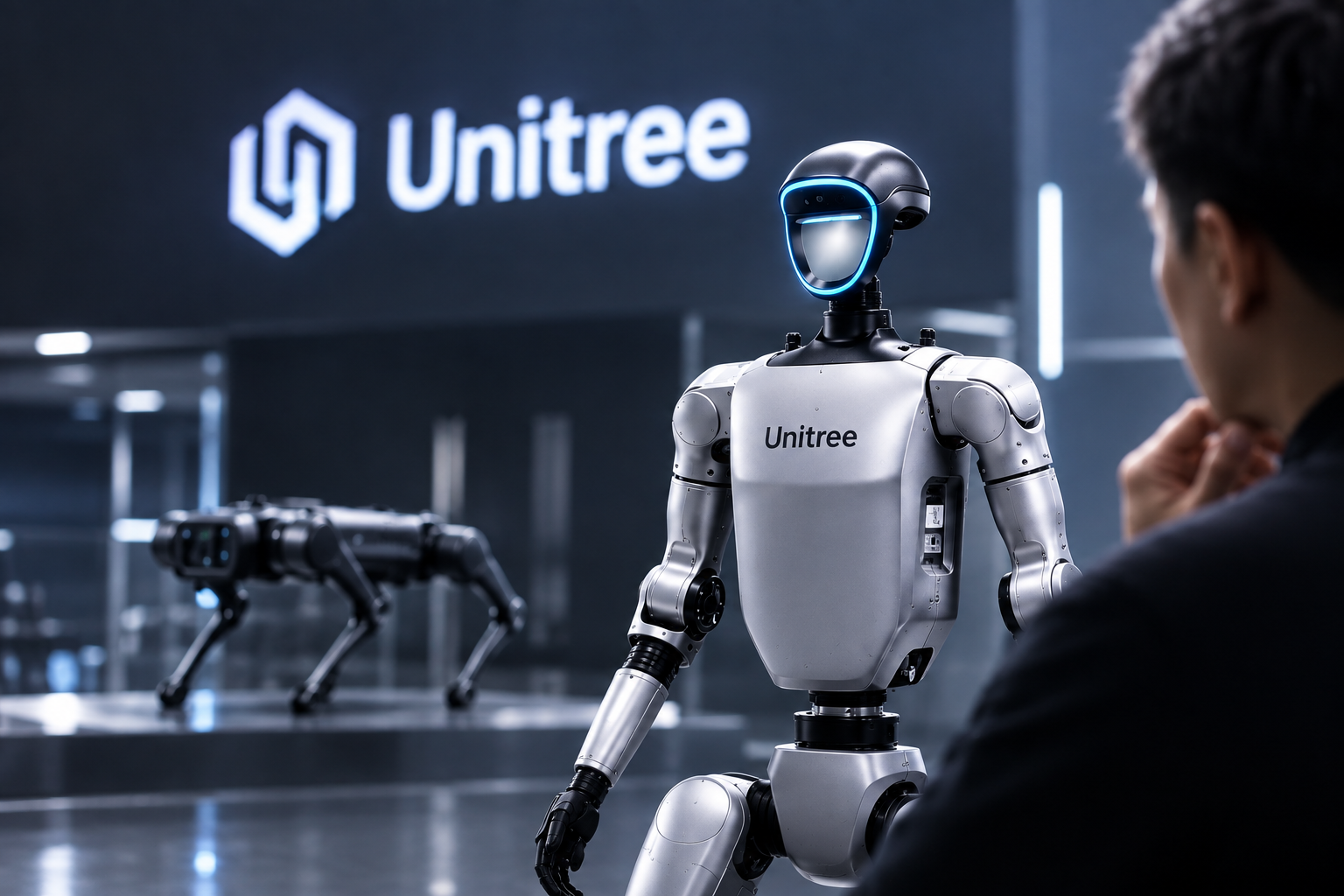
Source | Pencil Dao Oral Statement | Edited by Yu Shu Early Investor Zhao Nan | Wang Fang Original title: Yu Shu Early Investors: 6 years ago, why did I dare to invest? 丨Exclusive Today (August 19), Yushu Technology officially landed on the Science and Technology Innovation Board and became the “first stock of humanoid robots” in A-shares. Yushu's issue price was 150.80 yuan/share, an increase of 629.44% after opening on the first day. The market value reached 444.9 billion yuan at this point. Earlier, Pencil Road had a conversation with its early investor, Zhao Nan, to try to restore it: Why did Yu Shu dare to take action when he was still very low-key? The following is Zhao Nan's oral statement. - 01 - Meet Uki, the first time I met Uki because of the four-legged robot, was in April 2020. It wasn't an accidental encounter. Beginning in 2019, I've been watching robot tracks in a systematic way. Basically, I've looked at all the directions I could see at the time: four-legged robots, underwater robots, food delivery robots, and even some consumer-grade products. After watching that round, I actually have a relatively clear judgment in my mind: the robotics industry is not a question of “whether it will happen,” but “when will it happen.” The real question is: which directions have been proven and which are just imagination. In my opinion, four-legged robots are one of the few directions that have been proven. Look at Boston Dynamics (Boston Dynamics). It has already made robot dogs, and customers are already using it. This incident shows a very important thing: robots are not sci-fi, but have entered the real world. But at the same time, it also revealed a more essential problem — the cost problem: people are too expensive, R&D is too heavy, and the supply chain is immature. At the time, Boston Power's problems were typical: the team was the top team in the world, and labor costs were extremely high; the R&D cycle was long and the investment was huge; even early products were still using diesel instead of lithium; in the end, they were sold by Google to SoftBank Vision Fund. However, this is not to say that there is no demand for four-legged robots; it is that the cost cannot support it. To this day, four-legged robots are still one of Uki's core businesses, so my judgment at the time was: Whoever can cut costs has an opportunity. Obviously, the Chinese team has an opportunity because we have a supply chain advantage. - 02 - Why invest? It was also based on this judgment that I visited Hangzhou for the first time in April 2020 and met Wang Xingxing (founder of Yushu). That meeting actually made me realize very quickly that this isn't a “just starting” team. It was 2020 at the time, and they've been doing it for three years. When Wang Xingxing was a graduate student at Shanghai University, he already brought a four-legged robot laboratory. At that time, he started working on xDog's algorithm. By the time we met him, he had a deep understanding of every detail of the four-legged robot's functions and procedures. In other words, while many teams are still “watching the track,” they are already building up technology. This is particularly critical in the robotics industry, as it is a typical “time for ability” industry. Many things can't be smashed with money; they have to be accumulated little by little. What really made me decide were a few more specific things. First, they have mastered the robot's core underlying ability. Many people think that robots are a “complete machine product,” but in reality, there are three things that really determine the height of a robot company: driver, sensor, and controller. If you don't have these three pieces in your hands, you'll always be just a system integrator. Meanwhile, in 2020, Yu Shu already has accumulated technology and patents on these three areas. This means it's not assembling products, but building underlying capabilities. This essentially determines its upper limit. Second, it's the customer. Many robotics companies “make products first, then find customers”, but Yuuki did the opposite — they already had customers in 2020, and they are not regular customers. At the time, their customers included companies such as Apple, Nvidia, Meta, and Google. These companies buy their robot dogs to use for AI training and algorithm training. Domestic customers are mainly universities. This matter is critical because it shows two things: first, the product is already available; second, the technology has been recognized by top technology companies. Wang Xingxing always pushes everyone to do one thing: make simple products that customers can accept, and sell them one wave first. Not to make money, but to train the company's entire R&D, production, and sales system by selling products. By communicating with customers, we can also find problems and iterate on products. Third, mass production capacity. I went to their company at the time and saw something very detailed — there was a warehouse next to their office building with a press machine that was used to mold parts. At the time, Wang Xingxing explained that a four-legged aircraft...

3d ago铅笔道#Uki IPO #Wang Xing Xing
Why is capital chasing AI Native and ignoring the old Internet

Why is capital chasing AI Native and ignoring the old Internet

Capital doesn't reward being old-fashioned, not because old-fashioned people are at fault. The old part is clearly priced. There is no bad information, so there is no excess profit. Global venture capital was $510 billion in the first half of 2026, surpassing $44 billion for the full year of 2025 in one and a half months. More than 70% have entered AI; OpenAI and Anthropic took 217 billion dollars, accounting for 43%. With that much money, you'd think everyone could share a little bit. The truth is that distribution is more extreme than total volume, and the first sieve doesn't screen the industry, it screens people. The category that has been screened out now has an unkind name: the internet is old. Let's just say one thing: the “old man” in this article has nothing to do with age. It refers to a set of methodologies that have been formed in the mobile internet cycle, have been tested over and over, and have brought huge returns to holders. The person holding it may be 45 years old or 32 years old. It was this methodology that was being repriced, not the year of birth. Confusing these two things is Lao Deng's most common mistake and one of the most comfortable mistakes — because if the problem is someone else's age discrimination, you don't need to change a single word. 01 What is AI Native The term has been misused. They can use ChatGPT not called AI native, nor AI in the company name, let alone in their twenties. There are three things that really separate people. First, the starting point is a model, not a requirement. The order in which Lao Deng makes a product is: look at what the user wants, write down the requirements, and find technology to implement it. The order of AI natives is reversed: first figure out what level the model is capable of today and what step it is likely to reach tomorrow, and then move from this capability boundary to the external product. The former uses the model as a tool, and the latter uses the model as the foundation. There was no difference between these two kinds of things made by humans in the first edition; by the third edition, there was a difference of one species. Article 2. The default unit of an organization is not a person. The division of labor in the Internet age is the division of one thing into ten people. AI Native's division of labor is to take ten things from one person and add a bunch of agents. The CEO of a domestic application company said that the team consists of less than ten people, but a large number of AI work at night, and the first thing employees do every morning is check the work the AI handed in the night before. Cursor's side is even more extreme. Public reports mention that the company doesn't have a product manager; engineers write their own code, talk to users themselves, and participate in recruiting people themselves. Article 3. Information is first-hand. AI Native's input sources are papers, model cards, GitHub issues, original discussions on X, and self-run evals. Lao Deng's input sources are industry summits, closed-door meetings, brokerage reports, interpretation of public accounts, and finding someone to drink coffee with. This one is the least obscure and most lethal; I'll talk about that separately later. I'm satisfied with all three. The 25-year-old is an AI native, and so is the 45-year-old. I'm not satisfied with the three rules; I'm still an old man at the age of 25. AI natives are a state, not an age group. The trouble is that tickets in this state are works, not resumes. 02 The two lists spread the results of this round on the table. These are two lists. The first one is an all-AI native company. Their valuations are not rising; they are exchanging orders of magnitude. List 1 · Upstream OpenAI raised $122 billion in a single round of financing in Q1 2026, followed by $852 billion, the largest private equity financing in history. Anthropic Q2 had a single round of $65 billion, after investing $965 billion, accounting for about half of the total global venture capital for the quarter; the revenue operating rate in May reached about $47 billion. DeepSeek raised about 70 billion yuan in its first round of financing in May 2026. In April of the same year, Liang Wenfeng raised his direct shareholding from 1% to 34%, and controlled a total of about 84.29% of the shares through related entities. The Dark Side of the Moon (Kimi) was estimated at $4.3 billion in December 2025; it went for three consecutive rounds from January to February 2026 to reach 18 billion; the D round in May was about $2 billion, breaking 20 billion dollars after the investment; the July round surpassed $3.5 billion, after investing 35 billion dollars; the pre-IPO target was 50 billion dollars. ARR broke 100 million in March, 200 million in May, and held steady at 300 million US dollars in June, with APIs accounting for more than 70%. Smart Spectrum · MiniMax successively landed in Hong Kong stocks in early 2026, with a market capitalization exceeding 100 billion yuan. It was one of the first major model companies listed in China. The second one...

4d agoWendy#AI #DeepSeek
Fireworks that came out of Meta to talk about open source and closed source. Who will win?

Fireworks that came out of Meta to talk about open source and closed source. Who will win?

Author: Silicon Valley Vector Silicon Valley Coordinates Editor: Peggy, BlockBeats Original title: Silicon Valley Coordinates x Fireworks Co-Founder Benny Chen: Open Source Models, Token Growth, Inference Optimization, and Model Customization Editor's Note: In the context of open source models speeding up and approaching cutting-edge closed-source models, industry discussions are shifting from “who has the most capable model” to “who can put models into production at a lower cost”. However, when model capabilities converged and token consumption increased, a lower-level question began to emerge: are companies really willing to pay a cheaper model call, or exclusive intelligence that can perform specific tasks in a stable manner? Recently, Cao Qingyun, host of “Silicon Valley Coordinates”, had a conversation with Chen Yufei, co-founder of Fireworks AI. Located between models and enterprise applications, Fireworks mainly provides customers with open source model inference, performance optimization, and customization services. Rather than simply discussing whether open source can catch up with closed sources, Chen Yufei's observations are closer to actual workloads: where tokens flow, why companies pay, and what is still missing from the model from proof of concept to production. In this conversation, Chen Yufei disassembled “who wins between open source and closed source” into a set of lower level structural questions: can token growth be converted into revenue, can generic capabilities replace vertical accumulation, can the low price model pass corporate evaluation, and how the inference platform can gain value between cloud vendors and application companies. First, the scale of use and commercial value of the open source model are diverging. In the past, the ability to catch up and call price were the main indicators for judging the competitiveness of open source; today, the Fireworks platform processes about 40 trillion to 50 trillion tokens every day, and the actual usage of the open source model has rapidly expanded. However, free traffic, promotional subsidies, and model price differences will cause Token statistics to overestimate some demand. Customers may heavily use lower-cost models and still hand over the highest budget to the best-performing closed source model. This means that the next phase of open source is not just expanding traffic, but proving that it can meet or even surpass cutting-edge models for high-value tasks, and turn cost advantages into willingness to pay. Second, the general model and the vertical model are beginning to evolve in different directions. In the past, every time a cutting-edge model was upgraded, it was possible to directly eliminate a number of fine-tuned models; now, vertical applications such as law, medical care, and programming are accumulating more detailed evaluations, data, and workflows, and their optimization goals are gradually separated from cutting-edge laboratories. Generic models need to increase the upper limit of capabilities, while vertical models require stable delivery of results in limited scenarios. The former can solve a wider range of problems, while the latter has a better understanding of how users define “right.” This means that the barrier for vertical companies is not just having a customized model, but being able to continuously transform industry needs into an evaluation system and migrate over and over again as the basic model is updated. Third, the bottleneck in enterprise AI implementation is shifting from model supply to evaluation capabilities. In the past, enterprise proof of concept often relied on trial experience and subjective judgment; now, when AI enters production processes such as call centers, legal searches, and medical assistance, it is no longer possible to support procurement decisions simply by “looking good.” Businesses must know what tasks the model works for, when it fails, and how much the cost and quality of switching from closed source to open source changes. Assessment is therefore no longer an ancillary tool, but an infrastructure connecting procurement, training, and production deployment. Who can define tasks, establish test distributions, and continuously update standards can truly control model choices. Fourth, the value of inference platforms is shifting from “selling cheap computing power” to organizational models, hardware, and workflows. In the past, inference optimization was mainly understood to reduce the cost of a single token; now, caching, task splitting, model routing, and context management can all directly change the task completion rate. Different models don't have to compete for the same position; they can act as performers and advisors separately. Fireworks' business logic is also based on this: instead of building asset-heavy hardware, revenue is tied to actual use of customer models through training, customization, and continuous reasoning. But the main rival in this path is not a single new cloud company, but a large cloud vendor that can simultaneously control computing power, software, and customer portals. Fifth, the rise of the open source model may not reduce infrastructure requirements; on the contrary, it may reduce model layer premiums and further push value towards reasoning and computing power. Tech giants continue to increase capital spending, not just calculating short-term returns, but measuring missed AI cycles...

4d ago律动BlockBeats#AI
After eight years of investment, why did Ethereum abandon Poseidon?

After eight years of investment, why did Ethereum abandon Poseidon?

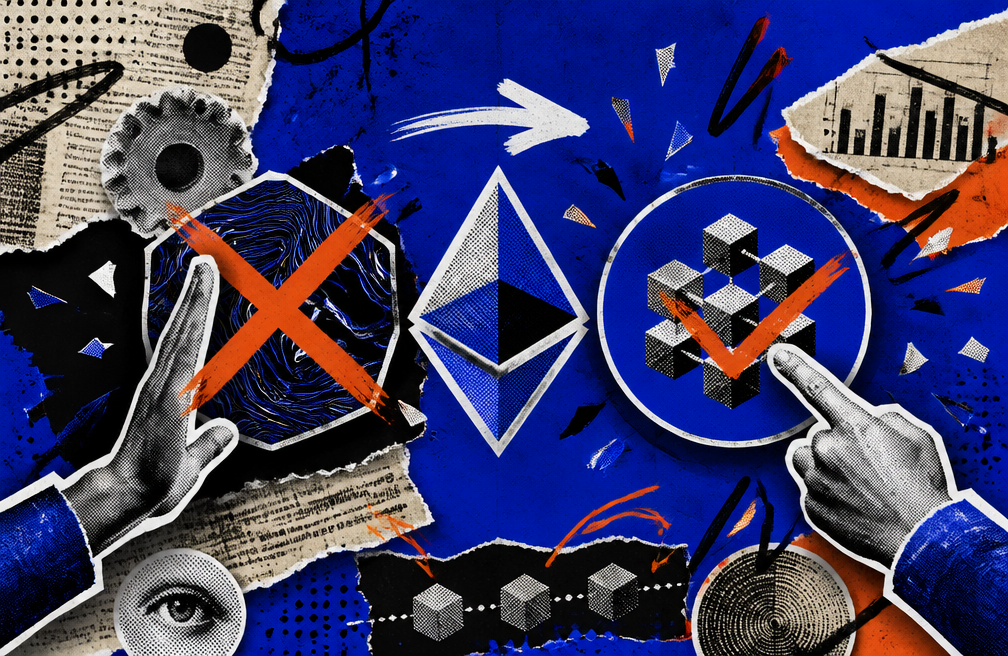
Author: ChandlerZ, Foresight News Original title: After eight years of sharp turns, why did Ethereum suddenly abandon Poseidon? On August 13, Ethereum researcher Justin Drake wrote on X that the Ethereum Fund decided to abandon the SNARK-friendly hash algorithm Poseidon at the L1 layer and instead use traditional hash functions such as SHA2 or BLAKE2. Behind this decision is eight years of research, the accumulation of tens of millions of dollars, and a major revision to the post-quantum cryptography roadmap. Since its launch in 2019, Poseidon has been regarded as an ideal hashing scheme for applications such as zkRollup and zKVM. Its structure makes it cheaper and more efficient than traditional binary-based hash functions in SNARK circuits. But when post-quantum security became a hard requirement for Ethereum, Poseidon's limitations began to be exposed. Justin Drake said that this shift is due to groundbreaking SNARK design progress, that is, the performance of traditional hash functions in SNARK circuits is comparable to that of Poseidon, which was previously designed specifically for SNARK optimization. A single laptop can verify about 1 million traditional hash calls per second. According to the article, Poseidon has been the mainstream SNARK-friendly hashing scheme since its launch in 2019, providing security guarantees for applications such as zkRollup and zKVM. Justin Drake said that the plan shows that production-grade LeanVM is expected to be launched in 2027, the relevant deployment of the consensus layer, data layer and execution layer is expected to be completed in 2028, and the quantum team is also accelerating research related to the binary domain after the Ethereum Foundation. Why now? Traditional hashes have been difficult to enter SNARK for a long time, and the main obstacle comes from differences in computational languages. SHA2, BLAKE2s, and Keccak make extensive use of Boolean operations such as XOR and shift. Traditional SNARK usually processes arithmetic on large prime numbers, and simulating every bit operation can incur high constraint costs. Poseidon is designed directly around prime field arithmetic, with fewer constraints in exchange for higher proof speed. The cost is that the algorithm has a short history and requires continuous cryptographic analysis. The binary domain switches the underlying math to the smallest element domain containing only 0 and 1, and uses the binary domain extension to carry larger data. As a result, bit computation can directly enter the proof system. SNARK began to adapt to traditional hashes, and the technical focus changed from designing SNARK-friendly hashes to designing hash-friendly SNARKs. Binius, proposed by Jim Posen and Benjamin Diamond in 2023, shows the binary tower domain SNARK path. The Flock paper by Benedikt Bünz, Ron Rothblum, and William Wang was uploaded to arXiv on July 29, 2026. Its M4 Max benchmark is that a single core proves 82,000 times of BLAKE3 compression and 42,000 SHA- cycles per second With 256 compression and 30,000 Keccak replacements, the 10-core BLAKE3 has a throughput of over 660,000 times. According to Drake, the laptop can prove about 1 million traditional hash calls per second, which is about 100 times the cost of native CPU Boolean calculations; SNARK.fast reached 1.8 million BLAKE3 per second on M3 Max a few days ago. LeanVM in 2027, the 2028 three-tier deployment Another key reason for the abandonment of Poseidon is that the post-quantum security timeline is accelerating. “The Quantum Threat to Blockchains - 2026 Report” published by Project Eleven points out that the rapid development of quantum computers poses a serious threat to blockchain security. Once a “cryptographics-related quantum computer” (CRQC) appears, the Shor algorithm can quickly crack asymmetric cryptography such as ECDSA (used by Bitcoin and most public chains) and RSA. It is expected that Q-Day (quantum decryption day) may be between 2030 and 203...

5d agoForesight News#L1 #Ethereum

AI probably doesn't have a language barrier at all: practice only one language, and others will get better

Comparative news. According to monitoring, the Apple research team conducted a round of reinforcement learning experiments with 9 models and 11 languages, and wanted to find out: if the training data were in only one language, could the problem solving ability learned by the model be used for questions in other languages? The answer is, yes, and the effect is pretty obvious. By training in only one language, the model will also improve in many other languages. For example, in the French test, when training directly in French, the score increased by an average of 25.6 percentage points; no French training at all, only Spanish questions were used to practice, and the final French exam could improve by 24.6 percentage points, which is only 1 percentage point difference. The model learned not only questions in a certain language, but also some problem solving methods that can be continued to be used in different languages. Therefore, if you want to improve the model's Chinese reasoning in the future, not all of the reinforcement learning data will have to be converted back to Chinese. However, training languages cannot be changed at will; specific languages may indeed trigger the deterioration of specific abilities. With the same set of reinforcement learning and another training language, some models will clearly regress in other languages and tasks. In the most exaggerated set of experiments, after Qwen3-4B was trained in Kiswahili, a set of English tests that had not been seen during training dropped 19.2 percentage points from the original model; when training multiple languages together, this test increased by 4.5 percentage points. This paper mainly verifies reasoning questions where answers such as mathematics, logic, graphs, and geometry can automatically determine right or wrong. After these questions are changed from one language to another, the underlying solutions often remain the same. The paper did not verify the tasks of reading comprehension, metaphor, semantic judgment, and cultural knowledge that really depend on the language itself.

5d ago