暴雷 · 654
Millions of dollars are rushing into the market, but some are in a hurry to exit: Pharos's high-interest treasury causes a “view of time” collision

Millions of dollars are rushing into the market, but some are in a hurry to exit: Pharos's high-interest treasury causes a “view of time” collision

Article: Sanqing, Foresight NewsSharos Network joined forces with Vault infrastructure agreement R25 and credit asset management agency Axil to launch Axil Prime Credit Vault (APC), an institutional consumer credit RWA wealth management product issued by Pharos on July 15. The products were launched simultaneously with Binance Wallet, TopNod, OKX Wallet, Bitget Wallet, and KuCoin Wallet, with a total fundraising limit of 100 million USDC, with a target annualization of about 14.3%. As of the closing of the deposit window, a total of $45.39 million had been deposited. This year, there have been frequent security explosions in Web3 on-chain strategies. User funds are looking for new stable income sources, and project parties are also there. Binance Wallet is now offering an additional $300,000 PROS as an incentive to explore RWA Vault's market space, causing the Vault to generate a lot of discussion in the market. The launch time coincided with the redemption period of the Pharos TGE pre-deposit campaign. The previous treasury required the submission of a redemption application about half a month before the end of the lockdown period, stop accruing interest on July 20, and complete the redemption within 7 days. Users accustomed to DeFi T+0 looked back and found that they couldn't help but missed the redemption period and began to question the redemption time and asset safety. R25 and Axil then held an AMA at Binance Square. Well-known KOLs such as Haotian and Tianqing participated in discussions, detailing the differences between RWA assets and DeFi Vault, the role of fund managers (Curators), why consumer credit is worth allocating, and risk management methods from pre-investment to post-investment. In complex asset logic and mixed social media discussions, some users put in one million funds on the last day, while others sought early redemptions from the project party. On July 23, Pharos issued an announcement: Users who submitted applications on time in the previous issue have received all principal and interest, breaking the “financial security” concerns; funds that missed the window will automatically be carried forward to the next three-month cycle according to the treasury's preset rules, and interest will continue to be accrued at 14% USDC per annum. The controversy revealed more important issues than the redemption itself. Although the RWA TVL has exceeded $38 billion, non-institutional chain users are clearly dissatisfied when investing in RWA products. Institution-driven, stable, and high interest rates, but often require longer lockdown periods and complex understanding costs. From DeFi to RWA, is the market really ready? High yield, low threshold, and high liquidity. BlackRock's “impossible triangle” of RWA's BUIDL threshold is $5 million. It is only open to qualified buyers, yet it can be redeemed almost instantly through the stablecoin channel; the APC threshold is so low that ordinary users can buy it at will; instead, it must be locked for three months. Liquidity has never been determined by how high or low the threshold is, but rather how quickly the underlying assets can be realized. The bottom layer of BUIDL is US treasury bonds, and the world's deepest secondary market can take over at any time; the bottom layer of APC is hundreds of thousands of emerging market consumer loans, and few people are ready to buy large amounts of capital at any time. This has formed a triangle that RWA cannot bypass at this stage: high yield, low threshold, and high liquidity; the three can only take two. For example, Franklin Templeton's BENJI starts at $20 (low threshold) and supports daily redemption (high liquidity), and the annualization is only 3% to 5%; if you want double-digit returns, you have to accept non-standard assets and a lock-up period. This is the liquidity premium. A significant portion of the excess income is the consideration for abandoning liquidity. APC, on the other hand, is a combination of high returns and a low threshold, and the cost is liquidity. There is nothing wrong with this trade-off itself; it also explains the full source of this controversy. Retail investors have obtained assets that were originally only open to institutions, and they have also taken over the agency's time rules that focus on long-term matching. The period of use of institutional funds is scheduled before investment, and the lockdown period is a predictable cost; private equity credit and closed-end funds already have redemption restrictions. However, most ordinary users on the chain are not the same; most of the latter's first appeal is to go in and out. So the current “retail” RWA is mostly just distribution-side retailing, to be precise. Web3 wallets and low initial investment amounts have contributed to a low threshold, but the liquidity structure is still designed according to institutional logic. Having understood this triangle, the remaining questions became specific: why must the liquidity side be sacrificed, a high income of 14.3%...

2d agoForesight News#WEB3

AI stock god Leopold's pre-thunderstorm positions revealed: SanDisk and Micron two stocks account for half

According to the latest disclosure documents from the US SEC, the Situational Awareness LP under AI stock god Leopold Aschenbrenner submitted 13F-HR on August 14, 2026, which revealed a snapshot of open positions prior to the July liquidation crisis. According to this 13F information sheet, Situational Awareness reports that the total declared value of positions is about US$20.04 billion. Among them, positions are highly concentrated: SanDisk is about US$5.674 billion, accounting for about 28.0%; Micron is about US$5.574 billion, accounting for about 27.5%. The total of these two storage chain labels alone is over $112 billion, accounting for about 55.5% of the combination. In addition to memory chips, the portfolio also re-invests in AI infrastructure and computing power chains: Bloom Energy approximately US$1,899 million, TSMC ADR approximately US$1.65 billion, Nebius approximately US$1.23 billion, CoreWeave approximately US$745 million, and Scientific Core approximately US$666 million. The document also shows that it holds targets related to data centers, electricity, and Bitcoin mining companies such as Applied Digital, IREN, Riot Platforms, and CleanSpark. This pre-thunderstorm ledger presents a set of deals that are highly betting on AI computing power bottlenecks: storage, foundry, cloud computing power, electricity, data centers, and mining infrastructure are bundled in the same direction. At the end of July, it was reported in the market that Situational Awareness was forced to sell most of its open stock positions due to falling AI-related stocks and leverage pressure. Eventually, Citadel took over the problematic stock portfolio, and the market had concerns about the fund's turmoil before. Based on this position, Leopold crushed multiple volatile assets in the AI infrastructure chain into the same super-crowded deal. When AI transactions go smoothly, it's like a myth; when chips, computing power, and power chains retreat together, leverage can quickly turn the myth into an accident. However, it should be emphasized that 13F only discloses US listed securities and some options as of June 30, and does not disclose intraday transactions, the full picture of the bears, the financing structure, and sales after June 30.

7d ago
Hash Global: Bitcoin bear market may be nearing its end

Hash Global: Bitcoin bear market may be nearing its end

Source: X Author: Jessica Feng (Hash Global BNB Fund Investment Manager), Henry Yang (Hash Global Investment Partner) Original title: Hash Global: Bitcoin hasn't risen yet, why are we starting to think the bear market might be over? Abstract: Bitcoin has been trading sideways between $62,000 and $65,000 for nearly two months, but on-chain chips have been reshuffled: more than 2.4 million BTC has been deposited in the $610,000 to $65,000 range. Concentration is rare, and a new bottom is being formed. Similar chip structures in history have predicted subsequent market trends. Changes in kinetic energy take precedence over price. Now is the time to enter the next round of cycle layout. Over the past six months, the popularity of AI has absorbed almost all of the market's attention, and even Crypto's last belief, Bitcoin, has been drastically shaken. Since falling below $70,000 in February, BTC has stepped back into the $58,000-$60,000 range three times. Strategy, an old player in the industry, began selling coins, and mining companies turned to AI. The prospects for the industry were bleak, and it also made the fears real time by time. While US stocks continued to rise and gold bottomed out, Crypto seemed to be forgotten by the world: BTC had been trading sideways between $62,000 and $65,000 for almost two months, and the 30-day implied volatility dropped to 36%, setting a multi-year low. The lack of vitality makes it difficult for the public to be optimistic about the market. But what we've been paying more attention to recently is “change” and “perspective,” that is, behind the price, the changes that are taking place in the market. The forces that weighed down the market in the early stages are weakening one by one: macro-austerity expectations have cooled down, the strategic lightning crisis has abated, and the outflow of institutional capital has stopped. Meanwhile, Bitcoin's on-chain chips are gathering again in the midst of consolidation. Everything seems to indicate that an inflection point is approaching, but these changes are not yet reflected in prices, as the market is waiting for more clear signals. Outside the market, AI transactions are cooling down, and a new round of capital switching is about to begin; in the market, the old OGs are still waiting for the last drop and slow to take action — the calm and quiet surface at the moment has just opened up the best angle and timing for us to enter. It is difficult to predict when the market will start, but what is certain is that we are entering the time window for the next round of layout. 1. Under the impression that the price has not changed, the chip structure has been reshuffled. The new bottom is forming a new bottom where BTC has tested the $60,000 mark three times, and has been clearly accepted each time. The price then rebounded to around $65,000, upward selling pressure reappeared, and the market fluctuated repeatedly between $63,000 and $65,000. On the face of it, the price has hardly changed, but on-chain chips have quietly completed a round of redistribution. Currently, more than 2.4 million BTC has been deposited in the $610,000 to $65,000 range, accounting for about 12% of the circulating supply; of these, around $63,000 alone, more than 1 million BTC has been collected, accounting for about 5.2% of the circulating supply. The concentration of chips has risen to a historically rare level. This change is more worthy of attention than short-term ups and downs. The bottom did not appear suddenly, but was “bought” by the market in repeated tug-of-war: some people left the market, others took over; old chips were constantly replaced, and new capital re-established the cost base at a lower position. As more BTC is concentrated in similar price ranges, a new price consensus has also been established. As a result, changes in kinetic energy often precede prices. Looking back at history, from May to November 2024, BTC also experienced a half-year adjustment after the ETF market. Before pulling from $60,000 to $100,000, the chain also had a highly concentrated structure around $50,000 to $60,000. In hindsight, the bottom of the construction at the time was a springboard for the subsequent launch of the market. History won't simply be repeated, but a similar chip structure indicates that the market is experiencing a round of similar bottom changes. 2. Directional choices are coming. The forces suppressing the market are being disrupted, and the concentration of chips represents an intensification of the game. The market is about to make a choice, but this is not enough to indicate the direction. What really tilts the balance upward is that several forces that previously drove the market decline are weakening. 1. Macro pressure is falling, and the risk of interest rate hikes has been reduced. The most important driving factor behind this round of adjustments is market concerns about higher interest rates. The geopolitical conflict boosted inflation expectations, the Federal Reserve sent hawkish signals, US bond yields and the US dollar strengthened, and risk assets naturally came under pressure. Recently, however, this logic of pricing high interest rates has begun to loosen. US CPI fell 0 month-on-month in June...

9d ago22#Bitcoin
Is Bitcoin still salvageable? Let the data do the talking

Is Bitcoin still salvageable? Let the data do the talking

Author: Will Clemente (@WClemente) Compiled and collated by: BitPushNews Author Profile: Will Clemente worked as the chief analyst at Blockware Solutions in his early years, focusing on Bitcoin on-chain data (exchange fund flow, holder behavior, etc.). In 2021-2022, he co-founded Reflexivity Research with Anthony Pompliano to provide institutional-level on-chain and macro research, and later became a listed company DeFi Technologies acquisition. He then became a consultant and participated in STIX related work. X has nearly 800,000 fans. The analytical style is data-driven and easy to understand. It is one of the influential voices in the field of Bitcoin cycle judgment. Here is the text: Happy summer! I haven't written a long analytical article on Bitcoin in a while. In this post, I'm going to do a thought review and share my thoughts on this asset class and some of my personal thoughts on how to deal with future trends. Last year, I generally focused my personal market attention on commodities, because it was clear at the time that there was an oversupply problem in the cryptocurrency sector, which made the market seem very heavy. At the same time, with the exception of Hyperliquid, lack of substantial innovation led to a lack of market interest — at least compared to the market activity we saw in other markets — making it difficult for demand to absorb all supply. I thought that late last year, when small-cap stocks soared and gold had just set off a sharp rise, Bitcoin had a window of good performance, but I was very disappointed when Bitcoin basically experienced a failed breakthrough (a few days before October 10). In January of this year, I further reduced my Bitcoin positions that I personally still hold because the market trend at the time was similar to the previous bear market we experienced in 2022. Frankly speaking, this hasn't been a fun year for those focused on Bitcoin and the cryptocurrency space. Although judging from the percentage decline, Bitcoin's retracement is much milder than in 2022, in many ways, one can argue that this bear market is even tougher than 2022. At least in 2022, you can clearly indicate the reason for the decline (rising interest rates, removal of leverage and fraud, FTX thunderstorm) and determine that “if these things are likely to change, and at the end of 2022, things are asymmetrically biased towards the impossibility of getting worse, then Bitcoin is probably a good long-term buying point here” — yet today, we don't see any similar situation, other than DaTS and quantum computing (which I'll talk about later), and what I think are some positive signs of recovery that I think are finally beginning to appear. Bitcoin ETFs hold 50 billion US dollars in assets and set a record for initial capital inflows, but they were surpassed by storage ETFs earlier this year. Major institutions have begun to introduce loan products. Gold performed extremely well last year, driven by central bank reserve demand. Fueled by the de-dollarization narrative, this should have been a time for Bitcoin to shine. Almost any individual or entity that wants to gain exposure to Bitcoin can do it, which makes it even more disappointing to see a net Bitcoin ETF outflow of $5 billion over the past year, while DRAM attracted $10 billion in capital inflows within a month. Network Health When we talk about the fundamentals of Bitcoin, we're clearly not talking about metrics in the traditional sense; we're focusing on the underlying state of the network itself. I'm not going to go through each data point one by one to list the data, but I think there are two main points that are really important. In an increasingly centralized world, in the context of a country-led economy and a country-influenced market, and the most centralized technological power brought by large technology companies, I do believe that decentralization is of great value. For those who don't know much about the details of Bitcoin, in addition to the miners we all know, there are also nodes. Nodes can be run by anyone and are responsible for enforcing rules and verifying the network, while miners provide security through extensive energy-backed computation. There are nodes all over the world, and there are probably many more that you can't easily track. The following list alone covers nearly 200 countries. Source: https://bitref.com/nodes/虽然查看矿池(它们对个体矿工没有控制权)是可能的,但你很难像追踪节点那样追踪个体矿工. However, we can get through...

12d agoWendy#cycles #Bitcoin #BEARISH #Bull market #Market topics

WonderFi founder criticizes Canada's innovation environment: it is difficult for the company to grow, forcing a sale to Robinhood

Comparing news, Karia Samaroo, founder and former CEO of Canadian crypto company WonderFi, recently stated that the company was acquired by the US trading platform Robinhood Markets for 250 million Canadian dollars, not because of a lack of development potential, but rather because the Canadian market environment limited the continued expansion of local technology companies. Samaroo said that WonderFi was founded in 2021, and after several years of development, the company integrated the Canadian fragmented crypto market, established a national brand, and survived the QuadrigaCX thunderstorm, the FTX collapse, and the strict Canadian crypto regulatory environment. By 2023, WonderFi had become the leading crypto platform in the Canadian market. However, he believes that success in Canada is not the ultimate goal of the company. WonderFi originally wanted to grow into a global enterprise, and Robinhood saw WonderFi as a strategic entry point into the Canadian market, so it completed the acquisition for 250 million Canadian dollars. Samaroo pointed out that Canada has long had structural problems that limit the large-scale development of enterprises, including insufficient venture capital, weak open markets, fragmented regulations, and a decline in the attractiveness of entrepreneurial returns. For the crypto industry, the challenges are even more obvious. Samaroo said that after the QuadrigaCX incident, Canadian regulators established a stricter global crypto regulatory system. Although the original intention was to protect investors, it also raised the operating costs of the business. International trading platforms, including Binance, OKX, Bybit, and Gemini, have all previously entered the Canadian market and then withdrawn. He believes that Canadian crypto regulations are not only strict, but also compounded the problem of fragmented securities regulatory systems, leading to rising corporate financing costs, increased operational complexity, and weakening the interest of overseas investors. Samaroo said WonderFi is not an exception; many Canadian tech companies have gone through a similar path: growing locally, reaching the market ceiling, and eventually seeking overseas capital or strategic buyers. Shopify founder Tobi Lütke also previously criticized Canada's repeated phenomenon of “cultivating important businesses and then sending them overseas.” Restricting business sales can easily become a political statement, but the key to truly solving the problem is to establish a business environment that can support companies to finance, expand, and participate in global competition. Robinhood previously announced the acquisition of WonderFi for approximately $250 million. The deal also reflects that the competitive landscape of the North American crypto industry is being consolidated at an accelerated pace, and US platforms are entering other markets through mergers and acquisitions.

15d ago

WSJ: $4.5 billion AI fund Situational Awareness thunderstorm, investors warned founders of leverage risks

Comparative news, according to WSJ reports, AI hedge fund Situational Awareness suffered major losses in July due to aggressive investment strategies. Previously, it attracted the support of many well-known investors from Silicon Valley and Wall Street, but some investors warned about the fund's high-leverage strategy and risk management. According to the report, Situational Awareness was founded by 24-year-old Leopold Aschenbrenner and rapidly grew into an AI investment fund of about $45 billion without professional investment management experience. Investors include D1 Capital founder Dan Sundheim, Greenoaks co-founder Neil Mehta, XN founder Gaurav Kapadia, former Tiger Global head of public equity Feroz Dewan, and Stripe co-founders Patrick Collison and John Collison. According to people familiar with the matter, the fund previously expanded its AI-related stock investment exposure through extensive loans. After some of its holdings fell sharply in July, the fund faced additional security deposit requirements from lenders and was forced to raise cash, eventually selling most of its public stock portfolio to Citadel (Citadel). According to fund recruitment documents, Situational Awareness has no restrictions on the scope of investment, position concentration, and use of leverage. Some investors warned founder Aschenbrenner that high leverage could be risky, and also expressed dissatisfaction with the frequency of information disclosure and communication. Research and consulting agency Aksia acknowledged Aschenbrenner's investment ability and industry influence in the March 2025 assessment, but also reminded investors to be wary of risk management issues caused by excessive confidence, especially when leverage is high. Aschenbrenner founded Situational Awareness in 2024 to rapidly expand the scale of asset management based on investment judgments in the AI industry chain. It has profiteed by betting on AI-related stocks such as SK Hynix and SanDisk, and is known as Nostradamus in the AI field. According to recent investor letters, the fund is still up about 80% since this year, while holding private equity investments in AI companies such as Fluidstack, mATX, and Anthropic. However, as the risks of high-leverage strategies were exposed, the market began to re-examine risk control issues in the AI investment boom.

17d ago

Bitcoin microtransfers hit a new high since FTX crashed, and the Coldcard security incident sparked a custodian debate

Comparing news, while the Coldcard wallet is suspected to have been hacked and continues to unfold, Bitcoin microtransfer activity has increased dramatically, reaching the highest level since the FTX exchange thunderstorm. The market is once again discussing the security issue of Bitcoin self-custody. Julio Moreno, head of research at CryptoQuant, disclosed data on the X platform. The number of Bitcoin transfers below 1 BTC in circulation on the chain rose to the highest level since November 2022. A total of about 39,600 BTC were transferred in a single day, which is only about 300 pieces lower than the November 16, 2022 record (39,900 BTC) a few days after FTX filed for bankruptcy. He believes it is a positive sign that users take active action to deal with risks. Additionally, Bloomberg ETF senior analyst Eric Balchunas believes that Bitcoin ETFs, with mature regulatory frameworks and convenience, may provide a safer way to invest for some users. However, industry insiders pointed out that the Coldcard incident was more a reflection of issues with a single wallet vendor or specific security process, and did not mean that the entire Bitcoin self-custody system failed. This incident once again highlighted the importance of safety awareness, risk diversification, and wallet usage habits in personal asset management. This article is sponsored by GENG, Build Your Fortune on GENG (https://geng.one)

20d agoburnking

Analysis: Bitcoin's current chip concentration is similar to that on the eve of FTX's thunderstorm, or there was a final decline in the bear market

According to crypto analyst Murphy, Bitcoin URPD (UTXO Achieved Price Distribution) data shows that Bitcoin is highly concentrated at 890,000 chips at $63,000 and 710,000 at $62,000. Together, the two account for about 8% of the circulating supply, which is far higher than normal. Murphy believes that the current data showed a concentration similar to the one on the eve of the FTX incident in 2022. High concentration increases the sensitivity of Bitcoin prices, which can easily cause drastic fluctuations, and eventually lead to violent redistribution, or become an important direction choice at the end of a bear market. In response, Jiang Zhuoer commented that if the CLARITY bill cannot be passed before the National Assembly recesses, Bitcoin may complete its final decline.

21d ago
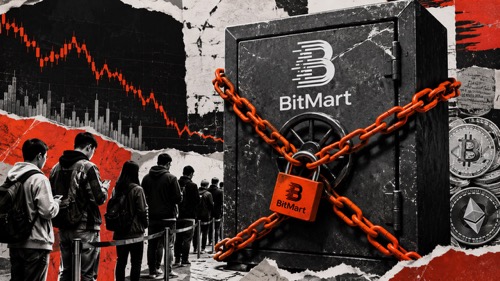
Insiders broke the news: April ban, May layoffs, BitMart shutdown long predicted

Insiders broke the news: April ban, May layoffs, BitMart shutdown long predicted

A “wave of bankruptcies” of cryptocurrency exchanges is spreading at an accelerated pace. Following the announcement of the shutdown of AscendEX (formerly BitMax) and BitMEX, on July 26, BitMart made an official announcement announcing the decision to stop operations in an orderly manner after comprehensively evaluating the company's operating status, market environment, and future strategic direction. There was an uproar in the crypto community, but in fact, the downfall of BitMart was by no means a “sudden decision”; some signs have already appeared. Withdrawal abnormalities already occurred in April, and layoffs began in May. At the end of April this year, abnormalities have already begun to occur within BitMart. According to information circulating in Lark's internal group at the time, the platform clearly indicated that user orders were not in line and directly gambled with users — as long as users won money, funds would be locked in. The customer service response was that withdrawals are prohibited for at least three months, and will not be lifted when they expire. At the beginning of May, several BDs reported the issue of user funds being banned in an internal group. As a result, contract leader Gavin directly requested Roham, the head of the mainland region, to close the group. The BDs moved to another group and continued to report, and were also kicked out. In the same period, some employees inquired about the company's asset reserves in the group, and was harshly criticized by founder Sheldon Xia. Sheldon clearly stated that BitMart was unwilling to disclose asset reserve certificates. An anonymous Bitmart employee told Bitpush that the entire department's layoffs began in May. Interviewees said that in May of this year, the company had already begun to “silently” abolish some business divisions — no formal announcements, no separation compensation negotiations, and the entire department was notified “not to be used tomorrow.” These abolished departments mainly focus on business lines where growth is weak or compliance costs are too high, including some overseas operations teams and marketing departments. With this complete shutdown, many people only learned through the official social media that they have lost their job, without the slightest preparation. DI (@Start16Start), a whistleblower who claims to be a “former BitMart employee and current WEEX employee,” wrote on the X platform that BitMart “went from using the unattainable KPIs of CIS employees to reduce our salaries to the chaos within the entire company.” He alleges that the company has long been delinquent on employees' wages and bonuses and refuses to deliver on promises to employees, traders, and KOLs. “This endless act of deception is the reason I chose to leave and keep my key partner as far away from that conflict as possible.” DI wrote. The most absurd thing about this shutdown is that BitMart Global CEO Nenter (Nathan) Chow posted a clarifying statement on X: “On July 24, 2026, I was told that my position as Global CEO will be terminated, and the separation process will begin immediately. I have yet to receive confirmation of my final separation date. Since July 24, I have not participated in any management or decision-making of the company, nor have I been consulted on any operational matters. I was not involved in the decision announced today, was not consulted, and was not informed in advance. I only learned about it when I saw the public announcement. “Chow said he is most concerned about BitMart users and employees, advising users to only handle account matters through official channels and “not comment further on this matter”. Chow joined Bitmart as a partner at Animoca Ventures in April 2025 as Global CEO. At that time, founder Sheldon Xia became Group President. In just over a year, the CEO witnessed the end of the company by being “fired”. Just a month ago, BitMart also reported that its asset management business AUM increased by about 256% month-on-month. At the time, Chow also stated “BitMart is eight years old and we plan to work for another eight years.” Bitmart also previously claimed to have obtained an Australian AFSL license, serving more than 13 million users. It was only one month from “working for another eight years” to “announcing the shutdown”. Founder Sheldon Xia has not made any direct comments on the shutdown as of press time. KOL: Customer service and BD garbage exchanges will go out of business. Crypto KOL @tradermige posted an article on the X platform saying, “The employees at BitMart and BitMEX are all in a shambles. No wonder they have gone out of business. I had a hunch for a long time.” He recounted his experience working with BitMart: BitMart has set up a rebate agency for him, but “all...

26d agoWendy#bitmart #Exchanges #Shut down the tide topic #original #Withdrawal #BEARISH
No thunderstorms, no hackers, why are more projects falling in 2026?

No thunderstorms, no hackers, why are more projects falling in 2026?

Author: Claude, Shenchao TechFlow Original title: 100 Crypto Projects Died in 2026: There was no explosion this time, only starving. On July 17, BitMart released an enthusiastic report for the first half of the year: the scale of asset management increased by about 256%, newly launched predictive market products, and just obtained an Australian financial services license in June. The report also acknowledged that the background board was not very good. Bitcoin fell 30% in half a year, Ethereum fell to a standstill, and spot ETF had a record net outflow. Nine days later, at 01:30 UTC on July 26, the same company announced an orderly shutdown. New user registration was stopped, deposits were closed, contract accounts were switched to a position reduction mode, trading was completely stopped on August 26, and completely closed on January 31, 2027. The BMX platform coin fell by nearly 60% on the same day. What's even more absurd is former Global CEO Nenter Chow's statement on X: He was notified of his dismissal on July 24, and has not participated in any management decisions since then. He has seen the news of the shutdown, just like everyone else. Three days ago, BitMEX just announced the closing of the exchange at 04:00 UTC on September 23, ending 11 years. Moving forward, AscendEX was shut down on July 1, and EXMO was liquidated because it was included in the UK's sanctions list against Russia. Within a month, four well-known centralized exchanges withdrew. RootData's 2026 list of dead projects in the crypto industry has reached number 100 and is still being updated. The number isn't 100 big is scary to put in the title; it's not that scary when you put it in a historical coordinate system. According to RootData's own statistics, 67 in 2021, 250 in 2022, 230 in 2023, 171 in 2024. After seven months in 2026, there are fewer than 100, and the full year is unlikely to catch up with 2022 and 2023. So 2026 can't be called the coldest summer in the crypto industry, in a really cold place, in the texture of a death list. Go through the names on the list: Wallets include Family, Ctrl, Leap, BitMart, BitMEX, and AscendEX; infrastructure and DeFi include Zapper, Stream Finance, Parsec, Loopring, Goldfinch. BitMEX has lived for 11 years, BitMart has been alive for 9 years, and Loopring is the first batch of zkRollups on Ethereum. These aren't air projects that were issued in 2024 and ran off the road in 2025; they have brands, users, real income, and veterans who survived the previous bear market. Lever and Ponzi died in 2022, and the longer the death list, the cleaner the industry. What died in 2026 is the business model. The shorter the list, the more it means that the blade has been cut into meat. The law changed from explosions to starvation. The common features of the 2022 deaths were violence: Luna returned to zero for three days, 3AC security deposit recovery was in default, FTX misappropriated customer assets were squandered, and Celsius froze withdrawals. The death occurred instantaneously, and the user's assets were directly evaporated, and the judicial process has not been completed until today. The common characteristic of the 2026 batch is decency. BitMEX gave users a full two-month liquidation period, and the withdrawal window was opened until 2027; BitMart gave users one month to close their positions and withdraw for six months, repeatedly reminding users to complete authentication before applying; Storj followed Chapter 11 restructuring rather than liquidation; the network was running as usual, and customer service was not interrupted. The wording of the announcement is almost exactly the same: after careful evaluation of the business situation, market environment, and future strategic direction, it was decided to exit in an orderly manner. Translate adult sayings, this is a business that is not profitable anymore. There were no hackers, no hacking, no law enforcement raids, it was just that the accounts couldn't be calculated. Starvation and explosion are two completely different market signals. An explosion means that systemic risk is spreading, and the collapse of a family will be destroyed; starving to death means that individual businesses fail, and the risk is isolated in one's balance sheet. The distribution of the lumbar collapse death list is not random; it accurately hits the industry's waist. Moonrock Capital's Simon Dedic put the problem with mid-sized exchanges straight: the fatal flaw in this model is that it must...

26d agoburnking#ETF #Ethereum #Shut down the tide topic #Bitcoin #Predicting the market