热点 · 1841

Review of this week's macro hot topics: the US debt crisis, AI infrastructure, and geopolitical conflicts are the main lines of the market this week

Comparing news, the global market this week focused on US debt pressure, AI capital expansion, and the US-Iran economic game. After the US Treasury expanded the scale of long-term treasury bond repurchases, US bond yields declined briefly, but the market feared that fiscal deficits and debt growth pressure would be difficult to ease through liquidity tools. The US federal government debt surpassed 40 trillion US dollars for the first time. The yield on 30-year US bonds once rose to a high level since 2007, and the global long-term bond market was under pressure simultaneously. The minutes of the Federal Reserve's July meeting show that internal hawkish forces are growing, and there are more than three voting members supporting interest rate hikes. Some officials are concerned that tariffs, energy prices, and AI infrastructure investments could drive up inflation. Meanwhile, Federal Reserve Chairman Walsh suggested that in the future, consideration could be given to reducing the number of annual meetings from 8 to 6. Driven by the weakening dollar and risk aversion, gold broke through the 4,600 US dollars/ounce mark this week and rose for the third week in a row; crude oil was higher, supported by the risk of the Strait of Hormuz and expectations of US sanctions against Iran. Geographically, the US-Iran relationship is shifting to putting pressure on the economy. The US plans to weaken Iran's economy by expanding sanctions and economic isolation, while Iran is studying countermeasures against energy transportation nodes, and the safety of the Strait of Hormuz has become the focus of market attention. In the field of technology, AI infrastructure competition continues to escalate. Nvidia guarantees up to $105 billion for the OpenAI data center project, and Broadcom is also planning an AI financing plan of up to $100 billion. Meanwhile, Anthropic's revenue surpassed OpenAI for the first time, and plans to advance IPOs, further intensifying AI companies' commercialization competition. On the capital market side, Yushu Technology skyrocketed on the first day it landed on the Science and Technology Innovation Board. At one point, its market capitalization exceeded 44 billion yuan, and founder Wang Xingxing's net worth increased dramatically. South Korean semiconductor giant SK Hynix announced a repurchase plan of approximately 40 trillion won, and Samsung is also planning to increase shareholder returns. Furthermore, trade negotiations between the US and Canada ushered in a critical window. The US suspended the imposition of up to 50% tariffs on Canadian goods for three days, and the two sides continued to seek trade agreements. The core logic of the market this week still revolves around three themes: whether US fiscal pressure worsens further, whether AI capital investment is forming a new round of asset bubbles, and whether global geopolitical risks are driving safe-haven assets to continue to rise.
13h ago

Byte discusses training a model with over 5 trillion parameters, and the Seed base model team adjusts the architecture

Comparatively, according to a late LatePost report, ByteDance is currently discussing a large model with training parameters exceeding 5 trillion yuan, surpassing Ali Qwen 3.8-Max (2.4 trillion yuan) and Dark Side of the Moon K3 (2.8 trillion yuan), making it the largest solution currently known in China. The plan is still in its early stages, which doesn't mean it will eventually be released. The new model is to be led by Xiang Liang, head of Seed Foundation, and in collaboration with Shen Ke, the head of pre-training data for the big language model. Seed is reorganizing the organization, dividing responsibilities, and allocating resources based on this. Two weeks ago, ByteDance founder Zhang Yiming and Seed head Wu Yonghui held a full staff meeting. Zhang Yiming's appeasement team said that it was already very difficult to train the big model. He hoped to pursue the upper limit of intelligence and rank first in the world. He acknowledged that programming is currently the key direction, advocates integrating volcano engines, Feishu, and Doubao resources to build computing power and data advantages, and reminded not to be led by a single hotspot. He praised Seedance's differentiated leadership and clearly opposed distillation, arguing that it is difficult to truly surpass, that the AGI barrier should be built from a lower level, and said the company will continue to invest more in AI. Seed's multi-modal performance has been outstanding in the past six months. Seedance 2.0, Seedream, etc. drive volcanic engine MaaS, but the market response of the language model Seed 2.0 has been limited, and poor coding capabilities affect the revenue structure. Byte has introduced Guo Daya to specialize in coding with a high salary, and has collected related resources. Facing the general trend of increasing model sizes in the industry, Byte hopes to seek to overtake cars on a larger scale, push for the cancellation of horse racing, break down departmental walls, and concentrate efforts.

3d ago

From building robot dogs in garages to being at the helm with a market capitalization of 100 billion dollars, Yushu Wang Xingxing stood on the robotics bandwagon

Comparing news, Yushu Technology officially landed on the Science and Technology Innovation Board, and its stock price soared on the first day of listing. The company's issue price was 150.80 yuan/share, and the closing price reached 845 yuan/share, with a total market value of over 340 billion yuan. In terms of shareholding ratio, the market value of shares held by founder Wang Xingxing, who was born in 1990, exceeds 100 billion yuan. Wang Xingxing's rise is not an entrepreneurial path familiar to traditional capital markets. He doesn't have a background in top universities, and he didn't get much attention in the early days of the robotics industry. He is more like an engineer who has been immersed in technology research and development for a long time. As early as a student, Wang Xingxing had a keen interest in robots. While in college, he developed biped robots and quadruped robots at a lower cost, and launched a pure electric four-legged robot xDog at the master's level to reduce robot development costs through electric drive solutions. In 2016, xDog test videos became popular overseas. Wang Xingxing, 26, received an initial investment of 2 million yuan, then left DJI to establish Yushu Technology. In the early days of starting a business, the robot circuit had not yet become a hot topic, and Yushu Technology also faced financial pressure. In 2017, the company released the first four-legged robot Laikago (Laikago), but commercialization was not an easy path. Investors had concerns due to Wang Xingxing's grassroots background, but his emphasis on technology, products, and cost control was gradually recognized by the market. With the development of artificial intelligence technology and the rise of the humanoid robot boom, Yushu Technology ushered in rapid growth. The 2025 Spring Festival Gala humanoid robot dance performance brought Yu Shu into the public eye. Since then, the company has received great attention from industrial capital and the market. In the face of being sought after by the outside world, Wang Xingxing maintained his style as an engineer. He once said that technological breakthroughs in the field of robotics will take time, and excessive hype will put pressure on the industry. Compared to capital and brand exposure, he pays more attention to product development and commercial implementation. Currently, Yushu Technology has formed a four-legged robot and humanoid robot product system, and released products such as the humanoid robot G1. As the company went public, Wang Xingxing also faced new challenges: how to grow from a technical expert to a listed company manager, and how to maintain a leading edge in an environment of increased competition in the robotics industry. From manufacturing robots at low cost in the early years to now being at the helm of a 100 billion dollar company, Wang Xingxing is undergoing a transformation from a technology entrepreneur to an entrepreneur.

3d ago
The whole process of issuing coins was empty! How difficult is it to bet on the next “cow comes”

The whole process of issuing coins was empty! How difficult is it to bet on the next “cow comes”

This August, the domestic animation “Cow Lai” suddenly went from “hardly anyone watching” to a phenomenal hit. The film was screened on August 5, and the cumulative box office for the first 9 days was only 7,169 yuan, and 236 people watched the movie; after topics rushed to the top search around August 14, the schedule and box office quickly reversed. On August 18, the “Cow Lai” film showed that the box office for the “Cow Lai” film had already surpassed 20 million yuan, and second-innovation videos created spontaneously by Internet users from Station B and Douyin were also all over the place. The crypto market followed almost synchronously. The meme coin of the same name, “Bullai”, appeared on BNB Chain. Currently, the main contract traded in the market is 0xbeea... 7777, with a market capitalization of about 49 million US dollars at one point. What is dramatic, however, is that the person who created this coin did not have the greatest wealth effect of this wave. According to on-chain data, “Niulai” was created at the address 0x6af3... 679e. On the morning of August 13, this address created two “Ox Lai” in a row within about 6 minutes, and then issued “Bear Walks” and “Stumbling” tokens for the next few days. The one that was finally selected by the market and became a popular trading target was the second “cow come”. According to GMGN transaction records, this address did not have any buying or selling records on the main “Niulai” which later became popular. Lookonchain monitoring shows that many early traders made a lot of money, but the publishers themselves did not buy them, so they did not make profits through main coin transactions. After “Cow Lai” became popular, this address continued to create meme coins such as “Tripp,” “Here Comes the Cow,” and “Moo,” and achieved a cumulative profit of about 253,000 US dollars from these subsequent projects. Therefore, the issuer did not expect the second “cow” to go this far. This kind of “igniting a fire but not getting in the car” is a common occurrence in the meme industry. Generally speaking, the usual style of play for meme players is to test the waters in batches, issuing N or more tokens within a few seconds, and betting that one or two of them can hit the hot spot. However, when a concept unexpectedly becomes popular, the creators often either haven't opened a position yet, or have already cleared their position, and can only wait and see. The most classic example is dogwifhat (WIF). In March 2024, Lookonchain's monitoring showed that the address labeled “WIF Dev” sold 350 million WIF copies in exchange for 511 SOL within two days of opening the transaction; at the time of its posting, the book value of this batch of WIFs had reached about US$693 million. Although this is just a book estimate, it doesn't mean that you can actually sell everything at this price, but the extent of “selling out” is really exaggerated. There's also the old Fartcoin. After issuing the coins, the creators of Fartcoin used 2 SOL to buy about 67 million Fartcoins. As a result, they sold all of them in less than 30 seconds, and in the end, they only earned about $600. Later, Fartcoin rushed all the way to a market capitalization of close to 2.5 billion US dollars, and his initial batch of chips was up to about 168 million US dollars. After missing Fartcoin, this address did not take it away, but instead began issuing new coins without stopping. According to Axiom and on-chain statistics, as of August 2025, the wallet has created a total of 446 tokens, with a total profit of more than 1.8 million US dollars. Its operation is highly modeled: buy the token immediately after creating it, and then sell it within seconds or minutes. Of course, there is no shortage of money, but it's still two orders of magnitude worse than if you had held Fartcoin in the first place. There are even more magical examples. In 2024, a teenager founded QUANT during a live broadcast, then sold all 51 million QUANT copies in his hand, making about 29,600 US dollars. As a result, after he cleared his inventory, the community continued to push up the price. At one point, the batch of coins that had already been sold was worth about 4 million US dollars. He then sent LUCY and SORRY, and only earned about $24,000. For people who issue coins in batches, most coins may not last long, so “run when you see money” is also the most reasonable operation. This is also the most “fascinating” part of Meme. It always creates stories of “getting rich overnight,” yet it rarely tells you how many zeroed tokens and empty people are behind it. It seems like everyone has an opportunity, but what is actually selected by the market is often only a very small probability event in mass issuance and transactions. Some people changed their net worth because they held one coin; others personally issued a thousand times ten thousand times ten thousand coins, but sold out of chips before take-off. The so-called wealth myth is essentially never a replicable methodology, but rather the result of survivors being magnified by the spotlight. In the Meme Marketplace, the hardest part isn't finding opportunities, but distinguishing what you see...

3d agoBitpushNews#MEME #original #Issuing coins #Cow Lai topic
Don't bet 100 times more, just look for “cash bulls”: What other projects are worth investing in in a bear market?

Don't bet 100 times more, just look for “cash bulls”: What other projects are worth investing in in a bear market?

Source: Odailey Planet Daily Author: Asher Original title: Don't guess 100 times the coin, only bet on “cash cow”: What other projects in the bear market are worth investing in? The bear market only buys the most profitable items on each track, and the bull market then goes after short-term hot spots. Core point of view: In the context of the downturn in the crypto market, this article has selected four issued projects, Pump.fun, Hyperliquid, Uniswap, and Chainlink. They have shown profitability through a bear market with stable agreement revenue, providing a more realistic reference target for long-term investment. Key elements: 1.pump.fun's revenue in the past 30 days was 41.53 million US dollars, with a cumulative total of about 256 million US dollars in the first 7 months. The revenue depends on the popularity of Meme transactions on the Solana chain, but the average monthly cash flow capacity of tens of millions of dollars is outstanding. 2. Hyperliquid's cumulative revenue for the first 7 months was about US$352 million, surpassing Pump.fun. In June, it reached a new high of 60 million US dollars during the year. The revenue mainly comes from perpetual contracts and spot transaction fees. 3. Hyperliquid uses approximately 99% of the agreement fee to repurchase and destroy HYPE tokens, forming a simple investment logic of “profitable and continuous repurchase”. 4. Uniswap has earned 5.6 million US dollars in the past 30 days. It is the most profitable DEX. It accumulated about US$28.4 million in the first 7 months, benefiting from the official opening of the agreement fee after the implementation of the Unification proposal and its use for UNi's destruction. 5. Chainlink's revenue in the past 30 days was 4.57 million US dollars. The monthly revenue was stable in the range of 4.4 million to 5.8 million US dollars. The revenue came from service fees such as oracles and cross-chain services, and the cumulative transaction value facilitated reached 32.18 trillion US dollars. Since this year, the crypto market has continued to be sluggish. There aren't no hot spots on the chain; every once in a while, there are a few burgeoning memes, but these quotes often focus on new coins that have just been issued and hardly give the market time to fully study. Once the story ebbed down, prices quickly dropped back down. Most players who got on the bus halfway ended up losing money and making little money. Since blindly guessing the next 100 times the coin makes little sense. A more realistic investment logic is: if you are preparing to invest slowly in a bear market and wait for the next round of the bull market to return, what other projects are worth buying now? Compared to simply reading the story, a more direct screening criterion is whether the project itself still makes money or not. If a platform can still earn millions or even tens of millions of dollars in revenue every month in the crypto bear market, it at least indicates that users and demand are still there, and the project also has a stronger ability to cross the cycle. This type of platform token won't necessarily be the altcoin with the most exaggerated rise in the next round of the bull market. So, since this year, what other coin issuing projects have continued to make money? (The revenue data for the project in this article comes from Tokenomist and DeFilLama. The revenue caliber is uniformly adopted, that is, the actual revenue of the agreement after deducting distribution to supply-side participants such as LPs.) Pump.fun: The “shovel seller” on the meme circuit earns money from round after round of coin issuance boom. Apart from the two major stablecoin issuers Tether and Circle, Pump.fun is one of the most profitable crypto native projects in the past 30 days, with a revenue of 41.53 million US dollars. Looking at monthly data, Pump.fun's revenue from January to July was 51 million US dollars, 40 million US dollars, 38.1 million US dollars, 32.4 million US dollars, 32.4 million US dollars, 34.4 million US dollars, 26.6 million US dollars, and 33.7 million US dollars, respectively, with cumulative revenue of about 256 million US dollars for the first 7 months. Pump.fun's revenue peak was high at the beginning of the year, then the overall decline was evident in April and June, and there was some recovery in May and July. The core of Pump.fun's revenue comes from continuous trading of SGD on the platform. Currently, users are free to create tokens themselves, but trading during the Bonding Curve phase requires transaction fees. According to Pump.fun's latest rate, Bonding Curve's total fee rate is 1.25% per transaction, of which 0.95% goes to the agreement and 0.30% is distributed to token creators. Additionally, when tokens graduate from Pump.fun and enter PumpSwap, a graduation fee of 0.015 SOL will be charged. Pump.fun's revenue still depends on Solana's on-chain meme activity. When the on-chain market is lukewarm, revenue drops significantly, and recovers quickly when popularity picks up. But from the perspective of a bear market, it can be at 7...

4d agoOdaily星球日报#DeFi #MEME #invests

This week's hot review: Expectations of the Fed's interest rate hike plummeted, and the AI frenzy and the Middle East crisis dominated the market

Comparing news, the global market this week focused on cooling inflation, the Federal Reserve's policy, the situation in the Middle East, and the wave of AI investment. The US CPI and PPI both declined in July, and the market drastically lowered expectations for interest rate hikes during the year, but long-term US debt was still suppressed by fiscal pressure. US technology stocks have rebounded, the South Korean stock market has risen more than 20% in two weeks, and the AI industry chain has once again become the main capital line. US CPI rose 3.4% year on year in July, core CPI rose 2.5% year on year, PPI fell to 4.7% year on year, and market expectations for the Fed's September rate hike declined markedly. However, the yield on US 30-year Treasury bonds rose to 5.22%, a record high since 2001, and investors are concerned that the widening US deficit is driving up long-term financing costs. The situation in the Middle East continues to heat up. Trump said that the US will declare the Strait of Hormuz as US territory after defeating Iran, and said that it will carry out further economic attacks on Iran. Iran responded that the opening and closing of the straits can only be decided by Iran. The US military continued to strengthen regional deployment, and the USS Washington aircraft carrier went to the Middle East to take over defense. The AI capital market continues to expand. Nvidia, in partnership with BlackRock, Goldman Sachs and other institutions, plans to raise more than 500 billion US dollars in capital to support the construction of AI data centers. Hwang In-hoon said that AI computing is becoming a new type of infrastructure similar to energy and transportation, but the market is also beginning to pay attention to the risks of AI financing models. Korea's KOSPI Index rebounded strongly this week, rising nearly 22% from its low at the end of July, and re-entering a technical bull market. Samsung Electronics and SK Hynix are led by growing demand for AI servers and HBM. AI company valuations continue to heat up. According to reports, Anthropic is planning an IPO, and the market is expecting a valuation that could reach $2 trillion. OpenAI, on the other hand, has accelerated commercialization, and its annual revenue is said to have exceeded 40 billion US dollars. As a tech giant, it was revealed that Apple is cooperating with Alibaba to train a big model exclusive to the Chinese market and adjust the AI localization strategy. Meanwhile, there is still controversy over whether to advance Apple's 20th anniversary all-glass iPhone project. On the market side, the S&P 500 and NASDAQ continued to rise this week, and investors are betting again on interest rate cut expectations and AI profit cashing logic. However, Bank of America warns that the current bullish sentiment in the market is close to the extreme level since 2021, and we need to be wary of geopolitical risks and valuation pressures.

7d ago

CMC Labs incubates Fuyo Markets, a predictive trading platform for the Southeast Asian market

According to the official news, Fuyo Markets, a new predictive trading platform created specifically for the Southeast Asian market, incubated by CMC Labs, has been launched. Fuyo Markets offers a range of unique market categories, including 1-minute cryptocurrency predictions (the fastest in the industry, an exclusive Fuyo Markets experience), “Trending Markets” (Trending Markets) that keep up with real-world hot events, regional markets focusing on local stocks and companies in Southeast Asia, and “Sad” markets (Sad Markets) built around bear markets. The platform supports 10 Southeast Asian languages and integrates Binance Connect fiat payments; Fuyo Markets is committed to providing a new generation of traders in the region with a predictive trading experience that is easy to use, user-friendly, and in line with local cultural preferences.

9d ago
From Avenir to UMX, Li Lin's return and new propositions

From Avenir to UMX, Li Lin's return and new propositions

Author: Eric, Foresight News In the summer of 2026, UMX, which was incubated by Li Lin's Avenir Group, began public testing, which also made outsiders once again set their sights on this group of Chinese entrepreneurs in the crypto industry. Thirteen years have passed since Huobi was founded in 2013. At that time, Li Lin was standing in a market that had just taken shape. The problem he faced was very straightforward: how to make it easier for more people to trade Bitcoin. Thirteen years later, the crypto industry has moved from a relatively independent digital asset market to a new stage of continuous convergence with ETFs, stablecoins, RWA, and traditional securities. Over the past few years, Li Lin's role has also changed. In 2023, he founded Avenir Group in Hong Kong, gradually shifting from a frontline entrepreneur to an investor and asset allocator, continuing to focus on digital assets, securities trading, and financial infrastructure. Today, UMX has emerged as an “Avenir Group Incubator”, giving these seemingly scattered investment leads over the past few years a new perspective. Problems also followed. In the years since Huobi founded Avenir Group, what exactly is Li Lin doing, and what is it that has made him stand back to the stage now? From Beijing to Hong Kong, from athletes to referees, to understand this return, they must first go back to where they left. In September 2013, Huobi went online. It was a crazy year when Bitcoin rushed from 800 yuan to 8,000 yuan. It was also a year on the eve of Mentougou's collapse and the industry grew reckless. A young man from Hengyang, graduated from the Tsinghua Automation Department, wrote code for Oracle, and had started a business twice. Using the “permanent exemption of processing fees,” he cut through the Bitcoin exchange market, which had experienced rough experiences at the time. Half a year after launch, Huobi's daily transaction volume exceeded 1.5 billion yuan. At its peak, it occupied more than half of the global Bitcoin exchange market. Zhenge Fund, Dai Zhikang, and Sequoia Capital followed one after another, and Li Lin became one of the most familiar faces of entrepreneurs in the Chinese crypto world. Over the next decade, Huobi and Li Lin experienced a complete cycle of the crypto industry from early recklessness to global compliance competition. For an entrepreneur, this experience left behind not only how to become a trading platform, but also a complete set of perceptions about trading, liquidity, user needs, account systems, and risks. However, running a platform and allocating a sum of money is not the same way to look at the market. In 2023, Li Lin founded Avenir Group in Hong Kong. The name comes from French and means “better future”. From managing an exchange with your own hands to managing a multi-strategy family office, the roles have changed, and so has the way you look at the market. In the past, he was an athlete on the field, watching user growth, transaction volume, product lines, and liquidity, and was fighting closely with his opponents every minute and every second. Now he is sitting on the sidelines and working as a fund allocator, but what he sees is a different set of problems. Where are funds left idle, where are assets split, why can't accounts be exchanged, and why is risk difficult to be managed uniformly. These issues are hard to see from an operator's perspective, because exchanges naturally only care about matters within their own market. From the perspective of the configurator, they are so dazzling that one cannot ignore them. Avenir's actions over the past few years have vaguely outlined a main line. The list has been drawn up for a long time. It has taken a stake in UP Fintech, the parent company of Tiger Securities, as a core investor, participated in the US$300 million equity financing of the Hong Kong licensed platform OSL, invested in the institutional order routing company CoinRoutes and options derivatives infrastructure SignalPlus, led the AI native quantification platform Inference Research, and signed multiple assets with Tiger Securities and AMINA Bank on Consensus Hong Kong Infrastructure Cooperation Memorandum. According to the 13F filing submitted to the SEC, Avenir ranked first among Asian Bitcoin ETF institutions for eight consecutive quarters, with BlackRock IBIT alone holding more than 18 million shares. In addition, Avenir launched a $500 million quantitative partnership program to provide capital and ecological support to mature quantitative trading teams, and also acquired the Japanese compliant trading platform BitTrade through the Xinhua Group. The investment reach of licensed platforms, brokerage services, transaction execution, quantitative capabilities, and stablecoin payments covers almost every aspect required to connect the two markets. Looking at individual projects, these investments are scattered across different products and markets. When you look at it together, the direction gradually...

10d agoForesight News#web 3.0
With weekly revenue of 3.2 million US dollars, FOMO is so popular that Pump.fun starts to rob people

With weekly revenue of 3.2 million US dollars, FOMO is so popular that Pump.fun starts to rob people

If you just look at the name, Fomo looks like yet another popular crypto trading app. But over the past two months, its growth rate has begun to be hard to ignore. Fomo co-founder Paul Erlanger revealed that the platform's weekly revenue reached a record $3.2 million, growing for the 8th week in a row, 70% higher than the previous week's record. As of August 11, Fomo ranked 16th in the financial category on the US App Store, with about 7,300 ratings and 4.8 ratings. The ranking was previously in the top ten. In June of this year, Fomo just completed Series B financing of 75 million US dollars, led by Index Ventures. According to official data, one year after launch, Fomo has more than 625,000 users, a cumulative transaction volume of more than 4 billion US dollars, and generated more than 110 million social interactions. Of these, 68,000 users purchased Crypto for the first time through Apple Pay in Fomo, with a cumulative amount of about 25 million US dollars. In other words, Fomo is doing something that many Crypto products have always wanted to do, but which is not easy to do: bring ordinary users who are not familiar with wallets, Gas, and on-chain transactions directly into the market. And this is the real reason why Fomo is suddenly in the spotlight recently. Why is Fomo running so fast? Fomo did not create new financial products; it mainly reworked users' transaction paths. Traditional on-chain transactions are often: first see a token on X, Telegram, or Reddit, then check the market, find a contract, open a wallet, prepare gas, and finally trade. Fomo pushes these links into a feed: users first follow people, see what friends or leading traders have bought, and then directly complete the transaction; complicated steps such as Apple Pay, cross-chain, and Gas are hidden in the background as much as possible. As a result, Fomo is more like a “social product with transaction features” rather than a “wallet with social features.” Galaxy Research analyst Will Owens studied this trend and said that the trading interface is shifting from revolving around “charts” to revolving around “people.” In the past, users first found an asset and then studied it; now they may first focus on the trader and then discover the asset from his behavior. Fomo isn't the only company seeing this opportunity, though. Robinhood has launched a beta version of Robinhood Social this year, where users can follow other investors, view real and verified trades and returns, and trade stocks, options, crypto, and prediction markets directly from the feed. Coinbase's Base App has also put social feeds, transactions, payments, and app discovery into the same product. Users can follow traders and copy transactions. Phantom, on the other hand, relies on the stock advantage of more than 20 million users and is adding features such as Trending Tokens, Top Traders, perpetual contracts, and predictive markets. Everyone is starting to do the same thing, which shows that “social+trading” is becoming the direction of joint competition for retail trading products. Pump is in a hurry and is starting to target Fomo users? Originally, the two were not direct rivals. Recently, however, a “gagging agreement” has been circulating in the community: FOMO community user CLR announced a user migration agreement supposedly from Pump.fun. Allegedly, eligible Fomo traders can receive a one-time signing bonus of $20,000 and a fixed monthly remuneration of $30,000, but they need to transfer funds and positions, use an exclusive wallet, bind to an X account, and close the Fomo account while meeting minimum transaction volume requirements. Currently, Pump.fun has not publicly confirmed this agreement. If the agreement is true, one detail is worth noting: According to the disclosure, the minimum monthly transaction volume requirement for subscribers is only $25,000, or 25% of the previous average monthly trading volume of Fomo. If you only calculate the minimum threshold, the monthly remuneration of 30,000 US dollars clearly cannot be covered by the processing fee generated by this user himself. This means that what Pump is really willing to spend money on is probably not the individual trading volume, but the public identity, followers, and subsequent transactions behind the trader. The two projects actually do different things. Fomo starts with “people and content”: first establishing relationships with feeds and traders, then directing traffic to assets; Pump starts with issuing tokens and then expands to swap and trading terminals. One is more biased towards demand and distribution, and the other is more focused on asset supply and trading infrastructure. But when both parties start to make love...

10d agoWendy#FOMO #MEME #Pump.fun #Robinhood #transactions
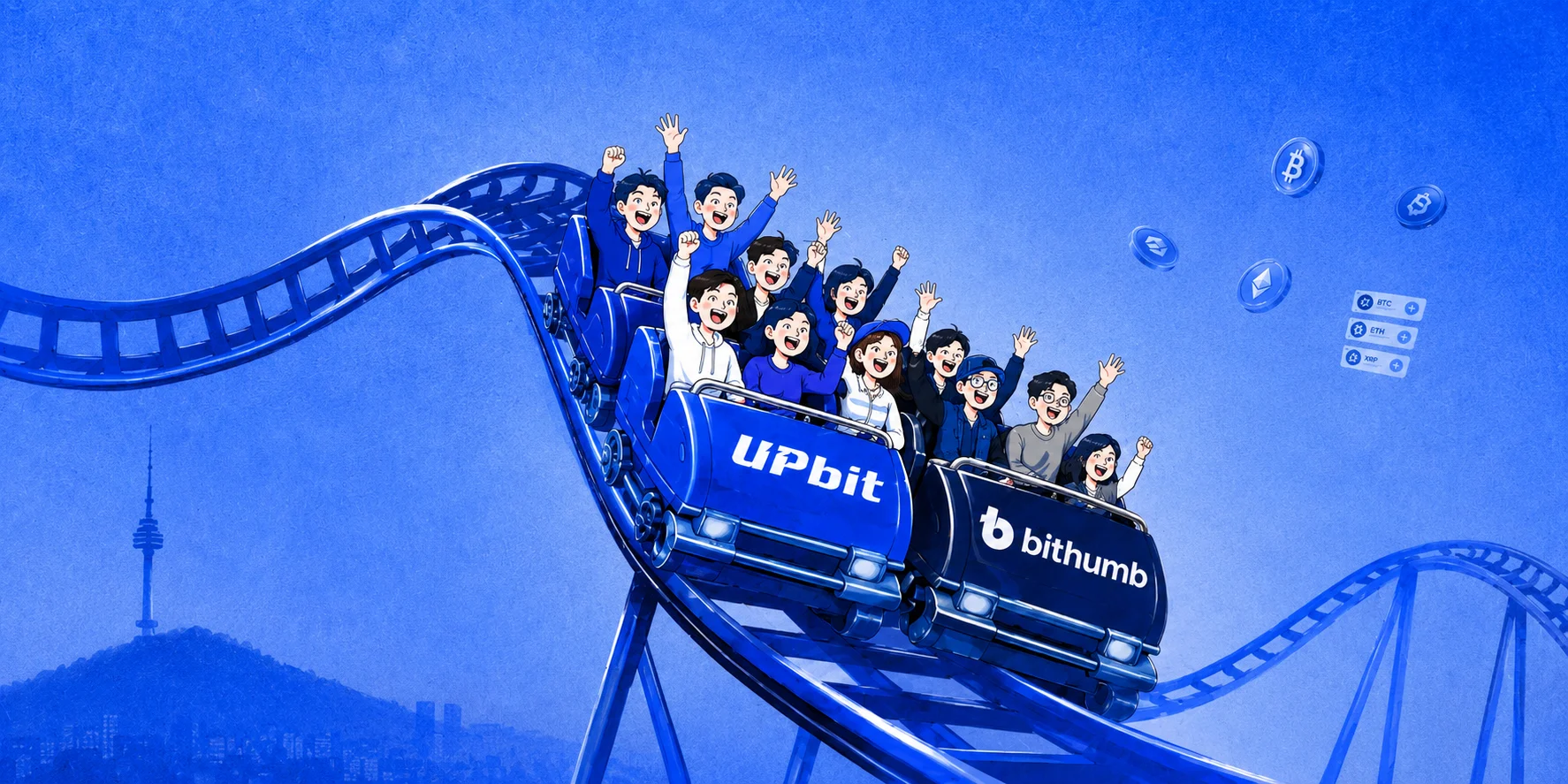
As the Korean stock market cools down, why did Upbit and Bithumb start a currency war?

As the Korean stock market cools down, why did Upbit and Bithumb start a currency war?

Author: Zen, PanNews Original title: After the trading volume was cut, the two major Korean crypto exchanges started a currency listing war, while the Korean stock market was cooling down, the listing competition between the two major crypto exchanges Upbit and Bithumb began to heat up. In the past month, Upbit and Bithumb's coin listing pace has accelerated markedly. Both exchanges have added 17 new won trading assets, which is significantly higher than the regular monthly average of 6 to 10 types in the first half of the year. In a context where overall trading volume is still sluggish, a cryptocurrency war has begun again around existing capital and retail investors' attention. The best summer for the Korean stock market. Crypto trading ushered in a major cooling. In the first half of this year, the Korean stock and cryptocurrency markets went out of two diametrically opposite curves. According to Korea Exchange (KRX) data, KOSPI's average daily turnover in January was 27.06 trillion won, rising to 32.23 trillion won in February, setting a historical record at the time. However, after entering May, the market was completely crazy. KOSPI's average daily turnover reached 50.22 trillion won, and continued to maintain a high level of 50.35 trillion won in June, nearly doubling from the beginning of the year. This round of trading is largely concentrated on large semiconductor companies such as Samsung Electronics and SK Hynix, which have jointly created an obvious upward market and wealth effect. Against the backdrop of KOSPI's rapid rise, retail capital is flocking to the stock market. As a result, domestic crypto trading in South Korea, which already lacked market conditions, shrank further and continued to cool down during the “best summer in Korea.” According to CoinGecko data, the total trading volume of the five Korean won exchanges of Upbit, Bithumb, Coinone, Korbit, and Gopax in the second quarter of this year was about US$146.43 billion, down 49.5% from US$289.69 billion in the same period in 2025. Among them, Upbit's trading volume of the two major exchanges declined 54% year over year, and Bithumb declined 41.7% year over year. In the first half of this year, for Korean investors, the hottest and most popular market today was clearly stocks rather than cryptocurrencies. For exchanges, even if a few more altcoins and a few activities are launched at this stage, they cannot compete with the stock market, which is having a strong wealth effect. At this stage, Upbit and Bithumb's coin listing pace remained normal or slowed down, basically maintaining 6 to 10 types per month. In the second quarter, which was the craziest in the Korean stock market, Bithumb seemed to avoid the sharp edge of the stock market. Only 22 new tokens were added, which is far lower than the 33 in the same period in 2025. The “inflection point” has arrived. The two major exchanges started a currency exchange war and entered the third quarter, and things began to change. After the peak in May and June, KOSPI's average daily turnover fell to 36.88 trillion won in July, down about 26.8% from the previous month; in August, the average daily turnover as of August 9, the average daily turnover fell further to 26.28 trillion won, which is already lower than the level at the beginning of the year. Furthermore, according to Korea Exchange data, the share of individual investors in KOSPI's turnover fell from 48.19% in January to 31.23% in July. Investors' reserves, which are regarded as “standby funds” in the securities market, also declined by about 25.5% over two months from a high of 139.69 trillion won on June 4 to 104.14 trillion won at the end of July. From a surge in wealth to “those who don't buy stocks are the winners”, after experiencing a frenzy in the first half of the year, the share of retail transactions in the stock market and off-market standby capital began to cool down from a high point. It was during this period that Upbit and Bithumb's coin listing pace began to accelerate markedly. From the beginning of July to August 11, Upbit added a total of 17 new won trading assets in just over a month, as well as 8 new coins that can only be traded in BTC and USDT. Compared to the monthly listing of about 6 to 10 new coins in the first half of the year, this is equivalent to the normal amount for at least the past two months. Meanwhile, Bithumb also maintained a high frequency of coin listings, and also added 17 types of won trading assets. PanNews learned that compared to previous rumors in the industry, the recent intensive listing, some projects said they also learned about it afterwards, and that they did not pay the coin listing fee. We don't know whether the management of the two exchanges will decide the number of coins listed based on changes in KOSPI's turnover. However, from the perspective of user competition, this time window is clearly more favorable than the first half of the year. When the stock market has a large number of rising targets and high volatility every day, relying on the new currency to grab the attention of retail investors is completely futile. However, when the profit effect of the stock market weakens, exchanges re-attract investors with high risk appetite through new assets, short-term price fluctuations, and incentive activities. The marginal effects may be mentioned...

11d agoburnking#Bithumb #Upbit