链游 · 1964
588 days, 300+ Web3 projects fall: who's still at the table?

588 days, 300+ Web3 projects fall: who's still at the table?

Source: Foresight News Author: Eric Original title: In 588 days, 300+ Web3 projects sank into the deep sea and sailed a thousand sails by the side of a sinking ship, and the disease tree is ahead of time. On the way to prosperity, any industry must go through a round of “dead bodies are everywhere” of elimination, and Web3 is no exception. According to Foresight News's review of public information, since 2025, at least 78 Web3 projects with a total funding amount of more than 1.5 million US dollars have been announced to be shut down. Of these, 69 projects that can confirm the amount of financing have taken away more than 900 million US dollars in total. If you count the small projects that didn't get financing from institutions and died silently, the total number is far over 300. This means that over the past nearly 600 days, an average Web3 project died every two days, or was famous or unknown. Of the 75 projects counted by Foresight News, 37 were shut down throughout 2025, while 41 were shut down in just half of 2026, and 17 were shut down in a single quarter in the second quarter, setting the highest number in a single quarter since this round of clearance. The “hot” DappRadar, Zapper, and established exchanges including BitMEX and AscendEX (formerly BitMax) in the last round of the bull market have all put an end to their business careers in nearly two years. The reshuffle did not stop as the market picked up; on the contrary, it accelerated. After receiving millions of dollars or even tens of millions of dollars in financing, every team that has stepped into this new world has had the proud ambition of “laughing at the sky and going out. Are our generation people from Fenghao?” But after a few years of being baptized in the market, these cold and cruel numbers are still in front of everyone's eyes. Emerging markets are also markets, and Web3 isn't more gentle than other industries. “Not being able to support myself” is the number one “cause of death”. Looking at the “cause of death” of 75 projects, the first one ranked was “insufficient funding,” with 31 projects falling on this issue, accounting for more than 40%; followed by “insufficient market demand,” and 17 companies shut down as a result. The two added up are close to two-thirds of the total. In other words, the vast majority of projects die for only one reason: they have never been able to support themselves. The expressions used by these projects in the shutdown announcement are similar. Many of them say “after trying our best to find a path to sustainable development, we have not found a path to sustainable development.” The subtext of this sentence is: At the beginning of the project, there was actually no idea how to do it, or the initial idea was very different from the actual situation in the market. Some industry observers rated this wave of bankruptcy as “a direct reflection of the failure of the business model and the breakdown of the capital chain, rather than simply fluctuating market sentiment,” which can be described as hitting the head. The investment logic of the primary market has completely changed in the past two years. The first question investors meet is no longer “how much room do you have for imagination”, but “how to make money.” The first batch of projects whose revenue did not cover operating costs or tell a new story fell after the financing floodgates were tightened. The OSL Institute summarized this shift in its annual report as the industry moving from the “first half” to the “second half”: a growth model driven by rising asset prices and innovative agreements came to an end, and the market moved “from narrative to delivery.” To put it more bluntly, the market and capital are no longer willing to pay for “experiments,” and the project's self-hematopoietic ability has become a necessity. Compared to the reason they wanted to be clear, the five projects that announced that the “model is unsustainable” seemed much more honest. For example, Goldfinch, which made unsecured credit loans, lost blood and shut down due to continued bad loans to emerging market companies; the social game Fantasy.Top, which is a popular social game that relies on tokens to motivate, makes it difficult to sustain the incentive model after the popularity recedes. The “unsustainable model” is a very interesting reason for the collapse. Most unsecured credit loans in traditional financial markets are based on big data or personal past credit records to set reasonable limits. As an emerging “lending company,” Goldfinch dares to provide unsecured credit loans in emerging markets without credit data. This is not a problem that can be solved by cryptocurrency and Web3 alone. Obviously, the reason for the birth of this company with a total financing amount of nearly 40 million is hard to convince. I don't know how top institutions like a16z were fooled into entering the market. Additionally, some companies have died due to regulation. Mango Markets shut down through a community vote after reaching a settlement with the SEC...
10d ago22#WEB3

Ownership of the WEMIX contract was hacked and more than 5.22 million WEMIX were added, and funds were transferred across chains to Ethereum and BSC

Comparatively, the Korean blockchain game platform WEMIX updated the abnormal transaction situation and countermeasures. The investigation results showed that ownership of contracts related to WEMIX was invaded, and the attackers issued an unauthorized additional approximately 5,225,525 WEMIX, and subsequent exchanges were approximately 30,736 WEMIX and 724,198.27 USDC.e. The stolen USDC.e was transferred to Ethereum and BSC via a bridge, exchanged for assets such as ETH and USDT, and partially deposited on centralized exchanges. The attackers' wallets and fund flows have been traced and are applying to exchanges and stablecoin issuers to freeze them. Currently, the exact cause is still under investigation, and the team and external experts are conducting a full review, as well as checking related and similar contracts. The market shows that the WEMIX token price dropped 16.65% in 24 hours.

26d ago

Web3's first Agent Arena starts: ClawQuest launches Agent Fire, and 126,000 AI agents will compete together

In comparison, the Telegram AI agent GameClawQuest: Agent Mine officially launched the first sub-game Agent Fire, and ClawQuest was upgraded to Web3's first Agent Arena: there is no human operation in tank battles. Each tank is written, optimized, and deployed by the player's AI agent, and the battle code is written, optimized, and deployed continuously for 7 x 24 hours. Unlike traditional chain games that use AI as an auxiliary tool, the agent in Agent Fire is the player itself in the next game: the player hands over the Tank Key to the AI agent (OpenClaw, Codex, or any agent framework) that they use, uses natural language to issue instructions, and the agent reads real-time tank data and battle codes, simulates improvements, and releases new strategies — stronger than the AI who trains them. According to previous data, Agent Mine, the main game of ClawQuest, has accumulated 444,751 players since the public beta on May 8, of which 125,790 have connected to their own AI agents. Officials said that there is also a large AI model transit station cRouter that will be launched simultaneously, and the agent's token consumption will count towards the $CLAW airdrop weight.

36d ago

Messi has joined the global “billion-dollar billionaire club”: has been involved in NFTs and has invested in soccer chain game companies such as Sorare

According to news, Messi officially joined the global “billion-dollar millionaire club” in June of this year, with a net worth of $1.1 billion. Among them, Messi's investments in the crypto and blockchain fields have also been successful. He has also been involved in the NFT (non-homogenized token) field, issued digital collections, and laid out the metaverse economy. In addition, he also invested in blockchain soccer game companies and tech startups such as Sorare. Since 2014, Messi has never fallen out of the top five on Forbes' list of the world's highest paid athletes, and topped the list in 2019 and 2022. (Forbes) This article is sponsored by GENG, Build Your Fortune on GENG (https://geng.one)

58d agoburnking
Money for a racetrack: AI and RWA are sucking out new money

Money for a racetrack: AI and RWA are sucking out new money

Article: KarenZ, Foresight News Original Title: 2026 Crypto VC Changes: Fundraising Thresholds Narrow, LPs Only Look at Repayments, New Money Flows to AI and RWA. If you only look at leading funds, Crypto VC in the first half of 2026 is not cold. According to Foresight News, of the new Crypto VC funds announced to be completed or launched in the first half of 2026, only a16z Crypto and Haun Ventures reached a scale of $1 billion or more: the former launched a $2.2 billion Crypto Fund 5, and the latter raised $1 billion in new funds. Of the announced funds that reached more than $500 million and less than $1 billion, there was only Dragonfly's $650 million Fund IV. Further down are Variant's $222 million Variant 4, and ParaFi's new $125 million fund for stablecoins, tokenization, and institutional on-chain finance. Almost every month, Crypto VCs get hundreds of millions of dollars in new ammunition. The market isn't that cold. But another set of data gives a colder side. According to the Galaxy Research report, Crypto VC raised only 8 new funds in Q1 2026, totaling about US$1.1 billion, the lowest number of new funds in a single quarter since the third quarter of 2020. Compared with Q1 in 2023, the number of new funds raised in Q1 2026 decreased by about 43%, the total amount raised was halved, the average fund size decreased by about 41%, and the median size also fell from $62.5 million to $55 million. Source: Galaxy Research This also makes the previous capital raising more meaningful: the market has not completely cooled down, but the popularity is mainly concentrated on a small number of funds. The emergence of large funds will amplify the sense of recovery. However, the number of new funds, average size, and the pace of annual fund-raising all remind that the overall fund-raising platform of Crypto VC is already much thinner than in the previous round. Combined with public fundraising data and our interviews with IOSG Ventures founding partner Jocy Lin, HashKey Capital CEO Deng Chao, and Starbase founder Vivian, a clear signal is emerging: 2026 is not an overall recovery, but a narrower recovery. The fundraising window is still open, but the doors have narrowed. Those that can be squeezed in are usually GPs with long-term results, exit cases, clear strategies, and cross-cycle capabilities; projects that can get money are also increasingly focused on projects such as stablecoins, RWA, institutional financial infrastructure, and Crypto x AI, which are easier to verify and are closer to real financial infrastructure. From changes in LP issues, to the narrowing of racetrack preferences, to the restructuring of investment play styles and exit paths, Crypto VC is entering a new, more demanding cycle. LP requirements have changed: AUM is not enough to watch. DPI becomes a hard currency from 2021 to the first half of 2022. The primary market is like a high-speed financing machine. Funds are raising capital, projects are being financed, ecological funds are subsidizing, and exchanges and market makers are undertaking liquidity. Crypto VCs at the time had a default consensus: as long as the industry beta continues to expand, early investments can always be caught by the next round of liquidity. But now, that default consensus is no longer valid. IOSG Ventures founding partner Jocy Lin summarized this change as a shift from “narrative driven” to “DPI driven.” He believes, “In past narrative-driven cycles, the gap between head and waist funds was not fully widened; however, in the DPI-driven present, funds that can actually exit and clearly explain the exit path will take more LP funds, and the remaining money is being contested among a large number of middle and lower back funds.” Deng Chao emphasized, “Crypto is highly cyclical, so funds must not only rely on a single path to exit; they must have the ability to allocate across cycles. In terms of fund allocation, HashKey Capital places more emphasis on portfolio structures: which are long-term infrastructure, which are cash-flow projects, which are early-stage projects with high volatility but high upward trends, and which can pass through level 2 or flow...

65d agoLuxurytracy

The Beacon's first season event officially launched, rewarding over 7.7 million BCNs

Comparing news, The Beacon posted an article on the X platform stating that the first season of The Beacon “Goblin's Gambit” is now online, with a total reward of over 7.7 million BCN tokens, and users can receive BCN token rewards by participating in the game. Also, for the best experience, users are officially recommended to play through the Epic Games platform. For more related content, please read: The first season of Chaingame Lighthouse is online, 7.7 million BCN prize pools and a full guide to how to play with treasure chests

88d ago

The number of monthly transactions on Ethereum surpassed 70 million, a record high; the median transaction fee fell to $0.00554, a record low

Comparing news, OKX Ventures quoted Token Terminal data on the X platform as saying that the number of monthly transactions on Ethereum has exceeded 70 million, a record high. Meanwhile, the network's median transaction fee has dropped to around $0.00554, a record low at the same time. This indicates that Ethereum is gradually achieving “high efficiency and low cost” network state characteristics. In view of this, OKX Ventures believes that Layer 2 solutions and modular architectures are continuing to reduce on-chain interaction costs, and the historically high gas fee problem is being significantly improved. As transaction costs are reduced to a sufficiently low level, applications such as stablecoins, blockchain games, social platforms, AI Agents, and RWA (Real World Assets) will more easily attract real users. Public chain competition is entering the “experience era”. Future competition will no longer be based only on TPS, but will depend on whether the network can provide better security, liquidity, and user experience. Ethereum still maintains a strong advantage in terms of developer and ecological strength. As costs fall, activities such as on-chain payments, asset issuance, and cross-border settlement are expected to continue to grow, and blockchain infrastructure is gradually becoming part of the mainstream digital economy. OKX Ventures will continue to focus on infrastructure upgrades and long-term application value within the Ethereum ecosystem. The real important signal is not only market price fluctuations, but the continued growth of actual on-chain usage.

89d ago
a16z Crypto's new fund has shrunk in half: the trend of the crypto industry has really changed

a16z Crypto's new fund has shrunk in half: the trend of the crypto industry has really changed

Original title: From 4.5 billion to 2.2 billion: The industry shift reflected by a16z Crypto Fund 5. On May 5, 2026, a16z crypto, the crypto investment division under Andreessen Horowitz, officially announced the completion of fundraising for its fifth Crypto Fund (Crypto Fund 5), with a total scale of 2.2 billion US dollars. Although this figure is significantly lower than its fourth fund of US$4.5 billion launched in 2022, it still has strong signal significance in the current context where the global crypto market is still in a cyclical adjustment phase. Instead of simply understanding Fund 5 as a “downsizing”, think of it as a clear strategic repositioning: after the previous round of rapid expansion dominated by narrative and capital drivers, the crypto industry is entering a phase where it is more pragmatic and more dependent on product and user value. As one of the most representative leading crypto investment institutions, a16z's capital allocation direction and pace often indicates to some extent the development path of the industry in the next few years. Therefore, the significance of Fund 5 is not only what tracks it is targeting, but also why it appeared at this time and in this way. The nature of scale contraction: From “capital ownership” to “efficiency priority,” Fund 5's $2.2 billion is in stark contrast to Fund 4's $4.5 billion on the surface, but if taken outside of the industry cycle context, this difference can easily be misinterpreted. The first thing that needs to be clarified is that after completing the fifth fund, a16z crypto's cumulative management capital in the crypto field is close to 10 billion US dollars. This means that its long-term investment in the industry has not weakened; rather, it continues. What has really changed is the way capital is allocated. In the high valuation environment around 2022, large-scale funds mean stronger track coverage and higher fault tolerance, which is essentially a kind of “placeholder investment”; in the current context where valuations return to rationality, the market no longer needs to seize opportunities through capital scale, but instead tests the accuracy and efficiency of investment. Fund 5's shrinking size is a direct reflection of this transformation. Compared to pursuing coverage, a16z is more inclined to invest capital into projects with long-term viability and real demand support through a more strict screening mechanism. In other words, this change marks the transformation of the industry from being “scale-driven” to “efficiency-driven.” Structural changes in investment direction: From Web3 narratives to financial infrastructure, if the size of funds reflects a “change in pace,” then the change in investment direction reflects a deeper logical restructuring. In the phase represented by Fund 4, a16z's investment covered a wide range of Web3 narratives, including NFTs, DAOs, chain games, and decentralized social networking. The central question at this stage is: What new possibilities can blockchain create. And in Fund 5, this question has fundamentally changed—what blockchain must answer is: in what scenarios is it really superior to existing systems. Based on this judgment, a16z's investment has clearly begun to converge towards “financial infrastructure and real application”: stablecoins and payment systems are placed at the core, becoming the most realistic entry point for on-chain finance; on-chain financial services are moving from an early experimental stage to a mature stage that focuses more on compliance and user experience; tokenization of real world assets (RWA) has become an important bridge between traditional finance and the crypto world; at the same time, “AI+Crypto” is seen as an important variable in the next round of technological evolution. Together, this series of changes points to a central conclusion: the crypto industry's competitive focus is shifting from “who has the bigger story” to “who can provide better products and services.” The essence of Fund 5's fund: A cross-cycle asset allocation tool If you look at the fund itself, what is more noteworthy about Crypto Fund 5 is its design logic as an “investment tool.” First, in the investment phase, Fund 5 continues a16z's consistent full-cycle coverage strategy, and can participate from seed rounds to late-stage projects. This makes it possible not only to seize early high growth opportunities, but also to continuously increase positions in high-quality projects, thereby dynamically adjusting the portfolio structure within a complete cycle. Second, in terms of the pace of capital deployment, this is a typical long-term fund. Its investment cycle is expected to last nearly 10 years, which means that it does not rely on a short-term market window, but is based on a complete industry cycle. In a highly volatile crypto market...

107d agoLuxurytracy
The earliest Crypto players are living the way they hate the most

The earliest Crypto players are living the way they hate the most

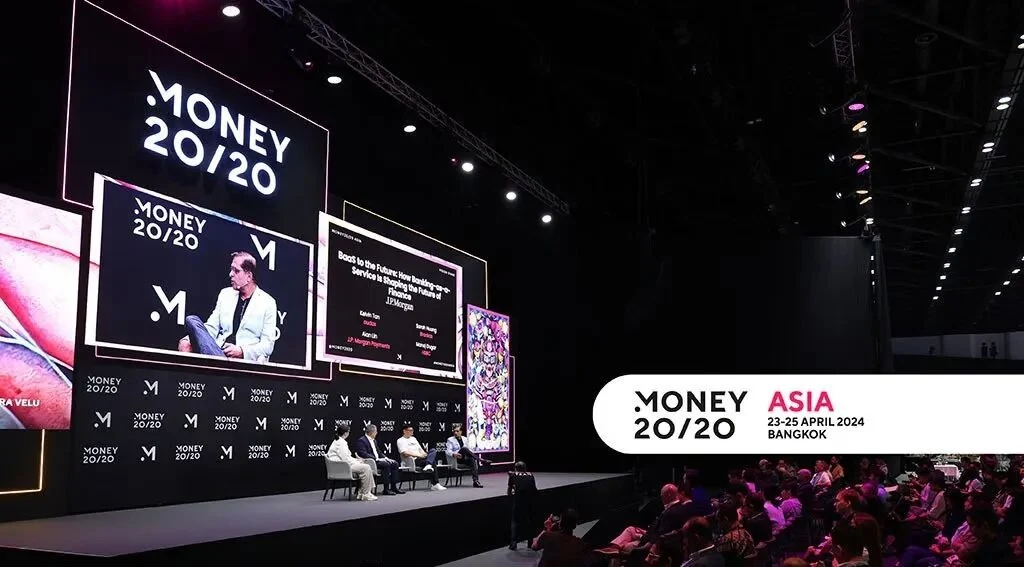
Author: Web3 Xiaolu Hong Kong Carnival × Bangkok Money 20/20 Observation Note Original title: The group with the most Crypto is becoming the least Crypto at Hong Kong Blockchain Week in April this year. What impressed me the most was not which panel, but a picture. After 10 p.m., at a tea restaurant in Wan Chai, four or five people huddled together at a table while eating stir-fried beef and talking about what they were going to do next. A friend who used to make stablecoin payments said that their team has completely switched to AI; another, who works with on-chain data, said he is now half his energy helping AI companies set up data pipelines. No one talks about currency prices, no one talks about narratives, even the term Web3 doesn't come up much. My feeling at the time wasn't surprising; it was a strange sense of familiarity — this group of people sat at the same table three years ago and must have been talking about DeFi, NFTs, and chain games. They're still those people, just as excited, and just as committed. I went to Hong Kong Carnival and Bangkok Money 20/20 this time, and after watching it, I kept on my mind saying: The group of people with the most crypto is becoming the least crypto. After the ebb of Web3, what is left? After running these two stops, I probably have an answer of my own. 1. Hong Kong: Familiar faces. Let's talk about Hong Kong first on unfamiliar topics. At this carnival, there are obviously few coin industry projects, and the hustle and bustle of distributing T-shirts everywhere and full of narratives the previous two years has dissipated. This year's official theme is “Mountain, Wind, Cloud, Sea”, and the positioning is very clear — say goodbye to the coin trading narrative. This sentence was posted three years ago, and the stage would have boo full of boos. However, no one felt wrong this year, because people didn't talk about coins in the first place; instead, they reached a tacit agreement. After walking around the exhibition, the faces were familiar: OKX Wallet, TRON, ZA Bank, HashKey, and Xinhuo. But the subject of their conversation changed, and the main theme focused heavily on two words: RWA and AI. RWA continues to be popular last year, but to be honest, everyone knows who is actually working on the project and who is doing the show. I think one judgment was established: RWA in Hong Kong is essentially the commercialization of financial management and investment — moving real assets onto the chain, making them more efficient and easier to distribute across borders. This is exactly what Hong Kong is best at: designing institutions and commercializing finance. The bubble has receded, and Hong Kong is more comfortable — the restlessness that didn't belong to it in the beginning has finally dissipated. AI is even more interesting. Almost every panel talks about the combination of AI and Web3, but I've listened to a few, and frankly, most of the discussions are at the level of “these two things should be combined.” As for how to combine and what problems to solve, no one can explain clearly. My feeling is that Web3 got together with AI not because it had a clear idea, but because if it didn't get together, there really wasn't a story to tell. Moreover, the guests on stage probably knew that they were chatting. But let's live before we talk about it; this is originally the survival philosophy of this community. There is nothing new about the Hong Kong dollar stablecoin. The licenses have all been issued, but after asking around, the two major banks each have their own rhythms, and none of them are in a hurry to make a high profile. It turned out that it seemed like nobody cared. But what really touched me was the people offstage. The busiest people at the venue this time were not the guests, but those dressed casually, wearing exhibition cards, and shuttling back and forth in the negotiation area — those doing BD, running the community, working on content, and helping the project connect resources. They don't have a beautiful resume, and they aren't necessarily “professional” in speaking, but their understanding of the industry grew from bumping into trouble one meal at a time. This understanding did not appear in the report; it was made in exchange for time. Whether an industry can get through the cycle depends not only on how many star companies are at the top, but also on how many people underneath are willing to continue refining when there is no applause. The Web3 chassis is still there. But what runs above the chassis has completely changed. 2. Bangkok: The stablecoin Trojan horse flew from Hong Kong to Bangkok, and the picture changed. Money 20/20 is a pure fintech B2B exhibition. The entrance fee is not cheap, and everyone who comes dressed like they wanted to meet customers. There are often vacant seats in the Panel area, but the business negotiation area next door is full from opening to closing. What surprised me was that stablecoins and crypto-native companies made up about one-third of the exhibitors. OSL, Circle, Ripple, Fireblocks, Cobo, Pyth... at least a dozen...

116d agoLuxurytracy