雷曼时刻 · 30

Goldman Sachs: Retail investors contributed about 30% of US stock trading volume, reaching a record high in June

Comparing news, Goldman Sachs data shows that retail investors currently account for about 30% of the daily trading volume of US stocks. In May of this year, retail stock trading volume was 10% higher than the peak in January 2021 during the retail war against Wall Street, and June further set a new historical record. The popularity of the options market is rising at the same time. Since this year, the daily turnover has exceeded 50 million shares several times, double that of three years ago. According to Citadel Securities data, July became one of the months with the strongest purchasing power for retail investors in its records, and there were no net sales in a single day. Continued purchases also forced some low-position institutions to push higher. Goldman Sachs estimates that the assets of retail investors holding their own brokerage accounts have reached 12 trillion US dollars, accounting for about 10% of the US corporate equity market; if direct and indirect holdings are included, the size of individual investors in the US has reached 111 trillion US dollars. Bobby Molavi, head of executive services at Goldman Sachs, described it as a big white whale in the capital market. However, the market is still divided over the AI narrative driving this round. Commentator Ed Zitron warned that OpenAI's high computing power spending and infrastructure debt could bring about an AI version of the Lehman moment; Howard Marx, co-chairman of Oak Capital, believes that AI's productivity potential may offset short-term financial pressure.
37d ago
In-depth conversation with the head of Apollo: The most expensive part of AI has just begun

In-depth conversation with the head of Apollo: The most expensive part of AI has just begun

Podcast Source: a16z Broadcast Time: May 27, 2026 Podcast Guest: Marc Rowan, Co-Founder, CEO and Chairman of Apollo Global Management Editor: BitPushNews Introduction In 1990, Marc Rowan walked out of the bankrupt Drexel Burnham Lambert and had only one carton containing personal items in his hand. In less than a year, Apollo, which he and his partners founded, managed $6 billion. More than 30 years later, Apollo is no longer just a “private equity company” in the impression of the outside world, but a capital platform with a management scale of over trillion US dollars, connecting retirement funds, investment-grade credit, infrastructure, and global industrial financing. In a conversation with David Haber, Apollo Global Management co-founder, CEO and chairman Marc Rowan talks about the origins of Apollo, the rise of private credit, the wave of capital spending brought about by AI, and why he believes private capital is becoming the core financing force for the real economy. The two also talked about the data center, chip, robotics, enterprise software crisis, and how a financial institution is maintaining an aggressive culture in the midst of change. Start with Drexel: What really matters is not financial skills, but understanding the business Q: You joined Drexel after graduating from Wharton in 1984. What did you see at this company back then? Marc Rowan: At the time, many of my Wharton students around me went to Goldman Sachs. But what drew me to Drexel is that it serves entrepreneurs and start-ups. These companies were not Exxon at the time, nor were they top blue-chip companies in the traditional sense. Their business model itself is controversial. To finance them, you can't just understand financial engineering; you can't just understand public offerings, pricing, and structures. You have to really understand the business itself. I've always been more interested in “business” than in financial technical details. So after joining Drexel, I wasn't disappointed; it was an amazing experience. Q: The founders of many major credit companies can be traced back to the Drexel people back then. How does the culture there influence you? Marc Rowan: The core is “business first” — understand the business first. Making credit judgments is essentially not about looking at tables, but understanding the fundamentals of a company. A large number of companies served by Drexel are not investment grade, but below investment grade. You can't rely on rating agencies, and you can't rely on the opinions of third parties; you have to understand the business yourself. More importantly, at the time, many financial products that are taken for granted today simply didn't exist. There is no high-yield bond market, no leveraged loans, no ETFs, and no mature securitization products. An entire market is being created. It forces us to do “clean sheet thinking” — thinking from a blank sheet of paper. PIK bonds, silver price-linked bonds, high confidence letters, and bridge financing are all created when solving specific problems. When problems arise, design solutions; when new problems arise, design new solutions. This ability to understand business, understand credit, and think from scratch remains at the core of Apollo to this day. Q: Michael Milken has been your mentor for a long time. What's the most important thing you've learned from him? Marc Rowan: Too many. When I was young, I thought I was very smart, and I had mastered my profession. But every time there was a problem with the market, Mike would call me and fly me from New York to California. I asked when, he usually said, “Tomorrow.” This reflects two things: first, dealing with problems must have a sense of urgency; second, always start with the business itself. I used to sit at the trading desk. Every day at the end of the deal, Mike walks past my desk and asks me a question I can't answer. He's not trying to humiliate me, or show how smart he is. He's training me to connect the dots. Today is the same. Can you combine geopolitics, technological changes, financial markets, human relationships, and business opportunities into one coherent judgment? Can you build good relationships, good deals, good partnerships, and ultimately create something that's good for the world? There is another statement that has had a profound impact on me: you either take the initiative to accept change, or change will come to you. We are in a moment like this right now. In 1990, he left Drexel with a carton. Apollo managed 6 billion dollars in a year. Q: Back in 1990, Ap...

86d agoWendy#AI #AI topics #Apollo Global Management #Marc Rowan #infrastructures #datacenter #depths #personal credit #financing #viewpoints #starters
From on-chain experiments to capitalization: Ethereum's 10th year knocks on Wall Street

From on-chain experiments to capitalization: Ethereum's 10th year knocks on Wall Street

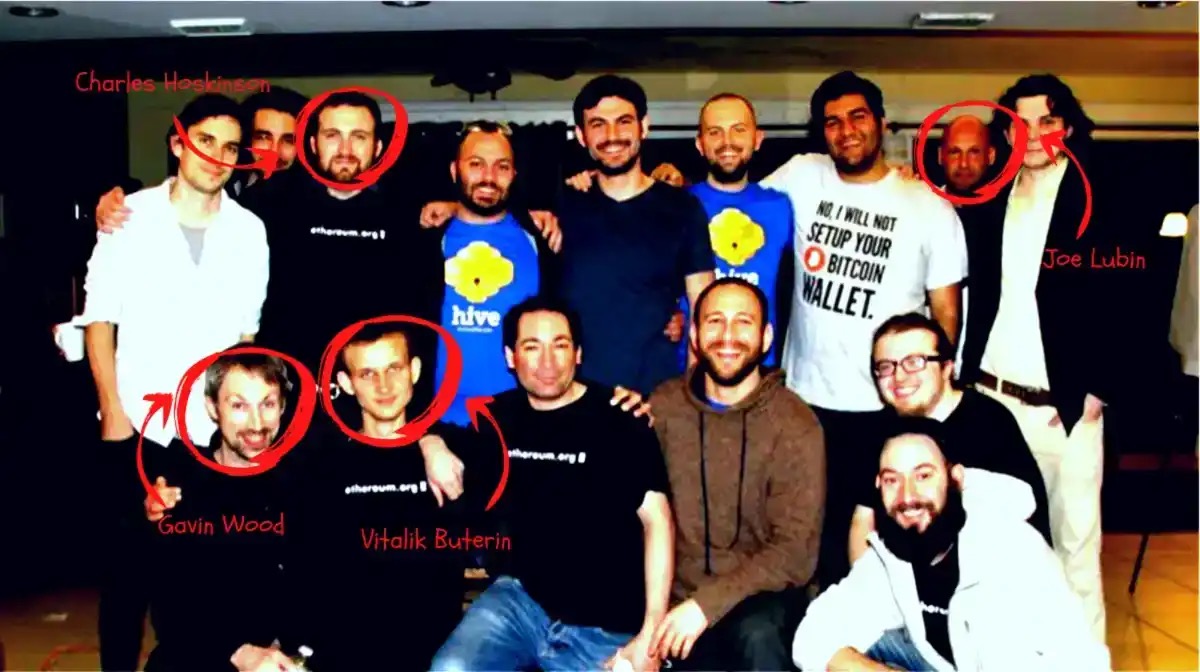
It appears that to coincide with this significant 10th anniversary, ETH is rushing back at $4000. From the launch of the main network on July 30, 2015 to today in 2025, it has not only witnessed the rise and fall of the entire blockchain industry, but has also used upgrades and consensus time after time to build an unprecedented “world computer”. Smart contracts, once frowned upon, are now the most common operating system in the Web3 world. ETH has also gone from a few cents at the time of crowdfunding to a large asset with a market capitalization of over $300 billion. At the same time, the Ethereum Foundation has also completed an important “blood exchange.” The inside is changing, and so is the outside. Over the past year, a number of companies with traditional financial backgrounds have successively bought ETH, and institutions such as SharpLink, BTCS, and BMNR have announced the inclusion of ETH in strategic asset reserves. All of these changes took place in this special year: 2025, ten full years since the Ethereum mainnet went live. This decade has been one of the most exciting chapters in blockchain history. From a white paper to a global ecosystem of hundreds of billions of dollars; from the founding team of the “Eight Kings Assembly” to breaking through silos in the siege of “Ethereum Killers”; from PoW to PoS, from technical laboratories to public infrastructure, Ethereum has completed its first reincarnation. But the real story is probably just beginning. The “prequel” phase of Ethereum focused on the split and ideological conflict of the Ethereum founding team, and took place during the period 2014-2015. Vitalik Buterin, a programmer genius who always makes fun of technology, always answers “the 8 co-founders thing” when asked what his biggest regret during his Ethereum journey was. Obviously, these 8 founders, who have long since left, are on his mind. When Vitalik had nothing but an idea, he greeted the top 10 developers who responded and chose 5 of them as leaders, namely the 5 founders of Ethereum: Vitalik Buterin, Anthony Di Iorio, Charles Hoskinson, Mihai Alisie, and Amir Chetrit. “This was clearly a very bad decision. They looked like nice people, and they wanted to help, so I thought at the time, why not let them be leaders?” Vitalik said this when he looked back on his decision at the time. Regarding the co-founder of Ethereum, this is a controversial topic. There are many versions on the internet, and even Wikipedia's related entries are constantly being edited and revised. After Vitalik “personally certified 8 co-creators,” the version widely recognized by the community was: Following the 5 founders, 3 other developers became co-founders in 2014: Joseph Lubin, Gavin Wood, and Jeffrey Wilcke. At this point, Ethereum has completed the early formation of 8 core leaders, like the “Eight Kings Council” in the early Yuan and Qing Dynasties to prevent the Emperor (Big Khan) from arbitrarily implementing it. Berlin “Pilgrimage” In the “Vitalik: An Ethereum Story” documentary released last year, Vitalik recalled that he had been a digital nomad since mid-2013. That was the prehistory of Ethereum. Bitcoin was only $204, more than a year since Vitalik and Mihai Alisie founded Bitcoin Magazine. While building Ethereum, he ran all over the world because he was invited by various communities around the world. In 2013 and 2014, Ethereum had headquarters in Switzerland and Berlin, the white paper came out, and Vitalik visited China to crowdfund Ethereum and visit miners. Berlin is the city he's been waiting for a long time. “Pilgrimage,” Vitalik described himself active in Berlin's Bitcoin Kiez area at the time. Cryptocurrency payments are very common in Berlin's Bitcoin Kiez region. Within about a few hundred meters, there are more than a dozen stores that accept BTC payments. The “Room 77” dining bar in the heart of the community is also a community center, frequented by technology developers, political activists, etc. Room&n...

388d agoLuxurytracy#Ethereum #Ethereum 10th anniversary topic #Wall Street
The direction of liquidity is the key. Are FTX's payouts a savior or a hidden danger?

The direction of liquidity is the key. Are FTX's payouts a savior or a hidden danger?

On February 18, FTX began repayment of accounts with claims amounts below 50,000 US dollars. The total amount of payments in this round was 1.2 billion US dollars. Currently, about 800 million US dollars have been paid. The direction of the flow of these funds will directly affect the short-term market and long-term ecology of the coin industry. Choosing to continue investing or withdrawing is essentially a game about “liquidity redistribution”. Its impact is by no means a simple benefit or disadvantage, but rather a complex chain reaction. 1. The collapse of FTX: The beginning and end of the “Lehman Hour” in the coin industry. In November 2022, the coin industry staged a “black swan incident” similar to a financial tsunami. FTX, the world's second-largest exchange, collapsed due to the liquidity crisis, and founder SBF (Sam Bankman-Fried) went from being a “coin world savior” to a “fraud suspect,” dragging an empire with a market value of 32 billion US dollars into the abyss of bankruptcy in just 10 days. The trigger for the incident stemmed from a balance sheet vulnerability in FTX affiliate Alameda Research. This quantitative trading company controlled by SBF is heavily betting on FTT, the FTX platform token, in its assets, forming a “buy and sell” circular bubble. When Binance founder Changpeng Zhao announced the FTT clearance, market panic triggered a wave of crowding. In three days, $6 billion was shorted, and FTX instantly crashed. This crisis not only caused Bitcoin to plummet to a 2-year low, but also caused top institutions such as Sequoia Capital and SoftBank to lose their money. Hundreds of crypto companies went bankrupt in a series, which can be called a “nuclear disaster” in the coin industry. 2. SEC attacks hard: The collapse of FTX, which reshuffled the coin industry under the regulatory storm, pushed the US SEC (Securities and Exchange Commission) to the front line of regulation. As early as 2022, the SEC filed lawsuits against platforms such as Ripple (Ripple) and Coinbase, accusing them of selling unregistered securities in violation of regulations. After the FTX incident, the SEC quickly intervened to investigate SBF's misappropriation of customer funds and market manipulation, and cooperated with the CFTC (Commodity Futures Commission) to thoroughly investigate FTX's US business. This series of actions sends a clear signal that cryptocurrencies are no longer an unregulated “extrajudicial place.” The tightening of regulations has had a double effect. On the one hand, centralized exchanges such as Gemini and BlockFi have been forced to increase transparency, and some platforms have even suspended high-risk businesses to seek compliance; on the other hand, decentralized finance (DeFi) has taken the opportunity to rise, and DEX (decentralized exchanges) such as Uniswap have attracted safe-haven funds with the characteristic of “code is the rule.” Although the SEC's iron fist suppressed market sentiment in the short term, it laid the foundation for the long-term healthy development of the industry. 3. $16 billion in compensation: The “double-edged sword” of liquidity In January 2025, the FTX restructuring plan officially came into effect, and the sky-high payment of $16 billion began. The impact of this “largest cryptocurrency debt repayment in history” on liquidity has sparked heated debate: The positive side: the bullish market with the return of capital is expected to have a “blood transfusion” effect: the initial payment of 1.2 billion US dollars will be distributed in stablecoins, and some creditors may re-invest their funds in mainstream currencies such as BTC and ETH to form market purchases. Confidence repair: The 120.5% excess cash compensation in the compensation plan (for some users) alleviated investors' fears that “exchange thunderstorms will return to zero” and boosted market sentiment. Deleveraging completed: After two years of liquidation, most of the SOL and other tokens held by FTX have been sold off, and market pressure was released early. Industry insiders predict that the payout may become the “trigger” for the 2025 bull market. Risk side: Short-term fluctuations and hidden structural risks Fiat currency “withdrawal”: The compensation is settled in fiat/stablecoin and converted at the 2022 currency price (BTC was about 20,000 US dollars at the time). If creditors choose to cash out and leave the market, it may cause capital outflow. Tail risk: FTX still holds millions of dollars in niche currencies (such as MAPS and SRM), and centralized selling may cause a flash crash. Regulatory aftershock: The SEC's monitoring of the flow of reimbursement funds may heighten market caution, particularly in the context of the Trump administration's uncertain cryptocurrency policy. 4. The future of the cryptocurrency industry: rebirth of nirvana or reincarnation of crisis? The FTX incident was like a mirror, unraveling the three major persistent problems in the coin industry: centralized black boxes, abuse of leverage, and lack of supervision. But its payout plan also proves that even in the face of systemic risks, the crypto industry is resilient to self-healing. In the long run, this crisis is spawning change: a wave of decentralization: DAOs (decentralized autonomous organizations) and smart contract insurance are on the rise, and users are gradually shifting asset custody from exchanges to on-chain agreements. Survive in compliance: Coinbase and other platforms actively embrace SEC scrutiny and seek mainstream financial recognition through listings and audits. Return of technological value: market attention from speculation to speculation...

548d agoWeb3践行者#Web3 practitioners
The cloned version of “MicroStrategy” entered the market in batches. Has BTC's “lying and winning strategy” been confirmed?

The cloned version of “MicroStrategy” entered the market in batches. Has BTC's “lying and winning strategy” been confirmed?

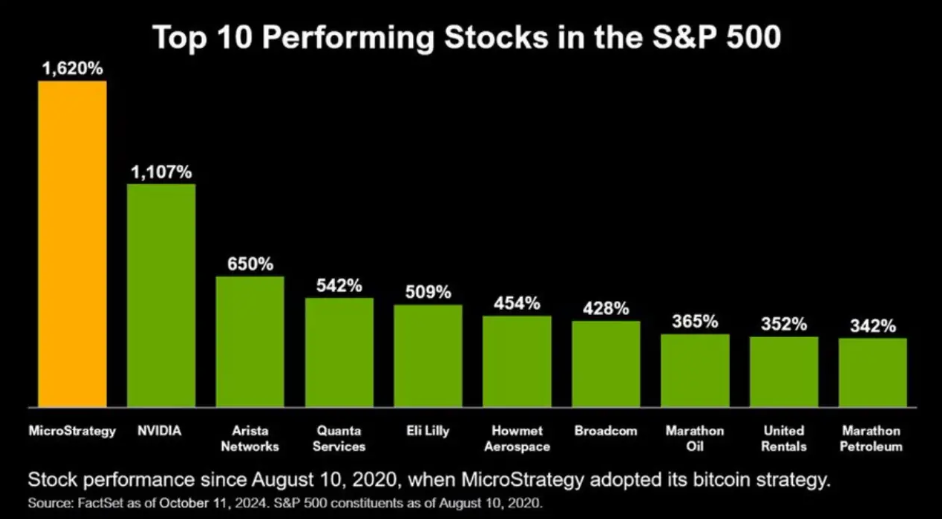
Author: flowie, ChainCatcher Editor: Nian Qing, ChainCatcher Last week, after founder Michael Saylor announced that Microstrategy (NASDAQ: MSTR)'s ultimate goal was to become the leading “Bitcoin bank,” MSTR surged nearly 16% last Friday to break through $212 (temporarily falling back to $194), and its market capitalization soared to 43 billion US dollars, reaching a record high. Since Microstrategy launched its Bitcoin investment strategy in August 2020, MSTR has risen by more than 1,600%, outperforming the gains of major S&P 500 technology stocks such as BTC and Nvidia. It is even more obvious that MSTR outperformed BTC by a large margin this year. According to market data, since the beginning of the year, BTC has risen 52%, MSTR has risen 180%. In the past 30 days, BTC has risen by about 7.41%, and MSTR has risen 44%. MicroStrategy's “lay back and forth” model is also attracting more imitators. Since the launch of the Bitcoin investment strategy in April, the Japanese listed company Metaplanet's stock price has risen 480%. Recently, German listed company Samara Asset Group will also issue 30 million euro bonds, partly to buy Bitcoin. Why can a listed company “lie back and win” by simply holding a large amount of BTC? Are there any risks with the MicroStrategy model? Borrow money to buy Bitcoin, MicroStrategy's “lie back and forth” model. MicroStrategy's original main business was enterprise-grade AI software, which contributed about 100 million US dollars in revenue every quarter. As a US listed company, this part of the business is very mediocre. It wasn't until August 2020, when MicroStrategy launched a Bitcoin investment strategy and overbought Bitcoin that the myth of a sharp rise in MicroStrategy's stock price began. MicroStrategy's market capitalization grew from $600 million to over $40 billion. As a result, many people, especially users in the crypto community, have the impression that MicroStrategy is just a publicly traded company that is constantly increasing its Bitcoin holdings. Investing in MicroStrategy is also indirectly equivalent to investing in BTC. But MicroStrategy co-founder Michael Saylor believes the market is misunderstood about MicroStrategy, and most people actually don't know what they do? Last week, MicroStrategy co-founder Michael Saylor's conversation with analysts Bernstein restored the thinking logic behind MicroStrategy's Bitcoin strategy. He clearly defined MicroStrategy's model and positioning, and why it can outperform BTC and beat major S&P 500 tech stocks including Nvidia. Simply put, MicroStrategy's Bitcoin investment strategy is not simply to buy bitcoins to store coins, but to borrow money to buy bitcoins by issuing bonds and creating a leverage effect. Michael Saylor said that MicroStrategy currently buys Bitcoin with almost zero interest (0.625% interest last two times), or issues shares at a 60% or 100% Bitcoin premium before buying back Bitcoin. For example, in September of this year, MicroStrategy completed a $1.01 billion convertible note offering with 0.625% coupon interest and a 40% conversion premium. The cost of debt is relatively fixed, and the value of Bitcoin assets has increased, and MicroStrategy has arbitraged between the fiat capital market and digital capital market by investing in digital capital with returns many times higher than the cost of capital. Michael Saylor This is why MicroStrategy's performance surpassed all 500 companies in the S&P Index, and is also superior to Bitcoin. This arbitrage model has also increased net profit and increased stock value. According to MicroStrategy's Q2 earnings report, MicroStrategy introduced a new accounting standard, the BTC yield, to describe the investment value of MSTR. MicroStrategy's BTC yield has reached 17.8% this year, which means...

673d agoAlvin Liu#Michael Saylor #MicroStrategy
Ten Questions About Binance: CZ's Return and Deep Reflections on Six Years of Success

Ten Questions About Binance: CZ's Return and Deep Reflections on Six Years of Success

On September 28, Binance founder Changpeng Zhao (CZ) tweeted a brief “GM”. Immediately after that, on September 29th, he published a long post to express his gratitude to his followers and supporters, and revealed that Binance is still thriving without his direct supervision. In the future, he will continue to invest in blockchain, decentralized technology, artificial intelligence, and biotechnology, while also writing a book. All of this has sparked a buzz throughout the crypto world, as if announcing his strong return. Going back to June 29, 2018, MarsBit (Mars Finance) conducted an exclusive interview with Binance founder Zhao Changpeng (CZ) on “Wang Feng's Ten Questions”. At the time, just one year after CZ founded the Binance Exchange, it was already listed as a billionaire on the digital currency richest list by “Forbes”. Binance's valuation was as high as 10 billion US dollars, and its spot trading volume was stable at the top of the industry. However, the strong rise of a new generation of exchanges represented by transaction mining has made competition in digital currency exchanges more intense. MarsBit (Mars Finance) invited CZ. The CEO of the crypto trading giant revealed the industry's difficulties, market competition, and future strategies during a laugh and talk. Six years have passed in a blink of an eye. The crypto world has gone through ups and downs, how many projects have had ups and downs, and new things are constantly emerging. When we personally witnessed events such as Luna's thunderstorm and FTX bankruptcy, we discovered that many of CZ's views were not only forward-looking, but also demonstrated his ability to understand and solve problems from a high level of industry perspective. The ten questions asked about CZ back then have now taken on even more profound significance. So, did CZ actually live up to that year's answer? Next, let's dive deeper into the implications behind these questions. First question: Binance pioneered the world, from Uganda to the global layout of MarBit (Mars Finance). Question: Why did you choose Uganda as the first place for Binance fiat trading? Can fiat transactions bring more traffic to digital assets, or simply trigger an asset bubble? CZ: Many people are eyeing developed countries where it's easy to make money, but Binance needs to take a deep dive into the industry and spread blockchain and digital currencies all over the world at its own pace. I believe the channels for transactions between fiat and currency should be opened up as much as possible. The bigger the better, the wider the better. In this case, more people can freely enter and exit. We do have very deep communication with the financial regulators in Uganda, and they are very supportive of this. In fact, with our efforts, more and more countries and regulators should support digital currencies; in this case, the entire industry will grow bigger. In a 2018 interview, when CZ chose Uganda as the first stop for the Binance Fiat Exchange, some people were quite surprised by this choice. However, this choice shows the unique vision of CZ's global strategy: from the beginning, Binance focused on promoting the development of digital currencies on a global scale, not just in developed countries. In 2018, Binance launched a fiat exchange in Uganda and is working closely with local regulators and financial institutions to ensure compliant operations. Additionally, Binance has launched new products in Russia and is connecting with local Russian partners to promote the use of digital assets. In 2020, Binance further increased its investment in the African market, particularly in South Africa and Nigeria, and launched localized versions of the Binance Exchange to enhance the user experience. Meanwhile, Binance is also partnering with Brazilian fintech companies to begin exploring the potential of the Latin American market. Addition of fiat currency channels: Binance has added support for up to 15 fiat currencies, including the UAE dirham, Australian dollar, and euro, through partnerships with partners such as Etana Custody. This allows users to easily make fiat deposits via SWIFT transfers. In 2021, Binance announced a partnership with financial institutions in Argentina and Chile to promote the use and popularization of digital currencies. CZ has also been frequently mentioned at various international conferences that Binance will continue to focus on emerging markets and promote digital currency education and popularization around the world. In 2022, Binance's global presence was further expanded, collaborating with the UAE's financial regulator and obtaining a license to operate legally. Additionally, Binance is actively promoting compliance processes in countries such as India and the Philippines, and has established good communication channels with local regulators to promote the healthy development of digital currencies. Six years later, Binance has business coverage in more than 100 countries around the world. Binance's global layout complies with local regulations and has obtained regulatory approvals in multiple jurisdictions. Additionally, Binance has set up offices in various regions around the world, such as Abu Dhabi, Bahrain, Dubai, and Paris, to better communicate with local users and regulators. Binance also...

691d agody zhang#Exchanges #What one #Binance #markets #users #Zhao Changpeng
Ethereum's 10-year power change: 3 internal shuffles, now trying to say goodbye to the Vitalik era

Ethereum's 10-year power change: 3 internal shuffles, now trying to say goodbye to the Vitalik era

If I don't know this, how can I say I know Ethereum? Article: Jaleel plus six, BlockBeats's “car” is too heavy, “Zhuang” is too scattered. The price of ETH, which is the 34th largest asset in the world, has stagnated, and Ethereum has ushered in its own “midlife crisis.” This year is a special year for Ethereum, the 10th anniversary of the ICO. Looking back at global tech companies, 10-year-old Apple almost went bankrupt, with a maximum market capitalization of only $20 billion. Microsoft's market capitalization grew from $6.7 billion to $130 billion in the decade since it went public. The market capitalization of Ethereum is $321 billion. Although Ethereum grew rapidly in terms of market capitalization in the first 10 years, it was even thought that it would surpass Bitcoin at one point. However, in this crypto cycle, when Ethereum stagnates, Bitcoin has repeatedly reached new highs, and Solana “died”. After many times reflecting on “What happened to Ethereum?” Only then did the community really realize that Ethereum is facing the dilemma of having wolves and then tigers, and it is not irreplaceable. In fact, the Ethereum Foundation has quite a few shortcomings, and the organizational structure is also very confusing. As a decentralized non-profit organization, it's not easy to handle Ethereum's internal organizational structure. Looking back at Ethereum along the way, the eight founding teams didn't match their “separation” philosophy and staged a cryptographic version of “The Eight Fairies of Silicon Valley.” With only Vitalik left, this decentralized non-profit organization became this prodigy's “centralized” era, and his influence and authority were unprecedented. Today, complex relationships and ideological conflicts within the Ethereum Foundation continue, researchers are fighting each other, and ideology is changing subtly. After experiencing the changes of the crypto age, the survival and death of the Russian-Ukrainian war, and life experiences, 30-year-old Vitalik also seems to have begun a new script, playing a completely different role in Ethereum than before. Phase 1: Vitalik personally elected the “Eight Kings Assembly” This stage focused on the split and ideological conflict of the Ethereum founding team. The period was 2014-2015. Vitalik Buterin, a programmer genius who always makes fun of technology, always answers “the 8 co-founders thing” when asked what his biggest regret during his Ethereum journey was. Obviously, these 8 founders, who have long since left, are on his mind. When Vitalik had nothing but an idea, he greeted the top 10 developers who responded and chose 5 of them as leaders, namely the 5 founders of Ethereum: Vitalik Buterin, Anthony Di Iorio, Charles Hoskinson, Mihai Alisie, and Amir Chetrit. “This was clearly a very bad decision. They looked like nice people, and they wanted to help, so I thought at the time, why not let them be leaders?” Vitalik said this when he looked back on his decision at the time. Regarding the co-founder of Ethereum, this is a controversial topic. There are many versions on the internet, and even Wikipedia's related entries are constantly being edited and revised. After Vitalik “personally certified 8 co-creators,” the version widely recognized by the community was: Following the 5 founders, 3 other developers became co-founders in 2014: Joseph Lubin, Gavin Wood, and Jeffrey Wilcke. At this point, Ethereum has completed the early formation of 8 core leaders, like the “Eight Kings Council” in the early Yuan and Qing Dynasties to prevent the Emperor (Big Khan) from arbitrarily implementing it. Berlin “Pilgrimage”, prequel to Ethereum In the recently released “Vitalik: An Ethereum Story” documentary, Vitalik recalls that he has been a digital nomad since mid-2013. That was the prehistory of Ethereum. Bitcoin was only $204, more than a year since Vitalik and Mihai Alisie founded Bitcoin Magazine. While building Ethereum, he ran all over the world because he was invited by various communities around the world. In 2013 and 2014, Ethereum had headquarters in Switzerland and Berlin, the white paper came out, and Vitalik visited China for Ethereum...

696d agody zhang#2023 market #Solana #Vitalik #Ethereum
The story of Gary Wang's glory and fall, revealed the genius Chinese programmer who personally forged the butcher knife for FTX

The story of Gary Wang's glory and fall, revealed the genius Chinese programmer who personally forged the butcher knife for FTX

Gary Wang, a genius programmer of a generation, was also famous for a while, but such a sharp, bloodthirsty sword was used in the wrong place and ended in a sloppy end. FTX's trial is still ongoing, what is the final outcome of SBF and Gary's trial? Let's wait and see. Author of the original article: Giovanni Chen On October 3, the bankruptcy case of the FTX exchange, which was once the second largest in the world, was officially heard in New York. Judges and SBF on the scene went tit-for-tat with numerous witnesses. Various testimonies and statements reviewed the details of how SBF operated FTX, unraveling the internal mystery of this cryptocurrency exchange, which once ranked second in trading volume and had a market capitalization of 32 billion US dollars. On the day of the trial, Gary Wang, Caroline Ellison, and Trabucco, the company's closest heavyweights to SBF appeared on the witness stand at the same time. One of the Chinese faces attracted the attention of all media and the public. The glasses-wearing, slightly reserved, and well-mannered witness was FTX's co-founder, CTO Gary Wang. Gary Wang's exit was a surprise; he personally revealed that FTX and Alameda's relationship did have a back door: SBF allowed Alameda to withdraw funds from FTX indefinitely, and Gary personally wrote Alameda's ability to steal customer funds in the FTX system in 2019 as CTO. Also, Alameda can trade with more funds than she actually has in her account. This intangible gave Alameda the privilege of misappropriating user assets and making unlimited transactions. When FTX crashed, Alameda increased its credit line to an exaggerated $65 billion, and Alameda even directly withdrew $8 billion from the FTX platform. This $8 billion is exactly the funding gap in FTX's corporate account, coming from FTX customers. Furthermore, the real insurance fund balance announced by FTX (a trade guarantee fund that guarantees the risk of a trader's counterparty being liquidated) was fraudulent. It was generated by a random number generator. The amount did not match the database, and the real number was lower than the number generated. This revealed FTX's own fraud in external financial statements and responses to audits. Seeing that his former most important “comrade” testified in court and revealed some shocking data and information, SBF's body kept shaking. He rubbed his eyes violently with his hands to try to calm down, and his eyes were full of despair. Who is Gary Wang? According to Gary's own statement, as the co-founder of FTX, with an annual salary of $200,000, and owns 17% of FTX and 10% of Alameda, he is second only to SBF. In FTX's operations, SBF is responsible for company strategy, PR, and communications, while Gary focuses on coding. According to FTX and Alameda's equity value, Gary, 28, became the richest person under 30 with a net worth of $5.9 billion on the new Forbes Rich List in April 2022. As the most mysterious billionaire executive, Gary usually has a mysterious personality. He rarely appears in public. There are only a few online photos. Even his company colleagues often don't see him for a long time, and even his LinkedIn photos only have a background. An acquaintance between Gary and SBF According to online data, Gary was born in China and immigrated to New Jersey in the US with his parents after age 8. He has excellent academic performance since childhood, and has shown a high level of talent and interest in mathematics and programming. In 2010, he participated in a high school math competition and happened to meet SBF and Trabucco (another FTX executive). The three participated in the math summer camp training organized by the Massachusetts Institute of Technology (MIT). All three successfully entered the MIT math major. Trabucco and Gary studied for a bachelor's degree in mathematics and computers, while SBF studied for a bachelor's degree in physics. SBF and Gary gradually built trust in college, and they did...

1040d agody zhang#Alameda #FTX #Gary Wang #SBF #THETA #Bitcoin
Why are crypto banks so vulnerable? How will the Bitcoin market develop in the future

Why are crypto banks so vulnerable? How will the Bitcoin market develop in the future

After the Silvergate Bank thunderstorm, Silicon Valley banks also fell into a liquidity crisis. Other than that, what other crypto banks are being dragged down? More and more US financial institutions are narrowing their crypto exposure, so what are the options for crypto institutions? How do big market players view the long-term impact of the crypto banking storm on the crypto market? What factors are still affected by the coin market storm? What are the more essential influencing factors? How will the Bitcoin market develop in the future? Crypto banking's “Lehman Moment” has arrived. How are their respective situations? With Silvergate and Silicon Valley Bank thunder one after another, crypto banks have ushered in a real “Lehman Hour,” and the crypto market has also been severely hit. Judging from current information, crypto banks have been hit differently. Here's a brief summary of this. Silvergate Bank ceased operations and voluntarily liquidated. Silvergate Bank was most affected by the FTX exchange storm, and it was also the first to thunder. Earlier, Silvergate Capital Corp. had to sell assets at a loss to repay depositors and lenders, causing Silvergate Bank to fall; finally, on March 10, Silvergate Capital Corporation completely abandoned the struggle and announced that it would stop operating and voluntarily liquidate Silvergate Bank. Silicon Valley Bank is still being rescued. It has been taken over by the Federal Deposit Insurance Corporation (FDIC). Next week, DINB will maintain the normal operation of Silicon Valley Bank. On March 10, Silicon Valley Bank (Silicon Valley Bank), which is involved in crypto business, experienced a liquidity crisis; subsequently, the US Federal Deposit Insurance Corporation (FDIC) announced that Silicon Valley Bank (Silicon Valley Bank) was shut down by the California Department of Financial Protection and Innovation, which designated the Federal Deposit Insurance Corporation (FDIC) as the receiver. To protect depositors, the FDIC created the Santa Clara Deposit Insurance National Bank (DINB), which will maintain normal business hours for Silicon Valley banks. According to reports, Silicon Valley Bank stated in its 2022 annual report that the bank lends and accepts deposits to crypto companies and also invests in these companies, but it has minimal risk exposure to crypto customers. Signature was dragged down, its stock price plummeted, and it was also in jeopardy. Due to the impact of the Bank of Silicon Valley and the Silvergate incident, Signature Bank's stock price fell 32% on Friday, and trading was suspended for a second day when bank stocks were sold off for the second day in a row. Similar to Silvergate, Signature is also one of the major banks in the cryptocurrency industry. Although Signature has stated that it has little exposure to cryptocurrencies, it still faces significant risks. Custodia Bank and others were pressured by regulators, and the US Federal Reserve rejected Custodia Bank's membership application. (Note: Custodia Bank is a full reserve bank that provides payment and custody services for cryptocurrency businesses.) It is worth noting that due to a series of events in crypto banking, the US financial sector suffered a panic sell-off, and the total market value of the four major US banks (J.P. Morgan, Citigroup, Wells Fargo, and Bank of America) evaporated a total of 52.4 billion US dollars within 1 day on March 10. According to people familiar with the matter, J.P. Morgan Chase is ending its business partnership with Gemini; however, Gemini responded to the incident on Twitter, saying that the banking partnership between Gemini and J.P. Morgan Chase had not been affected. Additionally, a Coinbase spokesperson confirmed that the exchange's banking relationship with J.P. Morgan still exists. What are the choices of crypto institutions? What do Big V think of the crypto bank thunderstorm After the Silvergate and Silicon Valley Bank thunderstorm, most crypto banks seem to have become conservative. So, for crypto institutions with deposit requirements, what are their options? How do big market players view the impact of the crypto banking storm? Currently, Signature Bank has become the main alternative to Silvergate because it provides a similar payment network, Signet, but it has little interest in more crypto businesses. Last December, the company said it wanted to cut crypto-related deposits to less than 20% of the total deposit volume, with the ultimate goal of cutting them below 15%. The bank's crypto-related deposits...

1260d agoWendy#2023 market #Silvergate Bank #Crypto banking topics #Sun Yuchen #Fire must #custodial #Bank of Silicon Valley
The most famous bank in Silicon Valley has collapsed, and the butterfly in the coin industry has finally triggered a storm in the US banking industry?

The most famous bank in Silicon Valley has collapsed, and the butterfly in the coin industry has finally triggered a storm in the US banking industry?

A huge PR mistake. Last night, Bank of America stocks crashed across the board, and the KBW Bank Index closed down 7.7%, the biggest daily decline since June 2020; SVB, the largest bank in Silicon Valley, fell sharply by 60%, and its market capitalization evaporated by 9.6 billion US dollars overnight, the biggest decline since listing in 1988. But who would have thought that SVB's flash crash was actually a huge “PR mistake” and a butterfly effect of the firestorm in the coin industry (although it itself had no exposure to crypto assets). The reason it happened is probably simply due to the current “vulnerable sentiment” of investors. There was a storm in the coin industry, and fears spread the day before. SVB issued a statement saying that the bank's 21 billion US dollar bond investment assets previously sold had a loss of 1.8 billion US dollars after tax due to rising interest rates. Therefore, SVB plans to urgently raise US$2.25 billion by issuing common shares, preferred shares, and targeted increases to make up for losses. This is a huge PR joke: in normal times, this statement doesn't cause much thought. However, just as SVB issued a statement, Silvergate, a “cryptocurrency friendly bank,” declared bankruptcy. Imagine this scenario: While the news of the bank storm in the cryptocurrency industry was still rolling on TV, a large bank with a history of nearly 40 years announced that it had suffered huge losses and needed financing. This will obviously cause the market to speculate whether this big bank has experienced a liquidity crisis and is therefore in a hurry to get out of trouble with financing. Before the thunderstorm of Silvergate, investors began panic selling, which eventually affected the entire banking sector: the four largest US banks — J.P. Morgan, Citigroup, Wells Fargo, and Bank of America — all evaporated $52.4 billion in market capitalization during the day. R.J. Grant, head of Keefe, Bruyette & Woods' New York-based trading department, told the media: “SVB's financing made everyone nervous about the state of deposits in this bank. Many institutional investors don't want to hold shares in certain banks anymore. People are freaked out because SVB has always been a big bank that operates well. If it were to go wrong, people would wonder how bad the other smaller banks were.” Tech blog TechCrunch jokes that people who work in SVB's investor relations department have to start looking for new jobs. SVB's real dilemma SVB mainly funds US tech startups and doesn't have much risk exposure to crypto assets. Theoretically speaking, the Silvergate thunderstorm had little to do with it. This PR outrage shouldn't have led to a “Lehman moment.” However, SVB does face some operational difficulties. First, there is the issue of rising interest rates mentioned above. In the tech stock bull market during the pandemic, SVB invested $91 billion in long-term bonds such as US Treasury bonds. These bonds were originally very safe, but then in order to curb inflation, the Federal Reserve violently raised interest rates one after another, and US bond yields continued to rise. The bonds held by SVB depreciated sharply, and losses were serious. According to data from the US Federal Deposit Insurance Corporation, securities held by the US banking sector generated an unrealized loss of 620 billion US dollars due to rising interest rates. US Federal Deposit Insurance Chairman Martin Gruenberg said on March 6 that unrealized losses “significantly reduced the equity capital of the banking industry.” Second, the deposits of tech startups that SVB mainly serves are declining. Half of the US venture-backed tech and life sciences companies are SVB clients. As the macroeconomic environment in the US deteriorated, venture capital financing slowed, and many startups ran out of capital. Greg Becker, CEO of the company, told investors on Wednesday: “The amount of money our customers are burning has always been very high, and there was a further increase in February, causing deposits to fall short of expectations. We expect interest rates to continue to rise, markets to continue to be under pressure, and customer capital expenditure to rise.” However, he also told the media: “We have sufficient liquidity to support our customers.” Moody's downgraded SVB's credit rating on Wednesday, citing “significant changes” in SVB's funding and profitability in the short term...

1261d agody zhang#SVB #Crypto banking topics #Wall Street News #Coin circle #Silicon Valley