


In-depth conversation with the head of Apollo: The most expensive part of AI has just begun
Podcast source:a16z
Broadcast time: May 27, 2026
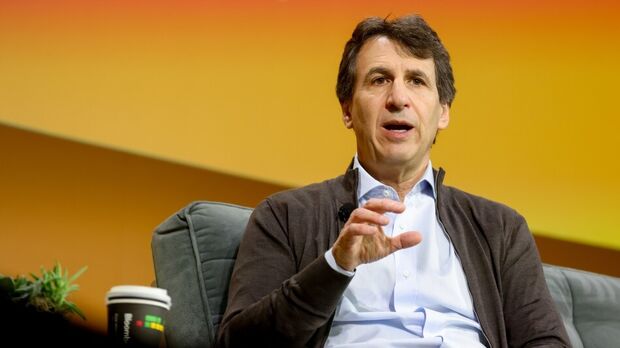
Podcast Guest:Apollo Global ManagementMarc Rowan, Co-Founder, CEO and Chairman
Edited by BitPushNews
INTRODUCTION
In 1990, Marc Rowan came out of business from the defunct Drexel Burnham Lambert with only one carton containing his personal belongings. In less than a year, Apollo, which he and his partners founded, managed $6 billion. More than 30 years later, Apollo is no longer just a “private equity company” in the impression of the outside world, but a capital platform with a management scale of over trillion US dollars, connecting retirement funds, investment-grade credit, infrastructure, and global industrial financing.
In a conversation with David Haber, Apollo Global Management co-founder, CEO and chairman Marc Rowan talks about the origins of Apollo, the rise of private credit, the wave of capital expenditure brought about by AI, and why he believes private capital is becoming the core financing force for the real economy. The two also talked about the data center, chip, robotics, enterprise software crisis, and how a financial institution is maintaining an aggressive culture in the midst of change.
Start with Drexel: What really matters is not financial skills, but understanding the business
Q: You joined Drexel after graduating from Wharton in 1984. What did you see at this company back then?
Marc Rowan:
At the time, many of my Wharton classmates went to Goldman Sachs. But what drew me to Drexel is that it serves entrepreneurs and start-ups.
These companies were not Exxon at the time, nor were they top blue-chip companies in the traditional sense. Their business model itself is controversial. To finance them, you can't just understand financial engineering; you can't just understand public offerings, pricing, and structures. You have to really understand the business itself.
I've always been more interested in “business” than in financial technical details. So after joining Drexel, I wasn't disappointed; it was an amazing experience.
Q: The founders of many major credit companies can be traced back to the Drexel people back then. How does the culture there influence you?
Marc Rowan:
The core is “business first” — understand the business first.
Making credit judgments is essentially not about looking at tables, but understanding the fundamentals of a company. A large number of companies served by Drexel are not investment grade, but below investment grade. You can't rely on rating agencies, and you can't rely on the opinions of third parties; you have to understand the business yourself.
More importantly, at the time, many financial products that are taken for granted today simply didn't exist. There is no high-yield bond market, no leveraged loans, no ETFs, and no mature securitization products. An entire market is being created.
It forces us to do “clean sheet thinking” — thinking from a blank sheet of paper. PIK bonds, silver price-linked bonds, high confidence letters, and bridge financing are all created when solving specific problems. When problems arise, design solutions; when new problems arise, design new solutions.
This ability to understand business, understand credit, and think from scratch remains at the core of Apollo to this day.
Q: Michael Milken has been your mentor for a long time. What's the most important thing you've learned from him?
Marc Rowan:
That's too much.
When I was young, I thought I was very smart, and I had mastered my profession. But every time there was a problem with the market, Mike would call me and fly me from New York to California. I asked when, he usually said, “Tomorrow.”
This reflects two things: first, dealing with problems must have a sense of urgency; second, always start with the business itself.
I used to sit at the trading desk. Every day at the end of the deal, Mike walks past my desk and asks me a question I can't answer. He's not trying to humiliate me, or show how smart he is. He's training me to connect the dots.
Today is the same. Can you combine geopolitics, technological changes, financial markets, human relationships, and business opportunities into one coherent judgment? Can you build good relationships, good deals, good partnerships, and ultimately create something that's good for the world?
Another sentence has had a profound impact on me: you either take the initiative to accept change, or change will come to you. We are in a moment like this right now.
In 1990, he left Drexel with a carton, and Apollo managed $6 billion in a year
Q: Back in 1990, how was Apollo born?
Marc Rowan:
If today's listeners aren't familiar with 1990, think of it as the 2008 Lehman moment.
1990 was a period of simultaneous global recession, banking crisis, Texas real estate crisis, New York real estate crisis, and savings and loan crisis. The situation is very chaotic.
I left the office one Friday, and when I went back on Sunday, I was only able to pack my stuff in a cardboard box. Drexel has gone out of business.
It taught me a lifelong lesson: financial services companies die from two causes, one is “heart disease” and the other is “cancer.”
The so-called heart disease is a financing risk. If you borrow short term investors, there is a risk of misallocating funds. Bear Stearns and Lehman Brothers all had this problem. This is deeply engraved in Apollo's culture: we must not let this risk happen.
The so-called cancer is the accumulation of bad assets over a long period of time. As a company with a capital mindset, we don't allow this to happen. We acknowledge our mistakes, deal with losses, and move on instead of constantly ramping up, doubling our bets, and pretending the problem doesn't exist.
We were a group of unemployed investment bankers at the time, but we continued to trade for our clients. Even though we had no company endorsement, we didn't know if we would get paid. Later, we received a call from French government bank Crédit Lyonnais asking if we would like to set up a merger and acquisition boutique investment bank under it.
However, there was no merger and acquisition market in 1990, and market confidence completely collapsed. So we said it casually: this is an excellent time to deploy capital.
A few months later, we received $800 million from the French Government Bank. We are a group of people who have never actually managed investment funds, and the other party is not an investment agency in the traditional sense of the word. But by the end of that year, we had managed $6 billion. In 1990, almost no one had $6 billion in deployable capital.
Apollo then became Crédit Lyonnais' biggest profit center. For a few years, we've earned over $3 billion a year for it. Crédit Lyonnais later sold Apollo to its major customer François Pinault in order to maintain capital. At first, Pinault thought he was buying assets such as Samsonite, Culligan, and Vail Resorts rather than an investment company. The story itself is worthy of being made into a movie.
Fortunately, we have good enough results. Later, we gradually expanded from a single source of capital to US, European, and international institutional investors; the rest is history.
Apollo is more than a private equity firm
Q: Many people still refer to Apollo as a private equity company. But you've transformed it into a retirement services and alternative asset management giant. How would you define Apollo today?
Marc Rowan:
Today Apollo manages more than $1 trillion in assets, but that's just an indicator.
Apollo now has two major businesses: retirement services and asset management. According to the scale of asset management, about 80% is credit, and the vast majority of these are investment-grade credits. The remaining 20%, or about half, is the partnership capital we call “hybrid equity,” and the other half is private equity under the traditional fund structure.
Therefore, the actual composition of Apollo is completely different from what the outside world imagines. It's not a traditional private equity firm. More accurately, Apollo is primarily an investment-grade credit company.
If you're a small company, you can just be a good dealer. But if you want to grow big, you have to serve some fundamental social need. Otherwise, social pressure, government regulation, and external forces will limit you.
I always ask first: What is the basic good thing we do?
First, we are the world's largest provider of retirement income.
Second, we are an important source of financing for global industrial revival, mainly in the US, but also in Europe, Asia, and elsewhere.
Third, we provide decentralization for the open market, which is the least understood point.
Today, 10 US stocks account for nearly half of the S&P 500's weight, and they all bet on the same trend. It's been great so far. But this also means that most of the US retirement system is betting on these 10 stocks. If things get worse in the future, we'll re-examine whether this concentration is wise.
Something similar is happening in the fixed income market. In the past, it was dominated by 10 big banks, and the future is likely to be dominated by 5 big banks and 5 big tech companies. The concentration of the stock market is replicating to the bond market.
Therefore, if investors want to diversify, they can almost only go to private markets. Today, many of the really important companies in the world are private companies, such as Anthropic, OpenAI, SpaceX, Cognition, Cursor, etc. Together, they represent trillions of dollars in value, yet most investors have almost no exposure.
In the future, many industrial companies will also choose to remain private for a longer period of time.
Q: What long-term trends is Apollo's business built on today?
Marc Rowan:
The most important trend is population ageing. People aren't saving enough for retirement, and there is a huge retirement income gap around the world. Retirees need a stable income.
Meanwhile, companies are borrowing money on an unprecedented scale for infrastructure, energy, power transmission, next-generation manufacturing, AI, defense, and data center construction. These things are happening at the same time.
What Apollo does is match the capital needs of large investment-grade borrowers with the income needs of retirees. We stand in the middle.
Sometimes I feel like I'm at a crossroads that has been flowing 24 hours a day. When people ask me how I am, I say, “Tired, very tired.
What is really scarce, according to Apollo, is not money, but the ability to “create assets”
Q: Apollo has a very unique permanent capital base. How do you understand this business?
Marc Rowan:
The traditional asset management industry usually measures success with AUM. Because of how much money you give a traditional asset management company, it can go to the open market to buy ready-made assets.
But Apollo is different. No matter how much you give us, we won't invest right away. We can only invest at the speed we “create assets.”
So we shouldn't just measure it by AUM, but by our ability to create attractive investment opportunities. Ultimately, we're not limited by capital, but by our ability to be creative.
If every asset we create is scarce, then as a business owner, I want to earn more value from every asset. It's great to charge management fees, but I also want to be a principal investor and have as much upward return as possible.
This also brings benefits at the customer level. Customers love to see you standing with them. There's nothing like “eating your own meals” to reflect alignment. You're not just managing money for others, you're partnering with customers.
The market often discusses whether “capital is light” or “capital heavy.” I think we should acknowledge without regret that the capital base is important. The future world is changing faster, and valuable things include brand, reputation, and the ability to guarantee results. And to guarantee results, capital is the key.
Whether for issuers or insurance and retirement income customers, capital allows you to promise results. This is the meaning of Apollo's huge capital base, and it will continue to grow.
Democratizing private markets
Q: What do you think about the private market entering the broader wealth management and retirement system?
Marc Rowan:
Over the past 40 years, the entire alternative asset industry has basically revolved around one funding source: alternative investment buckets for institutional investors. Basically, the forms are funds. The pace is slow, and quarterly disclosures are acceptable.
But now there are five new markets: individual investors, insurance companies, institutional debt and equity portfolios, traditional asset managers, and 401 (k) retirement plans.
These markets don't want traditional drawdown funds. They live in an open market world. It's arrogant if we think they'll adapt to us. We have to adapt to them.
However, adaptation does not mean disrupting the essence of the product, nor can it create an unacceptable risk and benefit mismatch.
So, Apollo starts with investment-grade private products to drive daily valuations. However, valuation alone is not enough; it also requires standardized information, standardized identification codes, data warehouses, market-making mechanisms, regular price disclosures, and the participation of other traders. It's not a matter of a single product; it's about building an ecosystem.
I believe this is the general direction. I've never seen a market with transparency and price discovery; in the end, it couldn't be 10 times larger than it was. The change may be uncomfortable, but it's coming. The first day won't be perfect, but every day it will get better. Maybe one day it will even come to the equity market, but that's just not this year's thing.
Q: The media often interpret private credit narrowly as direct loans and BDC. How would you define private credit in a broader sense?
Marc Rowan:
First, managing a credit book is a skill. Credit and equity are completely different.
In credit, you only take principal and interest. Money should generally not be risked and should be sufficiently diversified. Equity investment is different; equity does pay off by taking risks.
Second, you need low cost capital, or diversify the cost of capital.
One reason for Apollo's success is our willingness to match low-cost retirement liabilities with safe, long-term, and profitable assets. Note that it is a safe long-term yield asset, not a high-risk long-term return asset. High-risk assets should not be placed on a regulated balance sheet.
Today, many issuers of private investment-grade financing are actually large listed companies, such as Intel, Air France, EDF, AT&T, Meta, BP Energy, etc.
Corporate CFOs and CEOs now understand that there are three markets for financing: the banking market, the open market, and the private capital market.
Banks are the world's best source of short-term financing because banks are short on short-term loans. But banks aren't good long-term lenders. Open markets and private capital are both long-term sources of financing. The open market is suitable for standardized, plain vanilla financing; if you need a more complex structure, you need to go to the private market.
For example, building a data center involves various factors such as energy, chips, and offtake agreements. It may be reliable, but it is by no means simple; it is not a problem that can be solved by issuing a 10-year bond from a single issuer.
This is an opportunity for private investment-grade credit: dealing with complexity with brain power.
AI has made Silicon Valley capital-intensive, and Apollo sees new financial entrances
Q: What do you think of the meeting opportunities between Apollo, A16z, and the Silicon Valley tech ecosystem?
Marc Rowan:
The opportunities are huge, and the only limit is that much time in a day.
I agree with the statement “opportunity exists between fields of expertise.” When institutions allocate capital, they always put it in different buckets: stocks, fixed income, liquidity, real assets, alternative investments, etc.
However, there are assets that are not naturally owned. For example, where is an equity asset that is private, safe, and has insufficient return to fit into an alternative investment bucket? It's not a public stock, nor is it a traditional alternative asset. But it probably has a very good risk-to-benefit ratio. We call it hybrid, and it's Apollo's fastest growing business.
Similarly, private investment-grade assets are also not part of traditional fixed income buckets, because most of the traditional fixed income is open bonds. It is because these assets are not clearly owned and capital formation is insufficient that excessive returns are generated.
The “middle ground” is often the best asset class because no one is solely responsible for the risk there every day.
This is also happening between Apollo and the tech ecosystem. In the past, the tech ecosystem supported by venture capital was not capital intensive. But now for the first time, not only has it become capital-intensive, but it's also unimaginably large.
Data centers, chips, robotics, manufacturing, defense — these investments cannot all be funded through equity. That would be neither efficient, nor would it reach the required scale. Risk must be split: The fundamental risk of an enterprise is borne by equity, and parts of the infrastructure with reusable value and hard asset attributes can enter the credit market to finance at an appropriate rate of return and risk rating.
2025 just proved that data centers, chips, and energy are all necessary.
By 2026, the market is beginning to realize that if this trend continues, the capital expenses of the four largest listed companies alone could reach the level of 800 billion US dollars. Investors will be overly concentrated on a few names and begin to hit concentration limits. I think interest spreads will widen, and excellent entrepreneurs will cooperate with another type of entrepreneur — that is, financial entrepreneurs, to democratize tools such as credit assets and hybrid equity.
The imagination doesn't stop at chips, data, and energy. Robots are also a huge opportunity. The world has solved the complex problem of autonomous driving like Waymo: driving in an environment that is constantly changing, cannot be stopped, and has extremely high safety requirements. If this problem can be solved, then automated construction equipment and other robot scenarios will not necessarily be more difficult.
Why do these have to be funded by equity? We already have an equipment rental market. It is a lower cost and larger source of funding than venture capital. Apollo can help split risk, provide proper leverage, and build cooperative trust.
“Every job will be replaced or enhanced”: AI is changing the underlying assumptions of capital markets
Q: AI is reshaping the economy. How do you see its impact on Apollo's industry?
Marc Rowan:
From 1990 to 2008, although our industry grew in size, we did more or less the same thing. After 2008, external forces such as the financial crisis, COVID, interest rate changes, and product expansion shaped the entire industry.
It's not simple because managers are better. We would certainly like to think that we are well-managed, but the real driving force is external forces.
Now, new external forces are coming from changes in the structure of the economy.
Our assumption is that every job will be replaced or enhanced. Every single portion.
The future may see a world where GDP grows, profit margins grow, and wages grow, but employment does not grow. Perhaps this is related to issues such as an aging workforce, fewer workers for each retiree, and insufficient immigration. How to balance these issues for one country, one world, and one city will be a huge challenge.
Q: When and how should tech entrepreneurs get in touch with Apollo?
Marc Rowan:
The sooner the better, come with partnership.
We have two resources: time and money. Among them, time is now the most scarce. Entrepreneurs need to paint a picture of us not just where we are now, but where we will go in the future and how we can win together.
This is particularly evident in fields such as defense. You can't just pop up and say you want to do national defense. You must understand ecology, environment, and expertise.
Capital is also becoming limited. In the past, after creating value, great entrepreneurs usually waited to exit the open market. However, the world is changing too fast. They may need an intermediary private liquidity event to recover part of the capital, invest in higher return opportunities, and continue to participate in the company's subsequent development, and eventually move towards public listing or full monetization.
I think partnerships between growth companies and financial capital will emerge in large numbers. Whether it's the OpenAI ecosystem or the Anthropic ecosystem, it represents the beginning of this trend.
Enterprise software crisis: AI may hurt not only credit, but also private equity
Q: You mentioned the “enterprise software crisis,” and you think that many of the problems with direct loans stem from excessive exposure to enterprise software. How will AI impact this field?
Marc Rowan:
There's no going back. Of course, this doesn't apply to all companies, and not all situations are the same. But it's hard to understand if someone says they only realized that AI would affect enterprise software 8 to 12 weeks ago. As a responsible credit investor or investor, how is it possible not to have thought ahead of time?
The market is now focusing on credit, because credit problems are most visible, and the media is also focusing on it. But if there is a credit problem, then the equity problem may be even greater.
Over the past decade, about 30% of the private equity industry has invested in enterprise software. I personally expect that many private equity investments will have very poor returns because there is too much exposure to enterprise software.
That doesn't mean every enterprise software company is going out of business. Far from it. The problem is that the prospects for them to be resold to the open market or other buyers have declined. Because the price initially paid was too high, and that price reflected a future “without AI.” Now that AI has appeared, it has become a new contender.
The scale of change is huge.
At Apollo, everyone can imagine how AI can change their current job. But only a few people can really imagine how this business should have existed when data and software were nearly free.
AI has also changed the cost and speed of starting a business. We're seeing more new companies springing up, and challengers can start in a completely different position. That's why we're tired: as a successful established company, we have to be highly alert to the risk of being replaced.
In fields where there are “correct answers,” changes will be very rapid, such as coding, accounting, transaction operations, etc. AI can check if its answers are correct, so the change curve is almost vertical.
However, in fields that require judgment and know-how, the short term is more of an enhancement rather than a complete replacement. But it's not a permanent state, because no one knows what level AI's judgment will eventually reach.
In the short term, I'm very optimistic about companies that accept change and have a changing mindset. I'm also optimistic about wage growth. But I think there will be a structural change: blue collar workers will rise and white collar workers will decline. This will challenge the political system and many blue cities where white-collar employment is at the core.
The faster new businesses and industries are created, the more likely everyone is to benefit.
How is Apollo coping with rapid change?
Q: Has AI changed how you judge collateral and cash flow as a lender?
Marc Rowan:
As lenders, we've always known that change is the norm.
Back in 2000, people were still worried about whether Y2K would collapse America's digital infrastructure. We made it through. However, at that time, the market was still lending money to the Yellow Pages business. Who would have thought the Yellow Pages would be replaced? It's free, decentralized, and culturally deep. Today's new hires don't even know what the Yellow Pages are.
There are many similar examples. TV and radio stations were once considered huge franchises, but now they are being weakened. After that, cable TV appeared and was replaced. Satellite TV, mobile phones, optical fiber, etc. have also gone through a cycle of change.
As a lender, you must know this: to diversify, to be in a higher priority position when you see risk, and to look for hard collateral. You can't pretend you can make decisions for the next 20 or 30 years. You're more judging for 3, 5, and 7 years.
Credit is a skill. Not everyone has them.
Ethical Leadership: Doing the Right Thing, Not the Easy Thing
Q: You were very vocal about anti-Semitism and university governance issues, especially after October 7. How were you thinking at the time?
Marc Rowan:
If I had thought about it more, I probably wouldn't have done it. But I'm a passionate person. The whole thing made me feel very unfair and very unwise.
What I saw was not free speech, but favorite speech—not free speech, but preferred speech.
Before the University of Pennsylvania hosted the Palestinian Rights Conference, I wrote to the President. I said that I am an absolute supporter of free speech, and I think the conference can be held. However, this 300-year-old moral agency is funding and promoting the conference, requiring Jewish students to participate during the Jewish High Holidays, and also outsourced the conference to a known Hamas sympathizer and terrorist sympathizer. Other than these, I have no issues.
The deeper question is: What is the role of universities in society? Is it academic excellence and research, or social change? If it were social change, whose social change was it? The principal's? The board's? The teacher's? Were there any votes?
What I am seeing is not just an Israel-Palestine issue, nor is it just an anti-Semitic issue. What I saw was that anti-American, anti-system, anti-capitalist, and anti-elite performance things were pushed to the extreme.
So I don't think we should support something that violates basic moral principles.
Many donors later reduced the original donation to $1 a year, and the school finally noticed the problem. Ultimately, during congressional hearings, school leaders were unable to clearly call terrorism and murder reprehensible acts; the public did not accept it; the school board chairman and principal eventually resigned.
Q: How do you apply this kind of ethical leadership to your business?
Marc Rowan:
Similar problems have also arisen in the business community. Some became absolutists on DEI, and others became absolutists on climate issues.
When I took over as CEO in 2021, I said: I want to say the same things I say in Texas as I say in California. I'm so tired of memorizing different versions of the story, I'd rather be my real self.
When it comes to climate, we only have one rule: make things better, not worse. For some absolutists, that's not enough. But that's how we are. If we make things better, including financing hydrocarbon energy, we will finance it.
When it comes to employment, admitting students or hiring employees based on immutable characteristics isn't very American in my opinion. What we insist on: merit adjusted for distance traveled—based on ability while considering the distance traveled by the individual.
“Distance traveled” is not about your race, religion, sexual orientation, country of origin, or other immutable characteristics, but on what you have overcome and achieved as an individual.
This is the person I want, and it should also be the person that universities, businesses, and startup ecosystems want.
Apollo has a principle: do right over easy—do the right thing, not the easy one.
It's easy to say “zero carbon,” and it's also easy to say nothing. But it's harder to say “we want to make things better, not worse; if that includes financing hydrocarbons, we'll do it too” is harder.
It's easy to say “we follow a certain metric,” but it's harder to insist on “ability plus distance traveled by an individual.”
These options aren't without cost. But overall, if I did it again, I'd do it the exact same way. We've been so lucky to get a lot of what we wanted. Now is not the path from success to more success, but from success to meaning. We can choose to play golf or choose a real leader.
Apollo culture: continuing to want to win
Q: How does Apollo maintain its entrepreneurial culture as it grows larger?
Marc Rowan:
It's the best question, and the one I've spent the most time thinking about.
One of our biggest projects this past year was culture. The question is simple: What makes Apollo an Apollo?
When the company was still young, the culture was relatively simple. Everyone grows, hires, and learns the same way. But now that we have 4,000 people in asset management and 2,000 people in retirement services, we have to be more intentional in shaping culture.
Especially with a large number of external talents with 15 years of experience on board, we know how to make them commercially successful, but how can we make them understand Apollo culture? If he works for me, he'll learn one culture; if he works for other leaders, he'll learn another. We have to clarify the culture.
So we had six months of internal discussions, formed a “what makes Apollo an Apollo” document and placed it on the recruitment page. It's very real, and it's also controversial. The purpose is clear: if you want to visit Apollo, see if this is right for you; if you're already in Apollo, use it to understand our cultural norms.
Afterwards, we need to recruit, evaluate, promote, and onboard according to this culture.
Apollo has six principles, but the core still goes back to one point: playing to win.
Many successful companies go through a curve: they rise first, then slide to mediocrity, and some even fall into chaos. Senior teams will mistake processes for products and for real reasons when they have been successful methods.
In our industry, the desire to win is easily overtaken by the fear of losing. People are afraid of making mistakes.
I always say that even for me, it's only 60% at most. The key is to fail fast and fix quickly.
At Apollo, you won't get fired for making a bad decision. You'll be fired for not realizing your mistakes, not taking responsibility for them, and not fixing them.
We have a “wall of shame.” Every high-ranking professional has lost money to the company at one time or another. If you've never lost money, it means you haven't done enough, and you haven't taken enough risks.
We are normalizing the fact that teams win and lose together. We keep people mobile, keep a clean sheet thinking, and support our employees at important moments in their lives.
Q: You seem to be putting more emphasis on “building an institution” rather than “managing a fund.” What does this mean for Apollo?
Marc Rowan:
We are building a financial institution.
The industry started out as private equity firms. Later, it became real estate, but it was essentially real estate private equity; doing infrastructure, but it was also infrastructure private equity; doing credit was also like credit private equity. Many companies stop there because they have accumulated huge wealth and are living well. If you don't want to build something that adapts to change, why bother yourself?
Later, some companies began to serve the retail market and develop corresponding strategies, infrastructure, and technology. Many companies will stop there too.
What Apollo sees, however, is that the world lacks retirement income, and will need more retirement income in the future; the world needs better sources of financing to support global industrial revival.
Therefore, we need to build corresponding structures, products, and infrastructure. This drives our enterprise-grade capabilities, daily pricing, market making, and innovation.
The differences between these companies will be even greater in the next five years than in the past five. Apollo needs a culture that can adapt to change, know that change will come, and accept that change will come.
After the founder, what should Apollo leave behind?
Q: If you look at the next 25 or 40 years, what part of Apollo culture must continue after you?
Marc Rowan:
There are a few things.
First, clean sheet thinking. Don't just ask how to improve, ask what the right answer is.
Second, informality. I'm not talking about organizational disorder, but “intellectual insubordination” — ideological disobedience. We need an environment where the right answers win.
Third, treat people as people. Apollo should be a lifelong career for a lot of people. Ultimately, this business relies on experience, which can only be accumulated if partners are willing to stay for a long time.
If they're going to spend their entire career here, we have to admit that there will be happy and sad moments in their lives. How we treat them at these important times is extremely important, and may even be more impactful than many other things.
Therefore, we must not only be highly intellectually invested, dare to challenge, maintain informality, and pursue correct answers, but also be humane and truly treat people as human beings.
The balance between these two is where the magic lies.
Twitter:https://twitter.com/BitpushNewsCN
Compare the TG exchange group:https://t.me/BitPushCommunity
Compare TG subscriptions:https://t.me/bitpush
