顶峰 · 812
US Stock Value Investing Is Heading Into Another Trap

US Stock Value Investing Is Heading Into Another Trap

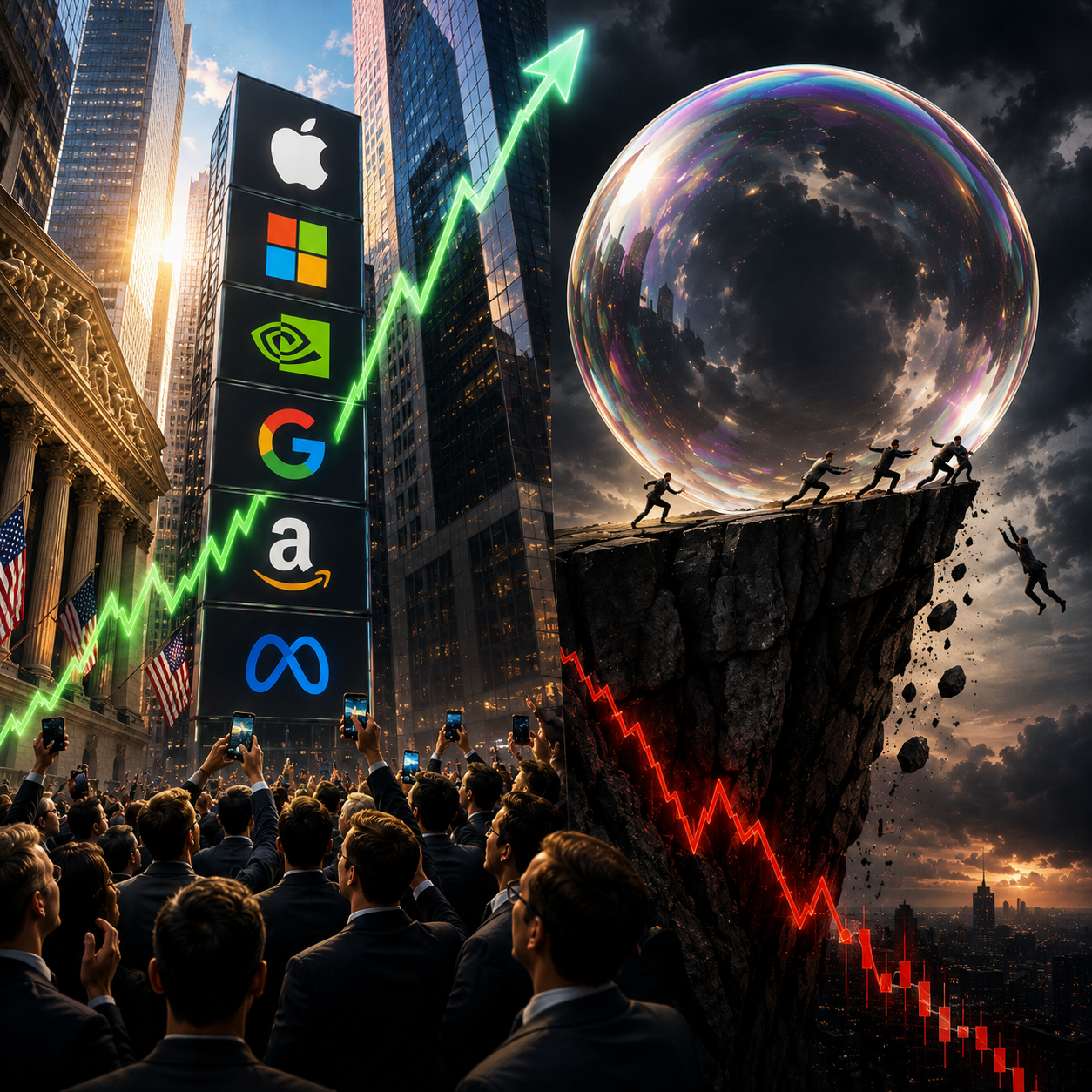
Source: Shenchao TechFlow Original title: (Opinion: Value investing in US stocks is not equal to fundamental investment) When “fundamentals are dead” becomes a consensus, investors who blindly organize giants will eventually experience astonishing capital destruction. Guide: When the market shouted “fundamentals are dead” and the capital frenzy formed a group of tech giants, the author used an astronomy discovery to unravel the logical loopholes behind this narrative. Starting from the composition of valuation multiples, this article reminds investors to distinguish between the true quality of an enterprise and the premium that the market is willing to pay. It is particularly cautionary about long-term allocation in the crypto and technology sector. I promise this introduction won't be as long as the last one on the weather. But please give me 90 seconds. More than 100 years ago, a woman named Henrietta Levitt was doing the tedious job of measuring the brightness of thousands of stars on photographic negatives (the way they were imaged before film appeared). She noticed one characteristic of a class of pulsating stars: the slower they pulsate, the brighter they themselves are. ¹ This might just seem a little interesting today, like “OK, that's pretty cool.” But at the time, astronomers couldn't tell the difference between a dark star very close to Earth and a very bright star far away. For them, the two left the same stain on the photographic film. Visual brightness is a messy mix of these two variables: how bright the thing itself is, and how far away it is from us. Henrietta's work decouples these two things: if you can observe the rate of pulsation, you can know its true luminosity; if you know its true luminosity, you can reverse the distance based on how dark it looks. Astronomers call it “standard candlelight.” A few years later, a man named Edwin Hubble discovered one of these pulsating stars, applied Levitt's math, and discovered what he had always thought was a cloud of gas within our galaxy; in fact, it was an entire independent galaxy, one million light years away. So in simple terms, the observable universe has grown about a trillion times larger, just because one person has figured out how to tell the difference between what things look like and what they actually look like. That in itself is obviously pretty cool. But another interesting thing is that around the same time period, two other astronomers each independently drew a scatterplot. One axis was actual luminosity, and the other axis was temperature. They discovered that stars are not randomly distributed in this space, but rather clustered into different families. The meaning behind this is: stars with the exact same visual brightness may and do belong to a completely different family, have a completely different past, and most importantly, have a completely different future... So what is written in the star? Over the past few years, there has been much discussion about markets, narratives, capital, company building, and financial nihilism. This feeling seems to have reached a feverish climax as the tech and financial world begins to face a very different future than a few decades ago. What is particularly clear is that separating progress from asset prices has become more noisy and in many ways more repulsive. But as an investor who makes a living by buying assets that (hopefully) outperform, a simple framework is: forward returns are roughly equal to growth in fundamentals multiplied by changes in valuation multiples (and multiplied by the dividends you've collected along the way). In this case, the valuation multiplier can very cleanly correspond to the smudges on the photographic film. It's an observable data point, but it entangles two things that the market can't directly see: how good the company actually is, and how far (or how long) its future cash flow is now. I think most of the money that can be made comes from investors who are most capable of unraveling these two variables earlier than others (or “perception of differences”), and we will continue to see astonishing capital ruin for investors who treat their stains as stars. Value investing is not equal to fundamental investing. I think there is a misunderstood view: fundamental investing has historically dominated the creation of excess returns. Most of these legends come from the Graham, Buffett, and Tiger Foundation lineage, as well as numerous narratives built around this group of people. It is believed that by some point in the 2000s, this approach was no longer effective, and anyone who invested in this way was overwhelmed by momentum, trends, and “direct buying tech giants.” The conclusion was (and still is?) It's “fundamentals are dead.” ² The modern version of “fundamentals don't matter” itself isn't stupid. It's rooted in a lot of ideas that many of us on the Compound team have written before. The biggest companies get the most mechanical purchases, and the software industry has a winner-take-all economic law. AI means that giants can transform scale into moats faster than challengers, and there are also reasons why the market's microstructure embeds momentum more deeply into our market infrastructure. These are all real...

1d ago深潮TechFlow#US stocks
Why is capital chasing AI Native and ignoring the old Internet

Why is capital chasing AI Native and ignoring the old Internet

Capital doesn't reward being old-fashioned, not because old-fashioned people are at fault. The old part is clearly priced. There is no bad information, so there is no excess profit. Global venture capital was $510 billion in the first half of 2026, surpassing $44 billion for the full year of 2025 in one and a half months. More than 70% have entered AI; OpenAI and Anthropic took 217 billion dollars, accounting for 43%. With that much money, you'd think everyone could share a little bit. The truth is that distribution is more extreme than total volume, and the first sieve doesn't screen the industry, it screens people. The category that has been screened out now has an unkind name: the internet is old. Let's just say one thing: the “old man” in this article has nothing to do with age. It refers to a set of methodologies that have been formed in the mobile internet cycle, have been tested over and over, and have brought huge returns to holders. The person holding it may be 45 years old or 32 years old. It was this methodology that was being repriced, not the year of birth. Confusing these two things is Lao Deng's most common mistake and one of the most comfortable mistakes — because if the problem is someone else's age discrimination, you don't need to change a single word. 01 What is AI Native The term has been misused. They can use ChatGPT not called AI native, nor AI in the company name, let alone in their twenties. There are three things that really separate people. First, the starting point is a model, not a requirement. The order in which Lao Deng makes a product is: look at what the user wants, write down the requirements, and find technology to implement it. The order of AI natives is reversed: first figure out what level the model is capable of today and what step it is likely to reach tomorrow, and then move from this capability boundary to the external product. The former uses the model as a tool, and the latter uses the model as the foundation. There was no difference between these two kinds of things made by humans in the first edition; by the third edition, there was a difference of one species. Article 2. The default unit of an organization is not a person. The division of labor in the Internet age is the division of one thing into ten people. AI Native's division of labor is to take ten things from one person and add a bunch of agents. The CEO of a domestic application company said that the team consists of less than ten people, but a large number of AI work at night, and the first thing employees do every morning is check the work the AI handed in the night before. Cursor's side is even more extreme. Public reports mention that the company doesn't have a product manager; engineers write their own code, talk to users themselves, and participate in recruiting people themselves. Article 3. Information is first-hand. AI Native's input sources are papers, model cards, GitHub issues, original discussions on X, and self-run evals. Lao Deng's input sources are industry summits, closed-door meetings, brokerage reports, interpretation of public accounts, and finding someone to drink coffee with. This one is the least obscure and most lethal; I'll talk about that separately later. I'm satisfied with all three. The 25-year-old is an AI native, and so is the 45-year-old. I'm not satisfied with the three rules; I'm still an old man at the age of 25. AI natives are a state, not an age group. The trouble is that tickets in this state are works, not resumes. 02 The two lists spread the results of this round on the table. These are two lists. The first one is an all-AI native company. Their valuations are not rising; they are exchanging orders of magnitude. List 1 · Upstream OpenAI raised $122 billion in a single round of financing in Q1 2026, followed by $852 billion, the largest private equity financing in history. Anthropic Q2 had a single round of $65 billion, after investing $965 billion, accounting for about half of the total global venture capital for the quarter; the revenue operating rate in May reached about $47 billion. DeepSeek raised about 70 billion yuan in its first round of financing in May 2026. In April of the same year, Liang Wenfeng raised his direct shareholding from 1% to 34%, and controlled a total of about 84.29% of the shares through related entities. The Dark Side of the Moon (Kimi) was estimated at $4.3 billion in December 2025; it went for three consecutive rounds from January to February 2026 to reach 18 billion; the D round in May was about $2 billion, breaking 20 billion dollars after the investment; the July round surpassed $3.5 billion, after investing 35 billion dollars; the pre-IPO target was 50 billion dollars. ARR broke 100 million in March, 200 million in May, and held steady at 300 million US dollars in June, with APIs accounting for more than 70%. Smart Spectrum · MiniMax successively landed in Hong Kong stocks in early 2026, with a market capitalization exceeding 100 billion yuan. It was one of the first major model companies listed in China. The second one...

4d agoWendy#AI #DeepSeek
After disbanding AI Lab and spending 84.6 billion dollars to buy cards in half a year, Tencent is going against the current

After disbanding AI Lab and spending 84.6 billion dollars to buy cards in half a year, Tencent is going against the current

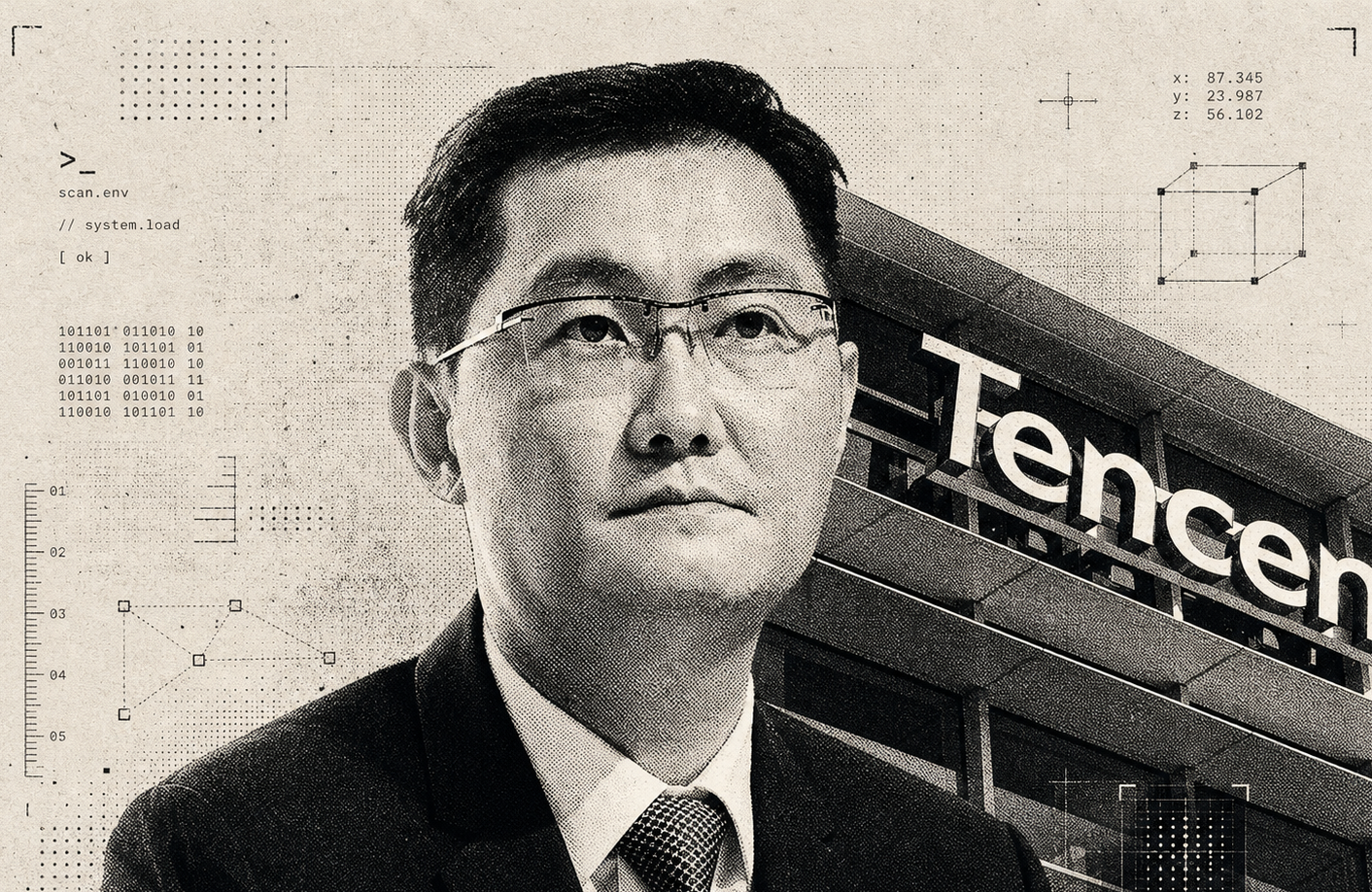
Author: Activision BeatingOriginal title: Tencent Still Has Dreams On August 12, 2026, Tencent released its financial report for the second quarter. Capital expenditure for a single quarter, $52.78 billion. Three months ago, that number was 31.9 billion. Moving forward a year, the total for the whole year would be less than 79.2 billion. This company has always been known for spending money with restraint. The speed at which it bought cards was once slow enough to make the market wonder if it actually wanted AI at the table. Now, it has brought the speed of spending money to this level within a year. At the earnings conference on the same day, Ma Huateng said that Tencent is “building a brand new, AI-enabled Tencent.” The hybrid was renamed HY, and Hy4 will be released soon. The last time this company described itself as “brand new” was in the era when WeChat was born. Tencent still has dreams. Its dream is not just AI; it needs to relearn to be an unstable company. In 2018, Pan Ran said in “Tencent Has No Dreams” that Tencent is a company like water. Water is good for all things, and there is no dispute; wherever there is a channel, it flows. Water has no personality, so water doesn't have dreams. It is natural for water to flow to a low place; backflow is for those who have reflux. In 2026, the 28-year-old company did something against nature. It admits that the article from eight years ago was right. It admits that it is no longer possible to live like water. On Wednesday, May 5, at 9 p.m., “Tencent Has No Dreams” was published. 13,000 words. At 2 o'clock in the evening, Liu Chiping and Tencent PR director Zhang Jun responded in the circle of friends. Liu Chiping said that Tencent is a larger organization and ecosystem than the outside world can imagine. “It's too narrow to reduce Tencent to the gains and losses of a product, a kind of strategic deployment, and one person's will.” At 2:19, a screenshot suspected of Ma Huateng's response began circulating in the circle of friends. At 2:39 the real Ma Huateng spoke up, saying “It's nice to have criticism” to a friend who cares about him. Afterwards, he said, “From writing the first line of code, my dream was how to make the best product, not how much money to make.” During the day, the national media quoted almost the full screenshot of Ma Huateng's response. Even Zhang Yiming spoke for Tencent in his circle of friends, saying this was a “Don Quixote imagination.” Tencent is not only powerful, but it is also constantly evolving in every dimension. Zhang Jun was on the long-haul flight that day. After landing, he said, “We certainly weren't as bad as the outside world thought, but the criticism also made us realize that we weren't as good as we thought.” Of course, there were a few different voices about that article at the time. Hong Bo said that many of the questions mentioned in the article are real questions, but is there only one correct answer for such a large company? “Perhaps the author thinks Zhang Yiming is the only correct answer. He is a bit superstitious about Zhang Yiming.” That article also recorded an earlier story. At the beginning of 2011, just after the 3Q war ended, Tencent held a general meeting to discuss what Tencent's ability to open up is. Ma Huateng asked the 16 executives who attended each to write down what they thought Tencent's core competencies were on paper, and came up with a total of 21 answers. Finally, decide on two. Capital, flow. The term capital was advocated by Liu Chiping. Opening up means releasing traffic and turning it into an investment. Traffic is open, capital is open, “I don't do it myself anymore.” These two terms have governed Tencent for ten years. The entrance to WeChat traffic and the exit of investment traffic is in the middle is a steady stream of cash generated by games and advertisements. JD's e-commerce portal entered the WeChat Jiugong grid. Sogou picked up the search, and Meituan took over the local life. Traffic is exchanged for shares, and shares are exchanged for allies. In ten years, Tencent's market capitalization has increased tenfold, surpassing Facebook's. When that article was published, it still looked invincible. If you look back and reread it eight years later, you'll find that the article predicted almost every time Tencent fell since then. Ten years later, on December 23, 2021, Tencent distributed 14.7% of JD shares to its shareholders, with a market value of about HK$100 billion. In January 2022, Sea holdings were reduced and $3.2 billion was cashed out. In November 2022, 9.6% of Meituan was split, or approximately HK$159.4 billion. The capital, which was designated as a “core competency” back then, was personally destroyed by Tencent. The water has flowed back and forth for the first time in decades. There is a section in the first AI Dream article that not many people paid attention back then. It's written in Tencent's AI. The Go program “Amazing Art” created by AI Lab successively lost to two amateur games. One is the personal hobby of Headline's vice president, and the other is an amateur work by several engineers on the WeChat translation team. Few people realize that...

5d ago动察Beating#AI

US media: Trump's demands put pressure on the US Navy

Comparing news, according to Politico reports, Trump's demand for the Navy peaked this month, making this military branch, which is already under tremendous financial and logistical pressure, is in danger of being further weakened. Trump's deployment of the aircraft carrier USS Lincoln has set a record. The ship has been floating at sea for nine consecutive months. The sailor's family warned that the number of people on board was close to the limit. According to a government report, Trump's proposed new battleship for the Golden Fleet will cost several billion dollars more than expected. At the same time, experts have criticized the president's order to restore old technology; this practice may completely disrupt the pace of ship production. These issues are now being superimposed on each other, doubling the pressure on the US Navy. However, the Navy itself has been plagued by delays in construction schedules, cost overruns, and a shrinking fleet size all year round. All of this may jeopardize its ability to defend the country. An American official said, “Our warships are struggling for their lives in the Middle East and the Caribbean, and there is no end in sight. The Navy is actually being set on fire right now.

7d ago
Use the xRev valuation method to lurk in the next doubling market

Use the xRev valuation method to lurk in the next doubling market

Source: Delphi Digital Author: @that1618guy编译及整理: BitPushNews When sifting through agreements, I've been thinking about the question: If a business relies on its revenue to help you recoup all of your investment in less than 2 years, what exactly is stopping you from buying it? The answer is almost never the revenue itself, but whether you believe it's sustainable. This is what the XRev multiple (market capitalization divided by annualized revenue) really measures. It's not cheap or not, it's durable (durable). Two real-life cases illustrate this very well. The trailing multiples currently selected by PUMP and AERO are in the low single-digit range, 2.3 times and 3.5 times, respectively. Over the past 30 days, PUMP has risen 87%, while AERO has declined 14.5%. The same screening metrics, but the exact opposite results. In June of this year, the market priced PUMP 1.3 times — meaning the market doubts that the agreement won't even be able to sustain current revenue for 16 months. This doubt was dispelled in July, and the subsequent revaluation (re-rate) completed all the upward drive. AERO is like a mirror: it has tripled since its high price in December 2024, not because some people are more optimistic about it, but because its revenue is declining faster than the market is repricing. If this framework is established, then the trading logic would not be “buy the lowest multiple”, but “buy the multiple that doubt will soon disappear.” When a suspected revenue stream is proven to be durable, even if revenue is overtaken, the revaluation will take on the burden of driving the rise. What exactly does xRev measure xRev is simple: market capitalization divided by annualized revenue. At 1.0 times, the revenue from the agreement can pay back its entire market value within a year. Less than 1.0 times, the payback is faster. The most immediate instinctive interpretation of such numbers is a “pricing error.” But the correct interpretation is: the market is putting huge “durability discounts” on it. The market is telling you that it thinks this kind of revenue is just a fleeting thing, and once it falls, it will never come back. So a compressed XRev itself isn't a buying signal... it's more of a “statement of no confidence.” The alpha (excess revenue) of these is figuring out whether this distrust is right or wrong. Before entering the case study, we also need to make a distinction, because the initial multiplier position of the token determines what kind of transaction it can evolve into. We can split it into two buckets. Bucket A (Bucket A) tokens are “cheap at birth”: A new protocol found product-market matches (PMF) in areas with extremely high rates, and revenue exploded before anyone believed it would last, so XRev launched at around 1x or less. High income, small market capitalization, and great doubt. The market capitalization is low for only one reason: the market hasn't bought up its revenue story, making them candidates for “belief revaluation.” Bucket B (Bucket B) tokens are “expensive at birth”: the market has been pricing them as future revenue giants since day one, so XRev was initially very high, and the belief was already pre-paid. There are no doubts that can be purchased; only expectations need to be defended. AERO's release belongs entirely to bucket A. The release of PUMP belongs entirely to barrel B. The next sections let's take a look at what happened to each of them. PUMP: Barrel B buys PUMP at its premium is typical of barrel B. The token stemmed from a $1 billion round of financing, and the ICO gave a fully diluted valuation (FDV) of $4 billion, equivalent to more than 9 years of annualized revenue generated by the agreement at the time, and opened at 4.5 times the circulating supply. Faith has already been paid for in advance. Since then, it has taken the market a whole year to reclaim these prepaid beliefs. This was reasonable at the time: Memecoin's trading volume was cyclical, competitors were actively absorbing order flows, and no one was sure if the platform could maintain market share. You can see that the belief in prepayment is being lost from the XRev chart. While the agreement recorded gross revenue of more than $200 million for four consecutive quarters, the multiples continued to shrink for almost a full 11 months. Figure 1: XRev, 30-day revenue window since PUMP was launched. At this...

8d agoBitpushNews#pump #token #valuations
Robinhood Chain is hot, but is it profitable?

Robinhood Chain is hot, but is it profitable?

Source: Blockworks Research Authors: Ryan Graham and Sam Schubert Compiled and organized: BitPushNews highlights The crypto business is getting cold: Although Robinhood's overall performance hit a record high, its crypto business is shrinking. Q2 Crypto business revenue fell 38% year over year to $100 million, accounting for only 8% of total revenue; retail crypto trading volume fell 36% year over year, and the share of crypto assets in total custodian assets (AUC) also fell to a record low of 7%. Robinhood Chain (Robinhood Chain) started strongly: Robinhood Chain had one of the strongest starts of the L2 expansion network in recent years, generating $3.6 million in real economic value (REV) in July, accounting for 38% of all L2 chain revenues counted by growthepie, surpassing mature networks such as Polygon and Base. Meme coins dominated early activity: Meme coins, not real world assets (RWA), drove Robinhood Chain's early activity. Meme coins accounted for 51% of July spot trading volume, while RWA only accounted for 5%; and 48% of RWA trading volume occurred in the “Meme Coin + RWA” liquidity pool. Monetization opportunities lie in the application layer: Robinhood's clearest monetization opportunities lie above the infrastructure layer. USDG has generated around $10.5 million in annualized interest income; Morpho has proven the great value of direct distribution of Robinhood's main app; while Lighter only uses the Robinhood Wallet (Robinhood Wallet) partnership, accounting for only 0.2% of its total perpetual contract trading volume. The company's overall performance has yet to be boosted: Robinhood Chain is currently unable to substantially improve Robinhood's underlying performance. Its total known annualized revenue is only $54.8 million, which is equivalent to only 14% of Robinhood's annualized crypto revenue. For the Robinhood Chain to have a real impact, Robinhood needs to scale up USDG, monetize access to main apps, or use the chain as a traffic entry point to introduce high-value products. Robinhood's crypto business at the crossroads is probably no company that has managed to capture the rise of retail investors as successfully as Robinhood. It has become synonymous with retail investment, and its underlying business is booming as a result. In the second quarter of 2026, Robinhood reported quarterly revenue of $1.31 billion (a record high), up 32% year over year and 92% from Q2 2024. This strong momentum comes not only from its core stock and options trading business, but also from its ever-expanding product matrix. Robinhood now has 13 different lines of business, each generating more than $100 million in annualized revenue. In fact, almost all transaction-based business lines experienced double-digit year-on-year growth in the second quarter... well, with one exception: cryptocurrencies. The crypto business, which once accounted for more than one-third of Robinhood's revenue, has now shrunk to the point where it's almost negligible for the company. In the second quarter of 2026, only 8% of Robinhood's quarterly revenue came from cryptocurrencies, the lowest share since the third quarter of 2023. The crypto business's share of Robinhood's revenue pie has declined so much that event contracts (event contracts), which were only launched last year, generated more revenue in the second quarter ($156 million) than the crypto business ($100 million). This weakness goes far beyond the crypto business's declining share of Robinhood's revenue. Overall, its core user base is losing interest in cryptocurrencies. While the reason behind it isn't unique to Robinhood, the extent of its weakness is shocking. This is particularly evident in trading activities. In the second quarter of 2026, retail crypto trading volume on the Robinhood App was just $182 billion, down 36% year over year, to record...

9d agoWendy#Robinhood #Robinhood Chain #RWA #Robin Hood chain

Concerned that the memory chip industry is peaking, the target prices of Samsung and SK Hynix were slashed by about 30% by South Korean brokerage firms

Comparative news. According to a report by South Korea's “Joongang Daily” Chinese.com on the 11th, South Korea's Kiwoom Securities simultaneously lowered the target share prices of Samsung Electronics and SK Hynix. Recently, market concerns that the general memory chip industry has peaked (peak-out) have heated up, and more and more securities companies have begun to lower their target stock price expectations for Samsung Electronics and SK Hynix, the “two leaders” in the Korean stock market. The day before, Kiwoom Securities lowered the target share price of Samsung Electronics from 390,000 won to 350,000 won, and lowered the target share price of SK Hynix from 2.2 million won to 2.1 million won, but maintained a “buy” opinion on both individual stocks. Major brokerage firms such as Future Asset Securities, Shinhan Investment Securities, and Samsung Securities have successively lowered their target prices for the two individual stocks by about 30%.

11d ago
The performance hit a record but plummeted after the market. What is the difference in SanDisk's earnings report?

The performance hit a record but plummeted after the market. What is the difference in SanDisk's earnings report?

Author: Azuma Original title: SanDisk handed over record earnings reports, why did it still plummet by eight points after the market? After the market on Wednesday EST, memory chip giant Sandisk (Sandisk) announced results for the fourth fiscal quarter and full fiscal year ending July 3. According to financial data, SanDisk's revenue for the current fiscal quarter was US$8.97 billion (market forecast US$8.48 billion), surging 372% year over year; adjusted earnings per share (EPS) under the non-GAAP caliber were $39.25, 135 times the level of a year ago ($0.29), and increased 68% month-on-month, nearly 10% higher than market expectations; adjusted gross margin reached 84.6%, a sharp increase of 58.2 percentage points year over year. In terms of a full year, SanDisk's 2026 fiscal year was also amazing. Annual revenue reached $20.05 billion, up 175% year over year; GAAP net profit of $11.43 billion, and annual non-GAAP earnings per share reached $70.88. You need to know that SanDisk was still losing 1.64 billion US dollars in FY2025. The fact that this reversal was completed in a year itself shows the power of the NAND storage cycle resonating with AI requirements. However, the capital market did not give positive feedback on this financial report. Before the earnings report was announced, SanDisk closed down 5.4%; after the release of the earnings report, it plummeted by nearly 8% after the market, with an interim report of $1,243 as of 11:00. Why didn't the market reward such a “record breaking” financial report? The underlying logic is similar to how we wrote Hynix's earnings report for this quarter (see “Hynix's Most Profitable Quarter in History, Why Did It Still “Fall Short of Expectations”?) For such major storage companies, investors are not only concerned about whether performance can grow, but whether growth can continue to exceed expectations that have already been greatly raised. Another layer of problems different from Hynix is the unfinished guide. SanDisk's revenue guidance range for the next fiscal quarter is $10.3 billion to $10.8 billion, with a median value of $10.55 billion, compared to the market's previous forecast of $11.16 billion, a gap of about 5.5% — in a nutshell, the market is not denying SanDisk's already delivering results, but is worried about whether its future growth rate will continue to meet higher expectations. Core business dismantling: How has the revenue structure changed? By disassembling SanDisk's revenue structure for this fiscal season, we can more clearly see the qualitative changes the company is experiencing. As SanDisk CEO David Goeckeler emphasized, the data center business has become SanDisk's well-deserved growth engine. Data center revenue for the fourth fiscal quarter was US$2.98 billion, up nearly 13 times year on year (1298%) and doubled month-on-month (103%), and its share of revenue jumped to 33% from about 11% a year ago. Data center revenue soared 437% throughout fiscal year 2026, and management has clearly established this as a “key growth pillar.” Against the backdrop of burgeoning demand for AI servers, high-performance computing and storage, SanDisk has clearly reaped the dividends of this wave of infrastructure investment. The edge computing (Edge) business is still SanDisk's largest revenue source, with revenue of US$5.43 billion this quarter, up 392% year over year and 48% month on month. This section is mainly aimed at the enterprise level and terminal equipment market. It is huge in size and has a steady growth rate, making up the basic SanDisk market. The only relative shortcoming is in the consumer side (Consumer). Consumer revenue for the quarter was only US$556 million, a slight decrease of 5% year over year and a sharp decline of 32% month-on-month, far below market expectations of US$874 million. Weak demand for traditional consumer electronics and lengthening PC and smartphone switching cycles have made this business the most obvious drag on financial reports. However, from a strategic perspective, SanDisk is actively optimizing its customer structure, favoring high-value-added data centers and enterprise-level markets. The contraction in the consumer business is also to some extent a pain during the transition period. The biggest highlight: Changxie+ Repurchase is worth noting that SanDisk management spent a lot of time on the earnings call explaining the strategic significance of its “New Business Model” (NBM) long-term agreement. In the history of the NAND industry, supply and prices have usually been negotiated quarterly, and the cycle has fluctuated drastically. SanDisk revealed that following the announcement of 5 BNM long-term agreements for the April earnings season, this quarter's earnings report once again revealed 5 NBM long-term agreements, including 3 new agreements and 2 expansions and upgrades of the original agreements. Related orders will cover the future...

16d agoburnking#AI #invests
Violent trend in the AI sector: rebound or reversal?

Violent trend in the AI sector: rebound or reversal?

A month ago, one of the most popular judgments in the market was “the end of the AI story.” The reason sounds good enough: chip stocks are too expensive, the capital expenses of tech giants are becoming more and more like a bottomless hole, revenue hasn't fully caught up, and cash flow has already been eaten up by data centers, GPUs, and power facilities first. After the drastic adjustment of AI assets in July, many people even began to compare this round of the market to the internet bubble. But the market soon gave another answer. On August 4, local time, the Dow rose 1.7% to 54,085 points, and the S&P 500 rose 1.8% to 7,736 points, both breaking closing records. The NASDAQ surged 2.6%, and the Philadelphia Semiconductor Index rose more than 6%. The cumulative rebound of the NASDAQ in four trading days was close to 9%. Palantir led the AI sector, surging 29.5% in a single day — CEO Alex Karp called it an “beyond imagination” quarter, with revenue surging 93%. Money is pouring back into chip, storage, and AI infrastructure. Even traditional industrial giant Caterpillar has benefited from a surge in data center turbine orders. For the first time, revenue in a single quarter exceeded 20 billion US dollars, and its stock price surged 5.6%. The decline in oil prices and US bond yields certainly helped — Brent crude oil plummeted 5.4% to $79.25 per barrel in a single day, and the 10-year US Treasury yield fell from 4.70% to 4.63% — but what really ignited technology stocks was the same signal sent by several financial reports: AI investment is expensive, but not without return. Why is the market suddenly willing to trust AI again? The point is not that capital expenditure has decreased. On the contrary, it continues to accelerate. Bank of America predicts that hyperscale cloud vendors may spend more than $860 billion in 2026 and close to $1.2 trillion in 2027. What the market was most worried about in the past: was this money blindly expanding production? The answer given in this earnings season is that at least part of the investment has begun to be converted into orders, revenue, and profits. Amazon is a prime example. In the second quarter, AWS revenue increased 37% year over year, reaching 42.2 billion US dollars, the fastest growth rate in 18 quarters; AWS operating profit increased 64% to reach 16.6 billion US dollars. Amazon also revealed that the annualized revenue from its AI business and self-developed chip business has exceeded 25 billion US dollars. In other words, instead of building a computer room and then slowly waiting for customers, it is expanding production while being pushed forward by real demand. Microsoft is also strengthening this logic. Azure revenue increased 43% year over year, far exceeding the 39%-40% guidance range. Annual annualized revenue surpassed $100 billion for the first time. The Smart Cloud segment recorded quarterly revenue of $39.3 billion, up 32% year over year. Commercial remaining performance obligations (RPO) reached $678 billion, an increase of 84% year over year. This is equivalent to telling the market that the customer is not only testing AI, but has already signed a number of future contracts. Google Cloud, on the other hand, provided the most amazing growth rate. Google Cloud's revenue in the second quarter was 24.768 billion US dollars, surging 82% year over year, far exceeding market expectations of 22.46 billion US dollars. Operating profit was $8.8 billion, up 212% year over year. Cloud backlog orders reached $514 billion. Global cloud market share climbed to 15%, a record high. For the past two years, Wall Street has been asking the same question: When will tech giants make money after spending hundreds of billions of dollars? Amazon and Microsoft didn't fully answer this question, but at least handed over part 1 of the answer: AI is driving revenue from cloud computing, chips, and enterprise software, not just the big story at the press conference. Goldman Sachs estimates that AI infrastructure companies contributed about one-third of the S&P 500's second-quarter earnings growth, and this share may be more than half for the rest of 2026 and 2027. The profit of S&P 500 constituent companies increased by about 26% year over year (after excluding one-time investment income), and when these earnings were included, it was as high as 45%, the fastest growth rate since 2021. In this round of growth, storage stocks such as SK Hynix, Micron, and SanDisk performed better than many traditional AI leaders. On August 4, SanDisk surged 8% to $1,393, Micron rose 6% to $880, and SK Hynix rose 4% to $148. The Philadelphia Semiconductor Index rose more than 6%, with storage stocks leading the market. The direct catalyst is the joint release of the first High Bandwidth Flash (HBF) industry standard by SanDisk and SK Hynix — introducing high-speed NAND flash memory into the AI storage tier through open standards is expected to significantly expand the addressable market for flash memory vendors. At the same time, SanDisk data center revenue surged 645% year over year, and Micron data center revenue increased...

17d agoWendy#AI #AI topics #original #storing #magnate #viewpoints #Capital expenditure

South Korean retail investors accuse the government of turning the stock market into a casino, and some investors vow not to buy stocks

Comparative news, according to Bloomberg, South Korea's KOSPI Index plummeted in July, causing a large number of retail investors to be hit hard. Despite the index's record rebound of 18% on Friday, retail investors still recorded a record net sale of KOSPI shares on the same day; the index fell 22% cumulatively in July, the biggest monthly decline since the global financial crisis, and the total market value of the Korean stock market is about 3.9 trillion US dollars. Influenced by President Lee Jae-myung's push for stock market reforms and the listing of single-stock leveraged ETFs, retail investors in South Korea bought a total of about 78 trillion won ($54.2 billion) of KOSPI shares from May to June. After the market plummeted in July, a large number of investors on social media pointed their finger at the government. An investor in his 30s in Seoul said that he first entered Korean stocks in May and has now decided not to invest in the Korean stock market; another 40-year-old investor used housing as collateral to trade stocks with 50 million won and criticized the government for introducing leveraged ETFs, turning the market into a casino. During July, KOSPI triggered a total of 4 fuses and suspension of trading, setting a record for a single month. Samsung Electronics and SK Hynix together account for more than 50% of KOSPI's weight. The shares of the two companies fell 21% and 35% respectively in July; however, since the beginning of 2025, Samsung Electronics has risen more than 4 times, and SK Hynix has risen nearly 10 times. Analysts said that this is a typical result of crowded transactions when leverage is superimposed. Deleveraging is difficult to complete within a few days. Technology and semiconductor stocks may still fluctuate drastically in the next few months, but it should not be viewed as a complete collapse of AI investment logic. The Korean government suspended the listing of newly listed single-stock leveraged ETFs in mid-July and promised to introduce more measures to stabilize the stock market and restrict retail investors from participating in high-risk products. However, the head of the Korea Shareholders' Union said that retail anger and criticism of the government has reached its peak, and many investors believe that the relevant measures have come too late.

20d ago