
预言机 · 2359
If it's just tokenized assets and doesn't connect to DeFi, what's left of RWA?

If it's just tokenized assets and doesn't connect to DeFi, what's left of RWA?

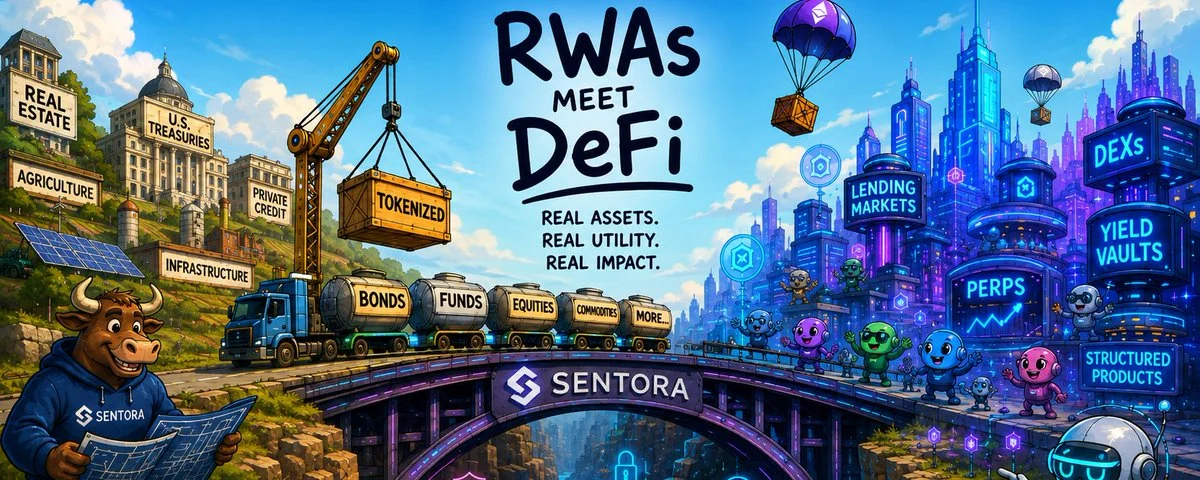
Author: Jesus Rodriguez, co-founder of Sentora Compiled by: Luffy, Foresight News Original title: Does RWA still make sense without DeFi? Discussions in the RWA industry often begin with a simple vision: take a treasury bill, fund share, stock, invoice, megawatt hour, or GPU for one hour, then mint a token representing it. Is it useful? It's really useful. But can it be called transformative? It's far from there. This is like putting a bar code on a container and claiming that a global trade problem has been solved. Barcodes make containers recognizable and machine-readable, but they don't create ports, cranes, customs, insurance, financing, shipping routes out of thin air, or bring in buyers from afar. A token is simply an addressable token of interest, and DeFi is a marketplace operating system. The question really worth discussing is not how many types of assets can go on the chain, but how many assets can complete valuation, financing, hedging, transaction monetization, and loss disposal in a stressful environment, and there is no need for offline meetings and coordination every time a transaction occurs. Tokenization completes the representation of equity; what DeFi brings is actual utility. Tokenization is just a bar code, and a similar scene has happened in the history of the supply chain finance market. The reason why mortgages can be scaled up is not as simple as turning a paper document into an electronic record. To actually achieve large-scale expansion, a complete set of operating mechanisms was created around this type of asset: credit review, post-loan services, securitization, credit rating, warehousing and financing, repurchases, hedging, clearing and settlement, and loss allocation rules. RWA also needed to go through the exact same evolutionary process. An asset that can be adapted to DeFi requires six levels: legally enforceable rights, reliable data sources, clear transfer and redemption rules, enforceable secondary market liquidity, collateral parameters that match actual behavior, and a credible settlement and loss disposal path. Most tokenization projects, on the other hand, tend to stop at the top five levels. There is a simple test that can be used to test the maturity of an asset. It only requires answering three questions: How much is this asset currently worth? Can the agreement complete withdrawal and monetization at this point? If the first two judgments are all wrong, who bears the loss? When smart contracts can definitively answer the above three questions, RWA can truly become a basic component of finance. Before that, it was mostly just a digital packaging shell. The deepest technical contradiction of RWA's quadruple time clock is that RWA runs under multiple sets of different time clocks at the same time. The blockchain can complete settlement in seconds and operate uninterrupted for 7 x 24 hours; oracles may update prices every hour or every day; underlying traditional exchanges are closed at night and on weekends; custodians follow bank working days; and the asset redemption process may take 1 day, 5 days, or even 30 days. If you use such a slow-paced RWA asset to support fast-maturing DeFi liabilities, such as stablecoin loans. This is the term shift, and it is also the core model that banks have relied on for hundreds of years: using short-term debt to fund long-term slow assets. This model has practical value, but the risk must be reasonably priced. Imagine a scenario: At 2 a.m. on Sunday, assets hit the liquidation threshold. Smart contracts can seize tokens immediately, but the underlying real-world market won't open until Monday, and the issuer's redemption business will not be processed until Tuesday. On-chain liquidation has been completed, and real-world asset disposal has only just begun. This creates a clearing gap. DeFi requires immediate withdrawal for monetization, but the real world does not allow it. The time difference between the two. This gap has counterintuitive consequences. Even treasury bonds with very low volatility are riskier than native crypto assets that are more volatile when used as collateral. The price of ETH fluctuates drastically, but it can be traded around the clock; the price of RWA assets appears to be stable, and it may only be up to a dozen hours without a new price tag. A flat price sometimes represents safety, and sometimes it's just a disguise of stale data. Liquidity is an exit channel, not TVL. The digital public also has common misunderstandings about liquidity. Liquidity is not equal to TVL, does not equal the existence of a trading pair, nor does it mean that the issuer promises to eventually redeem it according to net worth. Liquidity refers to the ability to convert a position into the settlement asset you need at an acceptable discount within the time window allowed by your debt. Take a crowded theater for example: the size of the hall cannot determine whether it is safe in the event of a fire; what really matters is the width of the exit channel. One copy of RWA to...


1d agoForesight News#DeFi #RWA

HertzFlow's $4.44 million USD1Genesis Vault has been filled, and the mainnet will open for trading on August 24

In comparison, HertzFlow announced that its $4.44 million USD1 Genesis Reserve Vault has been fully booked. HertzFlow officially stated that this is an important milestone before the launch of the main network of the project, and final preparations are currently being made for the official opening of the main network for trading on August 24. According to reports, HertzFlow aims to create a leveraged trading market with assets supported by oracles without permission, further activate BNB Chain's on-chain liquidity through composable DeFi strategies, and transform more on-chain capital into liquid assets that generate sustainable returns.

1d ago

Linera announces $LNRA public offering to target Hyperliquid's minute-level forecasting market

In comparison, blockchain infrastructure Linera published an article stating that with the $LNRA sale announcement, it will showcase Linera Originals, a badge system, and a specialty market that can be opened, operated, and settled within a minute. Linera said that becoming the “next Hyperliquid” means a dedicated chain, a focus on consumer-grade products, small teams, real revenue and user priority, rather than simple replication. The goal is to predict the market in real time. There is no one in this segment yet, which is difficult for GM to support. Linera uses a parallel microchain architecture, verified by the same set of validators. The user and market each run on an independent microchain. Most blocks are finally confirmed in less than one second, and throughput can be expanded by increasing the microchain. The design stems from research by the CEO's former Meta (Libra/Diem) researcher, and inherits low-latency settlement efforts such as FastPay. The app app.linera.xyz has been launched on this architecture. All predictions are on-chain transactions, and badges measure real participation. The platform markets are all pure player-to-player (PvP). The pool of shared funds is distributed according to the winners, there are no bookmakers or market makers, and the results rely on verifiable price oracles. The core team consists of about five people. $LNRA is a network token, and full sales details will be announced separately; badge recipients can obtain exclusive pool access during sales by using the product.

2d ago
Don't bet 100 times more, just look for “cash bulls”: What other projects are worth investing in in a bear market?

Don't bet 100 times more, just look for “cash bulls”: What other projects are worth investing in in a bear market?

Source: Odailey Planet Daily Author: Asher Original title: Don't guess 100 times the coin, only bet on “cash cow”: What other projects in the bear market are worth investing in? The bear market only buys the most profitable items on each track, and the bull market then goes after short-term hot spots. Core point of view: In the context of the downturn in the crypto market, this article has selected four issued projects, Pump.fun, Hyperliquid, Uniswap, and Chainlink. They have shown profitability through a bear market with stable agreement revenue, providing a more realistic reference target for long-term investment. Key elements: 1.pump.fun's revenue in the past 30 days was 41.53 million US dollars, with a cumulative total of about 256 million US dollars in the first 7 months. The revenue depends on the popularity of Meme transactions on the Solana chain, but the average monthly cash flow capacity of tens of millions of dollars is outstanding. 2. Hyperliquid's cumulative revenue for the first 7 months was about US$352 million, surpassing Pump.fun. In June, it reached a new high of 60 million US dollars during the year. The revenue mainly comes from perpetual contracts and spot transaction fees. 3. Hyperliquid uses approximately 99% of the agreement fee to repurchase and destroy HYPE tokens, forming a simple investment logic of “profitable and continuous repurchase”. 4. Uniswap has earned 5.6 million US dollars in the past 30 days. It is the most profitable DEX. It accumulated about US$28.4 million in the first 7 months, benefiting from the official opening of the agreement fee after the implementation of the Unification proposal and its use for UNi's destruction. 5. Chainlink's revenue in the past 30 days was 4.57 million US dollars. The monthly revenue was stable in the range of 4.4 million to 5.8 million US dollars. The revenue came from service fees such as oracles and cross-chain services, and the cumulative transaction value facilitated reached 32.18 trillion US dollars. Since this year, the crypto market has continued to be sluggish. There aren't no hot spots on the chain; every once in a while, there are a few burgeoning memes, but these quotes often focus on new coins that have just been issued and hardly give the market time to fully study. Once the story ebbed down, prices quickly dropped back down. Most players who got on the bus halfway ended up losing money and making little money. Since blindly guessing the next 100 times the coin makes little sense. A more realistic investment logic is: if you are preparing to invest slowly in a bear market and wait for the next round of the bull market to return, what other projects are worth buying now? Compared to simply reading the story, a more direct screening criterion is whether the project itself still makes money or not. If a platform can still earn millions or even tens of millions of dollars in revenue every month in the crypto bear market, it at least indicates that users and demand are still there, and the project also has a stronger ability to cross the cycle. This type of platform token won't necessarily be the altcoin with the most exaggerated rise in the next round of the bull market. So, since this year, what other coin issuing projects have continued to make money? (The revenue data for the project in this article comes from Tokenomist and DeFilLama. The revenue caliber is uniformly adopted, that is, the actual revenue of the agreement after deducting distribution to supply-side participants such as LPs.) Pump.fun: The “shovel seller” on the meme circuit earns money from round after round of coin issuance boom. Apart from the two major stablecoin issuers Tether and Circle, Pump.fun is one of the most profitable crypto native projects in the past 30 days, with a revenue of 41.53 million US dollars. Looking at monthly data, Pump.fun's revenue from January to July was 51 million US dollars, 40 million US dollars, 38.1 million US dollars, 32.4 million US dollars, 32.4 million US dollars, 34.4 million US dollars, 26.6 million US dollars, and 33.7 million US dollars, respectively, with cumulative revenue of about 256 million US dollars for the first 7 months. Pump.fun's revenue peak was high at the beginning of the year, then the overall decline was evident in April and June, and there was some recovery in May and July. The core of Pump.fun's revenue comes from continuous trading of SGD on the platform. Currently, users are free to create tokens themselves, but trading during the Bonding Curve phase requires transaction fees. According to Pump.fun's latest rate, Bonding Curve's total fee rate is 1.25% per transaction, of which 0.95% goes to the agreement and 0.30% is distributed to token creators. Additionally, when tokens graduate from Pump.fun and enter PumpSwap, a graduation fee of 0.015 SOL will be charged. Pump.fun's revenue still depends on Solana's on-chain meme activity. When the on-chain market is lukewarm, revenue drops significantly, and recovers quickly when popularity picks up. But from the perspective of a bear market, it can be at 7...

4d agoOdaily星球日报#DeFi #MEME #invests

Hyperliquid Policy Center Announces Support for US SEC to Abolish “Penetrative Trading Rules”

According to Twitter, the Hyperliquid Policy Center announced that it has recently submitted a joint opinion letter with Douro Labs to the US Securities and Exchange Commission (SEC) to support the SEC's proposal to repeal Regulation NMS Rule 611 (“Trade-Through Rule”) and to call on regulators to establish a more clear Best Execution (Best Execution) regulatory framework for the on-chain market. The Hyperliquid Policy Center believes that the current transactional rules are based on the traditional securities market structure and are clearly incompatible with the blockchain's native transaction model. HPC and Douro Labs made three recommendations in a joint opinion: First, support the SEC's revocation of the Trade-Through Rule. The two companies believe that the rules rely on the traditional quotation system, and that the system does not accurately reflect the on-chain transaction environment, and continued application may hinder the development of the on-chain financial market. Second, the SEC should establish clear best execution guidelines for on-chain transactions. The on-chain market has new factors that don't exist in traditional markets, such as unquoted trading, 24/7 operation, blockchain network fees, and MEV (maximum extractable value). Brokers need more clear regulatory standards to ensure they can execute transactions on behalf of clients. Third, the regulatory framework should be guided by principles and recognize an independent price reference mechanism. HPC and Douro Labs suggest that when traditional NBBO is unable to cover the on-chain market, the SEC should recognize independent price reference data based on transparent, manipulation-resistant mechanisms. For example, Pyth Network, which Douro Labs participated in the construction of, provides price prediction services for the on-chain market by collecting data provided by exchanges and market participants in real time. This article is sponsored by GENG, Build Your Fortune on GENG (https://geng.one)

5d agoburnking

APRO partners with Venus Protocol to provide price data support for Binance bStocks

Comparatively, APRO, an AI prophet invested by YZi Labs, announced that Venus Protocol, BNB Chain's leading lending protocol, has joined its Multi-Oracle Resilience Program (MORE). Under the partnership, APRO will provide a reliable price feed service for Binance bStocks on Venus Protocol to further enhance its asset price feed reliability. The first batch covers SKHYB, NVDAB, SPCXB, and TSLAB's four tokenized stock targets. APRO said that through the MORE program, it is possible to reduce the risk of a single oracle failure or being attacked, and improve the price stability and security of the entire DeFi ecosystem. The APRO team will continue to introduce more independent, verifiable data sources through the MORE program to build a more resilient and reliable infrastructure for the on-chain ecosystem. This article is sponsored by GENG, Build Your Fortune on GENG (https://geng.one)

5d agoburnking

Lido analyzes the NEST mechanism: initially adopting a treasury model to connect protocol growth with LDO value

Comparing news, the Ethereum staking protocol Lido DAO published an article explaining the NEST (Network Economic Support Tokenomics) mechanism to bind protocol revenue to LDO token values through on-chain automation to achieve continuous LDO repurchases. NEST is a core component of Lido's “LDO Value Alignment” strategy, which aims to allow LDO holders to more directly share the benefits of the agreement's growth. The mechanism is supported by DAO treasury surplus funds. When Lido's pledged business revenue exceeds the set benchmark, part of the excess revenue will be automatically converted into LDO through CoW Swap. According to the initial parameters set by Lido DAO, the NEST revenue benchmark is $40 million per annualized (approximately $109,000 per day). 50% of the excess amount will be used to repurchase LDO, with a daily repurchase limit of $50,000, and a 365-day cumulative limit of $10 million. Buybacks are carried out on a daily basis, using a permissionless on-chain process. At the beginning of the launch of NEST, the “treasury-only mode” (treasury-only mode) will be used, and the purchased LDO will directly enter the DAO treasury. In the future, when market conditions are right, DAO can switch to LP mode through on-chain voting, using half of the funds to buy LDO and the other half to wstETH, and provide Curve liquidity. Lido said that compared to solutions such as manual regular repurchases, direct token destruction, or simple revenue distribution, NEST uses smart contracts and on-chain governance to achieve a transparent, adjustable repurchase mechanism that does not require manual intervention. The mechanism includes a number of risk control measures, including daily capital limits, adjustment of on-chain governance parameters, price oracle protection, and an emergency suspension mechanism to reduce the risks caused by market manipulation, oracle attacks, and fluctuations in protocol revenue. Earlier backtesting based on revenue data from 2024 to 2025 showed that the NEST model is expected to execute LDO repurchases of approximately $7.09 million, which is in line with the target spending scale. Lido said that in the future, DAOs can adjust relevant parameters through on-chain voting according to changes in the agreement economy. This article is sponsored by GENG, Build Your Fortune on GENG (https://geng.one)

8d agoburnking

Data: TRON Eco released the 2026 Q2 Value Deflation Ecology Report. The quarterly buyback destroyed more than US$34.75 million

Comparatively, TRON Eco released the value deflation ecology report for the second quarter of 2026. The cumulative amount of repurchases and destruction during the quarter exceeded US$34.75 million, and the four core projects were promoted collaboratively. JST has completed the largest repurchase and destruction to date, destroying more than 355 million pieces at one time (worth US$34.59 million), a record high. The cumulative amount destroyed has reached 17.29% of the initial maximum supply, with a cumulative value of over US$94.62 million. SUN completed the 51st phase of buyback and destruction. More than 9.02 million pieces of SUN were destroyed in a single quarter, and the cumulative amount destroyed exceeded 678 million pieces. BTT and WIN announced a mechanism upgrade, using all revenue from the decentralized business and all revenue from the oracle service for repurchase, respectively. The new mechanism will be implemented on a regular basis starting in the third quarter. With the launch of the new mechanism in the third quarter, all four major projects have been incorporated into the sustainable deflation framework, achieving an upgrade from “phased incentives” to “institutionalized deflation.” TRON Eco will continue to use real revenue to drive repurchases and destruction to give back to the community.

8d ago

Santiment: Chainlink's giant whale activity hit a five-month high, with 246 large transactions over $100,000 in 24 hours

Comparative news, according to Santiment data, Chainlink (LINK) giant whale activity increased significantly. Within 24 hours, 246 LINK large transactions worth more than $100,000 appeared, the highest level in a single day in five months. Meanwhile, wallets holding 100,000 to 10 million LINK currently hold a total of about 466.3 million, accounting for 46.57% of the total supply, indicating that this round of giant whale activity has increased along with balance growth. Santiment pointed out that Chainlink continues to expand in the direction of CCIP, tokenized assets, stablecoins, institutional data, and new cross-chain channels, and official indicators still position the network as the core predictor infrastructure for on-chain finance.

10d ago
Some people use it, have brands, and don't issue coins. Why has POAP reached the end?

Some people use it, have brands, and don't issue coins. Why has POAP reached the end?

Author: imToken Original title: When POAP also comes to an end: When the “wave of bankruptcies” in the crypto industry hits, how can ordinary users cope with themselves? Recently, the crypto industry seems to have entered an intensive farewell period. From BitMEX, which has been in operation for 11 years, to Satori Finance, which has received investment from top institutions such as Polychain and Coinbase Venture, one familiar name after another has ceased operations and officially reached the end, covering various directions such as trading platforms, DeFi, wallets, NFTs, and infrastructure. Among them, POAP's departure was unquestionably particularly impressive. If you've gone through the previous crypto cycle, especially if you've participated in Devcon, ETHDenver, Hackathon, DAO community events, or various online and offline meetups, many people can probably pull out a few POAPs from their wallets. It may be from a conference, an online sharing, or just a community event where you can't remember the details. Most of these POAPs aren't worth much, but because of this, they're probably closer to the original meaning of “collecting” than many NFTs that used to be expensive. It is for this reason that POAP's farewell is particularly representative. It didn't suddenly go back to zero due to hacker attacks, and didn't even issue a native token that needed to continuously maintain price expectations. It just had real users, clear scenarios, and a high enough brand awareness, but in the end, it still hasn't found a business model that can support the company for a long time. This is exactly what is changing in the crypto industry today. In the past, we were more accustomed to discussing how a project was born; next, we may need to get used to discussing how a project dies. And this isn't necessarily a bad thing. However, as regular users, we need to know how to avoid being affected by the aftershocks of a bear market. 1. A new form of “shutdown wave” swept through the Web3 encryption industry. In the last round of expansion, it is actually not difficult for a project to prove that it was “founded.” The completion of financing, the launch of the main network, the issuance/airdrop, and a round of liquidity incentives are enough to attract the first batch of users. TVL, number of addresses, and transaction volume can quickly grow. Even over a long period of time, whether a project actually has revenue is not the most urgent issue. However, when the cycle is reversed, and token prices and liquidity cannot continue to perform financing functions, this model will reveal one of the easiest questions, which is, if no new money comes in, can this project support itself? This round of projects came to an end in 2026, and this is where the real focus is also on. Because many of those that have disappeared are not air projects that had no products at the beginning, but projects that have already been funded, launched, have real users, and even run well technically. For example, on July 23, BitMEX announced that it would officially shut down the trading platform on September 23, 2026. This trading platform, founded in 2014, was once one of the most representative companies in the entire crypto derivatives market. Perpetual contracts, 100x leverage, and a complete set of trading products that were later widely used by the entire industry are closely related to the early development of BitMEX. It even specifically emphasized in its official shutdown announcement that “in more than 11 years of operation, BitMEX has never lost user funds due to hacking,” but this has not made it an infrastructure that can run permanently. A similar story happened on the DeFi and infrastructure circuit. As a Bitcoin L2 project that has been under construction for nearly four years, Botanix has maintained 100% normal operation and zero security incidents since its launch. It has processed about 25 million transactions, 200,000 wallet addresses, and tens of millions of dollars of assets have entered the network, and is connected to infrastructure and DeFi products such as Chainlink and Morpho. Looking only at traditional Crypto KPIs, it's hard to even call it a “no-go” project — the chain has been created, the products can be used, the users have come, and the money has come in. But in the end, Botanix decided to shut down the network, and the review showed that the actual transaction demand was insufficient to generate sufficient fee revenue and could not cover the infrastructure costs required for the long-term operation of an independent network. At the end of the day, Crypto used to be too used to measure an ecosystem with TVL, number of addresses, and number of transactions, but it rarely asked that last question:...

12d agoburnking