马云 · 166

Over 80% of ships have diverted their routes to Oman, and Iran's control over the Strait of Hormuz is weakening

Comparing news, shipping data is showing changes in the actual traffic pattern in the Strait of Hormuz. According to Kpler data, more than 80% of ships passing through the Strait of Hormuz in the past two weeks chose the Oman side of the route. The route was authorized by the United Nations, but was previously opposed by Iran. Analysts believe that although both the US and Iran claim control of the Strait of Hormuz, neither side actually fully controls this key global energy channel. Homayun Farahshahi, head of crude oil analysis at Kpler, said it is becoming increasingly clear that Iran has at least partially lost control of the strait. A month ago, Kpler found that almost no ships were using the Oman route, but now that percentage has risen to over 80%. At the same time, the number of ships choosing Iran's preferred routes has declined markedly, and Iran's ability to collect tolls through the strait has also been affected. The United States relies on naval military deployment to continuously monitor shipping safety. US Secretary of Energy Chris Wright said that the current flow of oil being transported and diverted through the Strait of Hormuz has reached about 15 million barrels per day, which is close to the level of about 20 million barrels before the conflict. However, Iran still has some deterrent capability. Analysts pointed out that if Iran aims to completely control the strait, it will never actually achieve this goal; however, creating risks and influencing shipping through military action is still an important strategic tool. Currently, Iran and Oman are discussing arrangements to resume free navigation in the Strait of Hormuz. Qatar said that if the relevant agreement is reached, conditions may be created to push the US and Iran back to the negotiation table. However, Trump recently stated that there are currently no negotiations or dialogue between the US and Iran.
3d ago
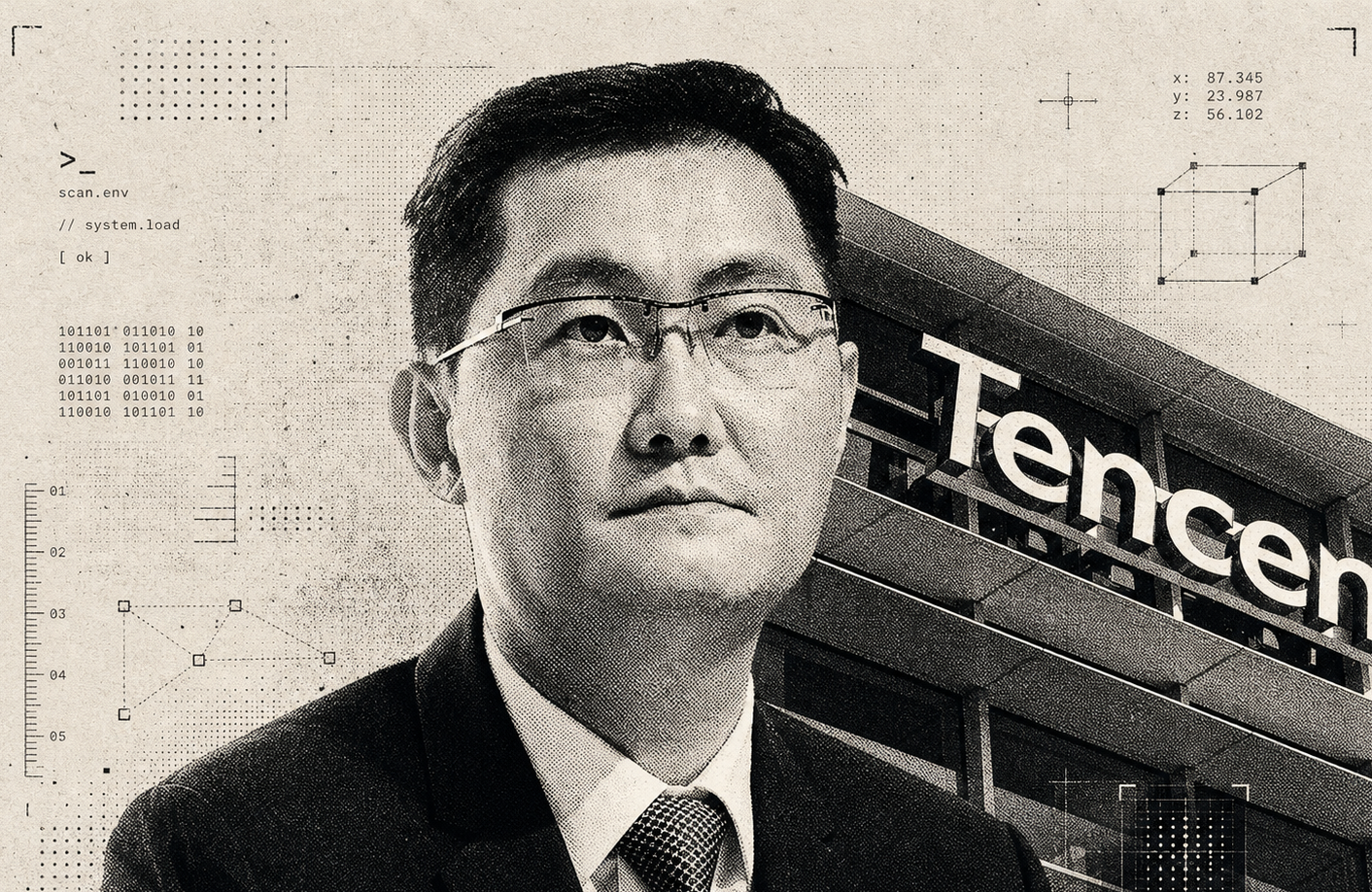
After disbanding AI Lab and spending 84.6 billion dollars to buy cards in half a year, Tencent is going against the current

After disbanding AI Lab and spending 84.6 billion dollars to buy cards in half a year, Tencent is going against the current

Author: Activision BeatingOriginal title: Tencent Still Has Dreams On August 12, 2026, Tencent released its financial report for the second quarter. Capital expenditure for a single quarter, $52.78 billion. Three months ago, that number was 31.9 billion. Moving forward a year, the total for the whole year would be less than 79.2 billion. This company has always been known for spending money with restraint. The speed at which it bought cards was once slow enough to make the market wonder if it actually wanted AI at the table. Now, it has brought the speed of spending money to this level within a year. At the earnings conference on the same day, Ma Huateng said that Tencent is “building a brand new, AI-enabled Tencent.” The hybrid was renamed HY, and Hy4 will be released soon. The last time this company described itself as “brand new” was in the era when WeChat was born. Tencent still has dreams. Its dream is not just AI; it needs to relearn to be an unstable company. In 2018, Pan Ran said in “Tencent Has No Dreams” that Tencent is a company like water. Water is good for all things, and there is no dispute; wherever there is a channel, it flows. Water has no personality, so water doesn't have dreams. It is natural for water to flow to a low place; backflow is for those who have reflux. In 2026, the 28-year-old company did something against nature. It admits that the article from eight years ago was right. It admits that it is no longer possible to live like water. On Wednesday, May 5, at 9 p.m., “Tencent Has No Dreams” was published. 13,000 words. At 2 o'clock in the evening, Liu Chiping and Tencent PR director Zhang Jun responded in the circle of friends. Liu Chiping said that Tencent is a larger organization and ecosystem than the outside world can imagine. “It's too narrow to reduce Tencent to the gains and losses of a product, a kind of strategic deployment, and one person's will.” At 2:19, a screenshot suspected of Ma Huateng's response began circulating in the circle of friends. At 2:39 the real Ma Huateng spoke up, saying “It's nice to have criticism” to a friend who cares about him. Afterwards, he said, “From writing the first line of code, my dream was how to make the best product, not how much money to make.” During the day, the national media quoted almost the full screenshot of Ma Huateng's response. Even Zhang Yiming spoke for Tencent in his circle of friends, saying this was a “Don Quixote imagination.” Tencent is not only powerful, but it is also constantly evolving in every dimension. Zhang Jun was on the long-haul flight that day. After landing, he said, “We certainly weren't as bad as the outside world thought, but the criticism also made us realize that we weren't as good as we thought.” Of course, there were a few different voices about that article at the time. Hong Bo said that many of the questions mentioned in the article are real questions, but is there only one correct answer for such a large company? “Perhaps the author thinks Zhang Yiming is the only correct answer. He is a bit superstitious about Zhang Yiming.” That article also recorded an earlier story. At the beginning of 2011, just after the 3Q war ended, Tencent held a general meeting to discuss what Tencent's ability to open up is. Ma Huateng asked the 16 executives who attended each to write down what they thought Tencent's core competencies were on paper, and came up with a total of 21 answers. Finally, decide on two. Capital, flow. The term capital was advocated by Liu Chiping. Opening up means releasing traffic and turning it into an investment. Traffic is open, capital is open, “I don't do it myself anymore.” These two terms have governed Tencent for ten years. The entrance to WeChat traffic and the exit of investment traffic is in the middle is a steady stream of cash generated by games and advertisements. JD's e-commerce portal entered the WeChat Jiugong grid. Sogou picked up the search, and Meituan took over the local life. Traffic is exchanged for shares, and shares are exchanged for allies. In ten years, Tencent's market capitalization has increased tenfold, surpassing Facebook's. When that article was published, it still looked invincible. If you look back and reread it eight years later, you'll find that the article predicted almost every time Tencent fell since then. Ten years later, on December 23, 2021, Tencent distributed 14.7% of JD shares to its shareholders, with a market value of about HK$100 billion. In January 2022, Sea holdings were reduced and $3.2 billion was cashed out. In November 2022, 9.6% of Meituan was split, or approximately HK$159.4 billion. The capital, which was designated as a “core competency” back then, was personally destroyed by Tencent. The water has flowed back and forth for the first time in decades. There is a section in the first AI Dream article that not many people paid attention back then. It's written in Tencent's AI. The Go program “Amazing Art” created by AI Lab successively lost to two amateur games. One is the personal hobby of Headline's vice president, and the other is an amateur work by several engineers on the WeChat translation team. Few people realize that...

5d ago动察Beating#AI
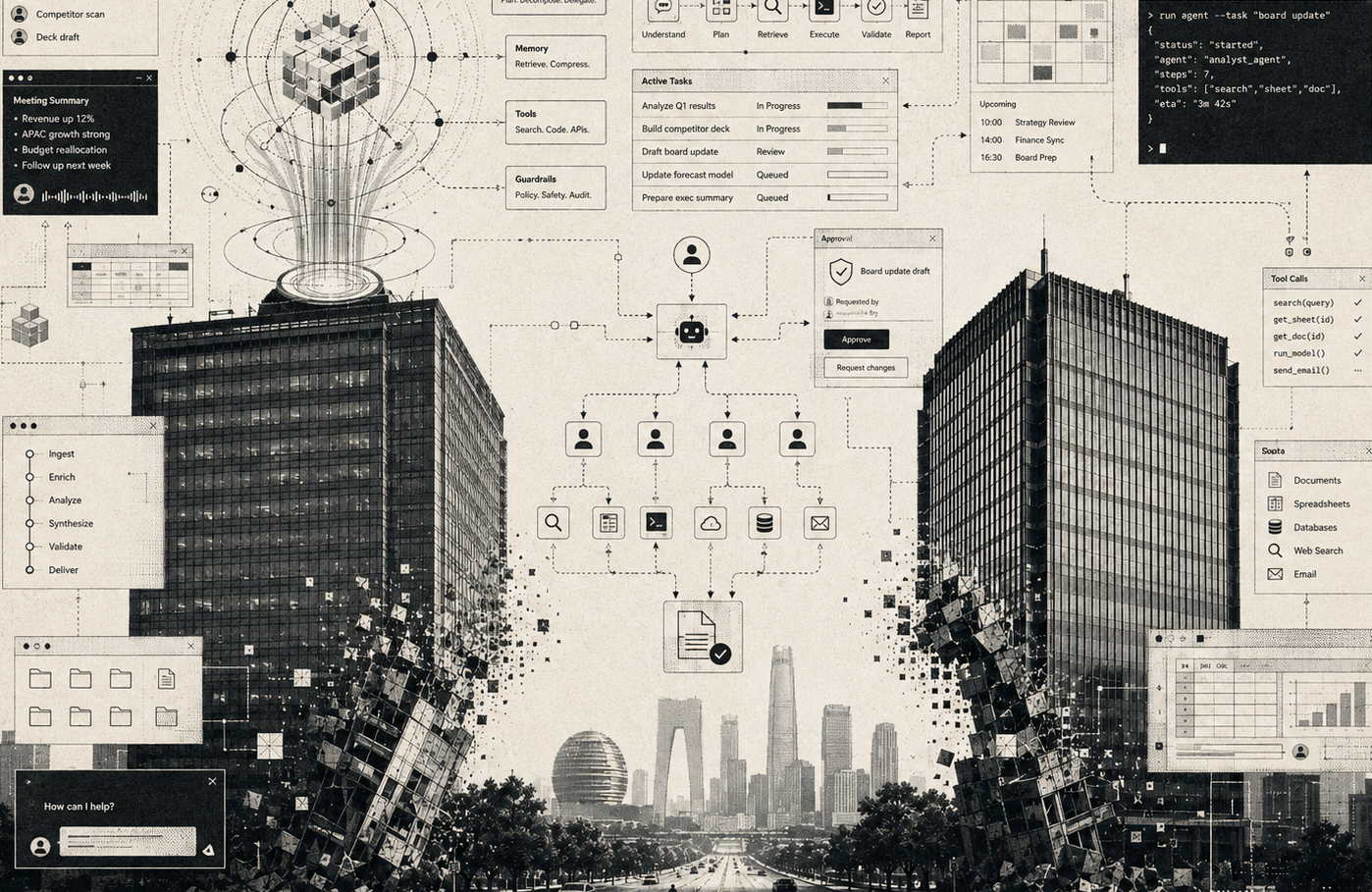
Office Agent's Summer: Big manufacturers are raising their knives and slashing their former self

Office Agent's Summer: Big manufacturers are raising their knives and slashing their former self

Author: Motion Detecting Original title: Twenty Years of the Internet in China, and Office Agent's This summer, there are two office buildings across the street in Hangzhou. On the roof of a building before the 2026 Spring Festival, a red and gold statue of Sun Wukong was erected next to the dowel's lightning symbol. The roof of the other building is the symbol of Feishu. On the day Sun Wukong stood up, photos were quickly uploaded on social media. Many people laughed that this was the most simple commercial battle. The meaning of DingTalk was probably one step higher than Feishu. The two have been playing for ten years. From whose messages you've read, to documents, forms, and customer lists, all the way to the roof. However, the monkey on the roof had empty hands and didn't wave. It's going to take out something, at the press conference a little over a month later. March 17, Xixi, Hangzhou. The founder of DingTalk was uninvited to stand at the press conference. He created DingTalk in 2015, left in 2021, and was invited back in 2025. On this day, he wants to release a new set of AI assistants. The name is Goku, and the logo uses the monkey on the roof of the building. Ali CEO Wu Yongming sat offstage. Needless to say, we need to break the nail and refine it again with AI. In the past, humans used DingTalk; in the future, AI used DingTalk. When talking about the logo, he removed the gold hoop from the monkey's head, saying it was already a battle over the Buddha. Offstage applause. The monkey that made a big fuss at Tiangong didn't go to Lingshan. He was crushed by Wuxing Mountain for 500 years. When he came out, he had an extra hoop on his head. He rolled all the way under the spell, and his temper was cleaned up little by little. The one who actually walked to Lingshan was already another monkey; he no longer wanted to be king. Fighting over the Buddha is the new name Qi Tian Daisheng got after walking that path. If you want to get there, you have to get rid of the original monkey first. This story is about Goku, but it's also about Ding Ning. What was ostensibly unveiled at this press conference was an AI product, but the one that really wanted to move was DingTalk itself. DingTalk has rewritten more than a thousand low-level abilities into instructions that AI can directly call. In the past, employees had to open approval, schedule, and business systems layer by layer on the screen. Goku could bypass this level, directly read data, adjust tools, and then move things on. Not only is there no way to hand it over, it's not just an entrance; it's also the company's internal organs that have been growing for ten years. However, after just 86 days, he left DingTalk on June 11. This incident is a bit dramatic, but returning to the Chinese Internet for the past 20 years is nothing new. Companies that have actually lived through cycle after cycle have almost all done the same thing, that is, hand over the next knife to their own people when the old business is still making money and the old products are still at their best. In the past 20 years of the Chinese Internet, no one has relied on protecting their former self until today. If you want to survive, you must first kill your former self. Big internet companies have been practicing this art for a long time to kill themselves at the pinnacle. October 2010, Shenzhen. Zhang Xiaolong wrote a letter to Ma Huateng, saying that QQ is a computer, and Tencent needs a communication tool born on a mobile phone. Tencent did not directly hand this matter to the QQ team. The three internal teams started construction at the same time. QQ, QQ address book, and QQ email each made one. Whoever did it first counts as who did it. That year, QQ was at its highest point. January 21, 2011, Guangzhou. The team that works for QQ email launched WeChat 1.0. Tencent took the lead. Two years later, something similar happened in Hangzhou. In 2013, Ma Yun said that the responsibility of the Alibaba Wireless team was to destroy Taobao. That year, Taobao was in the center of the stage. Two years later, mobile Taobao became the main battleground for Double 11. The words Taobao have been preserved, but the screen where people buy things has been replaced, and few people sit in front of a computer and open the Taobao web version. After another five years, it's Beijing's turn. August 2018, Zhichun Road. The China Airlines Building removed the four words “Today's Headlines” and replaced them with “ByteDance.” Today's headlines are still open, and are still being updated, as well as users and ads. That year, today's headlines are still national apps. It's just that TikTok has surpassed it. Three months later, Chen Lin became the CEO of Today's Headlines, and Zhang Yiming's official title was changed from “Today's Headline Founder and CEO” to “ByteDance Founder and CEO.” It's the same three times. Things that need to be used are making money and are getting a lot of attention. It seems like the last place the whole company should touch. But when it grows old on its own, the company will grow old with it. So you have to use it while it's still tough, hand over the next knife to your own person, let the new one grow from the inside, and then eat the old one little by little. The Division of the Losers, but it's bound to be...

10d agoburnking#agent
With a net worth of 20 billion dollars, Wang Xingxing bid farewell to Wang Xingxing

With a net worth of 20 billion dollars, Wang Xingxing bid farewell to Wang Xingxing

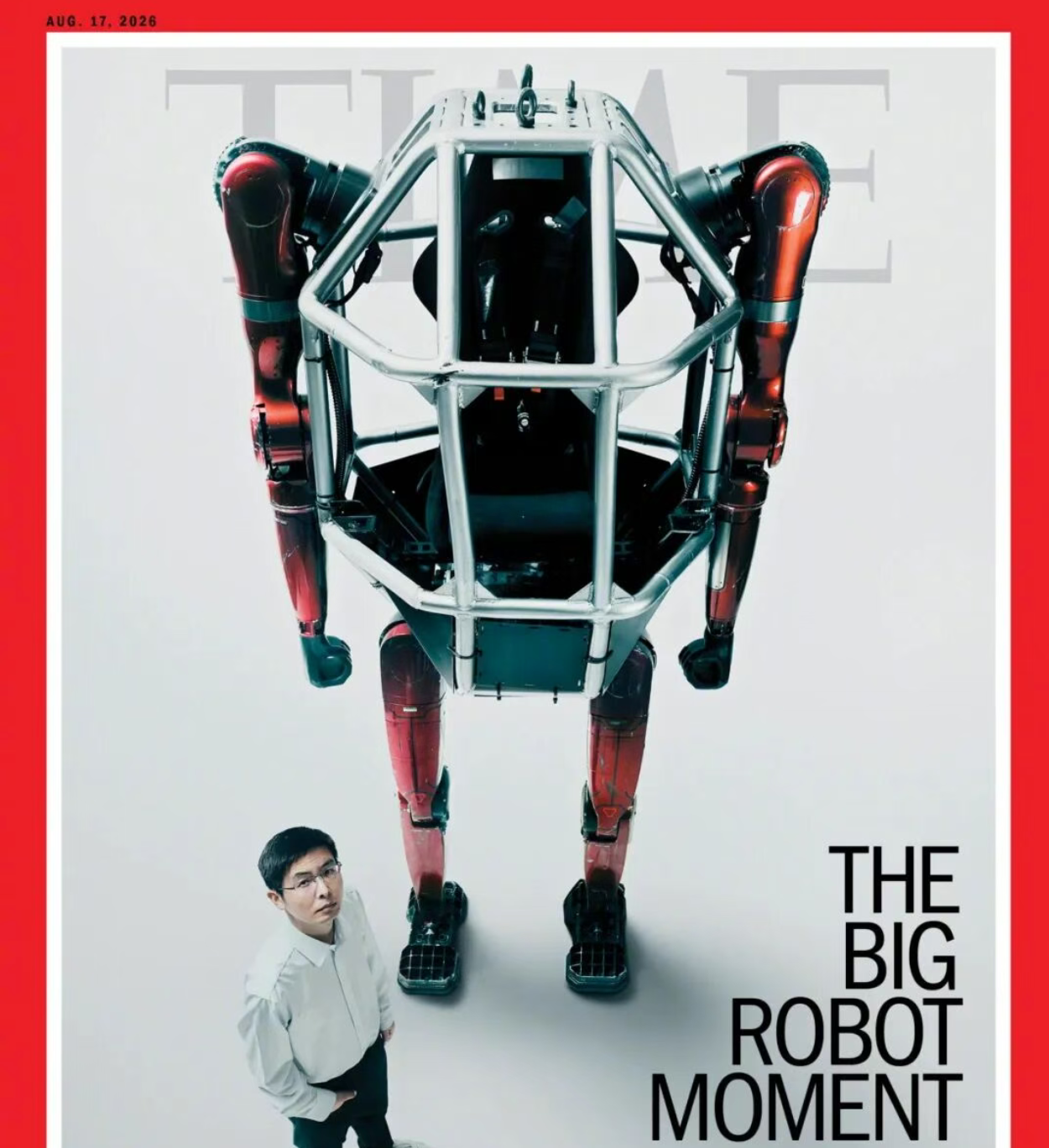
Source | Shannong Xiashan (ID: Shannongxiashan) Article | Edited by Li Yuyao | Yuan Wen Everything in the past is a prelude. In mid-March 2016, Wang Xingxing, who had just completed his master's thesis and had been hired in advance by DJI, became active on Zhihu. He first asked, “What do people think of Google's plan to sell robotics companies?” I expressed my opinion under the question. Two days later, because “no one sees it next door” and “cheeky,” the answer was copied to another question: “How would you evaluate Google trying to sell the robotics company it bought in 2013: Boston Dynamics?” It received hundreds of interactions. Judging from the subsequent action of not replicating the answers, he is satisfied with this number. Ten years later, he is no longer “content and joy,” but has shown enough ambition — Yushu Technology, which he founded, submitted a listing application on the Science and Technology Innovation Board on March 20, met in June, and began an IPO on August 10. This means that as the first A-share humanoid robot, Yuuki is about to be tested by the market. On the evening of August 6, Yushu Technology issued an announcement confirming the initial public offering price of 150.80 yuan/share. After the issuance was completed, Yushu Technology's total share capital was 404,643.4 billion shares. According to this calculation, Yushu's issuance market value is 60.9 billion yuan, and the founder Wang Xingxing, who holds about 33.36% of the shares, is expected to reach 20 billion yuan. At this point, Wang Xingxing has completely bid farewell to his past self. PART01 -- Construction is like the science and technology man most people stereotype. Wang Xingxing once mixed up at Zhihu and Station B. From time to time, he posts news on these two platforms, sharing his views on robots and AI and his daily life. He is used to using a emoticon or emoticon at the end of his sentences. When referring to his master's research results, he also directly stated “Please give everyone a thumbs up” and “Please encourage me” when sharing his work. In 2022, he co-starred with Yuuki Robot Dog to shoot a commercial. After completing the Weibo promotion, he excitedly ran to Station B and said, “Although our robot has participated in various large-scale events, this should be my first time personally participating in Party A's commercial activities. One day of filming earned me my personal salary for half a year”. At the time, although Yu Shu was already famous in the industry, few people cared about Wang Xingxing's social media. It can be said that after almost ten years of posting on Zhihu, he is still an unknown responder when he returns. The turning point of the story happened on January 28, 2025. The eighth CCTV program “Yang BOT” of the Spring Festival Gala in the Year of the Snake ended, and the Yuki robot went viral. For the first time, Wang Xingxing's name appeared in the public eye on a large scale. After the 90s, I only passed English 3 times in my three years of high school, and neither undergraduate nor master's colleges were prestigious schools. These experiences close to the lives of ordinary people made netizens feel very kind. Some people say that his company is called Yu Shu because of its good “vocabulary” and “outside” is too poor. In the early days of his popularity, he updated several pieces of personal content one after another, but only moved his position to Weibo and Xiaohongshu. His application suggestions were rated as “real” and “warm and rational,” and netizens also ridiculed his book list for revealing his obsession with learning English well — while borrowing many science and technology books, Wang Xingxing also borrowed several English study books and a bilingual version of the Psychic Chicken Soup. But this grassroots narrative didn't last long. On February 17, 2025, Wang Xingxing attended a private enterprise symposium, sat in the first row with Ma Yun, Ren Zhengfei, and Lei Jun, and spoke as one of six representatives of private entrepreneurs. He was encouraged: “You're the youngest in here. The country's innovation requires the contribution of the younger generation.” One year after that, he successively received the 2025 Chinese Youth May Fourth Medal and the 4th National Innovation Competition Award, attended the Summer Davos Forum, attended the China and Foreign Press Conference as an entrepreneur representative, and was hired as an industry professor at the Wuhan University School of Robotics. Overseas, he has also received much attention. After being selected in the “2025 100 Most Influential People in the AI Field” list selected by the US “Time” magazine in September last year, in July of this year, he also co-appeared on the cover of “Time” with Yushu's manned mecha product GD01, becoming the first Chinese entrepreneur to be on the cover of this publication in nearly eight years. “Time” magazine commented that Wang Xingxing's contribution to bringing science fiction to reality is almost unmatched in the industry. Wang Xingxing and Yu Shu manned mecha appeared on the cover of “Time” in July, and Wang Xingxing gradually walked into a different kind of story. He became an industry symbol. On the one hand, Yushu Technology's robots gradually evolved under public attention. At the beginning of the year, they were mocked by the group as “too fat” due to their erratic and slow movements. By the end of the year, they were able to dance silkily and unmistakably to the concert. 10 Yu Shu G1 accompanied Wang Lihong at Wang Lihong's concert in July of this year. On the other hand, Wang Xingxing also...

12d ago22#Yushu Technology #Wang Xing Xing

Yunfeng Fund responds to Corgi investment rumors: not involved

Comparing news, in response to recent market rumors about “Yunfeng Fund invests in American AI insurance company Corgi,” Yunfeng Fund responded that the news was untrue and that the fund did not participate in the project investment. Yunfeng Fund is a private equity investment institution jointly launched in 2010 by Ma Yun, founder of Alibaba Group, and Yu Feng, founder of Juzhong Media. Previously, it invested in a number of industry companies such as Changxin Technology, Lanqi Technology, Oriental Computing, Ziguang Zhanrui, Horizon, and Momenta. (One fortune)

15d ago
Worth $13.3 billion! Tsai Chung-shin, who announced her divorce, is not inferior to Ma Yun's credit

Worth $13.3 billion! Tsai Chung-shin, who announced her divorce, is not inferior to Ma Yun's credit

Source: Financial News Series: Ma Yun's most trusted man, Ali Chairman Cai Chongxin, suddenly announced his divorce, which sparked a lot of buzz. However, compared to the divorce itself, people seem to be more concerned about Tsai Chung-shin's assets and whereabouts. As one of the founders and shareholders of Ali, Cai Chongxin is worth a lot of money. According to Forbes's real-time richest list data, as of August 1, Cai Chongxin's personal net worth was about 13.3 billion US dollars, close to 90 billion yuan. He is one of the top richest people in the world. Some people may think that Tsai Chong-xin has too much wealth, but in fact, in Ali, his credit is not inferior to Ma Yun. Without Cai Chongxin, Ali is likely to face the three outcomes of division, loss of control, and bankruptcy; it is impossible to achieve today's results. Let's take a look at how much credit Tsai Chung-shin really owes? Online rumor has it that Choi Chung-shin's job number in Ali is 19, not one of the 18 Arhats. This is a misinterpretation. Before Cai Chongxin joined, Ali did have 18 employees, but one joined for a short time and then left. Therefore, Cai Chongxin is definitely one of the 18 founders of Ali. This position has been recognized by Ali. The first thing Cai Chongxin did when he arrived at Ali was to clarify the shares. At the beginning of Ali's founding, it was a caotai team, and everyone got together to start a business based on their trust in Ma Yun. These are all Ma Yun's acquaintances, including his wife, former business partners, students, etc. Therefore, in the beginning, there were no legal equity agreements; they were all oral agreements. The company has just been set up and hasn't made any money yet. Everyone relies on their enthusiasm, regardless of gains or losses. However, once the company grows big and makes money, if there is no clear equity agreement, it is easy to cause internal strife and eventually split due to disputes over interests. Examples of this abound. Cai Chongxin, who graduated as a doctorate in law and also worked for major international companies, knows this very well. Therefore, after he joined Ali, he immediately drafted an agreement to clarify everyone's shareholding ratio, rights and exit rules. According to information, Ma Yun's shares were over 50% at the time, making him the absolute largest shareholder. About 10% of Cai Chongxin's shares are the second largest shareholder. Another 16 people hold the remaining shares. Therefore, this is Cai Chongxin's biggest credit. It regulated the company's shareholding structure from the beginning, preventing the late founders from scrambling for power and profit and ending up breaking up. The next step was to save Ali. The initial capital of 500,000 yuan collected by Ma Yun's team was soon spent, but they were unable to finance it. It is said that Ma Yun's 37 rounds of financing failed. Actually, it's also normal. Ma Yun's group were all considered grassroots at the time. They had no fame, no resources from the investment banking community, and no resources from top alumni. Apart from Cai Chongxin, the other 17 people basically graduated from local universities in Zhejiang, such as Hangzhou Normal University, Zhejiang University of Technology, Zhejiang Gongshang University, etc. What to do? If I can't find any more money, Ali, which was just founded, will die in the womb. Therefore, Cai Chongxin came out and relied on his personal connections to attract the first investment of 5 million US dollars, which allowed Ali to survive. After getting the money, Ma Yun led Ali to expand in a big way and open branches in Hong Kong, South Korea, the United States, etc. But I didn't expect the Internet bubble to hit in 2000, and a large number of companies went out of business. Ali was no exception. The money burned out so fast that it almost couldn't hold up. It was also Cai Chongxin who came out and brought in SoftBank's Sun Zhengyi and invested 20 million US dollars to help Ali survive the hardest winter of the internet. Therefore, when Ali was founded, several life and death crises were saved by Cai Chongxin, which can be said to have contributed greatly. Without Cai Chongxin, Ali probably would have fallen a long time ago. In addition to this, Cai Chongxin also maintained control over the founding team. Back then, Sun Zhengyi wanted to invest 40 million US dollars in Ali in exchange for 49% of the shares. Ma Yun was very excited. After all, Ali was still very small at the time. 49% of the shares could be sold for 40 million US dollars, which was very worth it. However, Cai Chongxin stopped it because if SoftBank took 49% of the shares, then the founding team would lose its position as the largest shareholder and would lose control. So, in the end, it was only 20 million US dollars, and 30% of the shares were given. Cai Chongxin actually saved Ali from water and fire several times, and still maintained control. Is this credit less than Ma Yun's? Not only in the early stages, but during Ali's development and growth, Cai Chongxin also attracted a lot of investment, such as Yahoo's 1 billion US dollars, and later brought back more than 7 billion US dollars to buy back 40% of Yahoo's shares. In addition to the 2014 listing, it participated in the design of the Alibaba partner system, which allowed the founding team to permanently control the company through extremely low equity, which was another great achievement. This is like the founding team of the Han dynasty. Liu Bang was the commander and was responsible for directing the war at the front, while Xiao He was responsible for food and vegetables in the rear to ensure the normal operation of the army. Therefore, after the establishment of the Han dynasty, Liu Bang said that Hsiao Hsiao had the first success, taking responsibility...

19d agoWendy#Cai Chongxin #Alibaba #Ma Yun

OceanBase plans to raise 2 billion to 3 billion yuan to expand AI database layout

Comparatively, according to Bloomberg, OceanBase, a database company supported by Ma Yun, is negotiating Series A financing with investors and plans to raise about 2 billion to 3 billion yuan (about 295 million to 443 million US dollars) to promote the company's independent operation and accelerate the development of the AI database business. OceanBase was initially developed in 2010 to meet Ant Group's internal database needs, and has supported Ant Group's ability to process 500,000 transactions per second during major promotions such as “Double 11.” According to people familiar with the matter, OceanBase is currently strengthening AI analysis capabilities. In addition to processing structured data, it is also improving processing capabilities for semi-structured and unstructured data such as videos, hoping to become a key infrastructure connecting enterprise data with AI models and AI agents. To facilitate future spin-offs and listings, OceanBase has established an independent board of directors in 2024 and established an employee equity incentive plan. Also, according to people familiar with the matter, Ant Digital Technologies (Ant Digital Technologies), the corporate service division under Ant Group, is also exploring independent financing solutions.

24d ago
After the AI carnival, where is the new investment window?

After the AI carnival, where is the new investment window?

Author: Think AI, Aaron Original title: Missed the surge in AI stocks, what now? This round of AI stock rises for three and a half years, and there is no sign of stopping; people in the AI bubble fell into contemplation after watching the collapse of US stocks last year. The Korea Index has blown up 19 times this year, and the general market index has risen 4 times since last year. Hynix has risen 260% during the year, either at a new high, or on the way to a new high; US storage giant Micron broke through a market capitalization of 1 trillion US dollars and became the top 10 companies by market capitalization during the year, rising more than 10 times a year; the Japanese side previously invested in SoftBank in Ali, and its stock price has continued to rise continuously due to heavy investment in AI, making it the company with the highest market capitalization in Japan. Domestic Yushu and Changxin have already passed the meeting. Changxin's market capitalization is 1.5-2 trillion dollars, directly reaching the top 5 of A-shares; while AI companies Nvidia, Google, etc. are always fearful of rising; news even broke that domestic housing prices in Shenzhen and other countries are picking up. Since semiconductor and AI companies have exceeded expectations, executives of these companies have begun to grab buildings in batches. However, there is another scene. Loans to buy gold at the beginning of the year are still being held up, and domestic consumer stocks are still plummeting. Many netizens said that they have completely missed this wave of the AI bull market and are very anxious every day. What should we do now? Few people make money always look at the data first. In 2025, the profit ratio of A-share retail investors was only about 18.9%, the loss ratio was as high as 81.1%, and the per capita loss was about 21,000 yuan. The loss ratio of small retail investors under 100,000 yuan is even close to 98.7%. This is when the general market index closed up nearly 20% in 2025, the biggest increase of 80% in 50 years of science and innovation, and the overall rise last year. Wind data shows that in 2025, 500 stocks doubled, and more than 120 companies more than tripled. When the market recouped in January-April 2026, faith in AI collapsed, and institutions cut their meat at a low point. At the time of the decline, AI stocks experienced a wave of holdings reduction, and the shareholders + executives of Zhongji Xuchuang (Optical Module) reduced their holdings by 4.914 billion yuan, then the stock price rose by another 35%; Li Qiong, the majority shareholder of Kunlun World Wide, planned to reduce his holdings by 35.86 million shares, and the stock price plummeted 20% after the announcement, but then rebounded 40% within 1 month, and some of the shareholders who reduced their holdings “sold on the floor”. A special report on the reduction of holdings in the AI sector of brokerage firms in China indicates that in the AI computing power sector in 2026, the potential profit loss due to premature holdings reduction by institutions exceeds 200 billion yuan (calculated based on the average increase after reducing holdings), yet many institutions that firmly hold AI are betting in the wrong direction. At the end of 2025, institutions bet on vertical applications such as AI education and AI healthcare. As a result, vertical applications never exploded. In 2026, these sectors fell by an average of more than 20%, while the computing power sector rose by 50% +; when it came overseas, short selling was endless. The world-renowned fund, Bridgewater Fund, drastically reduced its holdings of Nvidia (nearly two-thirds), Alphabet (more than half), Amazon (9.6%), and Microsoft (35%) in Q3 2025, followed by an average increase of more than 80% from Q4 2025 to Q1 2026; there were even not a few shorters, and short positions in the US stock market recently hit a new high since 2012. According to the data, the total leverage ratio of hedge funds has risen to around 293%, and the S&P 500 short exposure and days-to-cover indicators have both set records. As strong as Buffett, he began reducing positions early. In 2026, Q1 cash reserves reached a record high of US$397.38 billion, completely skipping the AI market and missing out on the sharp rise in US technology stocks. There are many waves at the same time, but it is undeniable that AI is still the most definitive and revolutionary opportunity in the current market. AI is not a short-term concept, but a revolution in underlying infrastructure like electricity and the Internet. Historical experience shows that many people who missed the first wave of technology stocks found opportunities at the application layer or in the next round of infrastructure upgrades. China also has unique room for AI self-research, application implementation, and repair shortcomings in the industrial chain. When we are confused and anxious, we might as well take a look at what the best people in the industry think. Maybe they can give us some guidance and enlightenment. Tencent's Ma Huateng, who has always been thought to be lagging behind in the AI era, has been catching up since last year, and his speech at the shareholders' meeting in May of this year sparked a heated discussion. Regarding AI, he said, “We thought we were on the boat a year ago, but later discovered that the boat was leaking. Now it feels like it's standing up and still can't sit down. I still want the boat to be a little faster.” Regarding “how to go next,” he pointed out, “If you can't watch others do it, just walk over there and grab farewell...

80d agoLuxurytracy
The coin community has gone from small money to the core of big money sharing! The owner of OnlyFans passed away; Ma Yun became popular as a closed class at Lakeside University 10 years ago...

The coin community has gone from small money to the core of big money sharing! The owner of OnlyFans passed away; Ma Yun became popular as a closed class at Lakeside University 10 years ago...

Dear readers, what have the KOLs in the crypto industry been talking about in the past 24 hours? Note: The following content is compiled from the X platform. They are all personal opinions. They do not represent the platform's position, let alone constitute investment advice. The coin industry has gone from small money to the core of big money: OnlyFans boss Leonid Radvinsky died due to cancer Ma Yun shared a closed class at Lakeside University 10 years ago, sharing AI will make life span 150 years and everyone free to have wealth Popular replies: Do Nothing. Don't die. In a sense, this statement is true. In this day and age, individuals often feel a deep sense of powerlessness. Things are changing so fast that many things are beyond personal control. Sometimes all we can really do is not crash, quit, and stay alive. Over the past few years, we can still: make a few friends who really understand each other, write a book or two just for ourselves, help someone every month, watch a rain, listen to a gust of wind, and wait for a flower to bloom. Allowing yourself to maintain perception and temperature is part of the owner. In an age where acceleration is almost out of control, staying “normal” is a scarce ability. Do nothing is too difficult, the competitive attributes inherent in human DNA can't be removed This article is sponsored by GenG, Build Your Fortune on GENG (https://geng.one)Twitter:https://twitter.com/BitpushNewsCN比推 TG exchange group: https://t.me/BitPushCommunity比推 TG subscription: https://t.me/bitpush

151d agoWendy
Munger's blunt moment: From Bitcoin to Jack Ma to Musk, he “didn't like it”

Munger's blunt moment: From Bitcoin to Jack Ma to Musk, he “didn't like it”

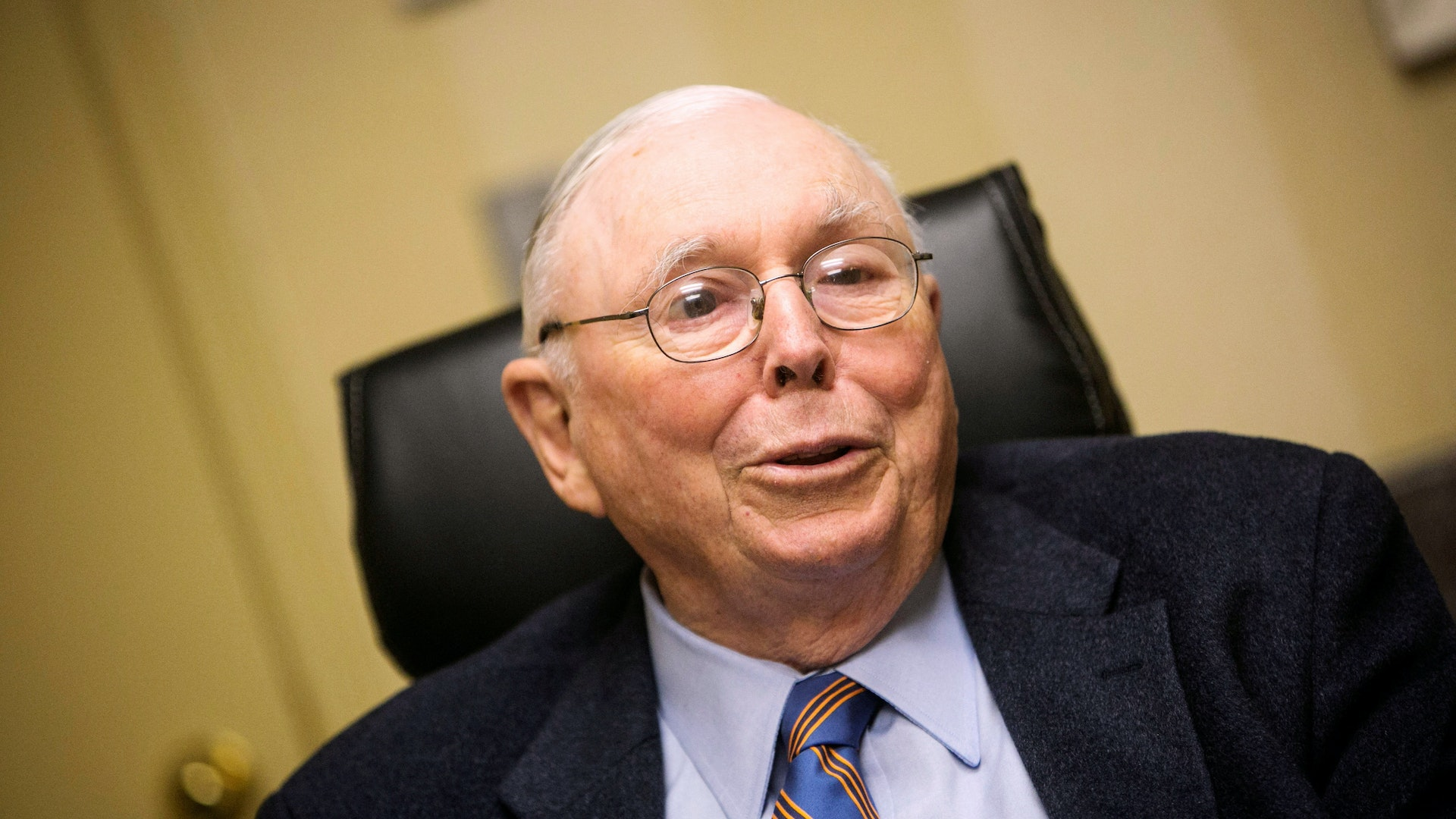
Charlie Munger has commented on both Bitcoin and Musk. Today, some may be right, some are wrong, and some of his reflections on mistakes are not necessarily correct (for example, he failed to invest in Ali, thinking the reason for the failure was that it was a damn retailer); some needed further investigation. The summary is as follows: Munger's review of Bitcoin: Munger said, “Bitcoin is stupid, evil, and makes people feel stupid.” “In my life, I try to avoid things that are stupid, and evil, and make me look bad in comparison to someone else, and Bitcoin does all three. “Bitcoin is likely to return to zero, and it also undermines the integrity of the Federal Reserve and the national monetary system,” Munger said. “It's stupid because it's very likely to go to zero, and it's evil because it undermines the Federal Reserve System and the national currency system, which we desperately need to maintain Its integrity and government control and so on. “Chinese Lingdao people have wisely banned Bitcoin, and we think we are civilized, but we are more foolish than the Chinese Lingdao people,” Munger said. “He was smart enough to ban bitcoin in China, and with all our presumed advantages of civilization, we are a lot dumber than the communist leader in China. “Bitcoin is disgusting and contrary to the interests of civilization,” Munger said. “Bitcoin is disgusting and exploiting to the civilization of civilization.” Munger said, “Trading cryptocurrencies is disgusting, like trading feces.” “It's like somebody else is trading turds and you think, 'I can't be left out'.” Munger also compared: “If you could make money by trading the brain of a newborn baby, would you do that? Bitcoin is almost equally repulsive.” “Imagine if you could profit from trading freshly prepared baby brains. You wouldn't engage in that, would you? It's an abhorrent idea. To me, Bitcoin is nearly as objectionable. I see it as a mix of insanity and immorality. “Those hurt it are a disgrace.” Munger said, “I'm dishonored that my country allows cryptographic garbage. It's worthless, very crazy, and definitely harmful.” “I'm not proud of my country for suffering this crap — well, I call it crypto shit. it's worthless, it's crazy, it's not good, it... “Munger is right...

253d agoLuxurytracy#Bitcoin #Munger #Ma Yun