Sam Bankman Fried · 1097

The Alameda Research bankrupt wallet transferred about 152,000 SOL to the BitGo escrow wallet, suspected of carrying out OTC OTC OTC transactions

Comparative news, on-chain monitoring shows that after about 10 hours of releasing the pledge of about 201,700 SOL, the Alameda Research/FTX bankruptcy management wallet distributed 201,700 SOL (about US$15.2 million) to multiple BitGo escrow wallets today. On-chain analysts pointed out that the funds are being routed and are suspected to be disposed of through over-the-counter (OTC) transactions. In September of this year, the bankrupt wallet transferred about 35,000 SOL to the exchange address in batches. As of now, FTX founder Sam Bankman-Fried is still serving his sentence. He was sentenced to 25 years in prison last year.

11d agoWendy#starters
US appellate court upholds SBF conviction and 25-year sentence

According to the news, the US Second Circuit Court of Appeals officially issued an order to uphold the seven felony convictions and 25-year prison sentence against former FTX CEO Sam Bankman-Fried, and to dismiss his appeal claim that investors can receive full compensation.

16d ago
How can crypto VCs find their next opportunity? Haseeb says “some things never come back”

How can crypto VCs find their next opportunity? Haseeb says “some things never come back”

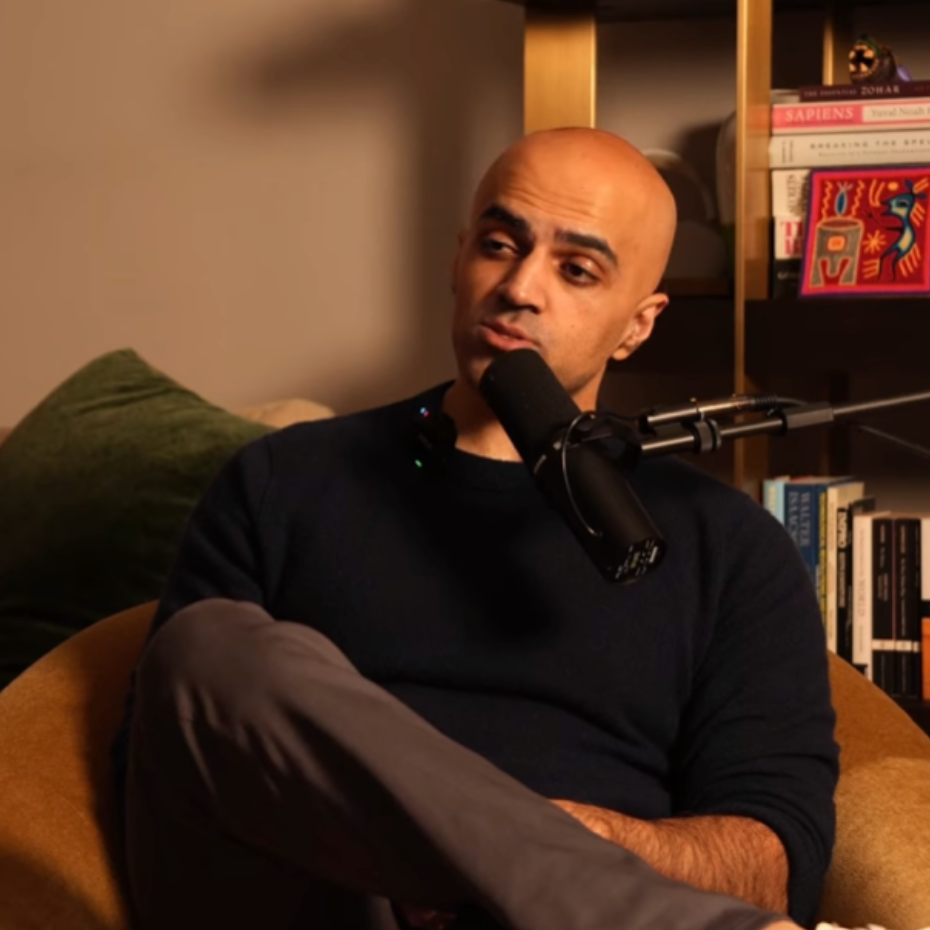
Author: Wu Says Blockchain Original title: Haseeb on Crypto VC: Sorry, Some Things Will Never Come Back In an interview with MAD Society on July 15, 2026, Dragonfly managing partner Haseeb Qureshi discussed crypto venture capital, founder judgments, and long-term trends in the industry. He believes that the key to venture capital is to seize a few non-consensus opportunities. Excellent founders should have outstanding “peak ability,” but lack of integrity and inconsistent words and actions are clear danger signs. Haseeb also said that it is difficult to form long-term enterprises in the direction of some structured products and the tokenization of individual assets, while the DeFi, stablecoin, payment and prediction markets will continue to exist; in the long run, cryptographic technology will eventually be incorporated into various financial and technology products, and the “crypto company” label may gradually disappear. The audio transcription was done by GPT, there may be errors, please watch the original video at YT. Poker and venture capital: How to establish judgment discipline in a long feedback cycle Haseeb Qureshi: There really isn't much compatibility between poker and venture capital. Poker is very similar to trading because they all have very fast feedback loops that can be iterated very closely and quickly. As soon as you play a hand, you'll know whether you won or lost, and whether your decision was right. But in venture capital, the feedback cycle is very slow. If you invest in a founder, it may take many years before you know if your original judgment was correct. In the first year, you may see some initial signs, such as the company is growing and seems to be starting to gain some market recognition. Even if a company has completed Series A or even Series B financing, it can still suddenly go awry. It may have looked like it was going well for several years, but the founders had a fatal flaw that eventually led them to lose the ball in their final offense in the final game of the season. So the reality is, it's hard to quickly judge whether you're doing a good enough job as a venture capitalist. Many funds raised funds by relying on the early book valuation of their portfolios, but it was only discovered in the end that there were no real winners in the entire portfolio. Let's say you invested in Axie Infinity or OpenSea early on, and you probably thought, “Wow, I'm an amazing investor, I did such a great job.” There are also several funds that have invested in FTX in the early stages. At the time, people would say, “My God, this guy is simply the son of choice in the investment world. Can you believe he participated in the FTX seed round?” But just a few years later, the situation became: “OK, this fund doesn't seem to be anything special now.” Because its brightest star project has already exploded. Venture capital is unique in this regard. This means, first, you must take the initiative to establish a feedback mechanism for yourself, rather than expect the world to give you direct feedback. Because as a venture capitalist, you have to keep learning and improving, but it often takes many years to know whether an investment is successful or not. Therefore, feedback must come more from your judgments about your own performance rather than from external results. For a lot of people, this is very difficult. Another difference between venture capital and poker is that venture capital is a team sport, while poker is a single player game. Of course you're playing cards with other people, but essentially you're facing the entire table alone. That's not the case with venture capital. You can only be successful if the founder you invest in is successful; you can only really win if your fund is successful and the projects carried out by the other partners in the fund are also successful. As a result, venture capital relies heavily on collaboration and interpersonal relationships. But if you're a poker player, you hardly need to care about anyone else in the world. As long as you sit at the table, play properly, and continue to make a profit, you can still be a successful poker player even if you don't have any friends. This is also a very different point between the two. Most really good venture capitalists are really good at dealing with relationships. I don't think I'm particularly good at this, but I'm definitely a lot better than the past and better at building relationships than most traders I know. Most traders don't need that. Just like poker players, they don't need to be friendly, be good at handling relationships, and don't need to have a large network of people. Therefore, the ability to really help you make good venture investments in poker is mainly the ability to think clearly about risk and the ability to control emotions well. I found that a lot of venture capitalists aren't really good at this. They can be very emotional, and it's hard to handle conflict. These two aspects are just right...

26d agoburnking

US Senate unanimously resolves that SBF cannot be pardoned under any circumstances

Comparatively speaking, the US Senate passed a unanimous resolution on Wednesday stating that FTX founder Sam Bankman-Fried should not be pardoned or commuted by the president under any circumstances. The non-binding resolution was co-sponsored by two leaders of the Senate Banking Committee's Digital Assets Subcommittee — Wyoming Republican Senator Cynthia Lummis and Arizona Democratic Senator Ruben Gallego. Lummis is the crypto industry's staunch supporter in Congress and has been driving the industry's legislative framework for years, but clearly advocated the continued imposition of SBF in this case. Gallego's statement ended with four words: keep him in jail. According to the current sentence, SBF will not be able to apply for release until around 2044.

37d ago

US Senate unanimously opposes pardoning FTX founder SBF

Comparatively, the US Senate passed a non-binding resolution by consensus, clearly stating that FTX founder Sam Bankman-Fried should not be pardoned or commuted by the president under any circumstances. The resolution was promoted by Senators Cynthia Lummis and Ruben Gallego. SBF was found guilty in November 2023 on 7 charges relating to the collapse of FTX and is currently expected to be released as early as around 2044. US President Trump said in January this year that there are no plans to pardon the SBF. (CoinDesk)

37d ago
OpenAI falls into the quagmire of “physical AI”: broken hardware dreams, compliance crisis, and collapse of giant alliances

OpenAI falls into the quagmire of “physical AI”: broken hardware dreams, compliance crisis, and collapse of giant alliances

Article: MICHAEL SPENCER Original title: OpenAI Falling Into the AI Hardware Trap: Is Apple Lawsuit, Youth Layoffs, and Uncontrolled Product Line AI Increasing Age Discrimination in the Workplace? Just as the 2027 consumer AI economy is about to launch a “physical AI” and wearable competition, the possibility of OpenAI's entry into the competition is facing serious threats — legal disputes and increasing scrutiny are raging. The Apple lawsuit over the weekend dealt a further blow to OpenAI's already severely damaged brand image and commercial partnership capabilities. As of 2026, I'm not sure which other corporate customers would want to do business with them. But what about ChatGPT users? OpenAI's past 24 hours (Saturday, July 11): An executive leaves his job unexpectedly (claiming health reasons) to shut down Atlas, a browser tool that has been in operation for 9 months — Another failed product was sued by Apple for stealing trade secrets and was revealed to sell products to China in violation of sanctions. Finally, the indictment alleges that OpenAI carefully planned a systematic theft and use of Apple's confidential information and trade secrets. The evidence seems unequivocal. How can this be recovered? I expect Microsoft will also file a lawsuit against them in the next few months on the grounds that OpenAI is in violation of Microsoft's terms to switch to Amazon. Apple is seeking (Ed Ludlow explains): The jury trial demands that OpenAI stop abusing Apple's trade secrets, order the court order to destroy all Apple's proprietary materials to redesign upcoming OpenAI hardware products, ensure that the timeline of Apple's technical events is not included. I am Chang Liu, Apple's senior systems electrical engineer, worked for the iPhone team January 8, 2026: Leave Apple and join OpenAI Apple I ignored the request to return the computer haha this is my computer. Within a few hours of leaving my job, I sent a message to my friend Yu-Ting “Alyssa” Peng, who is still at Apple: Using her account to access confidential Apple information within a few weeks, I borrowed her Apple work computer February 9: Trying to access Apple's network storage, which is a cloud repository of confidential project files, has a bug, and it's actually still usable! Message Peng: “Haha, I found out I can still access [network storage], that's funny.” While developing the hardware for OpenAI, I downloaded dozens of confidential documents, including a collection of over 1000 pages of technical documents, including MLB (main logic board) manufacturing and test reports, and sent a link to Peng's proprietary folder, instructed her to look at specific project data and teach her how to “avoid being discovered by the security team” and told her what to research before the OpenAI interview Confidential Apple materials warned her that another person “messed up” and made her “download some data” when answering Tang Tan's question about Apple's secret project. Read her in advance: Switch to LINE communication software, don't let people see these conversations. She got an offer from OpenAI. She left Apple on April 16, and at the same time, every message was left on the work computer distributed by Apple July 10: Apple sued Chang Liu first on the list of defendants He, who had interests before OpenAI and Tang Tan, was really unable to keep up with Anthropic, and many of its operating methods are being revealed. Successive product failures, project delays, legal trouble, strategic mistakes, and broken partnerships have all added additional risk to OpenAI — and it's preparing to launch a major IPO with SpaceX and Anthropic sometime next year. At that time, the company's momentum may have stagnated or even declined relative to competitors (Meta, Google, Anthropic, SpaceXAI, Alibaba, ByteDance, etc.). From a visual point of view, this completely overshadowed GPT-5.6's limelight. Even if you're bearish on OpenAI (like me), watching this scene is painful. After all, American politics...

39d ago谢伟伦#OpenAI #apples #layoffs

US Senators from both parties jointly proposed a resolution against Trump's pardon of SBF

Comparatively, US Republican Senator Cynthia Lummis and Democratic Senator Rubén Gallego supported a non-binding resolution to be proposed on Wednesday to oppose former FTX CEO Sam Bankman-Fried (SBF) receiving presidential pardon, commutation of sentence, or any form of administrative relief. The resolution stated that the SBF should not be granted executive relief under any circumstances, including presidential pardon or commutation of sentences. The resolution also said that if US President Trump approves the SBF's pardon request, it will remove its conviction, weaken deterrence, and send a serious false signal that perpetrators of large-scale financial fraud can evade permanent accountability. Since the US President's power of pardon is granted by the Constitution, the resolution is not binding. The SBF has previously officially applied for a pardon from Trump. Last week, the US Federal Court of Appeals upheld his conviction and sentence, leaving only a presidential pardon or appeal to the US Supreme Court. SBF was convicted in November 2023 on 7 felony charges involving misuse of FTX users' funds, and was sentenced to 25 years in prison in 2024.

65d ago

US lawmakers from both parties put pressure on a joint proposal to ban presidential pardons or sentence relief for SBF

Comparatively, US Senator Rubén Gallego (Democratic Party, Arizona) and Cynthia Lummis (Republican, Wyoming) jointly proposed a bipartisan resolution requesting that Congress officially state its opposition to FTX founder Sam Bankman-Fried receiving presidential pardons, commutation of sentences, or other forms of federal relief under any circumstances. Two lawmakers said the SBF has completed trial proceedings in court and should no longer seek forgiveness. Among them, Gallego said it had “no remorse,” while Lummis said it should assume established responsibilities rather than “pursue unobtained pardons.” SBF was convicted by a jury on 7 counts of fraud and conspiracy in 2023 in the FTX crash case, and was sentenced to 25 years in prison and the recovery of approximately $11 billion in assets in 2024. The customer lost more than $8 billion. The case is regarded as one of the largest financial frauds in US history. The resolution also responds to its recent application for pardon submitted to the US Department of Justice. Although Trump has previously stated that he has no intention of granting him an amnesty, some lawmakers are still concerned about political uncertainty about the relevant procedures. Currently, it is predicted that the probability that the SBF will be pardoned by the market remains low in single digits. (Decrypt)

66d ago

SBF prison recent situation revealed: daily medication to treat depression, inmates say they plan to issue new tokens after release from prison

Comparing news, FTX founder Sam Bankman-Fried (34) is currently serving time in California's Lompoc federal penitentiary and takes Adderall and Emsam daily for clinical depression and ADHD, according to a long-form report in “New York Magazine”. SBF continued to write a serial memoir called “Manfred” while in prison and sent it to a few family and friends through the prison email system. He didn't eat in the cafeteria because he insisted on vegetarianism, so he procured ingredients from the kiosk to prepare his own meals and wrote a “Vegan Prison Cookbook.” SBF spent around $135 on a prison tablet and has played the same game about 6000 times. According to inmate David Bunevacz, SBF has stated that it will require 50 million to 100 million US dollars to start a business after being released from prison, and that it will “issue its own new token, and everyone will flock to it,” but Bunevacz added that “he is probably kidding.” The SBF officially submitted a presidential amnesty application on June 8, and the appeal was rejected on June 12. The probability of receiving an amnesty is about 14% on Polymarket.

66d ago

SBF prison experiment: Second instance appeal rejected, amnesty application hopeless, still insisting not guilty and seeking release from prison

Comparatively, according to an in-depth report in “New York” magazine, FTX founder Sam Bankman-Fried (SBF) is currently in custody at the Lompoc federal prison in California and was sentenced to 25 years in prison for fraud and conspiracy in March 2024. On June 12 of this year, the U.S. Court of Appeals for the Second Circuit rejected its formal appeal, further reducing its legal remedy space; in the same month, the SBF officially submitted a presidential amnesty application. According to Polymarket data, the probability that it will be pardoned before 2027 is about 14%. At the level of the prison campaign, SBF's parents have hired two Republican lobbyists to lobby the Trump administration. Her mother, Barbara Freed, continues to post complaints on Substack, and the anonymous website freesbf.org and several X accounts are also building momentum for them. However, Trump made it clear earlier this year that he did not plan to pardon the SBF, and Cynthia Ramis, a well-known pro-crypto member of the Republican Party, also publicly opposed it, and its political prospects are not optimistic. It is worth comparing that CZ, who was also convicted of money laundering, has been pardoned by Trump. One reason is that its trading platform supports the Trump family's crypto project World Liberty Financial. SBF in prison maintained a great deal of writing and legal activity: serializing the memoir “Manfred” in prison, and writing where the money went documents to try to prove that FTX was solvent at the time and filed a motion for a new trial on its own behalf (which was rejected). He insisted that approximately $8 billion in lost customer funds stemmed from unintentional accounting omissions rather than deliberate fraud, and pointed out that the FTX bankruptcy process has so far repaid victims more than $10 billion. At the same time, he actively showed goodwill to Trump, posted pro-Republican content through his father's X account, and was interviewed by Tucker Carlson. For this reason, he was imprisoned for a while. In terms of life in prison, SBF lost about 30 pounds, insisted on a vegan diet, played about 6,000 pixel dungeon games every day, taught chess lessons, was obsessed with pickleball, and chose independence by refusing to join a racing team of any race. According to former inmates, he helped many inmates prepare legal documents. He was well liked by inmates, and was hailed as a peaceful person with a counterintuitive attitude. SBF's biggest fear is not to serve a long time in prison, but to train his brain to only search for Oreo's neurons during his long prison term, which is to lose the ability to think and influence the outside world.

66d ago