


Institutions are making a hundred times more profit, and the ban is about to be lifted: who will take over the intelligent trillion dollar valuation?
Author: Ga Six, Xing Sheng BeatZ
Original title: Institutions are profiteering 100 times. Has Zhipu's stock price reached its peak?
The recent market popularity is Zhi Spectrum (02513.HK), the first AI stock in China.
If you buy 1 million Smart Spectrum in January of this year, the high on June 22 was close to 25 million, and the closing time was more than 20 million. It is also one of the fastest companies in recent years where the market capitalization of Hong Kong stocks rose from a 10 billion IPOs to a market capitalization of HK$1 trillion.
Regarding this stock, there are three questions repeatedly asked in the market: Who made this amount of money? Why did it rise like this? Who will take over next?
This article is meant to answer these questions.
Hong Kong stocks have made the fastest wave of wealth in recent years
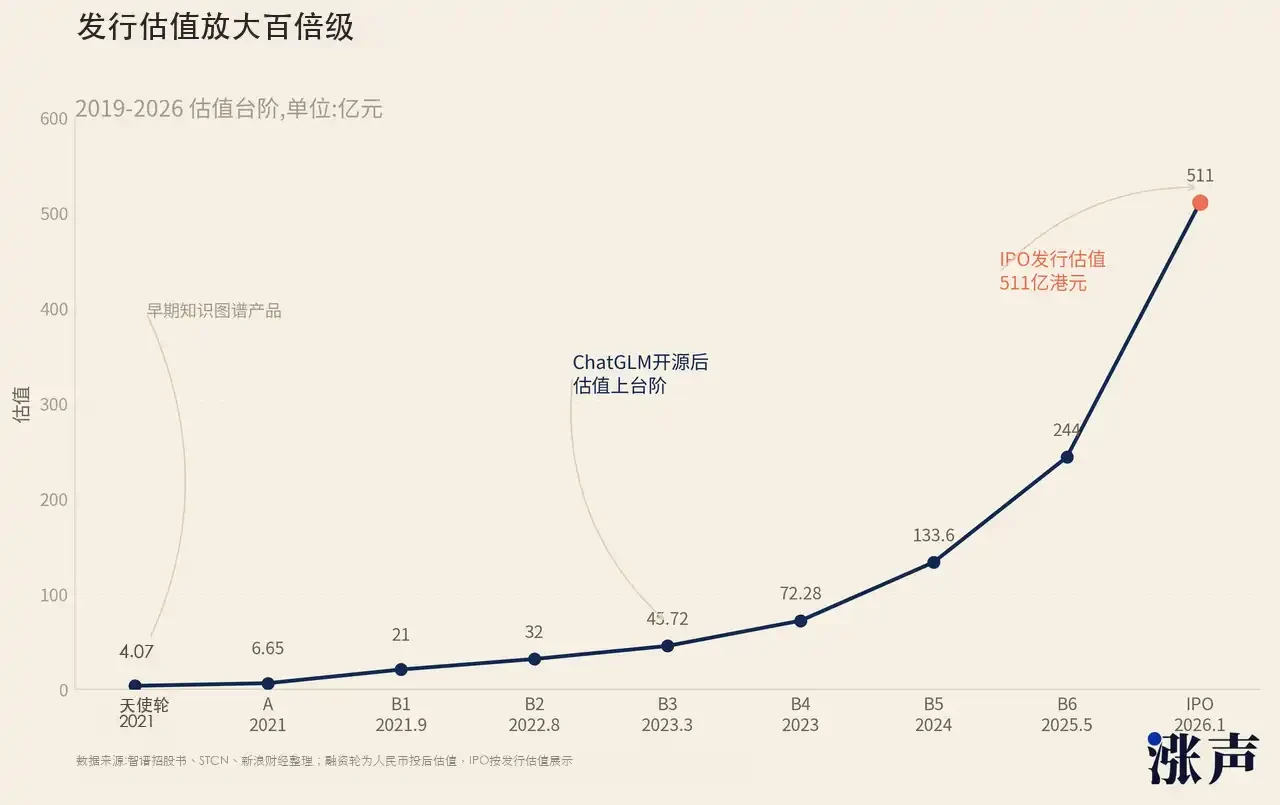
From Angel's turn to the IPO, Wisdom Spectrum's valuation increased by about 130 times. From its IPO to its intraday high on June 22, Zhi Spectrum's stock price increased 24.6 times.
The 57 external investors invested a total of RMB 8.36 billion, and the total book balance corresponding to the intraday high on June 22 was approximately HK$770.8 billion. The overall return is approximately 85x. In the history of China's primary market, cases where an average return of 85 times for all investors can be achieved on a single project can be obtained with one hand.
According to the prospectus, Zhipu's financing is classified as “three rounds of fourteen times.” The return on the first batch of money was particularly impressive.
China Science and Technology Innovation Star is the most extreme return multiplier. According to the prospectus, it invested about 20.37 million yuan in the angel round, and the corresponding post-investment valuation was about 407 million yuan. At that time, Smart Spectrum was still a knowledge map team split from the KEG lab in Tsinghua, and the concept of a big model didn't even exist. More than 20 million dollars became tens of billions of Hong Kong dollars. This is one of the most extreme cases of a single return multiplier in the history of China's AI Tier 1 market.
The same is true for Round A and Series B investors. Based on the high intraday level and market capitalization on June 22, the amount of capital entered in round A was already several hundred times greater, and round B was also close to 100 times greater.
The figures from the latter few agencies are also outrageous. Xu Xin's capital today invested 255.3 million yuan in November 2023 and received 11.35 million shares. Based on the high intraday price on June 22, the book balance was about HK$30 billion, and the return was more than 100 times higher. Today's capital management scale is around $3 billion, which means that the book value of Zhi Spectrum's amount has already exceeded the size of all of her funds. Xu Xin has been directly hired by NetEase, JD, and BOSS in the past, but judging from the absolute amount of money, Zhipu is probably the most profitable part of her career.
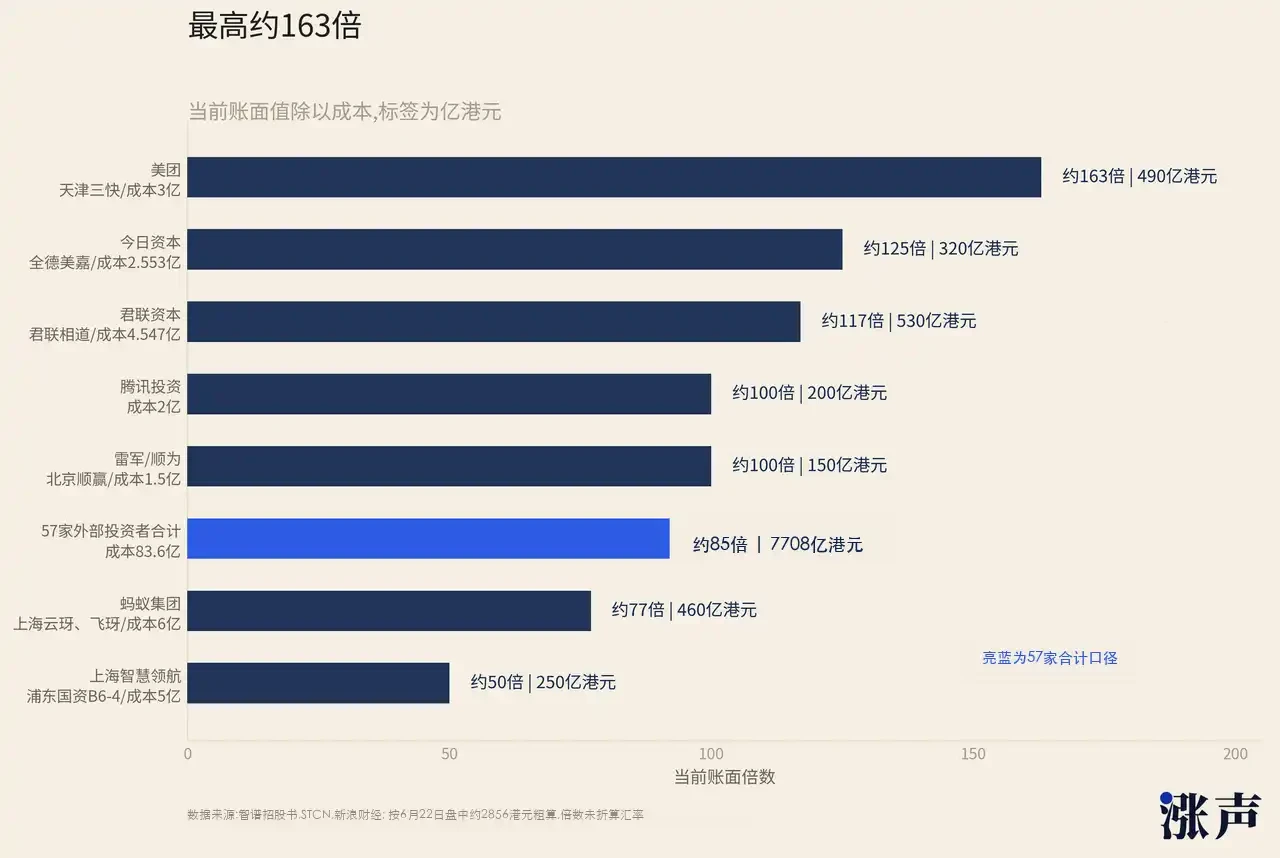
Meituan's example is also very intuitive. According to current data, Meituan invested about 300 million yuan that year, and now the book return is more than 150 times higher. In other words, the surplus of industrial investment has already exceeded 5% of Meituan's own market value.
Lei Jun's Shunwei Capital invested 150 million yuan through Beijing Shunying. Based on the high intraday price on June 22, the book balance was about HK$14.8 billion, and the return was about 90 times higher. Shunwei's management scale is nearly 50 billion yuan, and Smart Spectrum accounts for about a quarter of the total scale.
The absolute largest amount of money has been earned by Junlian Capital. It followed up 6 times, and invested a total of 454.7 billion yuan. Based on the high intraday price on June 22, the book balance was approximately HK$53.3 billion, and the return was about 107 times. The total management scale of Junlian exceeds 90 billion yuan, and the book value of Zhipu's transaction is close to half of its total management scale. An established PE that participated in iFLYTEK, the Ningde Era, and Yao Ming Kangde finally received a history-level single-project return on the smart spectrum.
In addition to market-based institutions, the density of intelligent state-owned shareholders is also very high. State-owned assets are in Beijing, Tianjin, Shanghai, Hangzhou, Zhuhai, Chengdu, and Daxing. Zhongguancun Science City, Zhuhai Huafa, Haihe Fuxin Youda Fund, Artificial Intelligence Fund, Hangzhou Urban Investment, and Daxing Industrial Fund are all well-known local government investment platforms. The social security fund Zhongguancun Independent Innovation Investment Fund also participated.
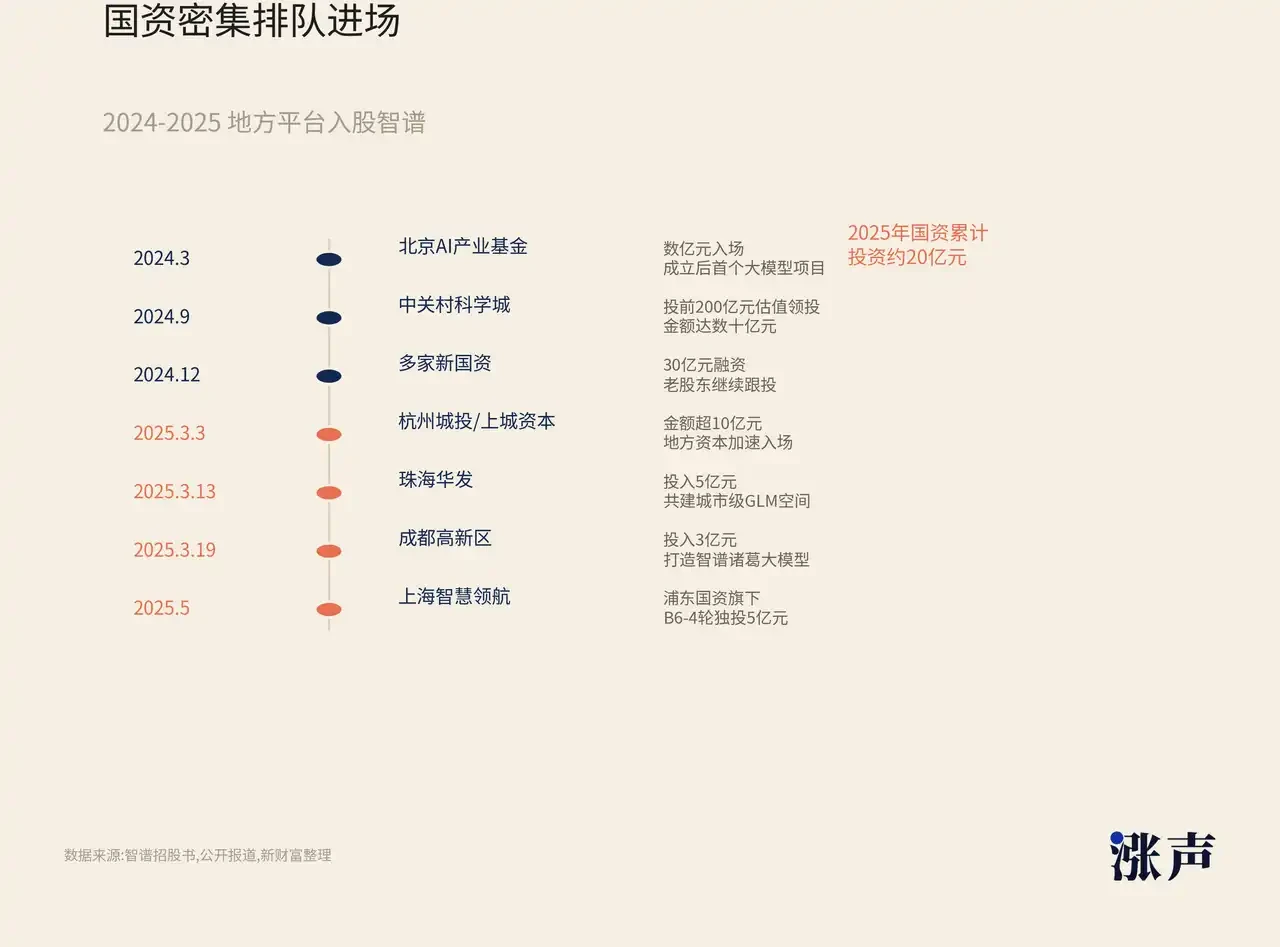
This money comes in and is not just a financial investment. Once they come in, they will drive procurement in the government system of the city and province where they are located. A local state-owned company invested in Smart Spectrum. When the local government selected big model suppliers, Zhi Spectrum had an additional layer of natural advantage. This is a very obvious characteristic of China's technology industry: the richest buyer is the government. If a technology project receives investment and support from the government, it is half successful. Zhongji Xuchuang and Changxin Storage are all examples of this model. The founders brought back technology from overseas, the government invested money to build a factory for orders, and the company started up quickly.
Employees are also big winners in this round of wealth creation. Zhipu employees hold a lot of shares. Together, the two employee-holding platforms hold about 15% of the company's shares. At the time of the IPO, the 25 employees of Zhideng Platform had a market value of over HK$100 million per person. Based on the intraday high on June 22, the average has changed to tens of billions of Hong Kong dollars. On another platform, Huihuili, after removing the founder's rights, more than 400 employees were roughly calculated at the level of 100 million yuan per person according to the June 22 high ranking.
This intensity of wealth generation is at the forefront in the history of Chinese technology companies' listing.
When Kuaishou went public in 2021, it also made “paper billionaires” in batches, but Kuaishou had a larger market capitalization, a larger employee base, and distributed wealth more evenly. Zhipu is a company with less than 900 people. The core options were concentrated in the hands of a very small number of early employees. After the IPO, the highest increase of 24.6 times in the market was compounded, and the book figures everyone received became extremely exaggerated.
Why is the smart spectrum rising so fast? The capital game behind the narrative
It was a rare form of collective wealth: early VCs, local state-owned companies, internet giants, competitors, founding teams, and core employees were all repriced in the open market on the same project. So why did it rise to this level?
The first thing the market saw was that it does have a business that can collect money.
Zhipu's most solid revenue is not a C-side chat product, nor a developer community, but rather localized deployments. Simply put, the entire GLM model is installed on the customer's own server and intranet. The data cannot be exported locally. The buyers are mainly government agencies, state-owned banks, energy groups, and smart city projects. For the full year of 2025, localized deployment revenue was $534 million, up more than 100% year over year, accounting for 73.7% of total revenue and 48.8% gross profit margin. For a big model company that is still losing money, this business at least proves that it's not just storytelling.
There are roughly a few pricing tiers for on-premise deployment. District and county government affairs and small and medium enterprise bureaus use the lightweight version, with an annual fee of about hundreds of thousands of yuan; municipal governments and ordinary state-owned enterprises buy the standard generic version and package 1 to 2 million yuan over three years; provincial departments, leading banks, smart cities, meteorology, and energy groups use the flagship version. The annual fee may reach several million yuan, plus operation and maintenance upgrade fees. It's not an exorbitant price for a single project, but China has dozens of provincial administrative regions, hundreds of prefecture-level cities, thousands of districts and counties, as well as vertical fields such as finance, energy, and transportation.
As long as government and enterprise AI budgets continue to exist, the smart revenue ceiling won't be too low.
The shareholder structure is also endorsing this business. The names Zhongguancun Science City, Zhuhai Huafa, Hangzhou City Investment, Chengdu High-tech Zone, and Pudong State-owned Assets entered the shareholder list, not just because they wanted to make stock money. After they are invested, they often also drive local demonstration projects, government system procurement, and industrial park cooperation. There has always been a similar path in the Chinese technology industry: the government pays money, gives scenarios, and orders, and companies take projects and get started quickly. In the past, chips, storage, and new energy vehicles all followed a similar path; SmartSpectrum only applied this set of logic to the big model.
However, if only government and enterprise deployments were made, the intelligence spectrum would not rise to what it is today. What really ignited the second wave of emotions was the rediscovery of GLM-5.2 in the English-language technology community.
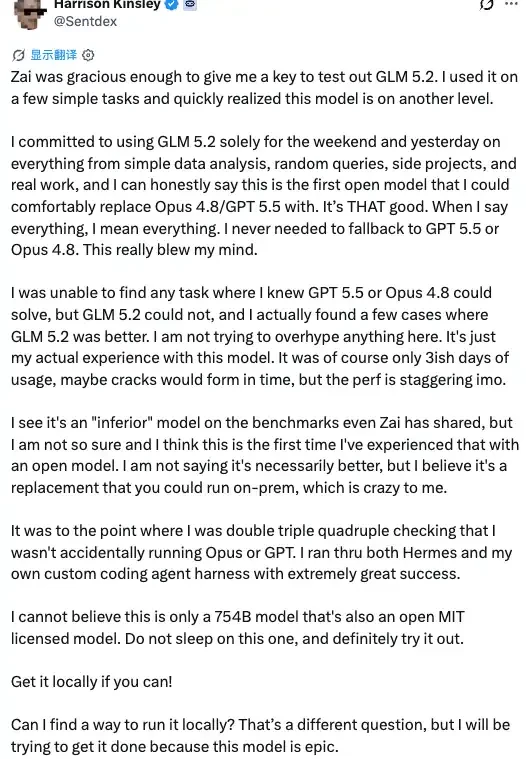
In mid-June, Z.ai released GLM-5.2, which focuses on coding and agents, supports 1 million token contexts, MIT's open source weight, and the API price remains unchanged. It didn't immediately make a big noise on the Chinese internet. After all, domestic big model topics are often diverted by DeepSeek, Tongyi, and mixed elements. However, the English developer community was very responsive.
Vercel CEO Guillermo Rauch said on X that he was “really impressed, almost shocked” by GLM-5.2's programming capabilities. Former Meta, Google DeepMind, and Microsoft executives such as Matt Velloso also called it the first open source model to reach the threshold of everyday use. Other developers have switched their daily work to GLM-5.2 and discovered that many tasks no longer require switching back to GPT or Claude.
This type of communication is important for intellect spectrum. Chinese investors look at smart spectra; what they see is Tsinghua, state-owned, government-enterprise deployment, and Hong Kong stock AI scarce targets; when the English tech community looks at GLM-5.2, what they see is another question: can it replace part of Claude and GPT? Can it be deployed locally? Is it open source? Is the cost low enough?
When overseas developers, AI infrastructure companies, and English-language investors all began using this framework to discuss intellectual genomics, it was no longer just an AI story of a local Chinese government enterprise, but became a target that could be driven by the logic of global model layer asset revaluation.
The market is buying more than 500 million yuan of local deployment revenue in 2025; it is a possibility: if the open source model can actually get close to the closed source model, if Chinese model companies can cut down on the cost of inference, and if unlisted tech giants such as OpenAI, Anthropic, and SpaceX continue to anchor the valuation of the model layer and hard technology assets, then Zhipu, as one of the few model companies that are already listed and can be directly bought by the open market, will naturally get a premium.
Of course, there's a big question here. Whether developer volume can eventually be converted into API revenue, on-premise deployment contracts, and high gross cash flow is not fully proven. However, in the phase of rising stock prices, the market often first asks about trading possibilities and then inquire about profit statements. GLM-5.2 gave Zhi Spectrum a new entry into the story, and also gave overseas capital a reason to buy it.
Another more direct and important reason is that there are too few chips in circulation.
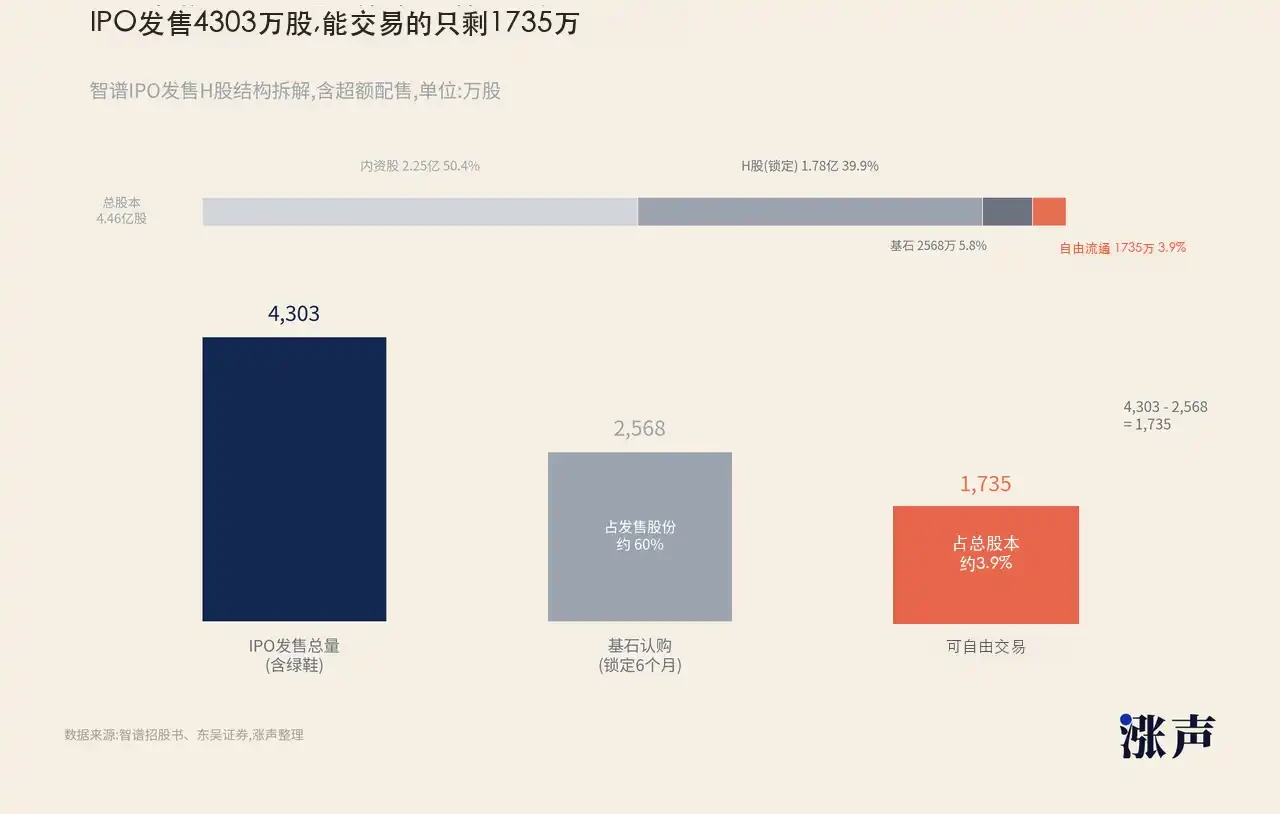
When many people see the IPO share figures written in the Dongwu Securities Research Report, they think that Zhipu's share capital in circulation is 2213.1 million shares, accounting for about 49.6% of the total share capital, which is not that low. However, let's be clear here. “Tradable shares” and “free circulation markets” are not the same thing. Smart Spectrum is a joint stock company registered in the Mainland and listed in Hong Kong. The tradable shares in the research report are closer to the H shares that have already been listed, but quite a few of these H shares are still locked in the early stages of listing and cannot be traded immediately. What really determines the flexibility of stock prices is how many chips can be freely traded on the market every day.
Looking at the IPO structure, Zhipu sold about 374.19,500 H shares worldwide. After counting the over-allotted rights, the total issuance scale was about 43.3 million shares, accounting for about 9.65% of the total share capital. This is less than 10% of the total share capital. More importantly, most of the shares offered in the IPO were taken away by cornerstone investors. The 11 Cornerstone investors collectively subscribed for approximately HK$2,984 billion, accounting for nearly 70% of the shares offered. The cornerstone usually has a 6-month lockdown period, and the corresponding release date for this batch of Smart Spectrum is July 8, 2026.
In other words, out of the 4.03 million newly issued IPOs, about 25.68 million shares are locked in the cornerstone. Of those that can actually be freely traded at the beginning of listing, there are probably only 17.35 million shares left, less than 4% of the total share capital. The apparent market value of a company exceeds HK$trillion, yet at the transaction level, less than 4% of the chips are transferred outside. Buying only needs to be concentrated a little, and the price will be greatly boosted.
This is not unique to Zhiguo; low circulation and high market capitalization have been very popular in the capital market in recent years.
The most typical example is that SpaceX was listed ten days ago. The publicly traded shares are less than 5%, but the company's listing valuation is already close to 1.77 trillion US dollars, up 19% on the first day, and at one point it rose to around 30% during the intraday period. The world wants to buy SpaceX, but there are very few chips that can actually be bought.
CoreWeave, Circle, and Figma's 2025 US IPOs all have similar operations. The scale of CoreWeave's listing was reduced. The shares that can be traded were initially limited, then surged due to AI computing power narratives and Nvidia's shareholding catalysts; the number of shares sold by Circle was not very large compared to the total share capital. Together with the stablecoin regulatory narrative, they quickly surged several times after listing; the sum of Figma's issuance and sales of old shares was less than 10% of the total share capital, and the stock price increased several times on the first day.
Although companies have different perspectives, the market structure is very similar: big story, large market capitalization expectations, and small circulation market.
Hong Kong stocks also have their own versions. When the Ningde Era H shares were listed, only a small portion of the shares were traded in Hong Kong, but the backbone was a global battery leader that had already been priced with A-shares, with a double-digit increase of more than double digits on the first day. As far as Hong Kong capital is concerned, it bought not only a new stock, but a scarce Chinese core asset that can be directly traded in a Hong Kong stock account. Smart Spectrum now has a similar logic, except that the asset label has changed from a power battery to a larger model.
Will the upcoming “Tianliang Unlock” smash the game?
Government and enterprise services provided a revenue base, GLM-5.2 gave a global technical narrative, low free circulation gave stock price flexibility, and intelligent stock prices were pushed to the current level.
But the more it rose, the more direct the question that followed: who will take over?
Let's look at the valuation first. Smart Spectrum closed with a market value of about 137 billion US dollars on June 22, and revenue for the full year of 2025 was about 100 million US dollars, corresponding to about 1280 times sales. This multiple has broken away from all traditional valuation frameworks.
Nvidia, Tesla, and Palantir, companies that have been repeatedly discussed as “too expensive” by the market, are mostly tens of times more sales when they are expensive. Based on FT's disclosure of about $13 billion in revenue and $730 billion in valuation in 2025, this is roughly 56 times that. The intellectual spectrum is 1280 times.
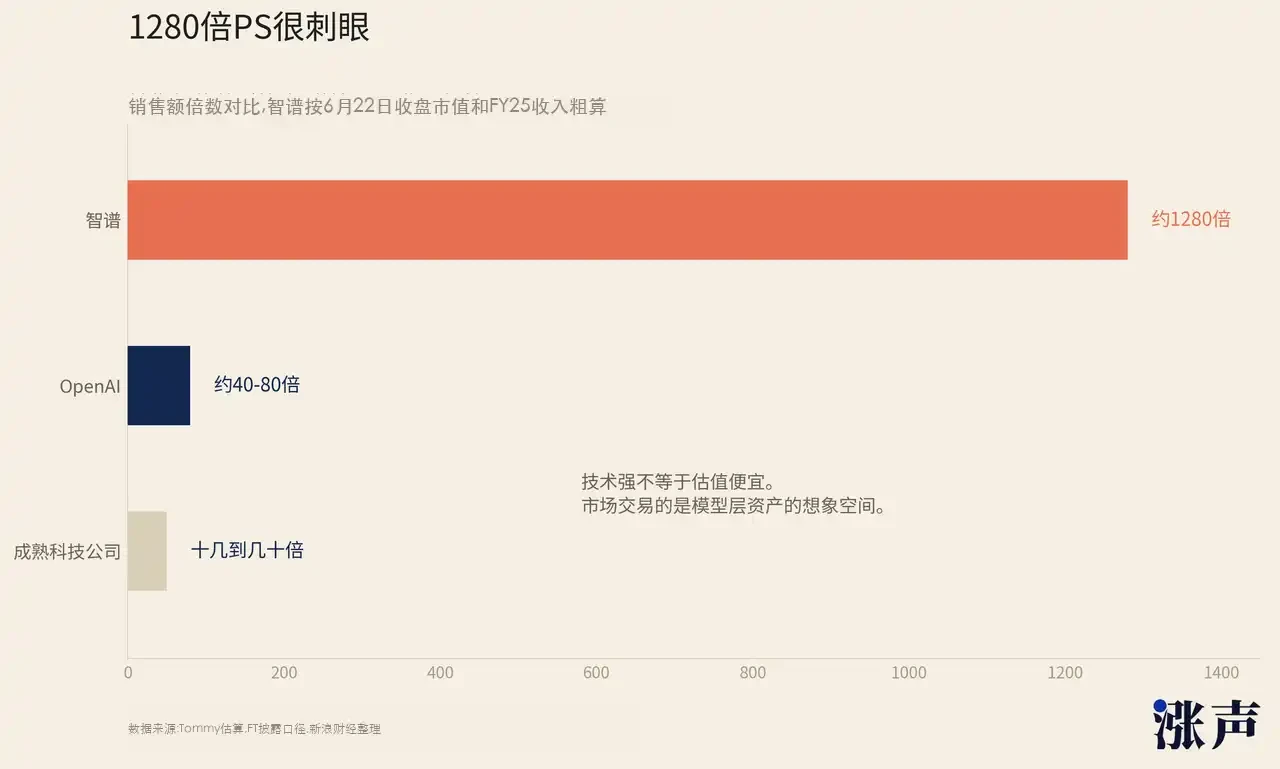
Taking OpenAI's revenue in multiples of Smart Spectrum, the “reasonable” market value of Smart Spectrum is around $4 to $8 billion. Even if J.P. Morgan predicts a 534% increase in revenue for 2026 (about $640 million), when multiplied by OpenAI, it would only support $25 to $50 billion. There is still a long way to go between the $137 billion corresponding to the closing on June 22.
Smart Spectrum's current price is not supported by a profit statement; it is supported by scarcity, imagination, and financial structure. As long as the market continues to be willing to buy it as a “Chinese OpenAI shadow stock,” the valuation can be unreasonable for the time being. But once the new chips are added, the market will once again ask a very realistic question: who will continue to buy such expensive stocks?
This question will become very specific on July 8th.
According to public information currently available, the most confirmed batch of unbanned products on July 8 was about 25.68 million shares of Cornerstone Investors. The 11 Cornerstones subscribed for a total of approximately HK$2,984 million, with an issue price of HK$116.2, which translates to approximately 25.68 million shares, accounting for approximately 5.76% of the total share capital.
As mentioned earlier, there were only about 17.35 million shares of chips that could actually be traded at the beginning of Zhipu's listing. After July 8, the cornerstone ban will expand the tradable market from 17.35 million shares to about 4.03 million shares, close to 2.5 times the original. Based on the intraday high on June 22, the corresponding book value of 25.68 million shares was approximately HK$73.4 billion.
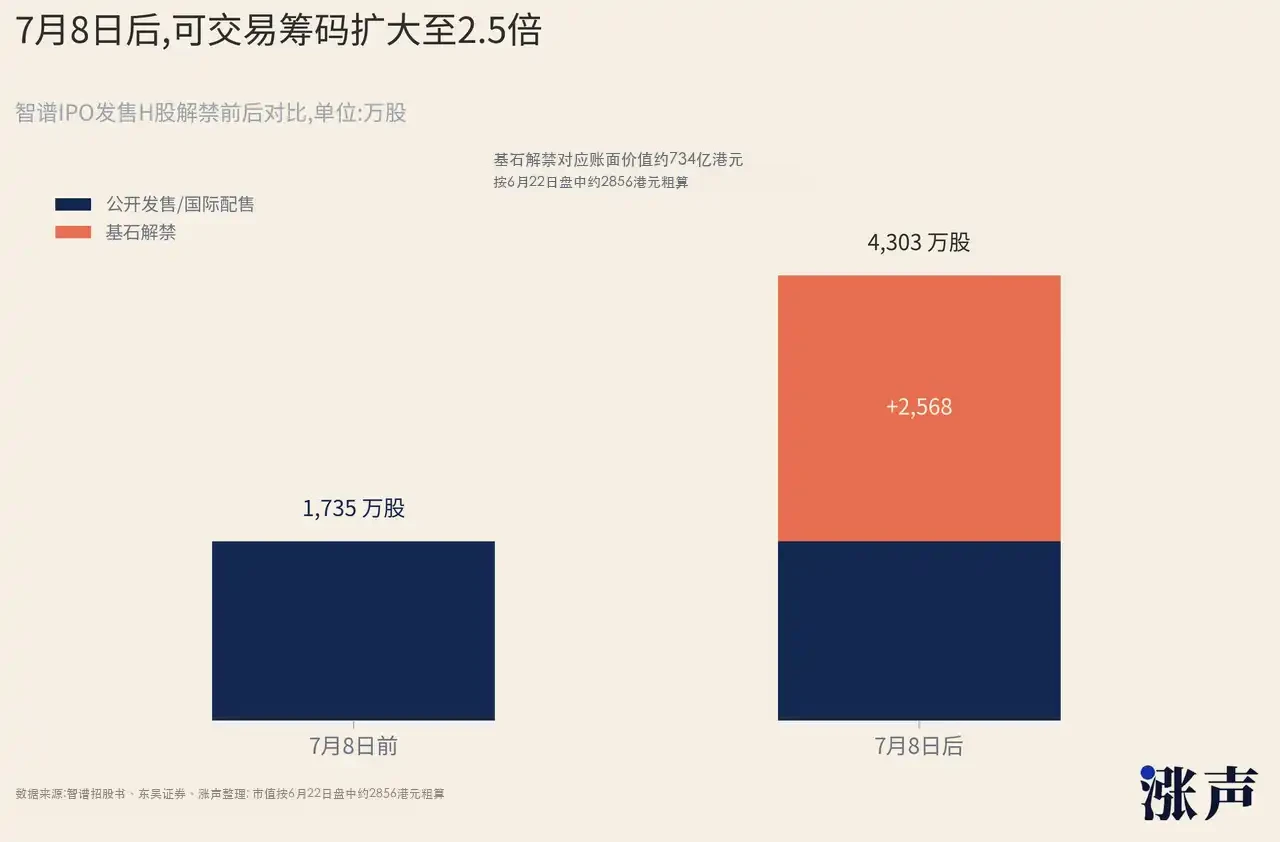
It's not a 100 billion dollar shock, but it's also enough to change the supply and demand of chips.
In addition to the cornerstone, the shares of pre-listing shareholders, state-owned platforms, strategic investors, and employee shareholding platforms will also gradually enter the saleable window in the future. They won't necessarily be available on July 8, but the market won't wait until the details are in place to respond. As soon as investors realize that these huge surpluses will gradually become sellable chips in the future, stock prices will begin to discount potential supply.
Hong Kong stocks have seen similar screenplays before. After the ban was lifted on the first anniversary of Preferential Choice's listing, important shareholders quickly reduced their holdings, and stock prices fell sharply.
If the cornerstone and early shareholders only reduced their holdings in a small amount, the market might be able to catch up. If large discounts continue to occur, important shareholders disclose holdings reductions, and trading volume increases but stock prices do not rise, the scarcity premium will quickly disappear.
Intellects need to prove two things the most right now. First, can the developer voice brought by GLM-5.2 turn into real revenue? Second, after July 8, can the market catch the new sellable chips and switch the stock price from “low circulation market promotion” to “fundamental promotion”.
If both of these things are achieved, there is at least room for further discussion on Zhisu Spectrum's overvaluation.
Twitter:https://twitter.com/BitpushNewsCN
Compare the TG exchange group:https://t.me/BitPushCommunity
Compare TG subscriptions:https://t.me/bitpush
