


The annual dividend cost may exceed 1.2 billion US dollars, and Strategy was forced to sell 3,588 bitcoins

Author: Cooper Duschang
Compiled by AidiDiaoJP, Foresight News
Key Takeaways
Strategy sold 3,588 bitcoins between June 29 and July 5 to pay dividends on preferred shares and replenish dollar reserves. This is only the third and fourth sale since Bitcoin was bought in August 2020.
Strategy's STRC preferred share structure could generate up to $1.26 billion in dividend costs each year. Currently, STRC's price is about 10% lower than face value, and the dividend rate has been raised to 12%. This mechanism will further drive up dividend costs.
Strategy can improve the actual transaction price of Bitcoin trading by decentralizing execution of transactions across multiple exchanges and markets. The Binance-USDT market has a deep leading order book, which can hold around 2,900 bitcoins within 10% of the median price range.
introduction
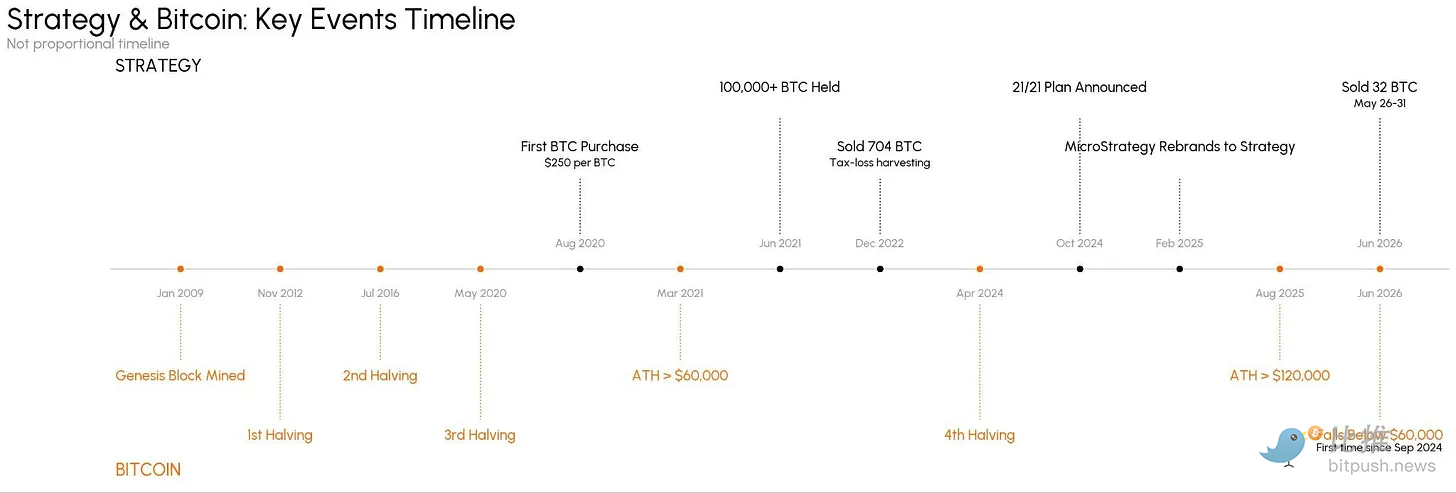
MicroStrategy was founded in 1989 as an enterprise software company. In 2020, the company realized that cash reserves were at risk of rapid inflation and depreciation, so it decided to hedge cash into Bitcoin.
On July 6, 2026, Strategy disclosed the sale of Bitcoin in an 8-K file, the only third and fourth sale since 2020. Strategy's complex capital structure requires continuing to pay dividends to preferred shareholders, manage convertible debt, and continue to accumulate Bitcoin. This article will thoroughly analyze the role of STRC preferred shares in the company's capital structure, the reasons for selling Bitcoin, and how to maximize the value of Bitcoin by optimizing transaction execution.
Strategy's capital operation strategy
In 2025, MicroStrategy officially changed its name to Strategy. Since the initial investment, the company has accumulated 843775 bitcoins through debt and equity financing. Since these bitcoins are mainly purchased through financing, the company actually provided investors with leveraged exposure to Bitcoin and pioneered the large-scale acquisition model of a single crypto asset. Today, such companies are known as digital asset treasury (DATs).
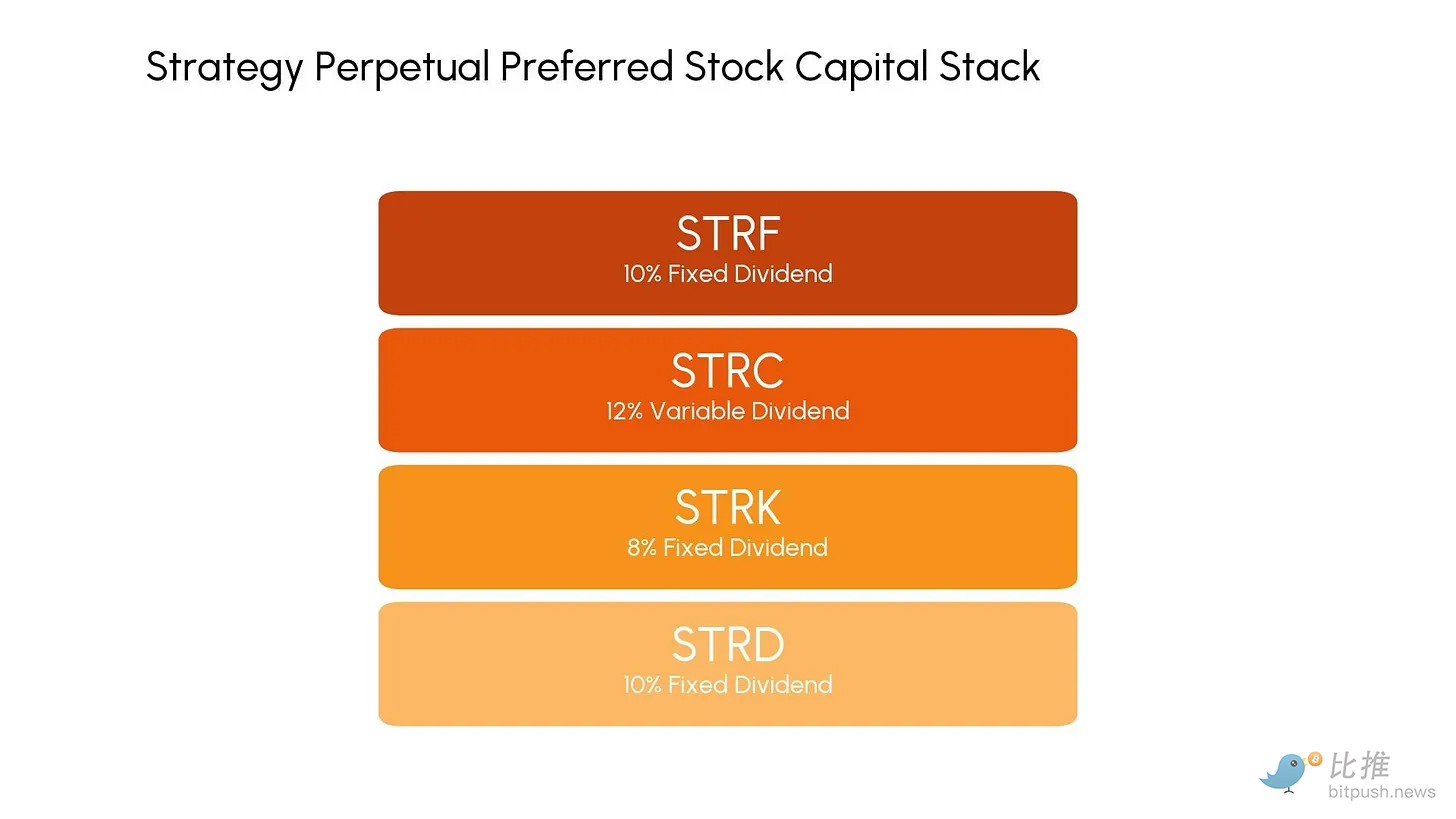
Hierarchical capital structure
Strategy has released a variety of structured products to finance the purchase of Bitcoin. Convertible bonds allow companies to access capital without immediately diluting common stock. This type of bond has both fixed income attributes and equity conversion potential, and is equivalent to a call option — if the company's stock price exceeds the exercise price, the bondholder can turn it into stock profit. Only bonds maturing in 2032 had a coupon rate of more than 1% (2.25%), and the remaining five bonds had interest rates below 1% or zero, which allowed the company to keep costs low and focus on accumulating Bitcoin.
In October 2024, the company launched the “21/21 Plan”, which plans to finance the purchase of coins by issuing US$21 billion in debt and US$21 billion in equity. As financing progressed, the company successively introduced four types of dollar-denominated perpetual preferred stocks: STRF, STRC, STRK, and STRD.
STRC Preferred Stock (commonly known as “Stretch”) has attracted much attention due to its variable dividend mechanism. It offers semi-monthly dividends, and the dividend rate is adjusted monthly, with the goal of fluctuating the share price around $100 in face value.
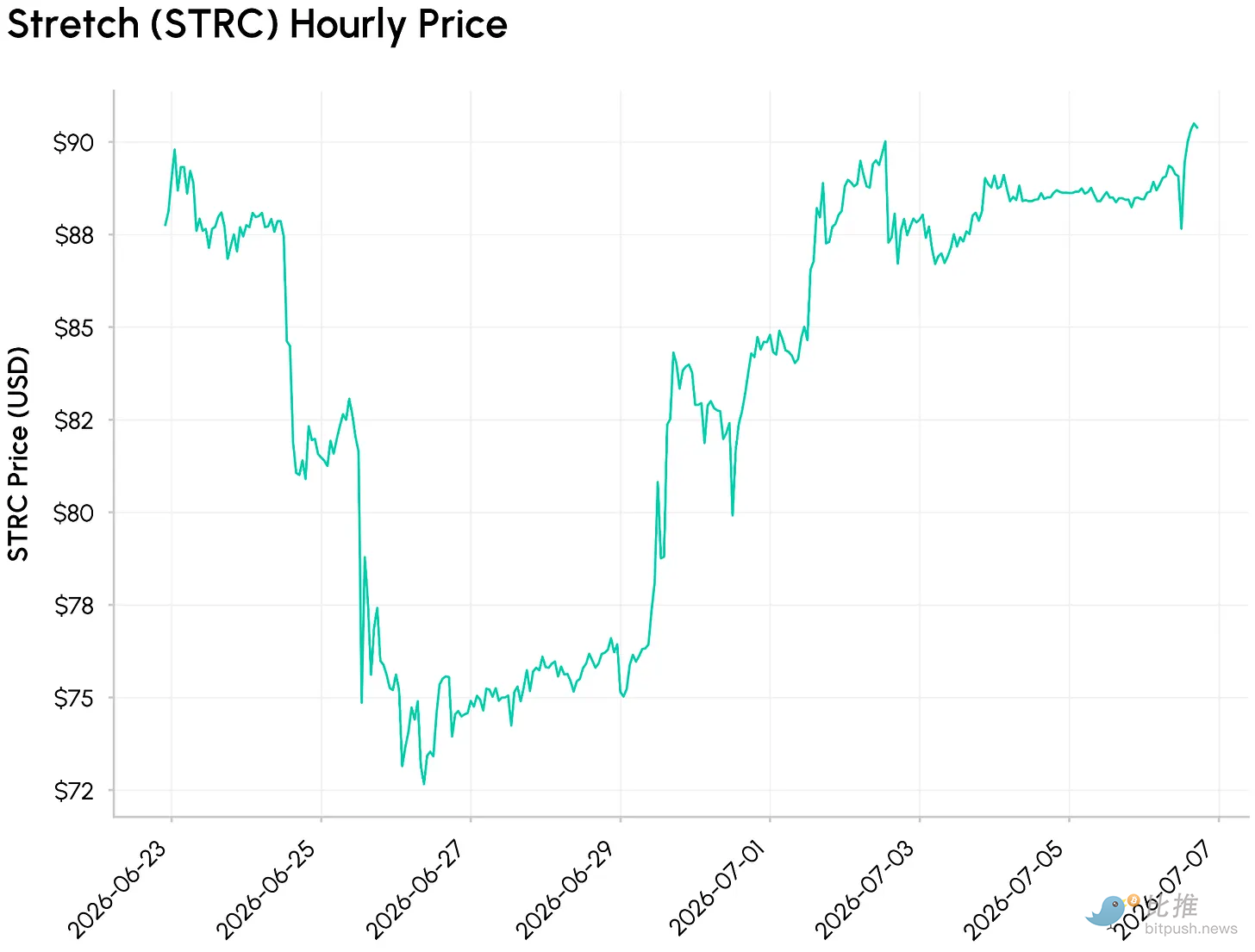
The specific adjustment rules are:
When the stock price is below $95, it is recommended to increase the dividend rate by 50 basis points;
When the stock price is between $95 and $99, the increase is 25 basis points;
When the stock price was above $101, it was reduced by 25 basis points.
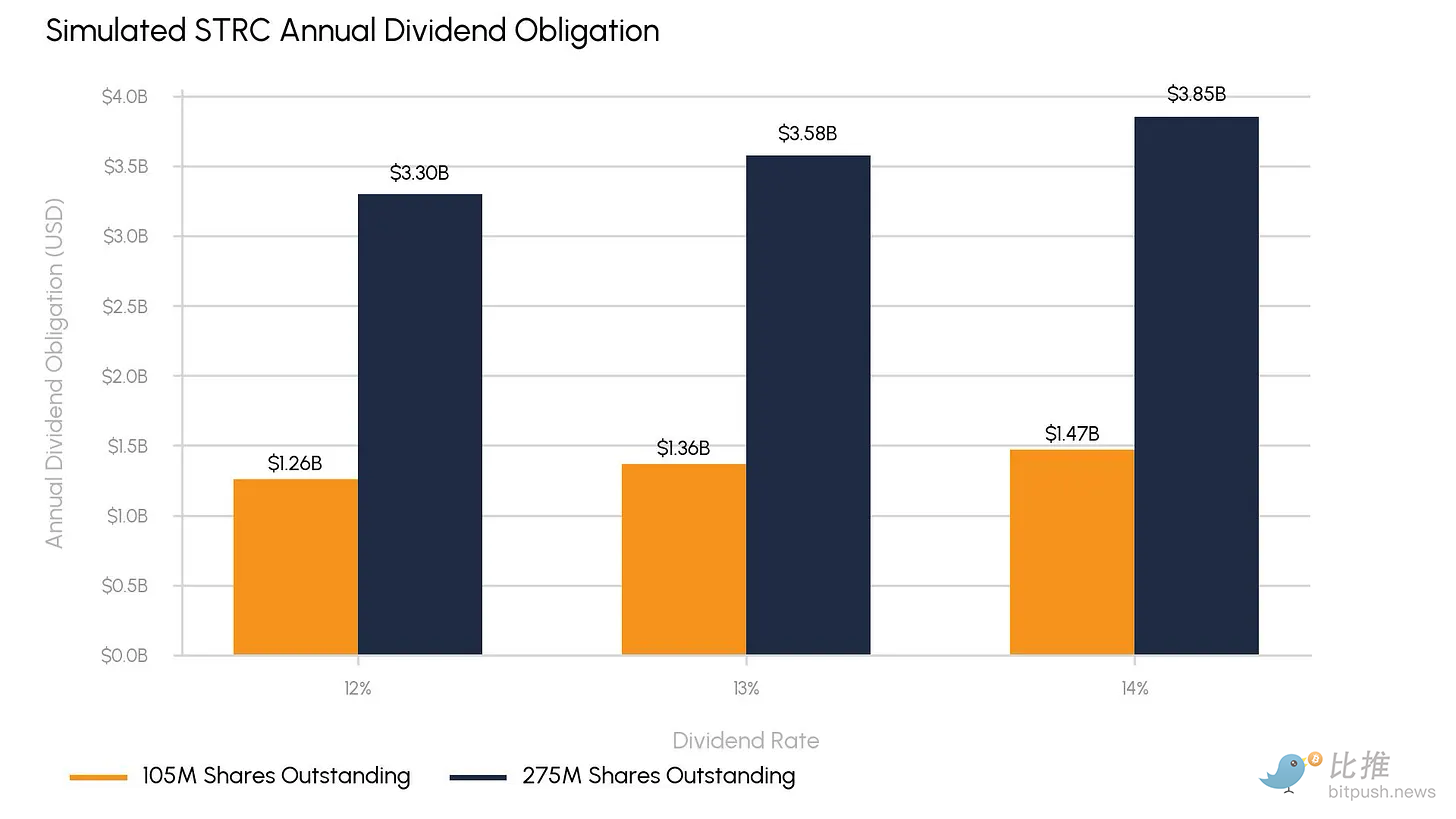
At the end of June, STRC once fell to about $73 (about 27% lower than face value), then the annualized dividend rate was raised to 12%. Based on the current estimate of approximately 105 million shares, this would cost the company $1.26 billion in annual dividends. If all of the remaining issuance capacity were used up (corresponding to the 275 million shares scenario), the cost would be even higher. STRC is also facing competition for Strive's SATA preferred stock, which currently has a 13% dividend rate, which may force Strategy to further increase dividends to attract investors.
In bankruptcy liquidation, convertible bonds and preferred shares have priority over assets, so the risk is low and the return is relatively limited. However, common stock (MSTR) has the greatest potential room for growth due to the company's leverage exposure to Bitcoin, but it also has the highest risk, and is at the bottom of the capital structure.
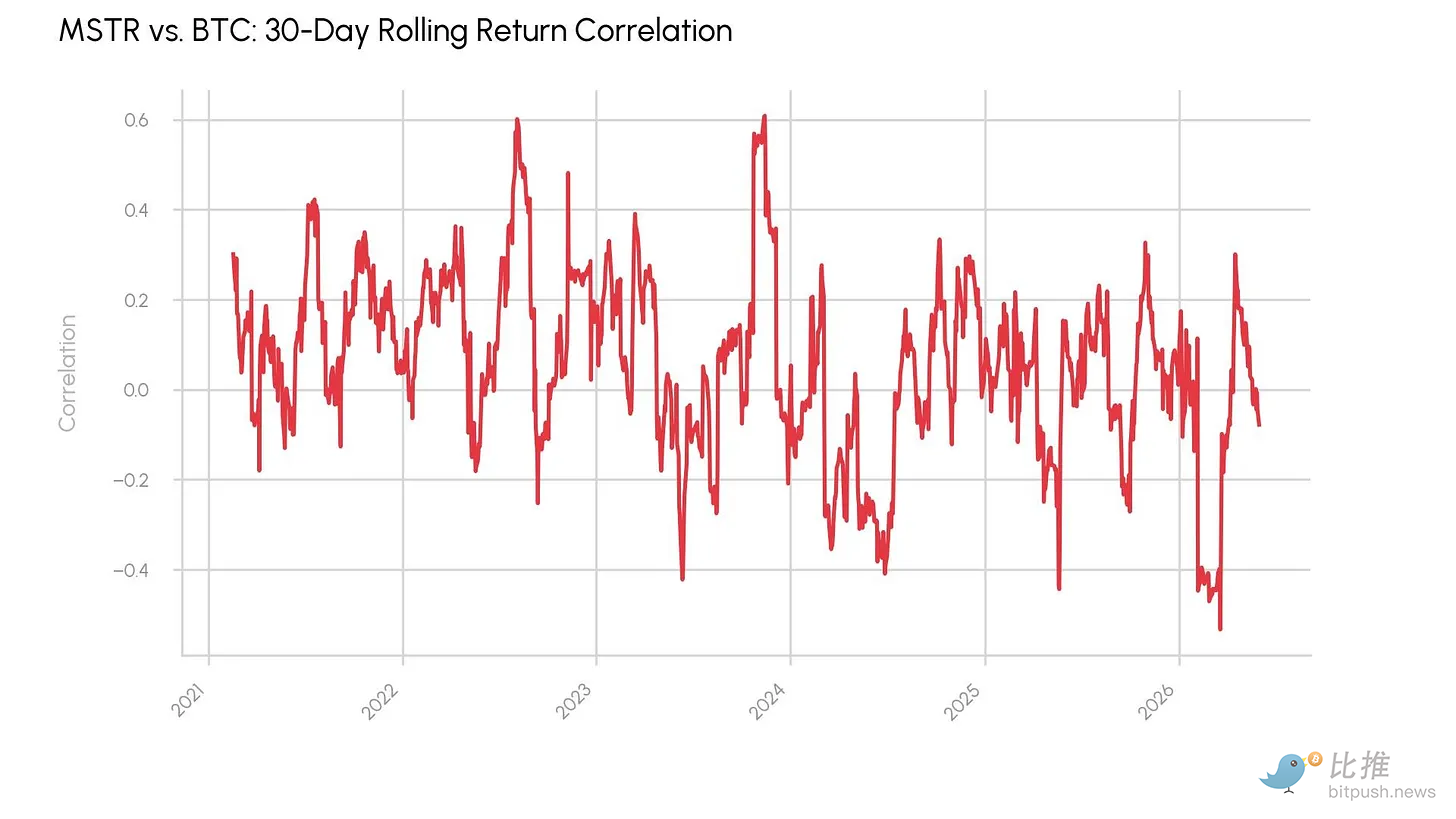
The company focuses on tracking the “Bitcoin per share” (BPS) indicator, which is the corresponding amount of bitcoins per share (calculated in Satoshi), assuming that all convertible bonds, preferred shares, options, etc. are exercised. However, the correlation between MSTR's stock price and Bitcoin price is only 0.09, which is a weak correlation, indicating that there are other factors driving the stock price.
One of the key factors is operational risk. The company must permanently pay dividends on preferred shares, and can also repay principal and interest on convertible bonds. However, holding Bitcoin alone did not generate stable revenue, and the company's software business generated only $124 million in the first quarter of 2026. How to focus on buying coins while continuing to meet the growing needs of creditors?
The shift to “never sell Bitcoin”
In February 2025, StrategyCEO Michael Saylor posted on social platforms stressing “Never sell your bitcoins.” Prior to that, the company had only sold 704 bitcoins once in December 2022 to offset capital gains. From May 26 to 31, 2026, the company announced the sale of 32 bitcoins; from June 29 to July 5, it sold 3,588 bitcoins. These sales represented only 0.42% of total holdings and generated approximately $218.5 million in revenue.
Selling bitcoins is not the norm for companies, so why break the rules this time? Proceeds are mainly used to pay dividends on preferred shares and supplement US dollar reserves (cash buffers set up by the company to cover dividends). The smaller sale doesn't mean the company is in trouble. Notably, the company also purchased three bitcoins in June, totaling 3,657.
Bitcoin Monetization and Reserve Management
The US dollar reserve was established in December 2025 specifically to pay dividends on preferred shares, which is mainly replenished through an on-market offering (ATM) program to issue common shares. As of June 28, the company expects the $2.55 billion reserve to cover all preferred stock dividends and interest on bonds for about 17.4 months.
Last week, the company officially approved the “Bitcoin Monetization Plan,” authorizing the sale of up to $1.25 billion in bitcoins to replenish reserves. This indicates that the company is moving towards more proactive balance sheet management, using Bitcoin sales in combination with equity issuance.
In June 2026, Saylor stated at the Goldman Sachs Digital Asset Conference in London that Bitcoin's role as collateral is increasingly important in creating “digital credit.” He mentioned that he had used Bitcoin collateral to finance the purchase of 175,000 bitcoins during the market downturn. The company is exploring new ways to use Bitcoin as a collateral asset or dividend payment resource.
Trade execution optimization: cross-platform selling can reduce losses
If the company continues to sell bitcoins to pay dividends, using a gradual, decentralized approach and execution on multiple exchanges, it can significantly improve the actual transaction price. The Bitcoin monetization plan allows the sale of up to $1.25 billion in bitcoins, which is equivalent to about 20,000 bitcoins at the current price of about $63,500, accounting for about 2% of current holdings.
Cross-exchange transactions reduce price shocks
There are differences in the median price and order book depth between exchanges, which provides room for arbitrage, and also means that decentralized transactions can reduce the impact of a single large order on the price.
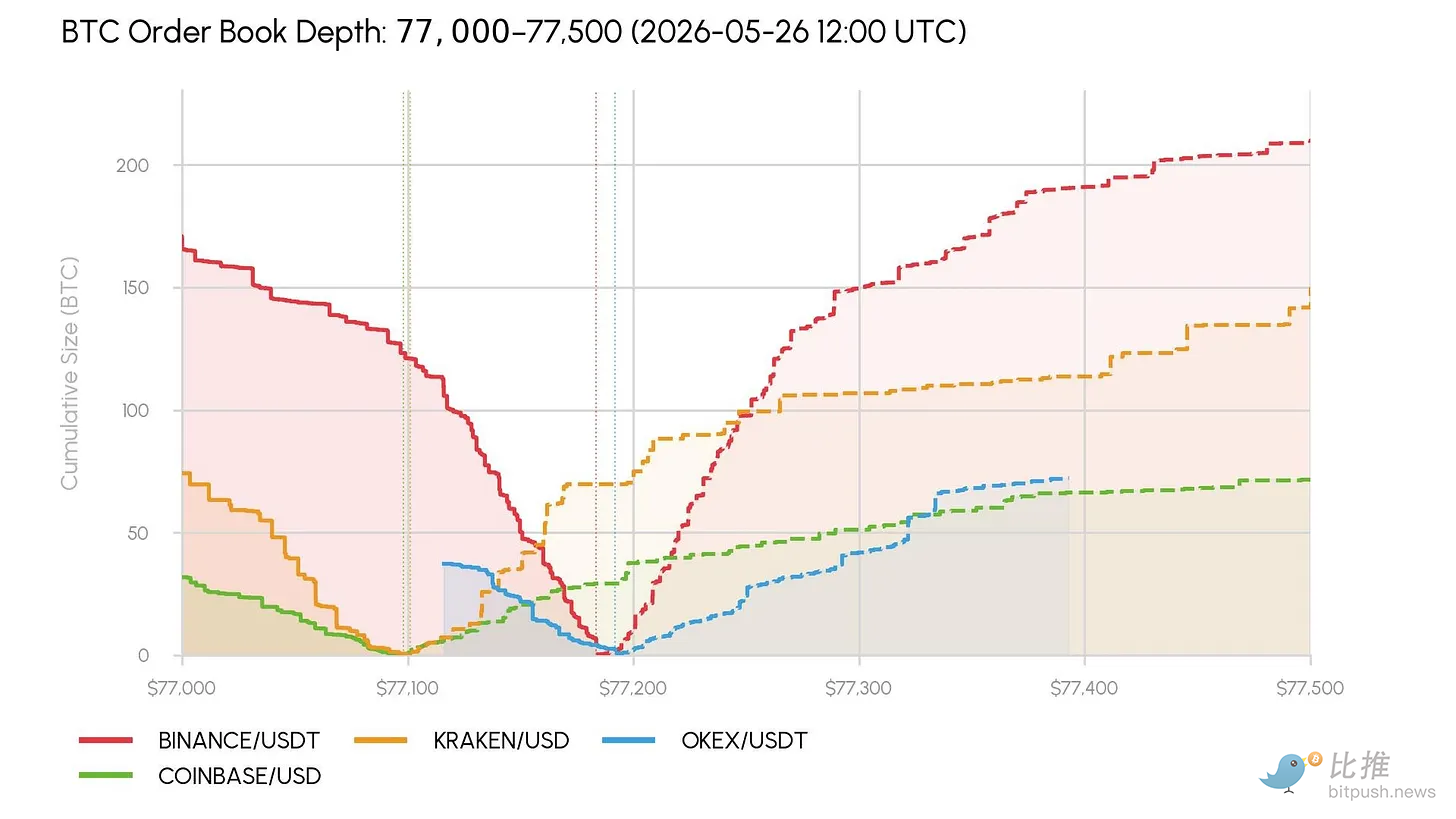
Near the point where the company was likely to sell 32 bitcoins (average transaction price of $77,135), we compared the four most liquid Bitcoin order books (near 1% depth of the median price). Binance-USDT has a deep lead order book with around 2,900 bitcoins, double that of second-place Coinbase. To push the price up 0.1% to 1% from the median price, Binance-USDT requires around 300 bitcoins, while OKEX-USDT requires only 40.
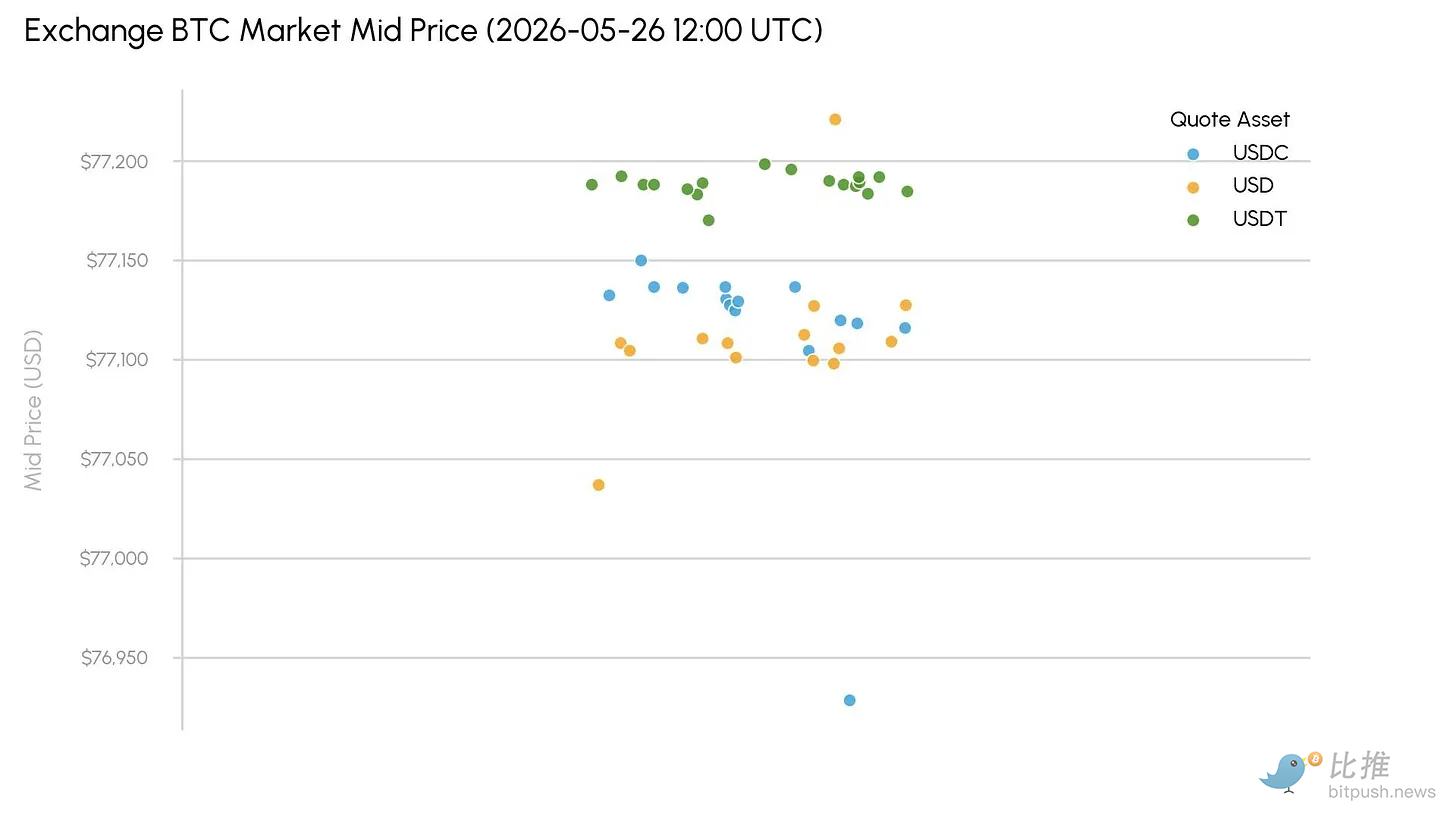
There are also differences in the median price between exchanges: the USDT price market is about 77,188 US dollars, and the USD and USDC price markets are about 77112 US dollars and 77115 US dollars, respectively. The price of Bitcoin itself and the quoted currency will affect the final transaction. Unifying the liquidity of various platforms and selecting order books with minimal price fluctuations can help achieve better prices for large sales such as the recent 3,588 bitcoins.
conclusions
Strategy's creditor obligations continue to grow, and Bitcoin sales are becoming a regular means of meeting these obligations. For STRC alone, the annual dividend cost could be as high as $3 billion. Maximizing the sale value of bitcoins helps reduce the amount of bitcoins that must be sold to pay dividends.
In the short term, dollar reserves, Bitcoin monetization plans, and more proactive balance sheet management provided sufficient buffer for the company. In the long run, developing Bitcoin collateral and other financial products that revolve around Bitcoin holdings can reduce the pressure to sell or dilute shareholders' equity on a large scale. Therefore, the sustainability of Strategy's capital structure depends not only on the price performance of Bitcoin itself, but also on whether the financial market supported by Bitcoin can further mature.
Twitter:https://twitter.com/BitpushNewsCN
Compare the TG exchange group:https://t.me/BitPushCommunity
Compare TG subscriptions:https://t.me/bitpush
