恒大 · 59

Xu Jiayin was sentenced to life imprisonment and Evergrande Group fined 8.82 billion yuan

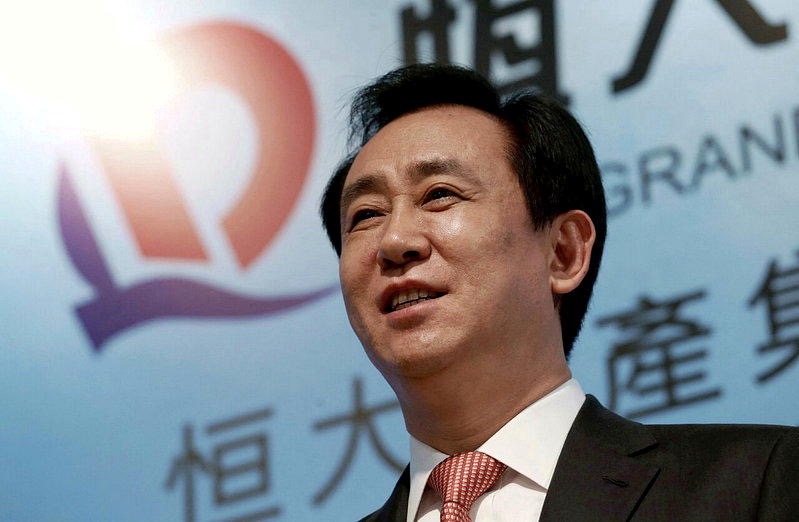
Comparatively, on the morning of August 20, 2026, the Shenzhen Intermediate People's Court of Guangdong Province handed down a public verdict in the first instance of the case of Evergrande Group Co., Ltd., Evergrande Real Estate Group Co., Ltd. and defendant Xu Jiayin. The court punished Evergrande Group for several crimes, with a fine of RMB 8.82 billion; a fine of RMB 7 billion for Evergrande Real Estate; Xu Jiayin was punished with a combination of crimes, life imprisonment, deprivation of political rights for life, and confiscation of all personal property; and continued to recover the illegal proceeds, and ordered compensation for the shortfall. The court found that Xu Jiayin is the actual controller of Evergrande Group. Between 2016 and 2021, Evergrande Group, Evergrande Real Estate and Xu Jiayin inflated assets, concealed liabilities by means of financial fraud, carried out crimes such as illegal absorption of public deposits, fund-raising fraud, fraudulent issuance of securities, and illegal disclosure of important information; obtained control of financial institutions through bribery, and illegally withdrew credit and insurance funds. Xu Jiayin also used his position to facilitate organizational financial fraud and usurped the company's assets in the name of dividends. The court found that the relevant acts seriously disrupted the order of the market economy, that the amount of the crime was particularly huge, the circumstances were particularly egregious, and that they were severely punished according to law. On the same day, two courts in Shenzhen also ruled on cases involving Evergrande involving illegal absorption of public deposits and fund-raising fraud. 56 people, including Zhen Litao, Ke Peng, Xu Tenghe, and Xu Zhijian, were sentenced to fixed-term sentences ranging from 18 years to 1 year and 10 months, as well as fines or confiscation of property.
2d ago
Xu Jiayin destroyed the second generation of Northeast China's wealth of 4.2 billion

Xu Jiayin destroyed the second generation of Northeast China's wealth of 4.2 billion

Source: Phoenix News Finance “Company Research Institute” Recently, a ruling by the Hong Kong High Court brought an old account that had been sunk for five years back to the table. Yingjia International Real Estate applied to the court for an injunction to stop Evergrande's liquidators from collecting the debt, but it was rejected. The liquidators wanted HK$5.97 billion, with principal and interest. And behind this huge dispute is a fixed growth game that took place during the peak of Evergrande Auto. In 2021, a second-generation wealthy person from Northeast China paid out 4.2 billion yuan, and Evergrande shares in exchange were nearly zero. What was thought to be just a bridge loan was turned into a huge debt of nearly HK$6 billion hanging over an offshore shell company. Cross-border crossing of HK$01 billion, a seemingly seamless closed loop. On January 24, 2021, Evergrande Motor issued an announcement to complete the IPO with six subscribers. A total allocation of 952 million shares, or HK$27.3 per share, raised a total of HK$26 billion. At that time, Evergrande Auto's market capitalization once surpassed 600 billion Hong Kong dollars, putting pressure on BYD and topping the domestic car companies' market capitalization list. Heyirong International Trading Co., Ltd., controlled by Wang Kaiguo, born in 1989, is also one of the subscribers. It promised to invest HK$5 billion to win about 183 million new shares, with a 12-month sales ban. The paper agreement has been settled, yet the financial problem is looming. It is necessary to mobilize funds in the amount of HK$5 billion to participate in Hong Kong stock subscriptions. The formal foreign exchange approval cycle is long, and Xu Jiayin cannot wait. Add up the two sides and come up with a quick way to pay. The whole process was implemented in three steps. The first step is domestic loans. In March 2021, Heyirong signed a RMB loan agreement with Evergrande, and Heyirong lent funds equivalent to HK$5 billion to Evergrande. From April 7 to 9, Heyirong remitted a total of RMB 4.2 billion to the Guangzhou Kailong Real Estate Co., Ltd. account designated by Evergrande in three transactions. Based on the exchange rate on the day of the transfer, it was just HK$5 billion. The second step is overseas loans. Also in March 2021, Guoxiong Holdings, a subsidiary of Evergrande, signed a loan agreement with Yingjia International Real Estate, wholly-owned by Wang Lihua. Guoxiong loaned HK$5 billion to Yingjia for a period of two years, repaid on a regular schedule without interest, and accrued interest on a 4% annual interest rate. From April 7 to 9, the HKD was also credited to the Yingjia account in three installments. The third step is to complete the IPO. After receiving HK$5 billion, Yingjia immediately transferred the full amount to Hongchang International Trade, another Hong Kong entity controlled by Wang Kaiguo. On April 9, Hongchang International successfully obtained Evergrande Motor's share certificate for 183 million new shares. According to Yingjia International Real Estate's claim in the lawsuit, there was an internal agreement between Evergrande's former management and Yingjia International Real Estate that no actual repayment was required for the above loans. However, on January 29, 2024, the Hong Kong High Court issued a winding-up order for China Evergrande. The liquidator took over the assets and contract files, and this loan agreement with complete procedures and complete settlement of funds was overturned. The old management's verbal tacit agreement was not binding on the liquidators. The contract is written in black and white with a principal amount of HK$5 billion and 4% overdue interest. This is a real claim with legal effect. In May 2025, Guoxiong Holdings officially issued a letter requesting Yingjia International Real Estate to repay nearly HK$6 billion in principal and interest. Yingjia refused to comply with the contract and in turn applied to the Hong Kong High Court for an injunction in an attempt to prevent Guoxiong Holdings from filing a winding-up petition. During the trial, Yingjia International Real Estate changed its arguments several times. First, they claimed that the loan was a false transaction, then changed their rhetoric to saying that there was a special funding arrangement, and finally put forward the core statement: the two parties had an oral subsidiary agreement exempt from enforcement. In response, presiding judge Chen Jingfen found that the oral subsidiary agreement claimed by Yingjia was “recently fabricated,” and rejected all of its defenses one by one. Chen Jingfen said that the loan contract signed in writing in the case and the funds were paid in full constituted a real claim. It was impossible to deny the legal effect of the formal contract based only on an oral agreement claimed by one party afterwards. The execution of the judgment on August 7 means that Evergrande's liquidators can officially commence the winding-up procedure against Yingjia and recover nearly HK$6 billion in claims. However, Yingjia itself is only an offshore shell company; it is still unknown how many actual assets it has that can be executed under its name. These offshore shell companies often only assume the functions of holding shares and transferring capital, making it difficult to get a glimpse of the real trading context of Fujia. To understand the private capital giant's layout in the A-share market, we also need to start with Wang Kaiguo, the core agent who was pushed to the front of the stage. 02 He took 5 directors' seats at age 32 and quietly left the market on April 21, 2021. Financial Street Holdings issued a director candidate announcement. The name “Wang Kaiguo” first appeared in the official disclosure documents of A-share listed companies. Five days later, on April 26, Goldwind Technology announced the “Proposed Election of Non-Executive Directors” on the Hong Kong Stock Exchange...

3d agoWendy#Evergrande #BYD #Wang Kaiguo #Xu Jiayin

Citron Research founder's sentencing hearing will be held on August 31, with a maximum sentence of 265 years

Comparative news, according to Caixin reports, the sentencing hearing for Andrew Left (Andrew Left), the founder of Citron Research (Citron Research), a shorting agency famous for its shares in the air, has been scheduled to be held on August 31, 2026. The maximum theoretical sentence can reach 265 years, and the final sentence will still be decided by the court based on specific circumstances. Left has sniped more than 20 Chinese securities companies, including New Oriental, Qihoo 360, Evergrande Real Estate, Southeast Rongtong, and China High Speed Media, and almost never failed in its shorting reports in the early years, but since then, compared to peers such as Mudwater Company, Citron's reports have often been accused of being flawed, and has been banned from the Hong Kong market for five years by the Hong Kong Securities Regulatory Commission. The prosecution alleges that Lift often uses short-term options that expire within 0 to 5 trading days to bet that the stock price fluctuates within a very short period of time after the report or tweet is posted, and that the exit price is often far from Citron's stated target price. The stocks involved include Nvidia, Tesla, Facebook, General Electric, Lucky Coffee, etc.

65d ago
Asset Allocation for the Year of the Horse: Three Market Strategies for US Stocks, Taiwan Stocks, and Bitcoin

Asset Allocation for the Year of the Horse: Three Market Strategies for US Stocks, Taiwan Stocks, and Bitcoin

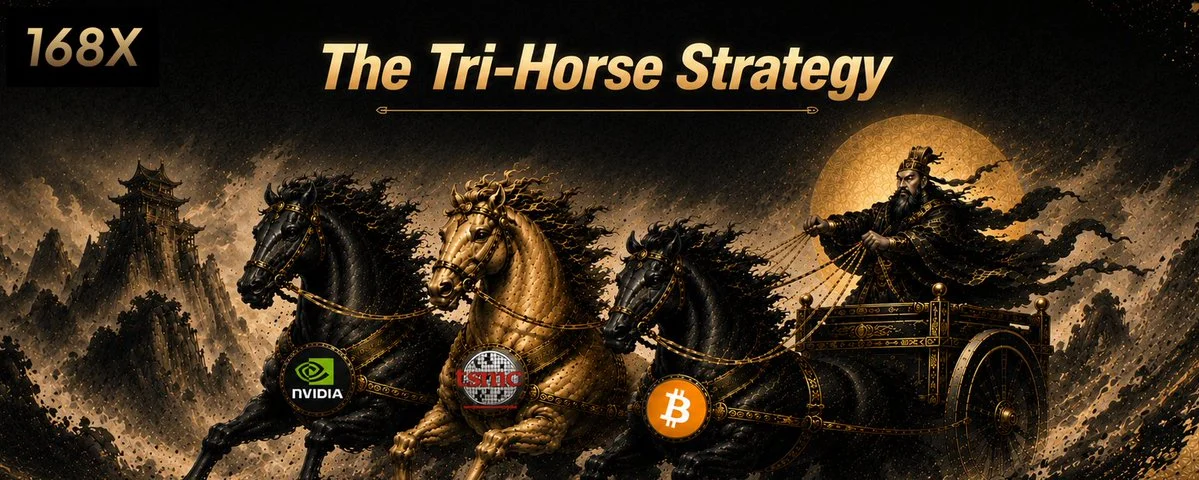
Author: Victor, Mr. Z, 168X Original title: “Troika” Investment Law in the Year of the Horse: Three Market Allocation Strategies for US Stocks, Taiwan Stocks, and Bitcoin “AI is the largest infrastructure construction in human history. Currently, the world has invested hundreds of billions of dollars, but this is only the beginning; trillions of dollars of infrastructure still need to be built.” ——Huang Renxun, 2026 Davos Forum Semiconductors directly formed productivity for the first time in 40 years. The entire supply chain is completely out of stock, and TSMC orders have already been placed after 2030. Wall Street is still using the old valuation model to call a bubble; this is our perception of interest spreads. The troika is a cross-market allocation framework proposed by 168X: US stocks, Taiwanese stocks, and crypto. It constructs a nested barbell structure around the three major players (NVIDIA, TSMC, and BTC), and systematically lays out AI and cutting-edge technology. There is only one core discipline: all transactions are aimed at hoarding more leaders. If you believe in the “second phase” of semiconductors like us, and are unwilling to only get big market rewards and pursue excessive returns with high growth and high impact, the troika is an exclusive investment framework for 2026 designed for you. 1. The second phase of semiconductors is preparing to launch a conversation at 168X, citing former Goldman Sachs FICC executive and founder of Zen Family Office Herman Jin (Related reading: Interview with former Goldman Sachs FICC executives: When semiconductors are out of stock, the good ones are the catchers! (Optical modules should be sold out): “For the past 40 years, semiconductors have driven PCs, mobile phones, and the cloud, but they have never directly generated revenue. Humans develop software on semiconductors, and software users generate productivity. But starting with this generation of AI models, semiconductors directly shaped productivity.” This trend began to take shape in 2024, and was later confirmed at TSMC's Q1 conference in 2026, with a CapEx of up to $52-56B. As Hwang In-hoon said, the infrastructure layer is organizing tens of thousands of processors into token factories to directly “create intelligence.” Computing power is production capacity, and production capacity is revenue. After talking with Herman, we are even more convinced that semiconductors have just finished the first phase, and now the key is how to bet on the second phase. The first stage is “discovery.” The market realized there was a real demand for AI. NVIDIA went all the way up from $12 to $150, and modelers' private equity valuations soared. TSMC's calm pace of production expansion in the first three years suppressed the bubble, causing all manufacturers to have very high gross profits, and the semiconductor supply chain to rise across the board. The second stage is “repricing,” which is now. The second phase of the troika bet is based on three core concepts: 1. Under the AI infrastructure cycle, the semiconductor supply chain should be scarce. According to Hwang In-hoon's “AI Five-Layer Cake Theory”: energy, chips, infrastructure, models, and applications, every successful AI application will drive down the demand of the five layers. As we can see, the wave of semiconductor shortages has spread from chips and advanced packaging to various components and assembly plants, causing prices to rise dramatically throughout the supply chain. Orders from TSMC have been scheduled for 2030, and the shortage will continue for a long time. 2. Perceived interest spreads: Wall Street has yet to understand the importance of CapEx. In 2026, the four cloud giants CapEx collectively surpassed $700 billion, an annual increase of 77%, but Wall Street has yet to keep up. Over the past few decades, Wall Street's valuation logic was “light assets, high gross profit, and low CapEx,” and seeing a decline in cash flow, it was instinctively a bubble. However, AI turned the company into a token factory. Without CapEx, there would be no production capacity, and without production capacity, there would be no revenue. When the valuation model catches up with actual perception in the industry, companies that are now in production regardless of cost will be drastically upgraded. This is the second phase of alpha. 3. Anthropic and OpenAI are not yet available. Anthropic and OpenAI's private equity valuation is close to $1 trillion, and model revenue continues to rise. Anthropic's ARR (annualized revenue) has doubled tenfold over the past 12 months to reach $19 billion, and OpenAI's ARR surpassed $25 billion in February this year. Giants' IPOs will pose a huge liquidity siphon risk for the market, but strong revenue means they may delay listing. In other words, the risk of the entire industry being killed before these giants go public is lower. II. Why traditional investment laws aren't enough to face AI and semiconductors in 2026...

93d agoLuxurytracy#US stock topics
Don't touch the parabola: three “asymmetric” ways to smartly short bubbles

Don't touch the parabola: three “asymmetric” ways to smartly short bubbles

Author: Campbell, Macro Analyst Compiled by: Yuliya, PanNews Original title: When a bubble hits, how to “smartly” short? Editor's note: Recently, the US stock memory chip sector has become the main focus of the technology market, and the stock prices of companies such as Micron Technology, SK Hynix, and SanDisk have continued to rise sharply. Meanwhile, the debate over whether AI has entered the bubble phase is heating up again. There are many opinions in the market: Dan Niles, a well-known chip analyst during the Internet bubble, believes that the current development of AI is closer to the mid-sprint period of Internet infrastructure construction in 1997, rather than the end of the bubble in 1999. He pointed out that the rise of AI agents is driving a sharp increase in demand for computing power. Although short-term valuations of chip stocks are high, they still have potential for the long term. Hedge fund legend Paul Tudor Jones also predicts that the AI bull market is now about 50% to 60% over, and may continue for another year or two. In contrast, Michael Burry, the prototype of the main character in the movie “The Big Short,” warned that the current market is highly similar to the day before the Internet bubble burst in 2000. At a time when fanaticism and concern are intertwined, and the bosses are holding their own opinions, if a bubble does exist, how exactly should we deal with it? The author of this article shared a hard-core practical guide on “How to Empty a Bubble” based on his own experience. The following is the original article: Honestly, I don't know if we are in a bubble now, and I'm not even sure if this is a known issue. I'm pretty much what you've learned: the AI revolution is real. Although I quit my professional investment career and have been writing relevant content for the past three years, I still don't think I've done enough. I looked around like you and saw that many people became extremely rich just by connecting tokens in series to create AI applications (or investing in infrastructure projects that provide garlic grains to generate these tokens), which made me feel cold and jealous. This then led to a feedback loop where I couldn't tell if my views were being influenced by jealousy or if jealousy was telling me a fact I already knew: “Keep going long.” To some extent, I do think “the future is here, we need massive computing power”, so you really want to buy these assets. I don't think software stocks are performing well, and the market is selling off these stocks, so there's nothing to be gained from that area. Like you, I am also concerned about the ultra-undervaluation of Korean stocks, and I am very interested in opening up their market. This is obviously inextricably linked to the recent rise in the stock market. I was also surprised that the government quietly relaxed the supplementary leverage ratio (eSLR). Banks and funds were allowed to hold less regulatory capital to buy US bonds. This is simply a classic release of water covered in sheep's clothing. I can imagine one day interest rates rising enough to remove this “liquidity feast,” but that's not yet the time. I can also imagine that the war would end this feast. The sharp fluctuations there shocked me from the rising market, so who knows what the future holds. I can also imagine that Bank of Canada stocks, which have a net market ratio of up to 3 times and low volatility, are an excellent shorting opportunity, but due to lack of trading channels and long-term enough options, I can't write a good article to provide everyone with something interesting. Frankly speaking, there's a lot more I can't say here. This doesn't change my fundamental view of trends, but it does greatly limit the people and things I can talk about here. If you know Andreesen's “stop domestic consumption” theory, you'll know that my worried personality meant I'd never become a billionaire. But there's one thing I know how to do. This is also a little bit of alpha benefit I can give you. We're not going to discuss whether we're in a bubble today, but rather how you can empty a bubble if you want to. Why is it so difficult to empty a bubble? What is a bubble? If something looks like a bubble, sounds like a bubble, moves straight into the sky like a parabola, and requires higher and higher expectations and leverage to keep prices rising, then it's a bubble. Why is the bubble so difficult to short? The problem is that the easiest thing to short is the kind of thing where the fundamental shortfall is gradually known to the public, and then it falls all the way down and eventually collapses. In the process, you may run short (bears are forced to buy and close positions, leading to a sharp rise), but this instead provides you with a good opportunity to increase and short positions, because sooner or later, this thing will return to zero. But shorting the bubble is something else entirely. When the price of an asset soars in an unsustainable manner, your exposure to shorting increases exponentially as the price rises. If you don't believe me, ask about the 2008 air protection period...

100d agoburnking#US stocks #chips
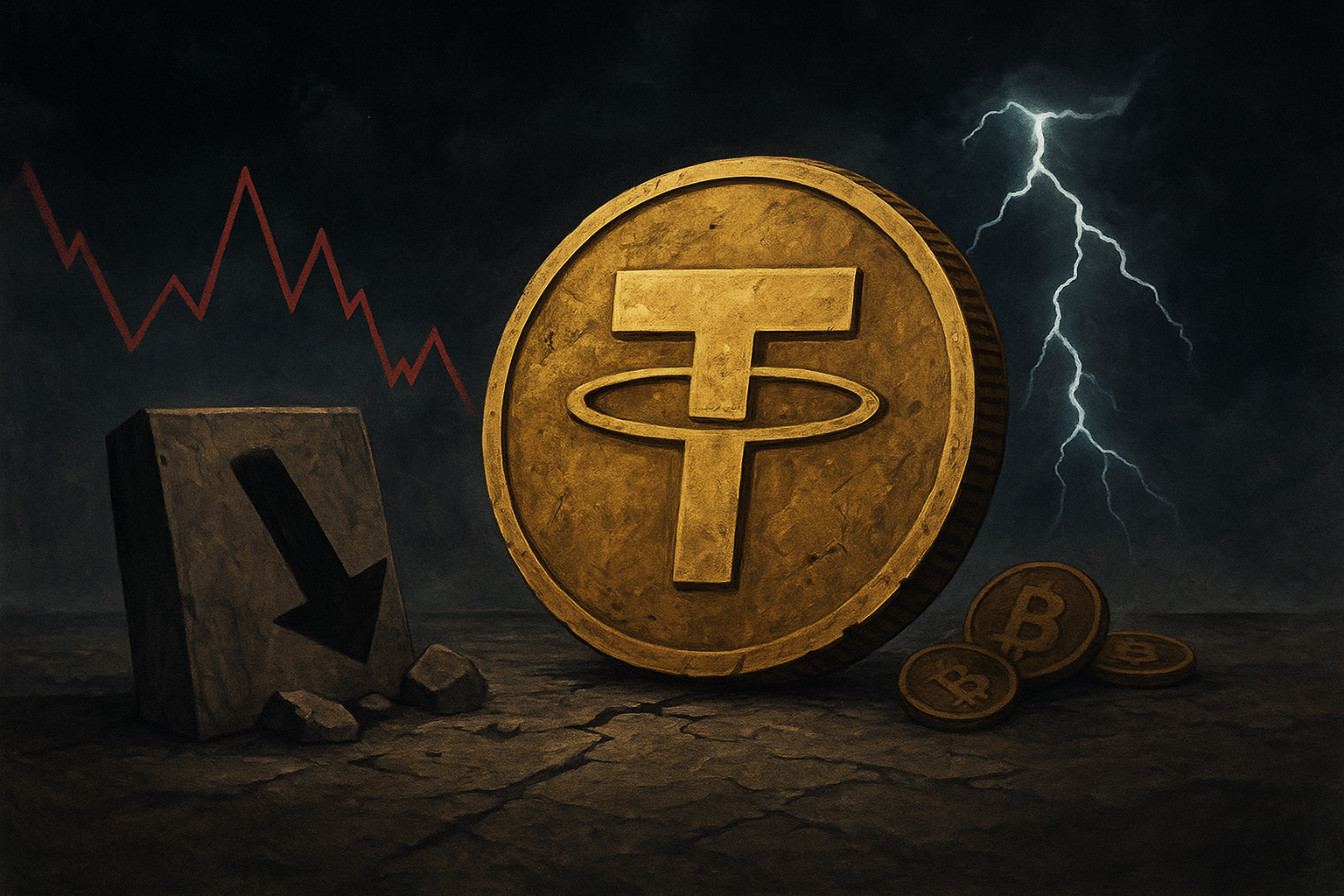
Tether's decade-long gamble: From stablecoins to the crypto world's “shadow central bank”

Tether's decade-long gamble: From stablecoins to the crypto world's “shadow central bank”

Author: BlockWeeks Original Title: Tether's 10-Year Gambling Game: How to Transform from a “Stablecoin” to a “Shadow Central Bank” in the Crypto World? What supports the liquidity of the $2.6 trillion crypto market is not a country's sovereign credit, but rather a private company headquartered in Hong Kong and Switzerland, and eventually settled in El Salvador — Tether. The US dollar stablecoin USDT it issues accounts for more than 70% of the market share. Over the past decade, it has grown amidst crises and questions, and now it is trying to define the boundaries of the industry with profit. But a “weak” rating warning from S&P Global once again revealed the core contradiction of this grand experiment: a monetary instrument aimed at “stability” itself is becoming the system's biggest risk point. It's like an elephant dancing on a steel wire. The base is 100 billion US dollars in US debt, but the dance steps are an adventure invested in AI, brain-computer interfaces, and farmland in Argentina. —— This is what the BlockWeeks editorial department said. Part 1: Chronicles of Crises — The history of Tether, the fragile cornerstone of trust, is a cyclical history of continuous questioning and continuous response to questioning with greater volume. Each crisis was viewed as its “end moment,” but the result was a ladder for consolidating its position. In 2017, the prelude to “hacking” and “money printing” doubts. On the eve of the big crypto bull market, Tether claimed to have been hacked and $31 million worth of USDT was stolen. It then exercised its centralized power — hard forking to freeze assets. This incident revealed two key facts to the market for the first time: Tether has the power to live and kill assets on the chain; the outside world knows nothing about whether it actually holds full dollar reserves. In the same year, academic research first established a statistical correlation between the increase in USDT and the rise in Bitcoin prices, and the “conspiracy theory” of “Tether printing money boosts the market out of thin air” planted the seeds. In 2019, New York's “real hammer” and $850 million hole. This is the darkest time for Tether to trust. An investigation by the New York State Attorney General's Office (NYAG) revealed a crack under Tether's gorgeous appearance: its parent company iFinex misappropriated at least $700 million in user reserves to cover the deficit caused by the freezing of the associated exchange Bitfinex as a result of the freezing of payment service provider Crypto Capital. The survey confirmed that USDT was only backed by about 74% cash and equivalent at the time, not the “1:1” it claims. In 2021, Tether settled with a $18.5 million fine and cessation of operations in New York. “Although misconduct is not acknowledged, allegations of fraud have gone from market rumors to judicial files.” In 2021, the “commercial paper” mystery and regulatory iron fist. As the market capitalization surpassed tens of billions of dollars, one question became acute: where is the money? Tether revealed that it holds a large number of commercial paper (CP), which is large enough to make it one of the world's largest holders. The market panicked and suspected that it held a large number of short-term bonds from high-risk companies such as Evergrande. The US Commodity Futures Trading Commission (CFTC) then fined Tether $41 million for “making false or misleading statements about reserves.” Under pressure, Tether emptied all commercial paper in 2022 and switched to more transparent US Treasury bonds. 2022: Market turmoil and a “brief period of failure.” In May 2022, in the midst of a chain panic triggered by the Terra/UST collapse, Tether once fell below the US dollar anchor on some exchanges (the lowest transaction price was about $0.95 or even lower), and large-scale redemptions and fluctuations occurred. Although USDT stabilized in the end, this incident showed that under extreme market pressure, “mainstream” reserve-backed stablecoins can also experience brief market distortions. “Looking back at this history, you'll find that Tether's 'increased transparency' was forced by crises and regulatory lawsuits.” According to the BlockWeeks analysis, “Every time it was pulled back from the edge of a cliff and then it got bigger. This has shaped its unique culture of risk: extremely averse to external audits, yet extremely good at surviving regulatory gaps.” Part 2: Dangerous Metamorphosis — From “Stable” to “Aggressive” If past crises were about “not enough reserves,” then current concerns have turned to “what are reserves” and “where are profits going.” Tether is completing a dangerous strategic transformation: from a conservative currency custodian to an aggressive crypto-era “chaebol”. 1. Balance sheet restructuring: When stablecoins fall in love with Bitcoin and gold...

261d agoLuxurytracy#Tether #stablecoins
Han Feng: BTCD can play an important role in future listed companies in dealing with debt crises

Han Feng: BTCD can play an important role in future listed companies in dealing with debt crises

(This article was rearranged based on Han Feng's speech at the DBS Bank Tower RWA Forum in Lujiazui, Shanghai) 1. Introduction: Starting from personal experience, focusing on the debt crisis and the value of BTCD, I'd like to talk to you about some practical topics today. Everything is based on my personal experience. Over the past many years, I have always been concerned about the relationship between Bitcoin and the debt crisis. From initially being questioned by the traditional financial community, to today's changes in global attitudes towards cryptocurrencies, to exploring BTCD solutions in actual combat, I hope to bring you new thoughts on dealing with the debt crisis of listed companies. 2. A shift in perception: From “questioning Bitcoin” to increasing global recognition (1) Clash of ideas in the early years: Traditional finance's exclusion of cryptocurrencies in the early days of cryptocurrency development, I was directly opposed by traditional financiers for recommending the allocation of Bitcoin. They insisted that “money can only be issued by the central bank” — this is the core creed in college finance textbooks, and it seems irrefutable. At a financial forum in Shanghai in 2016, a leader of the Financial Services Administration also strongly persuaded me: “The central bank must have exclusive rights to issue currency before implementing monetary policy.” At the time, these views sounded logical and rigorous, but subsequent global financial practices gradually overturned this “single perception.” (2) 180-degree shift in attitude: US and Harvard's approval 1. US policy shift: Now the US has clearly confirmed that Bitcoin can be used as a national reserve asset, and sees stablecoins as an important means to resolve the US debt crisis. This transformation proves that excluding the financial role of Bitcoin and cryptocurrencies will drastically reduce the country's monetary policy choice space, and even fall into a “stuck neck” passive situation in trade wars. 2. Harvard resonance: In 2024, in order to clearly explain the value of Bitcoin, I made a special trip to Harvard University to talk with Yale directors and Harvard alumni about “solving the global debt crisis.” After I proposed the core logic of Bitcoin, not only was it approved by them, but I also encouraged the NBW (New Bretton Woods) team to successfully obtain incubation approval from the Harvard Innovation Center under the advice of Professor Harvard Xue (for example, going to the Cuiyuan Hotel in Boston). 3. High level concern: Even President Trump has begun to focus on Bitcoin and stablecoins — essentially, traditional “central bank money” methods are no longer sufficient to resolve the current debt crisis, and cryptocurrencies provide a new path. 3. The nature of the global debt crisis: the 100-year cycle and the failure of traditional solutions (1) Radalio's core judgment: the once-in-a-century crisis Ridalio, founder of the Bridgewater Fund, concluded through massive data in “Debt Crisis” that the world is currently facing a global, deep, large-scale debt crisis once in a century. Unlike a “minor crisis” every 10 years (such as the 2008 financial crisis), the scale and depth of impact of this crisis far exceeds that of the past, and is an “overall crisis level cycle.” (2) Limitations of traditional solutions: “printing more money” cannot cure the root causes of debt crises. Traditional methods are essentially “injecting liquidity through printing money”, such as: · The world's mainstream “quantitative easing” policy; · China's 4 trillion bailout plan launched in 2008. However, these methods are largely ineffective for the “once-in-a-century crisis” — the last crisis of a similar level was the Great Depression of 1929, which ultimately required World War II to break the cycle, which is enough to explain the limitations of the traditional path. 4. The key to breaking the game: The core value of hard currency (gold, Bitcoin) (1) The essential advantages of hard currency: increasing liquidity without increasing debt, Ridalio clearly stated in “Debt Crisis” that to resolve a century-level debt crisis, it is necessary to rely on hard currency (such as gold and Bitcoin). The core reason is: · Hard currency can provide capital liquidity to the market and will not increase the debt of any party; · The opposite of the logic of traditional banking systems: capital injection and “borrowing” will inevitably lead to an increase in debt accumulation, which ultimately results in high and difficult debt accumulation. (2) Historical references: Implications of the Bretton Woods system The 1944 Bretton Woods system essentially “anchored hard currency gold to issue dollars” — according to today's blockchain logic, it is equivalent to “anchoring gold to issue stablecoins”. It relied on this model to resolve the global debt crisis at the time. This historical experience proves that the crisis cannot be solved by “the central bank's exclusive issuance of currency”; it is necessary to combine “hard currency” with market consensus to find a way to bail out the market. (Note: Bretton Woods is small...

315d agoWendy#BTCD #RWA #debt crisis #Han Feng
USD hegemony 2.0: How can stablecoins support US finances?

USD hegemony 2.0: How can stablecoins support US finances?

Author: Chairman Rabbit/tuzhuxi Original title: A New Weapon for Dollar Hegemony: Stablecoins This week, President Trump and the crypto industry will usher in the first major legislative victory in the cryptocurrency field: US House Republicans are preparing to accept the new stablecoin regulation bill proposed by the Senate (“Global Crypto Innovation Guarantee Act”, also known as the GENIUS Act). This is the first time that the US has introduced a stablecoin regulatory framework. One of the core elements is to require stablecoin issuers to ensure that tokens are linked 1:1 to the US dollar and reserve or invest the funds raised by issuing tokens in highly liquid US dollar assets, including cash, bank statements, and US Treasury bonds. The signing of the stablecoin bill will inject strength into the crypto industry and related markets, while supporting America's fiscal needs and maintaining the status of the US dollar (dollar hegemony). The cryptocurrency industry has been wandering in a marginal zone and grey area for many years and has never been integrated into the mainstream; its supporters have always hoped to obtain legislative approval from the US government and operate under an exclusive regulatory framework, which can further open the door for the participation of traditional/mainstream financial institutions and enhance the breadth and depth of the cryptocurrency market. Earlier, the crypto industry had been lobbying Congress for many years, never waited for the right time, and there was also a dispute over the central bank's digital currency (CBDC) route. Last year, they bet on supporting Trump in the general election. After Trump won the election, they finally waited for the right time to push the relevant legislation and become the biggest beneficiary of Trump's second administration. 1. “Good time and place”: Background of the introduction of the stablecoin regulatory framework The crypto/stablecoin industry itself is of course seeking development, but it also requires other conditions to obtain political recognition and government endorsement in the US. An important background for the introduction of the so-called “timely and geographical advantage” regulatory framework is that the US faces serious fiscal sustainability issues, and the status of the US dollar is under unprecedented threat. 1. The US fiscal deficit situation The US fiscal deficit for the 2025 fiscal year is expected to reach 1.9 trillion US dollars, accounting for 6.2% of GDP. This figure is a significant increase from previous years and is the result of the continuous expansion of US fiscal policy. The “Big and Beautiful Act” recently promoted and passed by the Trump administration is expected to increase the deficit by another 3.4 trillion US dollars over the next 10 years, further worsening the situation. Market opinion leaders such as Elon Musk in the corporate world and Ray Dalio in the financial world to J.P. Morgan Chase Jamie Dimon in the financial world have all pointed out that the US government's finances have been unsustainable for a long time, and the future is bound to cause a disastrous crisis. 2. How did the US treasury depend on US debt and the financial unsustainability of the US federal government trigger an economic and financial crisis? The core is to focus on US Treasury bonds, that is, the US government's ability to finance. In a deficit situation, the US government's way of meeting fiscal needs is through treasury bonds — including new issuance and refinancing. Currently, the balance of US Treasury bonds has exceeded 36 trillion US dollars, and 80% will mature in the next four years (about 7 to 10 trillion US dollars due each year). More than 80% of investors are market-based institutions. Issuance requires accompanying market entry, and there is real pressure to refinance. Some people say, can't US bonds be sold? What are the risks? The answer is, of course, US bonds can be sold, but the pricing of US bonds is highly market-based, and common sense of economics tells us that the price is determined by supply and demand. Assuming that the market demand for US bonds does not change, other conditions are equal, when the supply of US bonds increases and the supply exceeds the market's willingness to buy, then interest rates will increase — the US government should use higher interest rates to attract investors to invest and hold US bonds. Higher interest rates will only have one result: raising the US government's financing costs while driving up the overall interest rate of the market, increasing everyone's financing costs, thus harming the economy, and not only the US economy, but the global economy — everyone has to pay irresponsibly for the US treasury — this is another side effect of the US dollar's hegemony. Therefore, when we analyze the financial unsustainability of the US government, the final analysis is US debt, how can the US government maintain a large issuance volume at a lower interest rate. There are only two methods: either reduce circulation or let more people buy it. (The reduction in issuance volume is taken from the perspective of GDP. Assuming that the size of the fiscal deficit remains the same and GDP increases, it is equivalent to a reduction in relative issuance) 3. The root cause of harming the status of the US dollar and worsening the supply and demand situation of US bonds, then can the supply and demand problem of US bonds be solved? I'm afraid it won't work under the current framework. Distribution continues to grow, while demand continues to shrink. Next, let's do a brief analysis. 1) America's fiscal carnival and deficit politics. The “Big and Beautiful” Act pushes...

403d agoburnking#stablecoins #USD
An In-Depth Look at MicroStrategy's Opportunities and Risks: Davis' Double Click and Double Kill

An In-Depth Look at MicroStrategy's Opportunities and Risks: Davis' Double Click and Double Kill

Author: @Web3_Mario摘要: Last week, we discussed Lido's potential to benefit from changes in the regulatory environment, and hope to help everyone seize this wave of Buy the rumor trading opportunities. An interesting topic this week was the popularity of MicroStrategy's microstrategy. Many seniors commented on the company's operating model. After digesting and thoroughly researching, I have some opinions of my own, which I hope to share with you. I think the reason for the rise in MicroStrategy's stock price is due to “Davis's double click”, the business design of purchasing BTC through financing, binding the value-added value of BTC to the company's profit, and the capital leverage obtained by combining innovative design of traditional financial market financing channels has enabled the company to surpass the profit growth brought about by the appreciation of BTC held by itself. At the same time, as its holdings expand, the company has a certain BTC pricing power, further strengthening this profit growth expectation. The risk also lies in this. When the BTC market fluctuates or is at risk of reversal, BTC's profit growth will stagnate. At the same time, MicroStrategy's financing capacity will be greatly reduced due to the company's operating expenses and debt pressure, which in turn will affect profit growth expectations. At that time, unless new help can take over and further boost the BTC price, the positive premium of MSTR's stock price over BTC holdings will quickly subside. This process is also known as the “Davis Double Kill.” Why is Davis Double Click and Double Kill my friends who are familiar with it should know that the author is committed to helping more non-financial professionals understand these dynamics, so I will replay my own logic of thought. So first, let's add some basic knowledge about what “Davis double click” and “double kill” are. The so-called “Davis Double Play” (Davis Double Play) was proposed by investment guru Clifford Davis (Clifford Davis), and is commonly used to describe the phenomenon of a company experiencing a sharp rise in stock prices due to two factors in a favorable economic environment. These two factors are: l The company's profit growth: the company achieved strong profit growth, or optimization of its business model, management, etc. led to an increase in profits. l Valuation expansion: As the market is more optimistic about the company's prospects, investors are willing to pay a higher price for it, thereby boosting stock valuations. In other words, valuation multiples such as the price-earnings ratio (P/E ratio) of stocks expand. The specific logic driving “Davis Double Click” is as follows. First, the company's performance has exceeded expectations, and both revenue and profits are growing. For example, good product sales, increased market share, or successful cost control will directly lead to the company's profit growth. At the same time, this growth will also increase the market's confidence in the company's future prospects, leading investors to accept a higher P/E ratio, pay higher prices for stocks, and begin to expand in valuations. This positive feedback effect of a combination of linearity and index usually causes stock prices to rise at an accelerated pace, the so-called “Davis double hit.” To illustrate this process, let's say a company's current price-earnings ratio is 15 times, and its future profit is expected to increase by 30%. If investors are willing to pay 18 times the price-earnings ratio due to the company's profit growth and changes in market sentiment, then even if the profit growth rate does not change, the increase in valuation will drive the stock price to rise sharply. For example: l Current stock price: $100l Profit increase by 30%, which means that the profit per share (EPS) will increase from $5 to $6.5. l The price-earnings ratio increased from 15 to 18. l New share price: $6.5 × 18 = $117 The stock price rose from $100 to $117, reflecting the dual effects of profit growth and valuation increase. “Davis Double Kill”, on the other hand, is the opposite. It is commonly used to describe the rapid decline in stock prices due to the combined effects of two negative factors. The two negative factors are: l Decline in the company's profit: The decline in the company's profitability may be due to factors such as reduced revenue, rising costs, and management errors, resulting in lower profits than market expectations. l Valuation contraction: Due to declining profits or poor market prospects, investors' confidence in the future of the company declined, leading to a decline in its valuation multiples (such as price-earnings ratio) and a decline in stock prices. The whole logic is as follows. First, the company failed to achieve the expected profit target or faced operational difficulties, leading to poor performance and declining profits. However, this will further worsen the market's expectations for the future. Investors have insufficient confidence, are unwilling to accept the current overestimated price-earnings ratio, and are only willing to pay a lower price for the stock, leading to a drop in valuation multiples and a further drop in stock prices. Same example...

633d agoAlvin Liu#Davis Double Play #MicroStrategy
Bitcoin faces major opportunities in the shadow of the global economic crisis

Bitcoin faces major opportunities in the shadow of the global economic crisis

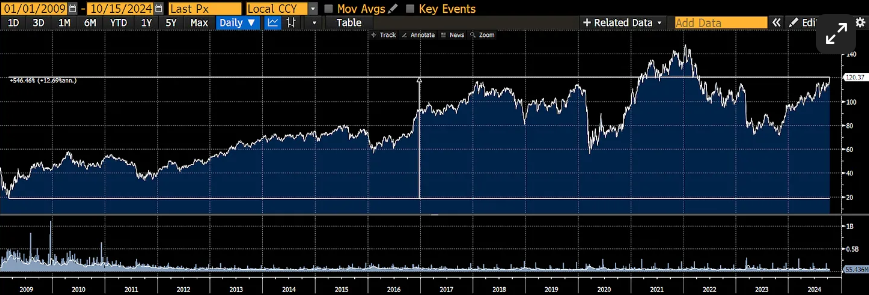
Original title: Let's Go Bitcoin Original Author: Arthur Hayes Original Article Source: https://substack.com/编译:Daisy, Mars Finance Wharton School of Business celebrates capitalism and American exceptionalism. Young students from all over the world are involved in this environment with dreams. Professors vigorously promote free market capitalism and the “rules-based” American peace order, which is maintained by Tomahawk cruise missiles. However, if you started your career in September 2008, like me, you'll soon discover that most of the education you've received is completely illusory. The reality is that this system isn't really an elite selection system — rather, companies that rely most on government support end up being the most financially successful. Capitalism is meant for the poor. The first lesson I learned from real capitalism — or what I now call “corporate socialism” — came after seeing which major investment banks flourished and which declined after the 2008 Global Financial Crisis (GFC). After Lehman Brothers went bankrupt, all banks in the US were bailed out through direct equity injections from the government. Although banks in Europe received secret financial support from the US Federal Reserve, they did not receive government equity injections or forced mergers funded through central bank loan guarantees until 2011. So, when my analyst class at Deutsche Bank received the 2009 annual bonus in February 2010, our bonus was a bit smaller than our friends working at Bank of America who had already pressed the “F9” button. This is the KBW Bank Index, which includes the largest commercial banks listed in the US. Since its low in March 2009 after the financial crisis, the index has risen by more than 500%. This is the European Stoxx Bank Index, which includes the largest European banks. Since its post-crisis low in 2011, the index has only risen 100%. Regardless of what political commentators say, corporate socialism is more common and more profitable in the US than in Europe. Remember, kids, privatizing profits and socializing losses is the secret to getting big bonuses. Considering that China has always claimed that its economic system is different and superior to the West, you might think they will adopt different policies to solve economic problems. But that's not true, young man. To understand the huge changes China is undergoing, we must first consider the recent financial crises of the other three major economies (the US, Japan, and the European Union) in the context. Every economy has experienced a severe financial crisis due to the bursting of the housing market bubble. Japan: 1989 US: 2008 EU: 2011 Today, China can also be added to the list of economies affected by the bursting of the housing bubble. China's central government began restricting the supply of credit to real estate developers in 2020 and achieved this goal through a policy known as the “Three Red Lines.” ChatGPT interprets this policy: China's “three red lines” policy is a regulatory framework introduced in August 2020 to curb excessive borrowing by real estate developers and reduce financial risks in the real estate industry. The policy sets strict thresholds for three key financial indicators: a balance ratio of no more than 70% after excluding advance payments, a net debt ratio (net debt divided by equity) of no more than 100%, and a cash-to-short-term debt ratio of at least 1. Developers are classified according to the number of violations of these standards, and the debt growth they allow is limited accordingly — developers that meet all criteria can extend their debt by up to 15% per year, while developers that violate all three standards are not allowed to increase their debt levels. By implementing these “three red lines,” the Chinese government hopes to promote financial stability by encouraging developers to deleveraging and enhance their financial position. The Chinese economy then fell into a liquidity trap or balance sheet recession, like all other victims. Private businesses and households began to shrink economic activity and save to repair their balance sheets. When demand for credit from households and businesses falls, conventional Keynesian economic policies — that is, maintaining a moderate fiscal deficit and reducing capital costs by cutting central bank policy interest rates — will no longer work. What is needed to avoid terrible deflation is a “big deal” of money and finance. The time it takes to launch “panic mode” depends on a country's culture. But make no mistake — no matter what the so-called economic “doctrine” is, every country will eventually respond by injecting monetary therapy. I would like this palliative treatment...

659d agoAlvin Liu#global economic crisis #Bitcoin