李彦宏 · 31
Why is capital chasing AI Native and ignoring the old Internet

Why is capital chasing AI Native and ignoring the old Internet

Capital doesn't reward being old-fashioned, not because old-fashioned people are at fault. The old part is clearly priced. There is no bad information, so there is no excess profit. Global venture capital was $510 billion in the first half of 2026, surpassing $44 billion for the full year of 2025 in one and a half months. More than 70% have entered AI; OpenAI and Anthropic took 217 billion dollars, accounting for 43%. With that much money, you'd think everyone could share a little bit. The truth is that distribution is more extreme than total volume, and the first sieve doesn't screen the industry, it screens people. The category that has been screened out now has an unkind name: the internet is old. Let's just say one thing: the “old man” in this article has nothing to do with age. It refers to a set of methodologies that have been formed in the mobile internet cycle, have been tested over and over, and have brought huge returns to holders. The person holding it may be 45 years old or 32 years old. It was this methodology that was being repriced, not the year of birth. Confusing these two things is Lao Deng's most common mistake and one of the most comfortable mistakes — because if the problem is someone else's age discrimination, you don't need to change a single word. 01 What is AI Native The term has been misused. They can use ChatGPT not called AI native, nor AI in the company name, let alone in their twenties. There are three things that really separate people. First, the starting point is a model, not a requirement. The order in which Lao Deng makes a product is: look at what the user wants, write down the requirements, and find technology to implement it. The order of AI natives is reversed: first figure out what level the model is capable of today and what step it is likely to reach tomorrow, and then move from this capability boundary to the external product. The former uses the model as a tool, and the latter uses the model as the foundation. There was no difference between these two kinds of things made by humans in the first edition; by the third edition, there was a difference of one species. Article 2. The default unit of an organization is not a person. The division of labor in the Internet age is the division of one thing into ten people. AI Native's division of labor is to take ten things from one person and add a bunch of agents. The CEO of a domestic application company said that the team consists of less than ten people, but a large number of AI work at night, and the first thing employees do every morning is check the work the AI handed in the night before. Cursor's side is even more extreme. Public reports mention that the company doesn't have a product manager; engineers write their own code, talk to users themselves, and participate in recruiting people themselves. Article 3. Information is first-hand. AI Native's input sources are papers, model cards, GitHub issues, original discussions on X, and self-run evals. Lao Deng's input sources are industry summits, closed-door meetings, brokerage reports, interpretation of public accounts, and finding someone to drink coffee with. This one is the least obscure and most lethal; I'll talk about that separately later. I'm satisfied with all three. The 25-year-old is an AI native, and so is the 45-year-old. I'm not satisfied with the three rules; I'm still an old man at the age of 25. AI natives are a state, not an age group. The trouble is that tickets in this state are works, not resumes. 02 The two lists spread the results of this round on the table. These are two lists. The first one is an all-AI native company. Their valuations are not rising; they are exchanging orders of magnitude. List 1 · Upstream OpenAI raised $122 billion in a single round of financing in Q1 2026, followed by $852 billion, the largest private equity financing in history. Anthropic Q2 had a single round of $65 billion, after investing $965 billion, accounting for about half of the total global venture capital for the quarter; the revenue operating rate in May reached about $47 billion. DeepSeek raised about 70 billion yuan in its first round of financing in May 2026. In April of the same year, Liang Wenfeng raised his direct shareholding from 1% to 34%, and controlled a total of about 84.29% of the shares through related entities. The Dark Side of the Moon (Kimi) was estimated at $4.3 billion in December 2025; it went for three consecutive rounds from January to February 2026 to reach 18 billion; the D round in May was about $2 billion, breaking 20 billion dollars after the investment; the July round surpassed $3.5 billion, after investing 35 billion dollars; the pre-IPO target was 50 billion dollars. ARR broke 100 million in March, 200 million in May, and held steady at 300 million US dollars in June, with APIs accounting for more than 70%. Smart Spectrum · MiniMax successively landed in Hong Kong stocks in early 2026, with a market capitalization exceeding 100 billion yuan. It was one of the first major model companies listed in China. The second one...

4d agoWendy#AI #DeepSeek

Baidu Q2 earnings report: Total revenue of 31.3 billion yuan, AI business accounts for more than half of the revenue in a row

Comparative news, according to a Jinshi report, Baidu (09888.HK) released its financial report for the second quarter of 2026, showing total quarterly revenue of 31.3 billion yuan; Baidu's general business revenue was 25.2 billion yuan, of which AI business revenue accounted for 50%, accounting for more than half for two consecutive quarters. Li Yanhong, founder of Baidu, said that the continued growth of the AI business has further confirmed Baidu's transformation from an Internet-centered company to an AI-first company, and has further strengthened Baidu's confidence in long-term growth potential. According to financial reports, Baidu's AI cloud infrastructure revenue in the second quarter was 7.3 billion yuan, up 50% year on year. Among them, GPU cloud increased 283% year over year, and achieved three-digit growth for four consecutive quarters; AI application revenue was 2.5 billion yuan, up 3% year on year; and AI native marketing service revenue was 2.6 billion yuan.

4d ago

Li Yanhong wrote in “People's Daily”: It's not just about how many tokens you burn, it depends on how much work the agent has done

Comparative news. According to monitoring, Baidu founder Li Yanhong published an article in “People's Daily” proposing to measure the smart economy using the Daily Active Intelligent Numbers (DAA). DAA counts how many agents complete tasks and deliver results each day. Li Yanhong compared tokens to AI electricity bills, and DAA is a report card. He criticized the industry for blindly chasing model size and token consumption. AI must not only compete in the lab, but also enter real scenarios such as factories, medical care, and logistics to create real value.

38d ago
Investors couldn't grab a share, and Li Yanhong's biggest IPO surfaced

Investors couldn't grab a share, and Li Yanhong's biggest IPO surfaced

Author: Wu Qiong, Investment Industry PEDaily Original title: Li Yanhong's biggest IPO is here “I can't get a share.” This scene is appearing on Kunlun Core. Since the filing was confidentially submitted to the Hong Kong Stock Exchange at the beginning of the year, Kunlunchip's listing is getting closer and closer. Now is the time to compete for a share of the cornerstone. Thus, Li Yanhong's biggest IPO has surfaced — according to foreign media reports, Kunlunchip's target valuation is about 50 billion US dollars (about 340 billion yuan). If it goes public, its market value will surpass Baidu. With such size, it's no wonder that Kunlun Core is always regarded by the outside world as the most valuable asset in Baidu's AI stories. Baidu's turnaround battle will soon be clear. Li Yanhong's biggest IPO will surpass Baidu at this moment, and the mood is strong. Back in time at the beginning of this year, Baidu announced that Kunlunchip has submitted a confidential listing application form (Form A1) to the Hong Kong Stock Exchange through its co-sponsor to apply for approval to list and trade Kunlunchip shares on the main board of the Hong Kong Stock Exchange. Since then, the IPO of Kunlun Core Hong Kong shares has always been carried out underwater. Now that half a year has passed, and as preparations for the IPO continue to advance, Kunlunchip has reached a critical stage before listing. According to The Information, the company is currently in contact with potential investment institutions. This is the last window for investors to enter Kunlun Chip through the primary market, but the threshold is not low: According to reports, Kunlun Chip gives priority to investors who promise to buy chips during distribution, and requires that the purchased chip value reach 3 to 7 times the subscription amount. This means that if investors want to get the cornerstone share of Kunlun Core, they must first “distribute” the goods. As a result, simple financial investors may be stopped at the door. Kunlun Core is more favored by industrial investors who themselves have the ability to continuously purchase. In the end, only a few make it to the table. One investor told the investment community that “competition for the share of the cornerstone is fierce” and that more people are “hard to find a seat.” Needless to say, the outside world has high expectations for Kunlun Core. According to reports, Kunlun Core's target valuation is about 50 billion US dollars (about 340 billion yuan). This is not out of the blue. According to IDC data, in the 2025 Chinese AI accelerator server market, Kunlun Core and Cambrian are tied for third place among domestic manufacturers, each shipping about 116,000 cards. Earlier, the Goldman Sachs Research Report pointed out that if the market gave Kunlun Core a valuation multiple similar to the Cambrian period, the equity value held by Baidu would be as high as 22 billion US dollars. At a time when demand for AI computing power exploded, the Cambrian market capitalization surpassed trillion dollars this week. As a result, there was a fierce competition for shares of Kunlun Core Cornerstone. Of course, Baidu will be the biggest winner. Recall that Li Yanhong explained in an announcement at the beginning of the year that one of the benefits that Kunlunchip's spin-off will bring is to enhance Kunlunchip's image among its customers, suppliers, and potential strategic partners to gain more business. Baidu will also benefit from its growth through shareholding. The effect was immediate. After this news came out, Baidu rose for four consecutive trading days, and the latest market value of Hong Kong stocks exceeded HK$300 billion. If Kunlunchip's target valuation of 50 billion US dollars is achieved, Baidu's shareholding value will exceed 100 billion dollars as its controlling shareholder. In this way, Li Yanhong also ushered in another bright moment — Kunlunchip's market value will surpass Baidu. Investors gathered to wait for a hidden, low-key, super return, but it has become a masterpiece Li Yanhong is proud of. The story of Kunlun Core can be traced back to 2011. The predecessor was Baidu's Smart Chip and Architecture Department. A team from leading companies such as Baidu, Qualcomm, Marvell, and Tesla began Baidu's path of core development. Until 2021, Baidu will officially become independent of its Kunlun chip business and establish a new company, Kunlun Chip (Beijing) Technology Co., Ltd. Along with Independence, there was also a luxury financing. The lead investor was CPE Yuanfeng. Investors included IDG Capital, Junlian Capital, Yuanhe Puhua, etc., with a valuation of about 13 billion yuan at the time. Since then, Kunlun Core has been well known to the outside world. However, this is the only time Kunlunchip has publicly announced financing. However, according to corporate research, Kunlunchip completed several shareholding changes in five years, and many well-known investment institutions took office one after another — in July 2022, shareholders such as General Technology Venture Capital, Zhongbi Fund, and Qianshan Capital were added; just half a month later, CITIC Securities and Linxin Investment also became Kunlunchip shareholders. In 2023, BYD, Zhongguancun Science City Company, Sanya Yuhai Fund, and China Internet Investment Fund appeared one by one; since then, there has been no shortage of faces such as the Social Security Fund Zhongguancun Independent Innovation Special Fund, the Beijing Artificial Intelligence Industry Investment Fund, Shunxi Fund, and CITIC Construction Investment Capital, and the lineup has become more luxurious. Perhaps the listing was already underway. In July of last year, Kunlunchip added 15 new shareholders in one fell swoop, including China Mobile's fund, Beijing Government Guidance Fund, Beijing Shangao Juntai Fund, and Guohai Innovation Capital...

50d agoburnking#AI topics #IPOs #Li Yanhong
How can the 10 billion hardware made in Shenzhen become an AI business that can reap the anxiety of the middle class?

How can the 10 billion hardware made in Shenzhen become an AI business that can reap the anxiety of the middle class?

Author: Lin Wanwan Original title: Made in Shenzhen, sold in the US: A 10-billion AI business selling anxiety to the middle class began to show a strange kind of wristband in Silicon Valley in 2024. It has no screen, no time display, no message, not even a single LED. OpenAI's Ultraman wears it, athlete Ronaldo wears it, a16z's partner wears it, and Sequoia and Benchmark all wear it. In addition to a wristband, there is another thing that is more hidden. A titanium ring, hidden on the middle or index finger, is not the same as a wedding ring, nor is it like jewelry. It's just a watch that doesn't show time; in 2026, the valuation was even over $10 billion. These things, which Silicon Valley sees as a social identity, look like they have three English words printed on the box, Made in China. To be precise, Made in Shenzhen. This is Silicon Valley in 2026, one of the hottest racetracks for capital, healthy wearables. I have Whoop and Fitbit compiled by Google on my wrist, and Oura on my finger. These three companies have brought a “body data detection” business to the level of 10 billion dollars. The end of an era, three Nordic people and a Harvard boy January 14, 2021. Fitbit founder James Park finally handed over his growing company to Google for $2.1 billion. Just six years ago, Fitbit rang the bell on the NYSE, and at one point the market capitalization reached close to $11 billion. It taught the world a number, 10,000 steps a day. But the slogan “ten thousand steps” is too old. The group of people who started wearing wearables in 2021 are no longer satisfied with knowing how far they have come. They wanted to know something darker. I wasn't stressed today, did I sleep well last night, and was my health already going downhill. The successor to Fitbit was not a bigger watch. It's a ring from Finland and a wristband from Boston. The story first goes back to the small Finnish town of Oulu in 2013. With only four or five hours of sunshine in Oulu in winter, three engineers, Petteri Lahtela, Kari Kivelä, and Markku Koskela, got together to do something they didn't think anyone was serious about. The three Oura brothers were struggling with “exercise volume” at the time. Their judgment was exactly the opposite. Less than 5% of people in the world exercise regularly, yet 95% of people have to sleep every day. So the point of entry for Finns is not the wrist, but the finger. The finger has a high blood flow density, and the signal is stable; the key is that it can not be removed for 24 hours. The prototype of the Oura Ring was drawn in a city that was always dreary. The first generation was a bulky ring, and it looked much more rustic than it is now. It was crowdfunded on Kickstarter in 2015 and raised $650,000, and it didn't even touch the cusp. Apple Watch was the hit in Silicon Valley that year. Oura is a Finnish startup that is only secretly discussed in biohacker circles and is unknown to almost no one in the rest of the world. Another line of the story takes place in Boston. On the Harvard campus in 2012, 22-year-old Will Ahmed was the captain of the Harvard squash team. He noticed something he couldn't figure out. People on the team who had the same amount of training had varying degrees of recovery the next day. Some feel refreshed; others feel like they've been run over by a truck. Coaches rely on the naked eye to determine who should train for another team. This method is no different from the 1950s. He wants to make something, and every morning he tells the athletes if you can do it today. This is where Whoop started. In the early days, Will didn't have money to do marketing; he did stupid things. He went to LeBron James and Phelps's personal trainers, handed them a wristband, and asked them to try it on. More than ten years have passed, and the bill has become like this. Oura completed a $900 million Series E round in October 2025, valued at $11 billion, led by Fidelity Funds. As of 2025, 5.5 million rings have been sold, of which nearly 3 million have been sold in the past year. Revenue is $500 million in 2024, expected to break 1 billion in 2025, and 1.5 billion in 2026. It already secretly filed an IPO application with the SEC in May 2026. Whoop, 2026 3...

88d agoburnking#OpenAI #middle class #Shenzhen
The popular “colleague.skill”, crushed workers

The popular “colleague.skill”, crushed workers

Text 丨 Beijing News reporter Guo Yimeng, editor 丨 proofread by Chen Xiaoshu 丨 proofread by Mu Xiangtong, original title: “Colleague.Skill”. Imagine an anxious workplace image: You are sitting at your desk, and your colleague Lao Zhang from the desk next door hasn't come today. You opened the work software and received a message from him: “Hello, I am the digital alter ego of Lao Zhang, a former employee. You can ask me questions, and I will answer your questions based on documents from my time at work.” Cool your back — Lao Zhang has left his job; this is his digital alter ego that has been “distilled”. This picture sounds a lot like a bridge in a sci-fi drama, but in the spring of 2026, it actually blew up on social media. The story is like this. A project called “Colleague.skill” went viral on “GitHub”, the world's largest social programming platform. By providing information such as a colleague's Feishu messages, DingTalk documents, emails, screenshots, etc., you can encapsulate your colleague's experience into AI, and then form a “cyber colleague.” This creation quickly spread from programmers' circles, and even became popular. Everyone suddenly realizes that this is no joke — your experiences, your processes, and the “crafts” you rely on to survive can all be packed little by little into a folder called “skill.” The AI then starts doing the work for you. Then, the company began to settle accounts: Now that efficiency has increased several times, why should so many people do? Although “colleague.skill” is more like a “trick” circulating on social media, the sense of crisis brought about by “skill” is growing in the hearts of more people. Explosive skills. Picture source IC photo “We are feeding AI while waiting to be eliminated” Li Yanqing has been working for an electronic equipment manufacturing company for 6 years. He manages 15 programmers and is a typical “old master in the workplace” — business savvy, experienced, and trusted by leaders. However, in recent months, the foundation of his workplace has begun to loosen. The cause is something called “skill.” “Skill” refers to an ability module that is packaged and can be reused, which is equivalent to a skill package that AI can directly use without relearning. Li Yanqing's company began promoting AI tools last year. This year, the department that did a good job was set up as an AI transformation pilot team, requiring that all work experience be turned into skills. Li Yanqing's department is one of them. This incident made Li Yanqing feel a sense of crisis. “It's like an undergraduate student who just graduated from the department. With the skills I've compiled, I can use AI to make the exact same product as me. So what is the value of my existence?” While feeling pressured, Li Yanqing also had to communicate “skill writing” instructions to his department. The programmers under them have mixed attitudes: some are very confused and haven't used the skill; some are very resistant and speculate about when the company will start layoffs; others actively write and submit. Li Yanqing noticed that since the company's skill library was set up, every day several large or small skills have been stored by various departments. This means that more people's experiences are being disassembled, standardized, and may be replaced by skills at any time. Product architect Pan Lei's sense of panic came earlier and more directly. His company is a manufacturing company with annual revenue of over 100 billion yuan. At the end of last year, soon after the skill appeared, senior management of the company noticed it and held a meeting to encourage employees to use it. At first, everyone was excited. There are AI enthusiasts sharing their ideas and skills in group chats. This kind of behavior was also appreciated by the leaders. Pan Lei himself has written quite a few skills, solidified his daily workflow, and his efficiency has indeed improved. The changes began the day the company began to “settle accounts.” The leadership began to pay attention to each department's token (computer term: translated as “word element”) consumption. The statistical development cycle was shortened from a few days to a few days, and how much efficiency everyone improved using AI. And all of these changes only took three to four months. Excitement soon turned to anxiety. A message is starting to spread internally: 30% to 40% of people are likely to be optimized because AI is improving too much efficiency. The employees' concerns are not without reason, because the process of layoffs has already begun abroad. Global software giant Oracle announced the beginning of a new round of layoffs on March 31. 30,000 employees will be affected, and large-scale layoffs are in response to surging AI capital expenses. Similarly, the tech company Amazon also laid off about 30,000 people in the past six months. Its CEO once stated bluntly in an internal letter: “In the context of the company's extensive application of AI products, the total number of employees is expected to decrease in the next few years.” Li Yanqing also saw this news. He found someone who works in data analysis at Amazon...

128d agoWendy#AI #depths #viewpoints
The artificial intelligence boom is fraught with crises. How should ordinary people deal with it?

The artificial intelligence boom is fraught with crises. How should ordinary people deal with it?

Artificial intelligence will become mainstream in 2023—this technology has been around for a long time, but it still has a long way to go to reach people's fantasies about human-like machines in science fiction. ChatGPT has unquestionably led the artificial intelligence boom this year. This chatbot has shown the world the latest advances in computer science, although not everyone knows how it works or how to use it. Artificial intelligence pioneer scientist Li Feifei said, “I think this is an inflection point. Historically, 2023 is expected to be remembered for profound changes in technology and public awakening. It also shows how amazing this technology is”. This year, people are obsessed with figuring out “what is this, how to use it, and what impact does it have? Including all the good, bad, and even horrible effects,” she said. 01. Panic caused by artificial intelligence In early 2023, shortly after the beginning of the new year, the first AI panic began. When classrooms reopened, schools from Seattle to Paris began banning ChatGPT. Students have begun “asking for advice” from this chatbot, which was released at the end of 2022, asking it to help write papers and answer after-school assignments. The large-scale language model of artificial intelligence behind technologies such as ChatGPT works by repeatedly guessing the next word in a sentence after “learning” the patterns of a large number of human works. They often give out some “facts” seriously and wrongly. Judging from the output, it seems so natural that it has aroused people's curiosity and concerns about the next development of artificial intelligence and the possibility that it may be used to carry out tricks and deception. With the advent of a new batch of generative artificial intelligence tools, concerns have gradually escalated — they can not only write text, but also produce novel images, music, and synthesized sounds. It has threatened anyone who writes, draws, arranges, or codes for a living, and has even sparked strikes by Hollywood writers and actors, as well as legal lawsuits by visual artists and best-selling authors. Some respected scientists in the field of artificial intelligence have warned that the uncontrolled development of this technology is surpassing humans and may threaten human survival; others say their concerns are too exaggerated or alert people to more immediate risks. By the end of this year, the AI crisis had moved to ChatGPT's own maker, San Francisco startup OpenAI, whose CEO caused “dramatic turmoil.” At the same time, the AI crisis moved to a Belgian government conference room. After several days of intense talks, political leaders from EU countries finally reached an agreement and formulated the world's first important artificial intelligence legal guarantee agreement. The new artificial intelligence law will take several years to fully take effect, and other legislatures, including the US Congress, are still a long way from enacting their own laws. 02. Too much hype? Undoubtedly, commercial artificial intelligence products launched in 2023 include technical achievements that could not be achieved in the early stages of artificial intelligence research, which dates back to the mid-20th century. Market research firm Gartner has been tracking the “hype cycle” of emerging technologies since the 1990s. Imagine a wooden roller coaster “ticking” to the highest peak, about to rush down what Gartner describes as the “trough of disillusionment,” and then back to reality. Dave Micko, an analyst at Gartner, said, “Generative AI is at the peak of growing expectations, and suppliers and producers are touting its capabilities and the help they provide.” Google this month edited a video demo of its most powerful artificial intelligence model, Gemini, which has drawn numerous criticisms despite making it look more impressive and more human-like. Leading artificial intelligence developers are driving some of the ways to apply the latest technology, most of which correspond to their current product line — be it search engines or workplace productivity software, Micko said. But that doesn't mean the whole world will use it that way. He said, “Although Google, Microsoft, Amazon, and Apple all want us to adopt their technical mindset and technology delivery methods, I think the adoption actually comes from the bottom up.” 03. What's different about commercializing artificial intelligence this time around? It's easy to forget that this isn't the first wave of commercialization of artificial intelligence. Computer vision technology developed by Li Yanhong and other scientists helps people organize huge photo databases, recognize objects and faces, and help guide autonomous vehicles. Advances in voice recognition technology have made voice assistants such as Siri and Alexa...

969d ago元宇宙之心MetaverseHub#AI #MetaverseHub #metaverse
Navigating the Digital Storm: The Legend of Changpeng Zhao and Binance

Navigating the Digital Storm: The Legend of Changpeng Zhao and Binance

Born in Lianyungang, Jiangsu, Zhao Changpeng learned the value of humility in a multicultural environment, dedicated his career, invested in Bitcoin, and joined Blockchain.info and OKCoin. His life partner He Yi is China's top Bitcoin missionary and the co-founder of Binance. In 2017, Zhao Changpeng founded Binance to raise the Binance Coin ICO. Sequoia valued Binance 500 million yuan and invested 60 million yuan. In the end, Sequoia invested in Binance, and Binance achieved great success. Original Author: CaptainZ Original Source: xlog “Those People Teach Me How to Play Chess and How to Think” The story of Zhao Changpeng began in 1977 in an unnoticed corner in Lianyungang, Jiangsu. He was born into an ordinary family with both parents who were teachers, but his father, Zhao Shengkai, as a teacher at the China University of Science and Technology, was branded as an “unscrupulous” intellectual during the Cultural Revolution. This label brought him endless suffering. Forced to live away from the city and relegate to a remote village, where they experienced some of the hardest years of their lives. Back then, rural schools were rudimentary and scarce, with only simple stone tables in classrooms. This was very common in rural areas where resources were scarce. In winter, the conditions for studying are even more difficult. In this environment, Zhao Changpeng not only experienced a poor life, but also learned the power to seek knowledge in the face of adversity. At the age of ten, Zhao Changpeng and his family left the village and moved to Hefei, a small city that is also home to the China University of Science and Technology. For Zhao Changpeng, this new environment is like an oasis of knowledge. Here, his world begins to change. Zhao Changpeng often sits down and listens to debates from senior students. They discuss everything from school life to political issues. These senior students also sometimes teach Zhao Changpeng to play chess and Go. Through these games, Zhao Changpeng not only learned strategy and thinking, but also gradually broadened his horizons. Zhao Changpeng recalled, “Those people taught me how to play chess and how to think. Working with someone seven to ten years older than me made me think differently from kids my age.” In such an environment, Zhao Changpeng's way of thinking began to change. Not only did he learn to think critically, but he also learned how to find his place in the wider world. In 1984, in search of a better future, Zhao Shengkai left China and went to the University of British Columbia in Canada to study for his doctorate degree. Five years later, in 1989, the outbreak of the June 4th incident made Zhao Shengkai once again feel threatened by political turmoil. For the future of his family, he decided to lead the family to emigrate to Vancouver, Canada and start a new life. While applying for a visa, Zhao Changpeng recalled, “I remember the line outside the Canadian Embassy was as long as three days. We had to take turns guarding the night to maintain our position in the team.” At the University of British Columbia campus, Zhao Shengkai continued his academic journey to pursue his PhD in geophysics. This decision was made not only for my own academic pursuits, but also for a better educational environment for the children. Humility in multiculturalism grew up in a multicultural environment in Vancouver, Canada. Zhao Changpeng's youth was unique. The high school he attended was the epitome of racial integration, where students came from diverse cultural and economic backgrounds. Despite being with many Asian students, Zhao Changpeng is one of the few students from mainland China. Most of his students are from Hong Kong and Taiwan, where the economy is more developed, and their lifestyle is markedly different from Zhao Changpeng. Zhao Changpeng deeply felt the gap between rich and poor between himself and other students. He recalled that children in Hong Kong pursue brands and fashion, while Taiwanese students, although equally well-off, showed a more humble attitude. These experiences gave Zhao Changpeng a deeper understanding of different cultures and values, particularly the humility values he learned from his Taiwanese family, which played an important role in his later life and career. Zhao Changpeng's father, Zhao Shengkai, was his technical and academic mentor. The IBM 286 computer he spent a huge amount of money to buy was not only a tool for Zhao Shengkai's research, but also became the starting point for Zhao Changpeng's programming studies. On this computer, Zhao Changpeng not only learned the basics of programming, but also inspired his interest in technology, which played a key role in the technical foundation for him to establish Binance and develop trading systems in the future. At the same time, Zhao Changpeng's work experience during high school also had an important influence on his personality development. Instead of working to try something new or meet his parents' expectations, he really relies on these part-time jobs to make ends meet. From the Chevron gas station to McDonald's, these experiences not only exercised his independence, but also nurtured...

997d agody zhang#CZ #SBF #What one #Binance #Binance Coin #Platform coins #Bitcoin #Zhao Changpeng
ChatGPT: Entering a new chapter in artificial intelligence and the automotive industry

ChatGPT: Entering a new chapter in artificial intelligence and the automotive industry

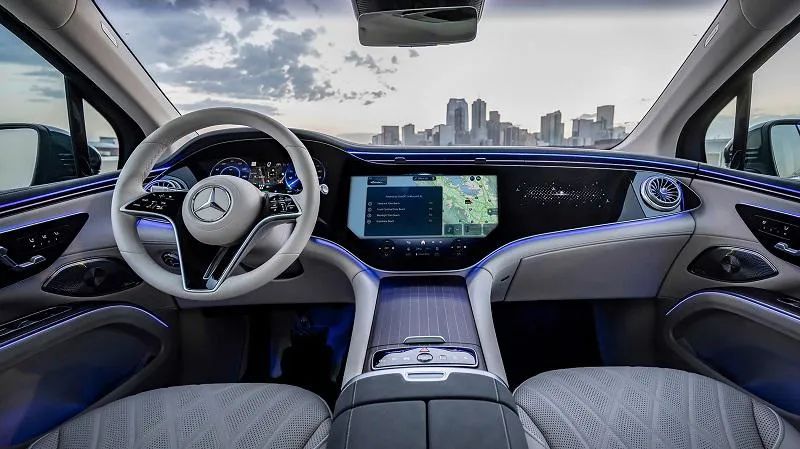
On June 16, Mercedes-Benz officially announced that the car's voice assistant will be connected to ChatGPT. From now on, over 900,000 US customers can participate in the MBUX intelligent human-computer interaction system test program through the Mercedes me mobile app or voice “Hey, Mercedes”. Cars are the biggest interactive application scenario for large models. This is the first time ChatGPT has been used in a car environment. The results of this test will be used to further improve voice assistants and provide reference for large-scale language models in more markets. With the introduction of ChatGPT, smart car operating systems will also be reshaped. In addition to Mercedes-Benz, many companies are also watching and exploring the application of big models in automobiles, including Tesla, Nvidia, Baidu, and Ali. The combination of artificial intelligence and automobiles is an urgent development direction at home and abroad, and no company wants to be left behind in another innovation led by artificial intelligence. Today, when everyone is talking about AI, we also want to simply talk about how artificial intelligence will change the automotive industry. METAVERSE knows more about your smart cockpit The emergence of large models has brought new opportunities and challenges to the development of artificial intelligence, and also provided new possibilities for the automotive industry. The main application scenarios include smart cockpits and intelligent driving. A car smart cockpit refers to the interior space of a car that integrates various intelligent functions and services. It can provide a safe, comfortable, convenient, and entertaining travel experience for drivers through multi-modal human-vehicle interaction. The application of the big model of artificial intelligence in the smart cockpit of a car is first reflected in voice interaction. Voice interaction is one of the most important functions in a smart cockpit. It allows drivers to communicate and control the car through natural language, improving the convenience and safety of travel. According to data from the automotive intelligence research institute Qishi Technology, at the 2023 Shanghai Auto Show, the proportion of models equipped with voice interaction functions reached 95%. Among them, Mercedes-Benz ranked first in terms of voice interaction. The reason why Mercedes-Benz is leading the way in voice interaction is related to its use of ChatGPT technology. Mercedes-Benz integrated ChatGPT into its mBux intelligent human-computer interaction system, providing car owners with a new voice assistant experience. The system will support more dynamic conversations, which can not only accurately understand the car owner's voice commands, but also have interactive conversations with the car owner. The second aspect is image analysis. The large image model can provide services such as facial recognition, sentiment analysis, and AR cameras in the car's smart cockpit, so that drivers can interact and entertain the car through images. For example, the image generation model “Second Picture SenseMirror” published by Shangtang Technology can generate images of various styles and themes based on drivers' input or choices. In addition to voice interaction and image analysis, large 3D content models can also empower smart car cockpits, which can provide them with services such as 3D navigation. In short, the application of artificial intelligence models in smart car cockpits can make cars have stronger ability to sense, understand, generate, and interact, thereby providing drivers with a more intelligent, personalized, and scenario-based travel experience. This is an ongoing interactive revolution, and this revolution is inseparable from another important development direction for the future transportation industry — autonomous driving. METAVERSE autonomous driving and speeding up autonomous driving technology is an important development direction for the future transportation industry, and AI is one of the key technologies for implementing autonomous driving technology. Autonomous driving refers to technology that enables vehicles to replace human drivers to varying degrees through the perception, decision-making, and execution of computer systems. According to the standards of the International Association of Automotive Engineers (SAE), autonomous driving can be divided into six levels, from L0 to L5, representing different degrees of automation and human-computer interaction. L0-L2 is driving assistance, and only L4-L5 is considered autonomous driving. However, we currently have the highest level of L3, that is, with artificial intelligence, the vehicle can handle all driving tasks, but in the event of an emergency or other similar system failure, the driver is still required. ◉ Autonomous driving L0-L5L0, manual driving; L1 level, assisted driving, means that the vehicle can provide some auxiliary functions, but the driver still needs to monitor the surrounding environment at any time and be ready to take over the vehicle at any time; L2 level, partially autonomous driving, means that the vehicle can provide multiple auxiliary functions, such as advanced driver assistance systems (ADAS) with both AIGC and LKA; L3 level, conditional autonomous driving. The vehicle can complete all driving operations and monitoring of the surrounding environment under specific scenarios and conditions, but it needs to be provided by humans when required by the system Appropriate response; L4 level, highly autonomous driving...

1149d ago元宇宙之心MetaverseHub#MetaverseHub #metaverse