
Animoca Venture · 51
Insiders broke the news: April ban, May layoffs, BitMart shutdown long predicted

Insiders broke the news: April ban, May layoffs, BitMart shutdown long predicted

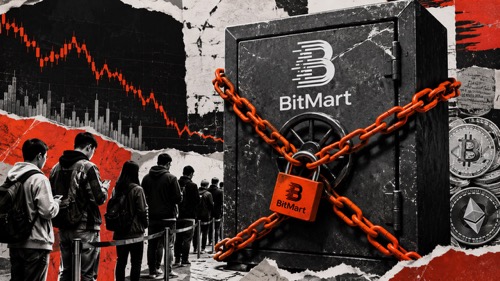
A “wave of bankruptcies” of cryptocurrency exchanges is spreading at an accelerated pace. Following the announcement of the shutdown of AscendEX (formerly BitMax) and BitMEX, on July 26, BitMart made an official announcement announcing the decision to stop operations in an orderly manner after comprehensively evaluating the company's operating status, market environment, and future strategic direction. There was an uproar in the crypto community, but in fact, the downfall of BitMart was by no means a “sudden decision”; some signs have already appeared. Withdrawal abnormalities already occurred in April, and layoffs began in May. At the end of April this year, abnormalities have already begun to occur within BitMart. According to information circulating in Lark's internal group at the time, the platform clearly indicated that user orders were not in line and directly gambled with users — as long as users won money, funds would be locked in. The customer service response was that withdrawals are prohibited for at least three months, and will not be lifted when they expire. At the beginning of May, several BDs reported the issue of user funds being banned in an internal group. As a result, contract leader Gavin directly requested Roham, the head of the mainland region, to close the group. The BDs moved to another group and continued to report, and were also kicked out. In the same period, some employees inquired about the company's asset reserves in the group, and was harshly criticized by founder Sheldon Xia. Sheldon clearly stated that BitMart was unwilling to disclose asset reserve certificates. An anonymous Bitmart employee told Bitpush that the entire department's layoffs began in May. Interviewees said that in May of this year, the company had already begun to “silently” abolish some business divisions — no formal announcements, no separation compensation negotiations, and the entire department was notified “not to be used tomorrow.” These abolished departments mainly focus on business lines where growth is weak or compliance costs are too high, including some overseas operations teams and marketing departments. With this complete shutdown, many people only learned through the official social media that they have lost their job, without the slightest preparation. DI (@Start16Start), a whistleblower who claims to be a “former BitMart employee and current WEEX employee,” wrote on the X platform that BitMart “went from using the unattainable KPIs of CIS employees to reduce our salaries to the chaos within the entire company.” He alleges that the company has long been delinquent on employees' wages and bonuses and refuses to deliver on promises to employees, traders, and KOLs. “This endless act of deception is the reason I chose to leave and keep my key partner as far away from that conflict as possible.” DI wrote. The most absurd thing about this shutdown is that BitMart Global CEO Nenter (Nathan) Chow posted a clarifying statement on X: “On July 24, 2026, I was told that my position as Global CEO will be terminated, and the separation process will begin immediately. I have yet to receive confirmation of my final separation date. Since July 24, I have not participated in any management or decision-making of the company, nor have I been consulted on any operational matters. I was not involved in the decision announced today, was not consulted, and was not informed in advance. I only learned about it when I saw the public announcement. “Chow said he is most concerned about BitMart users and employees, advising users to only handle account matters through official channels and “not comment further on this matter”. Chow joined Bitmart as a partner at Animoca Ventures in April 2025 as Global CEO. At that time, founder Sheldon Xia became Group President. In just over a year, the CEO witnessed the end of the company by being “fired”. Just a month ago, BitMart also reported that its asset management business AUM increased by about 256% month-on-month. At the time, Chow also stated “BitMart is eight years old and we plan to work for another eight years.” Bitmart also previously claimed to have obtained an Australian AFSL license, serving more than 13 million users. It was only one month from “working for another eight years” to “announcing the shutdown”. Founder Sheldon Xia has not made any direct comments on the shutdown as of press time. KOL: Customer service and BD garbage exchanges will go out of business. Crypto KOL @tradermige posted an article on the X platform saying, “The employees at BitMart and BitMEX are all in a shambles. No wonder they have gone out of business. I had a hunch for a long time.” He recounted his experience working with BitMart: BitMart has set up a rebate agency for him, but “all...


26d agoWendy#bitmart #Exchanges #Shut down the tide topic #original #Withdrawal #BEARISH
8 billion monthly trading volume was exchanged for an airdrop backlash. What did Opinion do wrong?

8 billion monthly trading volume was exchanged for an airdrop backlash. What did Opinion do wrong?

Written by ChandlerZ, Foresight News Original title: The biggest backlash at the beginning of the year? The Opinion airdrop caused controversy and predicted that Opinion, a popular rising star on the market circuit, is about to have its own TGE moment, but the long-awaited token release brought not joy, but rather a list of anger and loss from a large number of users. According to OPN tokenomics published by it, the airdrop in the first quarter accounted for only 3% of the total number of tokens, which is far different from the market's previous expectations; the pre-market price of Opinion points plummeted from a maximum of 45 US dollars/min to 6 US dollars/cent; bloggers such as @daidaibtc publicly stated that they burned 200,000 dollars to participate in the accumulation of points, and eventually only exchanged 2000 OPNs, equivalent to about $1,000. This is one of the most controversial TGEs for the beginning of 2026. The pre-market price rose by more than 30% for a short time, but airdrop users cried on the evening of March 2. The Opinion Foundation officially announced the tokenomics and roadmap for the native token OPN. OPN has a total supply of 1 billion and an initial circulation of 198.5 million, which will be deployed on Ethereum and BNB Chain. In terms of token distribution, airdrops accounted for 23.5% (235 million units), TGE released 3.5%, and the rest were owned within 7 months; investors accounted for 23% (230 million units), and teams and advisors accounted for 19.5% (195 million units). Both had a 12-month lockdown period and a 24-month linear release period. Foundations accounted for 12% (120 million units), TGE released 1%; ecosystems and incentives accounted for 11.1% (111 million units), TGE released 5.65% (including 3.5% locked airdrop rewards and 2.15% traceability incentives); marketing accounted for 8.9% (89 million units), TGE released 7.7%; liquidity and market making accounted for 2% (20 million units), and TGE released 2%. Binance's pre-market price briefly rose more than 30% above $0.57 after Opinion published news from the airdrop inquiry website. Some bloggers said that before the announcement of tokenomics, the OPN points secondary market once offered $45 per cent. Following the official disclosure that the first-quarter airdrop released only 3% of the total amount of tokens, the pre-market price quickly dived to $6/cent, with a cumulative drop of more than 85%. What is even more strange is that the trend of the currency price itself is the exact opposite of what airdrop users experienced. Precisely because the initial circulation volume was extremely low, OPN prices rose briefly before the market. The logic of low circulation and high control funding worked temporarily at the price level, but point holders were already cleaned out of the pre-market crash. According to feedback from several well-known studios, the cost of credits ranged from 5 to 20 US dollars/cent. In terms of airdrop value after TGE, almost none of them achieved positive returns. The blogger “Bandobitte” also publicly published his loss details, invested 200,000 US dollars to brush points, and eventually got 2,000 OPN, which is equivalent to about 1,000 US dollars at the current price. “200,000 dollars was exchanged for 2,000 coins. Yes, you read that right.” This statement quickly went viral in the Chinese crypto community. According to Polymarket data, the probability of “FDV exceeding $500 million a day after OPN goes live” is 64%, and market expectations are not pessimistic. But most of the anger of airdrop users lies in the distribution logic itself. “Belt and Band Bit” said, “Of course I accept that jerking is being rejected. Who says jerking will definitely make money? Willing to lose the gamble. The point that made me angry was the backstabbing. You can learn Lighter, just don't distribute points, don't distribute points, see if there are brushes to help you make data? But you sent out points, told everyone to get me quickly, make data, use up the community, and then at TGE, tell you that I sent you the score to play, and now it doesn't count, so does that make sense?” The project party used a credit mechanism to actively summon users to use data and voice, but it unilaterally reset the implicit contract during execution. Losses themselves are currently the norm, but the “throw away when used up” operation logic touches the bottom line of the community's basic trust relationship. Many well-known capital bets. Opinion Labs (Opinion Labs), the founder of the Hong Kong Wall Street background, is an on-chain predictive market agreement. Unlike the binary settlement mechanism of mainstream platforms such as Polymarket and Kalshi, Op...

172d agoburnking#Opinion #airdrop

Solana eco-revenue transaction agreement RateX closes $7 million in new funding, Animoca Ventures and others participate

Comparatively, according to market sources, Solana's ecological revenue transaction agreement RateX has raised a total of $10.4 million over the past two years. The latest round raised $7 million, with investors including Animoca Ventures, ECHO, GSR, Crypto.com Capital, Gate, Rzong Capital, BGX Capital, and Summer Capital. The agreement helps users trade and manage profits through tokenized financial products, and the recently launched Mooncake upgrade supports unliquidated leveraged token trading. In June of this year, US listed company DeFi Development Corp. strategically integrated its staked tokens with the RateX ecosystem to obtain additional revenue strategies.

274d ago
How to find the next Polymarket for the “casino of the future” with a sharp valuation?

How to find the next Polymarket for the “casino of the future” with a sharp valuation?

In four months, the valuation jumped from $1 billion to $15 billion — this is the madness of the forecasting platform Polymarket. Just yesterday, Bloomberg revealed that Polymarket is seeking a new round of financing, targeting a valuation of US$12-15 billion. You know, in June of this year, its valuation was only 1 billion US dollars. Meanwhile, its old rival, Kalshi, has just completed a $300 million D round of financing led by Sequoia and A16z. The valuation surpassed $5 billion, and more institutions offered a valuation offer of $10 billion. Why are these “predicting the future” platforms suddenly the hottest assets? This is inseparable from the following factors: 1. The world fell into an “uncertainty addiction” From the aftermath of the US election to the escalation of the Middle East conflict, global voters' and investors' anxiety about “what will happen next” reached its peak. Traditional polls can no longer meet demand — Polymarket's prediction accuracy rate for the 2024 election is as high as 90%, far surpassing mainstream media such as CNN. 2. The line between investing and gambling is completely blurred. Now you can bet on “the number of goals the hockey team has scored this season” on Kalshi and use USDC on PolyMarket to bet on “whether the Federal Reserve will cut interest rates this month.” When the NHL signs contracts with both platforms at the same time, it means that the prediction market is officially moving from the edge to the mainstream. 3. In the spring of US regulation, Kalshi obtained the first full license from the US CFTC, and Polymarket took back the market through the acquisition of licensed exchanges. These two key breakthroughs opened the door to compliance for the entire industry. 4. AI makes predictions more “smart” algorithms are eating up the prediction market. AI can analyze tens of thousands of pieces of social information in real time, give more accurate probabilities than human experts, and upgrade this field from “blind guessing” to “data-driven.” What other potential dark horses are there? In addition to Kalshi and Polymarket, a number of new projects with accurate positioning and innovative models are under way. This article has compiled a few notable projects for your reference: Limitless: Liquidity Engine for High-Frequency Contracts TGE's Limitless was founded at the end of 2024 and is headquartered in San Francisco. It was founded by a team of former Coinbase engineers. It is positioned as a “short cycle prediction market”, focusing on hourly or even minute-level event contracts, such as “Will the SOL price break through $210 within the next hour?” Or sports live score betting. The project stemmed from the founder's observation on the pain points of the fragmentation of traditional forecasting market liquidity. The beta version was launched on the Base chain earlier, which attracted the favor of crypto traders. Unlike Polymarket's daily/weekly settlement, Limitless emphasizes an “instant feedback” mechanism to achieve zero-delay execution by integrating Hyperliquid order books, which stands out in the highly volatile crypto environment of 2025. In terms of financing, Limitless completed the $10 million A round in September 2025, led by Coinbase Ventures and followed by 1Confirmation and Paper Ventures, with a total financing amount of 17 million US dollars (including the seed round of 7 million US dollars). Coinbase's participation is not only a capital injection, but also an ecological endorsement — its API integration allows Limitless to seamlessly connect to the Coinbase wallet, and users can place bets directly with USDC. Nick Tomaino of 1Confirmation praised it as a “new DeFi liquidity paradigm,” while Paper Ventures is optimistic about its potential to expand in sports betting. The current valuation is about 300 million US dollars, which is double that of the seed round. Three months after the launch of the project, the total transaction volume has exceeded 500 million US dollars, and the number of users has surged from 10,000 to 150,000 (150% monthly increase). The Discord community has more than 20,000 active users, and more than 500 events are created every week. On the X platform, the number of discussions on the #LimitlessPredictions topic exceeded 100,000, showing that the community is very sticky. The challenge is Oracle accuracy, but the team has partnered with Chainlink to optimize the data source. Overall, Limitless is the dark horse of choice for high-frequency trading enthusiasts. It is expected that after the Q4 main network is launched, trading activity will further increase. Novig, a compliance pioneer in sports and politics, is a Boston startup founded in mid-2024, led by a former DraftKings executive, and focused on predictive contract licensing platforms for sporting events and political events. The background of the project comes from American sports...

303d agoWendy#TGE #financing #Predicting the market #Forecast market topics

Bitcoin liquidity staking agreement Rover completed a $4.1 million seed round, with UTXO and others participating

Comparatively, Bitcoin liquidity staking agreement Rover announced the completion of a $4.1 million seed round, with Bloccelerate, Animoca Ventures, CMS Holdings, UTXO, and Maelstrom participating. Rover is developing a flagship liquidity staking solution for Bitcoin holders on Botanix, the first fully decentralized Bitcoin blockchain. Rover also received a strategic investment from early Bitcoin venture capital fund UTXO. (The Block)

459d ago

Animoca Brands becomes UXLINK's new strategic investor

Comparatively, after Animoca Ventures, Animoca Brands became a strategic investor in UXLINK. The UXLINK community leader said that we actively welcome Animoca Brands' strategic investment in UXLINK. We are building a new Web3 social model through AI Growth Agent, and hundreds of millions of social and corporate accounts will benefit from this in the future. At the same time, through the UXLINK PayFi ecosystem, crypto assets and the real world are connected to form a new lifestyle combining Web3+Web2 in the future.

464d ago

Full-chain liquidity infrastructure StakeStone receives investment from Animoca Ventures

Comparing news, full-chain liquidity infrastructure StakeStone posted an article stating that it has received investment from Animoca Ventures. The investment will accelerate StakeStone's three key areas: introducing RWA and IP-backed assets, improving the infrastructure of the Web3 consumer economy, and developing collaborative treasury and DeFi strategies.

487d ago

Resolv Labs closes $10 million seed round led by Cyber.Fund and Maven11

Comparing news, Resolv Labs announced the completion of a $10 million seed round, led by Cyber.Fund and Maven11, Coinbase Ventures, Susquehanna, Arrington Capital, and Animoca Ventures. The agreement provides USR stablecoin holders with cryptographic native, Delta-neutral income strategies. This funding highlights investors' interest in stablecoin agreements that bring benefits to token holders Interest is growing rapidly. (CoinDesk)

493d ago