
Elon Musk · 652
From 4 models to more than 500, OpenRouter was acquired after growing 30,000 times in three years

From 4 models to more than 500, OpenRouter was acquired after growing 30,000 times in three years

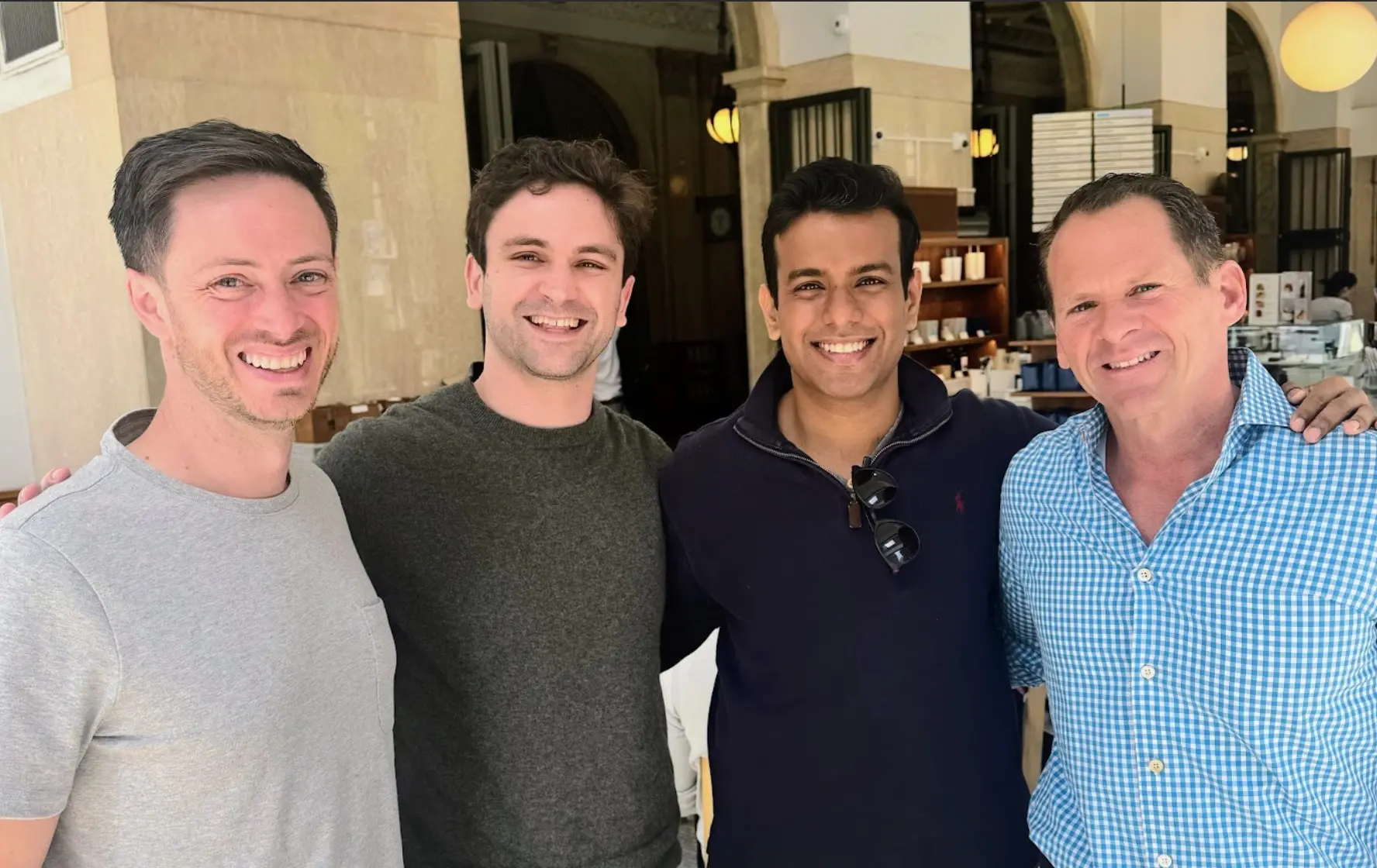
Author: Menlo Ventures Compiled by: Jia Huan, ChainCatcher Original title: Early Investors Behind OpenRouter Revisited Investments Today, OpenRouter announced that it has reached an acquisition agreement with Stripe. OpenRouter was launched in 2023, just over three years ago. OpenRouter was initially launched as a “unified interface for LLM” and only supported 4 models at the time: GPT-3.5, GPT-4, GPT NeoXt and Cohere xlarge by Together. When the company was founded, it was based on two core judgments: first, AI will eventually be used on a large scale and penetrate various fields; second, there will be many different models on the market, each with trade-offs, and users will choose different models according to different needs. As it turned out, both judgments far exceeded expectations at the time. Since its launch, the number of tokens processed by the OpenRouter platform has increased by about 30,000 times. Currently, it has exceeded 4,500 trillion tokens on an annualized basis, and the scale of expenditure on the platform has reached a very impressive level. Meanwhile, the number of models supported by OpenRouter has grown from the original 4 to over 500. Figure: OpenRouter Token usage growth from inception to acquisition Menlo Ventures is fortunate to be part of this journey. In March 2025, we participated in OpenRouter's seed funding round through the Anthology Fund set up in partnership with Anthropic. OpenRouter founder and CEO Alex Atallah previously founded OpenSea, which was once valued at $13.3 billion. His co-founders include tech guru Louis Vichy, whom he met on Discord, and highly executive COO Chris Clark. In May 2025, we led OpenRouter's Series A funding round, with Matt joining the company's board of directors, and Deedy as a board observer. Earlier this year, after seeing OpenRouter's rapid growth in customer numbers and revenue, and the company built a product route with stronger “model intelligence” capabilities around model selection and evaluation, we continued to step up Series B financing. In the tech industry, it often takes years for an idea to change from the judgment of a few people to industry consensus. And just a few weeks ago, this happened: from Ramp to Cursor, more than 10 companies launched their own model routing products almost simultaneously. In just a few years, OpenRouter has become one of the most important companies in the AI era. Picture: Group photo when deciding to lead OpenRouter Round A At first glance, Stripe doesn't seem like the most natural buyer of OpenRouter, but the two companies are actually strikingly similar. Both use an API that can be directly accessed to simplify the otherwise complicated transaction process and charge a certain percentage of the fee. It's just that OpenRouter deals with AI models. As Stripe has always said, the two companies combined and are still doing the same thing: increasing “internet GDP.” In fact, over a year ago, OpenRouter called itself the “Stripe of LLM.” OpenRouter's core value OpenRouter was one of the first companies Deedy came into contact with after joining Menlo in 2024. This company is almost right at the heart of our AI infrastructure investment logic. Menlo presented two judgments necessary to invest in OpenRouter in the 2024 Enterprise AI Report: AI spending will increase dramatically, and developers will not only use one model, but multiple models at the same time. Figure: Menlo's initial contact email to OpenRouter As someone who can also write code and actually use these models, we realized long ago that there is a very clear difference in cost, latency, and performance between the different models...
2d agoburnking#OpenRouter
Why did he dare to vote for Yu Shu 6 years ago? 丨Exclusive secrets revealed by early investors

Why did he dare to vote for Yu Shu 6 years ago? 丨Exclusive secrets revealed by early investors

Source | Pencil Dao Oral Statement | Edited by Yu Shu Early Investor Zhao Nan | Wang Fang Original title: Yu Shu Early Investors: 6 years ago, why did I dare to invest? 丨Exclusive Today (August 19), Yushu Technology officially landed on the Science and Technology Innovation Board and became the “first stock of humanoid robots” in A-shares. Yushu's issue price was 150.80 yuan/share, an increase of 629.44% after opening on the first day. The market value reached 444.9 billion yuan at this point. Earlier, Pencil Road had a conversation with its early investor, Zhao Nan, to try to restore it: Why did Yu Shu dare to take action when he was still very low-key? The following is Zhao Nan's oral statement. - 01 - Meet Uki, the first time I met Uki because of the four-legged robot, was in April 2020. It wasn't an accidental encounter. Beginning in 2019, I've been watching robot tracks in a systematic way. Basically, I've looked at all the directions I could see at the time: four-legged robots, underwater robots, food delivery robots, and even some consumer-grade products. After watching that round, I actually have a relatively clear judgment in my mind: the robotics industry is not a question of “whether it will happen,” but “when will it happen.” The real question is: which directions have been proven and which are just imagination. In my opinion, four-legged robots are one of the few directions that have been proven. Look at Boston Dynamics (Boston Dynamics). It has already made robot dogs, and customers are already using it. This incident shows a very important thing: robots are not sci-fi, but have entered the real world. But at the same time, it also revealed a more essential problem — the cost problem: people are too expensive, R&D is too heavy, and the supply chain is immature. At the time, Boston Power's problems were typical: the team was the top team in the world, and labor costs were extremely high; the R&D cycle was long and the investment was huge; even early products were still using diesel instead of lithium; in the end, they were sold by Google to SoftBank Vision Fund. However, this is not to say that there is no demand for four-legged robots; it is that the cost cannot support it. To this day, four-legged robots are still one of Uki's core businesses, so my judgment at the time was: Whoever can cut costs has an opportunity. Obviously, the Chinese team has an opportunity because we have a supply chain advantage. - 02 - Why invest? It was also based on this judgment that I visited Hangzhou for the first time in April 2020 and met Wang Xingxing (founder of Yushu). That meeting actually made me realize very quickly that this isn't a “just starting” team. It was 2020 at the time, and they've been doing it for three years. When Wang Xingxing was a graduate student at Shanghai University, he already brought a four-legged robot laboratory. At that time, he started working on xDog's algorithm. By the time we met him, he had a deep understanding of every detail of the four-legged robot's functions and procedures. In other words, while many teams are still “watching the track,” they are already building up technology. This is particularly critical in the robotics industry, as it is a typical “time for ability” industry. Many things can't be smashed with money; they have to be accumulated little by little. What really made me decide were a few more specific things. First, they have mastered the robot's core underlying ability. Many people think that robots are a “complete machine product,” but in reality, there are three things that really determine the height of a robot company: driver, sensor, and controller. If you don't have these three pieces in your hands, you'll always be just a system integrator. Meanwhile, in 2020, Yu Shu already has accumulated technology and patents on these three areas. This means it's not assembling products, but building underlying capabilities. This essentially determines its upper limit. Second, it's the customer. Many robotics companies “make products first, then find customers”, but Yuuki did the opposite — they already had customers in 2020, and they are not regular customers. At the time, their customers included companies such as Apple, Nvidia, Meta, and Google. These companies buy their robot dogs to use for AI training and algorithm training. Domestic customers are mainly universities. This matter is critical because it shows two things: first, the product is already available; second, the technology has been recognized by top technology companies. Wang Xingxing always pushes everyone to do one thing: make simple products that customers can accept, and sell them one wave first. Not to make money, but to train the company's entire R&D, production, and sales system by selling products. By communicating with customers, we can also find problems and iterate on products. Third, mass production capacity. I went to their company at the time and saw something very detailed — there was a warehouse next to their office building with a press machine that was used to mold parts. At the time, Wang Xingxing explained that a four-legged aircraft...

3d ago铅笔道#Uki IPO #Wang Xing Xing

Approximately $203 million short orders bet on tokenized SpaceX shares

In comparison, a giant whale placed a shorting order with a price limit of about US$203 million on the tokenized space company SpaceX stock SPCX. The price range was 141.93 to 142.9 US dollars, betting that the price of the token would fall. At the beginning of August, SPCX on the tokenized trading platform Gate had a two-day trading volume of about US$700 million, and on August 4, it sold US$332 million in a single day. The market traded around the 9115 million shares unlocked on August 6. After unlocking, SPCX rose 6.1% to close at $114.92. According to US Securities and Exchange Commission (SEC) documents, Elon Musk holds 48.4% of the beneficial interest in SpaceX, corresponding to more than 6.4 billion shares, worth more than 900 billion US dollars at current prices; related Class B shares give them more than 82% of SpaceX's total voting rights. This article is sponsored by GENG, Build Your Fortune on GENG (https://geng.one)

8d agoburnking

Grok Bot early beta launched

In comparison, Elon Musk's SpaceXAI launched an early beta version of Grok Bot. Elon Musk retweeted that Grok Bot's testing scope will be expanded and Grok 4.6 will be released later this week after addressing some of the underlying issues in the early beta.

10d ago

Musk: Starlink may carry more than 50% of Internet traffic for a long time, and annual revenue may exceed 1 trillion US dollars

Comparing the news, Elon Musk posted an article on the X platform saying that with the development of AI and robotics technology, bandwidth requirements will increase dramatically, and data transmission requirements will be several orders of magnitude higher than humans. Even if the communications market only doubles in size, he expects Starlink to account for at least 25% of the market outside of China, with annual revenue exceeding $500 billion. In the long run, Starlink is likely to carry more than 50% of internet traffic, and its annual revenue may exceed $1 trillion. There are currently no significant barriers.

13d ago

Elon Musk: Storage capacity is growing 20% a year, but demand could grow 200% or more

Comparing the news, during the SpaceX earnings call this morning, analyst Doug Anmuth asked Elon Musk, “What do you think of the future supply and demand pattern of the computing power market? Is the current high pricing power of this type of business sustainable?” Elon Musk replied, “Currently, the biggest bottleneck in AI expansion is still memory (Memory). Storage production capacity is currently growing by about 20% every year, and for any mature industry, this growth rate is already amazing. But the question is, is demand only growing by 20%? It's not! I think demand is growing at around 200% per year, maybe even higher. If demand grows much faster than supply, then according to the most basic principles of economics, prices should rise rather than fall.”

17d ago

SpaceX executive: The goal is to return humans to the moon by 2028

Comparing news, SpaceX executives answered about the progress of the “Manned Lunar Landing Program (HLS)” during this morning's earnings call. Elon Musk said, “For Starship, before putting humans on board, we first need to prove that it can perform satellite launch missions with extreme reliability. We anticipate that the launch frequency of Starship will be very high in the future, so it can quickly accumulate sufficient data and flight experience to achieve the level of safety required for manned flight. I think we can reach this target by the end of next year.” SpaceX President Gwynne Shotwell added: “Judging from mission milestones, orbital propellant transfer (propellant transfer) is a critical technology for both SpaceX's internal development plans and the HLS (manned lunar landing system) project. The Artemis III (Artemis III) mission will be carried out next year, when our Starship will dock with Orion (Orion spacecraft). Afterwards, we will also carry out an unmanned cargo mission to fly directly to the Moon. Our goal is to actually enable humans to step on the moon by 2028.”

17d ago

Elon Musk: SpaceX's projected $1 trillion in revenue has been brought forward to 2030

Comparing news, Elon Musk said on the SpaceX earnings call this morning: “Our internal forecast of reaching $1 trillion in revenue (not ARR, but actual revenue) has been brought forward from 2031 to 2030. Prior to our IPO, our financial forecast was to reach $1 trillion in revenue by 2031. We now expect this to happen in 2030. There is even a non-zero probability that it will happen in 2029.”

17d ago

Elon Musk: SpaceX and Tesla are two of the most hardware-capable companies on the planet

Comparing news, Elon Musk said on the SpaceX earnings call this morning: “SpaceX and Tesla (Tesla) are the two companies with the strongest hardware capabilities on the planet. We're applying a small amount of expertise for rockets and satellites to expanding terrestrial data centers. We've found that applying even the tiny lessons we've learned in building extremely difficult rockets to data centers can have huge benefits.” Elon Musk also said, “We expect future data centers to far exceed actual demand in terms of power supply and cooling capacity. Additionally, according to our communication with Nvidia, we expect to receive a significant portion of its GPU production capacity next year.”

17d ago

Musk: Grok4.6 will be released in a week

Comparing news, xAI founder Elon Musk (Elon Musk) said that Grok 4.6 will be released in a week. Currently, the details of the specific features, performance improvements, or release schedule of the new version have not been officially disclosed.

23d ago