OKEx · 1038
The annual dividend cost may exceed 1.2 billion US dollars, and Strategy was forced to sell 3,588 bitcoins

The annual dividend cost may exceed 1.2 billion US dollars, and Strategy was forced to sell 3,588 bitcoins

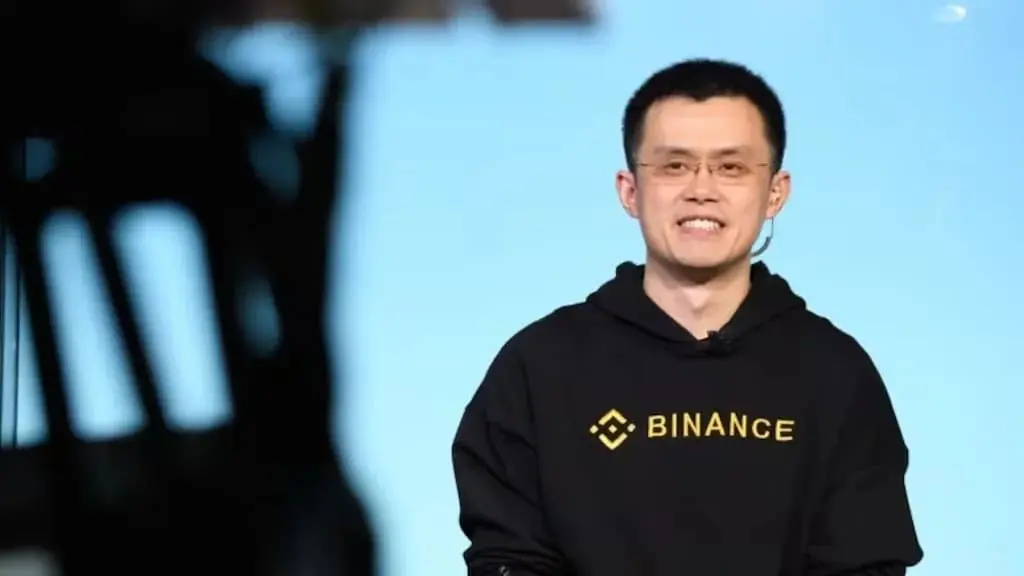
Author: Cooper Duschang Compiled by: AidiDiaoJP, Foresight News Key Takeaways Strategy sold 3,588 bitcoins between June 29 and July 5 to pay dividends on preferred shares and replenish dollar reserves. This is only the third and fourth sale since Bitcoin was bought in August 2020. Strategy's STRC preferred share structure could generate up to $1.26 billion in dividend costs each year. Currently, STRC's price is about 10% lower than face value, and the dividend rate has been raised to 12%. This mechanism will further drive up dividend costs. Strategy can improve the actual transaction price of Bitcoin trading by decentralizing execution of transactions across multiple exchanges and markets. The Binance-USDT market has a deep leading order book, which can hold around 2,900 bitcoins within 10% of the median price range. Introduction WeChat Strategy was founded in 1989 as an enterprise software company. In 2020, the company realized that cash reserves were at risk of rapid inflation and depreciation, so it decided to hedge cash into Bitcoin. On July 6, 2026, Strategy disclosed the sale of Bitcoin in an 8-K file, the only third and fourth sale since 2020. Strategy's complex capital structure requires continuing to pay dividends to preferred shareholders, manage convertible debt, and continue to accumulate Bitcoin. This article will thoroughly analyze the role of STRC preferred shares in the company's capital structure, the reasons for selling Bitcoin, and how to maximize the value of Bitcoin by optimizing transaction execution. Strategy's capital operation strategy In 2025, MicroStrategy officially changed its name to Strategy. Since the initial investment, the company has accumulated 843775 bitcoins through debt and equity financing. Since these bitcoins are mainly purchased through financing, the company actually provided investors with leveraged exposure to Bitcoin and pioneered the large-scale acquisition model of a single crypto asset. Today, such companies are known as digital asset treasury (DATs). Hierarchical capital structure Strategy has issued a variety of structured products to finance the purchase of Bitcoin. Convertible bonds allow companies to access capital without immediately diluting common stock. This type of bond has both fixed income attributes and equity conversion potential, and is equivalent to a call option — if the company's stock price exceeds the exercise price, the bondholder can turn it into stock profit. Only bonds maturing in 2032 had a coupon rate of more than 1% (2.25%), and the remaining five bonds had interest rates below 1% or zero, which allowed the company to keep costs low and focus on accumulating Bitcoin. In October 2024, the company launched the “21/21 Plan”, which plans to finance the purchase of coins by issuing US$21 billion in debt and US$21 billion in equity. As financing progressed, the company successively introduced four types of dollar-denominated perpetual preferred stocks: STRF, STRC, STRK, and STRD. STRC Preferred Stock (commonly known as “Stretch”) has attracted much attention due to its variable dividend mechanism. It offers semi-monthly dividends, and the dividend rate is adjusted monthly, with the goal of fluctuating the share price around $100 in face value. The specific adjustment rules are: when the stock price is below $95, it is recommended to increase the dividend rate by 50 basis points; when the stock price is between $95 and $99, an increase of 25 basis points; when the stock price is above $101, an increase of 25 basis points. At the end of June, STRC once fell to about $73 (about 27% lower than face value), then the annualized dividend rate was raised to 12%. Based on the current estimate of approximately 105 million shares, this would cost the company $1.26 billion in annual dividends. If all of the remaining issuance capacity were used up (corresponding to the 275 million shares scenario), the cost would be even higher. STRC is also facing competition for Strive's SATA preferred stock, which currently has a 13% dividend rate, which may force Strategy to further increase dividends to attract investors. In bankruptcy liquidation, convertible bonds and preferred shares have priority over assets, so the risk is low and the return is relatively limited. However, common stock (MSTR) has the greatest potential room for growth due to the company's leverage exposure to Bitcoin, but it also has the highest risk, and is at the bottom of the capital structure. The company focuses on tracking “...
45d agoburnking#Strategy #Bitcoin
Starting with Bitcoin's 30-fold profit, Luo Yonghao's past disputes with the coin industry

Starting with Bitcoin's 30-fold profit, Luo Yonghao's past disputes with the coin industry

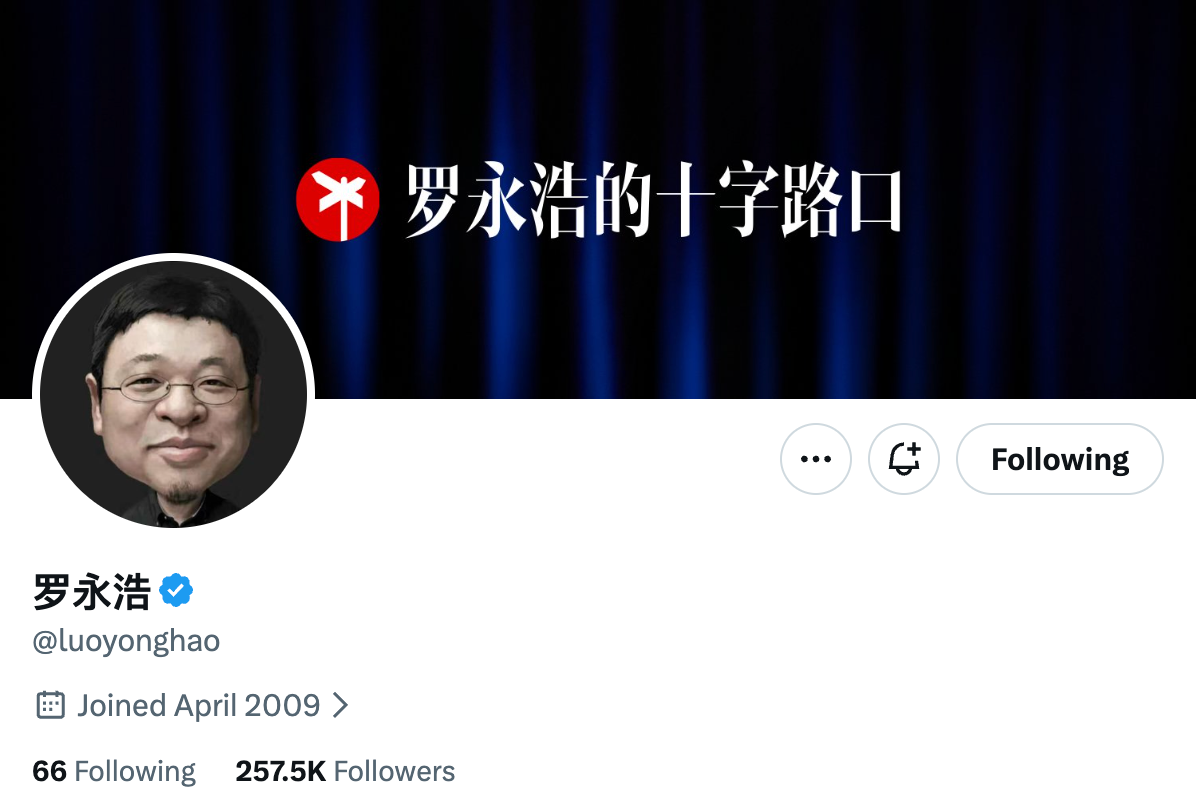
Article: Eric, Foresight News Original title: Luo Yonghao, who earned 30 times more on Bitcoin, struggled with the coin industry in the past, and Luo Yonghao returned to X after a lapse of 6 years. On May 13, Beijing time, Luo Yonghao announced his return by posting “Test it” on his old and new X accounts at the same time. The update of Lo Wing-ho's new X account was limited to June 2020. This time, he launched his old account “Suddenly Remembering My Password in the Middle of the Night”. The cover of the account was changed to the logo of the “Lo Wing-ho's Crossroads” podcast, and the new tweets also include some past podcast programs. However, compared to the podcast, Lo Wing-ho's own speech was clearly more effective in the program. Since the official launch of the new account, Lo Wing-ho has gone back and forth with “people in the coin industry” quite a bit. Currently, the account's top tweets are still reminding everyone not to be scammed by virtual currency under his own banner. X can be described as the “base camp” of the Web3 industry, and Lo Wing-ho's return will inevitably have to face up with active people in the cryptocurrency industry. But if we talk about Lo Wing-ho's relationship with Web3, it probably dates back 8 years. 2017 and 2018 coincided with the “ICO frenzy” in the coin industry, and it is also recognized that the first round of token wealth effects exploded. Lo Wing-ho also said on X that if he were shameless, the money he earned at the time was enough to buy an island. “At that time, many crooks came to me and said that I didn't need to stand on the platform. As long as I didn't stand up and publicly deny it, they would give me as much as I wanted.” In May 2018, Luo Yonghao complained on Weibo that Wang Qianchuang, a front-line programmer at Hammer Technology, “didn't earn much money by trading coins all day long,” and stated that he had invested more than 1 million in Bitcoin in his early years and had already risen to more than 30 million when he posted on Weibo. According to reports from the Observer Network, Wang Qianchuang has always been fascinated by coin trading, which has caused Luo Yonghao's dissatisfaction, which is why he made such a statement. This is also the first time that Lo Wing-ho has publicly mentioned crypto-related content on social media, but his first public opinion on blockchain was to participate in the “10 Questions Wang Feng” in late May 2018. At that event, Lo Wing-ho expressed his firm belief that blockchain technology can change the world, and Hammer Technology has also been actively researching and learning about related applications. When asked about blockchain phones, Luo Yonghao even bluntly stated, “Blockchain phones will definitely do it; it's not easy to talk about the details.” Furthermore, Luo Yonghao revealed that he “followed his friends” in Bitcoin in the early days of working at Hammer Technology, which later rose to more than 30 million yuan. “I don't like speculative business, so I won't spend my energy trading on coins, and I won't consider doing an ICO until the relevant national policies are officially introduced.” Outsiders generally speculate that Lo Wing-ho's so-called “friend” is probably Li Xiaolai, who worked as an English teacher at New Oriental with Lo Wing-ho in the early days, and later became famous overnight in 2017 because of Bitcoin. According to public information, Luo Yonghao joined Mixin's affiliate Feigman (Beijing) Technology Co., Ltd. in 2016, and in addition to founder Feng Xiaodong, the shareholders of this company are Luo Yonghao's friend Li Xiaolai. In February 2023, Lo Wing-ho stepped down as a shareholder. Mixin was hacked in September of the same year, and losses amounted to $200 million. Having reaped 30 times the profit on Bitcoin and withdrew before the project was attacked, Lo Wing-ho's investment in the Web3 industry cannot be described as unsuccessful. Luo Yonghao, who successfully invested in Bitcoin, was unsatisfactory in terms of the company's operations. At the end of the same year as participating in “Wang Feng's Ten Questions”, it was reported that Hammer Technology had broken its capital chain, defaulted on payments to suppliers, and continued layoffs and disputes. The situation did not improve the following year. In November 2019, Luo Yonghao posted a microblog stating that he was on the court's restricted consumption list and published an article entitled “Confessions of an “Old Lai” CEO. At the time, discussions about Lo Wing-ho were in full swing on the Internet, and popular people in the Weibo community were not prepared to let go of this wave of traffic. Sun Yuchen was the first to “attack” and expressed his willingness to hire Luo Yonghao as Tron's entrepreneurial spirit ambassador with an annual salary of one million. If the results are good, he is willing to continue to invest 10 million more in the future. A few days ago, Luo Yonghao also said on X that the offer offered by Sun Yuchen at the time was “the most stubborn” of the few companies that threw olive branches. At the time, OKEx Chief Strategy Officer Xu Kun also posted on Weibo that he hoped to invite Lo Wing-ho to join OKEx. Faced with these invitations, Lo Wing-ho responded in the early hours of the morning: “Thanks to my friends in the coin industry for looking up to me,...

94d agoLuxurytracy
A book detonates old accounts, and CZ and Star have had another ten-year feud

A book detonates old accounts, and CZ and Star have had another ten-year feud

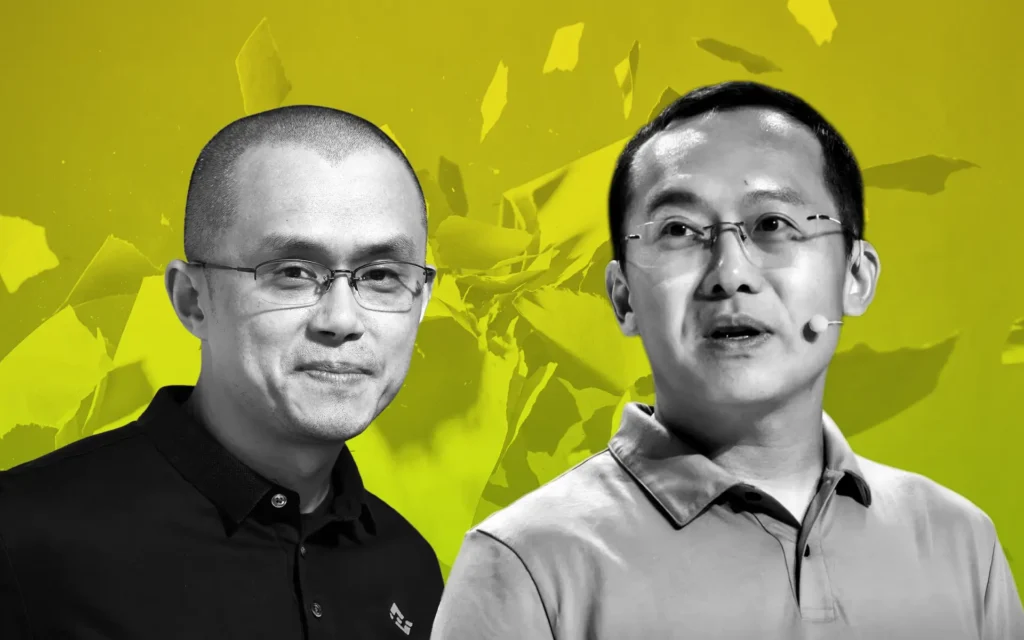
Article: Cookie, Deep Wave TechFlow Original title: A book detonates ten years of grudges, CZ and Star go to war again Introduction: A $1 billion bet, old contract fraud cases, reporting doubts... The two founders of Binance and OKX have unraveled an old scar at the deepest point in the crypto industry. On April 8, 2026, Zhao Changpeng (CZ)'s autobiography “Freedom of Money” (Freedom of Money) went on sale worldwide. This 457-page memoir, from his childhood in rural Jiangsu to his four months in the US federal prison, all sales were donated to charity and topped Amazon's crypto bestseller list. But the real explosion of this book is not that it tells an inspirational story, but who named it. The most controversial section of the book is this: At a dinner in 2025, Huobi founder Li Lin told CZ that he had seen a screenshot showing OKX founder Xu Mingxing (Star) personally reporting him to the Chinese police, and it was this report that led to Li Lin's detention at the end of 2020. After the bomb was dropped, Star responded by posting several long posts on the X platform, directly calling CZ a “habitual liar,” and unraveling an old case from ten years ago. An open scolding war that continued for many days began. Old Grudge: One contract, two versions. To understand the intensity of this war of insults, we must go back to 2014. That year, CZ joined OKCoin founded by Xu Mingxing as CTO. He stayed there for less than a year. According to CZ in the book, Xu Mingxing tried to renegotiate his 10% share in early 2015, and CZ left the job after the two parties broke down. The departure itself was not unusual, but what happened afterwards made the entire Chinese-speaking crypto community watch a big drama. At the heart of the dispute was a commercial partnership CZ brokered during his tenure: he brought in Roger Ver, an early Bitcoin investor, for OKCoin, and the two sides signed a cooperation agreement on the Bitcoin.com domain. Something went wrong with this contract after CZ left. Two versions of the contract were put on the table, one with a six-month termination clause and one without. OKCoin accuses CZ of falsifying the contract, and CZ in turn accuses OKCoin of manipulating transaction volume and falsifying proof of reserves. Roger Ver later sued OKCoin for $57 million for breach of contract. Ten years have passed, and Rashomon has never come to a conclusion about “who falsified the contract”. This time, Star has re-opened a video of the QQ chat transcript that OKCoin notarized back then. He said the video proved that CZ sent two different versions of the agreement (v7 and v8) to OKCoin's accountant in December 2014, and the evidence of falsification was clear. CZ explained in the book that he rarely used QQ, and that other OKCoin employees logged in to his account and falsified chat history. Two people hold their own opinions, and each has its own “irrefutable proof”. Ten years are like a day. New Feud: Report Doubt and OKEx's “The Darkest Five Weeks” “Life on Binance” that really hit Star's pain point is a story about the regulatory storm in China in 2020. On October 16, 2020, OKEx (the predecessor of OKX) suddenly announced the suspension of all digital asset withdrawals because a private key holder “is cooperating with the investigation by the public security authorities”. The private key holder was later confirmed by Caixin and other media as Xu Mingxing. OKEx's withdrawal suspension continued for a full five weeks. OKB tokens plummeted by more than 15% within 24 hours after the news was announced. Users angrily asked “when can I withdraw money” on Weibo. CZ describes this incident in the book, implying that OKEx's wallet system is at risk of a “single point of failure” because Xu Mingxing was detained alone, causing the entire exchange to fail. He also compared Huobi, saying that Li Lin was also under house arrest for about 90 days during the same period, but Huobi's withdrawals were never interrupted because “Huobi's wallet settings are better.” A month later, Li Lin was also taken into custody. CZ claims in the book that five years later, in 2025, Li Lin told him at the restaurant that he saw a screenshot showing Xu Mingxing reporting him to the Chinese police. S...

134d agoLuxurytracy
From Selling Stuff BTC to Binance Storm Center: CZ's Complete Record of Ups and Downs

From Selling Stuff BTC to Binance Storm Center: CZ's Complete Record of Ups and Downs

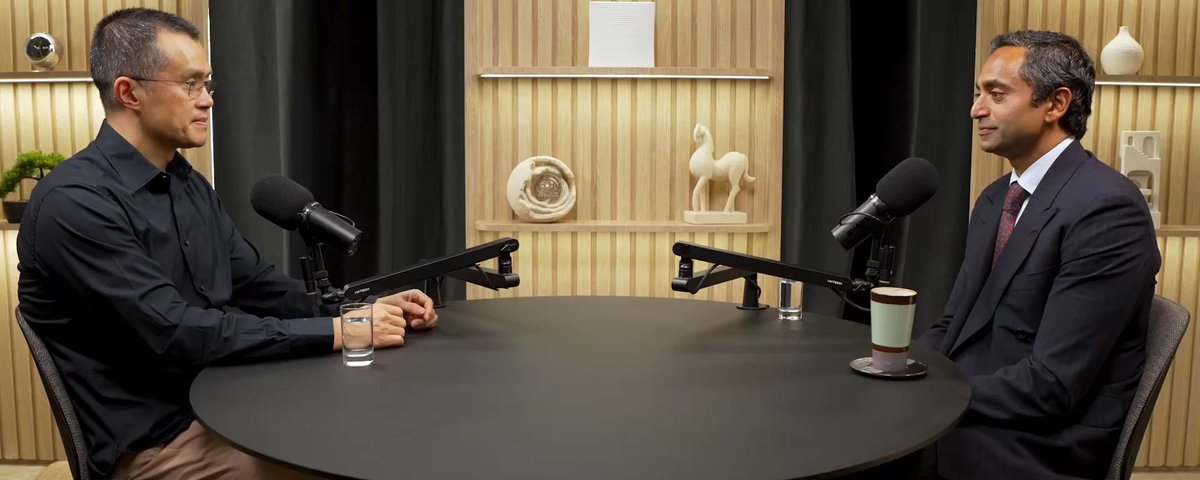
Arranged & Compiled by: A Fish CoolFish Guest: CZ (Zhao Changpeng @cz_binance) Host: Chamath Palihapitiya (@chamath) Podcast: All In Podcast (@theallinpod) Original title: CZ's Untold Story: The Rise, Fall, and Redemption of Binance's Founder air date: February 10, 2026 Highlights In this episode of the All In Podcast, Binance founder CZ dives into his personal growth, his entrepreneurial path from working part-time at McDonald's to founding the world's largest cryptocurrency exchange, and the valuable lessons he learned while facing challenges. He also shared his vision for the future of cryptocurrencies and his deep insight into success, wealth, and the meaning of life. Highlights Summary Early years of experience and education: CZ spent her teenage years in Canada, worked part-time at McDonald's, then studied computer science at McGill University and worked in financial transaction system development in Tokyo and New York. All-in cryptocurrency: After coming into contact with Bitcoin in 2013, CZ firmly believed in its potential, sold Shanghai apartments, and wholeheartedly invested in the crypto industry, holding firm even in a bear market. Entrepreneurship and challenges: The experience of founding Binance was challenging, and he emphasized the importance of resilience, adaptability, ability to handle uncertainty, and adherence to principles. Definition of success: Success is more than money; it includes health, family, freedom of time, values, contributions, and a positive impact on the world. Money is only one dimension of happiness. After reaching a certain level, more money does not bring more happiness. Life advice: You can't be too stupid, but you don't need to be particularly smart. There are many other factors, such as principles, values, emotional intelligence, etc., that are just as important. The only thing you can do is change yourself. Just break through a little bit every day to keep yourself in the 120%, 110%, and 130% state ranges. If you keep up for 30 years and have good luck, you're likely to be quite successful... 1. From China to Canada's Chamath: CZ, welcome to the All In podcast. I wanted to go back to the beginning because I think a lot of people don't know your background as they should. One thing I'm very concerned about is that your early years growing up in Canada were very similar to mine. You used to work at McDonald's, and I'm at Burger King. But before that, your parents immigrated from China around 1989. How did that happen? CZ: My dad actually went to Canada to study back in 1984. He usually comes back to see us twice a year, but he's in Canada most of the time. He was a professor at the time. He first went to the University of Toronto as an exchange student and then transferred to the University of British Columbia (UBC) in Vancouver a few years later. We were applying for immigration at the time. In those days, getting a passport was actually very difficult; it usually took three to four years. We started applying around 1985, and it took us about two or three years to get a passport. Chamath: You mean a Chinese passport? CZ: Yes, a Chinese passport. Once you get a passport, it will take a few more years to get a visa. The process was just that long at the time. After 1989, getting a visa became easier. But the hardest part is always the passport, and after that, it's hard for the government to issue a new one. But we're very lucky because we got our passports before. So after that, with the relaxation of the visa policy, we successfully obtained a visa. I remember very well that my mother took me to the US Consulate to line up — either the US Consulate was handling Canadian affairs at the time, or they were working together. It was August 6, 1989, and we lined up for three full days outside the US Consulate. We even camped there to line up, and we had to rotate people every three hours. My mom, my sister, and I took turns lining up. It was the kind of long line that couldn't be seen at a glance. Chamath: You were only 12 years old at the time. Did those events and discussions shape your worldview to some extent? CZ: Honestly, on a conscious level, it probably wasn't there at that moment. But I was living on a university campus (China University of Science and Technology), and it was China...

192d agoLuxurytracy
Manus Xiao Hong, with that group of interns in the coin industry who “came to the table”

Manus Xiao Hong, with that group of interns in the coin industry who “came to the table”

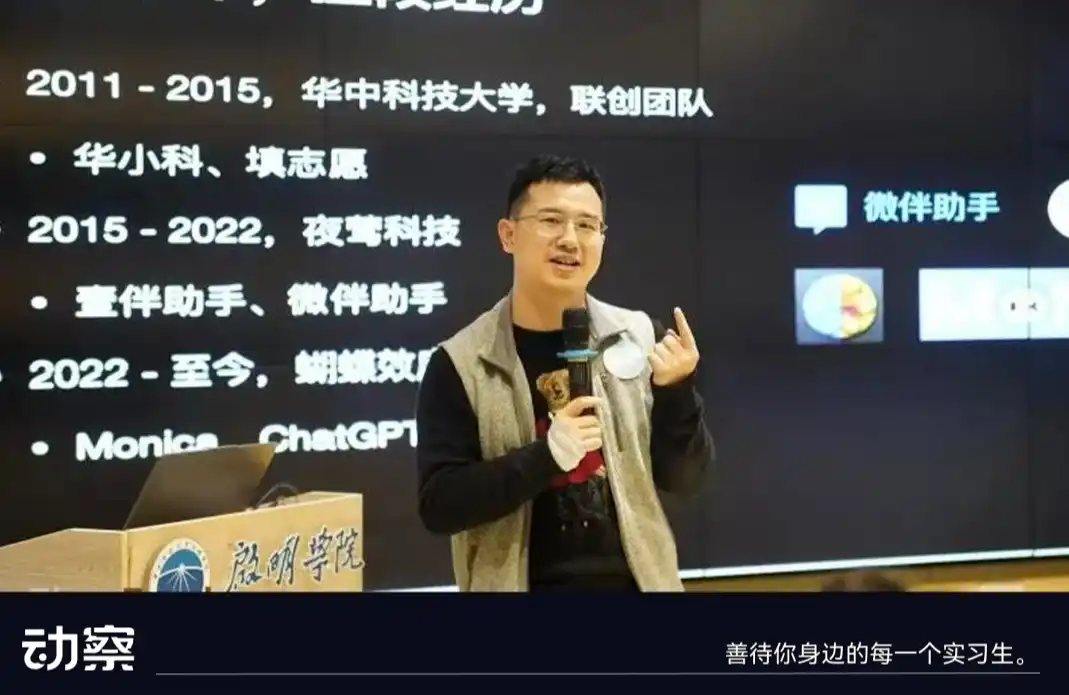
Author: Lin Wanwan, Motion Detective BeatingOriginal title: Starting with Manus Xiao Hong, the biggest news in the tech industry came from Meta: Zuckerberg spent billions of dollars to acquire Manus, an AI company that was founded less than a year ago. This is Meta's third-largest acquisition in history, after WhatsApp and Scale AI. A few days after the news was announced, everyone found that his profile stated: BTC Holder (Bitcoin holder). A tweet appeared on Twitter. The person who tweeted is called “Kamiyu”. His real name is Mao World Bank, one of the earliest Bitcoin miners in China, with a net worth of over 10 billion dollars: “It's no surprise that Manus founder Xiao Hong is a BTC holder — in 2013, he was one of our interns at Huake, and we worked together for 1bit at the time.” 2013. One bit. Huake intern. Xiao Hong, born in '93, is from the small town of Ji'an, Jiangxi. Prior to becoming Meta's vice president, he was best known as the founder of AI products Monica and Manus. But few people know that his first serious internship was at a Bitcoin media company called OneBit. He was in his sophomore year that year and worked on various student programs at Qiming College of Huazhong University of Science and Technology, WeChat drift bottles, WeChat on the wall, and a second-hand trading platform on campus. The vice-captain of the Lianchuang team is already considered a well-known tech geek among his peers. But Bitcoin is still a whole new world for him. One Bit is one of the earliest vertical Bitcoin media in China. Its office is located in Beijing Galaxy SOHO. The founding team included Kamiyu and several similarly young idealists. What they did was simple: translate foreign Bitcoin information, write popular science articles, and try to make more Chinese people understand this new thing called the “Ponzi scheme” by mainstream media at the time. What exactly did Xiao Hong do in Yibit is already difficult to verify. But looking back 12 years later, the significance of this experience has long surpassed the internship itself. The Bitcoin Circle in 2013 was a club of early participants in a major social experiment. There is no regulation, no pricing anchor, no mature business model — just a group of young people who believe “code is the law” to warm up amidst the ridicule of mainstream society. The people who were able to enter at that time were either gamblers or really understood something. Xiao Hong clearly falls into the latter category. Decentralized, permissionless, code autonomy. These ideas seemed like geek pride at the time, but they formed an underlying framework for understanding the world. Twelve years from now, when AI begins to reshape the boundaries of human-computer interaction, this framework may become traceable. From Bitcoin to AI Agents, the forms of technology vary widely, but the underlying logic is the same: it's all about how to make machines run autonomously, how to establish collaboration in an untrustworthy environment, and how to replace intermediaries with code. People who understood Bitcoin in 2013 understood AI Agents hardly needed additional cognitive purchasing in 2025. In that tweet, Kamiyu used a word: “identify vectors.” “In ten years, from Bitcoin to AI Agents, times have changed, and the company's boundaries have blurred. It's not so much about recruiting employees as it is about identifying vectors...” What is a vector? Direction multiplied by speed. Xiao Hong in 2013 is a sophomore who is willing to bet his time on “unreliable” fields. The choice itself is a screening — sifting out those who only look at immediate certainty, leaving behind those willing to pay for long-term possibilities. Twelve years later, this vector points to the position of Meta's vice president. In the cryptocurrency industry, where the myth of making wealth coexists overnight, there is a hidden path to success: follow one person in your early 20s. Around 2013, a group of the smartest and most adventurous young people poured into this barbaric world. Some of them have just dropped out of school, and some haven't graduated yet. Following the craziest entrepreneurs of that era, they work at the grassroots level in trading platforms, mining pools, and media companies. They're betting on some kind of perception. This perception allowed them to recognize opportunities faster than their peers in every wave of technology ten years from now. Buffett once said, “Life is like a snowball; the important thing is to find wet snow and long slopes.” The cryptocurrency industry in 2013 was that wet and long slope. And those who set foot on this slope in their early 20s have been rolling their snowballs for 12 years. Xiao Hong is one of them. But he's not the only one. One sheet...

226d agoburnking#Manus #Meta #trainee #viewpoints
Big Brother Ma Ji's “Return to Zero”: Serial Entrepreneurs' High Leverage Dreams Shattered

Big Brother Ma Ji's “Return to Zero”: Serial Entrepreneurs' High Leverage Dreams Shattered

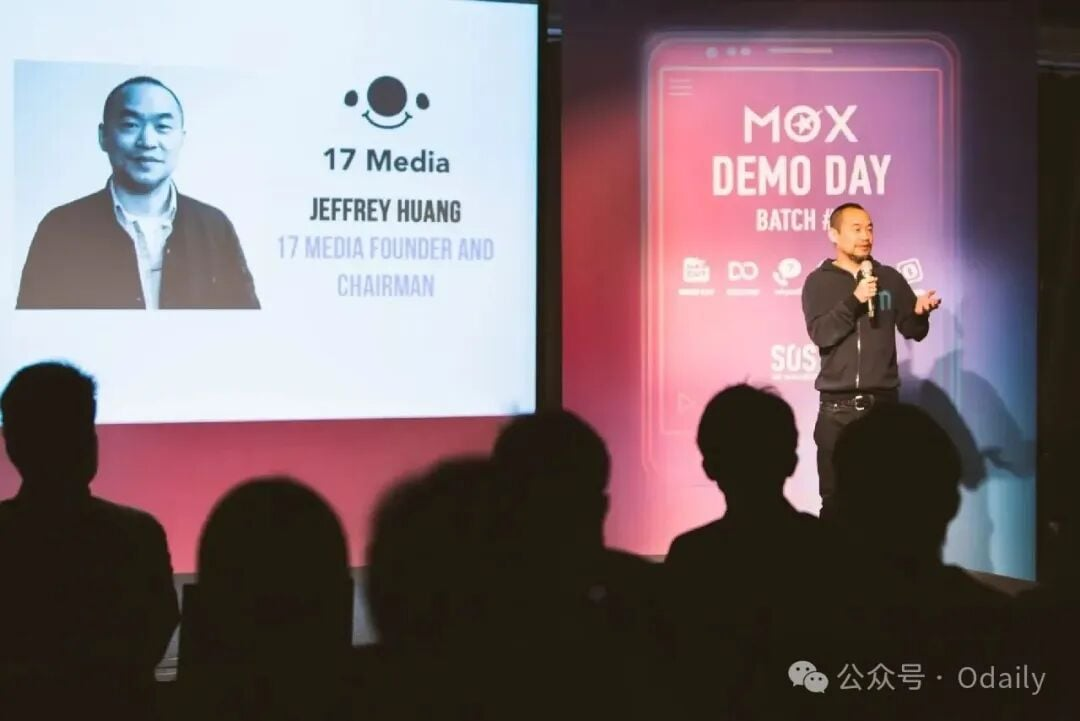
Author: Ethan; Editor: Planet Little Flower Original title: Big Brother Ma Ji's “Return to Zero” Memoirs: From serial entrepreneur to high-leverage gambler On November 4, the former giant whale “Big Brother Maji” Huang Licheng (@machibigbrother) took another step. He used his only remaining 16,700 dollars on the decentralized trading platform Hyperliquid platform to re-open multiple orders of 100 ETH with 25x leverage. After 24 hours, the liquidation came again. In the early morning of November 5, monitoring data showed an account balance of only $1,718. The operation was only 47 days away from the peak of his account's assets. Back on September 18, taking long positions with high leverage, he once made a profit of $44.84 million, becoming one of the most watched contract whales in the chain. However, the 10.11 sharp drop hit, the market shook, and the crypto asset fell continuously for the next month. Under continuous anti-order and position expansion operations, Hyperliquid's clearing interface flashed red like the center of the storm, and Huang Licheng's account also “crashed” during a series of strong ups and downs: not only did all of the profits spill out, but the principal amount of $15 million also almost returned to zero. The peak was close to the $60 million account, leaving only a few “a few pieces of silver.” In response, he left a comment on social media: “Was fun while it was fun.” (“Just have fun.”) Thirty years ago, he was in the real “spotlight.” It was Taiwan in the 90s, when hip-hop culture first entered the Chinese-speaking world. Young people wearing oversized jeans, stepping on the beat, and screaming were the most avant-garde at the time. Huang Licheng, the leader of L.A. Boyz, the earliest hip-pop boy group in the Chinese-speaking world, controls the stage, controls the rhythm of the audience, and also controls the fashion sense of the times. Thirty years later, this person, who aspires to control the rhythm, experienced countless speculations from different angles and methods to try to stay on top of the tide of capital, but all of this got out of control in the midst of madness and hustle and bustle. From hip-hop kids to tech entrepreneurs, from entertainment industry trendsetters, to internet serial entrepreneurs, to coin whales and the “Scythe Big Deal” label, every turn of “Big Brother Ma Ji” Huang Licheng has been full of drama and controversy over the past 20 years. Obviously, he is used to being on the cusp, knows how to focus on the economy, and doesn't want to let go of any opportunities. Born in 1972 in Yunlin, Taiwan, Huang Licheng immigrated to California with his family when he was 2 years old. He has a rebellious personality and street smarts. In high school, he formed a dance troupe called Funky Asian Buddy with his younger brother Huang Lixing and his cousin Lin Zhiwen. They spent the whole day dancing battles and going to nightclubs to find opportunities. In 1991, the three were discovered for their unique style and officially returned to the Taiwanese music scene under the name L.A. Boyz. Their mixed vocals in Chinese and English and American street style have taken Treasure Island by storm. At the time, the Chinese-language music scene was still dominated by Japanese idol styles, and the American hip-hop brought by L.A. Boyz was refreshing. Huang Licheng also became a pioneer of hip-hop culture in the Chinese-speaking region, setting off a trend. L.A. Boyz back then: Lin Zhiwen (left), Huang Lixing (center), and Huang Licheng (right), L.A. Boyz's cool hip-hop style gradually lost its mainstream market as it debuted in 1992 and released 13 albums and was popular. After disbanding in 1997, Huang Licheng gradually switched to business and behind-the-scenes business and started businesses in the field of technology. In 2003, he founded Maji Entertainment and is fully involved in music production and artist management. He went from being an entertainer to a boss, producer, and businessman. Huang Licheng always wanted to be “the first crab eater” and knows how to get around. While the entertainment industry went behind the scenes, he turned into a tech entrepreneur. He realized early on the value of traffic and attention. In 2015, Huang Licheng and his technical partner founded 17 Media. The main product is the “17 Live Streaming App”, which focuses on real-time video interactive social networking. At the time, betta from the mainland had just been created, and similar products such as Einko and Pepper had not been launched. After the launch, the app quickly became popular in Taiwan, attracting millions of users, and was once valued at several billion NTD, and received investment from Wang Sicong and LeTV Sports. Huang Licheng is 1...

288d agoLuxurytracy#HYPERLIQUID #Big Brother Mayoshi
From Shanghai startup to White House pardon: Binance's ten-year game and industry transformation

From Shanghai startup to White House pardon: Binance's ten-year game and industry transformation

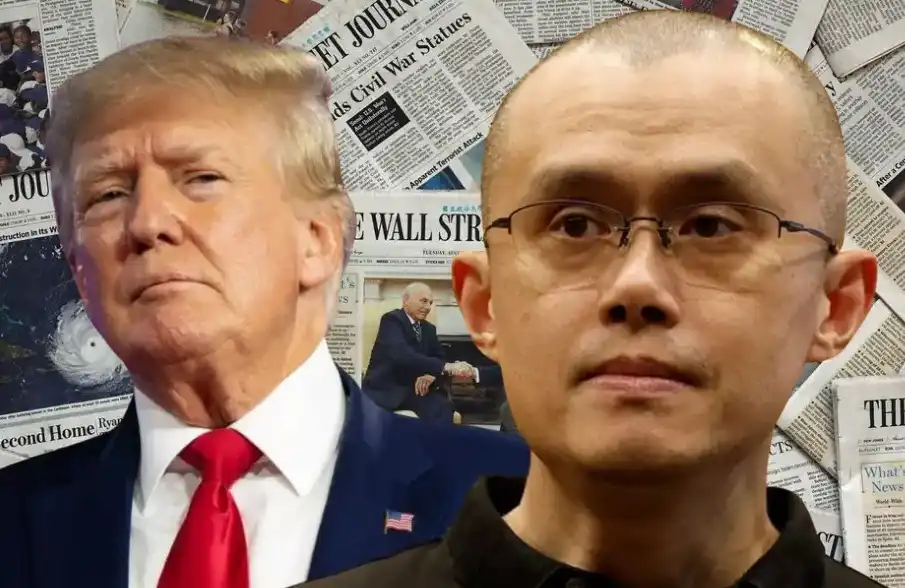
Author: JayZhou, 3 Blockchain Original title: Why was Binance Zhao Changpeng, who left Shanghai, pardoned by Trump? ——A person in the old money industry's ten-year memory and industry mystery From the reckless era of Beijing's Xierqi in 2014 to Trump's pardon in 2025, Zhao Changpeng's ten-year trajectory is like a mirror, showing the savage growth, regulatory turmoil, and power game of the coin industry. Those details scattered over time all became the key to solving the “mystery of forgiveness.” First encounter: The fireworks of Xierqi and the “careless era” of the coin industry 1. The “trio” in Beijing Yiquanhui's office worked as an advanced product operator on the open platform at Shanda Online in 2010. At that time, Shengda Group invested in hundreds of companies, including Ink Weather, which Zhao Dong co-founded at the time, and Douding Network, where Xu Mingxing served as CTO. My job duty at the time was to connect all the products invested by Shengda series to our Shanda Open Platform. At that time, when I didn't know about Bitcoin, I met Xu Mingxing and was responsible for connecting their Douding Network to the Shanda Open Platform. After I bought Bitcoin for the first time on November 22, 2013, I posted it on my WeChat circle of friends, and hundreds of people liked and commented. In 2013, CZ met a venture capitalist through Texas Hold'em, thus opening his way into the world of cryptocurrencies. As a relatively early believer in cryptocurrencies, when he saw that virtual currency allows money to flow at a high speed, he was keenly aware of what the future would look like. After that, CZ joined the digital wallet provider blockchain.info and began a virtual currency voyage. In Beijing in 2014, blockchain was still a term that needed to be explained for half an hour. In Beijing's Xierqi Yiquanhui office building, “OKCoin” was written on the house plate, which is a product of Beijing Lecouda Network Technology Co., Ltd., then evolved into OKEX after '94 in 2017, until now. Xu Mingxing invited guests that day and said they were “welcoming the technical team.” The glass door was pushed open, and the 20-square-meter office was crowded with more than 10 stations, and the sound of keyboard knocking began to rise one after another. Xu Mingxing was greeted in a plaid shirt and pointed to a man in the corner wearing black-rimmed glasses and a jacket and said, “This is CZ, our new technical director. He's back in Canada and knows blockchain. “He also pointed to the woman in the red dress next to her: “He Yi, who is in charge of the market, used to be the host of Travel TV.” CZ didn't talk much. He was holding a thermos mug in his hand, talking about the matchmaking logic of the Bitcoin trading system, but suddenly opened up a conversation. CZ had just left his job at Blockchain.info at the time, gave up his high salary in Silicon Valley and came to Beijing to get a monthly salary of tens of thousands; He Yigang left his job at CCTV and gave up his stable set-up to enter the “virtual currency” field that no one is optimistic about; Xu Mingxing even put his entire net worth into Bitcoin trading, and his quilt is still piled up on his office bed. He said that OKCoin's system throughput was insufficient at the time, and he was thinking about optimizing the code. “When we get this done, the number of users can triple.” On the sidelines, Ho Yi said that “What is Bitcoin” should be made into a popular science short film “so that grandparents and aunts can understand it.” For lunch that day, the donkey was burnt downstairs. Xu Mingxing rushed to pay and said, “Now the company has just made a profit, so we have to save money.” I only learned later that the 2014 coin industry was “reckless and pure.” Everyone got together just because “I think this thing has a future.” 2 “Jianghu Prototype” in a small salon From 2013 to 2016, most of the activities in the coin industry were “10-person” small salons. The location was either a free conference room for an incubator or a coffee corner in the garage. I've been with Xu Mingxing a few times, and almost every time I've met the later “big guys” such as CZ, He Yi, Li Lin, Du Jun, and Grandpa Bao. What impressed me the most was a salon in the winter of 2014, located on Chuangye Street in Zhongguancun. The theme was “Bitcoin Trends.” Li Lin brought Huobi's technical backbone. He was carrying a sample of a mining machine chip in his hand; he was the most active, and joked, “Although there are few people now, when the coin market becomes popular, we will host a 10,000 people conference.” Back then, CZ didn't show a “hero” temperament; it was more like an engineer obsessed with technology. At the end of the salon, he talked to me about his views on the industry and said, “The biggest issues right now are compliance and technology. Only when these two are solved can blockchain really become a reality.” No one expected that ten years later, it was the word “compliance” that gave him a prison sentence and regained his freedom due to a political game...

302d agoburnking#Binance #Zhao Changpeng
Demystifying the logic of making money in the coin industry: how to get the first 10 million on the cusp

Demystifying the logic of making money in the coin industry: how to get the first 10 million on the cusp

Author: @alpha_gege编辑: Biteye Core Contributor Denise Original title: Demystifying the Myths of Fortune in the Coin Industry, How to Earn the First 10 Million in Your Life? Every time the market fluctuates, friends call out, “Why can people have freedom of wealth?” Today, Pigeon Pigeon will take everyone to eat melons. How did the 10 richest bosses in the coin industry get rich? Where did their first pot of gold come from? What are some exclusive routines? After reading it, remember to copy your homework well. After all, these are all the paths that the bosses have walked and stepped on! 01 List of famous billionaires in the coin industry Note: The above are estimates of public wealth. Actual market fluctuations may affect asset values. Next, let's take a look at the rich stories of these wealthy people in the coin industry one by one, and how they each earned their first pot of gold. 1. Speaking of the richest person in the coin industry, Satoshi Nakamoto definitely couldn't get around the mysterious person Satoshi Nakamoto, the creator of Bitcoin. He published the Bitcoin white paper in 2008, officially launched the Bitcoin network in 2009, and is known as the “father of cryptocurrency.” Until now, nothing is known about his true identity. He has never appeared in public, and has always been one of the biggest mysteries in the coin industry. Although no one knows who he is, the approximately 1.1 million bitcoins he unearthed in his early mining was his first pot of gold. These bitcoins have almost never been moved or sold, but have rapidly increased in value as the price of Bitcoin soared, and are now worth around $125 billion! Arguably, the more successful Bitcoin is, the more valuable the coin he holds. However, Satoshi Nakamoto himself disappeared after 2010, and some people even speculated that he might have lost his private key or is no longer alive. Regardless of the truth, the myth of wealth created by Satoshi Nakamoto's first-mover advantage is unquestionably the ceiling level in the coin industry. 2. As the founder of Binance, Zhao Changpeng's experience is almost a textbook on entrepreneurship in the cryptocurrency industry. In his early years, CZ was a technical man who wrote code. He participated in the creation of the OKCoin exchange, but quit soon after. His first pot of gold dates back to 2014, when he sold his house in Shanghai and exchanged it for about 1,500 bitcoins (the price of a bitcoin was only around $600 at the time). Bitcoin skyrocketed over the next few years, allowing CZ to achieve considerable asset appreciation and lay the capital foundation for his later ventures. In 2017, he keenly grasped the bull market in the coin industry and founded Binance. Relying on an efficient matching engine, thoughtful user experience, and the issuer platform BNB as the core of the ecosystem, it only took a few months to become one of the most traded cryptocurrency exchanges in the world. Binance's initial profit model was also very simple and crude, matching transaction fees + platform currency appreciation. If you think about it, exchanges just charge “toll fees”. The more popular the market and the more transactions, the more money they make. Since then, with the rise of the Binance business, CZ's personal wealth skyrocketed like a snowball, and once became the richest Chinese. It can be said that creating a trading platform put CZ on the fast track to becoming rich, and his determination to go all in Bitcoin in the first place was a key step in his career. 3. Giancarlo DevasinigiCarlo Devasini probably isn't familiar to many people, but everyone who plays with coins knows the USDT issued by the Tether company he founded. In fact, he first graduated as a plastic surgeon, but later got bored and switched to electronic products. Devasini's first cryptocurrency came from investing in the Bitfinex exchange in 2012, then co-founded the Tether stablecoin project with others in 2014. The stablecoin market was still empty at the time. Devasini saw this opportunity with a sharp eye and turned USDT into an alternative to the US dollar in the coin industry. Today, USDT is the main stablecoin commonly used by major exchanges. The resulting sharp rise in valuation has caused his wealth to explode in recent years. To put it bluntly, he just identified gaps in the market and then went to the end. 4. Brian Armstrong, founder of Coinbase, the largest exchange in the US, followed a completely different path. As a software engineer, he first came into contact with Bitcoin while working at Airbnb around 2010, and was keenly aware that the process of buying Bitcoin at the time was too cumbersome and unfriendly. In 2012, he resolutely quit his job and founded Coinbase. Soon after, he received seed investment from Y Combinator, and soon attracted venture capital, including the NYSE. This gave him plenty of capital in the early stages of his business. His first...

376d agoLuxurytracy#Tron #Sun Yuchen