


New York Times Long Article | 81-year-old Allison All In AI bet on Oracle and kidnapped the entire United States
Source: The New York Times
By Jonathan Mahler, Jim Rutenberg, Kirsten Grind
Original title: Larry Ellison Bet It All on the A.I. Boom. Will He Be the Face of the A.I. Bubble?
Edited and edited by: BitPushNews
Bitpush note:
Through long-term in-depth research, the New York Times reporter interviewed dozens of people familiar with Larry Ellison (Larry Ellison) in Silicon Valley, San Francisco, Hawaii, and New YorkOracle (Oracle)People, and read a large number of financial documents, analytical reports, and court records. The article starts withLarry EllisonBetting on the aggressive transformation of artificial intelligence as the main line reveals how Oracle (Oracle) relies on huge debt to expand AI infrastructure, and the profound risks this gamble may bring to companies, capital markets, and even the US economy.
The following is the text:
January 21, 2025 — the first full working day after Trump's second administration — Larry Ellison woke up in his 33-bedroom, 34-bathroom beachfront mansion in Florida, boarded his private jet, and flew to Washington.
Ellison, who was 80 years old at the time, had a net worth of about 200 billion US dollars and wanted to go to the White House for an appointment. He was too lazy to even bring his driver's license — got to the door and call a staff member close to the president to guarantee his identity — but at 2 p.m., he was already standing next to Donald Trump in Roosevelt Hall. The president announced the launch of “the largest artificial intelligence infrastructure project in history to date,” and told the world that his friend Larry Ellison was the right person to complete this task.
“He's kind of like the CEO of everything,” Trump said. “He's an amazing person and an amazing businessman.”
Ellison first thanked Trump. “Of course we wouldn't be able to do this without you,” he said. “It just wouldn't be possible.”
He then drew up this ambitious plan. Ellison's database software and cloud computing company Oracle, and its partners — most notably OpenAI — will invest up to $500 billion over the next four years to build a number of giant data centers. Each data center covers an area of 500,000 square feet and will generate a total of 10 gigawatts of computing power, consuming enough electricity to power up to 10 million homes. The name of the project “Stargate” is taken from the 1994 sci-fi movie of the same name: in the film, Kurt Russell walks through a wormhole and finds himself inside a pyramid on an alien planet. In reality, this “Stargate” will be the entrance to lead humans from the post-industrial era to the era of artificial intelligence.
Ellison sided with Trump long before many other tech leaders turned to support him. After the 2020 election, he attended a strategic conference call with Trump's cronies to discuss how to reverse the election results; in 2024, he also donated tens of millions of dollars to support Trump's campaign. However, OpenAI CEO Sam Altman, who was also present at the White House on the same day, was a Democratic Party donor and Trump critic. To facilitate this event, Ellison helped arrange a call between the two.
As far as Ellison is concerned, this White House appearance was his work of running frantically for two years trying to transform Oracle into an AI giant.
The effort began in late 2022: ChatGPT came out of nowhere, shocking the world and starting a battle of contention — everyone wanted to master and control the most disruptive new technology since the birth of the internet.
As one of the founders of Silicon Valley and the last person still on the table in that generation, Ellison desperately didn't want to be left behind. He acted quickly and harshly — some would even say almost reckless — to try to turn Oracle into a “hyperscale cloud service provider,” one of the few companies that can provide critical infrastructure and power the AI boom.
These efforts have at times brought Ellison into conflict with the Biden administration. The latter has taken a more cautious approach to artificial intelligence and introduced a series of regulatory measures, hoping that the government can take some control over its development process. The Biden team believes that if the US wants to stay ahead in the AI competition, the best way is to control the ability of US companies to provide computing power to foreign countries such as China and the Persian Gulf authoritarian regime.
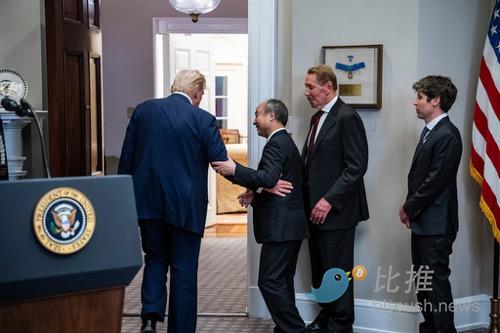
Photo: President Trump joined SoftBank CEO Masayoshi Son, Larry Ellison, and Sam Altman after announcing the “Stargate” project on January 21, 2025. Photo Credit: The New York Times
What Trump promised was a very different line. During the 2024 election, quite a few people in Silicon Valley supported him and generously donated money to his campaign; Trump also embraced the Silicon Valley agenda, criticized the Biden administration for blocking “artificial intelligence innovation” and imposing “radical left-wing ideology” on AI development in the campaign platform. Now that he's in power, he's removing the fence, and Ellison is already in a position to redeem the benefits, and may even use this to change the human process.
At least initially, Ellison did cash in on the benefits.
He signed a “Stargate” agreement with Altman to do business with the hottest young executives in the AI industry; he opened one of the world's largest data centers in Malaysia, which, according to one estimate, provided more than one-fifth of China's AI computing power; he also made plans to build another data center in the United Arab Emirates. Oracle became a significant investor in the US business of the social media app TikTok.
Ellison has also entered a whole new field of influence.
In 2024, he supported his son David's acquisition of Paramount for $8 billion; Paramount not only owns a major Hollywood studio, but also CBS News.
In 2025, he also helped finance David's $111 billion bid for Warner Bros. Discovery, which has a larger studio, dozens of cable channels, and CNN. Ellison's father and son seem to be building a new technology and media empire for the AI era, and Ellison's wealth has soared.
In September of last year, he once became the richest man in the world.
But his huge bet on AI was based on astronomical debt, which included almost everything — bonds, letters of credit, asset-backed securities — and the supply seemed endless, because according to the logic of the time, the more money it took to build AI infrastructure, and the more money it would make in the future. The computer theory community refers to this view as a “large-scale hypothesis.” It believes that advances in AI are directly related to generating unprecedented computing power and processing unprecedented amounts of data. Reaching the “holy grail” of general artificial intelligence (AGI) — where computers can meet or surpass the human mind on any task — requires larger data centers, and far more.
At the end of the day, everything depends on capital expenditure — the Silicon Valley jargon is called capex. Whoever has the most computing power will master the AI economy.
Recently, however, some investors and analysts have begun to question the “scale-up hypothesis,” or at least whether such huge spending is sustainable. In recent weeks, the market has shaken violently, and fears have continued to heat up — people are beginning to wonder whether the trillions of dollars being frantically injected into the global data center ecosystem can actually bring the promised profits.
After a year and a half after that spectacular trip to the White House, Ellison may be about to become a different character: a cautionary tale. Faced with lawsuits filed by a group of state attorneys general, David has already slowed down the move to push for the acquisition of Warner Bros. Exploration at any cost. Compared to the morning of her flight to Washington, Ellison's personal wealth has shrunk by about 55 billion US dollars; compared to the peak in September last year, it is more than 200 billion US dollars less. Oracle has pushed the credit market to the limit. Facing higher interest rates on lenders, its credit rating has also been downgraded to only one level higher than the “junk grade.”
Ellison and his peers at other hyperscale cloud service providers remain convinced that all of this debt and spending will allow them to dominate a reshaped global economy. If calculated as a percentage of the US gross domestic product, this large-scale AI infrastructure construction is moving towards a scale exceeding the construction of the US railway system in the second half of the 19th century, the construction of an interstate highway system 100 years later, and the Apollo space program.
These hyperscale cloud service providers — Alphabet, Amazon, Meta, Microsoft, Oracle — are all the richest companies in the world, and stock market growth is highly dependent on them. If Oracle were to fail, the consequences could be extremely widespread. Americans are more invested in the stock market than ever before, and the AI boom is contributing a disproportionate part of America's economic growth. Last fall, Geeta Gopinath, the former chief economist of the International Monetary Fund, wrote an article in The Economist that once AI collapsed, US wealth would evaporate $20 trillion — far more than the collapse of the Internet bubble in 2000, and even more than the 2008 financial crisis.
How did Larry Ellison go from being the star of the Trump administration's first official press conference to becoming the richest person in the world and the most vulnerable player in an increasingly volatile game?
It all started on an island in Hawaii.
“red alert”
Tech billionaires love Hawaii.
Jeff Bezos owns a $78 million estate on Maui; Mark Benioff owns hundreds of acres of land and a beachfront estate on the Big Island of Hawaii; and Mark Zuckerberg is building a heavily guarded fortress-like compound on Kauai. But only Ellison has an entire island of his own. Lanai is 140 square miles, and he owns almost everything — 47 miles of coastline, gas stations, movie theaters, Four Seasons Resort, and about 150 newly built Japanese-style employee rental houses. There are about 3,000 residents on the island. They call Ellison “ownership,” and the island's unusual economic structure really gives it a strange, plantation-like atmosphere.
Ellison retreated to Lanai during the pandemic and has barely left for a few years since then, and seemed like he had slipped into a more moderate and relaxed phase of his career. He loves hosting his rich and powerful friends in his island paradise: in 2021, Bezos, Benjamin Netanyahu, and Tony Blair all flew to his birthday party. (Netanyahu's security team insisted that he stay in a mountaintop six-bedroom villa, so one of Ellison's employees had to move out.) Ellison also built a house on the island for his friend Elon Musk; Musk is a regular visitor here.
Ellison was living on Lanai with Keren Zhu at the time. She is a Chinese citizen. She came to the US when she was a teenager and usually uses the name Jolin.
Not much is known about her, and it's not even clear if she and Ellison are already married. But people who have lived and worked for Ellison on the island of Lanai tell us that when their first child was born, she was around 23, and he was around 70 years old — Ellison had not divorced his fifth wife, Nikita Kahn at the time; the two didn't officially divorce until 2020 — and they have had at least three more children since then.
Ellison seemed to “love” Jolin, and when she complained about not being able to eat authentic Chinese food, he temporarily converted a local restaurant on the island — also owned by him — into a Sichuan restaurant.
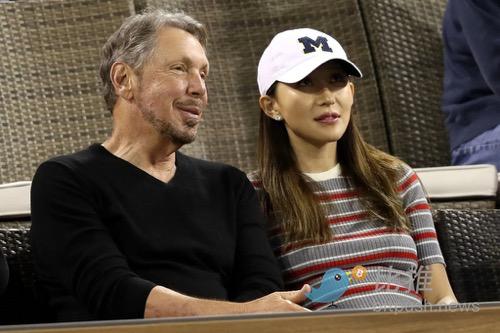
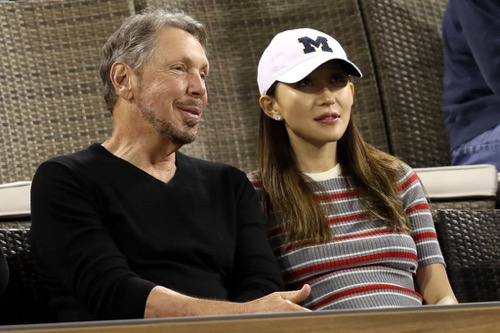
In 2018, Ellison watched a tennis match with her partner Keren Zhu in Indian Wells. Photo Credit: Getty Images
Since founding Oracle in 1977, Ellison has been notorious for winning at any cost.He even hired private investigators to spy on Microsoft。
In recent years, he has spent a lot of time with a Don Quixote “agritech” startup that claims to disrupt the global food supply chain. He stepped down as CEO of Oracle in 2014, but he retained the title of Chief Technology Officer and will continue to work on projects that interest him. However, these projects don't include the century's most transformative technology.
That all changed on November 30, 2022 — the same day OpenAI released ChatGPT. Within a few days, it had 1 million users; within a few weeks, it reached 100 million users. Analysts are starting to continuously raise the value that generative AI may add to the global economy: $7 trillion over the next 10 years, $200 trillion by 2030, etc.
No one can say exactly how any particular company would profit — in fact, OpenAI itself was burning money like crazy at the time, and there was no clear path to profit — but everyone knew that no matter what the “opportunity” was in the end, it was necessary to act immediately if they wanted to share a share of the pie.
Google CEO Sundar Pichai announced a “red alert” status;
The company's two co-founders — Larry Page, who was lying leisurely in Fiji at the time, and Sergei Brin, who had left the company to study physics textbooks and study all the Olympic programs — also ended their semi-retirement status and came back to help.
Musk raced against time to establish xAI. This AI startup claims to be “human-centered”;
Zuckerberg directed Facebook and Instagram's parent company Meta to launch the first chatbot.
Ellison also had to take a sharp turn. At the end of the day, Oracle is a software company; but once people can use AI to make their own custom software, who else needs its products? Its business model is clearly under threat. But also at risk is Ellison's reputation. (Oracle declined to comment, and did not schedule an interview for Ellison.)
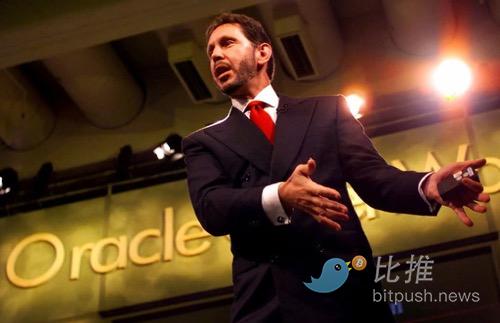
In the late 1990s, Ellison made Oracle take a sharp turn and ride on the rise of the internet. “If the internet finally proves that it's not the future of computing, we're done,” he said, “but if it is, we're developed.” Image source: Associated Press
Ellison has always been regarded as a technology visionary who revolutionized data management and storage.
He's no man like Gates, Jobs, or Musk, but he realized early on that in the new computer age, businesses and government agencies will be able to gather increasingly large amounts of customer, product, and employee information, and that storing, protecting, organizing, and analyzing this information will be critical. As a result, he has built an extremely important and surprisingly profitable business to help customers do all of this.
But now, this business—in fact, every business—has to become a different kind of business. If he wants to continue being that Larry Ellison — “the CEO of everything” — he has to start doing something.
“It's like a Formula One”
Ellison is no stranger to the sudden arrival of disruptive new technology. He has previously successfully navigated several technological revolutions that could disrupt his business. In the latter half of the 1990s, he suddenly turned Oracle around and took advantage of the rise of the Internet. “If the internet finally proves that it's not the future of computing, we're done,” he said at the time, “but if it were, we'd be developed.” By 2000, he was not only “developed”, but also became the richest man in the world in a very short time.
Now it's time for another sharp turn.
In June 2023, Ellison spoke to the entire company for the first time on AI. He connected from Lanai to an all-staff conference. “It's the most important technology ever,” he said, and compared it to humans discovering fire. A few months later, in September, during the keynote address at the Oracle conference in Las Vegas, Ellison outlined the company's evolving AI strategy. “Isn't it the most important new computer technology ever? “Probably,” he said. “One thing is certain: we'll know the answer soon.”

In the 1990s, Ellison was in the Japanese garden of his home in Atherton, California. Photo by Louie Psihoyos
At the center of Oracle's strategy is the data center. Over the past few years, the company has been frantically expanding cloud infrastructure; these infrastructures rely on the same types of data centers that are essentially what is needed to run and train new AI models, except that AI data centers are carrying a much stronger workload. Oracle can transform some existing cloud facilities to run and train AI models. But if it really wants to do a big job in the AI field, it must build a new, much larger data center.
This would be extremely complicated and extremely costly. In addition to expensive microchips, rows of servers, backup power, and large-scale cooling systems are needed, not to mention amazing energy and water consumption. Oracle's hyperscale cloud service provider rivals are larger and more capitalized. To keep up, Oracle would have to borrow a lot of money. To borrow this money, it must also find partners who also have big AI ambitions and promise to buy its computing power.
Musk seemed like the perfect guy. In 2015, he co-founded OpenAI with Altman. At the time, they described it as a non-profit enterprise with the goal of developing AI technology that can be freely shared for the welfare of all humankind. A few years later, a fierce power struggle prompted Musk to leave. Since then, he has gradually fallen behind in the AI competition, and now he is also in a hurry to catch up.
In the spring of 2024, about eight months after Ellison outlined Oracle's new AI strategy in Las Vegas, he and Musk and his team began discussing a plan to have Oracle build and operate a very large AI data center for xAI. Located in Abilene, Texas, the entire building will be shaped like the letter X.
According to the technology website The Information, the project is codenamed “Project Ludicrous” (Project Ludicrous), and the name comes from another sci-fi movie, Mel Brooks' satirical comedy “Space Bomb.” The villain “Dark Helm” in the film changes the speed of the spacecraft to “ridiculous speed” in order to catch up with the good guys. In order to run this new data center, Ellison and Musk needed a large number of dedicated microchips; these chips were almost entirely manufactured by Nvidia and were in short supply at the time.
As a result, they invited Nvidia CEO Hwang In-hoon to eat at Nobu Restaurant in Palo Alto, California.He asked him to sell them more chips.
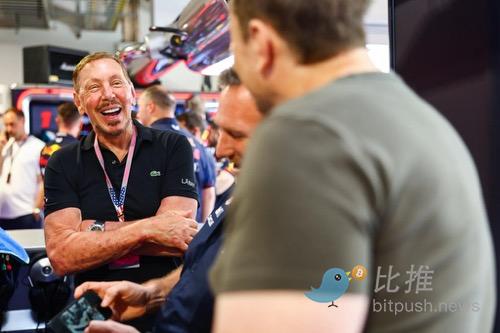
Ellison (left) and Elon Musk (right) at the 2023 F1 Miami Grand Prix. Photo Credit: Getty Images
Ellison did not wait to finalize an agreement with Musk to begin construction of this facility. In the spring of that year, Oracle signed a long-term contract with data center developer Crusoe, promising to pay $1 billion a year for 15 consecutive years.
But what Musk and his team expected was “ridiculous speed,” and they gradually became dissatisfied with the speed at which Oracle was moving forward and wanted more control over the project.
Musk finally decided that it would be more cost-effective to build a data center on his own.By July of that year, the deal had already broken down.
Ellison lost this big customer but soon found a bigger one. Microsoft originally signed an exclusive agreement with OpenAI to provide it with computing power, but this arrangement is being reconsidered. Altman's appetite for computing power continues to expand, and Microsoft's capital expenses to compete for data center construction have also risen sharply. It doesn't want to become a player with high leverage and excessive reliance on a single customer in an increasingly competitive market. As a result, Microsoft provided an exemption to OpenAI to allow it to work with Oracle. (The New York Times has sued OpenAI and Microsoft, accusing the two companies of infringing the copyright of news articles. (The two companies denied the allegations.)
Ellison didn't have Microsoft's hesitation to fully bet on OpenAI. Oracle agreed to bear the financial burden of building the data center and offered to “add turbines” to the entire process to reduce the project, which usually takes four years to complete, to 11 months. They began negotiations on this joint venture project, which later became “Stargate.” In September 2024, when talking about the competition for dominance in the AI business, Ellison told analysts, “It's like a Formula 1 car. There will always be people who do better than everyone else, and now a lot of people are fighting.”
Ellison is going to be that winner.The only thing that is slowing him down is the President of the United States.
“That's not a solution”
The reaction that ChatGPT sparked in Washington was quite different from Silicon Valley. It sparked another urgent action within the Biden administration: how to regulate the development of AI. In order to coordinate AI policies, Biden used senior Democratic policy adviser Bruce Reed; Reed believes that the government must take the initiative. A year after the launch of ChatGPT, in late 2023, Biden signed a comprehensive AI executive order to try to define the government's role in the future development of this new technology.
For the Biden administration, artificial intelligence is by no means just a domestic economic issue. Countries around the world are competing to develop their own AI infrastructure and technology. Whoever reaches the end first will have global power and influence. Seen from this perspective, AI data centers are not so much an enterprise as a geopolitical asset.
Given that artificial intelligence is likely to play a powerful role in reshaping the information ecosystem, the Biden administration is particularly concerned about the AI ambitions of China and the Persian Gulf countries. A former State Department official in the Biden administration requested anonymity in order to discuss sensitive issues. Describing the government's thinking at the time, he said, “When we don't know how these systems will affect reality, do we really want large-scale AI training racks to be built outside of the US?”
The US has a major advantage in the AI competition: China lags behind in computer chip technology. According to the Biden administration's judgment, the best way to take advantage of this advantage is to cut off China's access to American-made chips; in the fall of 2022, shortly before ChatGPT was released, the government already took relevant measures.
But the risk remains: China may remotely obtain US computing power through other countries. Saudi Arabia, the United Arab Emirates, and Qatar all have close ties with China. They are using large-scale sovereign wealth funds to shift leverage of global influence from oil to investment. If computing power is the “new oil” — and will shape the global economy for decades to come — then these countries are eager to get as much computing power as possible, and they have the money to do it.
The government's concerns are colliding with Ellison's ambitions.
Both China and the Gulf region are critical to Ellison's AI initiatives. Oracle already has a large number of contracts in the Gulf region, and also maintains a strong commercial relationship with ByteDance, one of China's most important AI companies.
Oracle is an American cloud service provider for TikTok's US business under ByteDance. It is responsible for storing and protecting the data of 100 million US users of this app. Today, ByteDance itself is also shifting to generative AI, and the two sides have the opportunity to do more business. In the summer of 2024, Oracle began promoting a $6.5 billion deal to build a large-scale data center park in Malaysia and deliver computing power to ByteDance and other foreign companies through opaque lease agreements.
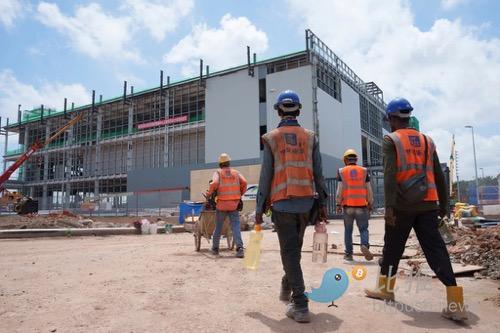
Oracle's data center is located in Malaysia; according to one estimate, the center provides more than one-fifth of China's AI computing power. Image source: Associated Press
This is fully legal — but under the Biden administration, it may soon fall out of compliance. At that point, national security officials were increasingly concerned about the AI ambitions of China and the Gulf countries, and began discussions on how to strengthen controls. The government is particularly concerned about Oracle's possible role in fueling these ambitions. They know that Ellison is trying to rapidly expand the company's AI infrastructure, and Oracle is extremely short of money, which means that the company may be more likely to be tempted to sign deals that the Biden administration believes are not in America's best interest.
The government's anxiety about TikTok has also created another potential obstacle for Ellison. This platform holds large amounts of Americans' personal data — including IP addresses and video preferences — and may be a treasure trove for Chinese intelligence agents. ByteDance is technically a private company, but if the Chinese government asks it to hand over data on national security grounds, it will almost certainly have to cooperate. TikTok has assured the US government that the data of US users is safe, but it has also given reason to doubt this statement. At the end of 2022, ByteDance admitted that the company's employees had visited the IP addresses of two American technology journalists. (ByteDance says it has dismissed relevant personnel and tightened the system to ensure that similar incidents never happen again.)
What is also unsettling to the government is how China might use TikTok's powerful recommendation algorithm. The algorithm is owned by ByteDance, and China may use it to carry out influence actions in the US. Oracle assured the government that the company had security systems in place to prevent this. However, given Oracle's close commercial relationship with ByteDance, Biden administration officials aren't convinced. “That's not a solution,” a senior government member told us while anonymously discussing sensitive issues. (TikTok said at the time that the algorithm was not influenced by Chinese politics.)
In early 2024, the Biden administration began working with Congress to push for a bipartisan bill — the “Act to Protect American Data from Foreign Rival Controlling Apps” — which would force ByteDance to divest TikTok's US business. In April 2024, Biden signed the bill into law and set January 19, 2025 as the sale deadline. If ByteDance fails to complete the transaction as scheduled, the app will be shut down in the US.
Meanwhile, the government is preparing to further strengthen measures to restrict China's access to US computing power and strengthen control over the Gulf countries. At the end of 2024, a draft plan was circulated within the government to require hyperscale cloud service providers to go through license approval when operating overseas, while retaining 50% of computing power within the US.
All hyperscale cloud service providers want to build facilities overseas, but Oracle is likely to lose the most: at least relative to its size, its global plans are the most ambitious. The company openly and harshly opposed the Biden plan. Ken Gluck, Oracle's chief policy director in Washington, said this would be one of the “most disruptive” actions against the tech industry; he argues that the best way to consolidate America's leading position in the AI competition is for US companies to build and control as much of the global AI infrastructure as possible.
Biden approved the new policy in the last few days of his presidency, and was originally scheduled to take effect in May 2025. Once implemented, it could force Oracle to cut back on its ambitions in Malaysia and the Gulf region. Ellison's plans to transform Oracle are in jeopardy. But a new president is on his way to Washington.
“tsunami”
The turnaround came almost immediately. A few hours after taking office in January 2025, Trump sat down at the fortitude table and began signing executive orders aimed at dismantling Biden's AI policy. He also signed an order instructing the Attorney General to suspend the TikTok ban authorized by Congress for 75 days. Afterwards, of course, there was the “Stargate” project press conference attended by Ellison and Altman.
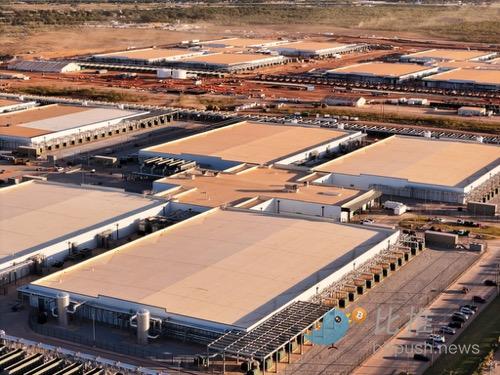
Stargate data center in Abilene, Texas. Photo Credit: The New York Times
Trump has instead relied on a very diverse group of people to shape the new administration's artificial intelligence policies. He appointed Silicon Valley venture capitalist David Sachs as head of AI and cryptocurrency affairs. Sachs raised millions of dollars for the Trump campaign; according to a New York Times survey, he personally invested in at least 449 companies linked to artificial intelligence. Sachs denied that there was a conflict of interest. He believes that when it comes to AI, the government's responsibility is to clear the way.
During Biden's administration, the National Security Council's technical and national security departments played a key role in shaping US AI policy. Trump initially appointed David Faith to head the department; Faith had serious concerns that China might obtain computing power remotely through Malaysia and other Southeast Asian countries. But by April, Trump fired Faith and several other hawks against China, and then simply removed the entire department.
At that point, Biden's plan to limit the ability of US hyperscale cloud service providers to operate overseas was only a few weeks away from taking effect. Both Sachs and Trump's Secretary of Commerce Howard Lutnick want to cancel it; Sachs believes that the plan is too bureaucratic and will only slow down American companies in the AI race.
Trump has also seen another benefit of withdrawing from Biden's plan: the Gulf countries are adamantly opposed to this policy. They need American computing power to build their own AI infrastructure, and they also have something to pay off. Their sovereign wealth funds hold trillions of dollars and are ready to invest in a variety of US companies, including some associated with the Trump family.
Just two weeks before Biden's policy was due to take effect, Zach Witkoff, son of Trump adviser Steven Witkoff and CEO of the Trump family cryptocurrency company World Liberty Financial, announced at a conference in Dubai that the UAE will use $2 billion of the company's new stablecoin to invest in the cryptocurrency exchange Binance. Less than two weeks later — only 48 hours until Biden's restrictions take effect — Trump rescinded the policy.
On the same day, Trump arrived in Saudi Arabia to begin a three-day trip to the Gulf. Later, in the United Arab Emirates, Altman joined him in announcing the “UAE Stargate” program. It's a multi-billion dollar operation to build one of the world's largest data centers outside Abu Dhabi. Oracle will also be a partner.
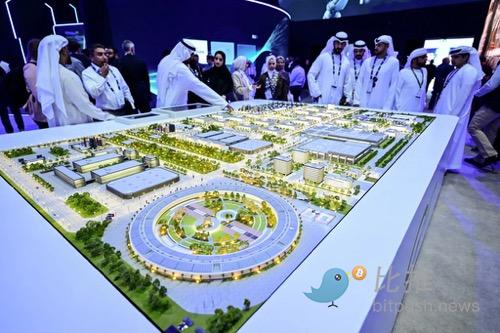
In November, the “UAE Stargate” model was displayed at the Abu Dhabi International Petroleum Exhibition and Conference. Photo Credit: Agence France-Presse — Getty Images
After the Biden plan is abolished, Oracle can operate the Malaysian data center campus according to its own wishes. By the end of June, the facility is expected to become the second-largest data center in the world. Oracle does not publish a list of local customers, but independent AI research company SemiAnalysis judged after studying its output. The facility provided most of the computing power to ByteDance. An analyst at ChinaTalk, Akib F. Zakaria, an analyst at the tech think tank, also made independent calculations and came to an astonishing conclusion: Oracle provided up to 22.6% of China's known AI computing power.
We are unable to independently verify these findings, but both SemiAnalysis and Chinatalk are widely respected AI analysis agencies. If they judge correctly, Ellison is fueling the AI ambitions of America's biggest geopolitical rival — the companies that benefit from it are likely to pose the greatest threat to his partner OpenAI. Oracle has a completely different view of the situation. It believes that global computing power is not scarce enough to be a reason to restrict US companies from doing business with China. According to Oracle's logic, with or without the help of US companies, China will find ways to power its AI projects; without the participation of US companies, it may further stimulate China to build its own AI infrastructure.
On September 9, Oracle announced quarterly results, announcing a significant increase in “remaining performance obligations” — this refers to orders that have been contracted but have not yet been confirmed as sales revenue. In a conference call with analysts, Ellison reviewed the success of Oracle's AI transformation and said, “Not everyone fully understands how big the impending tsunami actually is.”
The next day, the Wall Street Journal reported that Oracle had finalized an agreement with OpenAI for the initial “Stargate” deal. Oracle will build a number of data centers across the US and then lease computing power to OpenAI to train its AI models. The Wall Street Journal said that under the agreement, OpenAI will pay Oracle $300 billion over about five years, starting in 2027.
Driven by performance reports and OpenAI news, Oracle's stock price once soared 43%. Looks like Ellison has successfully completed the AI transformation.
In just a few hours, his personal wealth increased by $88 billion, to nearly $400 billion. For at least part of the trading session, he surpassed Musk to become the richest man in the world.
“any operating relationship”
The AI boom is driving not only Ellison's personal wealth, but the entire US economy.
According to a Morgan Stanley analysis, AI-related stocks have contributed up to 75% of S&P 500 returns since October 2022. Jason Furman, an economist at Harvard's Kennedy School of Government, estimates that data centers contributed 92% of the US GDP growth in the first half of 2025.
Oracle is gaining momentum; as the company dives deeper into AI, Ellison is also beginning to reclaim more management responsibilities. According to a later report by Bloomberg Businessweek, in September of last year, he took over all of the company's expenses; Oracle's top financial director has since reported directly to him. The company also underwent another personnel change. Oracle CEO Safra Katz, Ellison's trusted confidant, once questioned the company's aggressive AI expansion rate and then stepped down as CEO.
Armed with plenty of cash — or at least the book profits from Oracle's soaring stock price — Ellison decided to support his son David in his bid for Warner Bros. Discovery.
Movies are, to some extent, the Ellison family business: David and sister Megan are both filmmakers and investors. Ellison supported their Hollywood ambitions, but a few years ago, Megan's independent film company, Annapurna Pictures, was in financial trouble, and Ellison refused to help. Since then, the father and daughter have fallen out.
David had just completed a deal to acquire Paramount and CBS when he began chasing Warner Bros. Discovery; his father also helped finance that deal. But Warner Bros. Exploration is much larger. David has his own ambitions, but the deal also clearly benefits Ellison. Unlike many of his tech billionaire peers, Ellison has never controlled a direct-to-public media company, let alone two; the power attached to such companies is enormous. Furthermore, the acquisition of Warner Bros. Exploration will also take CNN, which has long been the target of Trump's obsessive attention. In David's $111 billion offer, Ellison personally guaranteed $45.7 billion.
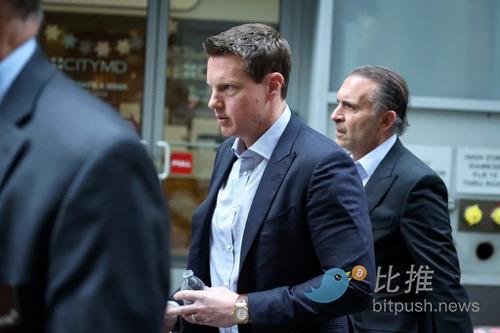
Larry Ellison helped finance his son David's acquisition of Paramount and CBS, and also supported David's bid for Warner Bros. Discovery. Photo Credit: Reuters
To make up for the remaining funds, they turned to foreign investors, including the United Arab Emirates, Saudi Arabia, and Qatar. If Ellison and his son complete the deal, these three authoritarian regimes will hold 38.5% of the shares in one of America's largest media and entertainment companies. Meanwhile, Ellison will be in charge of a hybrid empire of media and technology, whose influence is comparable to that of some of the world's most powerful groups.
At this point, Ellison, Jolin, and their growing family are spending more time at their $173 million estate in Manalapan, Florida. It's only a short drive from Trump's smaller Sea-Lake estate in Palm Beach. Thanks in part to this new neighbor, everything seemed to fall into place for Ellison — even TikTok.
Trump repeatedly extended ByteDance's divestment of TikTok's US business, essentially contrary to the will of Congress; in the end, he sent Vice President JD Vance — who was also a Silicon Valley venture capitalist — to design a deal to keep the app operating in the US. In January of this year, the Trump administration announced that Oracle, the UAE Investment Fund, and several other entities will form a joint venture to acquire a majority stake in TikTok's US business. Oracle will continue to be responsible for protecting the personal data of US users.
The 2024 law clearly prohibits ByteDance from having “any operating relationship” with TikTok's US business. According to this agreement, ByteDance will still retain ownership of the platform's powerful recommendation algorithm and then license the algorithm to the joint venture. ByteDance will also be the single largest investor, holding 19.9% of the joint venture's shares — only 0.1 percentage points short of the allowable upper limit. A Trump administration spokesperson said the agreement complies with the law and that US user data is also secure.
Five national security officials during the Biden era told us that the deal was far from enough to allay their initial concerns, as it still gave China too much control over the platform. An official who was responsible for the TikTok issue said, “It clearly violates the spirit of the law, and it may also violate the provisions of the law.” The hawks in the right-wing camp have the same views on China. The Wall Street Journal Editorial Board warned: “Don't be surprised if this new, but not necessarily improved, TikTok becomes a tool for China to continue to poison American political debates.”
“Fallen Angels”
If 2025 was Ellison's triumphant year, then 2026 is presenting a completely different picture.
Wall Street seems increasingly worried about the high level of debt that Oracle is burdened with. All hyperscale cloud service providers are making huge investments in AI and accumulating huge debts for this. But Oracle is a whole other level.
At the end of last year, when the company borrowed billions of dollars to finance continued construction of data centers in Texas, Wisconsin, and New Mexico, two Morgan Stanley credit analysts sent reports to investors, estimating that Oracle's debt and data center leasing obligations could triple in the next three years.
A Financial Times headline reads:“Morgan Stanley thinks you should short Oracle.”
What is more remarkable is Oracle's so-called debt-to-equity ratio,Approximately 500%— In other words, every $1 in shareholders' equity is equivalent to $5 in debt. In comparison, Amazon is around 50%, and Alphabet is much lower.
But Oracle continues to borrow money.
On one day in February alone, the company issued $25 billion worth of bonds. Soon after, it raised the bank's credit line to $10 billion to prepare to borrow more money.
Oracle's debt began to hamper its ambitions, as the company had pushed the credit market to its limits. In March of this year, since Oracle was the lessee of the project, several banks insisted on limiting funding commitments for the project, and Oracle was forced to cut back plans for the “Stargate” park in Texas.
In the same month, Oracle did what heavily indebted and cash-hungry companies usually do: without giving any explanation, it began cutting thousands of employees, or about 18% of the total number of employees. Whether AI will hit the US workforce hard remains uncertain, but it is already hurting Oracle's workforce. At this point, the company's stock price began to collapse. By early April, the stock price was down about 55% from its high in September last year.
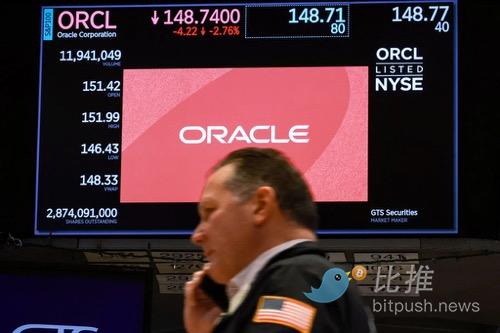
As of late July, Oracle's stock price was down about 60% from last year's peak. Photo Credit: Reuters
For Oracle, part of the sudden challenge was a mismatch of timing. Its capital expenses are soaring, and the company won't start receiving payments from OpenAI until 2027 — tens of billions of dollars a year. But there are other reasons for concern. ChatGPT now faces real competition from Anthropic's Claude model and various Chinese models. OpenAI already has hundreds of billions of dollars in payment obligations in deals with other AI companies and chipmakers; its revenue is growing, but so are cash requirements and losses. OpenAI is not expected to be profitable until 2030.
Despite this, Oracle is convinced that OpenAI will soon deliver on enough promises to prove that its strategy is not only correct, but extremely successful.
Oracle's annual report released in June strongly touted the company's success in turning to AI and assured investors that its cloud business is still growing and that strong cash flow is sufficient to meet its obligations. But the report also acknowledged the company's precarious situation. Oracle notes that it cannot guarantee that it can manage its outstanding debts; these debts have now grown to $130 billion. The company also warned that customers may be unable to pay for services and that the regulatory environment may also change, jeopardizing its business in China.
In July of this year, S&P Global Ratings downgraded Oracle's credit rating. The company's debt is currently only one level higher than the “junk level.”If downgraded again, Oracle will become what Wall Street calls a “fallen angel”——Financing costs will rise further, and potential lenders will also be drastically reduced.
At the local level, urban residents and local regulators have also begun to resist building resource-intensive data centers within the community, causing more trouble for Oracle. The Wisconsin Public Utilities Commission is trying to force the company to bear the cost of a grid upgrade; the upgrade is necessary because four data center buildings will be built on a 672-acre site. This will require Oracle to raise at least another $7 billion. In its testimony against the measures, the company said the prospects were “extremely difficult.”
In mid-July, there was another ominous sign on Wall Street: the price of Oracle's five-year credit default swap — essentially the price investors paid to hedge against a possible default on corporate bonds — rose to the highest level on record.
By late July, Oracle's stock price was down about 60% from last year's peak. Ellison's net worth is still over $170 billion, but much of his wealth is tied to Oracle stock, which is plummeting. According to a recent filing, he holds more than 1.1 billion shares of the company. At the same time, he also used these shares as collateral for loans and pledged 346 million shares as guarantees for personal loans. Ellison is the only Oracle executive authorized to make such loans; the Corporate Governance Committee says it will monitor Ellison's stock pledging activities.
David Ellison's $111 billion bid for Warner Bros. Discovery is also in trouble. Twelve state attorneys general filed lawsuits to block the deal, and a judge granted a temporary restraining order. Soon after, Paramount Sky Dance announced a delay in the acquisition, citing ongoing lawsuits. The $45.7 billion promised by Ellison to support David's bid now represents a much higher share of his net worth than when he made the promise less than a year ago. If he needs to raise money, now isn't a good time to sell Oracle shares or use the shares as collateral to borrow money again.
That “CEO of everything” has fallen to the altar.
“Nuclear Winter”
The AI story is as much a technical story as it is a financial story: the question is how to structure the funding for the incredibly huge investment required to train and run the model. There is little doubt that this technology will change everything. What's even less clear is when the profits will actually start rolling in, and how big they will be. Asad Ramzanali, head of AI at a policy center at Vanderbilt University, said, “In my opinion, this is a math problem. We use tens of billions of dollars in revenue to support trillions of dollars of investment.”
There is a growing consensus that these numbers add up to a bubble. Perhaps the more critical question is: How big is the bubble? Once it breaks, what will happen again? Macroeconomic research firm MacroStrategy Partnership estimates that the AI bubble is 17 times larger than the Internet bubble and 4 times the 2008 housing bubble. The real estate crash may be particularly worth learning from. It spread like an epidemic across the economy because the real estate market itself absorbs investment from the entire economy. The AI boom is even more so: it is driving growth in every sector in the US — real estate companies, banks, and even energy wholesalers are all riding the AI wave.
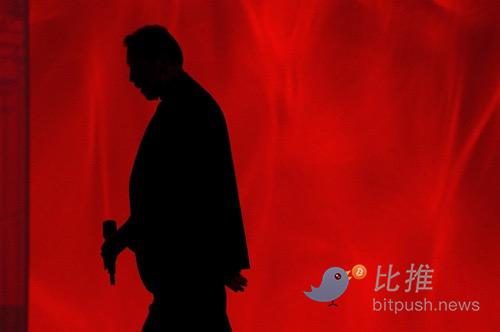
In 2011, Ellison attended the Oracle OpenWorld conference. Photo Credit: Bloomberg, Getty Images
The financial structure of data center expansion makes it particularly vulnerable in the face of collapse. The deal itself is based on extremely complex debt and equity arrangements, which also include revolving financing. Hyperscale cloud service providers are investing heavily in companies they expect to buy their own computing power. Economists call this structure a “chain debt structure.” If customers find it difficult to commercialize products, they will be hit particularly hard — investors too, including many ordinary Americans. It's still just an American company. The AI boom is a global phenomenon; the collapse of AI will also become a global phenomenon.
The opposite of turning AI into the future of everything is the nightmare of financial collapse. Oracle has become a barometer of this major expansion of AI infrastructure. It is one of the largest hyperscale cloud service providers with the highest leverage ratio, and its future profits are highly dependent on a few customers.
Larry Ellison was last declared the richest man in the world before 2025, in April 2000 — the peak of the internet bubble. In March of that year, the Nasdaq Composite Index set the closing record at the time, more than double that of a year ago. However, investors are beginning to notice that startups such as Pets.com and eToys are burning money at an astonishing rate and have not brought amazing profits. People joke about the home delivery startup kozmo.com: it loses money every time it takes an order, but it “makes up” for it by increasing the number of orders. By 2002, Kozmo had disappeared, and the Nasdaq Composite Index had lost nearly 80% of its market value. Analysts have compared the financial aftermath to a “nuclear winter.”
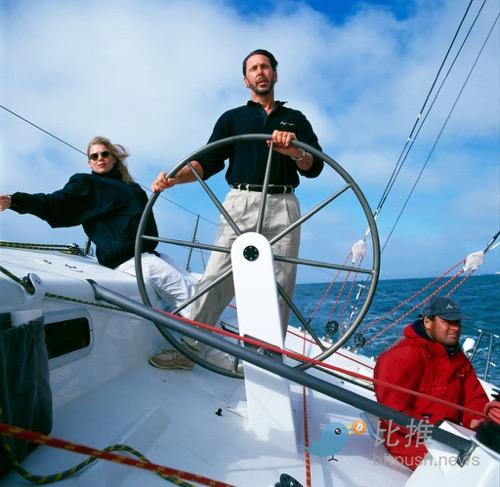
In the 1990s, Ellison sailed the 79-foot race yacht “Sayonara” around San Francisco Bay; at the time, he was also riding a huge financial wave. Photo Credit: Louie Psihoyos
When the internet bubble burst, Ellison was also hit hard, losing tens of billions of dollars. But from beginning to end, he was still a billionaire. By 2018, he had more wealth than when he was the richest man in the world — except Bill Gates had more wealth then. In 2000, a bubble brought Ellison to the top. In 2025, is it the bubble that brought him to the top again? Or will his all-out bet on artificial intelligence eventually succeed, making Oracle the center of a new global AI economy and putting him in control of a huge media group?
The answers were critical to Ellison. But for all of us, it's probably even more important.
Twitter:https://twitter.com/BitpushNewsCN
Compare the TG exchange group:https://t.me/BitPushCommunity
Compare TG subscriptions:https://t.me/bitpush
