
并购 · 1045
They are all stealing earlier data. Where exactly is VC Alpha hidden?

They are all stealing earlier data. Where exactly is VC Alpha hidden?

Author: insights4vc Compilation: Shenchao TechFlow Original title: Private Equity Market Intelligence Warfare Heats Up: In the AI Era, Where Did VC Alpha Come From? Guide to Deep Wave: Venture capital returns are extremely concentrated, and finding a good company in the early stages is almost the life and death line of a fund. This article breaks down the latest evolution of private equity market data tools and whether they can actually bring in excess profits. This is a sobering map for investors who are using AI and research tools to find projects. Venture capital has always been an information business. The advantage often lies in timing: founders tell former colleagues instead of updating data first; new companies start recruiting people before they appear in the database; investors start watching a team before the funding is announced. This advantage is important because VC returns are highly concentrated. According to data from the 2026 Oxford Academic Study, 4.5% of the investment amount contributed to a return of about 60% in a long-term LP data set. [1] Therefore, missing a few excellent companies can affect the entire fund. But finding them early is only part of the problem. Investors also need to develop beliefs, get credits, obtain meaningful holdings, and keep things right for a few years. The private equity market data industry is now getting closer to the moment the company was born. PitchBook, Crunchbase, Dealroom, Tracxn, and CB Insights remain core recording systems for transactions, funds, valuations, and company history. PitchBook generated revenue of $174.7 million in the second quarter of 2026, equivalent to nearly $700 million in annualized revenue. [2] The new platform is not replacing this layer. They're extending this layer with faster updates, behavioral data, and signals that predate traditional company records. Three changes stand out the most. First, companies such as Harmonic and Specter are building a continuously updated map of companies and people, rather than relying mainly on regularly updated data. Second, specialty products are looking for earlier behavioral signals. Evertrace tracks metrics formed by founders, including company registrations, technical activity, research, and domain names. Frontrun monitors changes in selected venture capitals' interest maps on X. Third, the API and Model Context Protocol (MCP) are moving this data into the fund's own software and AI workflows. Crustdata represents the infrastructure side of this market, while Affinity complements first-party relationship data from emails, calendars, and CRM events. Adoption is visible, but evidence of excess return on investment is not clear. Harmonic says hundreds of venture capital teams use its platform, and Specter reports more than 300 investment institutions, Evertrace more than 200 funds, and Affinity more than 3,300 private equity firms. Listed company Tracxn disclosed that it had 2,289 customer accounts in fiscal year 2026. [3] [4] [5] [6] Most of these figures are self-reported by companies. Vendors rarely disclose the complete set of companies unearthed by their models, making it difficult to assess accuracy, recall rates, false positives, and the economic value of individual leads. No single signal alone is enough. Employee departures may be early but vague. Company registration is objective but common. GitHub activities are valuable in developer-led markets, but have limited relevance in other areas. Hiring speed and employee migration provide broader signals, while revenue, customer, and usage data are often more valuable for decision-making, but come later. When several credible industry experts focus on the same company, investors' attention can provide early signs, even though this signal is platform-dependent and may reinforce itself. The strongest defensive sources are likely to be hidden deeper in the data stack: historical time series that cannot be reconstructed later, accurate physical analysis across people and companies, authorized first-party fund data, and distribution through CRM systems, APIs, and agents. Public data is not necessarily proprietary. However, five years of correctly time-stamped change history can become a proprietary asset. AI is more likely to make these infrastructures more easily queried rather than eliminate the need for them. As research, classification, and workflow costs drop, clean data, sources, and institutional context become more valuable. Investment decisions, quotas, and relationships are still not something a simple layer of automation can solve. The likely outcome is that a broader market for private market intelligence will emerge, rather than an independent search for project software categories. A mature database will increase discoveries and...
1d agoburnking
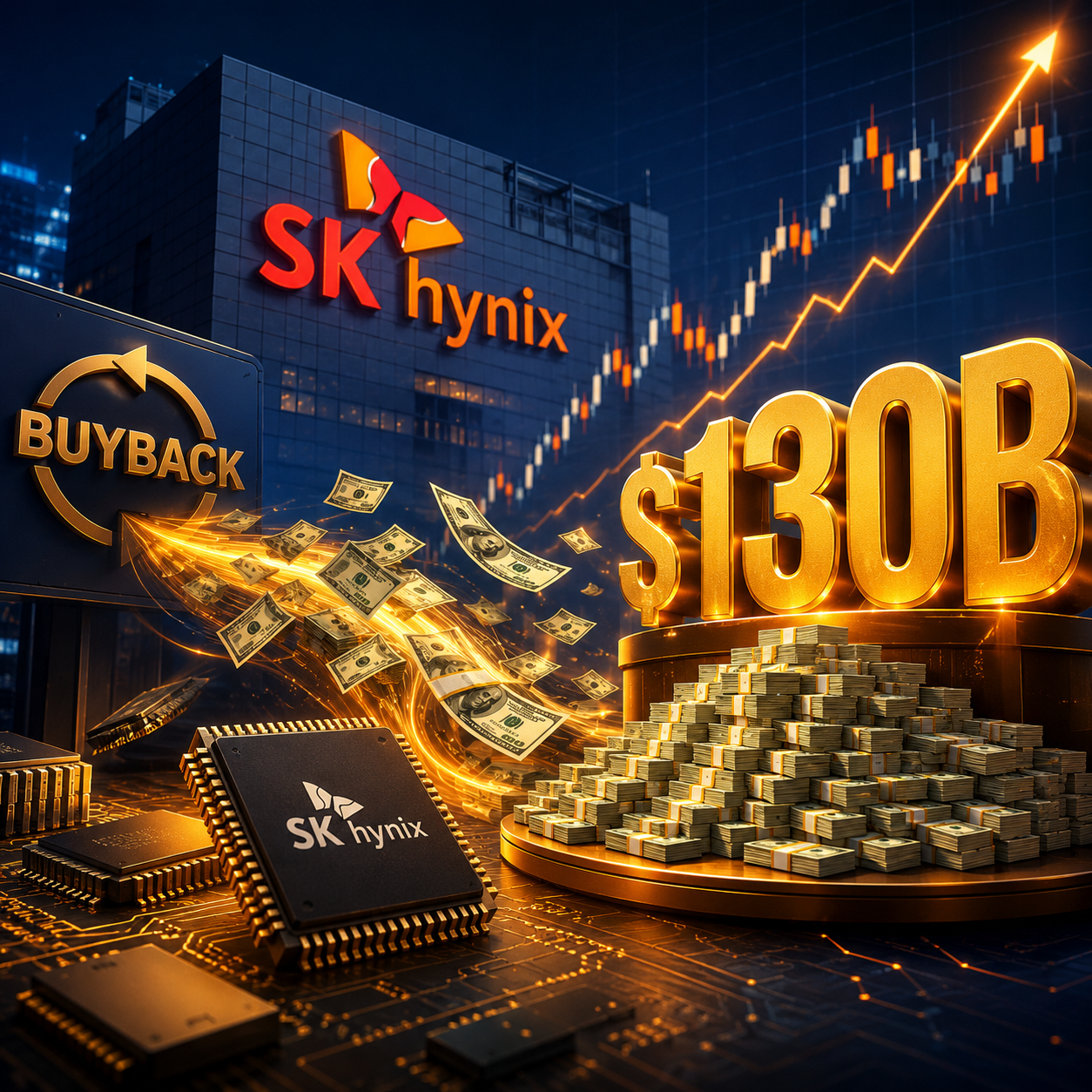
Is 40 trillion just an “appetizer”? The Hynix buyback landed ahead of schedule. Is 130 billion US dollars still ahead?

Is 40 trillion just an “appetizer”? The Hynix buyback landed ahead of schedule. Is 130 billion US dollars still ahead?

Source: Wall Street News Editor: Dong Jing Original title: Wall Street interprets Hynix's repurchase plan: Shareholder return of up to 8% next year, or return at least $130 billion to shareholders by 2027 Summary: J.P. Morgan believes that the shareholder return policy was upgraded from “no more than 50% free cash flow” to “no less than 50%”, changing from the upper limit to the lower limit, sending a clear signal to the market: future shareholder returns will only be greater, not less. Goldman Sachs predicts an 8% shareholder return in 2027, and expects an additional repurchase of approximately 7 trillion won in the future. J.P. Morgan expects additional return of over 16% of its market value by the end of 2027. Follow-up focus will be on the results meeting at the end of October. While the market was still debating the continuation of the AI storage cycle, and SK Hynix's stock price plummeted from a June high, the storage giant suddenly threw a huge bomb on the market. A historic repurchase, which was implemented early, reshaped the market's valuation logic for Hynix! SK Hynix officially announced the market's long-awaited shareholder return policy after closing on August 19, 2026 — it plans to repurchase and cancel 40 trillion won worth of shares, involving 24.07 million shares (3.3% of the shares issued as of the end of the second quarter of 2026), equivalent to about US$28.9 billion. This scale is not only the largest share repurchase in the history of a Korean listed company, but also exceeds the approximately 26.5 billion US dollars that Hynix raised through ADR financing in the US in early July this year. According to Chase Trading Desk, the two top Wall Street agencies, J.P. Morgan Chase and Goldman Sachs, both gave highly positive comments on the announcement in their latest research report on August 20. J.P. Morgan believes that the shareholder return policy has been substantially upgraded from “no more than 50%” to “no less than 50%”, and the policy ceiling has become the policy floor. Following the announcement of a 40 trillion won ($29 billion) share repurchase plan, SK Hynix may return at least $130 billion to shareholders by 2027, according to J.P. Morgan Chase. Goldman Sachs predicts a shareholder return of up to 8% in 2027, and expects an additional repurchase of approximately 7 trillion won in the future. Both J.P. Morgan Chase and Goldman Sachs maintain buying ratings: J.P. Morgan's target price is 2.75 million won (about 84% upside compared to the current price), and Goldman Sachs's target price is 3.5 million won (implying an upward margin of about 133%). The next key catalyst is the third quarter results conference call at the end of October 2026, when the company will reveal a more complete roadmap for shareholder returns. Analysts believe that this aggressive capital action directly proved to Wall Street that the company is “printing money” faster than market expectations. For the stock price, which has plummeted 49% since its high on June 22, this not only completely offset the dilution effect of the recent ADR issuance, but also established a valuation bottom (current annualized price-earnings ratio of only 3.8 times). The scale of the repurchase: The largest in history and earlier than expected. J.P. Morgan analyst Jay Kwon clearly stated that the 40 trillion won repurchase announcement “landed earlier than expected” — previously, the market generally expected the announcement to be released around the end of September, but the company chose to directly disclose it after closing on August 19, showing management's high level of confidence in the company's cash flow situation. In terms of scale, this repurchase has multiple historical significance: 40 trillion won is the largest share repurchase announced by a Korean listed company so far; equivalent to US$28.9 billion, higher than the approximately US$26.5 billion raised by Hynix's US ADR offering in early July, which means that the company actually used the repurchase to “hedge” the previous equity dilution; this amount is equivalent to 63% of the rolling FCF (operating cash flow minus capital expenses) over the past 12 months, & nbsp; It is higher than the previous “no more than 50%” FCF allocation limit policy. At the same time, J.P. Morgan Chase pointed out that if viewed from a valuation perspective, the price-earnings ratio corresponding to Hynix's current stock price is 6.4 times (based on adjusted earnings per share for the past 12 months) or 3.8 times (based on annualized adjusted earnings per share for the first half of 2026). This valuation level can be regarded as a reference benchmark for management to initiate repurchases. Policy upgrade: From “ceiling” to “floor”, the core policy change in this announcement is that the shareholder return ratio statement was upgraded from “up to 50% (no more than 50%)” to “50%”...

1d ago22#SK Hynix #J.P. Morgan Street

Stripe buys OpenRouter for more than $8 billion, says the private model is more suited to the “era of singularity,” and the IPO may be delayed

Comparing news, according to Axios, payment giant Stripe said in a letter to investors that January 1 marks “the beginning of a singularity”, sees it as a major inflection point in a long-term trend, and believes that maintaining a private structure is most suitable for this critical moment, and the IPO may continue to be put on hold. The company said that in the first half of the year, revenue increased 41% year over year and free cash flow increased 43%; 88% of Forbes AI 50 companies (including OpenAI and Anthropic) built on their platforms, and the share of revenue from AI and crypto companies has more than doubled year over year. Stripe also confirmed the acquisition of the AI routing platform OpenRouter. The transaction consideration was not publicly disclosed. Axios received more than $8 billion and was mainly paid in shares. Stripe says maintaining private ownership will help advance mergers and acquisitions and long-term investments without diluting shareholders. Its share capital is lower than three years ago, and the compound annual return on share prices since Series D has been around 31%. According to the company, total platform payments reached 1.9 trillion US dollars in 2025, an increase of 34% over the previous year; the employee share acquisition in February this year was valued at about $159 billion. There are also reports that Stripe is discussing a $53 billion takeover of PayPal with Advent International.

2d ago

Metaplanet uses Bitcoin to hold Super League, and Zhibao Technology completed a private placement of 2,380 BTC

Comparative news, according to BBX data, yesterday global listed companies revealed the latest developments in cryptocurrency strategic mergers, acquisitions and financing. The core information is as follows: Meta Planet invests 2,100 BTC holdings in Super League to create a multinational treasury: Super League Enterprise and Meta Planet reached a final agreement. Meta planet will invest 2,100 bitcoins (worth approximately $132.1 million) and $2.5 million in cash through its wholly-owned US subsidiary in exchange for 44,859,400 Super League shares ($3 each), preferred shares, and warrants. After the transaction is completed, Super League will change its name to “Super Planet, Inc.” and become a consolidated subsidiary of Meta Planet holding approximately 95.7% of the shares, thus creating a Bitcoin treasury platform spanning the NASDAQ and Tokyo Stock Exchange. Zhibao Technology completed $154.7 million PIPE financing, fully paid in Bitcoin: NASDAQ listed company Zhibao Technology (ZBAO) announced the completion of a $154.7 million private equity financing (PIPE). The company issued a total of 442 million PIPE units, and investors paid in full with 2,380 bitcoins (calculated at a market price of approximately $65,000 each on July 30). The funds raised will be used to strengthen the financial base, accelerate business growth, and deepen strategic collaboration with the cryptocurrency and Web3 sectors.

3d ago#financing

Databricks closes $5 billion financing led by Coatue

Comparatively, AI data infrastructure company Databricks announced the completion of a strategic financing of 5 billion US dollars, and the company's post-investment valuation reached 190 billion US dollars. The funding round is larger than the $188 billion valuation plan previously disclosed, and the funds will be used to advance AI infrastructure layout, product development, and potential mergers and acquisitions. The funding round was led by Coatue, with the participation of Blackstone, MGX and T. Rowe Price, and Sixth Street Growth joined as a new investor. Ali Ghodsi, co-founder and CEO of Databricks, said that the company's current annualized revenue run rate (revenue run rate) has exceeded 7 billion US dollars, an increase of more than 80% over the previous year. In terms of AI agent infrastructure, Databricks believes that the scale of AI generation software will grow dramatically in the future, and every AI application needs database support. The company said its Lakebase launches more than 16 million Postgres database instances every day and enables AI agents to quickly create, test, and destroy application environments. (Forbes)

9d ago#financing
Goldman Sachs spent $2.25 billion, and crypto followed the trend

Goldman Sachs spent $2.25 billion, and crypto followed the trend

Goldman Sachs is entering the ETF market again. On August 12, Goldman Sachs announced that it had reached an acquisition agreement with asset management company NEOS Investments, with a transaction consideration of up to US$2.25 billion, paid in cash and shares, and linked to some performance and service commitments. Currently, the transaction has not been completed, and regular conditions such as regulatory approval are still required. Delivery is expected in the first quarter of 2027. Because NEOS has three Bitcoin and Ethereum-related ETFs, the deal was quickly labeled “Goldman Sachs adds encryption.” But if you take a look at NEOS's asset composition, you'll find that crypto is actually only a small part of this deal. What Goldman Sachs really wants to buy is NEOS' ability in active ETFs, especially in options income strategies. With assets of 30 billion US dollars, crypto accounts for only about 4% NEOS was founded in 2022. Currently, it manages about 30 billion US dollars in assets, and has 19 option-type income ETFs. Its core strategy is uncomplicated: it superimposes options on top of asset exposures such as stock indices, bonds, gold, and Bitcoin, and earns additional income by charging option fees. What really supports the scale of NEOS is not Crypto. As of August 11, its two largest products — the S&P 500 High Income ETF (SPYI) and the Nasdaq-100 High Income ETF (QQQI) — had assets of about US$11.36 billion and US$13.87 billion respectively, totaling more than US$25.2 billion, accounting for more than 80% of NEOS's total size. In contrast, the net assets of the three crypto-related products BTCI, XBCI, and NEHI are about US$1.1 billion, US$111 million, and US$77.67 million respectively, totaling about US$1.29 billion, which is only about 4% of NEOS's total assets. So, this is not a “Goldman Sachs spent $2.25 billion to buy a crypto ETF” transaction, let alone $2.25 billion about to flow into Bitcoin and Ethereum. If the deal is finally completed, these three products will enter Goldman Sachs Asset Management's product portfolio, but they are more like a puzzle piece of NEOS's many strategies. What really interests me is the active ETF business, why is Goldman Sachs willing to pay up to $2.25 billion for an ETF company with only four years of history? The core is growth and charging capacity. According to Morningstar data, the current asset size of global derivatives yield ETFs has reached about 180 billion US dollars, with a compound annual growth rate of more than 70% since 2021, making it one of the fastest growing categories in the ETF market. This type of product also has a real appeal for asset management companies: the rates are much higher than traditional index ETFs. Currently, many ordinary S&P 500 ETFs have reduced their rates to a few basis points, while NEOS' two largest funds, SPYI and QQQI, have management fees of 0.68%. According to estimates, these two products account for more than 80% of NEOS's assets and may contribute about 200 million US dollars in revenue each year. This is the key that Goldman Sachs is willing to pay a high price. Goldman Sachs has been expanding its asset and wealth management business over the years, hoping to increase more stable management fee income and reduce its dependence on cyclical businesses such as investment banking, mergers and acquisitions, and transactions. In the second quarter of this year, the net revenue of Goldman Sachs's asset and wealth management business was 4.6 billion US dollars, an increase of 20% over the previous year. Jefferies analysts believe that the acquisition of NEOS not only seizes the trend of accelerating the popularity of derivative yield ETFs, but also further increases Goldman Sachs's more sustainable asset management revenue. And NEOS isn't an isolated deal. Earlier this year, Goldman Sachs completed the $2 billion acquisition of Innovator Capital Management, which also focuses on options and buffer ETFs. Successive moves are clearly complementing active ETFs, yield strategies, and risk management product lines rather than a sudden shift to betting on cryptocurrencies. After the transaction is completed, Goldman Sachs's active ETF scale is expected to reach about 80 billion US dollars, and the entire global ETF platform will reach about 130 billion US dollars, and rank among the top eight active ETF management agencies in the US. The three crypto ETFs are still worth watching. Currently, the price of Bitcoin is about US$63,500 and Ethereum is about US$1,625, all of which have clearly declined from previous highs. In a bull market, what investors are most concerned about is how much the price will rise; however, after entering a phase of high volatility, shock, or even decline, “whether revenue can be obtained from the fluctuation itself” becomes attractive. For example, NEOS' BTCI will gain price exposure through Bitcoin ETP, and at the same time, combine a bullish option strategy to try to turn Bitcoin's high volatility into a monthly one...

10d agoWendy#ETF #original #Fund #takeovers #Goldman Sachs
Manus and Lin Junyang are back

Manus and Lin Junyang are back

Source: Tencent Technology Author: Joanne Editor: Su Yang On August 12, two star projects and characters that have received a lot of attention in the AI community announced their return. On August 11, local time in the US, AI startup Manus issued a notice to users stating that the company will “soon resume operating as an independent company.” As part of the separation from Meta, data generated by some users on or after December 29, 2025 will be removed in accordance with regulatory requirements. According to the company's notice, affected users are required to complete data backup by 7:59 Singapore time on August 23. From August 23 to August 24, the relevant data will be deleted and affected accounts will be temporarily inaccessible. Starting at 8 o'clock Singapore time on August 25, users can restore previously backed up data and re-use the service. Manus said the adjustments were not due to data breaches or security incidents, but rather measures taken to meet regulatory requirements in specific jurisdictions as the company resumed independent operations. Unaffected users can continue to use the service normally without taking any action. A few hours later, another important return news came from Lin Junyang. The former technical leader of Alibaba's Qwen project announced the establishment of an AI lab Pragmatik (p7k) Labs (pragmatic technology) in Shanghai to focus on research on next-generation intelligence in the digital and physical worlds. Both are intelligent projects, involving the return of a company and the restarting of a technology leader, but they all point to the same change: AI competition is extending from the model's ability itself to how the model can use tools, adapt to the environment, and complete actual tasks. The Meta acquisition has entered the cancellation phase. Manus's deal with Meta began on December 29, 2025. On the same day, Meta announced plans to buy Manus. The company was founded in 2022 and initially developed in China before moving to Singapore, where it mainly develops AI smart products. The two sides did not announce the amount of the deal at the time, but previous reports indicated that the deal was about US$2 billion, and the total potential value, including employee retention arrangements, could reach US$2.5 billion. Following the completion of the acquisition, Meta plans to apply Manus' AI agent technology to its consumer and enterprise products to enhance AI business capabilities. However, the deal subsequently received regulatory attention. On April 28, CCTV news reported that the Manus merger and acquisition case, which has received much attention from all parties, has landed, and the China Foreign Investment Safety Review Working Mechanism Office (National Development and Reform Commission) made a decision prohibiting foreign investment in the acquisition of the Manus project according to law and regulations, requiring the parties to cancel the acquisition transaction. Since then, Manus and Meta have begun to push ahead with the separation of operations and stopped sharing data between the two sides. According to previous information, the two sides completed the separation at the operational level in May. Currently, Manus is completing the final stages of data processing and preparations for independent operation. This data adjustment mainly relates to data generated on and after December 29, 2025. Manus said the relevant data was deleted to meet regulatory requirements. The company has launched data backup and recovery tools to help affected users keep task records. Affected users can back up multiple times during the backup window. If users continue to generate new task data after completing the first backup, they need to back up again to ensure that the latest data is saved. Manus said affected users will not be charged during the backup period. Once the account is reinstated, the company will also provide a return bonus. For users registered with an Apple ID or Facebook account, since Manus may not have a corresponding email address, the company reminds users to pay attention to in-app notifications. The company behind Manus's founding team and product line Manus is Butterfly Effect, founded in 2022. Founder Xiao Hong previously worked in enterprise software development for a long time. According to data, he studied software engineering at Huazhong University of Science and Technology. After graduating in 2015, he founded Wuhan Nightingale Technology. Its WeChat tools “Yipan Assistant” and “WeChat Assistant” serve more than 2 million commercial users. Butterfly Effect then launched Monica, an AI assistant product that integrates the capabilities of multiple language models. Manus...

10d agoWendy#AI #Manus #Lam Chun Yeung #Pragmatic technology
Selling posts, buying bitcoins, and merging nuclear fusion companies, Trump's media is becoming one of the “Four Dissimilar”

Selling posts, buying bitcoins, and merging nuclear fusion companies, Trump's media is becoming one of the “Four Dissimilar”

Author: KarenZ, Foresight News Original title: Trump Media, what kind of company is it becoming? One company only earned $1.67 million in revenue in the second quarter, but recorded a net loss of $238 million; it just cut off a CRO treasury company's listing plan and swapped about $160 million in Bitcoin-related equity securities for spot BTC; its latest business was to sell public posts from leading accounts to Wall Street using a low-latency data interface. Finally, management told investors that the company's most important future value driver is a nuclear fusion enterprise. These businesses, which don't seem to be on the same track, are now all concentrated on Trump Media & Technology Group (Trump Media & Technology Group). On the face of it, Trump Media's revenue for the second quarter increased 89% year over year, and it seems that it has finally found growth. However, if you unpack the financial reports, you'll find that Truth Social's original advertising revenue is actually declining. The huge losses are mainly due to fluctuations in crypto asset prices. The $1.9 billion “financial assets” promoted by the company are not equivalent to freely usable cash; only about 425 million US dollars is cash and short-term investments. At the same time, it is experimenting with a more specific new business: selling public posts from leading accounts, including Trump, to Wall Street trading institutions with lower delays. Therefore, what is really worth watching about this financial report is that Trump Media is redefining what it actually makes money from. Behind revenue of 1.67 million US dollars, Truth Social advertising actually declined Trump Media's revenue in the second quarter, up about 89% year over year; net loss increased from 20 million US dollars in the same period last year to 238.1 million US dollars. The main factor causing the huge loss was not server, staff, or content costs, but changes in asset prices. The loss of digital assets and pledged digital assets for the quarter was US$116.7 million, and investment losses were US$71.76 million. The combined loss of the two was approximately US$190.4 million. However, in turn, the media business cannot be assumed to be close to break-even because losses mainly come from book fluctuations. After excluding the digital asset losses of US$116.7 million for the quarter according to the operating profit scale, the remaining business and corporate expenses still corresponded to an operating loss of approximately US$46.82 million; of these, general and administrative expenses reached US$35.94 million, and legal expenses alone were US$25.62 million. The company says the costs are mainly due to legacy lawsuits prior to the DWAC merger and are expected to decline as the case is resolved. What is more likely to be overlooked is revenue composition. Second-quarter ad revenue was $1,43.48 million, Truth+ subscription revenue was $17.95 million, and Truth.Fi management fees were only $554 million. The 10-Q document clearly stated that Trump Media's revenue growth was mainly due to a barter advertising agreement, Truth+'s Patriot Package subscription, and ETF management fees, while Truth Social's own advertising revenue declined. In other words, “89% increase in revenue” is true, but that doesn't mean Truth Social's original advertising business grew 89%. A significant portion of the increase comes from new business and non-traditional advertising arrangements, which is more reflective of the current state of the business than reporting a separate doubling of revenue. $1.9 billion in “financial assets” is not $1.9 billion in cash Trump Media highlighted in a press release that the company had total assets of approximately $2,019 billion at the end of the second quarter, of which approximately $1,863 billion was classified as “financial assets.” This number seems quite plentiful, but when taken apart, its meaning changes. As of June 30, the company's cash and cash equivalents were $215.5 million, short-term investments were $209.2 million, and $30.74 million in restricted cash. The rest mainly includes $480.5 million in equity securities, $200 million in convertible notes and interest receivable from TAE, and approximately $719.8 million in digital assets and pledged digital assets. At the same time, the company's debt was approximately $9703 million. Most notable is the $1 billion convertible senior guarantee note. The note nominally doesn't expire until May 2028, but the holder has the right to...

10d agoburnking#Trump media

Dragged down by a decline in the value of BTC holdings, Tether-backed 21 Capital lost $4.1 billion in the second quarter

Comparing news, Twenty One Capital (NYSE: XXI), a Bitcoin treasury company backed by Tether, announced financial results for the second quarter of 2026. The company recorded a net loss of US$413.5 million, mainly dragged down by the decline in the value of Bitcoin holdings. Financial reports show that Twenty One Capital's second-quarter loss of about $401.5 billion came from a decline in the book value of its Bitcoin assets. As the company adopted Bitcoin as its core asset allocation, BTC price fluctuations directly affected its financial performance. New CEO Raphael Zagury said that Twenty One Capital will not only exist as a “Bitcoin treasury (Bitcoin treasury)” in the future, but will need to transform into a broader financial services platform. Zagury proposed that the next phase of the company's plans will revolve around three major directions, including: expanding the business layout through mergers and acquisitions; using capital market tools to enhance financing capabilities; and exploring loan business based on Bitcoin collateral. (The Block)

11d ago

Intercontinental Exchange launches bond financing to prepare for $6 billion acquisition of MarketAxess

Comparing news, the NYSE parent company Intercontinental Exchange (ICE) has begun issuing US investment-grade bonds. This move is only two weeks since the company announced the acquisition of the electronic bond trading platform MarketAxess for about $6 billion. People familiar with the matter revealed that ICE's current bond issuance plan is divided into a maximum of five parts, covering a period of 3 to 10 years. Preliminary pricing guidance for longest-term bonds is about 1.15 percent premium over US Treasury yields. ICE previously announced that it will acquire MarketAxess Holdings for approximately $6 billion to further expand its layout in the fixed income trading market. MarketAxess is one of the world's leading electronic bond trading platforms. It mainly serves institutional investors and provides trading services for fixed income products such as corporate bonds and government bonds. The acquisition is seen as an important step for ICE to strengthen the bond market infrastructure. ICE currently owns the New York Stock Exchange (NYSE), futures exchange, clearing house, and data service businesses, and MarketAxESS's electronic bond trading network will help ICE further expand its fixed income asset trading ecosystem. Market sources said that with the gradual digitization of bond transactions, traditional exchange operators are competing for institutional investment market share through the acquisition of trading platforms and data companies. This financing also reflects the trend of large financial infrastructure companies supporting strategic mergers and acquisitions through the debt market. (Bloomberg) This article is sponsored by GENG, Build Your Fortune on GENG (https://geng.one)

11d agoburnking