
点阵图 · 278
Predicting “no action” and betting on “interest rate hikes” exist at the same time. What are the concerns of the market on the eve of the FOMC?

Predicting “no action” and betting on “interest rate hikes” exist at the same time. What are the concerns of the market on the eve of the FOMC?

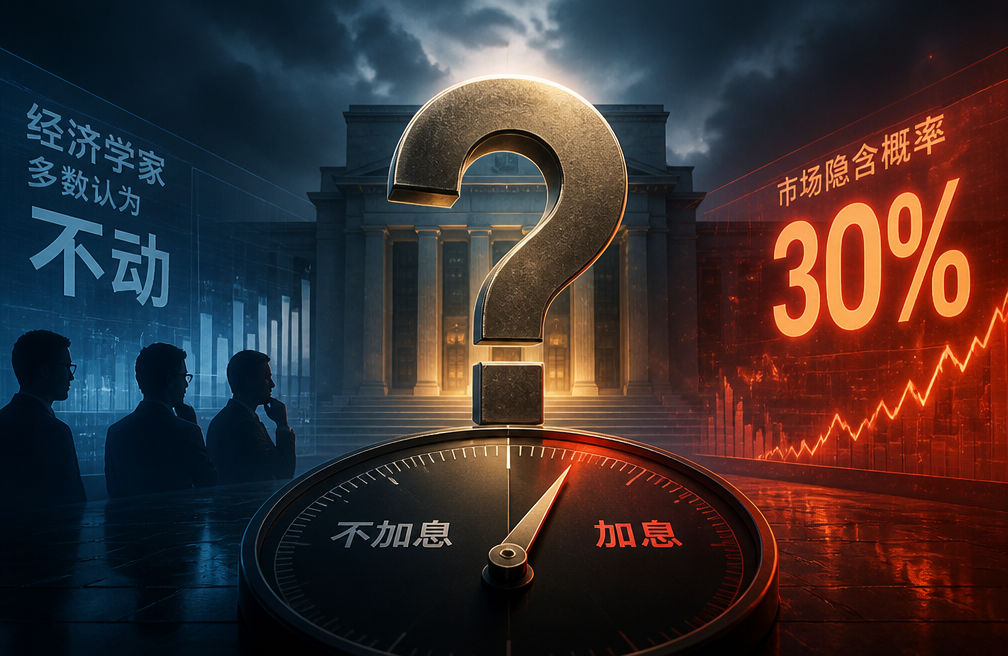
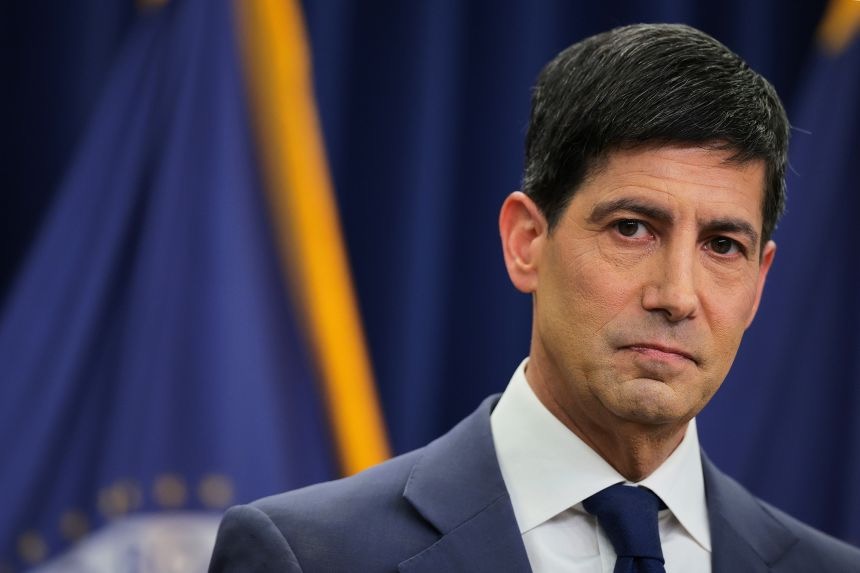
Author: Huohuo Original title: Whether to raise interest rates tonight: Economists say no, the market gave a 30% probability TL; the DR · Reuters survey showed that economists agreed not to raise interest rates in July, but the futures market once gave a probability of about 30% of interest rate hikes. · The disagreement centered on whether the oil price shock would force Warsh to use more hawkish communication to maintain inflationary credibility. · Related targets: US dollar index, USDJPY, WTI/Brent crude oil, gold, US stocks, Bitcoin and crypto assets. Federal funds futures were re-priced ahead of the July FOMC resolution, and traders began paying higher prices for the Federal Reserve to unexpectedly raise interest rates or release more hawkish signals. The anomaly is that economists' judgments are almost on the other side. According to a Reuters survey on July 21, all 104 economists expect the target range of 3.50% to 3.75% for the July meeting, and 78 of them expect it to remain the same until the end of the year. However, the futures market once gave a probability of about 30% of the 25 basis point interest rate hike. For investors, this isn't guessing the outcome of a meeting. The bigger question is whether the market is re-understanding how the Federal Reserve reacts to the impact of oil prices after Kevin Warsh took office as Chairman of the Federal Reserve on May 22. If Warsh sees the situation in the Middle East driving up oil prices as a temporary supply disturbance, the Federal Reserve is more likely to keep interest rates unchanged and wait for more data. If he is more concerned that oil prices will lead to secondary inflation, even if interest rates are not raised tonight, the September interest rate hike window may be reopened. The futures market buys hawkish tail risk federal funds futures, which can be understood as contracts betting on the path of the Federal Reserve's interest rate. The more open contracts, the more money is being bet or hedged around the outcome of the resolution. According to CME and media data leads, the federal funds futures open position contract rose to a high level before the resolution. This signal does not mean that the majority of the market believes that interest rates will be raised, but it indicates that the uncertainty before the resolution has already been traded into a crowded position. The “25 basis point rate hike probability” is the same logic. The probability of CME FedWatch comes from the 30-day federal funds futures price and is not the result of an economists' vote. The meaning of a probability of about 30% is that the tail risk suddenly becomes expensive. Markets don't necessarily think the Federal Reserve will act tonight. It's more like buying insurance for two types of unexpected events. One category is a direct rate hike, and the other type is no rate hike, but statements and press conferences suggest that the September rate hike has entered a serious discussion range. This is straightforward about asset pricing. The US dollar will be supported by interest rate expectations. If the yen continues to be pressured at a high level, the risk of intervention will be re-discussed. Overvalued stocks and crypto assets face higher discount rates and weaker risk appetite. The dispute between BofA and Citi is between hawkish agencies and dovish institutions that weigh oil prices. It is not about whether oil prices have risen, but about how the Federal Reserve should handle this rise. According to a Reuters report on July 27, institutions such as BofA and Deutsche Bank still use the July standstill as the benchmark scenario, but believe that oil prices and the situation in the Middle East made this meeting close to a dilemma. BofA's concern is that if the Fed completely downplays pressure on oil prices, it could challenge its inflationary credibility. This set of logic emphasizes the new chairman's first stress test. Warsh has just taken office, and the market doesn't have enough samples to judge the bottom line of his policies. If he seems too relaxed in the face of geopolitical shocks and inflationary pressures, investors may wonder whether the Federal Reserve is still willing to prioritize inflation. The judgment of agencies such as Citi is more biased towards a different set of explanations. The rise in oil prices is first a supply shock. Price pressure comes from concerns about energy supply; it is not that US demand is overheating. Interest rate hikes will not produce more crude oil; an overreaction may dampen growth. The core concept is secondary inflation. The rise in oil prices itself can be a short-term disturbance, but if it is transmitted to transportation, commodities, wages, and inflation expectations, it will become more enduring price pressure. Hawks are worried about the latter; doves believe that interest rates have not yet been raised to the point where it is necessary to raise interest rates. Therefore, what the market is arguing about is not the price of oil itself, but the weight of the oil price in the response function of the Federal Reserve. Will Warsh treat it as temporary noise or as a reputational risk that needs to be suppressed in advance. The new chairman amplified path pricing. The peculiarity of Warsh after taking office is that the market has yet to form stable expectations about his communication style. In the Powell era, investors were used to looking for path hints in wording, bitmaps, and press conferences. In the new presidency phase, the weight of every sentence will be amplified. If the Federal Reserve reduces forward-looking guidance and repeatedly emphasizes reliance on data, the market ostensibly gains flexibility; in reality, it assumes a wider distribution of interest rates. Traders are unsure about the policy path before the next meeting...
24d agoburnking#FOMC #Bitcoin #Federal Reserve #inflationary #gold
What the market is afraid of is not an interest rate hike, but that they can't guess Walsh

What the market is afraid of is not an interest rate hike, but that they can't guess Walsh

Markets haven't been so confused for a long time before the Federal Reserve's interest rate meeting. Early Thursday morning Beijing time, the Federal Reserve will announce the July interest rate decision. The futures market is still dominated by a “stand still” scenario, yet the probability of interest rate hikes of about one-third is taken into account at the same time. For a conference without bitmaps and economic forecasts, this kind of disagreement is extremely unusual: whether interest rates are raised or not, people may be caught off guard. The reason it's so hard to guess is because economic data gives answers in opposite directions. In June, the US CPI fell from 4.2% to 3.5% year on year, and the core CPI also fell from 2.9% to 2.6%; non-farm payrolls only increased by 57,000 people, but the unemployment rate fell to 4.2%, and wage growth did not get out of control again. Inflation is cooling down, and employment is not slowing down significantly. According to traditional logic, the Federal Reserve can just wait a little longer. The problem is that oil prices and geopolitical conflicts can push up energy costs again at any time, and the AI investment boom continues to drive demand for electricity, chips, and equipment. The Federal Reserve is not facing typical overheating demand, but rather a combination of supply shocks, strong investment, and stubborn inflation. Of course, interest rate hikes cannot increase oil supply, but they can prevent energy price increases from gradually spreading to wages, service prices, and inflation expectations. It also makes “staying on hold” no longer a risk-free option. Walsh is not simply a hawkish market's deepest impression of Walsh; it is his lack of patience with inflation. In his congressional testimony in July, Walsh stated bluntly that long-term inflation “is mainly determined by monetary policy” and that the Federal Reserve “has zero tolerance” for continued high inflation. When he was the governor of the Federal Reserve in the past, he was also often more concerned about rising inflation than the Federal Reserve staff, and opposed maintaining excessive policy easing even after the crisis ended. However, understanding Walsh only as an “interest rate hiker” is still not accurate enough. He believes that productivity increases, especially efficiency improvements brought about by AI, can make the US economy grow faster without necessarily creating higher inflation. At the same time, he has long advocated reducing the Fed's balance sheet and reducing the central bank's support for the bond market and asset prices. Wall Street summed up this set of ideas as “QT in exchange for interest rate cuts”: policy interest rates can be lowered, but the Fed's balance sheet must become smaller. Citadel Securities analysts believe that under this framework, “Fed put options” will be further away from the market; Walsh's reduction in forward-looking guidance may also cause market volatility to be higher than in the past for a long time. To put it more bluntly, Walsh may not always choose higher interest rates, but he wants investors to rely less on the Federal Reserve to bail out the market. This is exactly where the market is least used to. Over the past ten years, the Federal Reserve has usually released early signals to allow the market to complete most of the pricing before the meeting. But Walsh is more willing to keep his options open and re-examine the Federal Reserve's communication methods, balance sheet system, and inflation framework. So even if there is no rate hike this week, investors may not really be relieved. A pause may be just a temporary wait for data, or it may be the last observation period before the start of the interest rate hike cycle. As soon as interest rates rise, tech stock valuations shrink first. If the Federal Reserve unexpectedly raises interest rates, the impact will not stop at 25 basis points. Former St. Louis Federal Reserve Chairman Brad warned that the Federal Reserve rarely “just add it once.” The Bank of America also believes that the real question is whether decision makers are ready to start a cycle of at least a few interest rate hikes. Once the answer is positive, the market will reprice terminal interest rates, and two-year US Treasury yields and real interest rates are likely to rise. For US stocks, this means, above all, that valuations are under pressure. The current rise in US stocks is highly dependent on AI and large technology stocks, and the valuation of such companies is largely based on profits after many years. The higher the interest rate, the less valuable future profits will be when converted to today. What's more troubling is that tech giants are at the peak of capital expenditure. Data centers, chips, and power facilities require huge investments. As capital costs rise, the market no longer only asks “how much revenue AI can bring”, but also whether these revenues can cover increasingly expensive investments. Goldman Sachs anticipates that by 2027, approximately 35% of these AI-related capital expenses will be raised by issuing investment-grade bonds ($400 billion in debt/$1.14 trillion in total expenses), which means AI investments are increasingly dependent on leverage. Recently, chip stocks have clearly fluctuated due to market concerns about excessive investment in AI. Kristina Hooper, chief market strategist at Man Group, described the current market as “very bubbly,” and investors seem to be overreacting to any imperfection. Highly leveraged companies, small-cap growth stocks, and unprofitable tech companies are generally the most vulnerable; companies with stable cash flow, low debt, and pricing power are likely to have the upper hand. Instead, the most complicated scenario is “stand still, but the wording is hawkish...

24d agoWendy#encryption #original #Walsh #Federal Reserve #US stocks
The Federal Reserve's June minutes sent a cooling signal: inflation will not recede, interest rate hikes will not fall

The Federal Reserve's June minutes sent a cooling signal: inflation will not recede, interest rate hikes will not fall

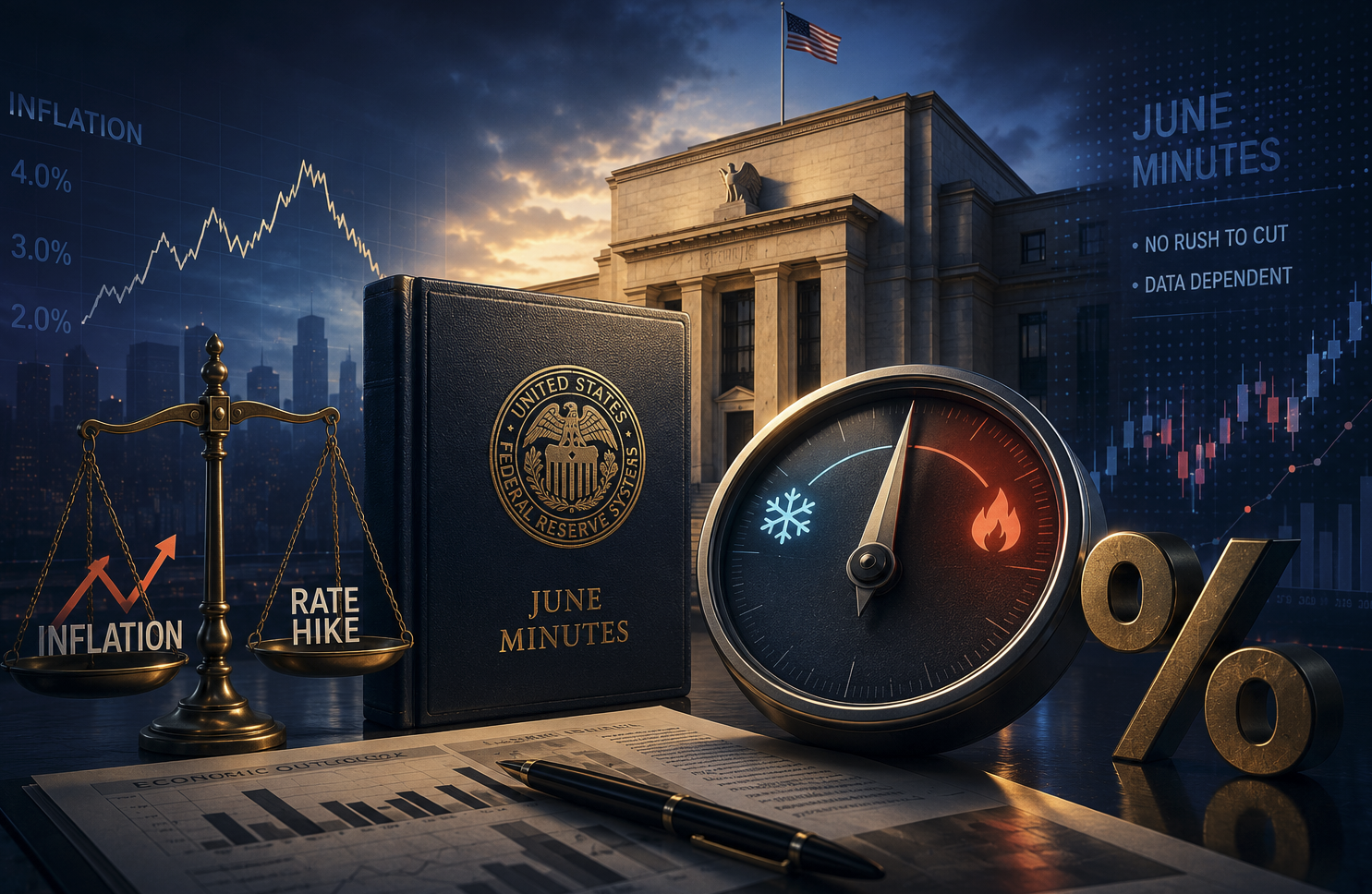
Source: Wall Street News Author: Long Yue Original title: Wall Street Review Federal Reserve June Meeting Minutes: Focus on inflation. There is no urgency to raise interest rates in the short term. The minutes of the meeting showed that all participants supported keeping interest rates unchanged. Only a “few” people thought there was a reason to raise interest rates, but in the end, they did not take action. Wall Street institutions believe that the trend of inflation is a core variable in the policy path — if inflation quickly subsides, interest rates will be maintained or lowered; if they continue to be high, they will face a certain degree of tightening. However, the market is too aggressive in pricing recent interest rate hikes; the benchmark scenario is to keep interest rates unchanged throughout 2026. The minutes of the Federal Reserve's June meeting came to fruition, and the three major Wall Street institutions unanimously read the same signal — inflation is the real switch that determines whether or not to raise interest rates. The minutes of the Federal Reserve's June FOMC meeting were released on July 8. The minutes showed that “all” participants supported keeping the federal funds rate unchanged in the 3.5%-3.75% range. The market initially worried that the records were hawkish, but after reading them, they generally interpreted them as marginal pigeons — the reason is simple: there is no urgency to see any recent interest rate hikes in the minutes. According to the Chase Trading Desk, the three institutions Goldman Sachs, Morgan Stanley, and Citibank quickly released review reports after the minutes were released. The core judgment was highly consistent: the Fed's current response function is still data-driven, and the policy direction depends entirely on the performance of inflation data over the next few months. Goldman Sachs economist Jan Hatzius's team directly pointed out the core logic: the key watershed in the minutes is whether inflation can begin to fall “soon”. If so, “almost all” officials discussing the scenario support “maintaining or eventually lowering” interest rates; if not, similarly, “almost all” officials discussing the high inflation scenario think “some degree of policy tightening” is likely. Two paths, one key: inflation data. The “few” saw the reason for the rate hike, but no one really wanted to add one of the most popular words in the minutes. The “few” participants thought “there is a reason to raise interest rates” at the June meeting. But Michael Gapen, the chief US economist at Morgan Stanley, clearly stated that this is the opposite of “inclination to raise interest rates.” He wrote: “These 'few' participants said they are currently satisfied with maintaining policy interest rates at current levels. “Citibank economist Andrew Hollenhorst shared the same opinion. Citing the original transcript in the report, he stated that these participants “expressed support for maintaining the current target range at this meeting”. In other words, even if some people think the rate hike makes sense, no one actually wants to press that button at this point. Notably, nine officials in the previous SEP bitmap expected interest rate hikes in 2026, and many of them expected to raise interest rates 2-3 times. However, judging from the wording of the minutes, this hawkish trend has yet to be translated into a will to act. Inflation: The core logic of not only looking higher, but also looking at the direction notes can be summed up in one sentence: wherever inflation goes, interest rates go. The Goldman Sachs team pointed out that the “majority” of participants in the minutes discussed two scenarios: Scenario 1: inflationary pressure subsides and inflation “soon” begins to return to the 2% target — “almost all” participants discussing this scenario believe that the federal funds rate should be “maintained or eventually lowered” at that time. Scenario 2: Inflation continues to be high due to AI-related demand, the Middle East conflict, or tariff factors — “almost all” participants discussing this scenario think “some degree of policy tightening may be necessary”. The team sorted out specific statements from officials: Participants generally noticed that both core inflation and overall inflation had risen further, “far above” the 2% target, mainly due to the impact of tariffs, supply chain disruptions caused by the blockade of the Strait of Hormuz, and strong demand driven by AI-related investments. “Several” officials indicated that price pressures had broadened, covering transportation, air tickets, petrochemicals and agricultural inputs; inflation in services other than housing “remains high.” However, there are two key reasons why officials are in no hurry to act: First, inflation expectations are still in line with the path back to target. Second, “Many...

44d ago谢伟伦#Wall Street #Federal Reserve #Interest rate cut

Federal Reserve Kashkari: Last week's bitmap forecast, nearly half of the officials expect to raise interest rates at least once more this year

Comparative news, according to the Golden Ten Data App, Federal Reserve official Kashkari said, “I am concerned about inflation. This is not only related to the situation in the Middle East, but a sign of broader inflationary pressure in the economy.” The war in Iran has boosted oil prices, and prices in many categories have also risen. This has heightened the concerns of some Federal Reserve officials that inflation is more widespread and more sustainable and may require stronger action by the central bank. A report released earlier this week showed that PCE recorded an annual rate of 4.1% in May, the biggest increase since April 2023. Prices have surpassed the Federal Reserve's 2% target for more than five years. In the bitmap forecast released by the Federal Reserve last week, half of the officials who gave the bitmap forecast expect to raise interest rates at least once this year.

57d ago

Agency: The gold bull market is not over yet, and the turning point may not be far away

Comparative news, according to the Jin10 report, the China Finance Research Report said that gold prices have continued to be adjusted since March, and the international gold price once fell below 4,000 US dollars/ounce, retreating more than 25% from the high of 5321 US dollars/ounce in early March. It is mainly affected by two factors: First, the US-Iran conflict has boosted oil prices and inflation. The market is worried that US inflation is resilient, forming expectations of monetary tightening. Second, Walsh's debut at the June FOMC meeting was interpreted as a hawk, increasing concerns about monetary tightening: Walsh emphasized inflation discipline, revised inflation expectations on the bitmap, and half of the 18-member voting committee supported at least one rate hike during the year. The current market narrative believes that the focus of the Federal Reserve's policy is to control inflation. The futures market has already set that the Federal Reserve will raise interest rates once each in 2026 and 2027 to restore the credibility of the US dollar, and the stronger dollar suppresses gold. Regarding the above two logics, we think it is inappropriate to extrapolate linearly: US inflation may have peaked and may enter a downward channel in the second half of the year. Walsh's debut does not mean that the Federal Reserve has completely turned to austerity; the current statement may be to reserve room for future policies to return to easing. Therefore, this round of gold pullback is not the end of the bull market, and the turning point may not be far off. We are still optimistic about the future gold market. We recommend maintaining positions, absorbing dips, and waiting for a turnaround.

57d ago

The US Treasury Secretary praised Walsh for eliminating forward-looking guidance and re-emphasized the dominance of the US dollar

Comparative news. According to Kim Ju's report, US Treasury Secretary Bessent praised Federal Reserve Chairman Walsh for removing forward-looking guidance, and at the same time, he thought no one should make bitmap predictions. On the economic side, he expects real wage growth to return to the pace before April, and he expects the economy to accelerate for the rest of the year without driving up inflation. He emphasized that the dollar's dominance is critical. He believes that after the situation in Ukraine is over, Russia will want to restore the dollar system, and the new Venezuela is returning to this system. While interest rates are cut, the US dollar can remain strong, and the US is happy to take the right steps to keep the dollar strong. On the Iran issue, Bezent said that the US Treasury will monitor Iran's funding allocation. These funds will initially be distributed through Qatar. A large portion of these funds will be used to purchase US food and drugs supervised by the Treasury Department, while any funds received by Iran should be owned by the Iranians.

59d ago

QCP Capital: Market focus shifts from the signing of the US-Iran agreement to implementation risks, and the Federal Reserve sends a signal to maintain high interest rates for a longer period

Comparing news, QCP Capital released a daily observation saying that after the signing of the Memorandum of Understanding (MOU) between the US and Iran, the focus of the market has shifted from reaching the agreement itself to risk at the implementation level. Although the price of Brent crude oil has fallen below $80, navigation in the Strait of Hormuz has yet to fully resume. Currently, the number of ships crossing the Strait is only about 14 per day, which is far below normal. The progress of technical negotiations over the next 60 days and the implementation of the cease-fire between Lebanon and Israel will be key indicators for observation. In terms of monetary policy, the Federal Reserve kept interest rates unchanged in the 3.50%-3.75% range, but the median interest rate in the 2026 bitmap was raised from 3.4% to 3.8%, indicating a further strengthening of the trend towards higher interest rates for longer (Higher for Longer). Meanwhile, the Federal Reserve raised its 2026 inflation forecast from 2.7% to 3.6%, highlighting that inflation remains a core constraint on current policies. In the tech sector, SpaceX shares have retreated from a post-IPO high of $211 to $155, down 27% from their peak, but still above the $135 issue price. QCP believes that the market narrative is shifting from the IPO boom to AI financing logic, and SpaceX is gradually becoming an important part of the AI capital formation cycle. In the crypto market, Strategy continues to increase its holdings of Bitcoin. Currently, it holds 847,363 BTC, accounting for about 4% of the total Bitcoin supply, and the average holding cost is $75,651. QCP pointed out that although Strategy's financing and holding mechanism is still in operation, against the backdrop that the spot price is lower than the cost of holding and the price of preferred shares falls below face value, the room for it to continue leveraging to increase its Bitcoin holdings in the future is narrowing.

59d ago

Bitcoin falls below $63,000, or suppresses the market due to continuous ETF outflows and the expiration of $10.6 billion in options

Comparing news, Bitcoin fell further to around $62,000 on Tuesday, continuing weak fluctuations due to the sixth consecutive week of outflows of spot ETFs, the hawking of macro-interest rate expectations, and end-of-quarter option expiration pressure. Ethereum fell below $1,700 on the same day, and both BTC and ETH have retraced nearly 20% over the past 30 days. This week's market pressure mainly came from two clues. One is that the Federal Reserve kept interest rates at 3.5% to 3.75% at the FOMC meeting on June 18, but the statement clearly cut the easing statement, and the bitmap also changed from previously implying interest rate cuts to implying interest rate hikes. Nine of the 18 officials already expect to raise interest rates at least once this year. The probability of a December rate hike is significantly higher than a month ago. The second is that geopolitical risks are re-disrupting the market. Previously, the US-Iran cease-fire was expected to push Bitcoin above $67,000, but the situation broke down during the signing ceremony on June 19, and Iran withdrew from negotiations. Bitcoin was the first to reflect this shock due to 7×24 hour trading in the crypto market. Additionally, Deribit will see approximately $10.6 billion in options expire on June 26, which has also intensified wait-and-see sentiment in the market at the end of the quarter. Analysts believe that currently leverage has been heavily cleared, and market positions are biased, but the next direction still depends on Thursday's PCE inflation data and whether the cash flow of spot ETFs can be corrected again.

59d ago

Bitget CFD Chief Analyst: PCE data will become the Fed's policy weather vane, be wary of the downside risks of gold

Comparative news. Today, Lewis Huang, chief analyst of Bitget CFD, pointed out in an online live broadcast on the theme “Gold Trend Disassembly Logic” that this week's market focus will target the US May PCE price index and the final GDP value for the first quarter. Previously, CPI and PPI data were high, non-farm payrolls showed steady performance, and signs of a rebound in inflation compounded the Federal Reserve's hawkish stance, and the market has gradually digested expectations of interest rate hikes. He stressed that Walsh clearly stated that curbing inflation is a top priority. The interest rate bitmap shows that the 2026 rate hike is becoming an internal consensus, and the market needs to prepare for a higher and longer interest rate environment. In response to the gold trend, Lewis Huang said that the overall personal consumption price index (PCE) growth rate may rise to 3.4% or more due to the impact of the geopolitical conflict driving up energy prices. If the personal consumption expenditure price index (PCE) rises above expectations, the US dollar index will gain strong momentum, while interest-free assets such as gold face the risk of weakening. CFD traders are advised to pay close attention to differences in inflation expectations and flexibly catch dollar bulls or prevent downside opportunities for gold. This article is sponsored by GENG, Build Your Fortune on GENG (https://geng.one)

60d agoburnking