


Cipholio Ventures 2022 Annual Report: Capturing investment trends from the evolution of the top 5 crypto vertices

Original title: Annual Report 2022: Capture Investment Trends from Evolutions of 5 Major Crypto Verticals
By 0x_Jonas, Cipholio Ventures
Source of original text:medium
Compiled by MarsBit
backgrounds
At the coreDeFi 和 NFTsAfter the narrative cycle disappeared, the entire crypto market seemed to lack endogenous growth momentum. Especially after experiencingTerra 和 FTXAfter the double blow, the entire industry was hit hard: confidence in internal workers was shaken, and the outside world faced stricter supervision. Is the crypto market really “weak” from an investor's perspective?
This article disassembles and studies the five major vertical fields of L1/L2, DeFi, Gaming, NFT, and Social, analyzes the competitive landscape in different vertical fields, and tries to abstract the core structure and possible future development direction of this field, so as to clarify the investment logic of the racetrack. It was also explained at the end of the articleCipholio VenturesOn the market cycleUnderstanding and core investment arguments.

1. L1/L2
The first thing to mention is the core infrastructure of blockchain: the public chain. As the source of innovation and the foundation of the superstructure of the entire industry, the public chain has never lacked the popularity and favor of capital since its inception. With the continuous evolution and development of the public chain ecosystem, we can roughly outline the current competitive pattern as “one super four”.
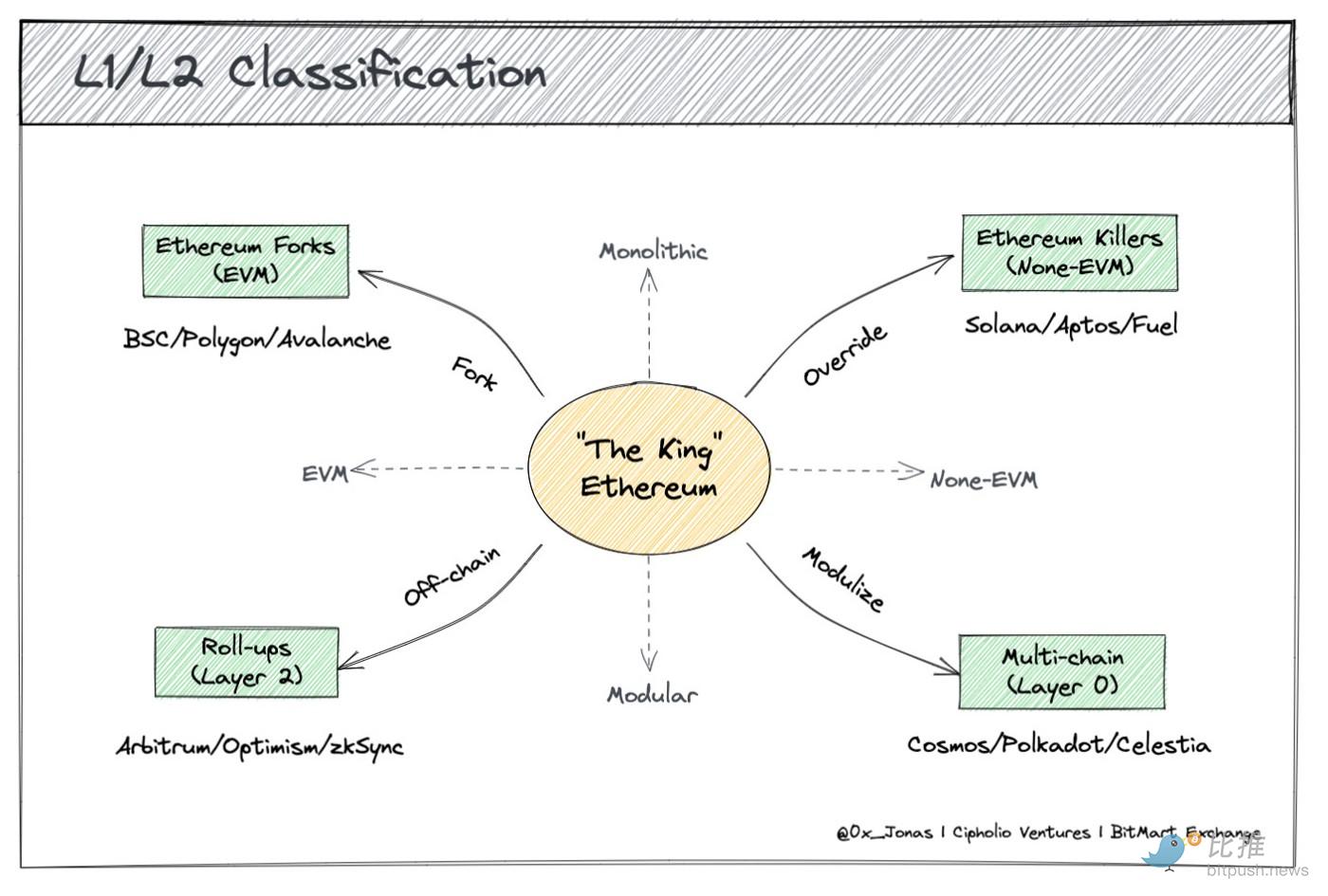
It's no surprise that the superpower is the “king” Ethereum. With its current technological maturity and ecological prosperity, no other chain can shake its position as king. However, due to the explosive growth of Dapps, the development process of Ethereum did not go smoothly, causing the Layer 1 network to become congested, which in turn pushed up transaction costs. High transaction costs will hinder the large-scale adoption of Ethereum, leading to the core problem surrounding the development of the entire public chain: expansion.
The history of public chain development is the development history of Ethereum in solving the expansion problem. Regarding “how to adopt blockchain technology on a large scale,” different public chains have formed different ideas and solutions under different divisions of labor, and have gradually evolved into the current “top four” competition pattern. Simply put, we can divide existing mainstream public chains into four quadrants based on whether they support EVM and can be decomposed, roughly divided into four categories.
The first one isSingle EVM chain, represented by BSC/Polygon/Avalanche in the upper left corner, commonly known as Ethereum Forks. At the beginning of their establishment, Ethereum's core architecture had more or less improvements in terms of technology, such as the number of validators, consensus mechanisms, etc., so there were also some improvements in terms of performance.
Similar reformers, on the other hand, did not break the monolithic architecture while still retaining the EVM environment. Such changes enable developers to seamlessly migrate both at the development level and in terms of user experience, thereby greatly carrying spillover users who want to experience dApps but cannot afford Ethereum's high GAS fees, and lowering the threshold for using Dapps.
To a certain extent, this change has enabled public chains other than Ethereum to continue the “DeFi Summer.” However, due to the market cycle, Ethereum's own gas is relatively low, lowering the user experience threshold to a certain extent. At the same time, most innovation in native applications still occurs on Ethereum, so the Ethereum fork chain is currently facing serious problems such as TVL outflow, insufficient innovation, and loss of users.
The second one also supports EVMmodular chainThis is also commonly known as the Layer 2 expansion scheme. As a horizontal extension of Ethereum, Layer 2 enhances the overall operating efficiency of Ethereum through an architecture that separates the execution layer.
The development of Layer 2 has gone through technical iterations of Channel, Plasma, and Rollups, to proposed hybrid solutions such as Validium and Volition. Currently, the solutions receiving the most attention in the market are mainly Rollups, and the mainstream segmentation solutions include ZK and OP leading the market. However, due to the difficulty of the algorithm and the slow development process of EVM equivalent compatibility, the ZK system uses Arbitrum andoptimismThe OP system solution represented by it has the upper hand in terms of technical maturity and ecological application.
The third one follows the exact opposite path from Layer 2, the so-called “Ethereum killer.” They abandoned Ethereum's current development path and took a different approach. The most intuitive improvement was the parallel optimization of Ethereum itself. The legacy problem of EVM at the beginning of the design was that it was unable to fully unlock the performance potential of multiple nodes and multiple threads, so the network itself was not good at solving high concurrency scenarios.
Public chains such as Solana/Aptos/Fuel are high-performance public chains designed to solve this problem. But it's not perfect either. Blockchain's impossible triangle has not been broken; they are sacrificing stability while improving performance and efficiency. For example,SolanaThe extremely low redundancy design has been greatly questioned by the market due to system stability issues brought about by large-scale use.
The last one is to make the blockchain as a whole highly abstract and modular. The modular public chain, represented by Cosmos/Polkadot/Celestia, further splits a single blockchain according to different functional modules, which helps lower the threshold for public chain development and operation, greatly reduces the technical and time requirements for cold start of the public chain, and brings independent sovereignty to Dapps. The concept of L3/L4/App-Chain was born as a result.
Furthermore, due to the division of public chain functions, the overall operation efficiency of blockchain is comparedmonomer chainThere has been a significant improvement. However, the downsides are also obvious. After functional division, information transmission within the original unified system required additional interchain communication tools, which posed certain challenges to interchain mobility, security, and atomicity.
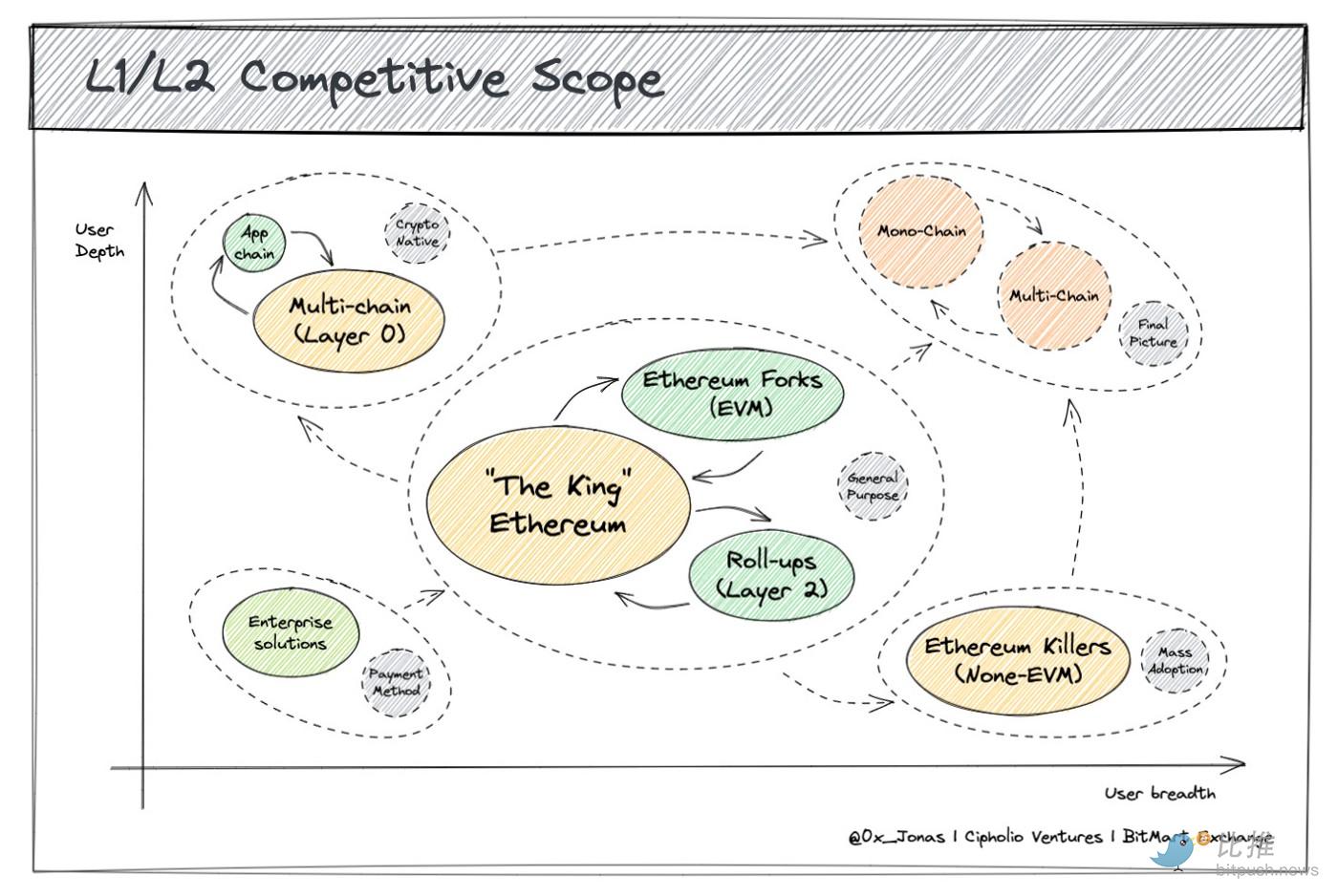
Based on the above analysis, we believe that the public chain is developing along two major directions in solving the core problem of scalability: a “general chain” that meets the needs of “a wide range of users” and a “dedicated chain” that satisfies the needs of “vertical users.”
The core players at this stage are still Ethereum+ Layer 2. In terms of breadth, high-performance chains are providing supercomputing platforms to meet the needs of large-scale adoption of Web2. In depth, modular public chains serve top Web3 applications to meet more on-chain native needs and innovations. We believe there will be a long-term trend of single-chain and multi-chain hybrid development in the future.
Of course, outside of the technical level, whether the public chain itself has the ability to provide continuous improvement for ecological development is also critical. There is no doubt that the public chain is still the most narrative and most profitable investment vertical at this stage, and public chain investment generally has a long cycle and large bets, and technological development is also facing huge uncertainty. Although the liquidity premium situation brought about by capital-intensive investment will not improve significantly in the short term, we can still see the evolution of the public chain ecosystem in the following areas.
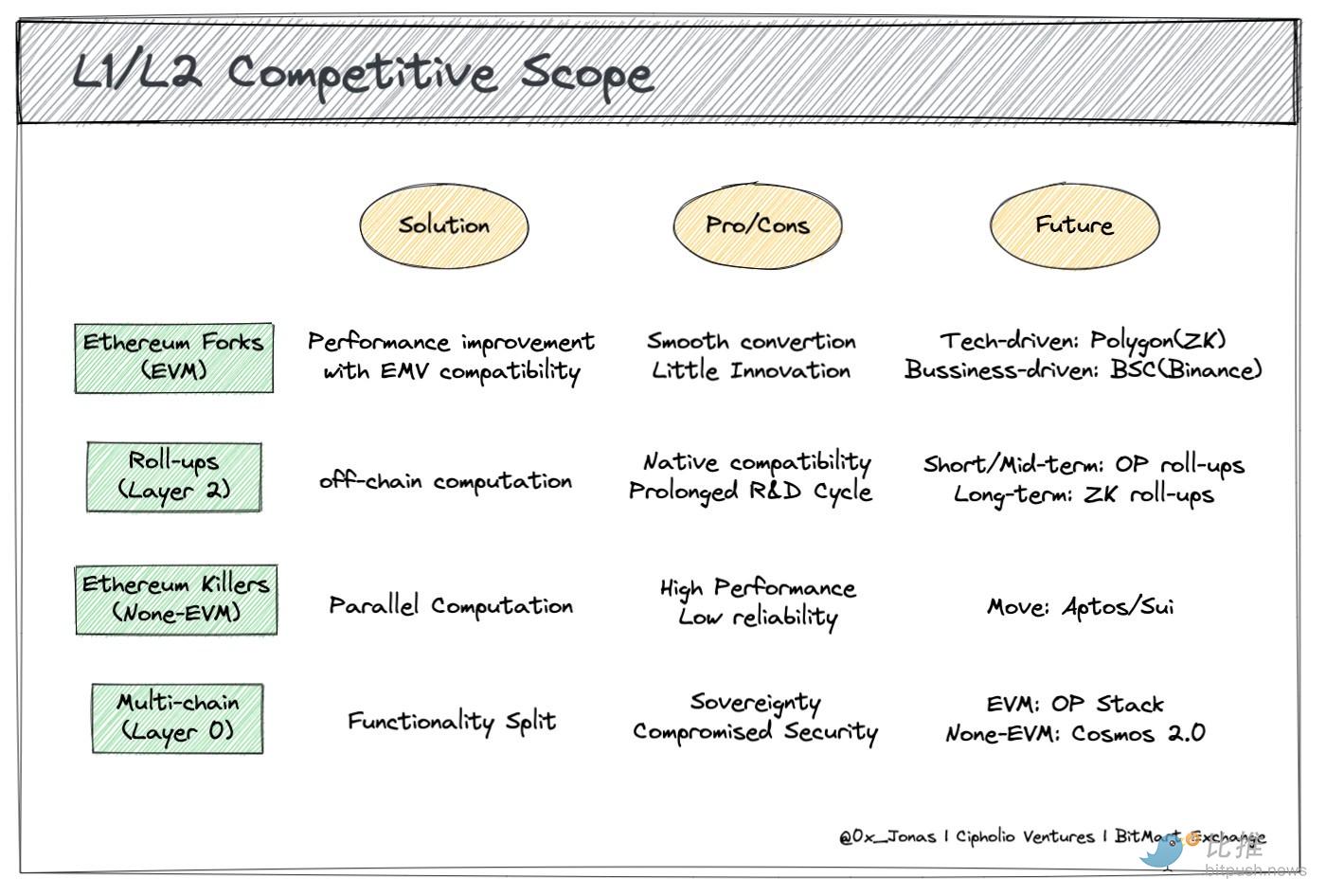
Ethereum Forks: With the development of Layer 2, the traffic dividend of the current bull market, that is, the result of the explosive growth of Ethereum's outflow traffic, may not exist in the next cycle. The public chain should focus on the Layer 2 endogenous growth logic business itself. i.ePolygonWe have been actively exploring fields related to ZK and modularity, and have proposed solutions such as Hermez, Miden, and zkEVM. Exchange-based public chains such as BSC can rely on the strong empowerment provided by the exchange ecosystem to obtain more traffic.
Furthermore, the rise of meme coins and NFTs has made us aware of the importance of cultural attributes in the crypto space. We look forward to seeing more public chains focusing less on the technology stack and more on cultural aspects in the next cycle.
Rollups: There is a lot of discussion on the market about the advantages and disadvantages of OP and ZK solutions. Most developers and investors believe that the underlying security guaranteed by cryptography is the ultimate scaling solution for Ethereum in the future. However, when we look back at history, before Rollups were considered the mainstream solution for Layer 2, not only ZK, but Plasma was considered the best scaling solution for a long time.
Therefore, instead of analyzing and comparing the pros and cons of different technology solutions, we prefer to pursue middleware with more deterministic trends in technological change, such as bridging between L2, decentralized sequencers, ZK mining, zkEVM, etc. Technically, we have also clearly seen the introduction and development of integrated solutions such as Optimism Bedrock, StarkWare Volition, and Celestia Celestium.EthereumThe ultimate means of capacity expansion can only be verified by the market and users.
Ethereum challenger: Although the high-performance chain narrative is Ethereum's killer, we don't think any ecosystem can imagine that any ecosystem can challenge Ethereum's dominance today. If you compare Ethereum to a super cryptographic lab that can nurture new ideas at any time, then a high-performance chain is a commercial platform where ideas and practices can be put into practice.
By carrying the value exchange behavior generated on Ethereum at a lower cost and higher efficiency, a high-performance public chain bears the responsibility of inheriting Ethereum's mature business model and extending it to more users. For example, Aptos/Sui, represented by the Move language, defines data capitalization so that it can better serve financial applications. Furthermore, we have seen that high-frequency Web2 interaction scenarios such as social games are also expected to be better experienced on high-performance chains.
Multi-chain/modular: Multi-chain and modular development is an inevitable trend. At the stage where ecological application development is beginning to take shape, we need to carry out specific in-depth optimization according to different usage scenarios. However, not all applications are suited to modular components. We wanted to find applications, find their PMF to run at a certain scale, and eventually take advantage of increased computational performance to significantly improve the product experience.
Chain gaming and high-performance DeFi are perfect for this kind of scenario. We're also looking for a development framework that allows developers to deploy to different modules with one click, so they can freely choose the consensus layer, data availability layer, settlement layer, and execution layer. We're excited to see that OP Stack is also moving in the direction of this change, and look forward to further developing it in the future.
 2. Decentralized Finance (DeFi)
As the jewel in the crown of blockchain, DeFi is naturally the fastest growing and most mature segment in the crypto world. If we disassemble the core structure of DeFi, we can find that DeFi is formed around three pillars: asset issuance, asset trading, and asset management.
Asset issuance is rich in asset types, and trading platforms activate liquidity. Asset management platforms provide financial benefits. Except for native DeFi modules such as AMM and POS staking, the rest basically replicate the functions and business modules of traditional financial markets. It can be said that a relatively complete financial market system has been implemented on the chain: money market (USDx), capital market (trading and borrowing), foreign exchange market (Token), and gold market (BTC).
DeFi may lose its appeal if it simply replicates all elements of traditional financial markets on the chain. Traditional financial markets (US/Hong Kong/A shares) increase asset liquidity by continuously issuing new financial assets (IPOs) and reaching out to global investors, complete a positive cycle (share price) of economic growth (dividends) by increasing the intrinsic value of assets, and then provide investors with actual income (dividends) through good operation.
However, this combination is not new. Soon, everyone will realize that all methods and methods of traditional finance will be repeated in DeFi. Apart from being transparent and fair, what will DeFi do to disrupt the traditional financial market system? I have to mention the core engines of DeFi that create rapid economic growth: “liquidity mining” and “vampire attacks.”
Unlike traditional finance, most DeFi projects lack professional market makers to provide liquidity. And one sign of the financial market's boom is whether the market is sufficiently liquid. Therefore, the essence of all on-chain wars is liquidity competition, and apps that have the ability to dominate liquidity have the greatest voice in the market.
Compound's “loan mining” concept made people realize that the project itself can gain incremental users through credit enhancement. As for the subsequent launch of the governance token pool, second pool, and yield aggregator, they all have only one purpose:Create prosperity in isolated economies by minimising the actual circulation of tokens.
On the other hand, vampire attacks have heated up the battle for liquidity based on liquidity mining: a price war to subsidize TVL at any cost. From Sushi to Uniswap, Ethereum to BSC, and from Looksrare to Opensea, they're all using similar methods to build another tower in a parallel universe.
Neither “Liquidity Mining” nor “Vampire Attack” are pure farm games. Liquidity mining locks in user funds by issuing highly inflated tokens, thereby reducing selling pressure, stabilizing high returns, and accumulating a large number of users and capital.
Vampire attacks, on the other hand, expanded the parallel universe of DeFi by replicating the same financial foundation on different public chains, creating a blockchain world financial market with a very different style but similar functionality. The development of multi-chain ecosystems has also spawned the prosperity of infrastructure such as cross-chain bridges and oracles.
If the growth of traditional financial markets is only capital expansion along one of the main lines of economic growth, then DeFi can match excess user numbers and user capital in depth and breadth, thus achieving unprecedented exponential economic growth.
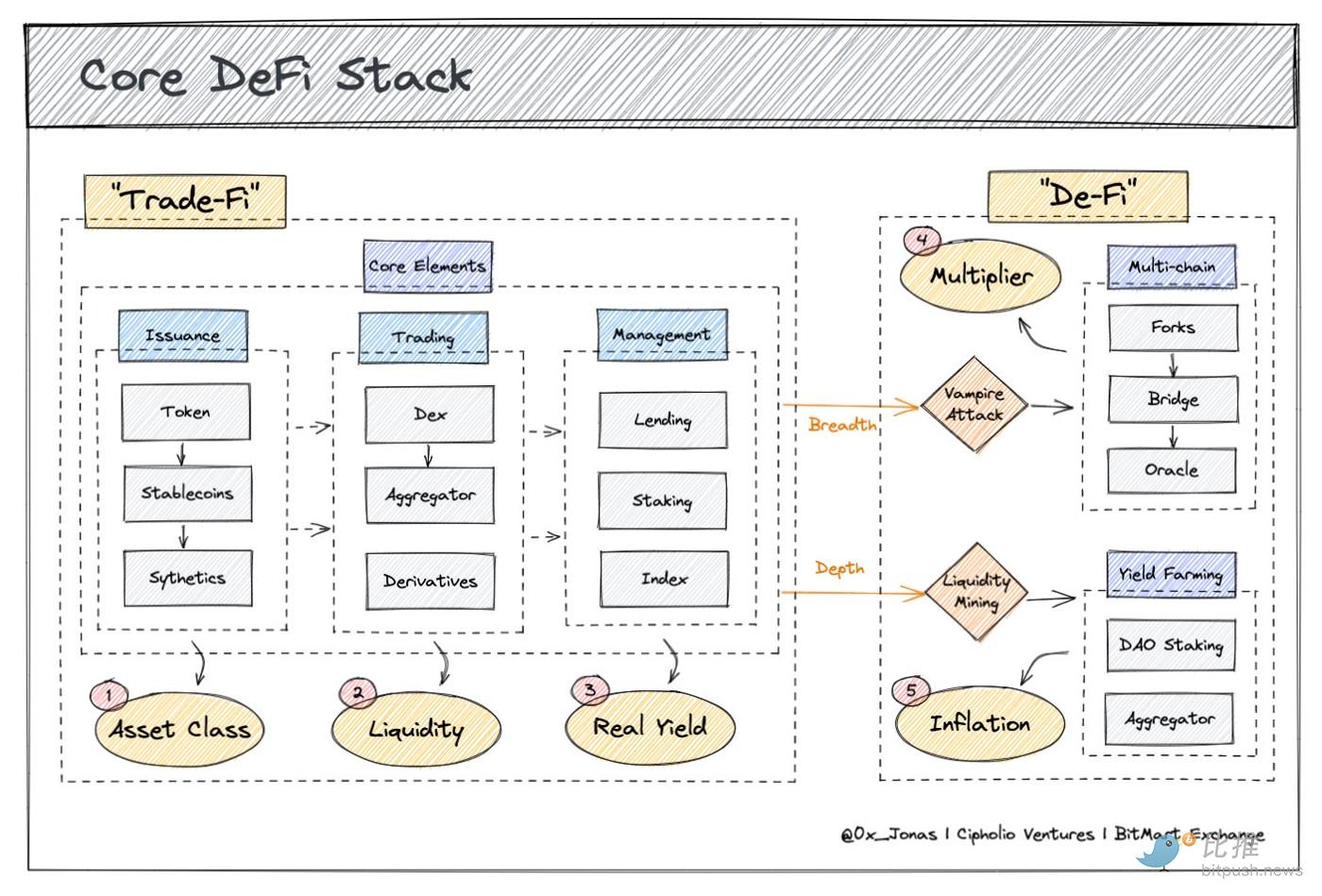
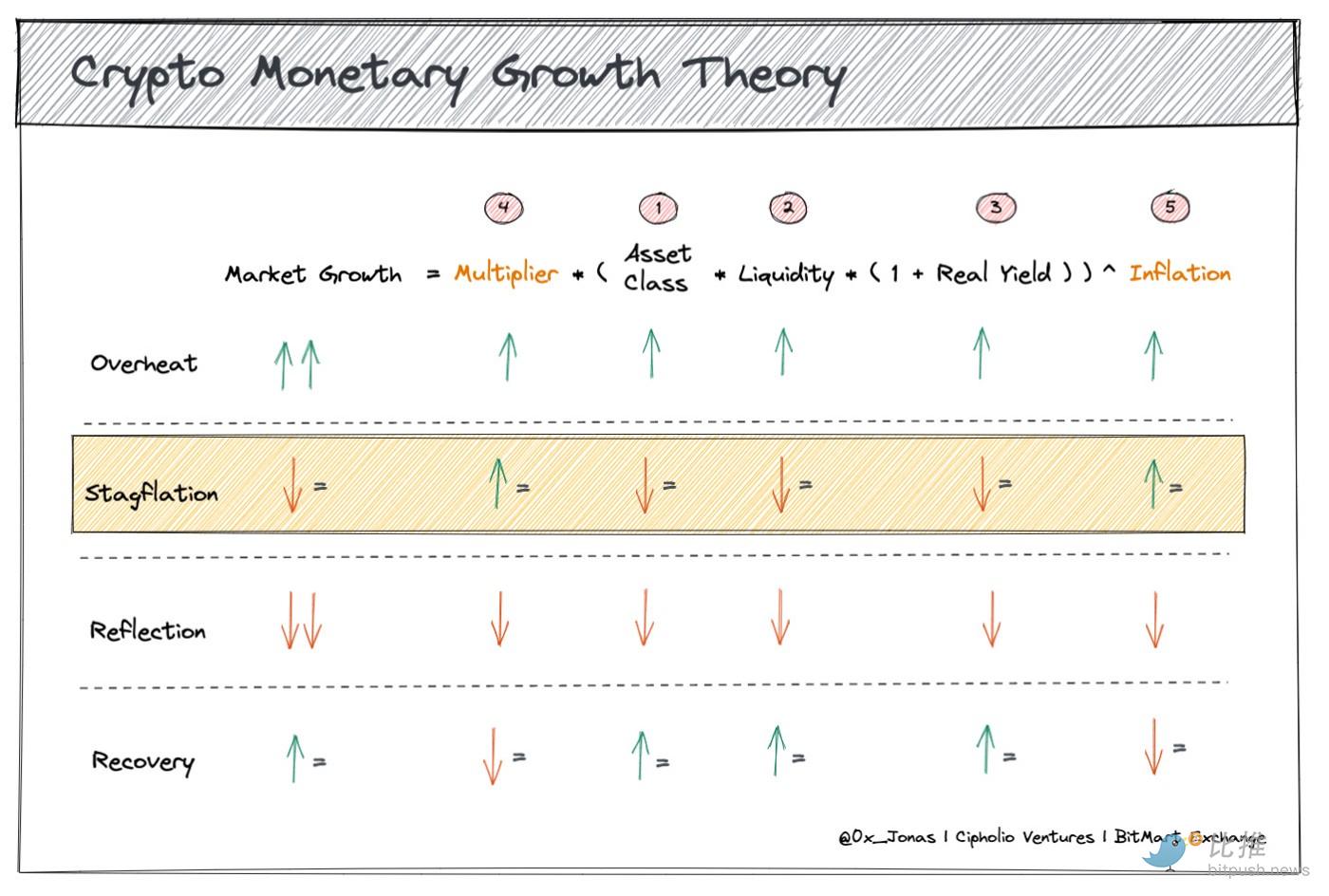
Following the above analytical framework, we can abstract the five major factors affecting the development of financial markets at the macro level:Asset types, liquidity, real returns, capital multipliers, and inflation levels, corresponding separatelyAsset issuance, the five core links of asset trading, asset management, multi-chain and yield farming。
The capital increase brought about by multi-chain development and the high inflation provided by “yield farming” is a double-edged sword. It provides continuous capital injection when the market rises, and when the market falls, the capital employed escapes at any cost, leading to the collapse of the economic system.
Combined with the Merrill Lynch clock theory, we can clearly see that the crypto market is currently inStagflationAt this stage, asset issuance, market liquidity, and actual yield all declined markedly, but the level of inflation and multi-chain development were still at a standstill. Rapid expansion, with occasional slowing trends, eventually leading to a slight decline in the overall market.
There is no doubt that the DeFi market is returning from false prosperity caused by excessive credit expansion to rational development, and it is already viewed by the public as leading the development of the on-chain ecosystem. The number one investment project for the development of the new public chain is DeFi. The concept of putting finance first brought initial users and capital to the development of the new public chain.
But as the tide recedes, today's popular stories that have created countless fortunes will gradually be forgotten. Our investment philosophy in the DeFi vertical sector has also moved from looking for innovative applications with endogenous leverage to applications with solid track logic and endogenous demand. One direct indicator is to pay more attention to the agreement's cash flow and whether there is healthy revenue growth.Finally, we want to see more diversified asset classes and businesses that are relatively mature in traditional businesses but are not on the chain. We are optimistic about the future development of on-chain order books, derivatives agreements, and synthetic assets.
Blockchain Founders Fund: If decentralized finance is to be adopted on a large scale, the current infrastructure needs to mature with increased use of risk management, underwriting, and insurance products and services that can prevent the uncertainty of exploits and failures of smart contracts and wallets.
3. Games
Gaming is the hottest yet most controversial vertical in 2022. I believe gaming+blockchain is a paradigm shift in the future of the gaming industry and the next important entry point for Web2 after DeFi. Skeptics believe that current P2E games are all Ponzi schemes and are completely incomparable to traditional games in terms of playability and sustainability.
How to create a highly playable and sustainable Web3 game for players is the biggest challenge facing the entire industry. Can there be a game that perfectly combines playability, financialization, and sustainability?
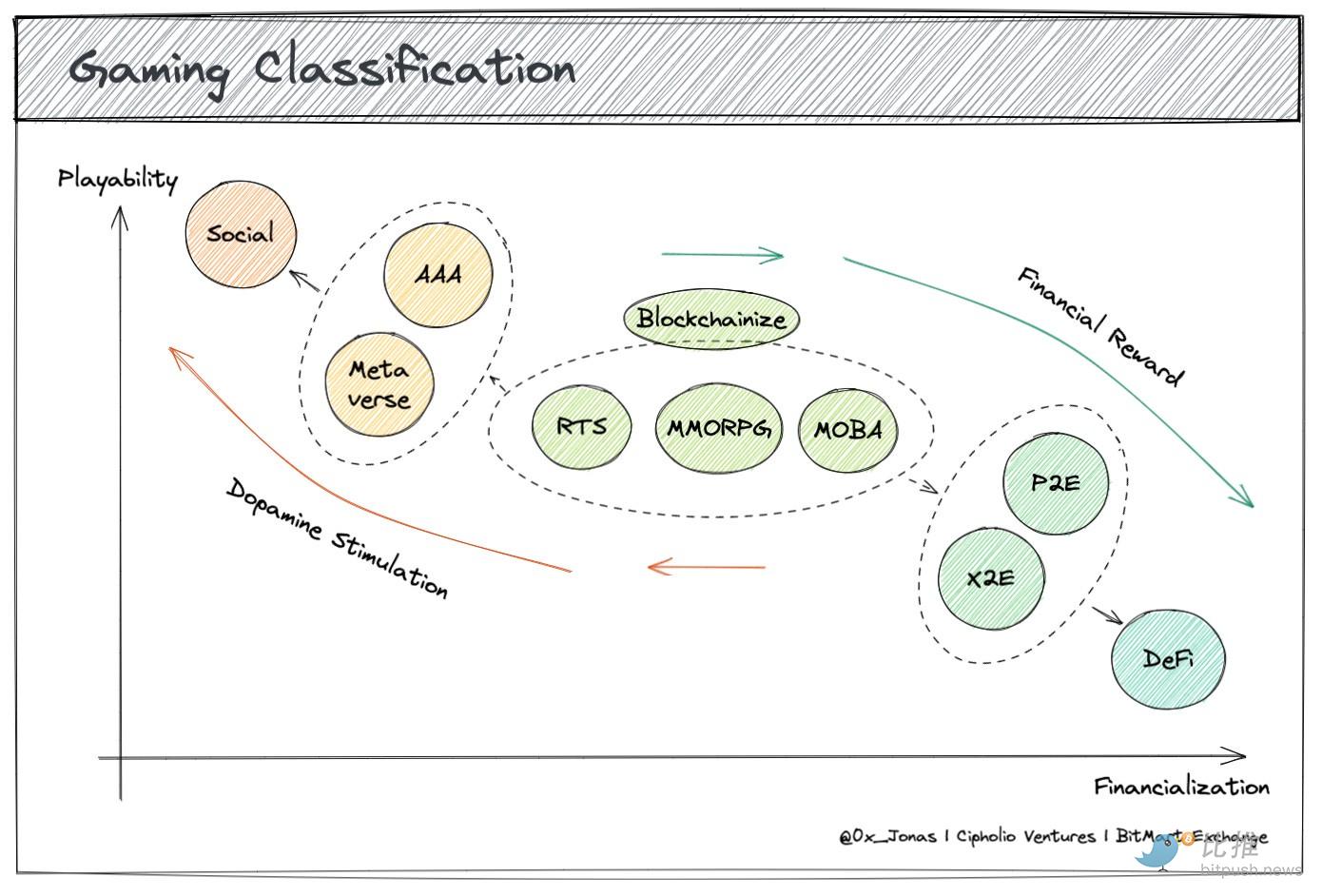
Unfortunately, our answer isnegationYes. The dichotomy of financialization and playability has yet to find a proper solution. Let's start with traditional games such as RTS, MMORPGs, and MOBAs, and intuitively discover that games face the problem of moving left or right:The game management team had to choose between playability and financialization at the beginning of the business.
The financialization option is currently the most widely known and criticized P2E/X2E model. One of the main features of this system is that the quality is average and the game plan is relatively single. The core is to let the public spontaneously participate in the game through financial numerical design and gameplay operations.
Although unsustainable, competition after race has become a testing ground for numerical design and operation ideas for DeFi products. How to properly distribute rewards? How can an economic system developed in the midst of hyperinflation achieve a soft landing?How to attract and retain users in the pool through token economics and operational design is the key answer.
Explore the complete opposite direction in the field of playability. This part is a key area for traditional game manufacturers. They are generally operated by professional game development and operation teams, combining the characteristics of blockchain and NFTs to bring game assets and gameplay onto the chain. The purpose of players playing games is still to have fun rather than simply generate revenue.
Unfortunately, due to the long development cycle of traditional games and slow implementation, we haven't seen much actual output of games landing, but combined with the entertainment habits of Gen-Z users, we think games have the potential to be an entry point for the next generation of social platforms. The AAA/metaverse capital injection not only bears the responsibility of educators in the Web3 market and subtly accumulates Web3 user traffic, but the gamified social business model is also suitable for the crypto world.
As a result, we can see that blockchain games stand at the crossroads of choosing to embrace financialization as a platform to provide pure math games, or focus on game content to become the gateway to the next generation of social platforms. Both AAA/Metaverse and P2e/X2e are only intermediate products of the current paradigm shift; they are processes and means, not results. Following the idea that blockchain games will eventually follow the social and DeFi scenarios, we think there will be some opportunities worth paying attention to in this vertical field.
We believe that unfeatured sudo on-chain games will be difficult to survive in the future, and game teams must choose between playability and financialization.Second, in the current situation where the overall industry model is uncertain, we are not optimistic about macro-middleware in the game industry, such as data service platforms, game associations, etc. Comprehensive game studios are more promising.
Finally, following the direction of game DeFi, that is, the vertical direction of P2E/X2E, we are still optimistic about teams with innovative, operational and narrative capabilities in token design and application scenarios. In the AAA/Metaverse direction, we will pay more attention to infrastructure development and bring more assets and even gameplay mechanisms onto the chain, such as cloud gaming, AIGC, game wallets, vertical NFT trading platforms for game assets, etc.
4. NFTs
While everyone is already familiar with the various PFPs in our wallets, we think it's too early to classify NFTs as a standalone vertical today. When sorting out the NFT-related industry structure, we found that the so-called NFT industry is actually a vertical financial market with PFP as the core. Its industrial framework is very similar to the core framework of DeFi, but it focuses more on asset issuers and trading platforms.
The scarcity and heterogeneity of total circulation makes the pricing and valuation of NFTs extremely complex, leading to low liquidity in the NFT market. Therefore, compared to the large-scale and comprehensive development of DeFi, the mainstream narrative of the NFT financial market will be more complicated. Focus on the liquidity service module to generate a series of innovative applications of NFT-Fi-related transactions, mortgages, loans, and sharding platforms.
But is NFT-FI really the only vertical development path for NFTs in the future?

Before answering this question, let's take a look at the proposed and implementation of EIP standards related to NFTs. It's easy to see that NFTs are also developing in two major directions: financialization and commercialization. In addition to well-known NFT asset issuance standards such as ERC-721/ERC-1155/ERC-875, we can also see some other standards that enhance financial composability, such as ERC-490 leasing standards and ERC-3525 semi-financialized and ERC-2981 homogenous tokens along the royalty revenue route. This is also a key area of development in the NFT-Fi market.
Another major trend is the exploration of commercial attributes. Since Vitalik proposed the SBT concept, various related EIPs have sprung up. The establishment of ERC-5192 also showed us the possibility of large-scale implementation of SBT applications. Further exploring the field of Web2 integration, we also discovered some subscription agreements such as EIP-5643, which also provided room for imagination for the development of the traditional Web2 vertical field of membership services. Judging from the total number of proposals and the number of approved proposals, another trend that can be observed is that the community is currently paying more attention to the development of the NFT finance direction, and there is still a long way to go in integrating practical NFTs more closely with Web2.

Returning to the topic of NFT-Fi, although the current NFT evaluation, borrowing, and settlement systems are more or less flawed,However, we believe that the current liquidity problem with NFTs is not that the infrastructure is imperfect, but that they are even more scarce on the supply side and demand side.
Compared to FT, NFT has almost only one vertical main narrative: PFP, the top ten PFP projects by market capitalization occupy almost all the liquidity in the market. There is a single type of asset and a homogenized narrative, resulting in an insufficient supply of assets. Also from the demand side, if NFTs are viewed as an alternative investment market in the crypto world, there will be less asset allocation focused on the NFT sector when the market declines. Furthermore, due to the influence of the total market value of NFTs, the Matthew effect from capital accumulation will be more obvious than FT, and the prudence of the market demand side cannot generate new investment and consumer demand.
There is a lack of fresh narratives on the supply side, and the tightening of investment on the demand side is not only an NFT issue. Due to the variety and inseparable characteristics of NFT assets, the liquidity problem will be infinitely amplified, which has led to the current extremely illiquid NFT market.
So back to the question above, is NFT-Fi the only way forward for NFTs? We believe that until the NFT asset classes were plentiful, any project claiming to solve the NFT liquidity problem was a one-size-fits-all deal. But at the same time, NFTs driven by cultural narratives represented by PFP will continue to dominate for a long time. This seems an insurmountable paradox, but we believe that changes in PFP's narrative style will become more frequent and diverse, and can increase the richness of PFP's internal assets in the future.
Second, with regard to the infrastructure direction of NFTs, we will continue to focus on the integration with Web2 to Web2, and find common “bridges” from Web2 to Web3: such as providing membership-based service SDKs and crypto wallets. Easier to access for regular users. Finally, we envision that in the future, NFTs will no longer appear as a separate vertical, but more like FT, as a foundation integrated into every aspect of the crypto ecosystem.
Blockchain Founders Fund: To date, most of the NFT trading volume has come from PFP, and these projects have had little utility, focusing mainly on digital art and collectibles. By the end of 2022, the NFT market saw a sharp drop in trading volume. This simply represents the boom of PFP, not the real value behind the NFT technology. In addition to images, there are also NFT use cases that are more subtle, more monotonous, but highly practical, such as authentication, which will act as a data layer composed of unique, verifiable digital identities and attributes, on which decentralized social tools can be built.
 NFT Market Trading Volume — 2022
5.Social
In Web2, social = traffic and traffic = attention. In an age where attention is king, if you grab users' attention, you can control them. Therefore, social networking is also a hot area for capital chase in 2022, and no one wants to miss the next Tencent or Meta.
When it comes to the drawbacks of existing Web2 products, everyone invariably thinks about issues such as data ownership, privacy, and revenue hijacking. As the most prominent and intuitive vertical field for solving such problems, social networking has occupied the dual main line of traffic+sovereignty, and has also attracted countless entrepreneurial teams to try to rebuild a mature Web2 business model in Web3. Today, these models often prove unsustainable and unsuitable for Web3 development.
Based on vertical disassembly, we can also clearly see that the social field is built around a classic three-tier framework, namely “infrastructure-middleware-application.” The bottom layer is mainly standardized data transmission, storage and protocols. Middleware is more of a core social graph around data usability. The upper layer application is not much different from the Web2 social scene experienced on a daily basis.
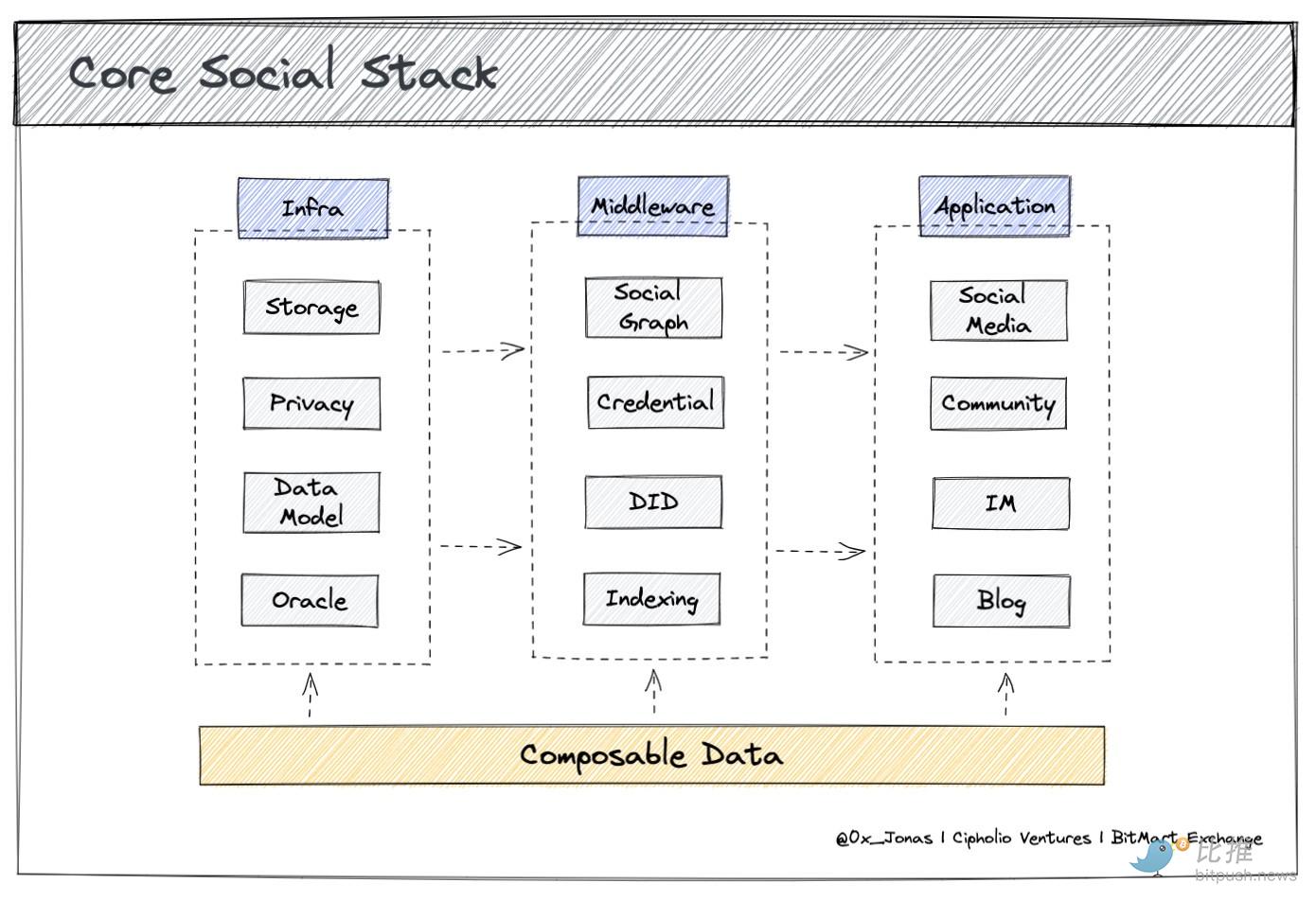
We've always believed that Web3 social and Web2 social aren't always in a state of antagonism and separation, and that the soul of Web3 social should be to return ownership of data to users. Based on this, we believe that the development path of Web3 should start with middleware attached to existing Web2 giants, and complete the accumulation of seed users by providing native Web3 services to platform users through streaming from Web2.
Meanwhile, privacy will become a basic requirement in Web3 social networking. We are optimistic about the development of ZK authentication and access control solutions in the field of infrastructure and middleware. The business model of Web2 application+token issuance, which was common at the beginning of the explosion of the application layer, has been falsified by the market. As a social product, ease of use is far more important than decentralization and financialization. Finally, we believe that with the increasing abundance of assets on the chain, crypto-native social apps will usher in explosive growth, and we look forward to the day when SBT and AAA games are launched on a large scale.
Core investment views
The above is our interpretation of the current competitive pattern and investment logic in the five core vertical fields. Sorting out the core structure of different vertical fields can help us more clearly grasp the pulse and direction of market development. However, as we went beyond segmentation and tried to re-examine changes in the crypto market from a macro-cyclical perspective, we seemed to have some surprising new findings.
First, according to the Merrill Lynch clock, we divided the crypto market into four quadrants according to the degree of economic growth and inflation, and divided a four-year bull and bear cycle corresponding to the crypto market. It should be noted that the intersection of the axes should not be 0, but should be in a neutral position, that is, the third quadrant should not be described as “negative growth, negative inflation,” but “low growth, low inflation.” Therefore, the order from the first year of the bull market to the last year of the bear market corresponds to the recovery period, the overheating period, the period of stagnation, and the period of re-inflation, respectively.
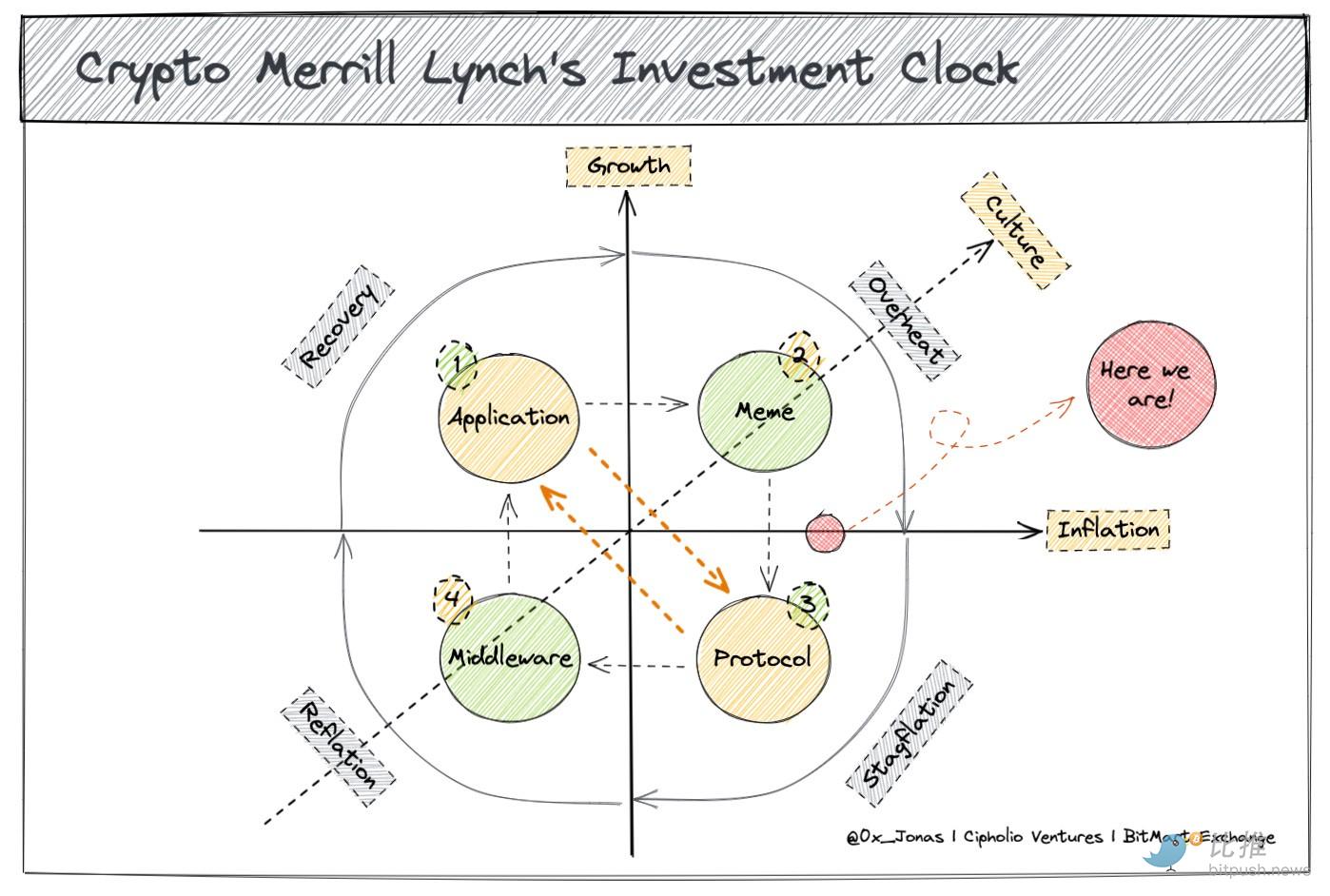
1. Recovery period: low inflation → medium inflation, medium growth → high growth. The accumulation of lower-level technology and the iteration of middleware in a long-term bear market have prepared for the explosion of the application layer. Furthermore, inflation has bottomed out, and improved economic expectations will also attract more capital and users to enter. As a matter of course, the application category, which is easier to use and understand, has become the most prominent performance in the asset class at this stage.
2.Overheating period: medium inflation → high inflation, high growth → medium growth. As inflation continues to rise, market popularity gradually reaches its peak. The market has overdrawn technology accumulation and application explosions brought about by high growth expectations, and there is a shortage of sufficient innovation reserves to drive the market forward in the short term. Capital has reached a bottleneck under the fundamental analysis narrative, and the reason why meme-like assets can shine is precisely because of their unique cultural narrative attributes that they can occupy the mood of capital carnival.
3.Stagflation period: high inflation → medium inflation, medium growth → low growth. The carnival of a bull market often ends after inflation reaches its peak, and the impact of overdraft growth is fully unleashed at this stage. The capital market will slowly return to rationality, bubble asset prices will retreat sharply, and at the same time, the market will wait and see to prepare the next narrative cycle for new growth points. This moment should be sorted out after the tide has receded, leaving behind core technology, and standing on the shoulders of the previous one to nurture the infrastructure needed for the next cycle to break out.
4.Recession period: medium inflation → low inflation, low growth → medium growth. This will be the hardest phase of the bear market. The infrastructure to be the next bull market growth engine is maturing, but due to the inactivity of the capital market, it is still impossible to reflect economic growth on paper. Therefore, at this stage, we should pay more attention to middleware connecting applications and protocols, and use the signs of mature and large-scale application of middleware as one of the signs of starting a bull market.
In summary,The crypto market will continue to cycle through the above four cycles, and the core link in the cycle will repeat the rotation of application-meme-protocol-middleware.The leading applications of the previous cycle will gradually expand the ecosystem and become the infrastructure of the next cycle, and the infrastructure of the next cycle will give birth to new leading applications, and so on.
Notably, outside of the inflation and growth threads, we can find a third thread, which we think is a unique dimension to measure in the crypto space: culture. There's no doubt that memes have the most cultural attributes, while at the other end of the axis, tool middleware lacks the most cultural attributes. Whether it's the public chain itself or the agreement on the public chain, you can more or less feel the differences in development and user experience brought about by different cultural attributes. As a result, we speculate that the invisible hand of culture, such as inflation and growth, is also subtly influencing the cryptocurrency cycle.
Where the heck are we? We think we're currently at the intersection of overheating and stagflation.With growth slowing now and inflation nearing peak, if we had only one area to focus on in 2023, we wouldn't hesitate to focus on the protocol layer. This is one of the key reasons why capital is now pouring into infrastructure investments. Whether it's Danksharding, zk Layer 2, Move duo, or Cosmos 2.0, we're looking forward to the crypto world's protocol layer in 2023.
However, as an investment agency in the primary market, what we should do is always look ahead of the market. Based on the judgment of this cycle, we believe that the profit and loss ratio in 2023 is no longer high, and we are unable to bow to the general protocol layer investment. Currently, the best strategy is to focus on middleware, or even the application layer in systems with high growth potential for middleware development. The crown of our predecessor has been fixed, we just need to choose the right pearl.
Finally, let's talk about how Cipholio Ventures' investment philosophy was formed.We believe that all native cryptographic innovation has only two models: driven by technological innovation and driven by business model innovation.These correspond to innovations at the protocol layer and application layer, respectively. According to this logic, we can sort out the competitive pattern of industrial structure in different vertical fields, and this process from idea to model to component is the framework for our industry research, and it is also the core framework for our analysis of different vertical fields above. However, investing is the opposite process. That is, we need to abstract out what the corresponding model is based on the basic composition of future possibilities, then speculate upward to see what technological innovations or business model innovations can bring about such changes, and finally form the core investment philosophy that guides future investment.
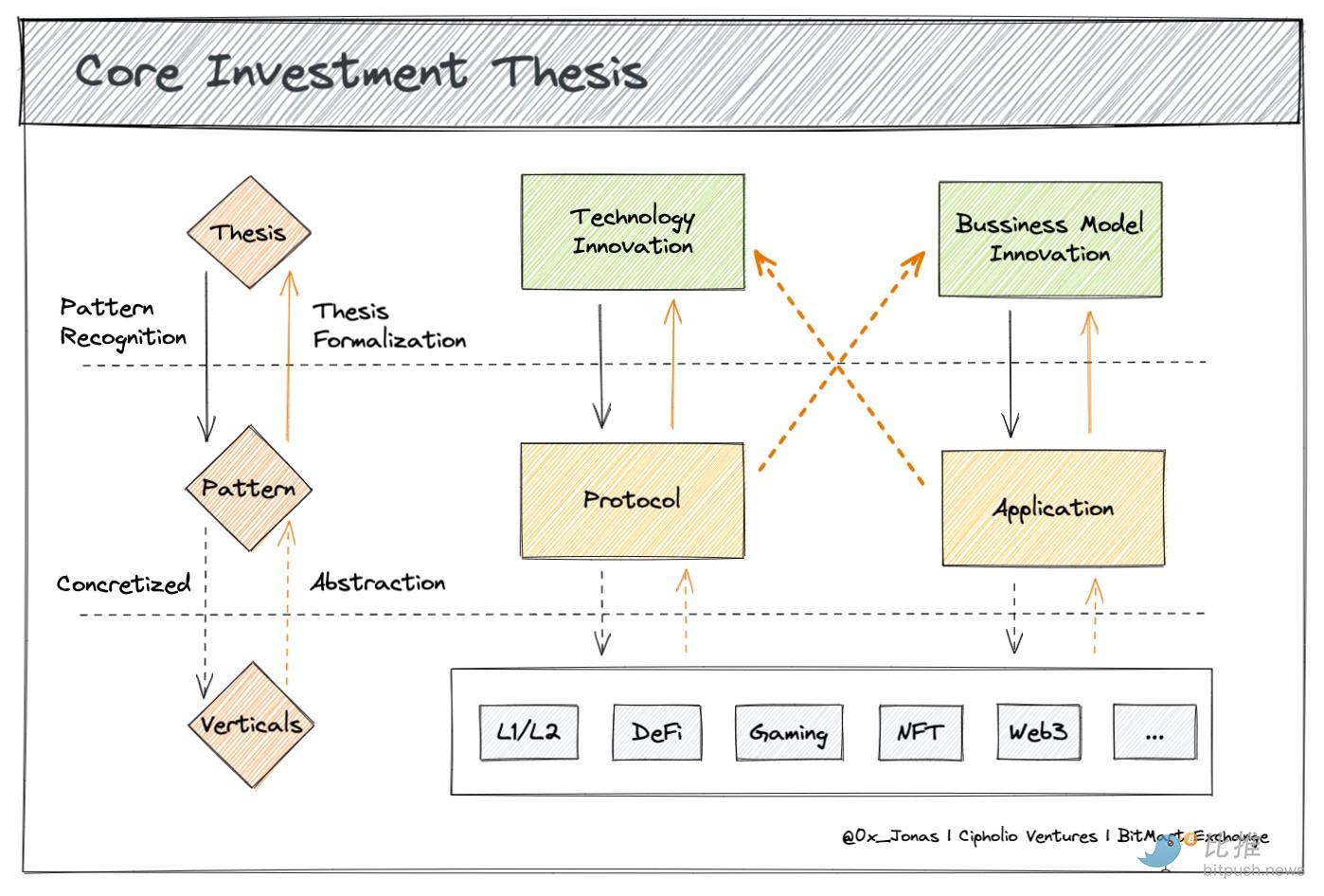
Beyond straightforward industry research and investment ideas, we've found that the most innovative and exciting direction isn't in traditional analytical frameworks, but at the intersection of the emerging application layer that drives technology development and the emerging protocol layer that drives business model progress.
Curve is now the next generation infrastructure for DeFi stablecoin transactions. The booming development of a series of bribery platforms built around Curve's voting mechanism has proven that it can spawn innovative business models at the application level. As a leading derivatives protocol, DYDX requires higher on-chain execution speed than other derivatives protocols. Due to Ethereum's efficiency, it has chosen to stand on its own, proving that excellent applications often have the ability to force technological breakthroughs at the protocol layer. So if we can sum up an investment guide that spans cycles and tracks, then what exactly is Cipholio Ventures looking for? There are only two answers.
1.The agreement requires technological breakthroughs to meet the actual needs of booming applications.
2.Applications that have protocol-specific business model innovations on top of generic agreements.
epilogue
Finally, there are some popular subcategories that cannot be effectively categorized, such as abstract account wallets, KYC/KYT, MEV, etc., which cannot be discussed due to limited space. We hope that through this sorting and analysis of the industry structure, we can provide some general guidance on the future direction of macro-investment. At a time of unprecedented austerity and a crypto credit crisis, the future seems certain and uncertain. As participants and witnesses of history, all we can do is be firm in our beliefs, maintain our childlike spirit, and continue to explore.
