Jane Street Capital · 31

Jane Street discloses 5% stake in SanDisk

Comparatively, Jane Street Group, LLC filed a 13G filing with the US Securities and Exchange Commission (SEC) to disclose that it actually holds 7.41 million shares of SanDisk common stock, accounting for 5.0% of the shares in this category. All shares are held by sharing voting rights and disposal rights. Among them, Jane Street Capital, LLC holds 5.89 million shares (4.0%), Jane Street Global Trading, LLC holds 1.28 million shares (0.9%), and Leonard Street Holdings, LP holds 238,102 shares (0.2%). These entities are all registered in Delaware and have shared voting and disposition rights over their respective holdings.

16d ago

Has Jane Street “manipulated” BTC? Dismantle the AP system and understand the pricing power game behind the ETF redemption mechanism

Has Jane Street “manipulated” BTC? Dismantle the AP system and understand the pricing power game behind the ETF redemption mechanism

It's not a question of a “villain,” but rather every AP has the ability to use the redemption mechanism to influence BTC liquidity. Written by Eddie Xin, OSL Group Chief Analyst “They Were Fcking Us the Whole Time (They Were Fcking Us the Whole Time)”. This rude phrase, which spread on Reddit and CT (Crypto Twitter) after the lawsuit, was accompanied by an epic bear squeeze with a liquidation scale of over $240 billion, pointing the anger of the market to the same target: Jane Street Capital (Jane Street Capital). 10 AM, the freezing point of liquidity in the Asian market over the past few months, finally unraveled the tip of the iceberg. It all started with Wall Street's top Wall Street Capital (Jane Street Capital), which was founded in 2000. It is accused of using the “Creation & Redemption” mechanism (Creation & Redemption) of spot ETFs by targeting the market through ETF arbitrage methods in the market, using the “Creation & Redemption” mechanism (Creation & Redemption) of spot ETFs. Until a lawsuit brought the dispute to the public eye, discussions around ETF arbitrage mechanisms and price discovery structures quickly heated up, and the market rebounded violently, resulting in an epic short squeeze (Short Squeeze) with a liquidation scale of over $240 billion. But is Jane Street really the one who pressed the suppression button? This is a question worth at least $1 billion. 1. Has Jane Street (Jane Street) really suppressed the BTC price? This question deserves an accurate answer. The first and most important thing to understand is that this is actually not just a question about Jane Street. This is a question about the structural features of the Bitcoin ETF architecture, which applies equally to every authorized participant (AP) in the ecosystem. As far as BlackRock's IBIT is concerned, the list includes Jane Street Capital, J.P. Morgan Chase, Macquarie, Virtu Americas, Goldman Sachs, Citadel Securities, Citigroup, UBS, and ABN AMRO. The role of these agencies is indeed deeply misunderstood by the outside world, even among seasoned industry veterans, and this misunderstanding is worth rectifying before any conclusions are drawn. The first thing to know about APs is that they occupy a marginal exception in the regulatory framework of Reg SHO (US Securities Regulatory Commission's Rules for Naked Short Selling). For example, Reg SHO requires short sellers to finance securities (locate stocks) before shorting, but AP was exempted by virtue of its contractual right to participate in subscription and redemption. Although this sounds procedural, the actual consequences are significant, meaning that any AP can create shares at will — no borrowing costs, no capital usage tied to shorting in the traditional sense, and no hard deadline for closing positions other than a reasonable commercial period. This is the grey area: a regulatory exemption designed for orderly ETF market-making, structurally indistinguishable from regulatory arbitrage, which has an unparalleled duration. This exemption is not unique to any one company. It is a prerequisite for membership in the AP Club. II. What does this AP exemption mean? Normally, if IBIT's transaction price is lower than its net asset value (NAV), you would expect arbitrage buyers to step in, redeem the Bitcoin with their share, and smooth out the difference. But any AP itself is that arbitrage buyer, and they control the pipeline, which means that their motivation to smooth out the price difference is different from a third-party trading desk that doesn't have the right to redeem. It sounds complicated, but it's easy to understand through a simple analogy: Level 1: What is a normal “smoothing the price difference”? Assuming there is a blind box on the market (this is an IBIT ETF), everyone knows that the blind box contains a real Bitcoin exchange voucher worth 100 yuan (this is the net asset value NAV). However, people are panicking in the market today, and the list price of this blind box has dropped to 95 yuan. According to the logic of normal people, smart merchants (arbitrage buyers) would definitely spend a crazy 95 yuan to buy a blind box, then go find the official one to unpack it and sell it in exchange for 100 yuan of Bitcoin,...

176d agoTyler#Jane Street #Jane Street Capital #Bitcoin #depths #Market #viewpoints

Opinion: Bitcoin prices will not be clearly suppressed by ETF authorized participating institutions, but the price discovery mechanism may be affected

Comparing news, discussions on the Bitcoin ETF mechanism triggered by Jane Street market manipulation speculations continue to ferment. Bitwise consultant Jeff Park wrote about this, stating that the question of whether Bitcoin prices are suppressed by Jane Street is not directed at a single institution, but is determined by the structural characteristics of the Bitcoin ETF architecture. Every authorized participant (AP), including Jane Street Capital, J.P. Morgan Chase, Goldman Sachs, etc., has immunity to create and redeem ETF shares, which allows them to operate positions flexibly in the market, including hedging with futures or derivatives without having to buy spot Bitcoin, which may affect the price discovery mechanism. This grey operating space stems from regulatory exemptions and SEC approval of physical delivery. Although there is no evidence that any AP clearly suppresses the price of Bitcoin, the existing structure may alter the natural mechanism of price formation and is worthy of regulation and investor attention. Bloomberg ETF analyst Eric Balchunas responded that this mechanism is really difficult to understand, and I'm curious who or what forces are behind the pattern sell-offs that appear every day and then suddenly disappear. Samson Mow, CEO of Bitcoin technology company Jan3, said that being an AP is not the only factor in suppressing the price strategy; the key is how extensive their undisclosed trading and hedging activities are. This is a channel that brings the cost of capital close to zero.

177d ago

Bit Digital announced an increase of 31,057 ETH, with total holdings exceeding 150,000 ETH

In comparison, Ethereum digital asset treasury company Bit Digital announced an increase of 31,057 ETH on Wednesday, bringing its total digital asset treasury to 150,244 ETH, with a valuation of around US$675 million. The company said that the funding for this round of the Ethereum acquisition comes from the net proceeds of a recently completed $150 million convertible bond issue. Last month, it proposed a proposal to issue convertible bonds to increase its ETH holdings. According to Bit Digital on Wednesday, Kraken Financial, Jump Trading Credit, and Jane Street Capital participated in the bond offering.

318d ago
SBF's Prison Conversation: Living with a Murderer Convinced in Innocent Rice as Currency

SBF's Prison Conversation: Living with a Murderer Convinced in Innocent Rice as Currency

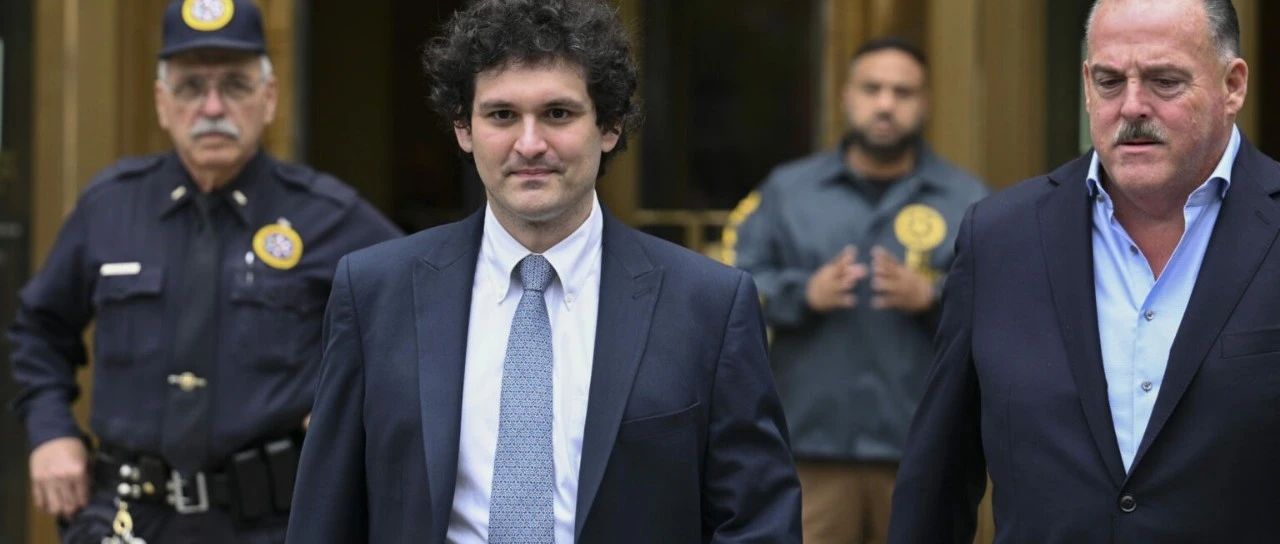
Author | WILLIAM D. COHAN, compiled by PUCK | Cat Brother Original Link: https://puck.news/exclusive-prison-chat-with-sam-bankman-fried/在星期二下午,我发现自己处于一种非常不寻常的情况——坐在布鲁克林日落公园 The Federal Penitentiary on 29th Street, the Metropolitan Detention Center (MDC) ), in a small plastic chair, the table was also very crowded. Outside, the weather was beautiful, and the picture-like, slightly humid weather inevitably reminds long-time New Yorkers of the morning of September 11th. However, the prison's visitation room had no natural light, no sunlight, only the Hitchcock hum of fluorescent lights and the three vending machines in the corner. The posters on the wall attempted to make up for the gloomy atmosphere by cheerfully welcoming visiting families. I first met Sam Bankman-Fried in December 2021, when his power and influence peaked, when he was the richest person under 30 in the world. My friend Anthony Scaramucci, aka The Mooch, connects us. I interviewed him on a cold winter night at the One Hotel on 6th Avenue when I was working on a documentary about Bitcoin and its developer, Satoshi Nakamoto. Sam showed up wearing a black t-shirt and cargo shorts, apparently just flew in a private jet from the Bahamas and an hour late. A month later, Sam's cryptocurrency exchange FTX raised $400 million in a final round of funding led by a group of high-end investors — including SoftBank, Temasek, and Paradigm, raising the company's valuation to $32 billion, making it one of the most valuable companies in the industry. At that moment, Sam's worth is said to have reached $26 billion. This week, we reconnected in a very different setting. Sam and I arranged this visit through his Corrlinks email account, on the advice of his mother, Barbara Fried, and the family's prison adviser. We'll meet on Tuesday at 1 p.m., because that's the only time MDC allows visits, a legacy of the COVID-19 era. Prisoners can receive visitors in one of two time periods, either at noon or at 5 p.m. Due to a shortage of staff in the facility, we met later than noon. I was allowed to bring in $1 or $5 bills totaling less than $30 in case I wanted to buy Sam some water, soft drinks, or snacks from the buzzing vending machine. I was told to put my $20 bill, wallet, and iPhone in a locker. Sam himself is not allowed to buy anything. After about an hour of bureaucratic mistakes (I went to the wrong building at the beginning, and I wasn't wearing dark pants — despite the exception for me) and other forms of prison treatment (taking off my shoes and belt, going through a metal detector, putting my hands in the scanner), I was finally allowed to go to jail and couldn't carry my phone, watch, recording device, or even paper or pencil. (Of course, I knew this beforehand, and as soon as I left the facility, I immediately began to keep memories of our conversations.) After a few minutes of waiting, I looked up to see Sam Bankman-Fried, standing in a corner wearing a chocolate brown prison jumpsuit, still his signature fluffy curls. Today Sam looks a lot thinner than when we last met — at least 25 pounds. But honestly, he looks better and healthier than I thought — less round, less fanatical, less restless, and has no dark circles right now. He said he made his living from rice and beans because the prison food was unsurprisingly difficult to eat, especially the vegetarian main dish he was served, which even his fellow inmates felt smelled like poop. He's not complaining, just pointing out that he's trying to do his best in a bad situation. The rice he bought at the prison kiosk has become a currency within MDC. We joked briefly that arbitrage in prison was more likely than his cryptocurrency trading at Jane Street Capital...

833d agody zhang#FTX #SBF #Wu says blockchain is real
After the Ethereum Denkun upgrade, which track is expected to explode

After the Ethereum Denkun upgrade, which track is expected to explode

Along with the Ethereum Dencun upgrade, the performance of Ethereum Layer 2 has been greatly improved, and the Web3 application side may explode. However, due to the differences between Web2 and Web3, the entry threshold for Web3 is relatively high, and this has become a problem that the industry urgently needs to solve. As early as 2023, account abstraction was mentioned by V God, etc., but account abstraction is OK when solving homogenous chains, but it is slightly overstretched when solving the problem of heterogeneous chains. With the end of the Dencun upgrade, account abstraction and chain abstraction are expected to explode, so what projects are worth paying attention to? The next Ethereum upgrade is on the agenda. The account abstraction circuit may become a new hot topic. On March 14, 2024, Ethereum developers held a developer conference after the Duncun upgrade. The developers discussed some EIPs that may be included in the Pectra upgrade. Among them, EIP 3074 is related to account abstraction. In support of the adoption of EIP 3074 in Pectra, Metamask wallet developer Dan Finlay stated: EOA has proven to be an inflexible authorization system for many people, with millions of dollars lost every day. We believe 3074 is a protocol layer proposal that presents potential opportunities for user security. Developer Beiko recommended that developers spend more time considering the benefits of EIP 3074, first considering EIPs related to other account abstractions related to Pectra, and secondly considering all other EIPs proposed to be included in Pectra. Currently, in the Account Abstraction Circuit, there are four main leading projects, namely Pimlico, Alchemy, Biconomy, and Stackup. Pimlico: Pimlico is an infrastructure platform for building the next generation of smart accounts. Developers developing ERC-4337 smart accounts are provided with bundlers, verified Paymaster, ERC-20 payers, etc., to develop more user-friendly decentralized applications or dApps. On September 25, 2023, Pimlico announced the completion of the $1.6 million Pre-Seed round, led by 1confirmation, Safe and Consensys, and more than a dozen angel investors. On November 7, 2023, account abstraction developer Pimlico announced the completion of a $4.2 million seed round, led by a16z crypto. Founded in 2017, Alchemy is a blockchain infrastructure company. Its main business is to provide blockchain development platform services for blockchain developers and enhance the user experience. By building development tools and computational infrastructure, Alchemy aims to enable the future of MultiChain. Biconomy provides a hot-plug API service that allows anyone to access dApps without any experience or knowledge. Currently, Biconomy's multi-chain repeater infrastructure processes nearly 50,000 transactions per day for 70+ Web3.0, DeFi, and NFT dApps. It has 3 main functions, namely Hyphen (instant cross-chain collaboration...

882d agoyuxishejiang#NEAR #Near DA #WEB3 #Ethereum #chain abstraction
Bitcoin is scarce and expensive

Bitcoin is scarce and expensive

Original title: Bitcoin Bulls Cite a Simple Reason for Its Rally: Not Enough Coins Original Article Author: Alexander Osipovich Original Article Source: wsj Compilation: Mlixy, W3C DAO Why did Bitcoin hit a record high this week? Fans of the world's largest cryptocurrency by market capitalization say this is due to the traditional law of supply and demand. Just like the price of any commodity — whether it's gold, oil, or soybeans, the price of Bitcoin is very sensitive to fluctuations in demand. Demand for Bitcoin surged after the launch of an American ETF that directly holds the digital currency, or spot Bitcoin ETF, in January of this year. Since then, investors have invested billions of dollars into these ETFs. This inflow of funds prompted these funds to buy Bitcoin to meet related demand, which boosted the price trend. But what makes Bitcoin different from other commodities is that its supply is strictly limited, and this dynamic could cause prices to skyrocket. The computer code that supports Bitcoin sets a hard limit of 21 million bitcoins. More than 90% of this supply has already been exploited. To expand supply, digital computing computers run algorithms to “mine” new coins. However, only about 900 new bitcoins can be mined every day, and this rate is expected to slow down after the cyclical event known as “halving” next month. Around 2140, when the last bitcoin was mined, its supply would eventually stop growing. Alex Thorn, head of research at Galaxy Digital, said, “Bitcoin is one of the most scarce assets in the world, and it's getting more and more popular.” No one can guarantee that Bitcoin will continue to rise. The current high price may encourage holders to sell their bitcoins and lock in profits. The previous rounds of the Bitcoin bull market were followed by a devastating plunge: after peaking last time in November 2021, Bitcoin fell by more than 70% over the next year. Skeptics, including government officials and Wall Street executives who have been on the sidelines during this wave of gains, still believe that Bitcoin is a speculative asset with no intrinsic value. In economic terms, Bitcoin's supply is extremely inelastic, which means it doesn't respond to price changes. Products with this characteristic are prone to sudden sharp price fluctuations. For example, gas producers cannot significantly increase gas production in the short term to take advantage of high prices. However, in the long run, the continued rise in gas prices will encourage drillers to explore new sources of gas. Similarly, when the price of gold remains high for a long time, gold miners can launch expensive new mining projects to search for gold in more remote places. That's not the case with Bitcoin. The rules in the Bitcoin code limit the speed at which miners can introduce new coins into the market, and this rate is regularly halved. In the past, Bitcoin's price would climb before such a “halving,” as cryptocurrency investors expected supply to be more tight. The creator of Bitcoin under the pseudonym Satoshi Nakamoto (Satoshi Nakamoto) proposed the idea that Bitcoin should have a fixed maximum supply. He wrote that such a design would keep the value of Bitcoin from being affected by inflation. Steven Lubka, head of private customer service at investment firm Swan Bitcoin, said: “Fundamentally, Bitcoin is not capable of bringing additional supply to the market.” This makes Bitcoin very sensitive to growing demand, and since its launch on January 11, new Bitcoin ETFs have been buying Bitcoin in droves. On the same day, nine new spot Bitcoin ETFs were listed and traded for the first time, and an existing fund, Grayscale Bitcoin Trust, was converted into an ETF. Since then, the net inflow into these ETFs has been close to $8 billion, and the amount of capital flowing into these nine new funds exceeds Grayscale's outflow. According to estimates by investment research firm ByteTree, as of this Tuesday, Bitcoin held by global ETFs or other investment funds accounted for 5% of the total global supply, up from 4.4% when the new US ETF mentioned above began trading on January 11. When ETFs buy new bitcoins to meet investors' needs, they usually rely on proprietary trading companies such as Cumberland, a subsidiary of Chicago trading giant DRW Holdings, or New York's Jane Street Capital. The cryptocurrency trading departments of these companies look for plenty of comparisons in the digital currency market...

890d agody zhang#Alex Thorn #ETF #Galaxy Digital #halving #Bitcoin
The Binance Futures market conceals potential coins, and the next WIF and PYTH grade dark Malaysian coins are about to be born!

The Binance Futures market conceals potential coins, and the next WIF and PYTH grade dark Malaysian coins are about to be born!

Author: Hash Editor: Star This article was co-authored by the Nubit community! Recently, the meme sector has been particularly popular, and the enrichment effect is very strong. Among them, it has just joined Binance, and WIF has risen nearly 1,250 times in 3 months, making it an upstart in the MEME sector this year! In January of this year, WIF was traded on Binance Futures, but it wasn't available for spot trading until the beginning of March. There was also a similar situation with the PYTH coin. The contract was converted to spot, and the price broke through! This article will take stock of the tokens that have already been traded on Binance contracts, but are not yet in spot trading: the $rats inscription section, the animal meme coin, the $kas pow section. Since its launch, it has quickly become the 100x $zeta layer 1 sector, the new leader in the $ondo RWA sector with a low circulation market value, and the $bigtime gamefi sector with a strong investment background. OKX launched the 3A chain game $orbs infrastructure, the decentralized cloud service $token meme coin, launched by the Floki team The $mavia GameFi section, the blockchain version of Clash of Clans $ethw Ethereum's PoW consensus mechanism fork coin $bsv bch is quite explosive. 1. $rats is an animal meme coin with the inscription section, Rats, the leading MEME coin, is a MEME coin issued on the Bitcoin blockchain using the BRC20 token standard. Its token name comes from mice — one of the fastest growing mammals on Earth. With a maximum supply of 1 trillion RATS tokens, it is one of the leading BRC20 projects, ranking second only to SATS in on-chain transaction volume among all BRC20 tokens. As the only animal meme coin in the Bitcoin ecosystem, the current market value of RATS is only 445 million. When Bitcoin was 40,000, this was the market value. If market consensus can determine the value of $rats and become the reference target for the Bitcoin Ecosystem Protocol meme coin, then this bull market is expected to replicate SHIB's success! 2. $zeta layer 1 sector, low market capitalization ZetaChain (ZETA) is an L1 blockchain launched in 2024. It is an L1 blockchain launched in 2024. It can achieve seamless data exchange and smart contract operation. Through its full-chain smart contract and ZetaEVM engine, it provides unique support for chains without native smart contracts such as Bitcoin and Dogecoin. To put it bluntly, it is an L1 network itself, but it is capable of L2 activities in various chains. In August of last year, ZetaChain raised $27 million in financing, with participants including blockchain.com, Human Capital, Vy Capital, Sky9 Capital, Jane Street Capital, VistaLabs, and Foundation Capital. The founder of the project was an early employee of Coinbase and one of the creators of Basic Attention Token (BAT). Currently, ZETA has a market capitalization of only 500 million US dollars. It was only released on February 1 this year, which is very early! 3. A new leader in the $ondo RWA sector, with a strong investment background Ondo Finance is a financial agreement focusing on the RWA circuit. At this stage, its main business is to tokenize high-quality assets such as US Treasury bonds and money market funds within a compliance framework so that users can invest and trade on the blockchain. The team behind Ondo Finance is quite luxurious and has a Wall Street background. The capital and market makers all belong to Wall Street Capital and the regular army. Since its inception, it has received support from institutions such as BlackRock and Morgan Stanley, and has also received investment from top venture capital institutions including Founders Fund, Pantera Capital, and Coinbase Ventures. As far as the price of ONDO tokens is concerned, there has been no sharp rise or fall. They are moving low and rising slowly. The market management team is doing a very stable job. Currently, the ONDO token market value has reached more than 700 million US dollars. 4. $orbs infrastructure, decentralized cloud service Orbs Network started in 2017. It is a blockchain IaaS platform in Israel. It provides blockchain infrastructure services for large-scale applications, and is committed to building a decentralized public platform to help software...

897d ago世链投研#Kaspow #Ondo RWA #RATS #Zeta layer 1 #Binance contract
The future of the Bitcoin ecosystem: From wallets to a new paradigm of cross-chain technology

The future of the Bitcoin ecosystem: From wallets to a new paradigm of cross-chain technology

Currently, the Bitcoin ecosystem is at a critical moment, waiting for the continuous development and improvement of infrastructure, and waiting for a turning point. How can we seize the opportunity and lay out the next wave of ecosystems and projects? The Bitcoin ecosystem has long been more than just inscriptions. Although there are still people who are debating whether the value of the public chain inscription is a “false proposition,” in fact, in addition to the inscription, the Bitcoin ecosystem also includes several BTC L2 projects and DeFi projects under development, all of which have attracted the attention of a large number of developers and institutional capital. What many people don't know is that the token market value of these projects is not that low compared to some Bitcoin inscriptions. The current Bitcoin ecosystem is at a critical moment. Although large-scale financial applications have yet to appear in the Bitcoin ecosystem, we can already see the trend of inscriptions shifting from the primary market to the secondary market. This trend heralds the continuous development and improvement of Bitcoin's ecological financial infrastructure. It is awaiting a turning point and has the potential to continue to attract attention in the cryptocurrency sector in the future. How can we seize the opportunity and lay out the next wave of ecosystems and projects? In this article, BlockBeats introduces some Bitcoin ecosystem infrastructure projects that deserve long-term attention. StacksStacks was originally called Blockstack and was founded by Muneeb Ali in 2013. Its goal is to allow smart contracts and decentralized applications (dApps) to run on the Bitcoin network, and Stacks can be viewed as a second layer (L2) solution for Bitcoin. Stacks introduced a unique consensus mechanism called Proof of Transfer (PoX), which allows Stacks not only to maintain the security of Bitcoin, but also to bring new features such as smart contracts, without changing Bitcoin itself. Through PoX, Stacks settles transactions on the Bitcoin blockchain and also operates its own autonomous state machine and consensus mechanism, expanding the scope of Bitcoin's functions. While anchored to the Bitcoin blockchain, Stacks is also an independent protocol. By introducing the smart contract language Clarity and the virtual machine SVM (Stacks Virtual Machine) to execute these contracts on the Bitcoin blockchain, it opens up new possibilities for applications such as Bitcoin DeFi and NFTs. STX is its native token and has staking, governance, ticket smart contracts, and value transfer purposes. In 2019, Stacks' native token STX became the first token issue approved by the US Securities and Exchange Commission (SEC). In addition, Stacks also launched sBTC linked to Bitcoin, which allows Stacks to communicate with the Bitcoin network and enhances decentralized communication and security. Unlike wBTC, sBTC is entirely community-run and has no central custodian entity. This is also an important innovation that Stacks brought to Bitcoin. AlexAlex, founded in 2021 under the full name Automated Liquidity Exchange, is a Bitcoin DeFi platform based on the Stacks blockchain. ALEX's main goal is to combine the features of Bitcoin Layer 1 and Layer 2 to provide a smooth DeFi experience. ALEX's native token is used for a variety of functions, including incentives, staking, and voting. ALEX provides a variety of services, including IDO (initial decentralized exchange issuance) launchpad, DEX (decentralized exchange), staking, and lending services, and all transactions are settled on the finality of the Bitcoin network. The characteristic of ALEX is that it not only provides liquidity support for emerging projects, but also introduces a decentralized trading platform to provide liquidity for traders. Currently, ALEX is a very large project on Stacks, with twice as many active users as Sovryn. The next phase of the platform focuses on improving the scalability and user experience of the Bitcoin economy. According to reports, the ALEX team consists of experienced Wall Street quantitative trading experts from Credit Suisse, Goldman Sachs, and Morgan Stanley. ALEX Labs has previously received investments from OKX Vetures, Stacks Foundation, Trust Machines, etc. As of now, ALEX has completed a partnership with CoinFabrik...

936d agody zhang#ALEX #DeFi #launchpad #NFTs #Solana #Stacks #UniSAT #financing
Breaking through 10 billion dollars in the first week, digging deep into the big winner behind Bitcoin ETF

Breaking through 10 billion dollars in the first week, digging deep into the big winner behind Bitcoin ETF

Eleven Bitcoin spot ETFs, over 70 institutions participated, and Wall Street's top capital stepped in. By Peng Sun, Foresight News January 17, Yahoo data shows that just one week after the US Securities and Exchange Commission (SEC) officially approved the Bitcoin Spot ETF, its cumulative trading volume has exceeded $10 billion. Among them, Grayscale, BlackRock, and Fidelity dominate, accounting for about 90% of the total transaction volume. Bloomberg analyst Eric Balchunas also said that Grayscale's spot Bitcoin ETF has lost $5 billion, and BlackRock is most likely to surpass Grayscale as the “king of liquidity.” So, with the Bitcoin spot ETF trading volume being so huge, what unknown institutions would benefit from it other than the 11 issuers and their affiliates? Based on this, the author was inspired by 1kx partner Diana Biggs's article “An In-depth Reading of the Current Status and Potential of Crypto ETPs Before the Launch of Bitcoin Spot ETFs”, and thoroughly combed through 11 of the latest Bitcoin spot ETF documents submitted to the SEC, and discovered that there are at least 24 ETF issuers and their affiliates, and at least 48 other stakeholders behind them. In other words, 72 beneficiaries have surfaced, and top Wall Street capitals such as Bank of New York Mellon, State Street, United Bank, J.P. Morgan Chase, Jane Street Capital, Macquarie Capital, and Virtu have also stepped in. Image Source: 1kx Custodian & Broker & Lender & Connected Trading Site & Executive Agent CoinbaseCoinbase is the largest cryptocurrency exchange in the US and won a lawsuit with the US Securities and Exchange Commission (SEC). Currently, Coinbase has become a Bitcoin custodian for 8 institutional ETFs including ARK 21Shares, Bitwise, Grayscale, Wisdomtree, Invesco/Galaxy, BlackRock, Franklin Templeton, and Valkyrie. At the same time, Coinbase also acts as the main broker, trading credit lender, connected trading venue, or main execution agent for these 8 ETFs. Additionally, most ETF connected trading venues (Connected Trading Venues) also include Bitstamp, LMAX, Kraken, and four non-bank market makers whose names cannot be revealed due to confidentiality restrictions. Gemini Trust Company, LLCGemini Trust Company, LLC is VanEck's Bitcoin custodian, and Gemini Trust Company is a crypto exchange owned by Tyler Winklevoss. In 2022 and 2023, cryptocurrency trading company Genesis filed for bankruptcy due to the FTX thunderstorm, and Gemini was subsequently involved in debt disputes and legal litigation with Genesis and its parent company DCG, which were investigated and prosecuted by the US government. On December 13, 2023, Gemini Trust sent an email to creditors outlining the proposed restructuring plan, which has now been submitted for a vote. Meanwhile, in April 2023, Gemini launched the Gemini Foundation, a non-US cryptocurrency derivatives platform. On January 17, 2024, Gemini received approval from the French financial market regulator Autorite des Marches financiers (AMF) to launch in France. The company also said it will launch its products to retail and institutional customers in France in the next few weeks. Of the 11 Bitcoin spot ETFs listed on the Cboe BZX Exchange (Cboe BZX Exchange), 6 chose to list on the Chicago Options Exchange: ARK 21Shares, WisdomTree, Invesco /Galaxy, VanEck, Fidelity, and Franklin Templeton. The parent company of Cboe BZX Exchange is Cboe Global Markets (formerly CBOE Holdings...

947d agody zhang#Ark 21Shares #Bitwise #ETF #Grayscale #Hashdex #SEC #Solana #WEB3 #WisdomTree #Ethereum #Fidelity #pays #Bitcoin #grayscale #financing #BlackRock