SevenUp DAO · 23
Zhao Changpeng's CZ talks in detail about BNB, BNBChain and their ecosystem

Zhao Changpeng's CZ talks in detail about BNB, BNBChain and their ecosystem

Source: SevenUp DAO Original link: https://mp.weixin.qq.com/s/mF0RWwiu1LwhShAuv5AyHw文字整理:RPC猫友会(九命公社)访谈原视频:https://youtube.com/watch?v=JZz1IRkLcbw对谈嘉宾介绍:David Namdar (X @namdarp): BNC @BNBNetworkCo首席执行官, also Co-founder of Galaxy Digital, with over a decade of experience in cryptocurrency and capital markets. He is currently the CEO of BNB Network Company (BNC), a NASDAQ listed company, and is leading a digital asset treasury project with BNB as the core, which is known by the outside world as the “BNB version of MicroStrategy.” CZ: Binance (Binance) @binancezh的创始人和前首席执行官, and one of the most influential entrepreneurs in the global cryptocurrency industry. I. History review David: OK, good morning, CZ. Glad to meet you. CZ: Good morning David. Glad to meet you. David: I'm really excited to start this conversation with you. We've known each other for a long time and it's been a wonderful journey. The recent market has also been exciting, especially today BNB is hitting a new all-time high. How are things on your side? Where did you connect from? CZ: The situation is pretty good. I'm in Tokyo now. Like you said, BNB is hitting a record high. I'm not really sure what caused it, but I think your efforts definitely contributed, so thank you. Overall, everything is pretty good. David: Glad to hear that. I'd like to review it from the beginning. We've had an amazing journey together in the crypto space. Back in 2017, when BNB first launched, the wave of ICOs and functional tokens was booming. BNB really stood out in that world. It was the first project to break the rules, and it was also quite innovative at the time. Now what do you think of the evolution over the years? Have you ever thought it would grow into the thriving ecosystem it is today? CZ: That's a great question. At the beginning (2017), BNB was an ERC-20 token on Ethereum that was only used to raise capital. We knew at the time that a blockchain would be developed; it was public, decentralized, etc. But I actually didn't expect it to grow into a full ecosystem. So it's really rewarding to see all of this now. Frankly speaking, I've been busy running centralized exchanges for most of the past seven or eight years, and I haven't actually spent much time on the BNB chain during that time. Over the past two years or so, I've had to deal with the US government, handle US government cases, fly to the US, and spent four months in jail, and so on. So we haven't actually invested much time or effort in the BNB chain in these 7-8 years. But despite this, the community has grown. This year in particular, we are starting to pay more attention to the BNB chain. I'm also paying more attention to the BNB chain—there's nothing else I can do. 2. BNB, BNB Chain, BNB Ecosystem CZ: And you are also in this ecosystem, which is really powerful. This year we've seen the BNB chain really flourish. That's a really good thing. I think that even today, the BNB chain is still “underdeveloped” and the entire ecosystem is still “underdeveloped.” This means there are still plenty of opportunities to give different projects room to grow bigger. Overall, I think it's great. David: Yes, I totally agree. Recently, I've actually been carrying the BNB flag outside, and doing my best to explain to investors the difference between BNB (as an asset) and BNB Chain (the entire ecosystem), and how it has evolved to no longer be tied to any single company. How do you usually explain this difference to people? CZ: Yes, many people are confused because many media like to call BNB “Binance Coin.” This has to do with history: I did call it that name in the beginning. We then tried rebranding a few times, hoping to differentiate the two. BNB initially had more equity on the Binance centralized exchange, but now, as you said, it's a thriving ecosystem of its own. BNB is a native asset on multiple blockchains, currently including BNB Smart Chain@...

334d agoSevenUpDAO#SevenUp DAO
Cryptocurrency's “Zhuang Xue” Thoughts: How to Create a New Circuit, New Narrative

Cryptocurrency's “Zhuang Xue” Thoughts: How to Create a New Circuit, New Narrative

Source: SevenUp DAO Original link: https://mp.weixin.qq.com/s/cavluJnBPO0-5MQJzhVDpg一、为什么需要全局操盘和规则? Referring to the entertainment industry, starting with -> driving force -> public opinion -> naval controversy -> commercial monetization, every step of the way is rule-making, obeying this rule from top to bottom. It is an unspoken rule and an explicit rule, and the rules drive the industrial chain, and the upstream and downstream. Everyone is subtly influenced by the rules and analogy to the “bookmaker mentality” (and “panics”) in the financial market — a market that can actually survive has never relied on “free growth”. This set of rules may not be written in a white paper, but it penetrates every participant In the act, the reason why some crypto tracks are always “in a round trip” is precisely because they lack this set of “rule instructions” or that their so-called innovation does not directly lead to “phenomenal carnival” in the crypto industry, but its core is inseparable from innovation. Undoubtedly, the entire crypto industry can be seen as a testing ground for Web2. DeFi/FiGame/SocialFi/various types of FI, everyone is trying to find how to step on the left foot and spiral up the sky in the stock market In the process, we will discover that its core is inseparable from 1) Innovation on the asset side 2) Innovation on the asset side. This includes asset class innovation & asset distribution innovation, which defines asset class innovation (such as inscription runes/ERC20 tokens/NFT/SFT assets), while innovation in asset distribution is ICO/airdrop Airdrop/split candy 1:1 give/ liquidity mining DeFi, etc. Let's talk about the 2017 ICO (initial coin offering). What about the results of “making it possible for ordinary people to participate in early-stage project financing”? Project parties can write whatever white paper they want, set up a Telegram group, send coins, and pull in a few communities. The early ICO was completely a “wild path”: some projects ran away after issuing coins, some added at will, and some promised to “double the launch” without implementation. Until the end of 2017, a set of “default rules” were spontaneously summed up by the market and “forced to abide by” by all project parties. This is what I call the “Market Minimum Trust Rule” white paper mandatory: You must clearly write the “project background, technical plan, and token economy model” (Otherwise, users think it's “unreliable” ) Standardized public offering process: first private placement (discount for early investors), then public offering (public sale), and finally listing (the exchange requires a “lock-up period”) token distribution rules and CMC/CoinGeco, and the exchange attaches token distribution until now. These rules are not defined by a specific project, but are refined by the market using “stepping on a hole experience”: only by adhering to these rules can a project be included in the exchange, trusted by users, and disseminated by the community. This is not a racetrack rule, but a “minimum market trust rule”. An established rule formed with subconscious endorsement is a postscript rule (what is a postfix? (The source of trust is not the project itself, but the result of the above, so it's a backstory rule) More examples of actual track design, most of which are mistakes and collisions, because our circle is just such a platform, focusing on 2 examples, one is PumpFun, and the other is Ordinals BTC Ecology 3. Case 1 PumpFunPumpFun, an interesting example. It uses the “bonding curve (curve casting)” algorithm to automatically set prices, which is essentially the curve used by Friend.Tech The model was modified to cover up the impermanent loss of price in the middle with the so-called function barrier method. Buying once felt like it was at a very low price. In fact, if you want to make money, you need 2 or more people to take over before you can sell to make money (including the pumping rate in the middle), so essentially, this is an obstruction method. The “mutual aid board” pumpfun, which everyone is familiar with, has set a set of rules and changed it with constant consensus magic. Once you've played enough, you can keep everyone's money in the “internal market”. It exists in a curve. This is a rule made by Pumpfun, His gameplay was to solve the problem that not so many people had enough LP liquidity using false early low costs -...

341d agoSevenUpDAO#SevenUp DAO
Replay Myx 300x: Careful planning with intertwined contracts over time

Replay Myx 300x: Careful planning with intertwined contracts over time

Source: SevenUp DAO Original Link: https://mp.weixin.qq.com/s/iA5LGvRfA13RRVa1xzW6pA作者 | DannyTwitter | @agintenderMYX利用了夸张的涨幅作为噱头攻陷各家媒体和数据平台的流量c位, allowing all the brave warriors to invest their own real money and contributed to a burst of fireworks. MYX is like a powder keg. The trigger is in the hands of big players, so no matter how empty it is, you can go back and forth. There is no shortage of opportunities in the market; all it lacks is a “survivor bias” that is willing to take risks. Disclaimer: This article strongly discourages everyone from participating in this unusual transaction. This article is not aimed at anyone or the project party; it is only for the purpose of academic analysis, so that more people can know the truth, know why, and understand the mechanism behind it. Part I: MYX Price Explosion: A Quantitative Overview 1.1 Depicting a Parabolic Trajectory The MYX token's price trend shows a typical parabolic pattern, and its upward speed and magnitude have reached extreme levels in the short term. Sorting through the timeline of this process can reveal its astonishing growth trajectory: the token price started from an all-time low of around $0.047 in June 2025. In the first round of significant increases in August 2025, the price reached a phased high of $2.49 on August 8. Then, in September 2025, a more explosive round of upward market growth began. In just seven days, the price surged by more than 1,132%, hitting a record high of over $17. On September 9 alone, the price increase in one day was over 291%. 1.2 Trading volume and market capitalization dynamics have been accompanied by a sharp rise in price, and there has also been an explosive increase in trading volume and market capitalization, which reflects the rapid influx of market attention and speculative capital. Surge in trading volume: Driven by the MYX Finance V2 upgrade narrative (which is probably a rationalized “cover”), spot trading volume increased sharply on September 7-8, by more than 710%, to reach US$354 million. During the subsequent price peak, this figure climbed to an astonishing $880 million. This huge trading volume shows that market sentiment is extremely high, and large amounts of speculative capital are involved. Market capitalization expansion: During the August rise, MYX's market capitalization has surpassed 300 million US dollars. Meanwhile, on September 8/9, its market capitalization swelled to more than 3.5 billion US dollars, and once ranked in the top 35 global cryptocurrency market capitalization rankings. 1.3 Technical indicators of an overheated market Technical indicators clearly show that the market has entered an extremely overbought and irrational state. This is a sign that the risk of price correction is extremely high. Relative Strength Index (RSI): RSI is a key measure of market momentum and overbought/oversold conditions. In this rise, MYX's 14-day RSI reached 96.21, while the 7-day RSI reached an unprecedented 98.06. Normally, an RSI value above 70 is considered an overbought region; values above 95 indicate that the market has entered a statistically unsustainable speculative frenzy, which almost without exception indicates an impending sharp correction. The interaction between price and trading volume creates a powerful positive feedback loop. The initial price increase, probably driven by concentrated and coordinated buying, successfully attracted initial attention from the market. As prices climbed, the percentage of trading volume shown on major exchanges and data aggregation platforms increased dramatically, providing material for cryptocurrency news media and social media influencers. The media, KOLs, data platforms, etc. (this article is one of them) have quickly created a social consensus on “hot tokens” and triggered FOMO among retail investors (similar to giant whale traders trading on HL, a kind of publicity effect from “large orders”). This process strengthened itself and formed a parabolic upward trajectory. More importantly, this inflow, driven by retail investors, provided early insiders and market controllers with the massive liquidity necessary to distribute their token holdings at a high level. Part 2: Under the surface: The price surge of MYX, an on-chain forensics and market manipulation indicator, is not simply market enthusiasm, but a comprehensive result of a series of carefully planned events. 2.1 Engine of sharp rise: Strong derivatives bears squeezing the derivatives market are the main battleground and core engine of this price explosion. Key data: According to Coinglass data, a large-scale liquidation event occurred in the market on September 8. The total settlement amount reached US$14.63 million, of which as much as 11 million...

344d agoSevenUpDAO#SevenUp DAO
Lost to only 300,000, but relied on intraday trading to counterattack tens of millions: One million Eric's trading mentality

Lost to only 300,000, but relied on intraday trading to counterattack tens of millions: One million Eric's trading mentality

Source: SevenUp DAO Original Link: https://mp.weixin.qq.com/s/gxTurA20-fSLGIrcUKunHA受访人:百萬@CycleStudies整理和来源:Mercy, In OKX2017, he earned his first 1 million dollars in his life through luck. In 2018, he lost only 300,000 US dollars due to blindly investing in ICOs. In 2025, he re-emerged through systematic learning and trading, with a net worth of tens of millions. This is not a simple success story, but a true portrayal of cognitive upgrading, self-reflection, and professional growth. From a standard “leek” to a well-known trader with 70,000 B-site followers and 60,000 Twitter followers, Eric million told us through his own blood and tears: in the speculative market, the only shortcut is not to take shortcuts. Mercy: First, I'd like to ask Boss Wang to introduce himself to us, especially the origin of the name “Million Eric.” Eric: Hi everyone, I'm Boss Wang. I first came into contact with Bitcoin in 2013 and earned my first pot of gold in the cryptocurrency market in 2017. In 2019, I went to an American proprietary fund to trade US stocks, where I refined my trading methods and made my overall trading strategy more professional. I then brought this experience back to the cryptocurrency market and have been working full time in the cryptocurrency field ever since. Regarding the name “Million Eric,” I was actually struggling for a long time when I started my personal brand. Back then, there was a popular American drama called “Billions.” I think Billions I don't have, I have Millions, Eric is my English name, so I'll call it Million Eric. Act 1: The Reincarnation of Prosperity and Massive Losses Mercy: Let's talk about your most dramatic experience—from $1 million to $300,000, what happened in between? Eric: I actually earned this 1 million because of luck, when Bitcoin was all sold at a high point. What I lost was exactly the same as everyone else's. The standard leek money loss method — 17 years of project investment. At the time, I thought that since I could make this much money, I should be able to make more, so I joined quite a few groups — I was embarrassed to say it myself. The atmosphere was very hot at the time. Even if the price retreated from a high point, everyone felt that this was only a brief correction, and the price would continue to rush to 30,000, 50,000, 70,000, 80,000, 90,000, and 100,000. The market was more speculative then than it is now, and there are various ICO leaders. I just invested with everyone. My older brother invests in whatever project he submits; when he invests money, it's gone. “I was scammed twice before I woke up.” I stepped on the pit twice in total. The first time was to invest in a project, and the second time was to invest in a token. At the time, the project owner invited us to dinner and said that he and his team all came from BAT to work on a public chain project. They will continue to develop even when the market is bad. So I gave them money again, and as a result, it went online and it went to zero. These two things suddenly made me realize that I don't understand this market at all. If I wanted to compete or make money, I had no advantage at all; the money I earned before was all due to luck. As soon as this perception changed, I knew that if I wanted to make money in this market, I had to abandon my previous perceptions and ideas and learn how to trade from scratch. Second Act: Transformation from a Leek to a Professional Trader “The Baptism of US Stock Proprietary Funds” Mercy: How did your experience with US stock proprietary funds change your trading mindset? Eric: The biggest benefit from the fund was breaking through the ceiling of my trading level. In fact, when I started trading, I was like everyone else. I joined various groups to find big brothers and learned a little bit about everything — a little bit of news, fundamentals, and technical analysis. I was already able to make a profit at the time, but I clearly felt that the ceiling was there, and I couldn't break through it. It's like being able to pass the 211 or 985 exam, but if you want to get to double the top and better universities, you won't be able to break through. After I went to the Proprietary Fund, and I was more self-disciplined, studious, and acted according to logic, I broke through this ceiling. “Institutional Traders vs. Retail Traders: The Core Difference” Mercy: What do you think is the biggest difference between institutional traders and individual traders? Eric: This is a really big question. I'm talking about the most obvious and counterintuitive point: institutional traders never predict the market. What we do is what is happening in the market, then find coping strategies to make money in the market from the two dimensions of odds and probability. But every day, individual traders think about whether there is a simple, straightforward logic to tell me,...

348d agoSevenUpDAO#SevenUp DAO
Zhao Changpeng's speech in Hong Kong: Interpreting stablecoins, RWA, DAT (Cryptographic Treasury Strategy), and AI

Zhao Changpeng's speech in Hong Kong: Interpreting stablecoins, RWA, DAT (Cryptographic Treasury Strategy), and AI

Source: SevenUp DAO Original Link: https://mp.weixin.qq.com/s/TKrBS54M6rs49_xbnq26Ew8 On January 27, at the “Hong Kong Crypto Finance Forum”, Zhao Changpeng (CZ), founder of Binance (Binance), the world's largest digital asset trading platform, explained his forward-looking thoughts on the future development of the industry. Chang Peng (CZ) focused his discussions on five topics: the evolution of stablecoins and the strategic position of the US dollar, RWA's regulation and liquidity bottlenecks, the potential of decentralized exchanges, the new investment direction provided by the crypto asset treasury (DAT) model for traditional investors, and changes in trading models brought about by the integration of AI and Web 3.0. Zhao Changpeng (CZ)'s views not only reflect his deep insight into the current development of the industry, but also his strategic thoughts on the future pattern of digital finance. These insights are an important reference for understanding trends and investment opportunities in the crypto finance industry. The following article is compiled based on the views of Zhao Changpeng (CZ) on the scene. The author maintains the original CZ expression as much as possible. 1. Zhao Changpeng (CZ) talks about stablecoins: From a “safe haven” of volatility to a powerful tool for dollar globalization, I'm not an expert in the stablecoin field, but the Binance platform carries about 70% of the world's stablecoin trading volume, which makes us the most important stablecoin distribution channel in the industry. Let me give you a brief history of the development of stablecoins. The earliest prototype of stablecoin technology was “Colored Coins,” which was the first “on-chain asset” solution explored by the Bitcoin community. In 2014, USDT was initiated by Brock Pierce, and the initial development of the project was lackluster, then Pierce gradually withdrew, giving way to the current USDT team Craig Sellars and others. Until 2017, there was no significant improvement. When Binance was founded in 2017, we focused on cryptocurrency trading, supporting trading pairs such as Bitcoin to Ethereum and BNB, but lacked fiat currency trading features. This raises a user experience issue: every time the price of Bitcoin falls, users can only withdraw Bitcoin to other fiat exchanges and exchange it for fiat, and there is great uncertainty about whether these funds will flow back to our platform. At the same time, it's also extremely unfriendly to the user experience. To improve the user experience, we decided to support USDT as a “safe haven” when the market falls. At the time, we understood stablecoins as a short-term storage tool, so the decision to support USDT was relatively simple — there were no complicated cooperation agreements or strategic partnerships, but simply integrated this product. At this point, USDT ushered in a period of rapid development: first, after 2017, coin exchanges entered a period of rapid development, and many platforms, including Binance, began to support USDT, which promoted the rapid growth of USDT. Subsequently, USDT ushered in a second wave of growth momentum: many Asian users wanted US dollars, but it was difficult to directly open US dollar accounts, and USDT provided them with an alternative. Tether's profitability has always been outstanding, and they have kept a relatively low profile due to US regulatory pressure and difficulties in bank cooperation. In 2019, US compliance agency Paxos took the initiative to contact us with a proposal to cooperate in issuing stablecoins, which later led to BUSD. From 2019 to 2023, the market value of BUSD grew to $23 billion. During this period, we invested little resources and mainly carried out some brand support and promotion activities, such as “free withdrawals”. In 2023, the US government withdrew the BUSD program. If BUSD continues, it will have a good scale of development, because at the time, BUSD grew faster than USDT and USDC. It is worth emphasizing that when the BUSD project was closed, all user funds were fully withdrawn, which fully proved the nature of BUSD as a compliant, transparent, and secure project. Stablecoins and exchanges have become one of the core profitable sectors in the field of crypto finance. Its business model is highly simplified: after obtaining a compliant license, users deposit funds and the platform can issue tokens; when users redeem tokens, the platform provides cash exchange. This model has a low threshold, high liquidity and huge market potential, and remarkable long-term profitability. From a national strategic perspective, the US government's attitude towards stablecoins has been remarkable in recent years...

355d agoSevenUpDAO#RWA #SevenUp DAO
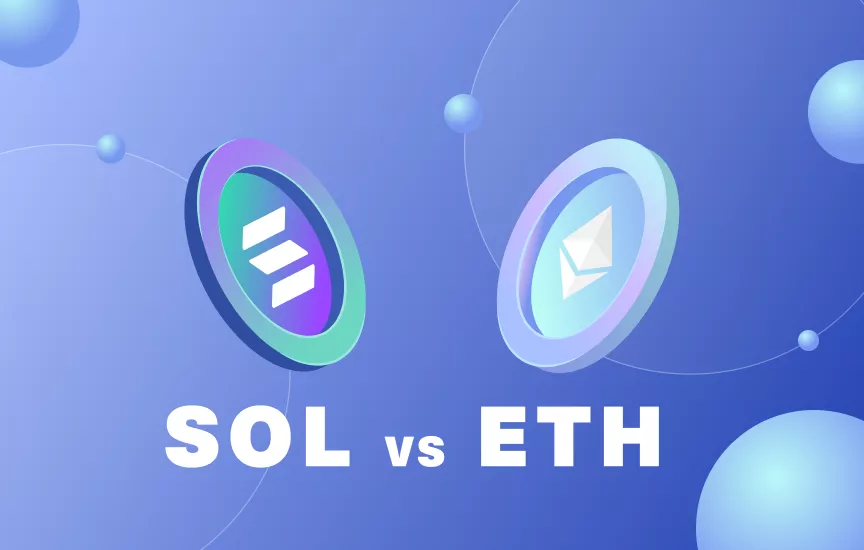
Research Report: Why did SOL lose out to Ethereum, and when will it gain momentum again?

Research Report: Why did SOL lose out to Ethereum, and when will it gain momentum again?

Source: SevenUp DAO Original Link: https://mp.weixin.qq.com/s/RyLbegx0S1IPtOWqMjOOEg8 ETH surpassed $4,700 in mid-month, a four-year high, while SOL swayed in the $180-$200 range for most of the same period, far below the performance of BTC and ETH prices. Looking back on the meme frenzy launched by Solana on platforms such as Pump.fun in 2024, it was once seen as the terminator of ETH. On January 19, 2025, SOL reached a new all-time high of around $293, then retracted, traded sideways, and repeated sentiment, which diverged from the trend of ETH “getting stronger”. Behind the appearance, there are hidden systemic differences in capital entry, value anchors, and online narratives. So what's the reason behind this? Can the Solana ecosystem be brilliant again, and can SOL tokens take off again? This article will analyze Solana's on-chain data and ecological performance panorama, break down the core reasons why SOL's phased defeat of ETH, and analyze the advantages and disadvantages of SOL taking off again. Based on this, we look forward to Solana's likely trend in Q3-Q4 of 2025 to provide readers with a systematic reference. 1. Panoramic analysis of Solana's ecological performance in 2025 Solana's growth path is clearly different from Ethereum: it does not rely on “high gas fees+deflation” to capture value, but rather relies on a single chain with high throughput + ultra-low fees to undertake massive long-tail and high-frequency transactions. 1. Core on-chain indicators Since this year, the Solana ecosystem has shown a trend of “falling back from a high level and then fluctuating upward”. TVL and stablecoin stocks showed a gradual upward trend. Currently, TVL is about 10.42 billion US dollars, and the stablecoin market value is about 11.62 billion US dollars, indicating that the “bottom dollar liquidity pool” on the chain has returned to the 10 billion dollar level and stabilized in the 10 billion dollar range; the number of on-chain transactions remains high, maintaining an active “high-frequency/long-tail” transaction state; the total market value of $SOL declined sharply in Q1, but it showed a wave-like upward trend starting in Q2; judging from structural changes, the return of meme popularity has had a marginal upward trend for DEX/chain fees Improved, but has not yet returned to the peak of the year . Source: https://defillama.com/chain/solana 2. Meme coin sector is the leading meme network. Solana has launched popular meme coins such as BONK, WIF, POPCAT, MOODENG, PUT, TRUMP, PENGU, FARTCOIN, and. Solana memes have common characteristics of “high volatility + strong rotation + strong event drive”. Currently, Solana The total market value of the meme sector is around $117 billion. The top 5 most popular meme coins since the beginning of the year are as follows: PENGU: A “brand coin” strongly tied to popular NFT IPs, with physical toy sales exceeding 10 million US dollars, covering more than 3,100 stores. Canary Capital has submitted a PENGU ETF application to the SEC, which strengthened significantly during the year, and ranked among the top Solana memes in market capitalization. BONK: Solana is a “veteran” and community traffic entrant. As LetsBonk.fun's outrage has also increased significantly, there is now a marked retracement. TRUMP: Trump's meme, an emotional currency driven by political topics, has fluctuated overall since its launch in January. Trump's crypto dinner led to a round of recovery in May. Currently, it is still in a state of decline and is sensitive to the catalytic effects of the incident. FARTCOIN: Its popularity stems from humorous themes and viral spread: users submit fart jokes or memes to earn coins, and each transaction generates digital fart sounds. Combined with AI storytelling (created by AI Truth Terminal), it is an AI-meme hybrid, which can easily cause FOMO. USELESS emphasizes “uselessness” as a selling point, satirizes the empty promises of other coins, and becomes the most honest meme coin. The higher the price of the currency, the more useless it is, the easier it is to attract speculation. Source: https://www.coingecko.com/en/categories/solana-meme-coins3.Launchpad section Solana...

360d agoSevenUpDAO#SevenUp DAO
From Byte Programmer to Securing Tens of Millions of Dollars in Cryptography: A “Calm” Wealth Code and Trading Philosophy

From Byte Programmer to Securing Tens of Millions of Dollars in Cryptography: A “Calm” Wealth Code and Trading Philosophy

Source: SevenUp DAO Original link: https://mp.weixin.qq.com/s/1vZnVMMrr1M7PWr9tKs6EA在加密货币这个7x24小时不停歇的全球金融市场中,普通人可能在一夜之间实现财富自由,也有可能瞬间血本无归. Over the past year, the MEME market has witnessed countless times or even 10,000 times more myths, but in this world full of opportunities and risks, what kind of people can grasp the real wealth code? The guest we invited today is well known for his record, but he is very low-key. Formerly a programmer for ByteDance, now a full-time on-chain trader with more than a huge amount of crypto assets. More importantly, his name is very special — “Calm down, calm down”. What does rationality and calm really mean in Crypto's extremely emotional market? From a speculative mentality to a trading mentality, what kind of mental journey does this shift require? When the sharp rise and fall of MEME coins tests everyone's psychological endurance, what kind of trading philosophy can keep a person awake in the midst of fluctuations? Let's dive into the world of this mysterious trader and explore his wealth password and trading philosophy. Friends of OKX in this issue Guest Speaker: Calm down and calm down @hexiecs, Interviewer: Mercy @Mercy_okx, welcome to follow us~ 1. Chapter 1: From Byte Programmer to On-Chain Trader Mercy: Can you briefly introduce yourself first? Calm down: Hello everyone, I'm calm. Everyone on the chain should know me more or less. When I was playing with Ethereum NFTs, I gave myself an ENS address name, “Calm down and then calm down”. I've all kind of forgotten why I suddenly wanted to take this name at the time; I probably rushed too many pixiu and evacuated the pool for a while, so I wanted to calm myself down. A lot of people follow me on Twitter from my address. Along the way, many coins on the chain have received quite good returns, and it also became one of the top players on the chain in Solana's MEME market last year. Mercy: You mentioned that you worked at ByteDance before, and I'd like to ask what led you to get into the world from Byte? Calm down: I came into contact with Crypto during the peak of the 2021 bull market, and I was still in Byte. Accidentally, I heard some stories about getting rich with Crypto in a chat with other colleagues. I had just bought a house at the time, and the financial pressure was quite high, so I was eager to participate and let my colleagues pull me into several coin trading groups. At that time, I never expected that I would quit my job trading coins in the future, or even gain financial freedom. I just thought it was a trading opportunity and wanted to explore if I could make money. Therefore, outside of my daily work, I started getting involved in the coin industry. Although I didn't have a full time job, I've mostly participated in hot spots in the chain in the past two to three years, including NFTs, Ethereum's meme, and Solana's meme, which began last year. I also went from being a novice to an increasingly experienced on-chain player, but it is true that I missed many opportunities because I wasn't able to trade coins full time. To be honest, there have been quite a few opportunities for ordinary users to make money on the chain in the past few years. Mercy: So what made you finally decide to quit Byte and join the coin industry full time? Calm down: I quit my job at Byte to trade coins full time, mainly because the market in the second half of last year was so good that I found it difficult to balance the two. During that time, I often had to wake up at 4-5 a.m. to check the market, then kept watching until I went to work at the company after 9 a.m., and after coming back in the evening, I sat in front of my computer for 1 to 2 hours trading coins, and then went to bed at 10 o'clock. The whole person felt very tired. My friends also often ask me when to quit my job, because during that time, I often earned more money from a Dogecoin than a year's salary. However, I myself felt that even though I made some money, I didn't feel very comfortable quitting my job. After all, my salary on Web2 was pretty good at the time. The turning point that made me decide to quit Byte and join the coin industry full time was when I met PNUT in November of last year. I've always liked this story myself. I also studied its market capitalization ranking in spot MEME and found out whether it was second to last or third, that is, the narratives and popularity that are lower than its market capitalization are far inferior to it. I judged at the time that the safety cushion was quite high if I bought it, and the possibility of a big loss was very small, so I bought it in a heavy position. I sold almost 20 BTC at the time, and then bought them all. Everyone knows what happened after that. The next day, Musk tweeted that PNUT, the MEME coin, saved the US. This kind of Twitter directly referring to MEME coins is actually wrong...

362d agoSevenUpDAO#SevenUp DAO
Why is “the Fed not cutting interest rates” more beneficial to US stocks and the crypto market in the long term?

Why is “the Fed not cutting interest rates” more beneficial to US stocks and the crypto market in the long term?

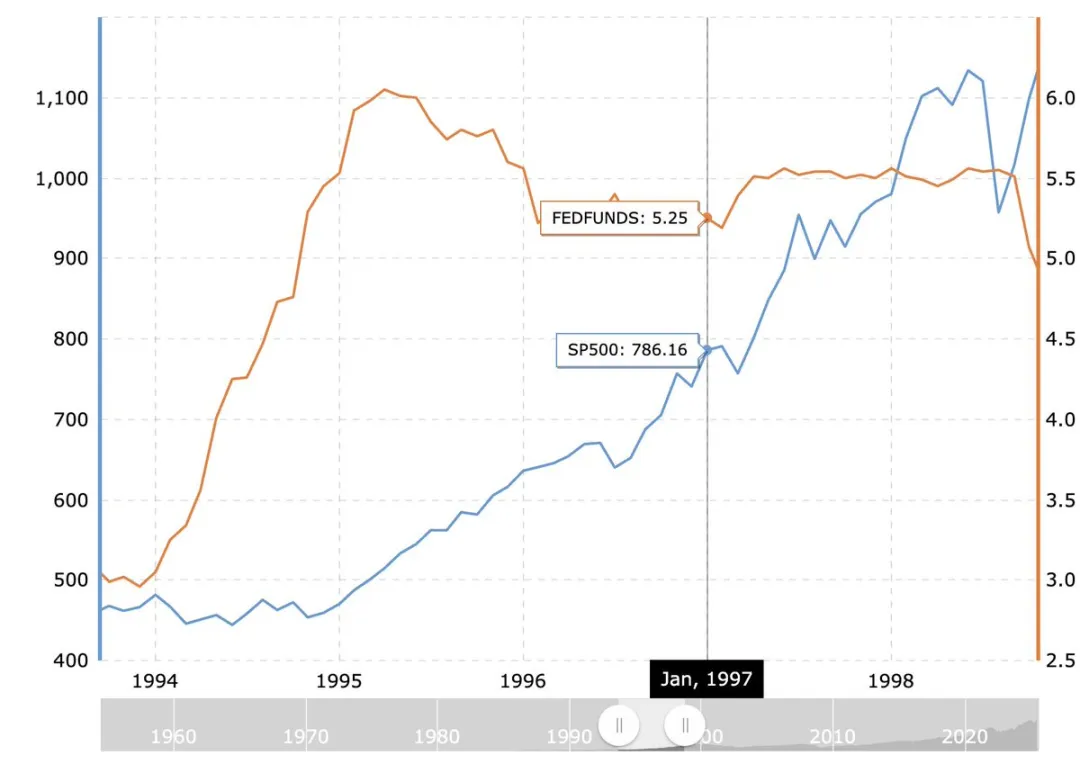
Source: SevenUp DAO Original link: https://mp.weixin.qq.com/s/5AvYMlETAlLryIawYMtPOQ作者丨Dr.PRTwitter丨@0xDrPR当前市场普遍聚焦“何时降息”,但真正值得关注的是:美联储维持高利率不变,可能才是对美股与加密市场长期更有利的宏观格局. Although this view is counterintuitive, everything from historical experience and fundamental structure to implicit fiscal easing all point in the same direction. 1. High interest rates ≠ bear market: History tells us that structured bull markets are often born in high interest rate environments. The Federal Fund Interest Rate vs. S&P 500 (about 1994-2000) took 1994 to 2000 as an example. The Federal Reserve raised the federal funds rate from about 3% to 6% in 1994. After this rate hike cycle, US stocks ushered in one of the strongest tech bull markets in history: the S&P 500 index rose from about 470 points to a 2000 high of 1500 points; NASDAQ in 1995 -An annualized return of more than 25% in 2000 drove the substantial profit cycle before the “internet bubble”; corporate profits, technological innovation, and return on investment dominated, not monetary easing itself. This means that as long as the economy does not have a hard landing, high interest rates are not the culprit in suppressing the stock market. 2. The essence of the current “no interest rate cut” is confidence in the economy. As of July 2025, the Federal Reserve's federal funds target interest rate range is 4.25% to 4.50%. There was no significant relaxation, but importantly — it didn't raise interest rates any more. What is reflected behind this is the reality that a “soft landing is being realized”: core PCE inflation fell from a high of 5.4% in 2022 to the 2.6% to 2.7% range in mid-2025; GDP growth remained between 1.5%-3% annualized; the unemployment rate stabilized at 4.1%, and the labor market was resilient; the overall EPS for US stocks in 2025 is expected to be in the 250-265 range, and profitability is recovering. In other words, the essence of not cutting interest rates is that the Federal Reserve sees no need to bail out the market because the market is repairing itself. 3. True “easing” is being driven by finance rather than money. Although nominal interest rates have not moved, the current overall macro-liquidity structure of the US has shifted to a “fiscal led stimulus.” Annual growth trend of US federal debt The US fiscal deficit in 2024 accounts for more than 6.4% of GDP, one of the highest after the war; as of July 2025, the total US federal debt has exceeded 36.7 trillion US dollars; the net issuance of US bonds in Q3 2025 is expected to exceed 1 trillion US dollars; the “Big Beautiful Bill” promoted by the Trump campaign includes large-scale tax relief and industrial subsidies, and is expected to increase the fiscal deficit by about 3 trillion US dollars within 10 years. Even if the Federal Reserve remains on hold, such fiscal spending would constitute a de facto “hidden release of water.” 4. High interest rates purify the market structure and strengthen the strong Hengqiang logic high interest rate environment. Although it makes financing more difficult, it is “beneficial” for large companies: Apple holds more than 130 billion US dollars in cash, Alphabet has more than 90 billion dollars, and Meta is also close to 70 billion dollars; under interest rates of 4% to 5%, these cash itself generates billions of dollars in interest income; small and medium-sized enterprises are marginalized in terms of financing costs, and market share is further concentrated on giants; high cash flow buybacks drive EPS upward, and the valuation structure is more stable. This explains not only that the “Big Seven Tech Stocks” still dominate the market capitalization rankings, but also why index assets continue to reach new highs when interest rates are high. 5. Crypto market: From speculative gaming to structured asset allocation, crypto assets were once regarded as “speculative products spawned by zero interest rates,” but in the past two years, the market structure has profoundly changed: 1) ETH/BTC has become the target of “digital cash flow” and “digital gold”. Ethereum ETH staking yield trend (annualized) The annualized yield of Ethereum staking remains at 3.5%-4.5%, with treasury bond-like attributes; BTC has become a core reserve asset in many US listed companies (such as MicroStrategy); ETF launches, re-staking mechanisms, on-chain financial gains, etc., have made ETH present “stable income+scarce assets...

382d agoSevenUpDAO#SevenUp DAO
Big and American Act, Trillion-Dollar Monetary Expansion: The “American Moment” for Crypto Assets

Big and American Act, Trillion-Dollar Monetary Expansion: The “American Moment” for Crypto Assets

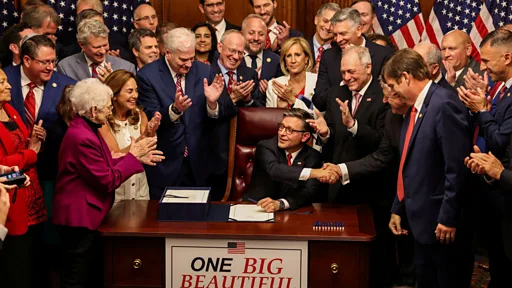
Source: SevenUp DAO Original Link: https://mp.weixin.qq.com/s/Qxlvwe_m6k2jfwaKvHiOdA作者丨 Luke, MarsBit Source 丨 MarsBit is in Washington. Seemingly unrelated events are often deeply intertwined, outlining a grand strategic picture. At the beginning of July, when public attention was focused on the US House of Representatives for President Trump's “Independence Day Gift Package” — a massive fiscal bill dubbed the “One Big Beautiful Bill (OBBB)” (One Big Beautiful Bill (OBBB)), another quieter but equally profound revolution was quietly brewing on Capitol Hill — a series of legislative proposals targeting digital assets were being put on the agenda at an unprecedented rate. These two seemingly parallel trajectories — one is aggressive fiscal expansion and the other is sophisticated regulatory reshaping — are no accident. Together, they form a carefully designed “Washington Conspiracy”: by creating a huge macroeconomic wave while building a regulatory moat tailored for the US, it has established its unshakable hegemony in the global digital asset race. It's not just about tax cuts or regulation; it's a gamble about future dominance of the financial system. 1. From a structural point of view, the economic engine of the “Big and Beautiful Act” and the debt black hole, the OBBB Act is a carefully designed duet. On the one hand, it introduced tax breaks on an unprecedented scale. The bill has been described by critics as the ultimate “robbery of the poor and the rich”: it permanently locks the corporate tax rate at 21% and brings about $6,000 in annual tax savings to high-income people. On the other hand, what paid for all of this was a cruel cut in social welfare programs. Food stamps for about 600,000 households will be reduced by $100 a month, and Medicaid (Medicaid) will be directly cut by $1.2 trillion over the next ten years. At the heart of the game's controversy is its true financial cost. The White House Council of Economic Advisers (CEA) uses a “dynamic scoring” model, insisting that tax cuts will stimulate economic growth and generate enough tax to cover costs. However, this optimistic forecast is far from the conclusion of almost all non-partisan analysts. The non-partisan Congressional Budget Office (CBO) predicts that the bill will net the federal debt by $3.3 trillion over the next ten years. Think tanks such as the center-left Brookings Institution (Brookings Institution) and the liberal-leaning Cato Institute (Cato Institute) have come to similar conclusions, arguing that their boosting effect on GDP is minimal and cannot offset its huge debt costs at all. Goldman Sachs economists are even more outspoken, believing that any weak growth impetus brought about by the bill will completely offset the economic drag caused by the tariff policy implemented by the government during the same period. The academic debate about scoring models actually conceals a more fundamental truth that cannot be ignored: no matter how calculated, the US has clearly chosen a path of stimulating the economy through large-scale, unfunded fiscal expansion. This is not an ordinary policy adjustment; it is a paradigm shift in fiscal posture. The real economic reality behind this is that a debt-driven super-stimulus cycle has begun. 2. The inevitable rise and fiscal expansion on this scale will inevitably have repercussions in the monetary sector. A trillion-dollar hole in additional treasury bonds means that monetary expansion of the same scale is needed to finance it. This will inevitably cause fiat currencies to depreciate, creating a strong and structural long-term benefit for scarce, non-sovereign hard assets like Bitcoin. This logical chain was explained to the fullest by two thought leaders in the crypto world — Michael Saylor and Arthur Hayes. Michael Saylor, founder of MicroStrategy, likened currency depreciation to a “leak of economic energy.” In his view, Bitcoin is an engineering solution to this problem, and is “the first time in human history that you can tie economic energy closely to an individual... without having to live in fear.” Meanwhile, BitMEX co-founder Arthur Hayes believes that government spending and fiat currency creation are the most fundamental fuel for the crypto bull market. “Printing money was their only answer,” Hayes asserted, and predicted that the massive stimulus from the Trump administration would be the catalyst to push Bitcoin to hit millions of dollars. These views were obtained with macroscopic data...

410d agoSevenUpDAO#SevenUp DAO
9-month net profit of $1000W, trading principles, experience and lessons

9-month net profit of $1000W, trading principles, experience and lessons

Source: SevenUp DAO Original Link: https://mp.weixin.qq.com/s/bPqH0dSrnzaoFP0TflMJQw目前我币Coin实盘合约盈利接近10M USD. The 3-month opening of the actual market was a profit of 6.3M USD, and a single individual record of 7.5M won the team first place in this Binance League trading tournament. But in reality, my experience is not only at the technical level of contract trading. The purpose of writing this article is to teach people to fish”. People don't want anything in return; hopefully, it's enough to actually help some confused people. Realistically speaking, if you are used to the “fish” given by others and don't want to improve yourself, it is likely that it will be difficult for you to mix up the path of trading and get results. 1. 40,000 ETH actually calculated from the 7.5M take-profit of the ETH-Long contract this time, the net profit was about 5M USD, but close to 10M of capital was used. Many people wonder why the whole network is criticizing the weak trend of ETH and going to a new low, and I still launched 40,000 ETH positions to go long. Of course, I'm not going to gamble with this position. My judgment is that it has actually been posted on Binance Square a long time ago, based on many factors and ignoring environmental noise: the ETF's net inflow performance surpassed BTC; the SEC could produce results at any time after Grayscale staked equity ETF 6.2, with potential for pins; the ETH daily level increased dramatically. Combined with ETFs and other indicators, the ETH/BTC ratio line directly fell compared to other coins, and it is likely that there is a chance for further rebound; the short-term market sentiment is stronger than other coins, and often conveys the smell of eagerness to test; the monthly position of ETH Still weaker than For all other coins (BNB/SOL), the daily level did not fall below the low level. Had BTC not fallen below 102000, and ETH would rise even earlier; I've always posted that ETH needs to see if BTC can stand still, because this round of ETH was brought about by a new high in BTC rather than a strong rise in ETH fundamentals. It is a pure buying logic similar to ETF. The fundamentals of the GWEI on the chain are still in a state of zero. Including ETH rushing to 2,850 this time, BTC has not stabilized at 11W. If it stands at 11W, then it is very likely that it will rise to a new high of 3000; if everyone can clearly see the direction of the trend, then why are few people in this circle making money? In addition, in addition to this order, in the first half of May, I earned 1 M USD by using only 300 KUSD to catch the limit of 5 to 6 waves. Full actual records can be checked on Binance Plaza and CoinCoin Software. This is a limited-price order+supplementary sheet method. It is more worth implementing when I talk about the details below. Record 2 of the original post posted on X at the beginning. On-chain investment is actually for many friends with small capital, I recommend that the early benefits of on-chain opportunities will far outweigh contract transactions. The chain has always been the best place to be small and big. All you have to do is get hold of it faster than others, take good care of the logo, and hit the bad information. (For example, the core of Vida's formula is also the speed of earning information) You accumulate a certain amount of principal to make a contract transaction to generate a considerable profit for you, and have enough positions to fill up positions, so it's not easy to get out of place. If you only get one chance, you'll be a loser in contract trading. There are even many KOLs that don't publicly trade contracts and only play with spot goods. I think it's a very wise choice for most people. There are too few contracts to get out of, and there are too many things to overcome and too many rules to abide by. For me, my self-made funding also comes from on-chain, GameFi/23 years of BRC-20/24 Meme. You can learn a lot of experience and knowledge about changing topics on the chain, intense research, and bookmaker risk games. Today's topic is contract trading, but I'll also briefly share a summary of some of the hot spots in the current cycle and reflect on ETH's on-chain fundamentals Gwei is currently in a state of zero. This is also one of the main factors behind the weak overall performance of ETH. But I'm still passionate about the future of the chain. If interesting DEFI paradigms and gameplay methods emerge in the future, I'll also recommend them to me. I'll do research and share my opinions and select 3. Go to the topic: Contract trading principles/experience/lessons 1. Position control, never lose chips. The details left on the table are to observe the token price volatility and bottoming area. For example, if BTC fluctuates 10% in a month, it's OK to play 30 times in the short term, increase...

418d agoSevenUpDAO#SevenUp DAO