

Is the US Federal Reserve Chairman who knows Crypto the most coming? He's still the richest one
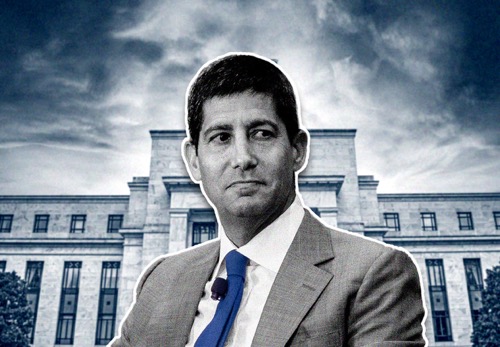
One holdsSolana、optimism、PolymarketAnd the SpaceX guys will probably soon be in charge of the Federal Reserve.
You read that right. This was recently submitted by Kevin Walsh — Trump's newly appointed US Federal Reserve Chairman candidateFinancial disclosure documents。
The 69-page document shows that沃Personal assets range from 131 million to 209 million US dollars.
And his wife Jane Lauder, heir to the Estée Lauder Group, has a net worth of 1.9 billion US dollars.
If he passes the hearing next week, he will become the richest chairman in the history of the Federal Reserve. Currently, current Chairman Powell is the record holder — but his personal assets are “only” $19 million to $75 million.
At the same time, Walsh is probably the one who knows the most about cryptocurrencies and AI.
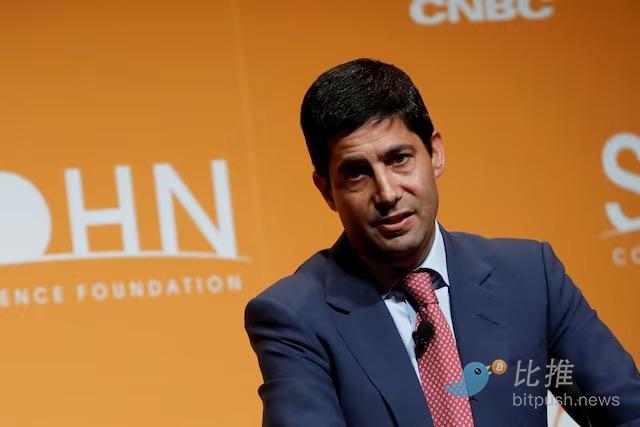
Personal holdings: amazing returns from investment and consulting
Let's first take a look at what Walsh bought.
His largest holdings are concentrated in the Juggernaut Fund LP — an investment vehicle closely linked to the office of legendary Wall Street investor Stanley Druckenmiller's family. Walsh's share of each of these investments exceeded $50 million, and also earned $10.2 million in consulting fees from Drucken Miller's investment office.
In the cryptocurrency sector, Walsh's layout is quite broad.
Among the assets he holds through his family office THSDFS LLC, his disclosed holdings include: blockchain network Solana, Ethereum second-layer network Blast and Optimism, which focuses on yield, Ethereum DeFi lending protocol dYdX, NFT company Dapper Labs, and cryptocurrency venture capital firm Polychain. Other crypto investments include Bitcoin trading platform Flashnet, Ethereum developer platform Tendly, and on-chain social media startup Deso.
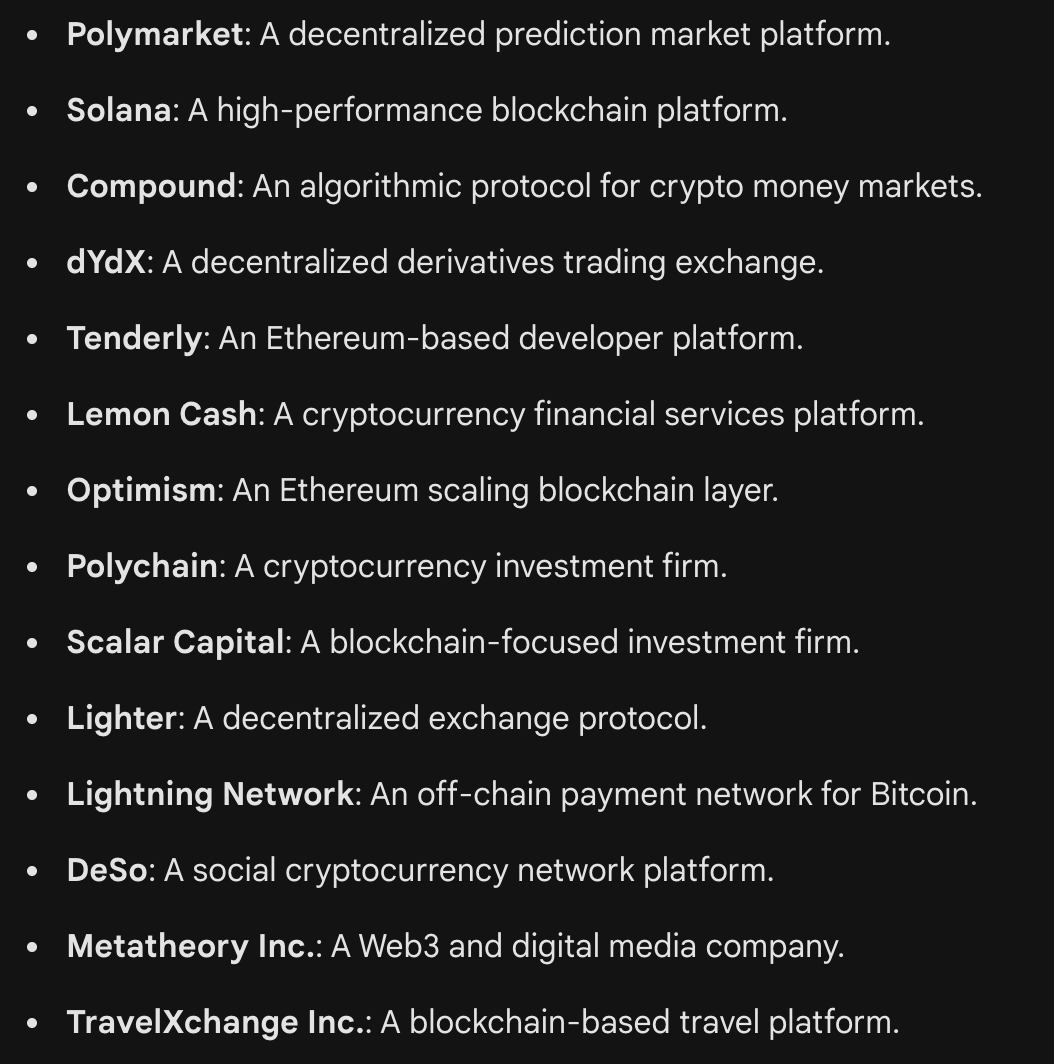
Additionally, he has invested in prediction market giant Polymarket and holds shares in SpaceX.
The AI field also appears on his asset list: the robot coffee platform Cafe X, bionic enhanced wearable clothing company Cionic, and several AI startups with undisclosed values.
Walsh promised in the document that if his nomination is confirmed, he will sell the relevant assets in Juggernaut Fund and THSDFS LLC and resign as a director of United Parcel Service (UPS) and Korean retail giant Coupang.
Compared to current Chairman Powell, Walsh's personal wealth far exceeds his career. Bernanke stepped down from the Federal Reserve in 2014presidenciesAt the time, its declaration documents showed assets of up to US$2.3 million, mainly from pension funds.
Walsh's situation is even more special — his wife Jane Lauder (Jane Lauder) is the heir of the Estée Lauder Group, and according to Forbes estimates, Jane Lauder's personal net worth is around $1.9 billion.
From middle class in New York to Estée Lauder's “horse riding horse”, I had a wild life
Walsh was born on April 13, 1970 to a middle class Jewish family in Albany (Albany), the capital of New York State. He is the youngest of three children in the family. Her father, Robert Walsh, ran several businesses, and her mother, Judith Philipson Walsh, was a journalist and freelance writer. Walsh attended Shaker High School, a local public high school. His specialty was tennis. During his time at school, he also participated in the New York State Tennis Championships.
“Purwa,” who came out of a public high school, eventually became the son-in-law of the Estée Lauder family - in the TV series, this is the first half episode of Attack Against the Giants.
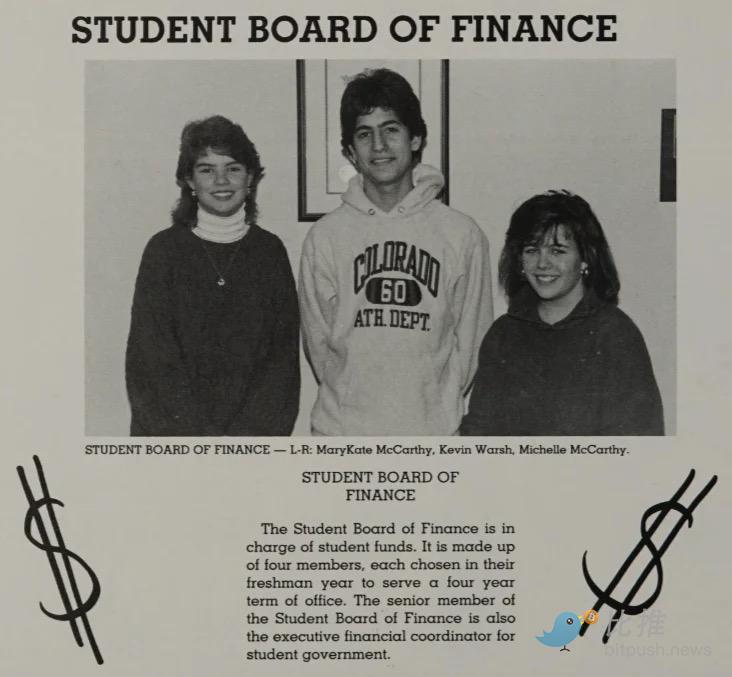
Walsh graduated with honors from Stanford University majoring in public policy, majoring in economics and statistics. While in school, he worked as a research assistant to the famous economist Milton Friedman — an experience that had a profound impact on the formation of his future ideas of monetarism. He then attended Harvard Law School and received his J.D. in 1995.
After graduating from Harvard, 25-year-old Walsh joined Morgan Stanley's M&A department. Within 7 years, he was promoted from Analyst to Executive Director and was involved in a number of major mergers and acquisitions.
In 2002, he left Wall Street and joined the George W. Bush administration as Special Assistant to the President for Economic Policy and Executive Secretary of the White House National Economic Council.
Also in this year, there was another major “merger and acquisition” in his life. Walsh married Estée Lauder's heir Jane Lauder.
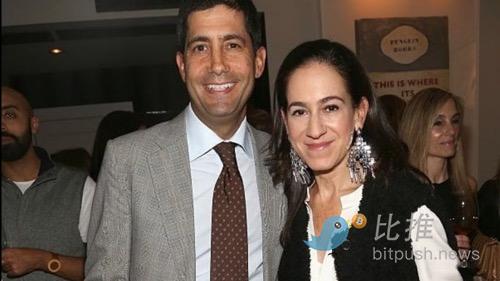
Jane Lauder is the granddaughter of Ronald Lauder, the granddaughter of the founder of the Estée Lauder Group, and was the senior vice president of the family business.
According to reports, their relationship began with a blind date (Blind Date) in the late 1990s.
At the time, they were both fighting in New York's top professional circles — Walsh was a rising M&A star at Morgan Stanley, and Jane had already made a name for herself in the family business Estée Lauder. Through the matching of mutual friends, this pair of elites with similar backgrounds and similar interests quickly fell in love, and finally officially tied the knot in 2002, when Walsh switched careers into politics.
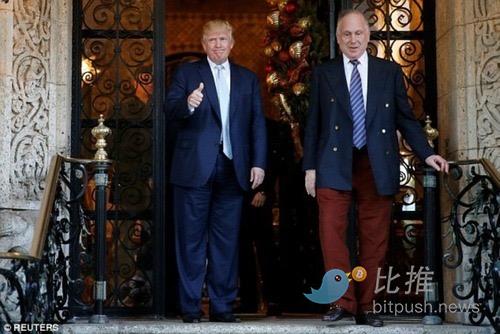
This marriage was ridiculed by outsiders as a “perfect merger and acquisition” between Wall Street Capital and a top consumer empire. Since then, Walsh has been firmly tied to the Republican Party's core donation circle — his father-in-law Ronald Lauder is not only the helm of the Estée Lauder Group, but also Trump's classmate and long-term financier at Wharton.According to foreign media TRT World, it was Ronald Lauder who first planted the seeds for Trump's Middle East policy proposals.
In 2006, at the age of 35, Walsh was nominated as a member of the Federal Reserve by President George W. Bush, becoming the youngest member in the history of the Federal Reserve. During the 2008 financial crisis, Walsh was an important member of then-Federal Reserve Chairman Bernanke's core circle. He was the main contact person between the Federal Reserve and Wall Street, and was deeply involved in bailout coordination with institutions such as Bearsden, Morgan Stanley, and AIG. Bernanke later wrote in his memoir that Walsh was one of the most loyal partners in crisis decision-making “with his extensive connections on Wall Street and political circles and his knowledge of practical finance.”
But Walsh is not a supporter of quantitative easing. In 2010, when the Federal Reserve introduced the second round of quantitative easing (QE2), he expressed strong opposition, believing that it would distort market signals and promote moral risk. In 2011/3, he voluntarily resigned from the Federal Reserve, several years ahead of his original term.
After leaving the Federal Reserve, Walsh served as an outstanding visiting researcher in economics at Stanford's Hoover Institution and taught at Stanford University's School of Business. He is also an external director of the Korean e-commerce platform Coupang, a UPS director, and a partner of the Drucken Miller family office Duquesne.
In the process, Walsh also built a network of contacts across Wall Street, Silicon Valley, and Washington. He has a close relationship with PayPal co-founder Peter Thiel and venture capitalist Mark Anderson — Walsh has revealed that it was these two people who got him involved in Bitcoin investing early with Drucken Miller. This network of contacts later became an invisible asset for his re-nomination by Trump.
Why did Trump re-choose Walsh after eight years?
In 2017, Trump faced the same two candidates for the Federal Reserve's presidency: Jerome Powell and Kevin Walsh. He chose the former and later publicly expressed his regret many times. After Trump returned to the White House in 2025, the dust finally settled on this personnel election. On January 30, 2026, Trump officially announced the nomination of Walsh as Chairman of the Federal Reserve and praised him as “undoubtedly one of the greatest chairmen in the history of the Federal Reserve.”
Trump's intentions are easy to understand. Over the past few years, he has continued to criticize Powell for cutting interest rates “too slowly and too little.” Trump needs someone who can both support interest rate cuts and gain trust in the market. Walsh is almost one of the few people who can balance the two almost conflicting requirements of “loyalty” and “market reputation.”
There are four main reasons why Walsh won in the end:
First, although Walsh disagrees with traditional Trump ideas on fiscal and foreign trade issues, he supports “equal tariffs” and downsizing to create space for interest rate cuts, which are basically in line with Trump's policy orientation.
Second, he has a perfect educational background and experience working on Wall Street. In addition, he has the qualifications of being a “senior central banker” as a former Federal Reserve member.
Third, Walsh's “hawkish” undertones in the past favoured his nomination being approved by the Senate — because his push to cut interest rates was not easily criticized as Trump's “political puppet.”
Fourth, Walsh's decades-long personal relationship with the Trump family made him a trustworthy candidate.
Walsh himself took the initiative to adjust his position. After Trump won a second term, he went from being an advocate of free trade to a supporter of Trump's tariff policy and publicly criticized the Federal Reserve for cutting interest rates too slowly.
Contradictory combination of “interest rate cut+downsizing”
Walsh's policy proposition can be summed up in four words: cut interest rates, downsizing.
“Interest rate cuts” are intended to reduce borrowing costs and inject liquidity into the market, which is in line with Trump's political needs. “Downsizing” is just the opposite: by reducing the Federal Reserve's asset holdings, it recovers market liquidity and raises long-term interest rates. The two are being promoted simultaneously, which is almost a paradoxical combination under the traditional monetary policy framework.
But Walsh has his own logic. For a long time, he believed that the size of the Federal Reserve's balance sheet was “too large” and “distorted the market” and must be reduced. In his view, the role of the Federal Reserve has been overextended — involving non-core issues such as climate and inclusiveness, and should return to the core legal responsibilities of price stability and financial stability. He argues that the Federal Reserve's inflated balance sheet to save big companies can be drastically slimmed down, freeing up space for interest rate cuts to support ordinary households and small and medium-sized enterprises.
Walsh also found a very contemporary argument to endorse interest rate cuts: artificial intelligence. He wrote in the “Wall Street Journal” column that AI will become a significant “de-inflation” force, increase productivity, and enhance America's competitiveness.
But the market's reaction to Walsh was mixed. On the day he was nominated, the price of spot silver fell by more than 36%, the price of gold fell by as much as 12%, while the US dollar rose. The market apparently did not interpret Walsh as a dovish who advocated drastic interest rate cuts, but instead saw a “credible inflation hawk.” Professor of Economics at Columbia Business SchoolBrett House“According to Walsh's words and actions during his time at the Federal Reserve in the past, he is the most hawkish of the four finalists,” he said.
Hearings and market suspense
Walsh's nomination hearing will be held next week. According to the plan, Powell's term ends on May 15 — if Walsh hasn't been confirmed by that time, Powell will continue to serve in a temporary capacity.
The market is currently most confused about: will Walsh fulfill his promise of “interest rate cut+downsizing”? How to follow the path of interest rate cuts? Can the independence of the Federal Reserve be preserved? The differences are not small.
Other than that, there's a minor nuisance. North Carolina Senator Tom Tillis has said that if the Trump administration's criminal investigation against Powell is not resolved, he will not let go of Walsh's nomination. However, according to many legal observers, this investigation itself is the White House's political pressure on the independence of the Federal Reserve. Today, it is the biggest obstacle for Walsh to take the presidency.
Author: seed.eth
Twitter:https://twitter.com/BitpushNewsCN
Compare the TG exchange group:https://t.me/BitPushCommunity
Compare TG subscriptions:https://t.me/bitpush
